Alessandro Bausi is a Full Professor of Ethiopian Studies at Sapienza University of Rome since November 2023, where he focuses on Ethiopic language, literature, and manuscript cultures. Prior to this, he served as a Professor for Ethiopian Studies at the University of Hamburg (2009–2023) and held academic roles at the University of Naples 'L’Orientale' and Addis Ababa University. MA (1988, University of Florence) PhD (1992, Naples Oriental Institute) His research spans Ethiopian textual and manuscript cultures, Aksumite history, textual criticism, hagiography, and Semitic studies. He has led major projects like TraCES and Beta maṣāḥǝft , emphasizing linguistic evolution and manuscript digitization. He is a member of prestigious academies including the Accademia Nazionale dei Lincei (foreign member since 2023), Academia Europaea, and the Ethiopian Academy of Sciences. His editorial roles include editing Aethiopica and the Encyclopaedia Aethiopica .
Piotr Głogowski is a researcher at the Institute of History, University of Wrocław, specializing in ancient epigraphy and Near Eastern studies. His work bridges the Hellenistic, Roman, and Persian periods, with a focus on the Levant and Phoenicia. Education: BA & MA in History and Classical Philology (University of Wrocław, 2012-2015); Erasmus exchanges at Bilkent University (2013/2014, 2016/2017); PhD in History (University of Wrocław, 2021). Research areas include ancient epigraphic cultures, Phoenician identity, Achaemenid Persia, and Greco-Persian military dynamics. His publications analyze inscriptions as cultural markers and explore historical narratives in Diodorus. Notable grants: Principal investigator for the National Science Center's Preludium project (2021-2024) on Near Eastern epigraphic culture, and internal grants for studies on Phoenician regional identity and Cappadocian politics. Scientific Awards: Gerda Henkel Foundation Scholarship (2020)
Dr Aaron D. Hornkohl is an Associate Professor in Hebrew and Bye-Fellow at Girton College, University of Cambridge. He serves as Director of Studies in Asian and Middle Eastern Studies at Girton and Homerton Colleges. His academic background includes a BA from Biola University, MA from The Hebrew University of Jerusalem, and PhD (2012) on the linguistic analysis of the Book of Jeremiah. His research focuses on ancient Hebrew philology, linguistic periodization, and exegesis, with a particular interest in the diachronic development of Hebrew and textual criticism of biblical manuscripts. Teaching responsibilities include courses on ancient and modern Hebrew literature, language history, and Middle Eastern culture. He co-organizes initiatives like the Sutton Trust Summer School and leads AHRC-funded research on critical editions of Hebrew texts, including the Kaufmann MS of the Mishna. Recent publications explore Tiberian reading traditions, Masoretic vocalization, and linguistic features in Qumran manuscripts. Research projects include Grammar of Biblical Hebrew Books (2024) and Studies in the Masoretic Tradition (2022). His work bridges linguistic analysis with historical context, addressing questions of language evolution and textual authenticity in Hebrew biblical and rabbinic corpora.
Bart Wallet is Professor of Jewish Studies specializing in Early Modern and Modern Jewish History at the University of Amsterdam's Faculty of Humanities, where he is affiliated with the Department of Semitic Languages and Cultures. His academic work focuses on the intricate relationship between Jewish communities and Dutch society throughout history, with particular emphasis on the connections between the Dutch Royal House and Jewish communities. Wallet's research interests span Dutch Jewish history from the early modern period to the contemporary era, with special attention to Yiddish studies, religious history, cultural integration, and the development of Jewish identity in the Netherlands. His scholarly output reveals a consistent focus on how Jewish communities navigated their position as a religious minority within Dutch society, particularly examining the complex dynamics between Jewish citizens and the Dutch state and monarchy. His work often explores the tension between religious tradition and modernization, and how Jewish communities maintained their identity while integrating into broader Dutch society. Analysis of his recent publications shows a strong thematic concentration on Orange-Jewish relations throughout Dutch history, Jewish military service, religious education, and the material culture of Jewish communities. His scholarship demonstrates a methodological approach that combines cultural history with religious studies, often revealing how seemingly mundane aspects of daily life reflect broader societal patterns of integration and identity formation. The geographic focus remains predominantly on the Netherlands, though with comparative perspectives on Jewish communities in other European contexts. Professor Wallet has been active in public scholarship through media appearances, radio programs, and contributions to encyclopedias. His work has appeared in both academic journals and public-facing media outlets, demonstrating his commitment to making Jewish history accessible to broader audiences. He has contributed to numerous radio programs on Jewish history for Dutch Jewish radio stations and has written for newspapers including the Reformatorisch Dagblad. His academic contributions include extensive work on Dutch-Jewish relations, particularly focusing on the relationship between Jewish communities and the Dutch Royal House throughout history. He has also produced significant scholarship on Jewish integration in Dutch society, religious education, and the development of Jewish identity in the Netherlands from the early modern period to the present day. His work often examines how Jewish communities maintained religious traditions while adapting to changing social and political contexts.
Jacqueline Vayntrub is an Associate Professor of Hebrew Bible at Yale University's Yale Divinity School (YDS). Her expertise spans the Hebrew Bible, wisdom literature, biblical poetry, philology, and the reception history of biblical scholarship. She holds a PhD in Near Eastern Languages and Civilizations from the University of Chicago (2015), along with earlier degrees from UCLA and Hebrew University. Dr. Vayntrub’s research examines biblical genres within ancient Near Eastern literary contexts, focusing on how textual values evolve through transmission and reception. Her first monograph, Beyond Orality: Biblical Poetry on its Own Terms (Routledge, 2019), critiques scholarly assumptions about biblical poetry’s oral origins. Her current projects include Reframing Biblical Poetry (Yale U.P.) and Seeking Eternity , exploring transmission and mortality in biblical texts. She directs the international Renewed Philology working group and chairs SBL units in Hebrew Bible and philology. Vayntrub has published widely in journals like Harvard Theological Review and Catholic Bible Quarterly , and her work has been reviewed at prestigious institutions including Yale and NYU. She received a 2019-20 Katz Center fellowship for her Seeking Eternity project. Her academic service includes organizing conferences at Yale, Harvard, and Princeton, and editorial roles for Studies in Cultural Contexts of the Bible . Her teaching and scholarship emphasize critical engagement with ancient texts and their enduring cultural impact.
Stephen Spector is a Professor of English at Stony Brook University since 1972, with a PhD from Yale University (1973). His work bridges medieval literature, religious studies, and language history. He has held visiting positions at the Hebrew University (Jerusalem, 1996–97) and fellowships at the National Humanities Center and Wesleyan University. His research focuses on medieval English literature, particularly mystery plays and biblical texts, alongside modern topics like Christian Zionism and the Ethiopian Jewish rescue operation (Operation Solomon). He has authored influential books such as Evangelicals and Israel (2009), which won the London Book Festival Prize, and Operation Solomon (2005), honored with the JDC-Herbert Katzki Award. Education: B.A. in English and Psychology from Penn State University (1968), M.Phil. and Ph.D. from Yale University (1973). He has taught courses ranging from the history of the English language to medieval literature and the Bible as literature. Research highlights include pioneering studies on anti-Semitism in medieval mystery plays, textual editing of the N-Town Play, and modern analyses of religious-political intersections. His recent work explores biblical prophecy’s influence on US foreign policy and contemporary grammar usage guides. Awards include the Van Courtlandt Elliott Prize (1980) for medieval scholarship, National Endowment for the Humanities grants, and SUNY Research Foundation fellowships. He has also contributed op-eds on topics like Sarah Palin’s religious influences and Israel-Evangelical relations. Grants and fellowships span decades, including directing NEH summer seminars on Jewish presence in early English literature (1993, 1996). His work often integrates historical methodologies with contemporary cultural analysis. Labs/Teams: Not explicitly listed, but his research collaborations are evident in co-edited volumes like The Olde Daunce (1991) and contributions to interdisciplinary projects like the Early English Text Society.
Professor Helen Finch (University of Leeds) is a leading scholar in German Literature , with a focus on Holocaust Studies , Queer Memory , and German-Jewish Cultural Production . Affiliated with the School of Languages, Cultures and Societies and the Centre for Jewish Studies , she co-leads the LCS Queer Area Studies Network and contributes to equality initiatives through the LGBT+ staff network . Research: Holocaust representation in German works, queer identity in postwar literature, transnational memory studies, curriculum design in German studies Awards: Fellow of the Higher Education Academy (2014) Academic Output : Her 15 most recent publications span Holocaust poetics , queer life writing , translation ethics , and Sebaldian intertextuality , with a particular focus on intersections between trauma , identity , and intergenerational testimony . Supervision : Currently guides PhD research on topics including transnational transphobia , queer art practices , and LGBTQ+ cross-cultural representation . Her students explore areas from German exile photography to postcolonial queer narratives .
Joel Westerdale is an Associate Professor of German Studies at Smith College, where he also serves as Chair of German and Italian. He is affiliated with the Film and Media Studies and Comparative Literature programs, with courses cross-listed in Jewish Studies and the History of Science. Ph.D. and A.M. from Harvard University B.A. from University of Michigan His research focuses on 19th-21st century German literature, intellectual history, and early cinema. He examines intersections between language, technology, and cultural expression, particularly in works like Nietzsche’s Human, All Too Human and early German films such as The Cabinet of Dr. Caligari . Recent scholarly contributions include analyses of Nazi-era film historiography and Nietzschean philosophical themes in literature. He has conducted extensive research at institutions in Germany, including University of Freiburg and Center for Literary and Cultural Research (ZfL) in Berlin. Grants from the Alexander von Humboldt Foundation, U.S. Fulbright Commission, and Whiting Foundation have supported his work. He co-directed Smith’s Kahn Liberal Arts Institute Evil project (2011–12) and led the study abroad program at University of Hamburg (2015–16).
François Déroche is a Professor at the Collège de France since 2015, holding the History of the Qurʾān, Text and Transmission chair. A renowned specialist in Arabic manuscripts, his work bridges codicology, Quranic textual history, and Islamic archaeology. Research focuses on Quranic manuscript transmission from Late Antiquity to the Umayyad dynasty Member of the Académie des inscriptions et belles-lettres (Institut de France) Expert in Arabic paleography and early Islamic book culture His recent lecture series The Medinese Koran (2025-2026) explores Quranic textual evolution through historical manuscripts. Publications emphasize material analysis of early Quranic codices and their socio-political contexts. Scientific Awards : Member of the Académie des inscriptions et belles-lettres Scientific Member of the Institut français d'études anatoliennes
Demirdache Hamida is a Full Professor of Linguistics at Nantes University and Director of the Nantes Linguistics Lab (LLING UMR 6310, CNRS). She holds a PhD from MIT (1991) and Habilitation à diriger des recherches from Nantes University (2003). Her research focuses on syntax-semantics interfaces, linguistic diversity, and formal syntactic theory with emphasis on Semitic languages and under-represented languages like Salish. She has pioneered experimental methodologies to probe logical form syntax, particularly in studies of temporal anaphora, distributivity, and quantification. Leadership roles: Founded LLING lab in 2004, elevated to CNRS status in 2016 Research grants: Coordinator of ANR-DFG projects (2022-2025), CHILL serious game initiative (2018-2021) Awards: Palmes académiques (2011), Descartes-Huygens Prize (2003), multiple PEDR/PES excellence awards Her experimental work bridges theoretical syntax and empirical child language studies, with recent focus on cross-linguistic variation in telicity and scalar implicatures. Supervised 15 PhD theses (including 3 double-doctorates) and 54 master’s theses. Active in international research networks including the Van Riemsdijk Foundation and Carnot Cognition Institute. LLING lab specializes in formal linguistics with particular expertise in: syntax-semantics interfaces, multilingualism, and experimental methods. Current projects investigate Boolean connectives (FRAL project), heritage language maintenance (AThEME EU project), and logical language acquisition through game-based learning (Cool Boole School).
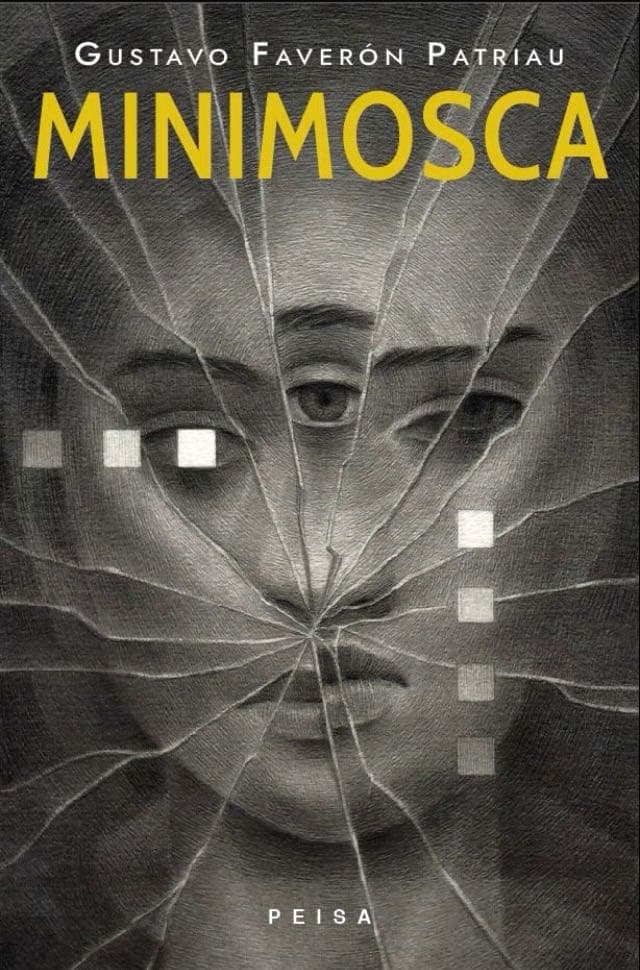
Gustavo Faverón Patriau is Professor and Chair of the Department of Romance Languages and Literatures at Bowdoin College, with affiliations in Latin American, Caribbean, and Latinx Studies and Hispanic Studies. He holds a PhD from Cornell University and has held visiting positions at Stanford University, Middlebury College, and Universidad Cayetano Heredia. His academic work centers on Latin American contemporary literature and political history, with a focus on the limits of visual and linguistic representation, the portrayal of mental illness in narrative, and the writings of Jorge Luis Borges. His research spans literary theory, cultural criticism, and journalistic inquiry, often bridging scholarly and public intellectual spheres. His recent publications reveal a consistent engagement with themes of abjection, memory, trauma, and the philosophical dimensions of narrative. He frequently analyzes canonical and marginal texts through interdisciplinary lenses, drawing on philosophy, visual culture, and historiography. His scholarship often intersects with his creative work, which includes novels and editorial projects that explore similar intellectual terrain. Among his scientific awards and recognitions are being a finalist for the III Vargas Llosa Biennial Novel Prize, receiving accolades from Letras Corsarias and Rockdelux, and being recognized by the Spanish newspaper ABC for his blog Puente Aéreo as one of the most influential in the Hispanic world. He has served on the board of Diacritics , directed literary journals such as Dissidences , La Vaca Multicolor , Somos , and Visto & Bueno , and co-edited major volumes like Bolaño salvaje and Toda la sangre . He regularly presents at international literary festivals and academic conferences, and has conducted numerous interviews and media appearances across Latin America and Europe. His creative and scholarly work has been translated into ten languages, underscoring his transnational impact. He continues to publish prolifically in both academic and literary venues, maintaining a dynamic presence in contemporary Hispanic intellectual life.
Dr Estara Arrant is a Cambridge University Library Leverhulme Early Career Research Fellow and Trinity Hall Postdoctoral Research Associate. She merges Semitic linguistics with data science to study medieval Jewish and Islamic textual cultures. PhD (University of Cambridge, 2021): Computational analysis of Cairo Genizah Torah codices MPhil (University of Oxford, 2018): Linguistic structure of Qur’ānic creation narratives BA: History & Modern Hebrew Her groundbreaking work combines machine learning and bioinformatics algorithms to analyze textual evolution. Current projects include: Developing the first NLP model for medieval Judaeo-Arabic Creating digital tools for computerized stemmatology She actively teaches Python and R as an Cambridge Digital Humanities associate, and her research has been published by Open Book Publishers and Brill .
Enzo Traverso is the Susan and Barton Winokur Professor in the Humanities at Cornell University, affiliated with the College of Arts and Sciences. His scholarly work bridges the Department of History, French Studies Program, Jewish Studies Program, and Romance Studies. Born in Italy, he studied at the University of Genoa and earned his PhD from EHESS in Paris (1989). Before joining Cornell in 2013, he taught political science in France for two decades and held visiting professorships across Europe and Latin America. Education: University of Genoa (Italy), Ecole des Hautes Etudes en Sciences Sociales (PhD, 1989) Traverso’s research explores intellectual history, historiography, and critical theory, focusing on twentieth-century Europe. His work interrogates the intersections of war, fascism, genocide, revolution, and collective memory. His authored books, translated into over fifteen languages, have established him as a leading scholar in these areas. His recent publications reflect a trajectory analyzing historical memory, revolutionary ideologies, and the resurgence of far-right movements. Articles in journals like History & Theory and Historical Materialism further contextualize his contributions to debates on totalitarianism, Jewish modernity, and postwar political thought. Awards: Premio Pozzale (2014), Premio Lo Straniero/Gli Asini (2018), Premio Napoli (2022) Traverso has advised students through courses on topics such as Left-Wing Melancholia, Holocaust memory, and the European Civil War. His academic influence extends via editorial contributions to journals like Jacobin, Constellations, and Il Manifesto.
Viktor Golinets is a Professor of Hebrew Linguistics at the Heidelberg University of Jewish Studies , where he has held the Chair of Hebrew Linguistics since 2018. Previously, he served as a Junior Professor at the same institution from 2012 to 2018. His academic journey includes a PhD in Ancient Near Eastern Studies from the University of Munich (2010) and a Magister degree in Semitics from Ludwig-Maximilians-Universität München (2004). Education: PhD (Altorientalistik, LMU Munich, 2010), Magister (Semitics, LMU Munich, 1997-2004) Professional Roles: Professor (Heidelberg University of Jewish Studies, since 2018), Junior Professor (Heidelberg University of Jewish Studies, 2012-2018), Scientific Assistant (University of Basel, 2007-2012) Golinets’ research focuses on the linguistic and textual history of the Hebrew Bible , ancient Bible translations , and historical grammar of Hebrew . He specializes in Masoretic studies, Semitic epigraphy, and comparative analysis of Northwest Semitic languages like Amorite, Aramaic, and Ugaritic. His work addresses textual criticism, biblical hermeneutics, and the evolution of Hebrew from Masoretic to modern usage. His publications and articles reveal a strong emphasis on Hebrew onomastics , epigraphic analysis , and the role of language in Jewish cultural identity . He has contributed to international colloquia on textual criticism and Semitic philology. Memberships: German Oriental Society, European Association of Biblical Studies, International Association for Comparative Semitics, Association of Judaists in Germany, and others Golinets serves as Deputy Rector at Heidelberg University of Jewish Studies and has collaborated on projects like the Hebrew-Greek Text-Critical Synopsis of the Book of Jeremiah and the Biblia Hebraica Transkripta. His expertise in Hebrew manuscripts and Semitic languages informs both his teaching and research.
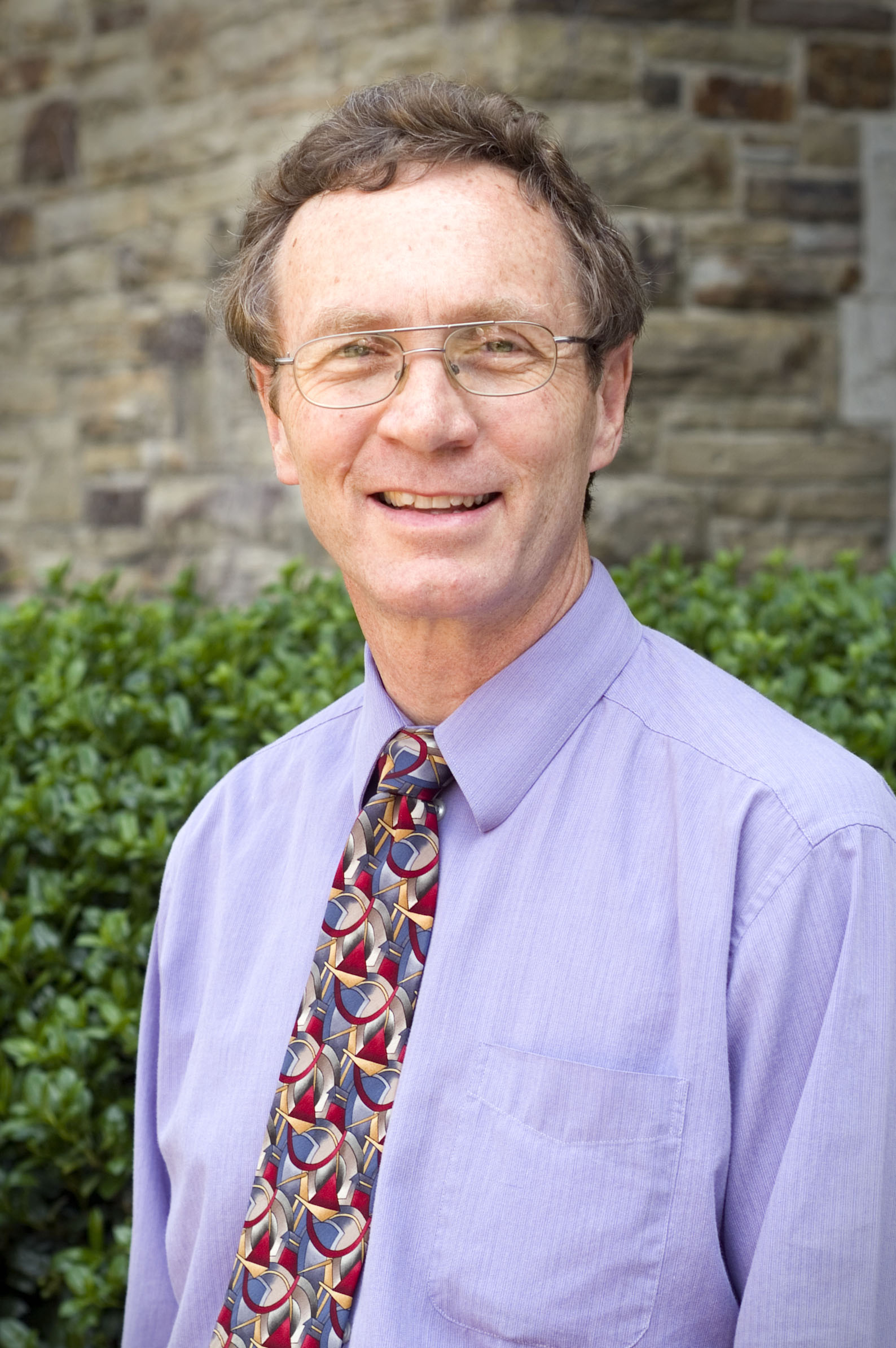
Steven L. McKenzie is Professor of Religious Studies and Spence L. Wilson Senior Research Fellow at Rhodes College, specializing in Hebrew Bible (Old Testament) studies, biblical archaeology, and the Dead Sea Scrolls. His academic career spans decades of influential scholarship and editorial leadership. His educational background includes: Th.D. from Harvard University B.A. and M.Div. from Abilene Christian University McKenzie's research focuses on the history of ancient Israel, Hebrew Bible literature, Hebrew language and grammar, biblical interpretation methods, and the intersection of archaeology with biblical studies. He pioneered work on the Deuteronomistic History and Chronicler's literature, establishing foundational frameworks still referenced today. His interdisciplinary approach bridges textual analysis with historical context, making complex scholarship accessible to broader audiences. His publication trajectory reveals consistent engagement with biblical historiography and interpretation, evolving from technical studies like The Chronicler's Use of the Deuteronomistic History (1985) to accessible works such as How to Read the Bible (2005), and culminating in major reference works including the Oxford Encyclopedia of Biblical Interpretation (2013). Recent projects focus on editorial leadership for the Oxford Bible Commentary series. Key honors include: Spence L. Wilson Senior Research Fellowship McKenzie's academic service demonstrates exceptional commitment: founding the Deuteronomistic History Section at the Society of Biblical Literature, serving as associate editor of Vetus Testamentum (2010-2019), and contributing to editorial boards of Journal of Biblical Literature and Catholic Biblical Quarterly . His decade-long leadership of academic tours through the Middle East and Greece with the Middle East Travel Seminar extended his scholarship into experiential education, while media appearances on Discovery and History channels brought biblical scholarship to public audiences.