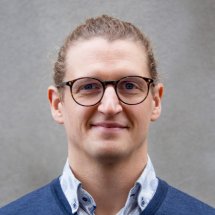
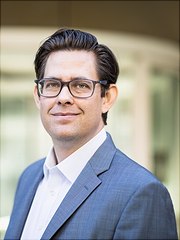
Alessandro Bausi is a Full Professor of Ethiopian Studies at Sapienza University of Rome since November 2023, where he focuses on Ethiopic language, literature, and manuscript cultures. Prior to this, he served as a Professor for Ethiopian Studies at the University of Hamburg (2009–2023) and held academic roles at the University of Naples 'L’Orientale' and Addis Ababa University. MA (1988, University of Florence) PhD (1992, Naples Oriental Institute) His research spans Ethiopian textual and manuscript cultures, Aksumite history, textual criticism, hagiography, and Semitic studies. He has led major projects like TraCES and Beta maṣāḥǝft , emphasizing linguistic evolution and manuscript digitization. He is a member of prestigious academies including the Accademia Nazionale dei Lincei (foreign member since 2023), Academia Europaea, and the Ethiopian Academy of Sciences. His editorial roles include editing Aethiopica and the Encyclopaedia Aethiopica .
Dr. Ute Pietruschka (b. 1959) is a senior research fellow at the Academy of Sciences Göttingen and associate researcher in the Seminar für Arabistik/Islamwissenschaft, University of Göttingen. From 2001-2021 she taught as Lehrbeauftragte at the Oriental Institute, University of Halle, after earlier appointments at Queensland and Marburg. Her projects include the Corpus of Arabic and Syriac Gnomologia and the Union Catalogue of Oriental Manuscripts in Germany. Education & Career 1982 Diplom, Martin-Luther-Universität Halle-Wittenberg (Arabic & Christian-oriental languages) 1986 Dr. phil. Halle, thesis on Ethiopian transmission of Greek philosophical sayings 1985-1992 wiss. Mitarbeiterin / Oberassistentin, University of Halle 1992-1994 Lecturer, University of Queensland 1994-2001 Assistentin, University of Marburg 2001-2021 Lecturer, Oriental Institute, University of Halle 2012-2022 Senior researcher, Academy of Sciences Göttingen Research Interests Pietruschka investigates the circulation of Greek wisdom literature into Arabic, Syriac, Coptic and Ethiopic cultures. Using philological and Digital-Humanities methods she edits gnomologia, traces manuscript transmission, and studies the educational role of monasteries and schools in the Islamicate world. Additional interests include the representation of nomads in Syriac writing and the reuse of biblical material in Islamic adab. Publication Profile Recent articles cluster around three thrusts: (1) Edition and analysis of Greek-Arabic gnomologia and doxographies, showing how compilations like Ps.-Plutarch’s Placita served as textbooks; (2) Study of Christian Arabic and Syriac wisdom collections, especially the monastic Apophthegmata Patrum and their pedagogical Sitz im Leben; (3) Codicological surveys of Coptic and Karšūnī manuscripts, highlighting monasteries as intellectual hubs after the Islamic conquest. Projects & Grants Head, Corpus der arabischen und syrischen Gnomologien (since 2011, continuation planned 2023-) Co-leader (with Jürgen Tubach) DFG-SFB project “Das Bild des Nomaden in der syrischen Literatur” (2004-2008) Senior researcher, Union Catalogue of Oriental Manuscripts in Germany, Göttingen Academy (2012-2022) Teaching & Digital Humanities Together with Dr. Marco Büchler (Leipzig) she regularly offers courses on Digital Humanities applied to Semitic manuscript cultures, combining codicology, XML/TEI and network analysis.
Piero Capelli is a Full Professor in the Department of Asian and North African Studies at Ca' Foscari University of Venice, where he specializes in Hebrew language and Jewish studies. His academic work spans biblical interpretation, rabbinic literature, Jewish mysticism, and medieval interreligious polemics. University: Ca' Foscari University of Venice Department: Department of Asian and North African Studies Academic Rank: Professor Email: piero.capelli@unive.it Capelli’s research focuses on the development of Jewish thought from antiquity through the medieval period, particularly in areas such as apocalyptic literature, the problem of evil, textual transmission, and the interaction between Jewish and Christian intellectual traditions. He has published extensively on topics including Ezekiel’s Merkavah vision, the figure of Satan in early Judaism, and the interpretation of Deuteronomy in late antique sources. His scholarly interests also extend to the cultural and theological dimensions of Jewish-Christian polemics in the Middle Ages, especially concerning figures like Nicolas Donin and Pablo Christiani. His recent publications demonstrate a sustained engagement with both primary textual analysis and broader thematic explorations. From 2023 to 2025, his work includes studies on apocalyptic texts like 1 Enoch, 2 Baruch, and 4 Ezra, as well as critical editions and translations of rabbinic and mystical writings. He has also contributed prefaces, introductions, and editorial leadership to journals such as Skenè and Humanitas , curating special issues on Jewish theatres and demonic traditions in Western culture. While no formal awards are listed in the provided text, his prolific output and editorial roles indicate significant recognition within the academic community. Capelli has advised on bibliographic projects and contributed to collective volumes, showing strong mentorship and collaborative engagement. He has not supervised any named students in the data provided, but his role as a professor implies teaching and guidance responsibilities. He leads no named labs or research teams in the available information, but his editorial and curatorial work suggests leadership in scholarly networks and academic publishing. His career reflects deep commitment to advancing the study of Jewish texts and their reception across historical and cultural contexts.
Alessandro Bausi is a Full Professor of Ethiopian Studies at Sapienza University of Rome, Faculty of Humanities, since November 2023. Previously, he held the position of Full Professor (W3) at the University of Hamburg’s Asien-Afrika-Institut (2009–2023) and served as Director of the Hiob Ludolf Center for Ethiopian Studies. He has extensive academic leadership roles, including editorships of Aethiopica journal and series like Aethiopistische Forschungen . His research focuses on Ethiopian and Eritrean textual traditions, ancient scribal practices, and manuscript cultures, with notable projects like the ERC-funded 'TraCES' and Hamburg’s 'Beta maṣāḥǝft.' Education: MA (1988, University of Florence), PhD (1992, Naples Oriental Institute). He has held academic appointments since 1995, progressing from Assistant to Full Professor roles in Naples, Hamburg, and now Rome. His research interests span Aksumite history, Ethiopic philology, apocryphal texts, and medieval manuscript studies. He has secured major grants and is a member of prestigious academies, including the Accademia Nazionale dei Lincei and Academia Europaea. Notable awards include the ERC Advanced Grant (2013) and the Giorgio Maria Sangiorgi Prize (2005). He leads interdisciplinary projects on Christian Ethiopian/Eritrean scribal culture and serves as a consultant for international scholarly series. Professional roles include Co-Spokesperson of the Hamburg Cluster of Excellence on Manuscript Cultures (2019–2023) and editorial roles in major journals. His work bridges textual criticism, epigraphy, and digital humanities in African studies.
Stefan Weninger is a University Professor and Head of the Department of Semitic Studies at the Center for Near and Middle Eastern Studies (CNMS) at Philipps University of Marburg. He has held a C4-Professorship for Semitistics in Marburg since 2001 and served as Managing Director of the CNMS from 2016-2020. His distinguished career includes leadership roles as 2nd Vice President (2015-2020) and subsequently 1st President (2021-2026) of the German Oriental Society, where he also serves as Speaker of the Semitistics Section. Weninger earned his doctorate in 1991 from Ludwig-Maximilians-Universität München with a dissertation on Qana'a in Arabic literature, followed by his habilitation in 1997 on the verbal system of Old Ethiopic. His academic journey includes research assistant positions at LMU from 1991-2001 before his appointment to Marburg. His scholarly work spans Semitic linguistics with particular expertise in Ethiopic languages, Classical Arabic, and Ancient South Arabian studies. Weninger's research interests focus on comparative Semitic grammar, historical linguistics, epigraphy, and lexicography. His work demonstrates exceptional depth in Ge'ez (Classical Ethiopic) studies, where he has produced foundational scholarship on its verbal system, grammar, and lexicon. His research extends to Arabic-Ethiopic language contact phenomena, Sabaean epigraphy, and the history of Orientalist scholarship. He has made significant contributions to understanding the linguistic relationships between Semitic languages and the historical development of writing systems in the Near East. Analysis of Weninger's recent publications reveals consistent focus on Ethiopic linguistics, particularly Ge'ez grammar and discourse structures, while also maintaining strong engagement with Classical Arabic studies and Ancient South Arabian epigraphy. His work shows a methodological blend of historical-comparative linguistics with textual criticism and philological analysis. The publications demonstrate increasing attention to the history of Orientalist scholarship alongside his core linguistic research, reflecting a mature scholarly perspective that bridges historical and linguistic approaches. 2nd Vice President of the German Oriental Society (2015-2020) 1st President of the German Oriental Society (2021-2026) Speaker of the Semitistics Section in the German Oriental Society (2017-present) As an academic leader, Weninger has supervised numerous doctoral students and research projects, including DFG-funded projects on Arabic and Ethiopic texts of the Testament of Abraham and Secundus Taciturnus. His editorial work includes serving on the advisory boards of Middle East - Topics & Arguments, Aethiopica, and Orientalistische Literaturzeitung, where he acts as section editor for Semitics. He has been instrumental in advancing Semitic studies through his leadership in academic societies and his comprehensive reference work, The Semitic Languages: An International Handbook.
Jillian Stinchcomb is an Assistant Professor in the Department of Philosophy and Religious Studies at Towson University, with affiliations in the Department of History and the Baltimore Hebrew Institute. She holds a Ph.D. in Religious Studies from the University of Pennsylvania and specializes in the reception history of biblical texts and figures across Jewish, Christian, and Muslim traditions. Ph.D., Religious Studies, University of Pennsylvania, 2020 M.A.R., Second Temple Judaism, Yale Divinity School, 2014 B.A., Program of Liberal Studies and Classical Civilizations, University of Notre Dame, 2012 Her research focuses on biblical reception history, particularly the evolving portrayal of powerful women such as the Queen of Sheba across religious traditions. She explores how cultural values shape the reinterpretation of ancient narratives, with emphasis on ancient Mediterranean religions, women in antiquity, and interfaith relations . Her multilingual scholarship engages Hebrew, Aramaic, Arabic, Greek, Latin, and Ge'ez sources to trace textual transmission and transformation. Her recent publications and ongoing book project, The Queen of Sheba between the Bible and the Kebra Nagast , reflect a strong thematic focus on reception history, cross-cultural textual antiquity, and religious identity formation . These works span disciplines including Religious Studies, Biblical Studies, Gender Studies, and Medieval History, often analyzing how sacred figures are reimagined in national and religious mythologies. Her scientific recognition includes: Florence Levy Kay Postdoctoral Fellow, Brandeis University (2020–2022) Postdoctoral Fellow, Institute for Advanced Study, Princeton (2022–2024), on the 'Interactive Histories, Co-Produced Communities' project Dr. Stinchcomb has advised emerging scholars and contributed to collaborative research initiatives, though no formal advisees are currently listed. Her work has been supported by prestigious fellowships and institutional grants. She teaches courses in Hebrew Bible, ancient history, and Jewish Studies, contributing to interdisciplinary academic programs. She is actively involved in research networks focused on comparative religion and ancient textual cultures, particularly through her postdoctoral work at the Institute for Advanced Study. Her current and future research continues to explore the intersections of religion, gender, and cultural memory in the premodern world.
Konrad Martin Heide is an Adjunct Professor at the Department of Semitic Studies , Center for Near and Middle Eastern Studies (CNMS) , Philipps University of Marburg , focusing on textual criticism of biblical and apocryphal texts, Ethiopic/Arabic/Syriac philology, and cultural history of animals in antiquity. Roles : Adjunct Professor (2014–2023), Research Fellow in multiple DFG projects (2015–2022) Education : Magister Artium in Semitic Studies (1997), PhD in Semitic Philology (1999), Dipl. Ing. in Electrical Engineering (1980) Research Interests : His work centers on critical editions of Ethiopic, Arabic, and Syriac biblical texts, including the Testaments of Isaac and Jacob , Secundus Taciturnus , and Kitāb al-Bayṭara . He specializes in Hebrew epigraphy from the pre-exilic period and interdisciplinary studies on the cultural history of camels and horses, collaborating with the Institute for Palaeoanatomy and History of Veterinary Medicine (LMU Munich). Publications & Textual Work : He has produced critical editions of the Ethiopic Book of Jeremiah and Testament of Abraham , and contributed to the Editio Critica Maior of the New Testament. His articles analyze textual variations in Syriac and Arabic apocalyptic literature, Hebrew ostraca, and the domestication timeline of camels through epigraphic and archaeological evidence.
MF Norwegian School of Theology, Religion and SocietyNorway
Matthew Phillip Monger is an Associate Professor of Near Eastern Languages and Literatures at MF, specializing in the languages and texts of the Ancient Near East and Mediterranean. His research focuses on textual transmission, reception history, and material philology, with particular attention to Akkadian, Hebrew, Syriac/Aramaic, Ethiopic, Greek, and Latin texts. He teaches courses such as Akkadian 1, Classical Syriac, and Biblical Exegesis. Education: Ph.D. (2018): MF, thesis on 4Q216 and Jubilees in the First Century BCE MA in Semitic Philology (2012): University of Oslo BA in Linguistics (2009): University of Oslo M.Th. (2008): MF Norwegian School of Theology B.Th. (2006): MF Norwegian School of Theology Research Interests: Dr. Monger’s work bridges philology and historical context, emphasizing the interplay between ancient texts and their transmission across cultures and eras. His current projects include a book on the reception history of pre-Abrahamic patriarchs’ wives in antiquity and a publication of biblical riddles in Syriac manuscripts spanning the 9th to 20th centuries. Publications: His recent work explores Jubilees manuscripts from Qumran, the Gelasian Decree, and the Delphic maxim in early Christian texts. Themes include material philology, textual criticism, and the intersection of ancient religious traditions. His analyses often integrate paleographical, codicological, and historical approaches. Teaching and Service: Responsible for foundational courses in ancient languages and biblical studies, Monger bridges textual scholarship with pedagogical rigor. His academic service includes editorial roles and peer review in journals like Revue de Qumran and Semitica .
Kasper Siegismund is a Guest Researcher and Postdoc at the Section of Biblical Exegesis within the Faculty of Theology at the University of Copenhagen. Since June 2021, he has been working on the AMRAM project (Apocalypticism: Manuscripts, Rewriting, and Authority Management), investigating early apocalyptic literature with a focus on the Aramaic composition known as 'Visions of Amram' found among the Dead Sea Scrolls. His research explores the tension between divine control and human choice in ancient Jewish writings. Dr. Siegismund received his PhD in June 2018 from the Faculty of Theology at the University of Copenhagen with a dissertation titled 'Studies in the Hebrew Verbal System: Hebrew as a System of Relative Tense and the Origins and Development of the Classical Consecutive Forms.' Prior to that, he earned his MA in Theology (cand.theol.) from the same institution in 2014. He has also completed practical theological pastoral education at Folkekirkens Pastoralseminarium in Copenhagen. His scholarly work spans biblical linguistics and theological interpretation, with particular expertise in Hebrew (biblical, inscriptions, Qumran, rabbinic) and Aramaic (primarily biblical and Qumran Aramaic). He also works extensively with other ancient Semitic languages including Syriac, Ethiopic, Ugaritic, Akkadian, and Arabic. His linguistic background extends to Indo-European languages, with reading knowledge of Gothic and Biblical Armenian in addition to Greek and Latin. His research consistently examines how grammatical structures convey theological concepts in ancient texts, particularly regarding divine sovereignty and human agency. Dr. Siegismund's recent publications reveal a cohesive scholarly trajectory focused on linguistic analysis of biblical texts. His work demonstrates methodological rigor in examining Hebrew verbal systems, Dead Sea Scrolls scholarship, and the interpretation of wisdom literature. A recurring thematic thread across his publications is the investigation of divine determinism and human choice in ancient Jewish thought, particularly as expressed through linguistic structures in biblical and apocryphal texts. Active researcher in the AMRAM project investigating early apocalyptic literature Contributor to digital edition of Amram manuscripts and commentary Author of multiple scholarly publications on Hebrew language and biblical interpretation Creator of educational resources including Hebrew grammar overviews and Classical Ethiopic materials Alongside his academic work, Dr. Siegismund has maintained pastoral ministry at Herstedøster Kirke, serving at 50% capacity from July 2019 to September 2021, and full-time from April 2024 to January 2025. His teaching experience includes courses on apocalyptic literature, wisdom literature, Old Testament studies, and language instruction in Biblical Hebrew and Classical Ethiopic, demonstrating his commitment to both scholarly research and practical theological education.
Professor Dr. Aaron Michael Butts is a University Professor of Semitic Studies specializing in Ethiopian and Eritrean studies at the University of Hamburg. He holds the Andrew W. Mellon Chair of Early Christian Studies (2022) and received his Ph.D. from the University of Chicago. Current projects include the ERC Consolidator Grant-funded BeInf: Beyond Influence – The Connected Histories of Ethiopic and Syriac Christianity (2022–2027). Ph.D., University of Chicago (2013) Master of Arts, University of Chicago (2007) Master of Theological Studies, Duke Divinity School (2005) Bachelor of Arts, Howard Payne University (2002) His research focuses on: Ethiopic and Syriac Christian traditions Aramaic and Semitic linguistics Manuscript transmission and textual criticism Greco-Roman linguistic influences Christian-Muslim textual interactions Recent publications analyze Narsai's works, Syriac-Akkadian connections, and Ethiopic-Greek loanword dynamics. He serves as Editor-in-Chief of Aramaic Studies and Supplements to Aramaic Studies , with editorial roles in multiple patristic journals. Scientific awards: ERC Consolidator Grant (2022) Current affiliations: University of Hamburg (since 2022) The Catholic University of America (2014–2022) Yale University (2010–2013)
Dr Hagos Abrha Abay is an Assistant Professor of Gǝʿǝz Philology at the University of Hamburg and founder of the St. Yared Center for Ethiopian Philology and Manuscript Studies. Holding a PhD from Addis Ababa University (2014), he specialises in the critical edition, cataloguing, and cultural analysis of Ethiopian Christian manuscripts, particularly hagiographic and non-codex forms that mediate between oral and written traditions. Research Interests: His work bridges philology, anthropology, and heritage science, focusing on non-codex Gǝʿǝz manuscripts, healing practices embedded in manuscript culture, and the global networks of Ethiopian Christianity. He explores how unconventional manuscript formats—scrolls, amulets, and ritual objects—function within community life and archival memory. Publications & Trends: Across his eight recent articles he combines meticulous textual criticism with ethnographic attention to manuscript use, revealing how Ethiopian communities produce, conserve, and repurpose written artefacts for devotion, therapy, and identity negotiation. Awards & Grants: He held the prestigious Petra Kappert Fellowship at CSMC (2019–2022) and leads digitisation campaigns in Tǝgray monasteries. Outreach & Leadership: Beyond academia he chairs the Wejjerat Development Association and curates the “Mahilete Gumaye” cultural preservation initiative, demonstrating commitment to safeguarding endangered heritage through poetry and community engagement.
David Hamidović is a Full Professor specializing in Jewish apocryphal literature and the history of Judaism in antiquity at the University of Lausanne's Faculty of Theology and Sciences of Religions, where he is affiliated with the Institute for Biblical Studies (IRSB). He previously served as Vice-Dean and then Dean of the Faculty. His international academic affiliations include being an associate researcher at the University of Liège (Belgium) and at the Laboratoire d'Etudes sur les Monothéismes in Paris, as well as having served as an invited professor at Yale University and Tel Aviv University. Professor Hamidović's research focuses on the History of Ancient Judaism, with particular expertise in Dead Sea Scrolls, Jewish Apocrypha, Rabbinic Literature, Hebrew and Aramaic Inscriptions, and the Archaeology of ancient Synagogues. He manages the excavation of Khirbet Bet Netofa in Galilee and leads the Summer University of Oriental Languages, which teaches numerous rare languages to students worldwide. His distinctive approach combines textual analysis, epigraphy, and archaeological data to contextualize ancient Jewish culture within broader comparative frameworks. His recent publications (2021-2025) show consistent scholarly output across multiple prestigious publishers including Oxford University Press, Brepols, and Cerf. The research demonstrates deep engagement with textual analysis, historical context, linguistic studies, and archaeological evidence related to ancient Judaism. His work spans biblical interpretation, historical development of religious concepts, linguistic evolution of Hebrew, and the material culture of ancient Jewish communities. Professional recognition includes: Membership in the New York Academy of Sciences Membership in the Israel Exploration Society Membership in the American Society of Overseas Research Pensioner status at the Institut de France (Académie des Inscriptions et Belles-Lettres) Professor Hamidović served on the Human Research Ethics Committee at the École Polytechnique Fédérale de Lausanne from 2014 to 2024. His linguistic expertise spans Biblical Hebrew, Mishnaic Hebrew, Talmudic Hebrew, Aramean, Classical and Postclassical Greek, Latin, Classical Ethiopic (ge'ez), Ugaritic, and West Semitic Inscriptions. His scholarly contributions include over 160 publications with significant output in both book chapters and journal articles, particularly in the journal Le Monde de la Bible.