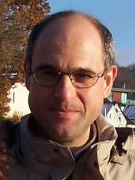
Alessandro Bausi is a Full Professor of Ethiopian Studies at Sapienza University of Rome since November 2023, where he focuses on Ethiopic language, literature, and manuscript cultures. Prior to this, he served as a Professor for Ethiopian Studies at the University of Hamburg (2009–2023) and held academic roles at the University of Naples 'L’Orientale' and Addis Ababa University. MA (1988, University of Florence) PhD (1992, Naples Oriental Institute) His research spans Ethiopian textual and manuscript cultures, Aksumite history, textual criticism, hagiography, and Semitic studies. He has led major projects like TraCES and Beta maṣāḥǝft , emphasizing linguistic evolution and manuscript digitization. He is a member of prestigious academies including the Accademia Nazionale dei Lincei (foreign member since 2023), Academia Europaea, and the Ethiopian Academy of Sciences. His editorial roles include editing Aethiopica and the Encyclopaedia Aethiopica .
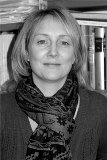
Joanne Lee is a Senior Lecturer in the Department of Italian Studies at the University of Warwick. She holds a PhD from the University of Bristol and has taught at Cardiff University and Bristol University prior to joining Warwick in 2008. Her administrative roles include Head of Italian Studies until September 2024 and Co-head of the School of Modern Languages and Cultures (SMLC) starting January 2025. BA in Italian and Language Studies (Cardiff University, 1999) MA in Literature in European Cultures (Cardiff University, 2003) PhD (University of Bristol, 2008) Her research spans travel writing , Italian emigration/immigration , post-war women writers , and Italy's colonial memory . Recent work examines decolonizing urban spaces through Igiaba Scego's works and sustainable travel in Paolo Rumiz's pedestrian journeys. She explores ethical dimensions of travel writing, including sustainability and cosmopolitan ethics, with a focus on globalization's impact on migration narratives. Selected publications include analyses of Laura Pariani's migration novels, Soviet-Italian Cold War travel discourses, and postcolonial memory in Italian literature. She has collaborated on interdisciplinary projects addressing slow travel , virtual tourism , and post-pandemic tourism patterns. Awards include Senior Fellowship of the Higher Education Academy and Fellowship of the Warwick International Higher Education Academy.
Wendy Laura Belcher is a Professor of African literature at Princeton University, holding a joint appointment in the Department of African American Studies and the Department of Comparative Literature. She specializes in early African literature, medieval studies, and postcolonial thought, with a focus on Ethiopian and Ghanaian intellectual traditions. Her work bridges global literary history and decolonial critique, emphasizing Africa’s role in shaping global cultural narratives. Belcher earned her PhD in English Literature from UCLA, alongside MA degrees in African Studies and Urban Planning, and a BA in English Literature from Mount Holyoke College. Her research includes groundbreaking translations of Ethiopian texts, such as The Life and Struggles of Our Mother Walatta Petros , and projects like the Princeton Ethiopian Miracles of Mary (PEMM) digital humanities initiative, supported by NEH grants. Her research interests span African literature’s global influence, early African philosophical texts, and the Kebra Nagast ’s impact on modern movements like Rastafarianism. She co-leads the Black Queen of Sheba project, exploring medieval African ideas in global culture. Belcher is also renowned for her best-selling guide Writing Your Journal Article in Twelve Weeks , aiding academics worldwide in publishing success. Belcher’s awards include the Fulbright Scholarship, SSEMW’s Best Scholarly Edition award, and the Paul Hair Award. Her work appears in journals like Eighteenth-Century Fiction and Research in African Literatures , with peer-reviewed chapters in volumes on African Christian biography and global medievalism. She collaborates with scholars like Michael Kleiner and Ralph Lee on translations and digital humanities projects. Her teaching and research challenge Eurocentric narratives, emphasizing Africa’s rich textual heritage and its contributions to global literature.
David Manuel Bozzini is a Full Professor at the University of Fribourg , affiliated with the Faculty of Letters and Human Sciences within the Department of Social Sciences . He also serves as a Lecturer in the Department of Computer Science (Faculty of Science and Medicine), indicating interdisciplinary expertise. Joined University: 2017 Research Focus: Bozzini's work examines state surveillance mechanisms in militarized contexts, particularly in Eritrea and its diaspora. His research spans political anthropology, digital security, and cryptography, analyzing how insecurity is socially constructed and resisted through both traditional and technological means. Publications: His recent works explore: Ethnographic analysis of surveillance practices Digital repression in authoritarian regimes Political mobilization among exiles Technological resistance strategies Contact: Email: david.bozzini@unifr.ch Phone: +41 26 300 7840
Max Planck Institute for the Study of Religious and Ethnic DiversityGermany
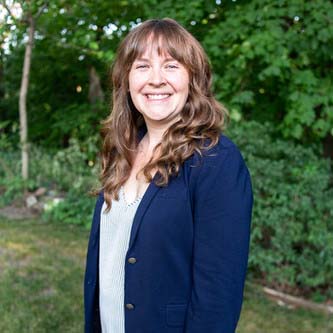
Meghan Kelly is an assistant professor in the Department of Geography and the Environment at Syracuse University, where she works at the intersection of cartography, feminist theory, and digital storytelling. Previously a doctoral student and instructor at the University of Wisconsin-Madison, she has also taught at Durham University. Her academic career bridges rigorous scholarly research with professional mapmaking for major publications including the Chicago Tribune, Washington Post, Rolling Stone Magazine, and Science Magazine. Kelly's research centers on the role of power in spatial data, map design, and mapping processes, with particular focus on how alternative perspectives can expand conventional cartographic tools. Her recent work examines satellite data usage through a Black feminist lens, while earlier projects investigated Syrian refugee border crossings using feminist methodologies. She approaches cartography as both science and critical practice, consistently challenging traditional representations of space and power. Her publication history shows a clear trajectory from doctoral research on Syrian refugee experiences toward leadership in feminist geographical practice, with increasing emphasis on collaborative, community-engaged mapping approaches. Kelly's work demonstrates how cartography can serve as a tool for social justice when informed by critical theory and diverse perspectives. University-wide Teaching Fellow Award for classroom innovation (2018) Runner up in Map Book and Atlas Category (2015 WLIA) Student Dynamic Map Award Winner (Group) NACIS Runner-Up, David Woodward Award CaGIS Outstanding Thesis Award (2016) Kelly has developed innovative teaching materials across the cartography curriculum, from introductory GIS courses to advanced web cartography. Her teaching philosophy integrates feminist pedagogies with critical approaches to mapping, emphasizing both technical skills and ethical considerations in spatial representation. She has created comprehensive course materials for Geography 170 (Our Digital Globe), Geography 370 (Introduction to Cartography), and Geography 572 (Graphic Design in Cartography), with particular focus on bridging theory and practice in map design. Her collaborative projects, including the Eritrean Human Trafficking Project and Collectively Mapping Borders initiative, demonstrate her commitment to participatory approaches that center marginalized voices in cartographic production. These projects often involve community engagement and alternative visualization techniques to represent complex spatial experiences that conventional maps might overlook.
Dr. Christine Matzke is a Lecturer in English Literature at the University of Bayreuth's Faculty of Languages and Literatures. She joined in 2011 after teaching at Goethe-University Frankfurt and Humboldt-Universität Berlin. Her research focuses on African theatre (especially Eritrean), postcolonial crime fiction, and medical humanities. She has held editorial roles for African Theatre and Matatu , and is active in academic societies like AfTA and IFTR. Her academic journey includes a PhD from the University of Leeds (2003) and studies at Goethe-University and Queen Mary, University of London. She has authored/co-edited volumes on African theatre history, crime fiction, and diaspora studies. Recent works include entries in Kindlers Literatur Lexikon and co-editing African Theatre 19: Opera & Music Theatre (2020). Research interests span Eritrean performing arts, Shakespeare adaptations, and transnational cultural studies. She collaborates internationally on projects like analyzing a 1960s German-Nigerian TV production. Her publications reflect interdisciplinary engagement with theatre historiography, colonial legacies, and performance in conflict zones.
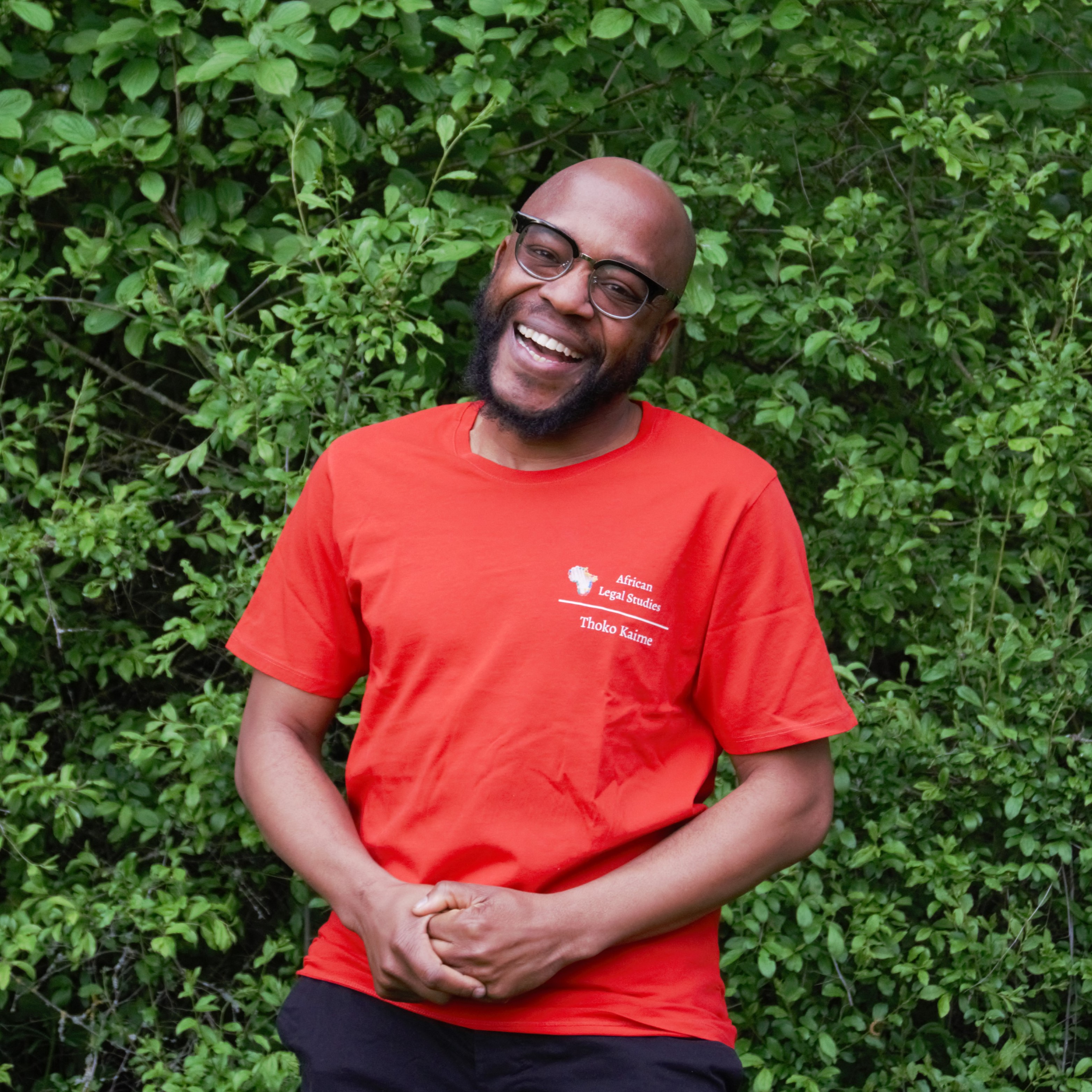
Prof. Dr. Thoko Kaime is Chairholder of African Legal Studies at the University of Bayreuth since 2019. She also serves as Vice Director of the Institute of African Studies (IAS) (2021-2023) and Co-Speaker of the Doctoral College for Intersectionality Studies (2022-2023). Her research focuses on International Human Rights Law , International Environmental Law , and their intersections with children's rights, energy justice, and refugee law. Education: PhD, Law (SOAS University of London, 2007) Master of Laws (LL.M.), Distinction (University of Pretoria, 2001) Bachelor of Laws (LL.B.), Honours (University of Malawi, 2000) Research Interests include cultural legitimacy in international legal frameworks, energy justice, environmental rights for children, and legal challenges in refugee situations. Her publications span children's rights under the African Charter, energy policy for sustainable development, and climate change law, with a focus on African contexts. Scientific Recognition: Fellow of the Higher Education Academy (2012)
Derek Duncan serves as Professor of Italian at the University of St Andrews' School of Modern Languages, specializing in Italian Cultural Studies. Previously holding a professorship at the University of Bristol, he directs the Italian Centre for Contemporary Art and contributes significantly to transnational humanities research. His educational background includes French and Italian studies at Aberdeen University followed by doctoral work at Edinburgh. Duncan's research centers on intersections of sexuality/gender and race/ethnicity in modern Italian culture through queer and critical race theory frameworks, with notable courses including 'Black Italians,' 'Fascist Italy,' and 'Cultures of Migration.' Analysis of his recent publications reveals consistent focus on Mediterranean migration narratives, transnational identity formation, and creative humanities methodologies. His work frequently connects historical events like the Arandora Star sinking with contemporary migration crises, emphasizing transcolonial continuities. Leverhulme Major Research Fellowship (2019-2022) Multiple AHRC-funded projects including Transnationalizing Modern Languages Founding editor of Liverpool University Press series: Transnational Italian Cultures and Transnational Modern Languages Duncan actively supervises research and collaborates with artists like Davide D'Elia on projects such as Tiepido Cool. His work with the Centre for Poetic Innovation demonstrates commitment to bridging academic research and artistic practice, while his global challenges project in Namibia reflects international engagement. Current research examines Mediterranean migration through the lens of the Arandora Star disaster and its contemporary resonances.
Fiori Berhane is an Assistant Professor of Anthropology in the Department of Anthropology at the Dornsife College of Letters, Arts and Sciences, University of Southern California. Her research focuses on African refugees, particularly Eritrean refugee activists in Italy, and their engagement with colonial and post-colonial policies within Central Mediterranean migration contexts. Her educational background includes: Ph.D. in Anthropology from Brown University (2021) M.S. in Education from City College, City University of New York (2013) B.A. in Anthropology and Middle Eastern, South Asian and African Studies from Columbia College, Columbia University (2007) Provost Post-Doctoral Fellow for Faculty Diversity at University of Southern California (2021-2022) As a political and legal anthropologist of migration, Dr. Berhane examines relationships between migrant activism, border infrastructures, and postcolonial racial politics across Eritrea, Libya, and Italy. Her work engages Global Black Studies , Critical Border Studies , and Anthropology of Europe , investigating how Black migrants exercise political agency amid radical exclusion through what she terms "disjunctive memory work" that reworks severed colonial histories. Her recent publications in Cultural Anthropology and Migration and Society reveal consistent thematic patterns: intersectional analyses of Blackness within migration systems, critiques of humanitarian recognition paradoxes, and examinations of non-statist solidarities among Eritrean migrants. These works highlight how refugee politics emerge from encounters with asylum systems, detention infrastructures, and transnational smuggling networks across historical and geographical contexts. Her notable awards include: American Academy at Rome Pre-Doctoral Fellowship in Modern Italian Studies (2019-2020) Fulbright Open Study Award to Italy (2017-2018) Dr. Berhane has secured competitive research funding including a Wenner Gren Foundation grant ($12,956) for "Eritrea, A Diaspora in Two Parts" (2017-2018). As an Assistant Professor, she mentors graduate students in anthropology while developing her book project "Prisoners of Our Dreams: Eritrean Diaspora Politics in 'Red' Italy," which analyzes Eritrean dissident activism through two historical conjunctures: Italy's Communist Party hegemony in the 1970s and contemporary radical-right migration laboratories.
Vienna University of Economics and BusinessAustria
Wogene Berhanu Mena is a teaching and research assistant (prae doc) at the Institute for Gender and Diversity in Organizations at WU Vienna University of Economics and Business. His academic background includes BA/MA degrees in Political Science and International Relations from Addis Ababa University (Ethiopia) and an MA in Intercultural Conflict Management from Alice Salomon University of Applied Sciences Berlin. Current focus on diversity management through ethnic/gender/religious/class intersections Active in refugee integration and conflict management research Recipient of WU SoTL Scholarship and Civil Society Leadership Award His work examines labor control regimes in Ethiopian industrial parks and social class impacts on student interactions , with fieldwork-based publications on Eritrean/Somali refugee communities in Ethiopia. Research trends combine qualitative case studies and theoretical frameworks from organizational sociology, African studies, and migration research. Scientific Awards WU Scholarship for Teaching and Learning (SoTL), 2023 Civil Society Leadership Award, 2019
London School of Economics and Political Science (LSE)United Kingdom
David Motadel is an Associate Professor of International History at the London School of Economics and Political Science (LSE) . He holds a PhD in History from the University of Cambridge , where he was a Gates Scholar . His academic career includes a Research Fellowship at Gonville and Caius College, Cambridge and visiting positions at Harvard , Yale , Oxford , Sciences Po , and the Sorbonne . His research focuses on Modern European History , Global History , and the History of Europe’s Global Entanglements . He has authored influential works such as Islam and Nazi Germany’s War and Revolutionary World: Global Upheaval in the Modern Age , with research spanning topics like Nazi-Muslim relations , anti-colonial movements , and global social transformations . His articles appear in journals like the American Historical Review , Past and Present , and Journal of Global History . He has received numerous accolades, including the Philip Leverhulme Prize (2018) and Walter Laqueur Prize (2014), and is a Fellow of the Royal Historical Society . His teaching includes undergraduate courses on Nazi Germany’s warfare and postgraduate seminars on European empires during WWII , such as European Empires and Global Conflict, 1935-1948 . He supervises PhD students working on themes like British Empire and Islam and Eritrean Foreign Policy .
Chiara Cortinovis is a Researcher at the Department of Civil, Environmental and Mechanical Engineering, University of Trento. Her work focuses on urban planning, ecosystem services, and climate adaptation, integrating Geographic Information Systems (GIS) and Strategic Environmental Assessment (SEA) into sustainable development frameworks. Current research emphasizes nature-based solutions, urban green infrastructure, and spatial databases for territorial planning. Recent publications analyze ecosystem service hotspots, geodesign methodologies, and policy instruments for sustainable peri-urban landscapes. Teaches Introduction to Urban Planning and Ecological Land Planning Specializes in GIS applications, environmental sustainability, and urban-climate resilience
Alessandro Gori is an Associate Professor at the Department of Cross-Cultural and Regional Studies, University of Copenhagen. His research focuses on Islamic literary traditions in the Horn of Africa, classical and modern Arabic literature, Islamic manuscripts, and African cultural heritage. Specializes in Islamic manuscript cultures across Ethiopia, Eritrea, and Yemen Principal Investigator for ERC-funded project Islam in the Horn of Africa (2013-2018) Coordinator in COST Action 18129 on Mediterranean Islamic legacies Research Interests: Gori examines textual connections between Islamic and Christian traditions in the Horn of Africa, with particular emphasis on Qur'anic transmission mechanisms and multi-text manuscript structures. His work bridges historical linguistics, paleography, and interfaith dialogue studies. Publications: Recent works analyze Ethiopian zoological lists in Arabic, spiritual genealogies connecting Yemen and Africa, and manuscript-based knowledge networks across maritime boundaries. His research involves comparative approaches to Islamic legal texts and Sufi mystical traditions. Scientific Contributions: European Research Council Advanced Grant (2013-2018) Extensive publications on Islamic manuscript cultures in Africa Editorial leadership in Africana Ambrosiana series Academic Activities: Gori maintains active engagement through international conferences, manuscript workshops, and visiting research appointments at institutions like École des hautes études en sciences sociales (2025). His network spans Islamic studies, African history, and comparative religious scholarship.
Dr Georgia Cole is a Senior Lecturer at the School of Social and Political Sciences, University of Edinburgh, specialising in refugee and migration studies. Her research explores alternatives to formal asylum pathways, plural geographies of refuge, and displacement dynamics in the Horn of Africa and Gulf States. She leads the Foundations for All project, a blended learning initiative for refugees in Uganda, and collaborates with the Mixed Migration Centre and Refugee Law Project. Cole previously held research fellowships at Cambridge and Oxford, where she completed her DPhil in International Development. Education: DPhil in International Development (University of Oxford). Her recent work focuses on refugee education technology, longitudinal migration analysis, and policy alignment in displacement contexts. Cole’s publications address semiotics in refugee politics, UNHCR funding dynamics, and systemic ambivalence in authoritarian regimes. She teaches courses on qualitative research methods, social work, and refugee studies, currently convening the BSc in Social Work Dissertation Course. Scientific Awards: Chancellor's Fellow Joyce Pearce Junior Research Fellow Book Review Editor for Journal of Refugee Studies She contributes to media outlets like The Guardian and The Conversation , and her research projects include collaborations with the Refugee Law Project, American University of Beirut, and Danish Refugee Council. Cole is accepting PhD students and engages in editorial and consultancy work.
Lisa Anteby-Yemini is an anthropologist and Research Fellow at the CNRS (French National Center for Scientific Research) since 1997. She was previously based at the French Research Center in Jerusalem for four years before joining IDEMEC (now IDEAS - Institute of Mediterranean, European, and Comparative Ethnology) in 2003. Her work is affiliated with Aix-Marseille University and she serves on various academic councils including the IDEAS Council and the Scientific Council of the French Research Center in Jerusalem. Her research focuses on migration, diasporas, and transnationalism, with particular attention to Jewish and non-Jewish migration to Israel, especially Ethiopian Jews and Eritrean and Sudanese asylum seekers. She also conducts significant research on the anthropology of Judaism, gender and religion, and is currently exploring new female religious roles in Islam and Judaism. Her work bridges anthropology, religious studies, and migration studies with a strong emphasis on comparative analysis. Her recent publications reveal a consistent focus on gender dynamics within religious contexts, migration policies in Israel, and the experiences of African asylum seekers. She has developed expertise in comparative religious feminism, examining how women navigate and transform religious traditions in both Judaism and Islam. Her research on Ethiopian Jewish communities in Israel demonstrates deep engagement with identity transformation and cultural adaptation processes. Leader of European project Ramsès 2 (2008-2011) on gender in Judaism and Islam Recipient of A*MIDEX project (2020) on new female religious functions Member of Mediterranean Migration Research Network (MIMED-MMSH) Member of Contemporary Judaisms Axis (GSRL, Université de Picardie) Member of ANR PredicMo research project (2024-2027) Deputy Secretary-General of French Association for Israel Studies (AFEIL) Anteby-Yemini has established herself as a leading scholar in migration studies with a focus on Israel, while simultaneously developing significant expertise in comparative religious feminism. Her interdisciplinary approach combines anthropological fieldwork with theoretical analysis to address complex questions of identity, migration, and religious practice in contemporary societies.