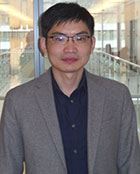
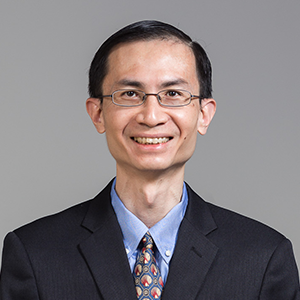
Zhaozheng Yin is an Associate Professor in the Department of Biomedical Informatics and Department of Computer Science at Stony Brook University, affiliated with the College of Engineering and Applied Sciences. His research focuses on biomedical image analysis, computer vision, machine learning, and human-robot collaboration in smart manufacturing contexts. Ph.D. in Computer Science and Engineering from Pennsylvania State University (2009) M.S. in Electrical and Computer Engineering from University of Wisconsin-Madison B.S. in Automation from Tsinghua University Active in advancing microscopy image analysis through novel algorithmic approaches, Dr. Yin's work bridges theoretical computer science with practical applications in healthcare and industrial automation. His research emphasizes: Intelligent human-robot collaboration systems Cyber-physical sensing and augmented reality for manufacturing Medical image segmentation and classification techniques Temporal action localization and counting algorithms His publications demonstrate expertise in domain adaptation, vision-language integration, and graph-based modeling. Grant-funded projects include NSF CAREER support for microscopy analysis and NRI/CPS grants for collaborative robotics research. Best Doctoral Spotlight Award, CVPR 2009 Young Scientist Awards at MICCAI (2010-2015) NSF CAREER Award recipient (2014) Best Paper Awards at CVPR workshop (2015) and IISE (2018)
Teresa Cristina de Freitas Gonçalves is an Associate Professor at the Department of Informatics, School of Sciences and Technology, University of Évora, where she has been employed since 1999. She serves as an integrated researcher at the ALGORITMI research centre and is the Director of the VISTA Lab (Video, Image, Speech and text Analysis Lab), the unit of the ALGORITMI research centre at University of Évora. Her leadership roles include Director of the Master programme in Informatics Engineering and deputy Director of both the Master programme in Artificial Intelligence and Data Science and the Doctoral program in Computer Science. She earned her PhD in Computer Science from University of Évora and a MSc degree in Informatics Engineering from New University of Lisbon. Her academic journey at University of Évora has included significant leadership positions including Head of the Computer Science Department (2011-2015), Director of the Bachelor programme in Informatics Engineering (2016-2021), and Deputy Director roles for various undergraduate and graduate programs. Dr. Gonçalves' research focuses on intelligent systems, particularly Machine Learning approaches, with substantial contributions in evolutionary algorithms, information extraction and retrieval, and supervised learning across multiple data modalities including tabular data, text (in both Portuguese and English), and images (medical and satellite). Her work bridges theoretical advances with practical applications in healthcare, remote sensing, and natural language processing. She has successfully supervised 6 doctoral theses, 19 master theses, and 3 postdocs, and currently mentors 5 doctoral and 6 master students from diverse international backgrounds including Bangladesh, Cabo Verde, Nepal, Philippines, India, Sri Lanka, China, Mongolia, and Portugal. Her publication record includes over 100 scientific articles indexed by Scopus with 640 citations and an h-index of 12, demonstrating significant international impact with 56% of her work involving international collaboration. Her recent research shows a strong trend toward applying advanced machine learning techniques to healthcare applications, information retrieval systems, and remote sensing analysis, with particular emphasis on transformer networks, learning-to-rank methodologies, and multimodal data analysis. Dr. Gonçalves has made substantial contributions to the academic community through her service as a reviewer for over 50 articles in prestigious international journals and conferences, and as chair for major international conferences including IDEAL 2023, PROPOR 2020, SKIMA 2017 and 2018, and CLEF 2016. She serves on the board of APRP (Associação Portuguesa de reconhecimento de Padrões) and as a jury member for APRP prizes for best MSc and PhD theses. Her current research portfolio includes coordination of the Horizon Europe MSCA Staff Exchange HarmonicAI project and local coordination of WP6 in the NewSpace Portugal mobilising agenda. She is also actively involved in numerous other international research initiatives including Interreg VI-B Sudoe SenforFire, PRR CANTE, La Caixa INCOME, Erasmus+ KA220-HED REDINEST, Interreg POCTEP TID4AGRO, and ATTRACT DIH projects. Previously, she led the FCT AI in the Public Administration SNS24.Scout.IA project and coordinated the FEDER R&D NIIAA project. As Director of the VISTA Lab, Dr. Gonçalves leads a dynamic research team focused on video, image, speech, and text analysis. The lab serves as the Évora hub of the ALGORITMI research centre and has established strong international collaborations. Under her leadership, the VISTA Lab has developed innovative approaches in medical image analysis, natural language processing for Portuguese, and satellite image classification, with applications spanning healthcare, environmental monitoring, and public administration.
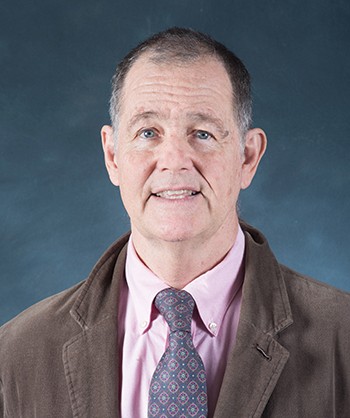
Peter Clote is a Professor of Biology at Boston College, with research focusing on computational biology , bioinformatics , synthetic biology , and RNA molecular design . His work integrates RNA thermodynamics , folding kinetics , and machine learning to develop algorithms for RNA structure prediction and functional design. He holds a Sc.B. from MIT , a Ph.D. from Duke University , and a Doctorat d'Etat from University of Paris VII . Research Interests : Computational biology, synthetic biology, RNA folding algorithms, structural motifs, molecular evolution, and proteomics. Awards : Guggenheim Fellow in Applied Math (2013-2014). Collaborations : Extensive partnerships with institutions including MIT, University of Paris-Sud, CSIC Madrid, and European Bioinformatics Institute. Publication Trends : His work emphasizes RNA structural networks , kinetic modeling , thermodynamic algorithms , and synthetic RNA design , contributing to understanding RNA's role in gene regulation and synthetic biology applications.
Maurice van Keulen is an Associate Professor affiliated with the University of Twente's research institutes including Datamanagement & Biometrics, Digital Society Institute, and TechMed Centre. His multidisciplinary work bridges computer science, healthcare, and social systems. Research Focus: Van Keulen specializes in artificial intelligence applications with emphasis on: Data management (quality, integration, probabilistic databases) Explainable AI and interpretable machine learning models Healthcare informatics (cancer prediction, medical imaging, outcome analysis) Natural language processing and social media analytics His recent work explores dynamic sparse training, meta-learning for data imputation, and ethical AI frameworks. Publication Trends: Recent articles (2023-2025) show strong focus on: Interpretable AI methods in healthcare diagnostics Robust machine learning under data corruption Meta-learning approaches for data preprocessing 3D medical imaging and reconstruction techniques Awards: Beste paper award (2018) for work on probabilistic data conditioning Supervision & Activities: Has supervised 14 research projects and serves on executive boards including EDBT (Extending DataBase Technology) and IFIP WG 2.6. Leads research on ethical dimensions of AI systems.
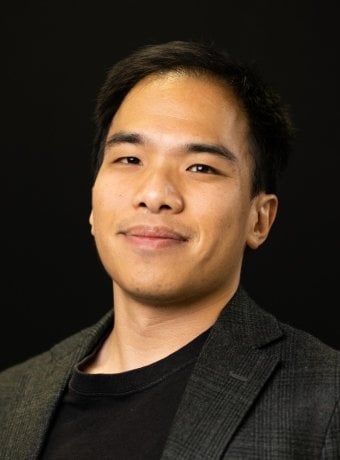
Vinh Nguyen is an Assistant Professor in the Department of Mechanical and Aerospace Engineering at Michigan Technological University, where he directs the Michigan Tech Center for AI and coordinates the NIST-PREP program. His research focuses on advanced manufacturing through Industry 4.0, human-robot-machine interaction, and physics-based/data-driven modeling. He has developed solutions for machining, additive manufacturing, metal forming, and robotic assembly to promote smart and sustainable manufacturing. Prior to joining Michigan Tech in 2022, he was a National Research Council Postdoctoral Fellow at NIST (2020–2022). Dr. Nguyen earned his PhD (2020), MS in Mechanical Engineering (2017), and MS in Electrical & Computer Engineering (2017) from Georgia Institute of Technology. He received dual bachelor’s degrees in Electrical and Mechanical Engineering from Rensselaer Polytechnic Institute (2014). His research portfolio spans Advanced Manufacturing Industry 4.0 and 5.0 Human-Robot Interaction Physics-Based/Data-Driven Modeling Industrial Automation based on his lab’s interdisciplinary focus on human-centric, resilient solutions. His recent publications address trends in Machine Learning for Manufacturing Autonomous Vehicle Sensors Hybrid Additive/Subtractive Manufacturing Augmented/Mixed Reality Interfaces Industrial Robot Diagnostics Material-Specific Machining with keywords spanning Robotics, Data Science, and Industrial Engineering.
Dr. Hemant Tagare is a Professor at Yale School of Medicine with primary appointments in the Radiology & Biomedical Imaging department and secondary appointments in Biomedical Engineering and Statistics . He is affiliated with multiple research centers, including the Bioimaging Sciences , Center for Brain & Mind Health , and Yale Biomedical Imaging Institute . Research Interests Cryogenic Electron Microscopy (Cryo-EM) for protein structure reconstruction MRI/ultrasound image segmentation using machine learning Non-rigid registration and shape theory Mathematical foundations of image analysis Articles Trends : Recent publications focus on cryo-EM particle picking consensus algorithms, T2-weighted MRI standardization, and IVIM perfusion measurement in peripheral artery disease. Earlier works emphasize segmentation techniques, non-rigid registration, and phantom validation. Scientific Awards Best Poster Award (2003) for ultrasound segmentation algorithm Francois Erbsmann Award (1993) for medical image processing National Science Talent Search Scholarship (1977) from India
James Shackleford serves as Associate Professor and Interim Associate Dean for Enrollment Management and Graduate Education in the Department of Electrical and Computer Engineering at Drexel University. His research bridges medical image processing, high performance computing, and emerging neuromorphic architectures with significant contributions to radiation therapy applications. Education: PhD in Electrical Engineering, Drexel University, 2011 MS in Electrical Engineering, Drexel University BS in Electrical Engineering, Drexel University Research Focus: Professor Shackleford's work centers on GPU-accelerated medical image registration (forming the core of the open-source Plastimatch software), real-time tumor motion management for radiation therapy, and digital spiking neuromorphic systems . His research integrates computer vision, machine learning, and embedded systems to solve clinical imaging challenges. Publication Trends: Recent work (2020-2024) reveals dual research trajectories: (1) advancing deformable image registration through CycleGAN-based domain adaptation for CT auto-segmentation in radiation oncology, and (2) pioneering neuromorphic computing with configurable hardware architectures, dataflow-based compilers, and resource-aware neural network mapping. These streams converge on high-performance solutions for medical imaging and efficient neural processing.
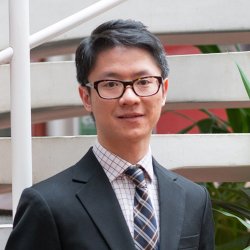
Jason Chen is an Associate Professor in Tourism and Events Management at the University of Surrey, serving as Director of Postgraduate Research in the School of Hospitality and Tourism Management. He holds a PhD in Tourism Management from The Hong Kong Polytechnic University, alongside earlier degrees in Economics (BA, 2004) and Economics and Statistics (MSc, 2007). His research focuses on tourism economics, tourist behavior, demand forecasting, and quantitative methods. Notable projects include 'Understanding the Landscape of Inbound Tourism Measurement' and collaborations with organizations on tourism impact assessments. He has secured grants, including an ESRC grant for the School, and advises on postgraduate research programs. Teaching responsibilities include modules in International Tourism Management, Consumer Behavior, and Researcher Development. His recent publications emphasize spatiotemporal models, crisis management in tourism, and pro-environmental behavior interventions. He has contributed to policy-relevant studies on tourism's economic role and sustainability challenges. Key research themes include destination resilience, electric vehicle adoption, and behavioral nudging for sustainability. His work bridges academic theory with practical applications, supporting industry and policy stakeholders.
Dr. He Xu is a Visiting Professor in the Department of Engineering Science at the University of Oxford, with a focus on Biomaterials , Tissue Engineering , and Biomechanics . She previously worked at Shanghai Normal University, rising from lecturer (2014) to associate professor (2018) and full professor (2024). Education: BEng in Materials Science and Engineering (China University of Geosciences), DPhil in Biomedical Engineering (Shanghai Jiao Tong University, 2014) Her research explores: Biomaterials : Smart hydrogels, piezoelectric systems, and nanogenerators for therapeutic applications. Tissue Engineering : Innovations in intervertebral disc and tendon regeneration. Drug Delivery : Targeted activation, nitric oxide therapy, and bioelectronic systems. Her publications span 2021–2025 , combining Biomaterials , Nanotechnology , and Medical Imaging to address challenges in Diabetes , Cancer , and Cardiovascular Disease . Key collaborations include the 3DMed Interreg 2 Seas Consortium and work on rapid Covid-19 testing .
Krista H. Lagus serves as Professor of Digital Social Science at the University of Helsinki's Faculty of Social Science, where she co-founded and directed the Center for Social Data Science (CSDS) starting in 2019. Her interdisciplinary work bridges computational methods with social science inquiry to analyze complex societal behaviors through digital footprints. Her educational foundation includes an M.Sc. in Computer Science (1996) and Ph.D. in Computer and Information Sciences (2000), both earned at Helsinki University of Technology (now Aalto University). This technical background enabled her transition into pioneering computational social science methodologies. Lagus's research integrates artificial intelligence and social science through signature projects: WEBSOM for visualizing large text corpora via self-organizing maps, Citizen Mindscapes for gauging public opinion through digital communication analysis, and Morfessor , a groundbreaking unsupervised morphological segmentation algorithm widely adopted in natural language processing. Her work demonstrates how machine learning can decode societal patterns from digital traces. Her scientific recognition includes: Academy Research Fellow, Finnish Academy of Sciences (2006-2012) Lagus actively supervises graduate students in AI and digital social science while contributing to academic governance as an Editorial Board Member for PeerJ Computer Science. Her research leadership is anchored in the Center for Social Data Science, which she established to foster cross-disciplinary collaboration between computational and social scientists. The Center for Social Data Science (CSDS) operates as her primary research ecosystem, driving initiatives that apply artificial intelligence to contemporary societal challenges. Through CSDS, Lagus cultivates methodological innovations that transform how social phenomena are observed and interpreted in the digital age.
Andrey Vladimirovich Savchenko is a prominent researcher and educator in computer vision and artificial intelligence at the National Research University Higher School of Economics (HSE) in Nizhny Novgorod. He holds multiple positions including Professor at the Faculty of Informatics, Mathematics, and Computer Science, Leading Researcher at the Faculty of Computer Science and Institute of Artificial Intelligence and Digital Sciences, and Academic Director of the "Artificial Intelligence and Computer Vision" educational program. His educational background includes: 2016: Doctor of Technical Sciences from Nizhny Novgorod State Technical University 2015: Academic title of Associate Professor 2011: Candidate of Technical Sciences 2008: Specialist degree in Applied Mathematics and Computer Science Savchenko's research focuses on computer vision, pattern recognition, and artificial intelligence, with particular emphasis on facial recognition, emotion analysis, and efficient deep learning algorithms. His work bridges theoretical foundations with practical applications, especially in mobile computing environments where computational resources are limited. He has developed innovative methods for making AI systems more efficient without significant loss in accuracy. His recent publications demonstrate a strong trend toward multimodal analysis, combining visual, audio, and textual data for more robust recognition systems. There's a clear emphasis on making AI systems more efficient, especially for mobile devices, and on developing methods that can work with limited computational resources while maintaining high accuracy. His work spans fundamental research on neural network architectures and practical applications in education, healthcare, and human-computer interaction. Among his notable scientific achievements: Gratitude from the Governor of Nizhny Novgorod region (2022) Multiple gratitude awards from HSE (2021-2022) Best Teacher Award (2018-2019) Leaders of IT Industry Award from NEYMARK IT Campus (2023) Academic Success Bonus at HSE (2011-2013) Savchenko has successfully supervised numerous master's students and currently mentors PhD candidates working on cutting-edge topics like large language models for recommendation systems and document analysis. He has secured significant research funding, including projects with Huawei, Sberbank, and the Russian Science Foundation, totaling millions of rubles. His laboratory focuses on developing efficient algorithms for computer vision and multimodal data analysis. He leads the Laboratory of Theoretical Foundations of Artificial Intelligence Models and has established strong industry partnerships that ensure his research has practical impact. His NVIDIA Deep Learning Institute certification demonstrates his commitment to staying current with the latest AI technologies.
Dimitris Maroulis is a Professor at the Department of Informatics and Telecommunications, University of Athens, leading the Real-Time Systems and Image Analysis Lab (RTS-image). With over 20 years of experience in data acquisition and real-time systems, and 15 years in image/signal analysis, he collaborates extensively with Greek and European hospitals in biomedical informatics. He has led 5 R&D projects and authored 150+ papers with 1400+ citations. University of Athens: Professor (2000–present) Meudon Observatory: Research Fellow (3 years) & Long-term Collaborator (10+ years) Research Interests focus on real-time systems , image/signal processing , and biomedical applications . Key areas include automated segmentation of proteomic images, noise removal methods, and stereo image coding. His 15 most recent publications (2003–2012) span 3D imaging , medical image analysis , and biomedical informatics , with sub-fields like autostereoscopic displays, wavelet-based coding, and computer-aided diagnosis. Awards : Best Paper Award (2012: Integral Image Analysis) Projects include European and national R&D initiatives in image analysis and real-time systems. Labs : RTS-image Lab develops methodologies for biomedical and proteomic applications.
Dr. GOH Khim Yong is an Associate Professor and Head of the Department of Information Systems and Analytics at the National University of Singapore (NUS School of Computing). He holds a Ph.D. in Business Administration (University of Chicago), M.Sc. and B.Sc. in Computer & Information Sciences (NUS). His research focuses on digital media marketing, social/mobile platforms, AI pricing strategies, and econometric methods. He advises major firms like Alibaba, Lazada, and Johnson & Johnson across industries such as e-commerce, healthcare, and retailing. Educations: Ph.D., Business Administration, University of Chicago (2005) M.Sc., Computer & Information Sciences, NUS (1998) B.Sc., Computer & Information Sciences, NUS (1997, First-Class Honours) His research explores digital transformation, AI-driven pricing, live-streaming commerce, and consumer behavior in platform ecosystems. Notable projects include studying AI pricing agents' impact on e-commerce sales and analyzing live-streaming dynamics' socio-economic effects. He has published in top journals like Management Science and Information Systems Research , and his work frequently addresses practical industry challenges. Recipient of prestigious awards including the International Conference on Information Systems Best Paper Award (2022) and AIS Distinguished Member (2021). He teaches courses in econometrics and data analytics across NUS and the University of Chicago. His former Ph.D. students hold faculty positions at institutions like Tsinghua University and the Chinese University of Hong Kong (Shenzhen).
Dr. Vladimir Vlassov is a full Professor in Computer Systems at the Division of Software and Computer Systems (SCS) , Department of Computer Science (CS) , School of Electrical Engineering and Computer Science (EECS) , KTH Royal Institute of Technology , Stockholm, Sweden. He leads the AVA project in ALEC2, an AI-powered system for mental health care. He is a member of the Distributed Computing research group (DC@KTH) . Education & Roles: Holds a PhD and is a member of ACM and IEEE. Previously visited MIT (1998) and UMass Amherst (2004). Teaches courses on Data Mining , Distributed Systems , and Concurrent Programming . Research Interests: Focus on scalable AI, Cloud computing, distributed systems, and NLP for mental health. Projects include ExtremeEarth (Copernicus data analytics) and EMJD-DC (distributed computing PhD program). Grants & Projects: Principal Investigator in ALEC2 (adaptive mental health care) and ExtremeEarth (EU H2020). Led EU projects like ENCORE (manycore systems) and PaPP (embedded systems). Labs & Teams: Directs the Distributed Computing group, contributing to Hopsworks (machine learning feature store) and Maggy (hyperparameter optimization).
Dr. Harm Bartholomeus is an Assistant Professor of Remote Sensing at the Department of Geo-information Science and Remote Sensing, Wageningen University & Research. He received his MSc in Physical Geography (2000) and a Geography teaching degree (2001) from Utrecht University. His career includes part-time PhD research (2004–2009) on soil property estimation via spectral measurements and vegetation influence. Since 2009, he has focused on remote sensing techniques like imaging spectroscopy, LiDAR, and UAV-based methods applied to forestry, soil science, and climate studies. In 2012, he co-founded the Wageningen UR Unmanned Aerial Remote Sensing Facility (UARSF), advancing UAV research in environmental studies. His expertise spans Ecology, Geographical Information Systems (GIS), Remote Sensing, Soil Science, Spectroscopy, and 3D analysis. He teaches courses such as Advanced Earth Observation, Remote Sensing and GIS Integration, and MSc thesis supervision in Geo-information Science and Remote Sensing. His work integrates cutting-edge technologies for environmental monitoring, including terrestrial laser scanning and drone-based sensing. Research interests include vegetation-soil interactions, UAV applications in agriculture and ecology, and climate resilience. He collaborates on projects like the UARSF and contributes to global initiatives like the IDEAS-QA4EO network. No scientific awards are explicitly mentioned, but his contributions to UAV and LiDAR methodologies are widely recognized. He advises MSc students on thesis and internship projects in remote sensing and geo-information science.