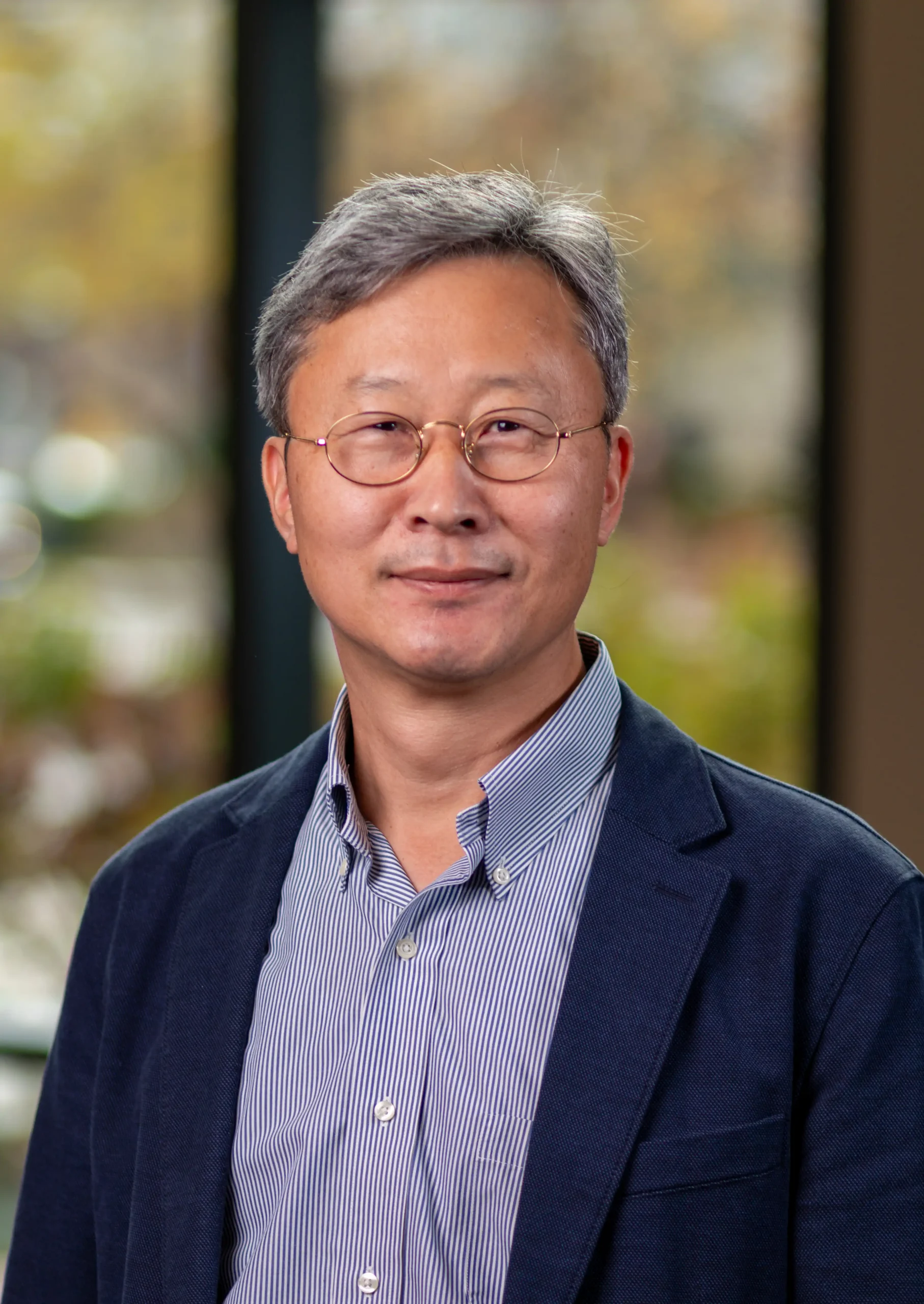
Dr. Hoontaek Seo serves as Associate Professor of Finance and Chair of the Department of Accounting, Economics, and Finance at Niagara University's Holzschuh College of Business Administration, where he has been faculty since fall 2010. His office is located in Bisgrove Hall Room 354F with office hours Tuesdays and Thursdays 10 a.m.-12 p.m. and Wednesdays 1:30-3:30 p.m. He holds a Ph.D. in Finance from Michigan State University (2009), forming the foundation of his academic expertise. Research focuses on empirical corporate finance mechanisms, particularly security offerings dynamics, corporate governance structures, control systems, and divestiture strategies. His work examines how these elements influence corporate financial decision-making and market valuation processes within empirical frameworks.
Rhenish Friedrich Wilhelm University of BonnGermany
Gül Şen is a Senior Lecturer and Privatdozentin at the Institute of Oriental and Asian Studies, University of Bonn, and also serves as a Lecturer at the University of Heidelberg. Her academic work focuses on premodern Ottoman history, historiography, and the dynamics of dependency, particularly in maritime contexts such as galley slavery and war captivity. She is actively involved in major research programs including the DFG-Priority Program 'Transottomanica' and the Bonn Center for Dependency and Slavery Studies. Her research areas include: Premodern Ottoman historiography and narrative strategies Legitimacy of rule and political transitions Maritime unfree labor and galley slavery War captivity and captivity narratives in the 18th century Dependency and asymmetrical power relations in the early modern Mediterranean Her recent publications reveal a strong thematic trend centered on the interplay between narrative construction and social power, particularly in contexts of slavery and captivity. She investigates how historical actors used storytelling to assert legitimacy, cope with crises, and negotiate identity. Her work bridges literary analysis with social history, offering nuanced understandings of agency within systems of dependency. She frequently collaborates with leading scholars like Stephan Conermann and contributes to major edited volumes and series in Ottoman studies. Her scientific awards include: DAAD Award for outstanding academic achievements (2012) Postdoctoral Scholarship from the Fritz Thyssen Foundation (2012–2013) Postdoctoral Fellowships at the Annemarie Schimmel Kolleg (2015–2016, 2018–2019) Postdoctoral Scholarship from the University of Bonn (2019–2020) She has supervised numerous B.A. and M.A. theses at the University of Bonn and Heidelberg and has secured third-party funding, including a DFG project (€192,000) from 2016–2018 and Fritz Thyssen Foundation grants. She is co-editor of the 'Ottoman Studies' and 'Otto Spies Memorial Series' book series, and holds leadership roles in the Society for Turkic, Ottoman and Turkish Studies (GTOT) and the International Association for Ottoman Social and Economic History (IAOSEH). Her academic activities are deeply embedded in collaborative and interdisciplinary research environments. She is affiliated with the Bonn Center for Dependency and Slavery Studies and contributes to the DFG-Priority Program 'Transottomanica,' where she examines mobility dynamics and captivity narratives. Her work is supported by a strong network of international collaborations and editorial engagements.
Vitaly Shmatikov is a professor of computer science at Cornell Tech and the Cornell Ann S. Bowers College of Computing and Information Science . Prior to his current position, he worked at the University of Texas at Austin and SRI International. His research focuses on digital privacy , computer security , and security and privacy issues in machine learning . Education: Ph.D. in Computer Science and M.S. in Engineering Economic Systems from Stanford University Teaching: Offers courses like CS 5435 Security & Privacy Concepts in the Wild Shmatikov's research has received multiple accolades, including the Caspar Bowden PET Award three times and Test-of-Time Awards from leading IEEE and ACM symposiums. His work addresses adversarial system design and practical applications of privacy and security. Scientific Awards: Caspar Bowden PET Award (3x) IEEE Test-of-Time Award ACM Test-of-Time Award ACM/IEEE Symposium on Logic in Computer Science Test-of-Time Award USENIX Security Outstanding Paper Award EMNLP Distinguished Paper Award He actively mentors students and collaborates on cutting-edge security research, with applications in cryptography, malware analysis, and behavioral economics in cybersecurity.
Associate Professor Mark Humphery-Jenner is a distinguished faculty member at the University of New South Wales (UNSW) Business School, specifically within the School of Banking and Finance. With an exceptional academic pedigree including multiple PhDs from prestigious institutions worldwide, he has established himself as a leading researcher at the intersection of finance, law, and corporate governance. Dr. Humphery-Jenner's educational background demonstrates remarkable breadth and depth, featuring PhDs from UNSW, Tilburg University, and Leiden University, along with master's degrees from Columbia University and the University of Washington. His undergraduate achievements include a BCom with First Class Honours and University Medal, and an LLB with First Class Honours, both from UNSW. This multidisciplinary foundation spanning business, law, and finance informs his comprehensive research approach. His research spans corporate finance, venture capital, and law, with particular focus on how legal frameworks shape financial decision-making and corporate behavior. Humphery-Jenner has published extensively in top-tier finance journals including the Journal of Financial Economics, Journal of Financial and Quantitative Analysis, Review of Finance, and Journal of Corporate Finance, as well as leading management journals such as Strategic Management Journal and Journal of International Business Studies. His scholarly contributions address critical issues in executive compensation, securities litigation, corporate governance, and private equity markets. Analysis of his recent publications reveals a sophisticated research trajectory increasingly focused on the relationship between litigation risk and financial reporting practices, corporate governance mechanisms, and investor protection frameworks. His work demonstrates particular attention to Australian regulatory contexts while maintaining a strong international comparative perspective, especially regarding Asian capital markets and cross-border investment. With substantial industry experience including work in investment banking and consulting for hedge funds, Humphery-Jenner brings practical insights to his academic work. He has been teaching in various capacities since 2006 and has served as an assistant professor in finance since 2012, contributing significantly to business education at UNSW. His professional background enhances his ability to bridge theoretical research with real-world financial practice.
Subodha Kumar is the Paul R. Anderson Distinguished Chair Professor of Statistics, Operations, and Data Science at Temple University’s Fox School of Business. He serves as the Founding Director of the Center for Business Analytics and Disruptive Technologies and has a secondary appointment in Information Systems. His roles include Ph.D. Program Concentration Director for Operations and Supply Chain Management. With over 240 publications, he ranks #1 globally in Information Systems Research publishing and holds a robotics patent. His research focuses on AI, blockchain, healthcare analytics, and cybersecurity, with notable contributions to digital transformation and operations management. Awards include the INFORMS ISS Distinguished Fellow and POMS Fellow. He advises major journals like Production and Operations Management and organizes conferences like POMS 2018. Media mentions span NYT, WSJ, and CBS. Education: University of Washington faculty Texas A&M University faculty Research Interests: Dr. Kumar explores AI applications, blockchain in fintech, healthcare system optimization, and supply chain analytics. He investigates cybersecurity’s operational impacts and data mining strategies. His work bridges theory and practice, addressing challenges in digital transformation and platform economies. Publications Trends: Recent work emphasizes digital platforms (e.g., blockchain adoption, telemedicine impact), organizational behavior (real-time feedback systems), and healthcare operations (personalized treatment algorithms). He frequently collaborates internationally, with studies appearing in Management Science, Information Systems Research, and Decision Sciences. Awards & Recognition: Changjiang Scholars Chair (China) ISB Visiting Professorship POMS Executive Editor Grants & Labs: Secured NIH grants for health analytics projects. Leads Temple’s analytics center fostering industry partnerships. Active in editorial roles (e.g., Production and Operations Management Journal Deputy Editor). Teaching: Offers courses in data science, optimization methods, and innovation entrepreneurship at graduate/undergraduate levels.
Erik Gordon is a Clinical Assistant Professor of Entrepreneurial Studies and Area Chair at the Ross School of Business, University of Michigan. He holds degrees in economics and law, with prior roles including Associate Dean and Director of the Graduate Division of Business & Management at Johns Hopkins University, and leadership positions at the University of Florida’s Center for Technology & Science Commercialization Studies. His research focuses on entrepreneurship, venture capital, private equity, corporate governance, and FinTech. He frequently contributes to media outlets like The New York Times, Bloomberg, and Marketplace, offering insights on business trends and corporate strategy. His teaching spans advanced topics in business strategy, with a focus on real-world application and interdisciplinary approaches. Notable engagements include commentary on the pandemic’s impact on education and virtual teaching methodologies. He advises initiatives like the Wolverine Venture Fund and Zell Early-Stage Fund, emphasizing practical experience for students.
Professor Alexander Ilin-Tomich serves as an Acting Professor at the Institute of Egyptology within the Department of History and Cultural Studies at the Free University of Berlin. His academic career spans multiple prestigious institutions including Johannes Gutenberg-Universität Mainz and the Russian Academy of Sciences. His educational background includes: 2022: Habilitation in Egyptology at Johannes Gutenberg-Universität Mainz with thesis "Egyptian name scarabs from the 12th to the 15th Dynasty: Geography and chronology of production" 2007-2011: Doctoral studies at Lomonosov University Moscow, earning "kandidat istoriceskich nauk" (equivalent to PhD) 2002-2007: Undergraduate studies in Ancient History (including Egyptology) at Lomonosov University Moscow Professor Ilin-Tomich specializes in Egyptian stelae, offering tables, scarabs, personal names, prosopography, and administration during the Middle Kingdom and Second Intermediate Period. His research combines philological, archaeological, and historical approaches to examine ancient Egyptian society, with particular focus on administrative structures, material culture, and regional variations. His work on scarab production and distribution has established him as a leading expert in this specialized field. His publication record demonstrates consistent focus on Middle Kingdom administration, with recent expansion into material analysis of Egyptian blue pigment and methodological approaches to studying small archaeological finds. He has developed significant digital resources including the open-access "Personen und Namen des Mittleren Reiches" database. Professor Ilin-Tomich has secured multiple competitive research grants: Fritz Thyssen Foundation project "Ancient Egyptian titles in official and familial contexts, 2055-1352 BC" (2021-2024) Fritz Thyssen Foundation project "Transformation and variability in the corpus of ancient Egyptian personal names 2055-1550 BC" (2017-2021) Alexander von Humboldt Foundation postdoctoral fellowship (2015-2017) Russian Foundation for the Humanities research grant (2013-2015) He actively contributes to the academic community through editorial work, including co-editing the 2023 Festschrift "Schöne Denkmäler sind entstanden. Studien zu Ehren von Ursula Verhoeven," and has established himself as a key researcher in Middle Kingdom studies through his monographs and numerous journal articles.
University of North Carolina at Chapel HillUnited States
Sishuai Gong is an Assistant Professor in the Department of Computer Science at the University of North Carolina at Chapel Hill, focusing on system reliability and security. His research bridges machine learning, software engineering, and computer architecture to address challenges in large-scale software systems. Education : Ph.D. in Computer Science from Purdue University (2025), B.S. in Computer Science from the University of Science and Technology of China (2019). Research Interests : System reliability and security, kernel concurrency testing, verified security modules, and machine learning for systems. He develops interdisciplinary techniques to identify and mitigate functional interference bugs in OS virtualization and latency-sensitive applications. Scientific Awards : Jay Lepreau Best Paper Award at OSDI (2024) Google Cloud Research Innovator (2024) Bilsland Dissertation Fellowship at Purdue (2024) Teaching : Offering COMP 790: Reliable and Secure Systems (Fall 2025) with a focus on empirical studies, static/dynamic analysis, and machine learning for systems. Course grading includes paper presentations (30%), class participation (30%), and research projects (40%).
Alexander I. Platt is the Earl B. Shurtz Research Professor of Law and Director of the Polsinelli Transactional Law Center at the University of Kansas School of Law. He specializes in securities regulation, corporate law, and administrative law, with a focus on regulatory frameworks, corporate governance, and legal ethics. Platt teaches Contracts, Securities Regulation, Business Organizations, and Due Diligence in Business Transactions. Platt earned his B.A. in Philosophy and Political Science (magna cum laude) from Columbia University in 2006 and his J.D. from Yale Law School in 2012, where he served as an Articles Editor on the Yale Law Journal. He clerked for Judges Stephen F. Williams (D.C. Circuit) and Royce C. Lamberth (D.D.C.) and practiced law at Boies Schiller Flexner LLP before joining KU. He is admitted to multiple U.S. courts, including the District of Columbia and New York. His research explores the intersection of regulatory enforcement, corporate transparency, and legal accountability. Notable works include critiques of SEC whistleblower programs and analyses of IPO regulatory frameworks. His 2024 article on mandatory disclosure was recognized as one of the Top 10 Corporate & Securities Law Articles of the year. Platt advocates for balanced legal guardrails to address modern market challenges like unicorn valuations and short seller dynamics. Research Highlights : SEC enforcement mechanisms and transparency Whistleblower incentives and corporate accountability IPO regulatory bureaucracy Corporate governance structures Awards : Top 10 Corporate & Securities Law Articles of 2024 Platt’s work has been cited by SEC Commissioners and featured in major media outlets like the Wall Street Journal and Bloomberg, underscoring the practical impact of his scholarship on legal and regulatory policy.
Kevin Pisciotta is an Assistant Professor of Finance at the University of Kansas School of Business, specializing in empirical corporate finance, initial public offerings (IPOs), and information intermediaries. His work bridges corporate finance theory with real-world market dynamics, focusing on IPO processes, analyst behavior, and economic impacts of social issues like opioid abuse and sports betting. Education: Ph.D. in Business Administration, Pennsylvania State University M.S. in Finance, University of Delaware B.S. in Finance, University of Delaware Research Interests: His research explores how IPO bookbuilding mechanisms influence market outcomes, the role of sell-side analysts in information dissemination, and the macroeconomic consequences of phenomena like opioid abuse and sports gambling. He also investigates labor economics through the lens of corporate innovation and workforce productivity. Publications Trends: Recent work examines the interplay between sports betting and household financial stability (2024), IPO marketing strategies post-JOBS Act reforms (2018), and the spillover effects of opioid abuse on regional innovation ecosystems (2023). His studies frequently employ large-scale datasets to analyze market microstructure and policy impacts. Grants/Advising: No specific grants or advisee names are listed in available materials. Teaching experience includes undergraduate courses in investments, international finance, and corporate financial management. Labs/Teams: No dedicated lab affiliation is mentioned, though collaborations with institutions like Pennsylvania State University and the University of Delaware are implied through his educational background and co-authorships.
Professor Guy Wallis is a Professor and Director of Research at the School of Human Movement and Nutrition Sciences, Faculty of Health, Medicine and Behavioural Sciences at the University of Queensland. He is also an Affiliate of the Centre for Sensorimotor Performance. His work bridges visual neuroscience, computational modeling, and applied human factors research, with significant contributions to understanding visual recognition and visuomotor behavior. Education: Bachelor (Honours) of Engineering in Electrical and Electronic Engineering from Imperial College London PhD in Visual Neuroscience from University of Oxford, UK Prof. Wallis's research program combines computational modeling with behavioral studies, many conducted in computer-controlled virtual environments. His work spans visual neuroscience, object recognition, visuomotor control, and simulator-based training. He has made significant theoretical contributions to understanding how visual recognition is achieved in biological systems and how everyday visuomotor tasks are regulated, challenging existing paradigms and offering new insights. His recent publications reveal a strong focus on virtual reality applications, visual-motor integration challenges, and cross-species cognitive studies. There's a clear trend toward investigating how virtual environments can be optimized for training and assessment, with particular attention to visual perception limitations and how humans adapt to these environments across diverse contexts from surgical training to aviation. Scientific Awards and Recognitions: Elected Fellow of the Queensland Academy of Arts and Sciences (2022) ARC Medical Research Advisory Group (2022-2024) ARC College of Experts (2019-2021) CSIRO CSS Human Research Ethics Committee member (2020-2022) UQ Health and Behavioural Sciences Faculty, HDR Supervision Award (2018) ARC Future Fellowship (2011-2014) ARC QEII Fellowship (2003-2007) UQ Postdoctoral Fellowship (2001-2003) Prof. Wallis has successfully secured funding from major organizations including the Australian Research Council, the Human Frontier Science Program, and the Wellcome Trust. His industry partnerships span diverse sectors such as construction training, mining, healthcare, and aerospace. His research has led to the development of novel training programs for health professionals, impacted the design of man-machine interfaces for mining equipment, and informed the design parameters for pilot training systems. As Director of Research, he oversees the research direction of the School of Human Movement and Nutrition Sciences, fostering interdisciplinary collaborations and supporting early-career researchers through his leadership in the Centre for Sensorimotor Performance.
Sungsoo Ray Hong is an Assistant Professor at George Mason University's Department of Information Sciences and Technology, directing the Alignment Lab (A-lab). His research focuses on bridging human mental models with AI systems through Human-Computer Interaction (HCI) and Computer-Supported Cooperative Work (CSCW). Dr. Hong earned his PhD in Human Centered Design and Engineering at the University of Washington. Research Domains: Human-AI Collaboration, Interactive Data Annotation, Steerable Deep Neural Networks, and AI-Driven Applications Key Grants: NSF Future of Work at the Human-Technology Frontier (2021-2024, $160K) Email: shong31@gmu.edu Hong's research explores how humans interact with machine learning systems to improve decision-making and task productivity. His lab develops tools for collaborative data annotation, interpretable model building, and AI-augmented creativity in professional contexts. Recent work includes applications for neurodiverse workers and comic professionals. The 15 most recent publications show strong focus on Human-AI collaboration (7 articles), interactive systems design (11 articles), and accessibility applications (5 articles). Topics span from explainable AI frameworks to collaborative annotation interfaces and creative industry tools. Dr. Hong maintains active collaborations with KAIST researchers, including Dr. Jaegul Choo and Dr. Juho Kim. His lab offers remote internships and accepts PhD students for summer positions.
Dr. Chunyan Mu serves as a Senior Lecturer in the School of Natural and Computing Sciences at the University of Aberdeen, actively contributing to both academic instruction and cutting-edge research in computing science while currently accepting new PhD students. Her research program centers on Trustworthy AI and Safe Autonomy, with specialized expertise in formal verification of responsibility, accountability, and privacy mechanisms within multi-agent systems. She investigates resilience frameworks for autonomous intelligent systems and develops advanced methodologies for information flow security analysis, bridging theoretical computer science with practical security implementations. Analysis of her publication trajectory (2014-2025) reveals consistent innovation in applying formal methods to security-critical systems. Key thematic developments include probabilistic strategy logic for observability analysis, quantitative verification of opacity properties, and game-theoretic approaches to security verification, demonstrating increasing sophistication in handling multi-agent accountability and system resilience challenges. Dr. Mu currently supervises PhD candidates and offers a fully funded doctoral position focused on formal verification of safety properties in autonomous systems, providing comprehensive financial support including tuition coverage, £20,780 annual stipend, and dedicated research funding for candidates with strong backgrounds in formal methods and artificial intelligence.
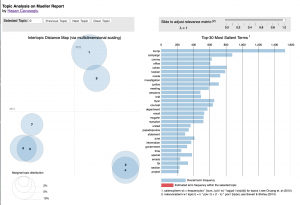
Hasan Cavusoglu is a Professor of Management Information Systems at the Sauder School of Business, University of British Columbia. He holds a Ph.D. in Management Science with a specialization in MIS from the University of Texas at Dallas. His research focuses on IT risks, cybersecurity, governance, and privacy, particularly in the context of online social networks and organizational data protection. Education: Ph.D., Management Science (UT Dallas); M.Sc., Management & Administrative Sciences (UT Dallas) Roles: Associate Editor of Management Information Systems Quarterly (MIS Quarterly) His work addresses challenges in cybersecurity preparedness, data breach management, and regulatory frameworks like GDPR. Cavusoglu has contributed to high-profile discussions on cybersecurity risks and policy, including analyses of the Mueller Report and the LifeLabs data breach. He frequently engages with media, offering expert insights on privacy, data security, and organizational IT governance strategies. Key areas of focus include risk-based security architectures, employee training against social engineering, and the strategic role of cybersecurity in business differentiation. His research has appeared in top-tier journals such as Management Science and Information Systems Research.
Steve Worthington is an Adjunct Professor at Swinburne University of Technology's School of Business, Law and Entrepreneurship in Melbourne, Australia. Previously, he held a Professorship in Marketing at Monash University until 2013. His research focuses on financial services distribution via electronic channels, payment systems regulation, and cross-cultural financial practices. He has contributed extensively to academic journals such as the International Journal of Bank Marketing and practitioner outlets like The Financial Times and ANZ's BlueNotes . His work includes analyses of payment card markets in China and Japan, regulatory interventions in Australia's payment system, and expert testimony on financial services marketing disputes. Worthington's research interests span payment systems innovation, consumer behavior in financial contexts, and the intersection of technology with financial services. Notable contributions include studies on cashless society debates, payment fraud dynamics, and the cultural dimensions influencing financial product adoption. He frequently engages with industry conferences and media, offering insights into emerging trends like digital payment adoption and regulatory challenges in the financial sector. His publications highlight interdisciplinary approaches, blending economic policy analysis with marketing strategy. Key themes include the societal implications of cash decline, fairness perceptions in financial services, and the ethical dimensions of payment technologies. Despite no explicit awards listed, his prolific media engagement and advisory roles reflect recognition of his expertise in payment systems and financial markets.