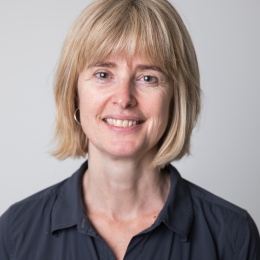
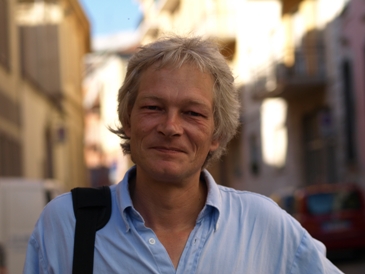
Kenneth Mills is the J. Frederick Hoffman Professor of History at the University of Michigan. His expertise lies in early modern Iberian Atlantic history and colonial Latin America, particularly focusing on religious and cultural transformations in the Viceroyalty of Peru. He holds a D.Phil. from Oxford University (1992) and has been a faculty member since 2015. Mills' research integrates transoceanic perspectives and interdisciplinary approaches, emphasizing the interplay between religious practices and colonial dynamics. Affiliations: Center for Latin American and Caribbean Studies (LACS), Medieval & Early Modern Studies, Latin America & Caribbean Studies Teaching: Undergraduates to doctoral candidates across religious history and cultural studies His scholarship explores themes like missionary narratives (e.g., Diego de Ocaña's travels), Andean Christianities, and the Baroque's transatlantic cultural exchanges. Key works include Idolatry and its Enemies and co-edited Lexikon of the Hispanic Baroque . Recent publications analyze colonial religious exclusion, Inquisition studies, and the intersections of sacred geography with colonial power.
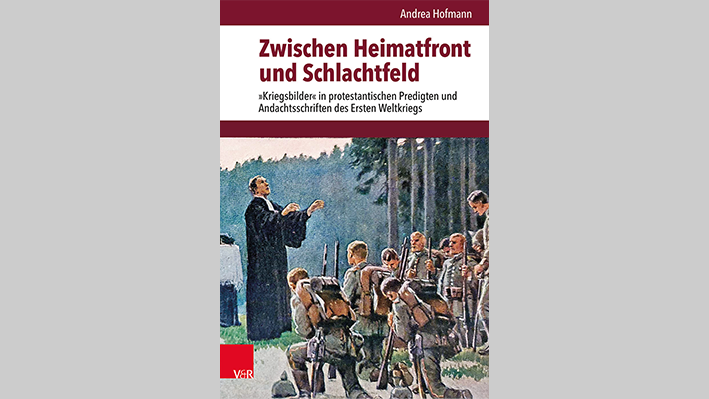
Prof. Dr. Andrea Gabriele Hofmann holds the Professor of Church and Theological History at the Faculty of Theology, University of Basel since January 1, 2024. She studied Protestant theology and musicology in Heidelberg and Salzburg, earned her doctorate in 2013, and completed her habilitation at Johannes Gutenberg University Mainz in 2022 with a thesis on First World War sermons. Her academic journey includes roles at the Leibniz Institute for European History (Mainz), Humboldt University Berlin, and fellowships at the Herzog-August-Bibliothek and Alfried Krupp Institute. Research Interests focus on Women and Piety in the Early Modern Period Reformation and Confessional Age dynamics Theology's role in the First World War Sacralization and Desacralization processes Intersections of Theology and Music . Her recent publications explore Protestant hymnals, war sermons, and biblical reception in early modern women's writings. Scientific Awards include the 2025 University of Basel Teaching Excellence Award, 2022 DHI Paris Essay Prize, and multiple DFG-funded and institutional scholarships. She serves on editorial and advisory boards for theological journals and societies, including the Swiss Theological Society and Luther Society.
Christina L. Fojas , Associate Professor at Marist College's School of Science, specializes in Physical Therapy and Physician Assistant Studies. She directs the Gross Anatomy Laboratory and serves as Interim Director of the Center for Teaching and Learning (CTL). Her academic journey includes a PhD in Anthropology from the University of Tennessee and an MS in Forensic and Biological Anthropology from Mercyhurst University. Education: PhD, Anthropology, University of Tennessee (2016) MS, Forensic and Biological Anthropology, Mercyhurst University (2010) BA, Anthropology, New York University (2006) Dr. Fojas integrates scholarship of teaching and learning with forensic anthropology , focusing on metacognition, anatomy education, and skeletal biology. Her work includes validating learning environment tools and developing 3D anatomical models for pedagogy. Her peer-reviewed publications span anatomy education, skeletal biology, and forensic anthropology. Recurring themes include student learning strategies, forensic age estimation, and bioarchaeological health analysis. She has received multiple grants and awards, including the Wenner-Gren Dissertation Fieldwork Grant and Ford Foundation Dissertation Fellowship. Scientific Awards: 2015: Ford Foundation Dissertation Fellowship, Honorable Mention 2013: Wenner-Gren Fieldwork Grant 2017: Faculty Travel Fund, Marist College 2010: Sister Eustace Taylor Award, Mercyhurst University Multiple travel grants from the William M. Bass Endowment and American Association of Anatomists Dr. Fojas advises graduate students in anatomy and physical therapy, with projects funded by Marist's Strategic Plan. Her lab work includes forensic skeletal analysis and 3D printing innovations. She has contributed to over 20 forensic cases across five states and led training for the FBI's Evidence Response Team.
Alejandro Garcia Aviles is a Professor of Medieval Art at the Universidad de Murcia in Spain, affiliated with the Department of History of Art within the Faculty of Arts and Humanities . His research focuses on medieval visual culture, particularly the intersections of art, magic, and religion in medieval Europe. He holds a PhD from the Universidad de Murcia (1995) with a thesis on medieval astrological miniatures. Research Groups: Visual Studies: Images, Texts, Contexts; Catalogación-Escultura y Arquitectura Key Interests: Iconography, medieval astrology, alchemical imagery, idolatry, and the cultural history of magic. Publications include seminal works on Alfonso X's manuscripts, the role of planetary imagery in medieval politics, and the visual representation of magical practices. His co-authored books explore topics like the profane within sacred art and the power dynamics of medieval images. Recent research highlights include analyzing the Libro de Astromagia and Aurora Consurgens manuscripts, as well as investigating the demonization of idols in Romanesque art. He has contributed to international conferences on medieval Iberian art and co-organized colloquia on transnational medieval artistic exchanges. His work bridges art history, theology, and cultural studies, offering critical insights into how medieval societies conceptualized the sacred, the profane, and the supernatural through visual media.
Dr. Anna Marie Sitz is a Research Fellow at the University of Tübingen's Faculty of Humanities, Department of History. She specializes in Late Antique archaeology and epigraphy in the eastern Mediterranean, with a focus on Anatolia and Cyprus. Current affiliations: Wissenschaftliche Mitarbeiterin (Project Staff), Teilprojektleiterin (Phoenix Survey, Turkey) Research interests: Material text cultures, inscription reuse, reception of antiquity, Byzantine provincial life Her recent work analyzes the spatial dynamics of inscriptions in post-Roman contexts, examining how ancient texts were repurposed in Christian environments. This includes studies on spoliation practices, epigraphic erasures, and the materiality of commemorative traditions. Scientific contributions include a 2023 monograph on pagan inscriptions in Christian viewership, multiple peer-reviewed articles on Late Antique Anatolia, and fieldwork leadership in Labraunda and Phoenix excavations. Her 2024 First Book Award from the Classical Association of the Middle West and South (USA) recognizes her groundbreaking research. Major grants: Dumbarton Oaks (2023), Mary Jaharis Center (2022), American Philosophical Society (2020/21) Academic background: Ph.D. (2012-2017) and M.A. (2010-2012) from University of Pennsylvania; B.A. (2006-2010) from Baylor University. Active fieldwork in Turkey (Labraunda, Alabanda) and Sicily (Philosophiana) complements her epigraphic studies.
Dr Adam Powell serves as a Lecturer in Medical Humanities at Durham University, holding dual affiliations with the Department of Theology and Religion and the Institute for Medical Humanities. His work bridges religious studies, cognitive science, and mental health research to investigate identity formation and wellbeing through spiritual experiences. His research focuses on Medical Humanities , Religion and Spirituality , and Mental Health , examining how individuals process conflict, trauma, and extraordinary perceptual phenomena. With expertise in 19th-century religious movements like Mormonism and Spiritualism, he analyzes voice-hearing experiences through interdisciplinary lenses combining sociology, psychology, and history of religions. Analysis of his 2016-2023 publications reveals a dominant theme: spiritual voice-hearing phenomena across cultural and clinical contexts. His work systematically explores phenomenological taxonomies, cognitive mechanisms, and therapeutic implications of spiritually significant voices, connecting historical theology with contemporary mental health frameworks. Dr Powell supervises postgraduate researchers including Maria Williams on topics spanning ancient 'lived religion' to modern spiritual identity strategies. His research has achieved global recognition through features in Forbes , Slate , BBC Science Focus , and coverage in over 30 countries' media outlets.
Prof. Dr. Jörg Rüpke serves as Vice Director of the Max-Weber-Kolleg (Max Weber Centre for Advanced Cultural and Social Studies) at the University of Erfurt, where he holds the Professorship for Comparative Religious Studies within the Faculty of Philosophy. His academic work focuses on the intersection of religion, urban environments, and historical development, particularly in ancient contexts. Vice Director, Max-Weber-Kolleg Professor of Comparative Religious Studies Member, Research Group 'Religion and Urbanity: Reciprocal Formations' Subproject Leader, SFB 294 'Structural Change of Property' Head, International Graduate School 'Resonant Self-World Relations' Rüpke's research centers on ancient religions, particularly Roman religion, with a distinctive focus on 'lived religion' as an approach that moves beyond traditional institutional frameworks. His work examines how religious practices and experiences manifest in everyday life, particularly within urban environments. He has pioneered research on religious individualization in historical perspective and the complex relationship between religion and urban development throughout history. His methodological approach combines historical, archaeological, and sociological perspectives to understand religious phenomena in their full cultural context. His recent publications reveal a consistent focus on urban religious dynamics, ancient religious practices, and the historical development of religious concepts. Rather than treating religion as a separate institutional sphere, Rüpke examines how religious elements permeate all aspects of social life, particularly in urban settings. His work on 'lived ancient religion' has significantly influenced the field by shifting attention from official cults to individual religious experiences and practices. ERC Grant for 'Lived Ancient Religion: Questioning Cults and polis Religion' (2012-2017) Leadership of the Kolleg-Forschergruppe 'Religiöse Individualisierung in historischer Perspektive' (2008-2018) Significant contributions to understanding Roman religious practices beyond traditional institutional frameworks Development of new methodological approaches for studying historical religious phenomena Rüpke has secured substantial research funding including an ERC grant and leads multiple collaborative research projects. His work with doctoral students and early career researchers is evident through his leadership of the International Graduate School 'Resonant Self-World Relations in Ancient and Modern Socio-Religious Practices.' He has established important research networks both within Germany and internationally, particularly through his work on urban religion and ancient religious practices. As Vice Director of the Max-Weber-Kolleg, Rüpke plays a significant role in shaping interdisciplinary research at the University of Erfurt, fostering collaboration between scholars from diverse fields examining cultural and social phenomena through historical and comparative lenses.
Maria Wendt is a Senior Lecturer and Associate Professor at the Department of Economic History and International Relations, Stockholm University. Her work sits at the intersection of feminist international relations, critical heritage studies, and military history. Current research focuses on gendered military heritagization Lead projects on Cold War memory and Ukraine War security politics Key publications in International Journal of Heritage Studies and Cooperation and Conflict Research spans: Military heritage as security resource Gendered war narratives Emotional politics in security debates Comparative analysis of military rituals Student learning methodology Key article themes include: Military violence framing (2019-2025) Cold War memory temporalities (2021, 2024) Gendered security discourses around Ukraine (2023) Methodological innovations in cross-national analysis (2015-2020) Her work challenges: Depoliticization of military heritage Gender binaries in national memory Emotional manipulation in security politics Methodological nationalism
Erik Andersson is a faculty member at Åbo Akademi University's Faculty of Arts, Psychology, and Theology, specializing in Theology and Study of Religions. His work intersects religious heritage, cultural history, and missionary studies. Education: Teologie kandidat (Theology Bachelor), Legitimerad läkare (Licensed Physician), Doctor of Theology Research focuses on religious heritage transformation, colonial missionary contexts, and biblical interpretation. Key themes include sacralization processes, cultural memory, and interdisciplinary SDG contributions (specifically SDG 11 and 12). Recent publications analyze Axel B. Svensson's 1938-1939 African missions, Nordic church-museum transitions, and medical missionary ethics. Collaborations span religious historians and cultural anthropologists.
Jürgen Strothmann is a lecturer in Ancient History and Medieval History at the Faculty of Humanities, University of Siegen, where he has served since May 2011 in the role of Lecturer for Special Tasks. He holds a habilitation from 2013 and a doctorate from 1996, and his academic career includes research and teaching positions at Ruhr University Bochum, University of Dortmund, University of Paderborn, and archival work at ThyssenKrupp. He is an active scholar in medieval political and cultural history, with a focus on the transition from antiquity to the early Middle Ages. Education: Studied History, Ancient History, and Philosophy at Ruhr University Bochum (1986–1992) Master of Arts (1992) Promotion (PhD), June 27, 1996 Habilitation, July 19, 2013 His research centers on the political reception of antiquity, Carolingian and Merovingian political orders, and the use of numismatic evidence—particularly Merovingian monetary coins—as sources for understanding societal structures in 7th-century Gaul. He investigates how ancient concepts of rule were adapted in medieval contexts and explores the role of civitates in maintaining political continuity after Roman rule. His current focus includes the Alpine region’s cultural and political significance between antiquity and the early Middle Ages. His recent publications reflect a strong interdisciplinary approach, combining historical, numismatic, and philological methods. Themes across his work include sacral kingship, symbolic representation of power, and the function of borders and space in early medieval governance. He has contributed to major reference works such as Brill's New Pauly , and his monograph Emperor and Senate examines Rome's political claims during the Hohenstaufen period. While no scientific awards are explicitly listed, his sustained scholarly output and leadership in DFG-funded projects demonstrate recognition in his field. He has supervised research assistants and contributed to collaborative academic endeavors, though no named students are listed. He has been involved in major editorial and research projects, including the interdisciplinary DFG project on Merovingian coins at the University of Paderborn (2007–2009). He is affiliated with the Research Center for Transnational Cultural History and the Research Center for Regional Cultural History at the University of Siegen. Dr. Strothmann maintains an active research agenda, with several publications in preparation, particularly on numismatic sources and early medieval political structures. His office is located in AR-H 204 at Adolf-Reichwein-Str. 2, Siegen, and he can be reached via email at juergen.strothmann@uni-siegen.de.
Joanna Kulska is a Professor at the University of Opole, affiliated with the Department of Political Science and Administration. Her academic profile demonstrates extensive expertise in political science and international relations, with a particular focus on reconciliation processes, especially Polish-German relations. She maintains an active research profile with 64 publications documented in institutional repositories and major citation databases. Dr. Kulska's research interests span several interconnected domains within political science. She specializes in the intersection of religion and politics, particularly examining the role of religious actors and institutions in international relations. Her work prominently features studies on reconciliation processes, peacebuilding initiatives, and the political dimensions of religious identity. She has made significant contributions to understanding how faith-based actors contribute to conflict resolution and diplomatic efforts, with particular attention to Central and Eastern European contexts and the role of the Catholic Church. Analysis of her recent publications reveals a consistent thematic focus on fraternity as a concept in global politics, the sacralization of politics in contemporary Europe (particularly Hungary and Poland), and religious dimensions of reconciliation processes. Her scholarly output demonstrates a methodological approach that bridges political theory with empirical case studies, particularly examining Polish-German reconciliation and the role of religious actors in peacebuilding. The publications show increasing attention to Pope Francis's "Culture of Encounter" and its implications for international relations theory. Dr. Kulska has accumulated a substantial body of scholarly work with a Web of Science h-index of 3, reflecting impact within her specialized fields. Her publications have achieved a Total Ministerial Score of 1,116, indicating recognition within the Polish academic evaluation system. While specific major awards are not documented in the available information, her research has contributed to important scholarly conversations at the intersection of religion and international relations. As a dedicated academic, Dr. Kulska has contributed to the scholarly community through her extensive publication record. Her work bridges theoretical political science with practical applications in reconciliation processes and religious diplomacy, offering valuable insights for both academic and policy communities. The ministerial score of 1,116 reflects the significance of her contributions to Polish scholarship. Dr. Kulska's research appears to be conducted both independently and through collaborative networks, particularly evident in multi-center publications. Her work connects with international scholarly communities, as indicated by publications in international journals like Religions. The focus on Polish-German reconciliation suggests engagement with historical and contemporary diplomatic efforts in Central Europe.
Paula Androić Gračanin is a researcher at the Doctoral School of Cardinal Stefan Wyszynski University in Warsaw, Poland (UKSW). Her work focuses on the archaeology of insular landscapes in the northeastern Adriatic, particularly the Island of Rab (Croatia), spanning the Iron Age, Roman period, and Late Antiquity. She specializes in landscape evolution, settlement organization, and interdisciplinary methods like geophysical surveys and GIS. Specializes in Adriatic island archaeology Expert in Late Antique and Roman rural settlements Uses geophysics and geoarchaeology Her research emphasizes material culture, including pottery production and iron working, while exploring communication routes and intra-regional interactions. Current projects involve diachronic analysis of settlement patterns and environmental impacts on Roman agrarian systems. Her recent publications (2024–2020) examine fortified settlements, cultural exchange, and geoarchaeological methodologies. Topics include Late Iron Age hillforts, Roman coastal infrastructure, and GIS applications in tracking settlement transformations.
Dr. Steffen Zierholz is an Assistant Professor in the Department of Early Modern Art History at the University of Tübingen's Faculty of Humanities. Previously, he held positions as Assistant Professor at the University of Bern (2016-2018) and Visiting Professor at Ruhr University Bochum (2021). His academic journey includes prestigious fellowships at the Bibliotheca Hertziana in Rome, the Kunsthistorisches Institut in Florence, and a Getty Foundation/American Council of Learned Societies Postdoctoral Fellowship. Ph.D. in History of Art, University of Bern (2016) M.A. in History of Art, University of Tübingen (2010) M.A. in Educational Studies, University of Tübingen (2009) Zierholz's research centers on Jesuit Art, Aesthetics of Existence in Early Modernity, and the material properties of stone surfaces. His work explores how early modern religious practices intersected with artistic production, particularly within Jesuit contexts. He investigates the relationship between spiritual exercises and visual/material culture, examining how surfaces, stones, and architectural spaces functioned as technologies of the self. His monograph 'Räume der Reform. Kunst und Lebenskunst der Jesuiten in Rom, 1580–1700' (2019) established him as a leading scholar in Jesuit art history. His recent publications reveal a consistent focus on Jesuit visual culture, with particular attention to Ignatian spirituality, celestial imagery, and material transformations. Zierholz demonstrates how stone surfaces functioned as alternative aesthetic systems, how copper's material properties shaped religious imagery, and how early modern artists conceptualized heavenly contemplation. His work bridges art history, religious studies, and material culture studies, revealing the complex interplay between visual forms and spiritual practices. Getty Foundation/American Council of Learned Societies Postdoctoral Fellowship in the History of Art ($65,000) Postdoctoral Fellowship at Kunsthistorisches Institut in Florenz, Max Planck Institute Postdoctoral Fellowship at Bibliotheca Hertziana, Max Planck Institute for Art History, Rome UniBE Initiator Grant Zierholz has received significant recognition for his scholarship, including multiple reviews of his monograph in prominent journals such as Renaissance Quarterly and Journal of Jesuit Studies. His research has been supported by major funding bodies including the Swiss National Science Foundation. While specific grant details aren't provided in the text, his fellowship history demonstrates sustained external research support. His academic trajectory shows progression from research assistant to independent fellow to faculty positions at prestigious institutions, reflecting strong scholarly impact in the field of early modern art history.
Krzysztof Komendarek-Tymendorf is an Associate Professor of Viola and Chamber Music at the Stanisław Moniuszko Academy of Music in Gdańsk and the Feliks Nowowiejski Academy of Music in Bydgoszcz. He holds a PhD and habilitation, specializing in viola performance and contemporary music interpretation. His academic career began at age 24 after winning assistant professor competitions. He has performed globally with major orchestras like the National Philharmonic, Gdańsk Baltic Opera, and international festivals including Berliner Philharmonie and Vienna Konzerthaus. He completed postgraduate studies in Culture Management and MBA at Adam Mickiewicz University. Notable awards include the Bronze Medal for Merit to Culture (Gloria Artis), Opus Klassik nomination, and Fryderyk Award recognition. His discography includes acclaimed albums like ReVIOLAtion (NAXOS) and Quantum of Silence (ODRADEK). As an educator, he teaches at three institutions and mentors over 40 students, many of whom hold positions in leading orchestras and music schools. He actively engages in masterclasses across Europe and North America, and leads initiatives like the EURO Chamber Music Festival. His research focuses on Baroque to contemporary viola repertoire, with publications in the Journal of the American Viola Society.
Sandy Alexandre is an Associate Professor at the Massachusetts Institute of Technology (MIT), specializing in African American literature and cultural studies. Her research examines intersections of racial violence, material culture, and visual representation in works spanning from the late 19th century to present-day Black America. She teaches courses such as Introduction to Drama and Studies in Fiction: Toni Morrison . Her scholarship focuses on: Reinterpretations of lynching iconography as property ( The Properties of Violence , 2012) Black curation practices challenging consumer capitalism (forthcoming Up From Chattels ) Digital humanities through projects like The Reading Redux and Muses to My Gears Publications (2017-2020) predominantly analyze Toni Morrison's novels, African American drama, and material culture through lenses of trauma, gender, and historical memory. Earlier works (2002-2011) explore photography, folklore, and playwrights like August Wilson. Awards: Modern Drama Award for Outstanding Article (2009) for her analysis of property in Wilson's The Piano Lesson .