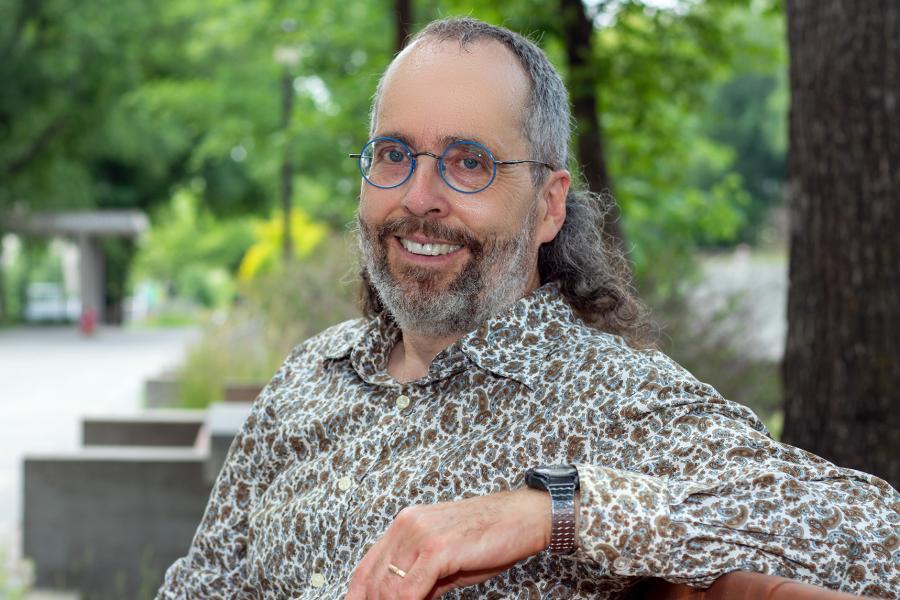
Professor Cathy Shrank, Faculty Director of One University Strategy Delivery at the University of Sheffield's School of English, specializes in early modern literature and culture. Her academic journey began at Cambridge, continued through King's College London and the University of Aberdeen, and now focuses on Renaissance textual culture, political dialogues, and national identity formation. Research: Explores Tudor-era texts, manuscript-print intersections, and scholarly editing projects including Shakespeare's poems and Thomas Wyatt's works. Publications: Co-edited The Oxford Handbook of Tudor Literature and The Oxford Handbook of Thomas More's Utopia , with ongoing projects examining English dialogues. Teaching: Focuses on 1500-1800 literature for undergraduates and Master's students. Her work bridges literary analysis with historical context, examining topics like parliamentary debates, Mary Queen of Scots' portrayal, and early modern insults. Current research includes editorial projects on Renaissance manuscripts and comparative studies of Galenic influence in England and Italy.
Professor Donato Pirovano is a leading scholar of Dante Alighieri, affiliated with the Department of Philosophy and Educational Sciences at the University of Turin . His work focuses on the intersection of Dante’s theological and philosophical ideas with broader intellectual traditions, particularly those of Nicholas of Cusa (Cusanus). Research interests include: Analysis of Dante’s concept of divine transcendence in the Divine Comedy Comparative study of medieval and Renaissance philosophical thought Examination of the relationship between divine grace and human agency Exploration of themes like imago Dei (image of God) and the metaphysics of unity/multiplicity Critique of ecstatic mysticism through Dante’s humanistic lens The event highlighted his lecture on "Dante and the Vision of God," emphasizing the preservation of human singularity against mystical fusion with the divine. Scientific Awards: No specific awards mentioned in the provided text. Advising and Grants: No student advisement or grant details available. Labs/Teams: Collaborates with the Cusanian Society (Società Cusaniana), an academic group dedicated to the study of Nicholas of Cusa and related philosophical traditions, based at the University of Turin.
Paweł Wiktor Ryś is a literary scholar and anthropologist of literature affiliated with the Faculty of Artes Liberales at the University of Warsaw . His academic work focuses on Polish literature from the late 19th and early 20th centuries, particularly the works of Henryk Sienkiewicz , and explores themes such as class and racialization in social divisions , proto-racism in Polish nobility , and the plebeian turn in contemporary Polish culture . Education : PhD in Humanities from Jagiellonian University (2023), MA (2013) and BA (2011) in Polish Philology. His research investigates the historical anthropology of literature , analyzing how biological determinism and social hierarchies are embedded in literary texts. He has contributed to discussions on scientific editing of 19th-century texts and critiques the misuse of racialized language in Polish cultural discourse. Key trends in his 15 most recent articles include critiques of class racism, comparisons between French 19th-century theorists (Gobineau, Le Bon, Vacher de Lapouge) and Polish anthropologists (Olechnowicz, Talko-Hryncewicz, Rutkowski), and examinations of Sarmatian myths versus proto-racist nobility narratives. His work often intersects with critical race theory , 19th-century literature , and social exclusion . He has engaged in public discourse through podcasts and conference presentations , addressing topics such as sarmatian racism and class-based discrimination in Polish history and media.
Andrea Garavaglia is a Full Professor of Musicology at the University of Fribourg's Department of Musicology (Faculty of Letters and Human Sciences). He earned his PhD in Musicology from the University of Pavia (2007) and has held academic positions at conservatories in Venice and Adria, Bocconi University, and the University of Fribourg (as assistant professor and lecturer). His research centers on Baroque music dramaturgy, vocal music-literature relationships, the history of emotions in music, and 17th-century Italian musical patronage. Garavaglia employs interdisciplinary approaches, blending musicology with cultural history, anthropology, and gender studies to analyze opera as a reflection of socio-political contexts. Garavaglia has contributed to significant SNSF-funded projects: Opera Aria (17th-18th centuries) and Temporal Structure of Emotional Experience (2009-2012) Il carteggio Michiel: Musica e mecenatismo nell’Italia del Seicento (2014-2016) His publications explore the evolution of Baroque aria forms, cross-cultural operatic adaptations, and mythological themes like the Amazons as symbols of female power.
Uberto Motta serves as Full Professor of Italian Literature at the University of Fribourg's Faculty of Letters and Human Sciences within the Department of Italian. He previously held leadership roles as Department President of Languages and Literatures and Vice-Dean of the Faculty (2018-2021). His academic appointments span postdoctoral fellowships at the Universities of Lausanne (1996), Leuven (1997), and Harvard (2000-2001); a professorship at the Catholic University of Milan (2003-2011); and visiting positions across Russia, Germany, Hungary, and Switzerland. Educational background: PhD (1996) His core research focuses on: Italian Renaissance Literature Modern and Contemporary Italian Poetry Theory of Literature and Literary Criticism This work examines the evolution of Italian literary expression through historical and theoretical frameworks, with particular emphasis on Renaissance texts and 20th/21st century poetic innovations. His scholarship bridges philological analysis with critical theory across multiple historical periods. He co-directs the academic series "Biblioteca del Rinascimento e del Barocco" and "Biblioteca di studi e testi italiani", and serves on editorial boards including "Testo a fronte", "Rivista di Letteratura Italiana", and "Stilistica e metrica italiana".
Dr. Manuel Mühlbacher is a University Assistant at the Department of Romance Studies within the Faculty of Philological and Cultural Studies at the University of Vienna. His academic profile reflects deep expertise in Romance Philology and Comparative Literature, with particular focus on narrative theory and early modern literature. His recent habilitation at LMU Munich (awarded May 7, 2025) on 'The Wound as a Principle of Narrative: Ariosto, Cervantes, and the Transformation of Adventure in the Early Modern Period' represents a significant scholarly achievement. His research interests span narrative theory, particularly adventure narratives across historical periods; 18th century French philosophy (with emphasis on Condillac and Diderot); memory studies in relation to narrative structure; and the intersection of violence and storytelling. His work demonstrates how literary wounds function as narrative structural elements that both propel and conclude adventure stories. His research output reveals a consistent exploration of how adventure narratives balance contingency and providence, with particular attention to Ariosto's Orlando furioso and Cervantes' Don Quixote . His habilitation thesis argues that wounds in adventure narratives have the 'miraculous property of healing without a trace' and that there is 'an inherent affinity between wounding and narrative.' Venia Legendi for Romance Philology and General and Comparative Literature at LMU Munich (2025) Mühlbacher's teaching portfolio at the University of Vienna includes courses on Italian literary landmarks, French cinema comedy, narrative beginnings in French novels, and the fragmentation of self in Svevo and Pirandello. His academic journey includes a B.A. in Comparative Literature and Literary Theory from LMU Munich (2011), an M.St. in Modern Languages from Oxford University (2013), and a Ph.D. from LMU Munich (2017).
Prof. Dr. Franziska Meier is a Professor of Romance Literature and Comparative Literature at the University of Göttingen, affiliated with the Seminar for Romance Philology. Her research spans Dante Studies, Giovanni Boccaccio, and intersections of autobiography, epistolary culture, and text-image relationships in the Italian Renaissance, alongside comparative analyses of Italian and French fascist-era literature and theoretical frameworks for literary history. She leads the Göttingen Dante Forum and currently supervises doctoral students and postdoctoral researchers, including Sabrina Bastemeyer, Jennifer Helm, Virginie Leclerc, Ximena Ordóñez, Fabian Schmitz, and Manuel Möll. Her active projects include investigations into Dante reception history, Boccaccio's Esposizioni sopra la Comedia , cultural history of (rhetorical) colors, and the Italian Renaissance. Her contact information includes an office at Humboldtallee 19, Göttingen (Room 1.227), with consultation hours arranged via email.
Prof. Dr. Esther Schomacher serves as a Visiting Professor of Italian Literature at the Institute of Romance Studies within the Faculty of Languages and Literature at Humboldt University of Berlin, having assumed the Chair of Italian Literature starting in the winter semester of 2023/2024. Previously, she worked as a research assistant at the Chair of Cultural Theory and Cultural Analysis under Prof. Dr. Jan Söffner at Zeppelin University, Friedrichshafen, and at the Romance Studies Department of Ruhr University Bochum under Prof. Dr. Rudolf Behrens. Her research program centers on the intersection of literature and science—particularly economics—alongside media and writing history, literature and emotion, embodiment studies, gender history, and contemporary Italian political philosophy (Italian Theory). Her current project "L'uomo del Rinascimento?" examines masculinity figurations across Italian Renaissance literature, philosophy, and science. Dr. Schomacher's scholarly approach consistently bridges literary analysis with economic theory, cognitive studies, and gender perspectives, as reflected in her extensive publication record spanning from 2007 to 2024. Her recent publications reveal a sustained engagement with economic metaphors in literature, particularly in the works of Italo Svevo and Carlo Goldoni, while also exploring Renaissance comedy and contemporary Italian Theory's response to crises like the pandemic. This interdisciplinary focus culminates in her monograph "Writing and Money around 1900. Italo Svevo's Media" (2021) and the co-edited volume "The Culture of Money. Implications for Contemporary Economics" (2024), demonstrating how literary texts engage with economic concepts across historical periods. Dr. Schomacher actively contributes to academic discourse through editorial work, including the journal "Aghios: Rivista di studi sveviani" and the volume "Italian Theory" (2020). Her research methodology incorporates enactive criticism and embodied cognition approaches, reflecting her commitment to interdisciplinary scholarship that challenges traditional boundaries between literary studies, economics, and philosophy. She maintains regular consultation hours for students at her office in Dorotheenstraße 65, Room 4.38, Berlin.
Justin Jaron Lewis is an Associate Professor in the Department of Religion within the Faculty of Arts at the University of Manitoba. Originally from Winnipeg where he has resided since 2008, he teaches courses including Religion and Sexuality, Introduction to Judaism, Hebrew Bible, Storytelling and Religion, Atheism, and Kabbalah: Magic, Mythology, Mysticism. He is currently accepting both Master's and PhD students. Education: Maggid (Jewish storytelling and teaching), Jewish Spirit Maggid Training Program, 2010 PhD (Post-Biblical Hebrew Language and Literature), University of Toronto, 2003 Rabbi (Judaism and pastoral training), Academy for Jewish Religion (New York), 2001 Lewis's research centers on storytelling, particularly in Hasidic Judaism, with additional interests in Winnipeg's Jewish history, religion and gender/sexuality, Yeshayahu Leibowitz's religious thought, and Hinduism-Judaism comparative studies. His methodology emphasizes stories themselves rather than theoretical frameworks, subscribing to Wendy Doniger's teaching that stories are best understood through other stories. He approaches his research collaboratively, learning from students and welcoming them as research partners. His publication record demonstrates a consistent focus on Jewish mystical traditions, particularly Hasidic storytelling and Kabbalah. Recent works explore gender transformations in divine imagery, the intersections between rationalist Jewish thought and mystical traditions, and the preservation of Yiddish-language Hasidic narratives. His scholarship often juxtaposes unexpected images and ideas, such as comparing feminine divine imagery in Kabbalah with Indian ritual theatre. As an educator and community member, Lewis maintains strong connections with Winnipeg's Jewish community. His outreach includes storytelling and Jewish teaching in congregations, Jewish events, and interfaith gatherings. He is currently cataloguing and studying the book collection of Chevra Mishnayes synagogue in Winnipeg, once a center of Jewish study. His ongoing Winnipeg Jewish Renewal Oral History Project documents Rabbi Zalman Schachter's years in Winnipeg (1956-1975), interviewing those who knew this founding figure of the Jewish Renewal Movement during his time in the city.
Gregory Hays serves as Associate Professor of Classics in the Department of Classics at the University of Virginia's College of Arts & Sciences, where he has taught since 1999 after prior appointments at the University of Illinois and postdoctoral work at Munich's Thesaurus Linguae Latinae. His research specializes in late and medieval Latin literature with particular focus on the sixth-century North African mythographer Fulgentius, on whom he is preparing an Oxford University Press edition with commentary. Additional research trajectories include Latin palaeography, manuscript studies from 1500 to present, Greek lyric poetry's reception in modernist movements, and the ancient reception of Vergil. Analysis of his fifteen most recent publications reveals consistent scholarly output centered on North African Latin literature, medieval mythography, and textual criticism, with significant contributions to understanding Fulgentius's works and their transmission. His 2002 Modern Library translation of Marcus Aurelius's Meditations remains widely circulated despite his current restriction on related interviews. Hays contributes to academic discourse through editorial roles with the Toronto Medieval Latin Texts series and Journal of Medieval Latin publications, while maintaining active scholarly engagement through his New York Review of Books contributions and Mastodon presence. His teaching portfolio spans undergraduate Roman Civilization surveys to specialized graduate seminars on Latin palaeography, Petronius, Lucan, and first-year seminars examining Edgar Allan Poe and Umberto Eco's Name of the Rose , demonstrating pedagogical versatility across classical and medieval curricula.
Valerio Morucci is a Lecturer of Musicology and Music Appreciation at the University of Nevada, Reno’s School of Music (College of Liberal Arts) since 2015. He teaches undergraduate and graduate courses in musicology and focuses on Renaissance/Baroque music, patronage studies, performance practice, medieval liturgical music, and music in fascist Italy. His research bridges archival scholarship with interdisciplinary cultural history. Education: Ph.D. in Musicology from UC Davis (specializing in early modern music) and a Laurea from the University of Rome. He leads the early music ensemble Musica antica as founder/director. Research highlights include his monograph Baronial Patronage of Music in Early Modern Rome (Routledge, 2018), supported by the American Musicological Society. Current projects explore 17th-century religious reform’s impact on musical patronage and artistic networks across Rome, Florence, and Naples. Publications span peer-reviewed journals like Early Music , Journal of Seventeenth-Century Music , and Acta Musicologica , with articles addressing topics from cardinal Borromeo’s reforms to polychoral practices. His work frequently examines how aristocratic patronage shaped musical culture during periods of religious and political change. Professional service includes editorial contributions to Grove Music Online and conference presentations worldwide. His teaching emphasizes historical context and critical analysis of music’s social roles.
Dr. Paul D. Streufert is a Professor of Literature and Languages and Director of the Honors Program at the University of Texas at Tyler. He holds a Ph.D. in Comparative Literature from Purdue University (2001), an M.A. in Classics (Texas Tech University, 1995), and a B.A. in Classics (Valparaiso University, 1993). His research focuses on Classical literature, its influence on later works, Early Modern and Twentieth-Century drama, and semiotics. He has translated Euripides’ plays for performance, earning an ACTF award for his Trojan Women adaptation. Streufert pioneered UT-Tyler’s Latin program and interdisciplinary Classical Studies minor. He teaches courses ranging from World Literature surveys to specialized topics like 'Ghost Plays.' His scholarly output includes co-editing Early Modern Academic Drama (Ashgate, 2009) and analyzing classical adaptations in modern media. Dr. Streufert’s publications bridge ancient and contemporary texts, emphasizing interdisciplinary approaches. His work on Aeschylus/Shakespeare ghosts and Frank Miller’s 300 demonstrates thematic consistency across eras. He actively engages in collaborative projects like the CCMRS and has mentored students through UT-Tyler’s Latin program and Honors initiatives. Beyond academia, his translations and theatrical collaborations highlight his commitment to making classical works accessible. Awards: ACTF award (2004) for Trojan Women translation Dr. Streufert’s teaching spans foundational and advanced courses, with notable expertise in Homer, Euripides, Shakespeare, and modern playwrights like Sam Shepard. He leads the Classical Studies minor and supports interdisciplinary research through the CCMRS, fostering student engagement with classical traditions.
Brittany Asaro is an Assistant Professor and Director of Italian Studies at the University of San Diego, affiliated with the Department of Languages, Cultures, and Literatures. She holds a Ph.D. in Italian from UCLA, along with an M.A. and B.A. in related fields. Her academic roles include directing Italian Studies programs and serving on executive boards for Renaissance-focused organizations. Dr. Asaro's research examines erotic philosophies, love motifs, and gender representation in medieval/Renaissance Italian literature, particularly focusing on Giovanni Boccaccio's Decameron . She emphasizes interdisciplinary approaches, designing courses on Dante and integrating civic engagement through Renaissance music and art field trips. She co-edited a volume of Carlo Goldoni's comedies and is translating a 16th-century unpublished dialogue. Her teaching philosophy emphasizes making early modern material accessible and relevant to contemporary students. Notable projects include the San Diego Decameron Project exploring public humanities during the pandemic and initiatives like the Teaching Race in Premodern Classes forum. She has also contributed as an interpreter at major events and worked in cultural industries in Italy.
Riccardo Benedettini-Dep is an Associate Professor at the University of Verona , affiliated with the Department of Foreign Languages and Literatures . He specializes in French literature spanning the 16th and 20th centuries, Francophone studies, and comparative literature. His research emphasizes French-Italian literary exchanges during the Renaissance and modern textual analysis. Education: Laurea in Foreign Languages and Literatures (University of Pisa) PhD in Modern Foreign Literatures (French Studies), University of Pisa Qualified for secondary school teaching (TFA) and twice recognized as eligible for Professor of Second Rank Research Interests: Focuses on Renaissance French theater, 20th-century French literary history, autofiction, and Francophone literature in Romandy (Switzerland). Leads the Gruppo di Studio sul Cinquecento francese , exploring 16th-century French literature from a European perspective, particularly Franco-Italian cultural relations. Teaching: Teaches courses on Francophone cultures, French literature, and digital humanities across undergraduate and graduate programs including: Bachelor's in Languages and Cultures for Tourism and International Commerce Master's in Languages, Literatures, and Digital Culture Has instructed modules since 2010, covering French literature from foundational courses to specialized topics like intertextuality in Queneau's work. Administrative Roles: Chair of the Quality Assurance Board for the Bachelor’s in Languages and Cultures for Tourism and International Commerce Member of the Doctoral College for Foreign Literatures, Languages, and Linguistics Member of committees overseeing research, internationalization, and educational policy Projects: Led the Rerum prudentia custos: poésie, religion et science à la Cour de Savoie (2016), investigating Savoyard cultural and intellectual history.
Rosanna Gorris-Dep is a Full Professor at the University of Verona's Department of Foreign Languages and Literatures. She leads the Gruppo di Studio sul Cinquecento Francese and has directed major research projects such as the PRIN-funded 'Corpus del Teatro Francese del 500.' Her work focuses on Renaissance French literature, Italian-French cultural exchanges, and 20th-century exile narratives. She teaches French literature modules across undergraduate and graduate programs. Research Interests: Poetry and Reformation in 16th-century France, French-Italian Renaissance dynamics, and the intersection of poetry and science. Projects: Led PRIN projects (2001–2011), 'Rerum prudentia custos' (2016), and DH initiatives promoting inclusive digital humanities. Teaching: Over 70 modules since 2003, including French Literature III and specialized graduate courses. Labs/Teams: Active in SKENÈ Research Center for Interdisciplinary Theatre Studies and the Digital Arena for Inclusive Humanities (DAIH).