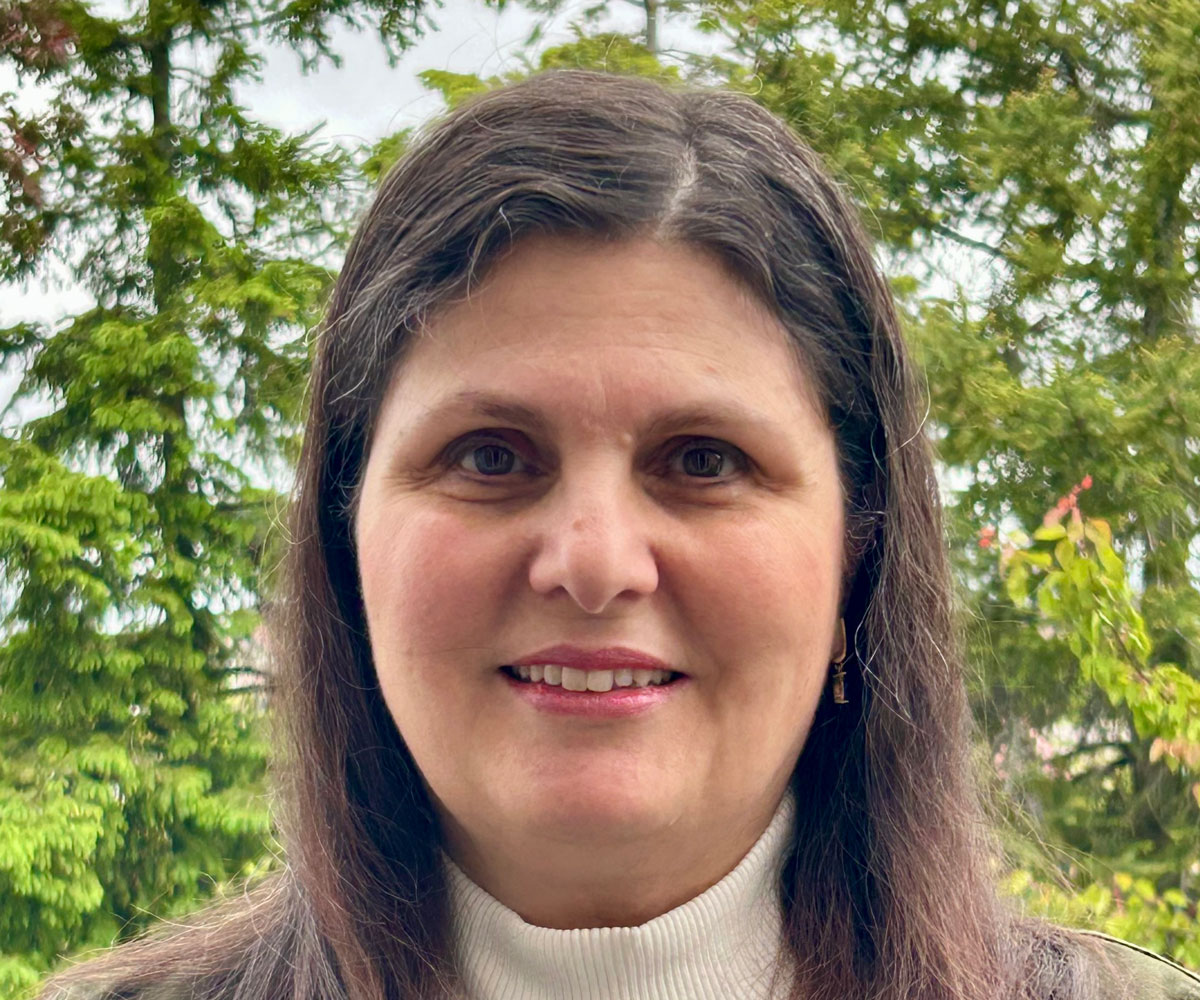
Mulki Al-Sharmani is a Professor at the University of Helsinki, affiliated with the Faculty of Arts and the Department of Cultures (specializing in Middle Eastern Studies). Her research focuses on Islamic feminism, Muslim family law, gender studies, and transnational migrant communities. She examines how religious texts and practices intersect with legal frameworks and social dynamics in contexts like Egypt, Finland, and the Somali diaspora. Her work includes analyzing Islamic legal reform, gender equality in marriage, and the lived experiences of Muslim women. Key publications explore Qur'anic hermeneutics, the role of feminist activism in legal change, and the wellbeing of transnational families. She has contributed to projects like 'Reclaiming Adl and Ihsan in Muslim Marriage' and co-edited volumes on Islamic ethics and family law reform. Research interests: Islamic feminist theory, Middle Eastern legal traditions, transnational family dynamics, and religious praxis. Recent articles highlight themes like Qur'anic ethics of marriage, legal pluralism in Finland, and the political dimensions of Egyptian family law reform. Active in international conferences, including presentations at SOAS University of London, American University in Cairo, and panels on Islamic law and gender at venues like MESA and EASR. Involved in interdisciplinary initiatives such as the Africa Research Forum and Musawah's global network for equality in Muslim family laws.
Mohsen Goudarzi is an Associate Professor of Islamic Studies at Harvard Divinity School (HDS), part of Harvard University. He joined the faculty in 2021 after teaching at the University of Minnesota. His academic background includes a PhD from Harvard University and an MA from Stanford University. His research focuses on the Qur’an and early Islamic history, employing literary, linguistic, comparative, and historical approaches. Key interests include the Qur’an’s role in Late Antique religious developments, Islamic exegetical traditions (tafsīr), and theological frameworks (kalām). His current projects explore the Qur’anic worldview’s interpretation and the significance of Meccan cultic rituals to early Islamic identity. He has received teaching excellence awards, including a certificate from the University of Minnesota’s Center for Educational Innovation and three teaching distinctions from Harvard’s Office of Undergraduate Education. Research outputs include groundbreaking articles on Qur’anic exegesis, cultic practices, and interreligious dynamics. Notable works analyze the Qur’an’s engagement with Abrahamic traditions, ritual practices in Mecca, and the textual history of early Islamic manuscripts. His collaborative work on the Ṣan‘ā’1 codex redefined understandings of early Qur’anic canonization. Teaching spans HDS and Harvard’s Faculty of Arts and Sciences (FAS), covering Islamic studies, Qur’anic studies, and religious history. He advises students in HDS programs and contributes to interdisciplinary initiatives at the intersection of theology, history, and textual criticism.
Noah D. Gardiner serves as Associate Professor and Director of Undergraduate Studies in the Department of Religious Studies at the University of South Carolina's College of Arts and Sciences. His academic journey includes a Ph.D. in Near Eastern Studies from the University of Michigan (2014), followed by positions as Lecturer in Islamic Studies at Michigan and a postdoctoral fellowship at Annemarie Schimmel Kolleg, Rheinische Friedrich-Wilhelms Universität Bonn. Gardiner's scholarly focus centers on Islamic thought and culture with particular emphasis on Sufism, esotericism, occult sciences, and manuscript culture in the 12th-15th century Arabic-speaking Mediterranean. His research explores the 'science of letters and names' (ʿilm al-huruf wa-al-asmaʾ), religious cosmology, and apocalypticism, examining how mystical ideas move between religious margins and centers. His work reveals significant connections between Islamic occult traditions and other esoteric systems like Jewish Kabbalah. His extensive publication record includes the monograph Ibn Khaldūn versus the Occultists at Barqūq's Court (2020), co-editing the special issue Islamicate Occultism: New Perspectives (2017), and numerous articles in leading journals. His current research focuses on the 13th-century Sufi occultist Aḥmad al-Būnī and the broader occult renaissance in 14th-15th century Cairo. Gardiner actively contributes to the scholarly community through his role as co-organizer of the international online workshop 'Islamic Occult Studies on the Rise' and administrator of the scholarly resource site islamicoccult.org, which showcases emerging scholarship in Islamic esotericism. He teaches courses spanning foundational religion studies to specialized topics including Islam, Qur'an, Hadith, Islamic Theology, Sufism, and Religion and the Fantastic.
Walid A. Saleh is a Professor of Islamic Studies at the University of Toronto , holding appointments in both the Near and Middle Eastern Civilizations department and the Department for the Study of Religion . His scholarship focuses on the Qur’an , Quranic exegesis (Tafsir), Islamic apocalyptic literature , and Biblical reception in Islam . PhD from Yale University (2001) Recipient of Mellon New Directions Fellowship (2014) and Konrad Adenauer Fellow (2017) Editor of the Routledge Qur’an Series His research analyzes Quranic chronology , manuscript traditions , and Islamic intellectual history . Recent publications examine periodization in Sunni tafsir, late Ottoman book culture, and the reception of al-Bayḍāwī's Anwar al-tanzīl . Articles explore topics from Quranic death narratives to medieval Islamic cosmology . Key article themes: Quranic identity formation , Islamic manuscript studies , exegetical methodology He has edited critical texts like al-Biqa`i's Bible treatise and serves on editorial boards for the Journal of the American Academy of Religion and Journal of Qur'anic Studies . His teaching includes advanced courses in Arabic paleography and Quranic hermeneutics .
Gabriel Said Reynolds is the Jerome J. Crowley and Rosaleen G. Crowley Professor of Islamic Studies and Theology in the Department of Theology at the University of Notre Dame. He is a leading scholar specializing in Qur'ānic studies with particular expertise in Muslim-Christian relations and the historical context of Islamic scripture. Education Ph.D. in Islamic Studies, Yale University (2003) Professor Reynolds' research explores the intricate relationship between the Qur'ān and Biblical traditions, examining how Qur'ānic narratives reinterpret earlier religious stories within their 7th-century Arabian context. His work demonstrates exceptional literary and historical sensitivity to both Islamic and Christian scriptures, revealing how early Muslim communities engaged with preceding religious traditions while establishing their own theological framework. He approaches Qur'ānic studies with methodological rigor that respects both the academic study of religion and the theological significance of scripture for believers. His publication trajectory shows a consistent deepening of focus on the theological implications of Qur'ānic studies, particularly regarding the nature of God in Islamic scripture as evidenced by his acclaimed work 'Allah: God in the Qur'an.' Reynolds' scholarship bridges academic analysis with contemporary interfaith dialogue, making complex theological concepts accessible to diverse audiences while maintaining scholarly precision. Scientific Awards Field Prize at Yale University for doctoral dissertation on ʿAbd al-Jabbar's Islamic history of Christianity Professor Reynolds serves on the Vatican Dicastery of Inter-Religious Relations with Muslims, reflecting his significant contributions to Catholic-Muslim dialogue. He has directed major collaborative projects including 'The Qurʾān Seminar' (2012-13), which fostered international scholarly exchange. His YouTube channel 'Exploring the Qur'an and the Bible' has become an important platform for academic discussion of scripture, featuring conversations with leading scholars. He has conducted research and delivered lectures across the Middle East including Cairo, Jerusalem, Beirut, Damascus, and Tehran, giving him firsthand engagement with diverse Muslim scholarly traditions. Through his teaching at Notre Dame and public scholarship, Reynolds has created meaningful pathways for understanding between religious traditions while advancing the academic study of Islam with exceptional clarity and nuance.
Mahmoud Abdallah is a Researcher at the Center for Islamic Theology , University of Tübingen, where he has worked since 2020. His career includes roles as Senior Scientist at the University of Innsbruck (2019–2020), Project Leader at ZITh (2016–2019), and Post-Doc researcher (2013–2018). He also held guest lectures at Marmara University (2017) and served as an Arabic Editor (2012–2013). Education : PhD in Comparative Linguistics (2012, Heinrich Heine University Düsseldorf), Master’s summa cum laude (2002, University of Minia), State Examination (1998, Al-Azhar University). Research Interests focus on Islamic Theology , Pastoral Care , Interreligious Dialogue , and Religious Institutions in Pluralistic Societies . He explores hermeneutics in Islamic counseling, Ḥisba in public order, and Umma dynamics in multicultural contexts. Recent Publications (2014–2022) analyze Qur’anic ambiguity , interfaith education , religious responses to crises (e.g., pandemic pastoral care), and Islamic social ethics . Key themes include Abrahamic unity , contextual theology , and religious hermeneutics . Scientific Awards : Master’s degree with summa cum laude distinction (University of Minia, 2002). Advising & Projects : Co-editor of Grundlagen muslimischer Seelsorge (2020) and Theologie des Zusammenlebens series (2017–2022). Led the 2016 project Scientific Education and Social Responsibility (Baden-Württemberg Ministry). Currently working on books about Prophetic Hermeneutics (2023) and Religious Transformations in Crisis (2022). Committee Memberships : Member of the German Islam Conference (since 2018), Scientific Advisory Boards at Zukunftsforum Islam e.V. (since 2017), and the DAVO (German Working Group on the Middle East, since 2009).
Professor Muhammad A S Abdel Haleem, OBE, is the King Fahd Professor of Islamic Studies at SOAS University of London, within the School of Languages, Cultures and Linguistics. He holds a BA from Cairo University and a PhD from the University of Cambridge (Cantab), with additional qualifications including FCIL (London). His research focuses on Quranic language, style, and translations, alongside Islamic family law and Arab society. Key interests include Qur’anic exegesis, comparative religious studies, and the intersection of scripture with contemporary issues like disability ethics and interfaith relations. Professor Haleem has supervised numerous PhD candidates exploring topics such as divine states in Sufism, gender relations in the Quran, and charitable work in multicultural societies. He has authored over 60 works, including translations of the Quran and influential studies on Quranic structure and theology. Awards: Order of the British Empire (OBE) Publications: Over 60 books and articles, including Understanding the Qur'an: Themes and Style and translations of the Quran. His work bridges academic theology with practical ethics, emphasizing contextual interpretation and intercultural dialogue. Current research continues to explore Quranic coherence, legal hermeneutics, and the Quran’s role in modern society.
Aysha Hidayatullah is an Associate Professor in the Department of Theology and Religious Studies at the University of San Francisco's College of Arts & Sciences. She teaches undergraduate courses focusing on gender, sexuality, race, ethics, and religious studies within Islamic traditions. PhD, Religious Studies, University of California, Santa Barbara, 2009 MA, Religious Studies, University of California, Santa Barbara, 2005 BA, Women's Studies and English, Emory University, 2001 Her research explores feminist exegesis of the Qur'an , constructions of gender and sexuality in Islamic traditions , and the body in Islamic ritual practices . She also examines literary representations of Muslims, particularly through feminist theological frameworks and methodologies in Islamic studies. Key themes in her publications include interfaith collaboration , Qur'anic hermeneutics , and gendered narratives in Islamic history . Her work addresses intersections of religion, gender, and race in both historical and contemporary contexts. 2023, Collective Achievement Award, University of San Francisco 2019, James Catiggay Changemaker Award, University of San Francisco 2017, Distinguished Teaching Award, University of San Francisco & Faculty Association 2016-2017, Dean's Scholar Award, College of Arts and Sciences 2015, Ignatian Service Award, University of San Francisco
Nevin Reda serves as Associate Professor of Muslim Studies and Director of the Muslim Studies program (MPS) at Emmanuel College, Victoria University within the University of Toronto. Her academic leadership spans Qur'anic scholarship, Islamic legal theory, and interfaith education, with active teaching in courses such as Surat al-Baqara, Islamic Law, and Bible-Qur'an Dialogue. Her educational foundation includes: BSc, Cairo University (1989) MA, University of Toronto (2003) PhD, University of Toronto (2010) Dr. Reda's research centers on Qur'anic poetics and narrative structure, integrating literary theory, Islamic spiritual care, and Biblical Hebrew studies. She pioneers spiritually integrative approaches to Islamic ethical-legal theory (uṣūl al-fiqh) and develops interreligious pedagogies that bridge theological divides. Her work critically engages gender justice, domestic violence interpretations, and democratic theology through Qur'anic exegesis, emphasizing contextual hermeneutics and feminist perspectives. Analysis of her 15 most recent publications (2024-2010) reveals dominant trends in Qur'anic narrative analysis, gender-ethics intersections in Islamic law, and postcolonial interfaith dialogue frameworks. Key subfields include spiritually integrative readings of verse 4:34, reform of uṣūl al-fiqh for marriage ethics, and comparative Torah-Qur'an exegesis, demonstrating consistent methodological innovation across disciplines. No scientific awards were documented in the source material. As MPS Director, Dr. Reda mentors graduate students in Muslim Studies while advancing curriculum development for intercultural theological education. Her scholarly output—including two monographs and collaborations with institutions like Women and Memory Forum—reflects sustained research leadership, though specific grant details remain unreported. Current projects focus on Qur'anic structure theory and decolonizing epistemologies in religious studies.
Virginia Polytechnic Institute and State UniversityUnited States
Rachel Marion Scott is a Professor and Chair of the Department of Religion and Culture at Virginia Polytechnic Institute and State University, within the College of Liberal Arts and Human Sciences. She is also affiliated with ASPECT (Alliance of Social, Political, Ethical, and Cultural Thought), reflecting her interdisciplinary engagement with political and ethical theory in Islamic contexts. Her research centers on Islamic political thought, modern Islamic law, constitutional development in Muslim-majority countries, and personal status law. She has made significant contributions to understanding the interplay between religion and the nation-state, particularly in Egypt. Her scholarly work explores how religious authority is negotiated in constitutional frameworks, the evolution of Islamic legal thought, and the role of institutions like al-Azhar and the Muslim Brotherhood in shaping political discourse. Professor Scott’s publications reveal a sustained focus on the dynamics of Islamic law in modern governance, with a particular emphasis on Egypt’s constitutional history and legal reforms. Her work bridges religious studies, political science, and legal theory, addressing themes such as secularism, religious pluralism, citizenship, and hermeneutics. The articles show a trajectory from broader studies of political Islam to more nuanced analyses of constitutionalism, gender, and religious authority. She has authored two major monographs: The Challenge of Political Islam: Non-Muslims and the Egyptian State (Stanford University Press, 2010) and Recasting Islamic Law: Religion and the Nation State in Egyptian Constitution Making (Cornell University Press, 2021), both of which are central to contemporary scholarship on Islam and governance. While no formal list of awards is provided in the text, her publications with leading academic presses indicate recognition and scholarly impact in her field. Rachel M. Scott advises graduate students and contributes to academic mentorship through her leadership roles. As department chair, she oversees curriculum development, faculty collaboration, and interdisciplinary initiatives. There is no explicit mention of external grants, but her research output suggests engagement with funded scholarly projects or institutional support. She is affiliated with research initiatives related to Islamic studies, political thought, and constitutional law, particularly through her work with ASPECT and the Department of Religion and Culture. These affiliations support collaborative scholarship on ethics, cultural thought, and the role of religion in public life.
Elizabeth (Lisa) Alexandrin is an Associate Professor in the Department of Religion at the Faculty of Arts, University of Manitoba . Her academic work bridges Islamic Studies , Sufism , and gender theory , with a focus on visual and textual representations of mysticism. Education: PhD in Islamic Studies, McGill University (2006) MA in Anthropology, University of Toronto (1993) BA in Anthropology, Boston University (1993) Research Interests: Islamic intellectual history Sufism Ismaili thought Body histories Visual piety Key Themes in Publications: Apocalyptic narratives in Fāṭimid Ismāʿīlī thought Qurʾanic calligraphy as spiritual practice Symbolism of walāyah (sainthood) in Sufi texts Intersection of dreams and mystical exegesis Awards: SSHRC Insight Development Grant (2018-2022) Explore SSHRC/University of Manitoba grant (2021-2022) SSHRC standard research grant (2011-2012)
Dr. Salwa El-Awa is a Senior Lecturer in Arabic and Islamic Studies at Swansea University's School of Culture and Communication. She previously held positions at the University of Birmingham (2001-2010) and Ain Shams University in Cairo (2010-2015). Her academic roles include teaching Arabic linguistics, Qur’anic studies, and Hadith analysis, alongside supervising PhD students in translation and religious studies. Her research focuses on Qur’anic textuality, discourse markers, and Islamic movements. Key areas include textual coherence in the Qur’an, Arabic linguistic analysis, and the intersection of religion and counter-terrorism policy. Recent projects explore governance strategies engaging moderate Islamic groups to combat jihadism. El-Awa has published extensively on Qur’anic linguistics, including monographs like Textual Relations in the Qur'an (2005) and Al-Wujuh Wa al-Naza’ir (1998). Her work bridges religious studies, linguistics, and security studies, with notable contributions to Yale’s Dictionary of the Qur'an (2024) and interdisciplinary journals like International Journal of Law, Crime and Justice . She has secured £20,000 for the International Qur’anic Text Linguistics Conference (2020-2021) and served as an External Examiner for Westminster University’s Translation program (2019–2022). Her teaching includes advanced translation, healthcare interpreting, and world cinema studies.
Joseph E. Lowry is a Professor of Arabic and Islamic Studies at the University of Pennsylvania's School of Arts & Sciences, affiliated with the Near Eastern Languages and Civilizations (NELC) department. Before completing his PhD, he practiced law in private practice. His research focuses on Islamic law, Arabic literature, and classical Islamic thought. He has authored and edited foundational works on Islamic legal theory, medieval Islamic education, and Arabic literary biography. Editorial roles include Consulting Editor for the Library of Arabic Literature (NYU Press), and membership on editorial boards for Islamic Law and Society and Abbasid Studies . He co-edits the Resources in Arabic and Islamic Studies and IQSA Studies in the Qur’an series. Courses taught span Qur’anic studies, Islamic legal traditions, and classical Arabic texts. Key contributions include translations of al-Shafi‘i’s legal works and critical editions of medieval Islamic texts. His scholarship bridges legal theory, literary analysis, and institutional history, reflecting interdisciplinary engagement with pre-modern Islamic intellectual traditions.
Dr. Tajul Islam is a Lecturer in Islamic Studies at the School of Languages, Cultures and Societies , University of Leeds , where he has been a member of staff since 2009. He also holds a visiting position at the University of the Punjab, Lahore. His academic work bridges traditional Islamic scholarship and critical theory, and he is a co-founder of Critical Muslim Studies (CMS) at Leeds, a framework aimed at centering Muslim subjectivity and decolonizing knowledge production in higher education. Education: BA in Arabic and Islamic Studies — University of Leeds PhD in Arab and Islamic Studies — University of Exeter Dr. Islam’s research encompasses a wide range of fields, including Islamic Theology (kalam) , Qur’anic Studies , Hadith , Islamic Law , Islamic Philosophy , Islamism , Islamophobia , antisemitism , racism , Biblical Studies , and Madrasa studies . His teaching emphasizes inclusivity and sensitivity to contemporary issues of identity and prejudice. His recent publications reflect a strong interdisciplinary trend, combining religious studies with food ethics, digital humanities, and decolonial theory. Key themes include theological minimalism , racial justice in early Islam , Islamic reform , and cross-traditional dialogue . He frequently presents at international conferences and public events on topics such as decolonial imagination, fatwa borrowing, and Muslim identity. Scientific Contributions and Recognition: Co-authored a well-cited article on Hanafi fiqh and British Muslims’ views on cultured meat. Published on Qur’anic phonetics and automatic lexis extraction. Contributed to encyclopedias on Ibn Mujahid and the Bible’s use in Islamophobic discourse. Co-founded the Iqbal Centre for Critical Muslim Studies. Dr. Islam supervises a diverse cohort of PhD students on topics ranging from blasphemy laws and translation studies to female religious authority and Qur’anic coherence. He has successfully guided over 15 doctoral candidates to completion. He is also involved in collaborative research and international academic partnerships, particularly with institutions in Pakistan. Labs and Research Groups: Co-Director, Iqbal Centre for Critical Muslim Studies Member of research groups in Arabic Cultural Studies , Conflict , and History
Hakan Coruh is a Senior Lecturer in Islamic Studies at the Centre for Islamic Studies and Civilisation, Charles Sturt University. He joined the university in 2015 as a lecturer and was promoted to Senior Lecturer in November 2021. Dr. Coruh has served as the Higher Degree Research Coordinator (HDR) for master's and PhD candidates at the center from 2020 to 2022. He is actively involved in multiple academic associations including the Australian Association of Islamic and Muslim Studies (AAIMS), CRES (Centre for Religion, Ethics and Society), and PAPER (Practical and Public Ethics Research group) at Charles Sturt University. Dr. Coruh obtained his Bachelor of Divinity (Ilahiyat) degree from the Faculty of Divinity at Sakarya University. In 2007, he completed his master's degree in Qur'anic exegesis (tafsīr) at the same university. Between 2003 and 2008, he actively participated in academic circles and centers such as İSAM (Centre for Islamic Studies) in Istanbul. In 2015, he successfully earned his PhD from Australian Catholic University, focusing his research on the early modern exegesis of the Qur'an, specifically studying the works of Said Nursi, Muhammad 'Abduh, and Sir Ahmad Khan. Dr. Coruh specializes in Qur'anic exegesis (tafsīr) and actively teaches and writes on subjects related to Qur'anic studies, classical exegesis, and contemporary approaches to the Qur'an and Islam. His academic interests encompass various fields, including classical and modern Qur'anic exegesis, contemporary Islamic thought, Islamic Legal Theories (usul al-fiqh) and Jurisprudence (fiqh), Islamic Ethics (akhlaq), Islamic theology, Medieval Classics (Islamic, Christian, and Jewish), and Comparative Theology. His teaching includes subjects such as Usul al-Tafsir, Usul al-Fiqh, Islamic Family Law and Society, and Islamic Jurisprudence of Five Pillars. Dr. Coruh's research output shows a strong focus on Qur'anic hermeneutics, particularly examining the works of key figures like Bediuzzaman Said Nursi and Muhammad 'Abduh. His publications demonstrate interdisciplinary approaches, connecting Islamic studies with contemporary issues such as religious freedom, science and religion dialogue, bioethics, and interfaith relations. He has made significant contributions to understanding the relationship between traditional Islamic scholarship and modern contexts, especially regarding topics like religious freedom (Qur'an 2:256), the methodology of Qur'anic exegesis, and Islamic responses to contemporary challenges. Dr. Coruh supervises multiple research students, including PhD candidates David Drennan, Sarkhan Gasimov, and Nadia El-Mouelhy (as co-supervisor), as well as Master's students Ikramullah Ahmad and Ensar Cutahija. His supervision topics cover diverse areas such as Islamic legal theory, interfaith relations, and contemporary Islamic thought. Dr. Coruh is actively engaged with various academic communities, serving as a member of the CISAC Research Team, CISAC School Board, Sufi Studies Network at Monash University, and the Comparative Theology Reading Group at Australian Catholic University. In 2023, he held a visiting research fellow position at the Center for Islamic Legislation and Ethics (CILE) at Hamad Bin Khalifa University in Qatar.