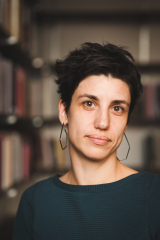
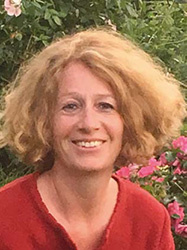
Mulki Al-Sharmani is a Professor at the University of Helsinki, affiliated with the Faculty of Arts and the Department of Cultures (specializing in Middle Eastern Studies). Her research focuses on Islamic feminism, Muslim family law, gender studies, and transnational migrant communities. She examines how religious texts and practices intersect with legal frameworks and social dynamics in contexts like Egypt, Finland, and the Somali diaspora. Her work includes analyzing Islamic legal reform, gender equality in marriage, and the lived experiences of Muslim women. Key publications explore Qur'anic hermeneutics, the role of feminist activism in legal change, and the wellbeing of transnational families. She has contributed to projects like 'Reclaiming Adl and Ihsan in Muslim Marriage' and co-edited volumes on Islamic ethics and family law reform. Research interests: Islamic feminist theory, Middle Eastern legal traditions, transnational family dynamics, and religious praxis. Recent articles highlight themes like Qur'anic ethics of marriage, legal pluralism in Finland, and the political dimensions of Egyptian family law reform. Active in international conferences, including presentations at SOAS University of London, American University in Cairo, and panels on Islamic law and gender at venues like MESA and EASR. Involved in interdisciplinary initiatives such as the Africa Research Forum and Musawah's global network for equality in Muslim family laws.
Katherine Lemons is an Associate Professor in the Department of Anthropology at McGill University's Faculty of Arts. Her research focuses on Islamic family law adjudication in India, examining its implications for understanding Muslim gender and kin relations, secularism, minority politics, and legal pluralism in postcolonial contexts. She has established herself as a leading scholar in the anthropology of law with her groundbreaking work on Muslim divorce practices and their relationship to Indian secularism. Dr. Lemons earned her Ph.D. from the University of California, Berkeley in 2010. Her academic journey has centered on the intersections of religion, law, and gender in South Asian contexts, with particular attention to how religious legal systems operate within secular states. Her research interests span multiple interconnected fields including the anthropology of law, Islamic legal studies, secularism theory, feminist anthropology, and South Asian studies. Lemons approaches these topics through careful ethnographic work in India, particularly examining how Muslim communities navigate family law disputes through non-state Islamic institutions. Her work challenges conventional understandings of the relationship between religious and secular law, arguing that Muslim divorce practices in India represent a critical site for understanding the complexities of secular governance in postcolonial contexts. She investigates how legal pluralism functions in practice, how religious legal authority is established adjacent to secular states, and how gender relations are shaped through these intersecting legal regimes. Dr. Lemons' scholarly output reveals a consistent focus on the tensions between religious legal traditions and modern secular governance, with particular attention to how marginalized communities navigate these complex legal landscapes. Her work demonstrates how legal practices often blur the boundaries between religious and secular domains, challenging simplistic understandings of secularism. She has made significant contributions to understanding how Islamic law functions in non-Muslim majority contexts, both in India and more recently in her research on sharia courts in Ontario. Michelle Z. Rosaldo Prize from the Association for Feminist Anthropology, American Anthropological Association (Honorable Mention) Critical Anthropology Book Prize from the Association for Political and Legal Anthropology (Honourable Mention) South Asian Muslim Studies Association Book Award (Honourable Mention) As an academic mentor, Dr. Lemons advises graduate students working at the intersections of anthropology, law, and religious studies. Her research has been supported by various academic grants that have enabled extensive fieldwork in India and Canada. She is currently developing two major research projects: "Traveling for Justice," which examines transnational dimensions of Islamic legal knowledge, and "Adjacent to the State," an ethnographic study of sharia courts in Ontario. Dr. Lemons is affiliated with several research centers at McGill University that focus on South Asian studies, legal anthropology, and religious studies. Her work connects with broader scholarly communities through collaborations with researchers studying legal pluralism, secularism, and Islamic jurisprudence across multiple national contexts.
University of California, Los AngelesUnited States
Asma Sayeed is an Associate Professor and Program Director of Islamic Studies at UCLA's Near Eastern Languages and Cultures department, part of the UCLA College. She holds a PhD in Near Eastern Studies from Princeton University (2005) and previously served as an Assistant Professor at Lafayette College. Her research focuses on early Muslim social history, Muslim education, gender studies, and hadith transmission by women. She has authored Women and the Transmission of Religious Knowledge in Islam (2013) and contributed to numerous journals and encyclopedias. Sayeed received a Fulbright Fellowship (2010) for archival research on Muslim women’s education in Syria. She teaches courses such as 'Introduction to Islam' and graduate seminars on research methodologies. Her current work examines textual practices in Muslim education across historical contexts. Education: PhD, Near Eastern Studies, Princeton University (2005) MA, History, Binghamton University (1994) BA, Politics, Princeton University (1991) Certificate in Near Eastern Studies, Princeton University (1991) Research Interests: Her scholarship emphasizes women’s roles in religious knowledge transmission, legal and social history intersections, and medieval Muslim educational systems. She frequently addresses how gender shaped access to religious authority and spaces. Awards: Fulbright Fellowship (2010) Teaching and Professional Engagement: Sayeed’s courses cover Quranic studies, Islam in the West, and methodological frameworks in Islamic studies. She actively participates in academic conferences and initiatives, including keynote lectures on women’s intellectual engagement in classical Islam and digital humanities projects mapping women’s educational histories.
Mashood Baderin is a Professor at SOAS University of London's School of Law, where he has established himself as a leading scholar in Islamic law, international law, and human rights. With over 90 publications spanning more than two decades, Professor Baderin has made significant contributions to bridging Islamic legal traditions with contemporary international legal frameworks. Professor Baderin's research interests focus on the intersection of Islamic jurisprudence with modern legal challenges. His work explores how Islamic legal principles can inform contemporary human rights frameworks, international criminal justice systems, and social reform initiatives in Muslim-majority countries. He has extensively examined Islamic legal theory (usul al-fiqh), the application of Islamic law in modern contexts, and the relationship between Islamic law and international legal norms. His most recent publications reveal a continued focus on the universality of international law from Islamic perspectives, the application of Islamic law in African contexts, and the relationship between Islamic principles and human rights frameworks. Professor Baderin has edited significant works including 'Islamic Legal Theory' (2014) and authored the widely recognized 'Islamic Law: A Very Short Introduction' (2021). Professor Baderin has supervised numerous doctoral students working on Islamic law topics with regional focus on Nigeria, Saudi Arabia, and the UAE. His students' research often examines gender issues, legal reform, and the practical application of Islamic law in contemporary settings.
Professor Muhammad A S Abdel Haleem, OBE, is the King Fahd Professor of Islamic Studies at SOAS University of London, within the School of Languages, Cultures and Linguistics. He holds a BA from Cairo University and a PhD from the University of Cambridge (Cantab), with additional qualifications including FCIL (London). His research focuses on Quranic language, style, and translations, alongside Islamic family law and Arab society. Key interests include Qur’anic exegesis, comparative religious studies, and the intersection of scripture with contemporary issues like disability ethics and interfaith relations. Professor Haleem has supervised numerous PhD candidates exploring topics such as divine states in Sufism, gender relations in the Quran, and charitable work in multicultural societies. He has authored over 60 works, including translations of the Quran and influential studies on Quranic structure and theology. Awards: Order of the British Empire (OBE) Publications: Over 60 books and articles, including Understanding the Qur'an: Themes and Style and translations of the Quran. His work bridges academic theology with practical ethics, emphasizing contextual interpretation and intercultural dialogue. Current research continues to explore Quranic coherence, legal hermeneutics, and the Quran’s role in modern society.
Dorothea Schulz is a Professor of Anthropology at the Institute of Ethnology, University of Münster, where she has been serving since March 2018. She is a Principal Investigator in the Cluster of Excellence, a member of the Board of Directors, and a member of the General Assembly. Her research focuses on religious diversity and legal-political unity, with particular emphasis on Muslim communities in Africa. She leads two major projects: B3-48 on 'The role of social identities in interreligious arrangements' and B3-20 on 'Testing and contesting religious pluralism in Uganda'. Professor Schulz received her academic training at several prestigious institutions: 2005: Postdoctoral Degree (Habilitation), Institute of Social and Cultural Anthropology, Freie Universität Berlin 1991-1996: PhD in Anthropology, Yale University 1984-1990: Study of Anthropology, Sociology and Biology, Johannes Gutenberg-Universität Mainz 1990: Master of Arts in Anthropology, Sociology and Biology, Johannes Gutenberg-Universität Mainz 1982-1983: Study of Art History, Université Paul-Valéry, Montpellier Dorothea Schulz's research spans several interconnected fields within anthropology and religious studies. Her work primarily examines the dynamics of religious diversity, particularly focusing on Muslim communities in Africa. She investigates how religious identities intersect with political structures, social formations, and media technologies. Her anthropological approach emphasizes the lived experiences of Muslim communities, especially regarding gender relations, youth aspirations, and educational systems. Professor Schulz has made significant contributions to understanding how religious pluralism functions in contemporary African contexts, with particular attention to Uganda and Mali. Her research on media and religion explores how digital technologies reshape religious practice and authority in African Muslim communities. Professor Schulz has received numerous recognitions for her scholarly work: 2016: Fellow, Center for African Studies – Harvard University 2010: Teaching Prize – Faculty of Arts and Humanities, University of Cologne 2005: Fellow – Society for the Humanities, Cornell University 2000: Visiting Scholar – Department of Anthropology, University of Chicago 1996: Frobenius Society's Research Award – Johann Wolfgang Goethe-Universität, Frankfurt am Main Throughout her career, Professor Schulz has been actively involved in mentoring students and securing research funding for her projects. She has served on numerous academic committees and editorial boards, contributing significantly to the development of her field. Her leadership as Academic Director of the Research and Teaching Unit 'Media, Culture and Society' at the University of Cologne (2008-2018) demonstrates her commitment to interdisciplinary research collaboration. She currently oversees major research projects examining religious pluralism in African contexts, which involve international teams of researchers and provide opportunities for doctoral students. Professor Schulz co-leads research initiatives within the Cluster of Excellence, working with interdisciplinary teams to investigate religious diversity and legal-political unity. Her projects B3-48 and B3-20 bring together scholars from anthropology, religious studies, political science, and African studies to examine how social identities shape interreligious arrangements and how religious pluralism is tested and contested in specific African contexts, particularly Uganda.
Virginia Polytechnic Institute and State UniversityUnited States
Rachel Marion Scott is a Professor and Chair of the Department of Religion and Culture at Virginia Polytechnic Institute and State University, within the College of Liberal Arts and Human Sciences. She is also affiliated with ASPECT (Alliance of Social, Political, Ethical, and Cultural Thought), reflecting her interdisciplinary engagement with political and ethical theory in Islamic contexts. Her research centers on Islamic political thought, modern Islamic law, constitutional development in Muslim-majority countries, and personal status law. She has made significant contributions to understanding the interplay between religion and the nation-state, particularly in Egypt. Her scholarly work explores how religious authority is negotiated in constitutional frameworks, the evolution of Islamic legal thought, and the role of institutions like al-Azhar and the Muslim Brotherhood in shaping political discourse. Professor Scott’s publications reveal a sustained focus on the dynamics of Islamic law in modern governance, with a particular emphasis on Egypt’s constitutional history and legal reforms. Her work bridges religious studies, political science, and legal theory, addressing themes such as secularism, religious pluralism, citizenship, and hermeneutics. The articles show a trajectory from broader studies of political Islam to more nuanced analyses of constitutionalism, gender, and religious authority. She has authored two major monographs: The Challenge of Political Islam: Non-Muslims and the Egyptian State (Stanford University Press, 2010) and Recasting Islamic Law: Religion and the Nation State in Egyptian Constitution Making (Cornell University Press, 2021), both of which are central to contemporary scholarship on Islam and governance. While no formal list of awards is provided in the text, her publications with leading academic presses indicate recognition and scholarly impact in her field. Rachel M. Scott advises graduate students and contributes to academic mentorship through her leadership roles. As department chair, she oversees curriculum development, faculty collaboration, and interdisciplinary initiatives. There is no explicit mention of external grants, but her research output suggests engagement with funded scholarly projects or institutional support. She is affiliated with research initiatives related to Islamic studies, political thought, and constitutional law, particularly through her work with ASPECT and the Department of Religion and Culture. These affiliations support collaborative scholarship on ethics, cultural thought, and the role of religion in public life.
Qudsia Mirza is a Senior Lecturer in Law at the University of East London (UEL), affiliated with the Department of Law & Criminology in the Royal Docks School of Business and Law. A qualified solicitor, she has extensive academic experience across the UK and US, including roles at Birkbeck, University of London, Albany Law School (New York), and the University of Cincinnati. Her research focuses on Islamic Law with a particular emphasis on feminist/reformist perspectives, diasporic legal cultures, and human rights intersections. Research interests include Islamic Law and Gender, Islamic Feminism, Legal Pluralism, and Human Rights. Current projects examine the impact of religious and legal frameworks in Pakistan and globally, co-directed with Southern Methodist University. She has held prestigious visiting positions at Harvard Law School, UC Berkeley, and Spain's Onati Institute. Publications span topics like intersectionality in Muslim labor markets, human rights cinema, and feminist exegesis of religious texts. She has received two British Academy Research Grants and holds editorial roles at Social and Legal Studies and Muslim World Journal of Human Rights . Active in professional governance, she serves on Liberty's Executive Committee and advises organizations like the Joint Council for the Welfare of Immigrants and the Contemporary Arab and Muslim Cultural Studies Institute.
Chitra Raghavan is a tenured full professor and clinical psychologist at John Jay College of Criminal Justice, CUNY. She serves as Professor of Psychology, Director of the Forensic Mental Health Counseling Program, and Coordinator of Victimology Studies in Forensic Psychology. Her expertise spans trauma and abuse, human trafficking, intimate partner violence, and forensic evaluations. She holds a Ph.D. in Community and Clinical Psychology from the University of Illinois (1998) and a B.A. from Smith College (1992). Education: 2000: Postdoctoral Fellowship, Yale University School of Medicine 1998: Ph.D., University of Illinois at Urbana-Champaign 1995: M.A., University of Illinois at Urbana-Champaign 1992: B.A., Smith College (Magna Cum Laude) 1990–1991: Université Paris V (Smith Junior Year Abroad) Research Interests: Coercive control, sex trafficking, trauma bonding, multicultural assessment, and integrating Eastern psychological principles into forensic practice. She has authored over 50 articles and two books on gender justice, domestic violence, and self-determination in Muslim communities. Media and Awards: Named “New York’s New Abolitionists” (2014) by the New York State Anti-Trafficking Coalition Featured in The New York Times , MSNBC, and podcasts like Prevention is Now and Schein On . Teaching and Outreach: Teaches courses across BA, MA, and PhD programs in forensic psychology, trauma, and gender studies. Leads study abroad programs in Bali (cultural self-study) and Morocco (gender and feminism in non-Western contexts). Collaborates with Dr. Jennifer Pipitone on pedagogy and global psychology education. Labs/Teams: Active in research partnerships and case law contributions, including shaping New York State rulings through expert testimony (e.g., 2018 case law).
University of California, Los AngelesUnited States
Carol Bakhos is a Professor at the University of California, Los Angeles (UCLA), affiliated with the Departments of Jewish Studies and Near Eastern Languages and Cultures under the College of Letters and Science. Her work bridges Scriptural Interpretation, Ancient Judaism, and Comparative Religions (Judaism, Christianity, and Islam). Education: Ph.D. in Talmud and Rabbinics (Jewish Theological Seminary, 2000); MTS in Theology, Scripture and Interpretation (Harvard, 1992); B.A. in English Literature and Philosophy (Boston College, 1988). Her research explores intertextual connections between Jewish, Christian, and Islamic scriptures, with a focus on Midrashic literature, Rabbinic texts, and Quranic exegesis. She investigates topics like the transmission of apocryphal works across religious boundaries, the portrayal of biblical figures (e.g., Abraham, Ishmael, Esau) in Abrahamic traditions, and the intersection of orality, writing, and animal ethics in ancient contexts. Carol Bakhos' publications reveal a scholarly emphasis on Abrahamic comparative studies , narrative migration , and methodological approaches to Midrash. Her recent peer-reviewed articles (2006–2017) span disciplines including Religious Studies, Literary Criticism, and Ancient History, with subfields in Quranic Interpretation, Rabbinic Humor, and Intertextual Ethics. She has contributed extensively to edited volumes, encyclopedias, and book reviews, while teaching courses on Judaism, Abraham and Ishmael in comparative perspectives, and Religion and Critical Thought at both undergraduate and graduate levels.
Hakan Coruh is a Senior Lecturer in Islamic Studies at the Centre for Islamic Studies and Civilisation, Charles Sturt University. He joined the university in 2015 as a lecturer and was promoted to Senior Lecturer in November 2021. Dr. Coruh has served as the Higher Degree Research Coordinator (HDR) for master's and PhD candidates at the center from 2020 to 2022. He is actively involved in multiple academic associations including the Australian Association of Islamic and Muslim Studies (AAIMS), CRES (Centre for Religion, Ethics and Society), and PAPER (Practical and Public Ethics Research group) at Charles Sturt University. Dr. Coruh obtained his Bachelor of Divinity (Ilahiyat) degree from the Faculty of Divinity at Sakarya University. In 2007, he completed his master's degree in Qur'anic exegesis (tafsīr) at the same university. Between 2003 and 2008, he actively participated in academic circles and centers such as İSAM (Centre for Islamic Studies) in Istanbul. In 2015, he successfully earned his PhD from Australian Catholic University, focusing his research on the early modern exegesis of the Qur'an, specifically studying the works of Said Nursi, Muhammad 'Abduh, and Sir Ahmad Khan. Dr. Coruh specializes in Qur'anic exegesis (tafsīr) and actively teaches and writes on subjects related to Qur'anic studies, classical exegesis, and contemporary approaches to the Qur'an and Islam. His academic interests encompass various fields, including classical and modern Qur'anic exegesis, contemporary Islamic thought, Islamic Legal Theories (usul al-fiqh) and Jurisprudence (fiqh), Islamic Ethics (akhlaq), Islamic theology, Medieval Classics (Islamic, Christian, and Jewish), and Comparative Theology. His teaching includes subjects such as Usul al-Tafsir, Usul al-Fiqh, Islamic Family Law and Society, and Islamic Jurisprudence of Five Pillars. Dr. Coruh's research output shows a strong focus on Qur'anic hermeneutics, particularly examining the works of key figures like Bediuzzaman Said Nursi and Muhammad 'Abduh. His publications demonstrate interdisciplinary approaches, connecting Islamic studies with contemporary issues such as religious freedom, science and religion dialogue, bioethics, and interfaith relations. He has made significant contributions to understanding the relationship between traditional Islamic scholarship and modern contexts, especially regarding topics like religious freedom (Qur'an 2:256), the methodology of Qur'anic exegesis, and Islamic responses to contemporary challenges. Dr. Coruh supervises multiple research students, including PhD candidates David Drennan, Sarkhan Gasimov, and Nadia El-Mouelhy (as co-supervisor), as well as Master's students Ikramullah Ahmad and Ensar Cutahija. His supervision topics cover diverse areas such as Islamic legal theory, interfaith relations, and contemporary Islamic thought. Dr. Coruh is actively engaged with various academic communities, serving as a member of the CISAC Research Team, CISAC School Board, Sufi Studies Network at Monash University, and the Comparative Theology Reading Group at Australian Catholic University. In 2023, he held a visiting research fellow position at the Center for Islamic Legislation and Ethics (CILE) at Hamad Bin Khalifa University in Qatar.
Prof. Dr. Nadja-Christina Schneider is Professor of South Asian Societies and Cultures at the Humboldt University of Berlin, where she is affiliated with the Institute of Asian and African Studies within the Faculty of Humanities, Social Sciences and Education. She previously served as Professor of Gender and Media Studies for the South Asian Region at HU Berlin from 2017 to 2024, and before that as Professor of Media and Society at the IAAW with a focus on Global South Asian Studies from 2009 to 2016. She also held an interim professorship in Visual and Media Anthropology at Heidelberg University during the winter term 2016/17. Her research focuses on media culture, gender, urban transformation and intersectional im/mobility in South Asia. She is particularly interested in media developments in South Asia, mediatization processes and social change, and debates on Islam, media and gender. Her interdisciplinary approach draws from South Asian Studies, Modern and Contemporary History, and Islamic Studies. Prof. Schneider's recent publications demonstrate a strong focus on transcultural media and communication, critical regionalism in architecture, and visual representations of social cohesion and identity politics in South Asia. Her work often explores how media forms shape and are shaped by social transformations, with particular attention to gender dynamics and religious identities. Her significant research projects include 'Beyond Social Cohesion - Global Repertoires of Living Together (RePLITO)' from October 2021 to December 2024, where she served as co-spokesperson and HU project leader. Prof. Schneider has supervised several doctoral projects including: Mobility and Witnessing: Independent Documentary Film Practices in the Kashmir Conflict (Max Kramer) Cinema, Cultures and Marker of Muslim Identity (Saima Haq) Mobility Differentiated: Navigating Religion, Activism and Everyday Life among LGBT Indonesians (Wikke Jansen) Unveiling Images. Regimes of Visibility in the Visual Politics of Contemporary Far Right Parties in Europe (Anna Kathrin Oswald) She has held prestigious research fellowships such as the Alexander von Humboldt research fellowship (Feodor Lynen Fellowship), a senior research fellowship at the Humanities Center for Advanced Studies 'Multiple Secularities' at Leipzig University, and a research fellowship at the Heidelberg Center for Transcultural Studies.
K. Mohrman is a Clinical Associate Professor in the Department of Ethnic Studies at the University of Colorado Denver, College of Liberal Arts and Sciences. Her research intersects sexuality, race, religion, gender, and U.S. imperialism across the nineteenth to twenty-first centuries. Ph.D., American Studies, University of Minnesota M.A., Humanities and Social Thought, New York University B.A., Study of Women and Gender, Smith College Her work examines the construction of heteronormativity and racial hierarchies through Mormonism, popular culture, and political discourse. She has contributed to journals like Radical History Review and Ada: A Journal of Gender, New Media, and Technology , and authored the book Exceptionally Queer: Mormon Peculiarity and U.S. Nationalism (2022). Her publications address topics such as queer Mormon experiences, polygamy, and the interplay between religion and U.S. national identity. The articles demonstrate interdisciplinary engagement across gender studies, religious studies, and cultural critique. 2018-2019 LGBT Religious History Award Mohrman teaches courses on race, religion, research methods, and queer histories, including cross-listed courses with Women’s and Gender Studies.
Sachiko Murata is a part-time Professor of Religious Studies at Stony Brook University and affiliated with the Institute for Sufi Studies. She has held academic roles since 1983 at Stony Brook and has been lecturing at the Kenan Rifai Center for Sufi Studies in Beijing since 2012. Her work focuses on Islamic thought, Sufism, and comparative religious studies, particularly in Chinese Muslim contexts. Bachelor of Arts in Family Law from Chiba University (Japan) PhD in Persian Literature from Tehran University (1971) Master of Arts in Islamic Jurisprudence from Tehran University (1975) Her research interests span Islamic theology, Sufi philosophy, and cross-cultural religious dialogues. She co-authored works on figures like Huiru, a Chinese scholar linked to the Akbarian school, alongside William C. Chittick and Tu Weiming. She has collaborated with the Imperial Iranian Academy of Philosophy and remains active in global Islamic studies networks. Lectures and academic engagements at the Kenan Rifai Center highlight her involvement in institutional platforms for Sufi Studies.
Erin Stiles, Professor of Anthropology at the University of Nevada, Reno, specializes in the intersections of religion, law, and gender. Her ethnographic work in Zanzibar, Tanzania, Ghana, South Africa, and Utah examines Islamic family law, legal pluralism, and Mormon spiritual experiences. Ph.D., Washington University in St. Louis M.A., University of Colorado, Boulder A.B., Duke University Stiles' research explores: Islamic legal reasoning in marital disputes and inheritance law Gender dynamics in LDS fundamentalist and Irish Traveller communities Spirit-world encounters in Utah Mormonism Comparative legal practices across sub-Saharan Africa and the Indian Ocean Her recent publications focus on global Islamic divorce mechanisms, LDS spiritual ethics, and postcolonial legal adaptations in East Africa. She teaches courses ranging from introductory cultural anthropology to specialized topics in African studies and Islamic law. Stiles actively mentors graduate students working on: Healing practices among LDS fundamentalists Marriage customs in Irish Traveller communities Islam and migration in Japan LGBTQ+ affirming Protestant groups