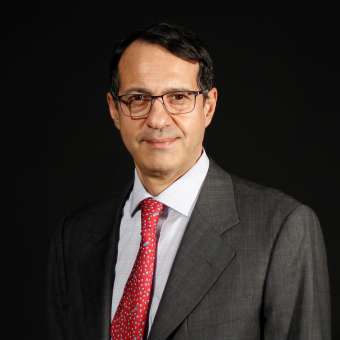
Jun Hwa (Jacky) Cheah is an Associate Professor in Marketing at the Norwich Business School, University of East Anglia (UEA), a position he has held since February 2023. Before joining UEA, he served as a Senior Lecturer at Universiti Putra Malaysia and Universiti Teknologi Malaysia in Malaysia. He holds a PhD in Business Economics and an MBA in International Business from Universiti Putra Malaysia, along with a Bachelor of Management in Marketing from Universiti Malaysia Terengganu. His research focuses on digital marketing, technology marketing, consumer behavior, data analytics, and statistical modeling. He has published extensively in top journals such as the Journal of Business Research , European Journal of Marketing , and Psychology & Marketing . He currently serves as a Guest Editor, Associate Editor, and Editorial Board member for multiple academic journals. Dr. Cheah has received several accolades, including the Emerald Young Researcher Award (2021) and a Young Researcher Award from his former university. He has supervised PhD students, one of whom successfully completed their doctoral program. He is actively engaged in PhD supervision and collaborative research, with a strong emphasis on advancing quantitative methodologies and addressing contemporary marketing challenges.
Edward H. Kaplan is the William N. and Marie A. Beach Professor of Management Sciences at the Yale School of Management, Professor of Public Health at the Yale School of Medicine, and Professor of Engineering at the Yale School of Engineering and Applied Sciences. He holds secondary appointments in Chemical and Environmental Engineering, Health Policy & Management, the Institution for Social and Policy Studies, and Statistics. Education: PhD in Urban Studies, Massachusetts Institute of Technology (1984) SM in Mathematics, Massachusetts Institute of Technology (1982) SM in Operations Research and City Planning, Massachusetts Institute of Technology (1979) BA in Urban/Economic Geography, McGill University (1977) Kaplan is an expert in operations research, mathematical modeling, and statistics, focusing on public policy and management. His research spans counterterrorism, HIV prevention, bioterrorism, and public health modeling. He has developed models for suicide bomber detection, smallpox response logistics, needle exchange program effectiveness, and wastewater-based disease surveillance. His work has been recognized with numerous awards, including the Koopman Prize (2003, 2005), INFORMS President’s Award (2002), Charles C. Shepard Science Award (2009), and INFORMS Fellow (2005). He has also served as President of INFORMS (2016) and co-directs the Daniel Rose Technion-Yale Initiative in Homeland Security.
Michael Lepech is a Professor of Civil and Environmental Engineering and Senior Fellow at the Woods Institute for the Environment at Stanford University. His research focuses on integrating sustainability into civil engineering through quantitative assessment and multi-scale modeling, particularly via the Sustainable Integrated Materials, Structures, Systems (SIMSS) framework. He also leads the Stanford Center at the Incheon Global Campus (SCIGC) in South Korea, exploring smart city technologies for urban sustainability. Education : PhD in Civil and Environmental Engineering (2006), MBA in Finance and Strategy (2008) from the University of Michigan. Research Areas : Sustainable infrastructure design, biopolymer composites, life cycle assessment, digital twinning, smart city technologies, and multi-physics deterioration modeling. Leadership : Director of SCIGC, advancing research on smart and sustainable urban environments in Songdo, South Korea. His recent publications focus on biopolymer-bound composites, traffic signal optimization, and life cycle sustainability analysis. He has received recognition as a Senior Fellow at Stanford’s Woods Institute for environmental research.
Nurul Alam is a Lecturer in Accounting at the University of Sydney Business School. His research focuses on machine learning applications in finance and accounting, corporate distress prediction, and financial reporting. He holds a PhD from the University of Sydney, where he investigated machine learning models for US corporate bankruptcies. His teaching excellence has earned over 15 awards, including multiple Dean’s Citations and nominations for the Wayne Lonergan Award for Teaching Excellence. Education Master of Commerce (Finance & Accounting), University of Sydney Bachelor of Business Administration (Finance & Banking), University of Rajshahi, Bangladesh Research Interests Machine Learning and Deep Learning in accounting and finance Big Data analytics for corporate financial decision-making Accounting fraud detection mechanisms Financial reporting standards and regulations Current Projects Corporate bankruptcy prediction using survival models and AI Deep Learning applications in panel data analysis for firm distress Machine learning variable selection in corporate finance Accounting fraud patterns among lower/mid-level employees Teaching Contributions Financial Accounting B (ACCT3011) Quantitative Methods for Accounting (QBUS5002) Quantitative Business Analysis (BUSS1020)
Nasir M. Rajpoot is a Professor in the Department of Computer Science at the University of Warwick, UK. His research focuses on computational pathology, medical image analysis, and deep learning applications in histology. He leads interdisciplinary projects integrating artificial intelligence with healthcare, particularly in cancer diagnostics and pathology workflows. Rajpoot’s work emphasizes developing robust algorithms for histology image analysis, including nuclear segmentation, tumor classification, and domain generalization in computational pathology. His contributions include the TIAToolbox, an open-source framework for tissue image analytics, and the CoNIC Challenge to advance nuclear detection and counting in histology images. He collaborates with clinicians and biologists to translate AI models into clinical practice, addressing challenges like tumor heterogeneity and staining variability. Rajpoot’s research spans colorectal, lung, and oral cancers, with a focus on predicting clinical outcomes via histological features and genomic data integration. Notable projects include the development of Handcrafted Histological Transformer (H2T) for unsupervised representations of whole slide images and the SAFRON framework for histology image synthesis. His work addresses domain adaptation, robustness evaluation, and explainability in AI-driven pathology systems.
Henri van Soest is a Professor of Policy Analysis at the RAND School of Public Policy and a Senior Analyst at RAND Europe. He is based at RAND, a global policy research organization, where he leads studies on energy security, artificial intelligence governance, critical infrastructure protection, and European Union policy. His work supports key institutions including the European Union, UK government, and Dutch government. His research focuses on the intersection of technology and policy, particularly in energy systems and AI. Key areas include: AI governance and trustworthy AI tools Energy security and digitalisation of the power grid Critical undersea infrastructure protection Cybersecurity in energy systems Space technology regulation Societal resilience and national security The trend in his recent publications shows a growing emphasis on the dual-use nature of AI in critical infrastructure, balancing innovation with security and resilience. His work combines technical analysis with policy recommendations, often using modeling and expert elicitation. Much of his research addresses transatlantic and European policy challenges, especially in energy and security domains. Scientific contributions and policy impact are evident through frequent publications and expert submissions to governmental bodies. Notable outputs include evidence submissions to the UK Parliament and reports for the U.S. Department of Energy. While no formal awards are listed, his influence is reflected in high-level policy engagement. He has advised on grants and policy studies involving global teams, particularly in energy transition, AI infrastructure, and resilience planning. His prior experience includes energy policy research at the University of Oslo, cleantech analysis, and corporate governance in banking. He holds a Ph.D. from the University of Cambridge and a joint LL.M. from KU Leuven and the University of Zurich. Henri van Soest leads research within RAND Europe’s multidisciplinary teams focusing on science, technology, and security policy. His work often involves collaboration across international experts and institutions, particularly on EU and NATO-related security issues. He contributes to projects involving horizon scanning, Delphi studies, and quantitative modeling in policy contexts.
Marta Veljkovic is a Lecturer and permanent academic member affiliated with Sorbonne University, specializing in sociology with a focus on social inequalities, intragenerational mobility, class and wage trajectories, and gender disparities. She earned her Doctorate in Sociology from Sciences Po, Paris, and the National Institute of Demographic Studies (Ined) between 2018 and 2022, following a Master of Research in Sociology from Sciences Po (2016–2018) and a Bachelor of Sociology from the University of Belgrade (2012–2016). Her academic work is deeply rooted in quantitative methods and large-scale empirical analysis of career dynamics in France. Her research interests include: Social inequalities and stratification Intragenerational mobility and career trajectories Class and wage mobility Gender inequalities in professional advancement The subjective experience of social mobility Quantitative methodologies in sociological research The trends in her recent publications reveal a consistent focus on analyzing long-term shifts in career mobility in France, particularly how class barriers persist despite increased fluidity in job transitions. Using data from the Formation-Qualification Professionnelle survey and EGP class schema, she investigates both absolute and relative mobility, demonstrating that while career paths have become more complex, structural class boundaries remain resilient. Her work bridges academic sociology and public discourse through contributions to outlets like Pour l’Éco and the Observatory of Inequalities. She holds active responsibilities in the academic community, including: Co-organizer of the Gemass scientific seminar Member of the editorial board of the Sociological Year Marta Veljkovic teaches a wide range of courses at undergraduate and graduate levels, including Theory and Concepts (L1), Sociological Tradition – Contemporary French Sociology (L2), Statistics and Computer Science (L3), and advanced methods such as Quantitative Methods I, Sociology of Inequalities, and Advanced Methodology at the M1 level. She has presented her research at numerous international conferences, including the ISA RC28 Spring Meeting, ECSR, and LIVES colloquia. Although no specific students or scientific awards are listed, her extensive publication record and institutional engagement underscore her growing influence in the field of sociological inequality research. She is involved in collaborative research with scholars such as Nicolas Duvoux, Richard Nennstiel, and Ettore Recchi, and her work is supported by access to major French social science data infrastructures like ELIPSS and Insee surveys. She does not appear to lead a lab, but her participation in Gemass—a joint research unit between CNRS, Sorbonne University, and Sciences Po—positions her within a vibrant interdisciplinary network focused on social mechanisms, networks, and inequalities.
Professor Tolga Akçura is a distinguished faculty member at Özyeğin University's Faculty of Business, Department of Business Administration. With over 25 years of academic experience, he has developed and taught courses on marketing strategy, marketing analytics, and marketing research at prestigious institutions including Carnegie Mellon University, Purdue University, and Long Island University. At Özyeğin University, he teaches Marketing Strategy, Integrated Marketing Communication Strategies, Innovation, Business Model Development, and Advanced Topics in Marketing for undergraduate, graduate, and executive students. Professor Akçura holds a B.Sc. in Industrial Engineering from Boğaziçi University (1990), an MA in Business Administration from Boğaziçi University (1996), an MBA from Carnegie Mellon University (1998), and a Ph.D. in Quantitative Marketing from Carnegie Mellon University (2000). Before joining academia, he worked for Procter & Gamble across multiple European locations including Brussels, London, Manchester, and Istanbul. His research focuses on the intersection of Information Technology and Marketing, Brand Valuation, Consumer Learning Behavior, Structural Choice Models, Brand Equity dynamics, and Competitive Pricing Strategies. Professor Akçura has made significant contributions to marketing science through his extensive publication record in top-tier journals. His recent scholarly work demonstrates a strong trend toward digital marketing, AI applications in marketing analytics, healthcare marketing, and the strategic implications of data-driven decision making. His publications span from foundational work on brand equity to cutting-edge research on patient-generated health data and deep learning applications in campaign participation prediction. William W. Cooper Award (awarded twice for publications in Management Science and Marketing Science) Professor Akçura has successfully bridged academic research with practical business applications through his role as founder of eBrandValue A.Ş. and as a Y-Combinator alum (YCW15). He is an active member of professional organizations including the Institute for Operations Research and Management Science, American Marketing Association, and Direct Marketing Institute. His industry experience complements his academic work, providing students with valuable real-world insights into marketing strategy and implementation.
Associate Professor Steven Lu is a faculty member at the University of Sydney Business School, serving as Deputy Head of Discipline (Education). He holds a PhD in Marketing from the University of Toronto, an MA in Economics from York University, and a BA from Nankai University. His research focuses on quantitative modeling, machine learning, and big data analytics applied to digital economy challenges such as digital retailing, search advertising, and blockchain. He co-directs the Consumer Insights Research Group and is affiliated with the Sydney Institute of Agriculture. Dr. Lu has published in top journals including Marketing Science , Production and Operations Management , and Journal of Retailing . His awards include the CNS Vithala Rao Award, ANZMAC Best Paper Awards (2022-2024), and the 2021 Vice Chancellor's Teaching Award. He teaches courses on machine learning in marketing, marketing research, and new product development. He leads research grants such as 'The Era of Mobile Payment' (2021) and 'Digital Transformation of Food Sensory Quality' (2017). His advising focuses on topics like neural recommender systems, e-coupon effectiveness, and heterogeneous treatment effects analysis.
Dr. Leon Barron is a Reader in Analytical & Environmental Sciences at the School of Public Health, Imperial College London. His expertise spans chemical contaminant analysis, wastewater epidemiology, and environmental forensics. He leads the Emerging Chemical Contaminants team within the Environmental Research Group, focusing on pharmaceuticals, PFAS, and illicit drugs. Education: BSc(Hons) in Analytical Science (2001), PhD in Analytical Chemistry (2005), and a Postgraduate Certificate in Academic Practice (2011). Previously held roles at King's College London as Lecturer (2009–2015) and Senior Lecturer (2015–2020). Research interests include trace environmental analysis (LC, GC, MS), chemical risk assessment, and wastewater-based epidemiology. Key projects include global drug use monitoring via sewage analysis and PFAS removal from drinking water. His work has produced over 100 peer-reviewed articles, with recent focus on PFAS accumulation, biochar filtration, and urban pollution source apportionment. Awards include Fellowships from Royal Society of Chemistry and Chartered Society of Forensic Sciences. Supervises PhD students on topics like pesticide exposure, opioid monitoring, and machine learning in ecotoxicology. Collaborates internationally via initiatives like the Sewage Analysis CORE Group and NIHR HPRU in Environmental Exposures.
Dr. Dahlia El-Manstrly is an Associate Professor (Senior Lecturer) in Marketing and Director of Research for the Marketing and Creative & Cultural Industries (MCCI) group at the University of Sheffield Management School. She previously served as Co-Director of the Center for Service Excellence at the University of Edinburgh. Her expertise spans services marketing, with a focus on service recovery, customer loyalty, and international marketing. Education: BSc (First Class Honours) MSc (Huddersfield University) MRes PhD (Glasgow University) AHEA (Advanced HE Academy) Research Interests: Service Recovery and Complaint Management Customer Loyalty and Satisfaction International Marketing in Services Transformative Services and Well-being Tourism Services and Online Travel Communities Awards and Recognition: Highly Recommended Paper Award (AMA SERVSIG, 2014) Three Teaching Excellence Awards (University of Edinburgh) Grants and Supervision: Supervises PhD students on topics like sustainability in fashion and elderly adoption of self-service technology. Recipient of grants including the British Academy Quantitative Skills Award and ESRC Seminar Series funding. Labs/Teams: Leads the MCCI research group at the University of Sheffield Management School.
Kimberly A. Whitler serves as the Frank M. Sands Sr. Associate Professor of Business Administration at the University of Virginia's Darden School of Business. With nearly 20 years of industry experience in general management, strategy, and marketing roles within CPG and retailing sectors, she brings practical expertise to her academic work. Her career includes significant positions at Procter & Gamble, Aurora Foods, David's Bridal, and PetSmart, where she helped build $1B+ brands including Tide, Bounce, Downy and Zest. Dr. Whitler's educational background includes: B.A. in psychology and business administration from Eureka College MBA from the University of Arizona, Eller School of Business M.S. and Ph.D. from Indiana University, Kelley School of Business Whitler is an authority on marketing strategy, brand management, and marketing performance, with particular expertise in understanding how a firm's marketing performance is affected by its C-suite and board. Her research focuses on C-level marketing management challenges, digital marketing transformation, employer branding, and the emerging field of athlete branding through NIL (Name, Image & Likeness). She has authored over 350 articles as a Forbes senior contributor and published in top journals including Harvard Business Review, Journal of Marketing, and Journal of the Academy of Marketing Science. Her award-winning publications demonstrate a consistent progression from traditional brand management topics toward more strategic considerations of marketing's role at the executive and board levels. Recent work examines digital transformation, brand purpose, and the evolving CMO role, reflecting her deep understanding of how marketing strategy intersects with organizational leadership. Whitler has received numerous professional accolades: Ranked as a Top Influencer of CMOs Named Favorite Professor of Top MBA Students in Poets and Quants Winner of Darden's Morton Award in 2018 and 2021 Finalist for Journal of Marketing's 2018 MSI/Paul H. Root Award Winner of 2017 Robert D. Buzzell Best Paper award Winner of 2020 Sheth Foundation Award As an active consultant and speaker, Whitler has worked with numerous C-level organizations including Coca-Cola, McDonald's, U.S. Department of Defense, and Gartner. She has been cited over 3,600 times in major media outlets including Wall Street Journal, New York Times, and Bloomberg, establishing herself as a leading voice in marketing strategy. Her industry experience informs her teaching and research, creating a valuable bridge between academic theory and practical application. Whitler leads research initiatives focused on marketing leadership and brand strategy, often collaborating with industry partners to ensure practical relevance of her work. Her recent projects include examining the impact of marketers on corporate boards and developing frameworks for effective marketing technology implementation, positioning her at the forefront of strategic marketing research.
Luc Anselin is the Stein-Freiler Distinguished Service Professor of Sociology and the College at the University of Chicago. He serves as Director of the Center for Spatial Data Science and Senior Fellow at NORC, with affiliations in the Department of Sociology and the Committee on Quantitative Research Methods in Social, Behavioral, and Health Sciences. B.S., Vrije Universiteit Brussel, 1975 M.S., Vrije Universiteit Brussel, 1976 M.A., Cornell University, 1979 Ph.D., Cornell University, 1980 Anselin is a pioneer in spatial data science, spatial econometrics, and computational social science. His work bridges quantitative geography, regional science, and computer science, with applications in urban studies, economic analysis, and health research. His recent publications focus on spatial regimes, software ecosystems like GeoDa and PySAL, stigma analysis in public health, and computational methods for urban equity. These reflect interdisciplinary trends in spatial statistical modeling, open-source development, and geospatial policy evaluation. Scientific recognition includes: Fellow, Regional Science Association International (2004) Walter Isard Prize (2005) William Alonso Memorial Prize (2006) National Academy of Sciences (2008) American Academy of Arts and Sciences (2011) Anselin has led major grants and directed institutions like the GeoDa Center for Geospatial Analysis and Computation at Arizona State University. He has mentored interdisciplinary collaborations across sociology, economics, and data science. His laboratories and teams include the Center for Spatial Data Science at the University of Chicago and the GeoDa Center at Arizona State University, fostering innovation in geospatial computation and open-source spatial analytics.
Steffi Haag is a Professor of Digital Innovation and Entrepreneurship at the Institute of Computer Science , Heinrich Heine University Düsseldorf (HHU) . She bridges the Faculty of Mathematics and Natural Sciences and Faculty of Business Administration and Economics , collaborating with the Center for Entrepreneurship Düsseldorf (CEDUS) to inspire tech startups. Her research focuses on sustainable information systems, digital experiences, and business models. Steffi Haag’s research integrates Shadow IT , Usable Cybersecurity , and Digital Idea Management . Her work emphasizes theoretical , quantitative , qualitative , and mixed-methods research , including experimental and survey methodologies. Steffi Haag’s publications (2018–2024) span Information Systems , Cybersecurity , Digital Twins , and Sustainable Design . Common themes include Shadow IT dynamics , user behavior in security , and innovation management . Hermann Gutmann Award for special scientific achievements (2023) Schöller Fellow (2020) HMD Best Paper Award (2018) Research Award in Data Protection and Data Security (2017) Dissertation Prize (2017) Steffi Haag has secured grants such as the TU Darmstadt Postdoctoral Fellowship for Female Researchers (2016–2018) and Deloitte Foundation Fellowship (2009–2011). She actively moderates conferences and serves as Associate Editor of Business & Information Systems Engineering .
Cheng Yuhan is an Assistant Professor at Shandong University's School of Management, serving as director of the Center for Artificial Intelligence and Digital Finance and recognized as a Taishan Scholar Young Expert in Shandong Province. His interdisciplinary research bridges artificial intelligence with finance, accounting, and economics through collaborations with MIT and Tsinghua University. His educational background includes: Bachelor of Science in Mathematical Sciences from Beijing Normal University Double Degree in Economics from Peking University National School of Development PhD in Finance from Tsinghua University PBC School of Finance Cheng's research focuses on AI applications in accounting, auditing, and finance, particularly large language models for financial regulation, asset pricing, and macro-finance. He integrates computational methods to solve complex financial problems using industrial-grade computing infrastructure, enabling novel approaches to traditional economic analysis. His recent publications demonstrate a clear trend toward generative AI in financial modeling, with emphasis on stock factor generation, predictive analytics, and economic forecasting. These works showcase how language models transform financial analysis through automated insight extraction and data-driven decision frameworks. Key honors include: Taishan Scholar Young Expert award Best Paper Award at 2024 China International Risk Forum Outstanding Paper Awards at 13th International Conference on Futures and Derivatives Membership in Shandong Provincial Philosophy and Social Sciences Young Talent Team Cheng mentors students across Master of Accounting, Master of Auditing, and MBA programs while securing competitive grants including National Natural Science Foundation of China Youth Fund. His lab supports students in academic exchanges, with former research assistant Dou Yun admitted to University of Chicago Economics Master's with scholarship. His research lab features industrial-grade hardware including NVIDIA H100, Huawei Ascend 910b, A100, and A800 processors, providing near-tech-company computing power for large-scale AI/finance research and industrial application development.