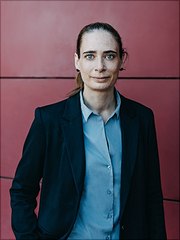
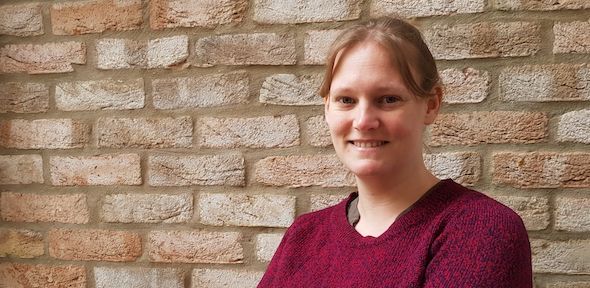
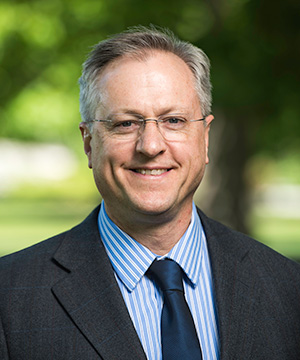
Prof. Stefan Müller is a Professor at the Institute for German Language and Linguistics , part of the Faculty of Languages and Literature at Humboldt University. His research focuses on syntax, formal grammar theories (especially Head-Driven Phrase Structure Grammar), and computational linguistics. He leads the CoreGram Project , developing cross-linguistic grammars using HPSG formalisms. His work includes analyses of German syntax, constituent order, anaphoric binding, and register phenomena. He is also involved in open-access publishing initiatives through Language Science Press . Contact: St.Mueller@hu-berlin.de . Education and academic background details are not explicitly stated in the provided text, but his professional trajectory indicates deep expertise in theoretical linguistics. His research spans multiple languages including German, Mandarin, and Persian, with a focus on grammar implementation and syntax-semantics interfaces. Key contributions include the Head-Driven Phrase Structure Grammar Handbook (2024), analyses of headless nominal structures in German (2022), and exploration of large language models' theoretical implications (2024). He actively engages in interdisciplinary projects bridging formal grammar and computational methods.
Sara Stymne is a Senior Lecturer in Computational Linguistics at the Department of Linguistics and Philology, Uppsala University, where she has been working since 2012. She initially joined as a post-doc (2012-2015), then worked as a researcher (2015-2017), and served as an assistant professor (2017-2023) before her current position as Senior Lecturer. Prior to Uppsala, she was a researcher at Linköping University's Department of Computer and Information Science. Dr. Stymne earned her PhD in Computational Linguistics from Linköping University in 2012 with the thesis 'Text Harmonization Strategies for Phrase-Based Statistical Machine Translation,' following a Licentiate degree in Computational Linguistics (2009) and a Master's degree in Cognitive Science (2006), both also from Linköping University. During her doctoral studies, she spent the autumn of 2010 and spring of 2009 at Xerox Research Centre Europe in Grenoble, France. Her primary research interests focus on cross-lingual natural language processing and digital humanities, with particular emphasis on multilingual dependency parsing. Dr. Stymne is passionate about applying computational linguistics to solve research questions in other fields, including language history, literary analysis, and political science. Her earlier work concentrated on machine translation, with specific interests in discourse-aware translation, compound processing, and error analysis. She has made significant contributions to the development of language technology tools for analyzing dialogue, narrative, and stylistic features in literature. Analysis of Dr. Stymne's recent publications reveals a strong focus on cross-lingual and cross-domain natural language processing. Her work spans multiple subfields including dependency parsing across genres and topics, discourse relation analysis in low-resource languages like Egyptian Arabic, direct speech identification in Swedish literature, and causality detection in governmental documents. A notable trend is her application of NLP techniques to digital humanities problems, particularly in analyzing literary texts and historical language change. Her research often involves creating and utilizing specialized datasets for specific linguistic phenomena across multiple languages. Dr. Stymne actively supervises graduate students, having guided numerous master's and bachelor's theses on topics ranging from speech recognition to multilingual parsing and causality detection. She leads or participates in several research projects including 'Fictional prose and language change' (funded by VR, 2021-2023) and 'Enabling climate-resilient development' (funded by Marianne and Marcus Wallenberg Foundation, 2023-2027), demonstrating her commitment to interdisciplinary research with practical applications. Her work has resulted in several notable software resources including uuPronPred for cross-lingual pronoun prediction, uuparser for dependency parsing, and Docent for document-level machine translation. Within the Computational Linguistics and Language Technology group at Uppsala University, Dr. Stymne contributes to multiple research initiatives focused on developing language technology tools for digital humanities applications. Her team works closely with literary scholars and historians to create computational methods for analyzing large corpora of literary texts, particularly focusing on Swedish literature across different historical periods. Her research bridges the gap between theoretical computational linguistics and practical applications in the humanities, creating new methodologies for quantitative analysis of literary and historical texts.
Prof. Dr. Gülşen Eryiğit is a Professor at Istanbul Technical University within the Faculty of Computer and Informatics , Department of Artificial Intelligence and Data Engineering . She founded and directs the ITU Natural Language Processing Group , Turkey's leading team in Turkish-language NLP, and serves as Senior Action Editor for ACL RR , Director of ITU TÖMER (Turkish Language Teaching Center), and Co-Chair of the EU UniDive Cost Action WG3. Education: PhD in Computer Engineering from ITU (2007), MSc and BSc from ITU and Marmara University Research: Focuses on Natural Language Processing for Turkish, including dependency parsing , coreference resolution , multiword expressions , and language education technology Her recent work involves multilingual transfer learning , LLM applications for Turkish text simplification, and gamification for morphology education. She has received prestigious awards like the Siemens Excellence Award and TÜBİTAK's Above Threshold Award . Her research has produced 65+ publications and 29+ projects funded by EU, TÜBİTAK, and industry partners. Scientific Awards: Siemens Excellence Award (2007) Above Threshold Award (TÜBİTAK, 2015) Certificate of Appreciation (EU 7th Framework, 2012) Thank You Plaque (ITU, 2017) The ITU NLP Group under her leadership has developed Turkey's first licensed NLP software exported internationally. She collaborates with European institutions through COST actions and participates in ACL, CoNLL, and LREC conferences. Her lab focuses on language technology for Turkish , including sign language processing and social media normalization.
Mark Baker is a Professor of Linguistics and Cognitive Science at Rutgers University. His work focuses on comparative syntax, linguistic universals, semantic roles, and the study of Amerindian and African languages. He holds the title of Distinguished Professor and maintains an office in Scott Hall. As of 2021, his office hours were by appointment due to sabbatical leave. His research interests include syntactic diversity, its limits, and patterns across languages. Notable themes in his work involve logophoric pronouns, switch-reference mechanisms, and the relationship between case systems and agreement structures. He has contributed to discussions on language typology, formal syntax, and the cognitive foundations of linguistic structures. Baker teaches advanced syntax courses and has published extensively on topics ranging from Panoan languages to theoretical models in generative grammar. His recent articles explore syntactic variation, morphosyntactic alignment, and interdisciplinary connections between linguistics and cognitive science. He serves on editorial boards and has reviewed for journals such as Journal of East Asian Linguistics and Yearbook of Corpus Linguistics and Pragmatics . His work bridges formal linguistic theory with empirical cross-linguistic analysis, emphasizing the interplay between universal grammatical principles and lineage-specific traits.
Gregory Ward is Professor of Linguistics, Gender & Sexuality Studies, and Philosophy at Northwestern University. His work bridges pragmatic theory, information structure, and intonational meaning, with a focus on reference/anaphora. He has taught courses like Pragmatics (LING 372) and Language & Gender (GSS 234), receiving the E. LeRoy Hall Award for Excellence in Teaching (2012). BA in Comparative Literature and Linguistics (1978, UC Berkeley) PhD in Linguistics (1985, University of Pennsylvania) His research explores how contextual meaning shapes linguistic structures, including demonstratives, implicatures, and noncanonical word order. He has contributed to experimental pragmatics, syntax-discourse interactions, and the semantics-pragmatics boundary, co-authoring key works like Information Status and Noncanonical Word Order in English (1998). Recent publications analyze deferred reference, event anaphora, and functional compositionality. These works span subfields such as pragmatic theory, syntactic variation, and discourse processing, reflecting his interdisciplinary approach. Scientific awards include: E. LeRoy Hall Award for Excellence in Teaching (2012) He served as Secretary-Treasurer of the Linguistic Society of America (2004-2007), co-PI on NIH and NSF grants, and Fellow at the Center for Advanced Study in the Behavioral Sciences (2004-05).
Suzanne Stevenson is a Professor in the Department of Computer Science at the University of Toronto, affiliated with the Cognitive Science Research Community (CoRC). She holds a BS in Computer Science and Linguistics from William & Mary and MS/PhD in Computer Science from the University of Maryland. Before joining UofT in 2000, she was faculty at Rutgers University with joint appointments in Computer Science and Cognitive Science. Her research focuses on computational cognitive models of language acquisition and processing, integrating insights from linguistics, psycholinguistics, and machine learning. Key areas include semantic/syntactic learning from text, probabilistic computational models of word learning, and cross-situational learning. Notable awards include the NSERC University Faculty Award (2000) and NSF CAREER Award (1997). Her work bridges computational linguistics and cognitive science, emphasizing multidisciplinary approaches. Recent publications (2014–2018) explore topics like probabilistic perspective models in language production, bilingual word associations, and semantic search algorithms. She advises on computational linguistics and cognitive modeling, with grants supporting investigations into language acquisition dynamics and semantic networks. Active in teaching, she previously offered courses on computational linguistics and the computational lexicon. Her lab’s research themes include child language acquisition, ambiguity resolution, and computational modeling of linguistic phenomena.
Patrick Sturt is a Reader in Psychology at the University of Edinburgh's School of Philosophy, Psychology and Language Sciences. His research focuses on syntactic processing in language comprehension, computational models of incremental parsing, anaphor resolution, and eye movements in reading. With over 100 publications and more than 3,300 citations, he is a recognized expert in psycholinguistics and language processing. Dr. Sturt's research interests span multiple areas of language processing. He investigates how humans comprehend sentences in real-time, with particular focus on syntactic structures, agreement phenomena, and anaphoric reference. His work often employs eye-tracking methodologies to examine the moment-by-moment processing of linguistic information. He has made significant contributions to understanding how readers handle syntactic ambiguities, garden-path sentences, and the role of prediction in language comprehension. His recent publications demonstrate a strong focus on cross-linguistic studies, particularly examining language processing in Mandarin Chinese and Korean. Many of his studies investigate how syntactic and semantic information interact during comprehension, and how linguistic structures like honorifics, classifiers, and non-canonical word orders are processed. His work bridges theoretical linguistics with experimental psycholinguistics, providing empirical evidence for models of sentence processing. Dr. Sturt actively supervises PhD students including Carine Abraham, Wenjia Cai, Chiuchou Hao, Ruomeng Zhu, and Christy Gu. He teaches Psychology of Language 1 and 2 at the MSc level, as well as Data Analysis for Psychology in R for first-year undergraduates. His teaching reflects his research expertise, providing students with both theoretical knowledge and practical analytical skills. Based in Room G29 of the Psychology Building at 7 George Square, Edinburgh, Dr. Sturt maintains regular office hours on Tuesdays from 3-4pm, providing accessibility to students and colleagues. His email address is patrick.sturt@ed.ac.uk.
Lance Rips is a Professor in the Psychology Department at Northwestern University , Evanston, IL. His research focuses on cognitive psychology, particularly concepts, reasoning, and autobiographical memory. Academic Rank: Professor Institution: Northwestern University Department: Psychology Department Contact: ripslab@gmail.com , rips@northwestern.edu Research interests include: Deductive and inductive reasoning Concepts of objects/events over time Causal cognition Mathematical thinking (numbers, non-Euclidean geometry) Informal argumentation and survey methodology His lab investigates foundational questions in cognition, with recent work on conditional reasoning, object individuation, and developmental understanding of substances. Publications span journals like Cognitive Science , Psychological Science , and Cognition .
Keir Moulton is an Associate Professor and Graduate Chair in the Department of Linguistics at the University of Toronto. He holds a PhD from the University of Massachusetts, Amherst, and a BA (Honors) from the University of Toronto. His research focuses on the syntax-semantics interface, experimental linguistics, and formal approaches to clause structure and anaphora. He has conducted extensive experimental work on pronoun resolution, ellipsis, and binding theory, with a particular interest in exploring how structural constraints influence language processing. His academic career includes roles as co-editor of NELS 34 and contributions to major linguistics conferences such as SALT and WCCFL. Moulton's recent work examines topics like underspecified pronoun interpretation, Korean VP anaphora, and the cognitive processing of syntactic structures. His methodologies blend formal theoretical analysis with experimental techniques, including eye-tracking studies and acceptability judgments. Key research areas include: experimental syntax-semantics interaction, binding theory, ellipsis resolution, and the typology of clausal complementation. He has published over 50 articles in journals like Language , Linguistic Inquiry , and Journal of Cognitive Science , as well as book chapters and edited volumes. Moulton’s work has been supported by grants from the Social Sciences and Humanities Research Council (SSHRC) of Canada. His teaching focuses on graduate courses in syntax, semantics, and experimental methods.
Ernest Davis is a Professor at the Department of Computer Science , Courant Institute of Mathematical Sciences , New York University . His research focuses on representing commonsense knowledge in AI systems , with an emphasis on spatial and physical reasoning , and he collaborates with Gary Marcus on integrating AI and psychological models. He has authored over 50 scientific papers and three books, including Linear Algebra and Probability for Computer Science Applications (2012). His teaching includes courses on Artificial Intelligence and Fundamental Algorithms. Research Trends: His recent work examines benchmarks for commonsense reasoning , limitations of large language models (e.g., GPT-4, DALL-E 2), mathematical reasoning in AI, and the Winograd Schema Challenge . Professional Activities: He has served as an ACM reviewer, program committee member for 50+ conferences, and area editor for ACM Transactions on Computational Logic . He contributes book reviews to Computing Reviews , SIAM News , Artificial Intelligence journal, and others. Non-Technical Writing: Davis writes for general audiences on topics spanning computer science, mathematics, cognitive psychology, and literary themes, published in outlets like The New Yorker , Wired , and The Times Literary Supplement .
Prof. Dr. Anne Lauscher is an Associate Professor of Data Science at the University of Hamburg Business School, specializing in fair, inclusive, and sustainable conversational AI systems. Her research focuses on improving algorithmic fairness through demographic factors in NLP systems and exploring ethical implications of large language models. She holds a PhD from the University of Mannheim, where her work on computational argumentation was awarded summa cum laude, and has conducted research at Grammarly and the Allen Institute for AI. Key contributions include gender-fair machine translation datasets (e.g., Building Bridges), bias detection frameworks (e.g., SHADES), and multilingual benchmarking tools like MultiQ. Her work has been recognized with the Maria Gräfin von Linden-Award and inclusion in the '100 Brilliant Women in AI Ethics' list. Research spans ethical NLP, multilingual AI, and societal impacts of AI technologies. Education: PhD in Data and Web Science (University of Mannheim, 2021), Postdoc at Bocconi University's NLP group (2021-2022). Academic roles include adjunct positions and international collaborations across Europe and the US. Research Interests: Conversational AI fairness, multilingual NLP systems, ethical AI evaluation, bias mitigation in LLMs, and interdisciplinary applications of machine learning in scientific discovery. Publications (select highlights): Over 55 peer-reviewed works in top-tier venues like ACL, EMNLP, and AAAI. Recent focus on LLM hallucination analysis, cross-cultural NLP benchmarks, and gender-neutral language resources. Awards: 2021 Maria Gräfin von Linden-Award (Baden-Württemberg), 2023 '100 Brilliant Women in AI Ethics', 2022 Dissertation Award Nominee (GI). Labs/Teams: Leads the UHH Data Science Research Group, collaborating with industry partners like Grammarly and academic institutions worldwide. Active in initiatives promoting gender equity in STEM and sustainable AI development.
James Hardy is a Professor in Sport & Exercise Science at Bangor University's School of Psychology and Sport Science , with a career spanning elite sports psychology research and teaching. He holds a BSc (First Class) from the University of Birmingham, and MA/PhD from the University of Western Ontario under Prof. Craig Hall. Key roles: Senior Lecturer, Deputy Head of School, Associate Editor for Journal of Applied Sport Psychology , and editorial board member for multiple journals. Research focuses on self-talk/imagery and group dynamics (team cohesion, leadership), funded by ECB, UK Sport, and Manchester City FC. Recent publications highlight his interdisciplinary approach, examining leadership effects, pressure training protocols, narcissism in teams, and injury risk factors via pattern recognition. Notable work includes Psychosocial Characteristics of Elite Rugby Players and Individualized Talent Development in beach sprint rowing. Scientific contributions include a Bangor University Teaching Fellowship and 30+ peer-reviewed articles . Grants like £80k from ECB and £56k from City Football Services underscore his applied impact.
Julie Boland is a Professor at the University of Michigan's College of Literature, Science, and the Arts, affiliated with the Psychology and Linguistics departments. She holds a PhD from the University of Rochester and leads the Psycholinguistics Lab, focusing on interdisciplinary language processing research. Her work explores interfaces between word recognition, syntax, semantics, and sociolinguistic variables, with special attention to bilingual processing and executive function roles. Education: PhD, University of Rochester. She teaches research methods and language psychology, advising numerous PhD candidates. Key research themes include sociolinguistic priming, bilingual ambiguity resolution, and language processing in digital contexts. Her findings highlight how dialect variation, cultural background, and technology impact comprehension and production. Research Interests: Psycholinguistics, sentence processing, lexical access, sociolinguistic influences, bilingualism, and cognitive mechanisms. Labs: Director of the Psycholinguistics Lab, promoting interdisciplinary collaboration across Psychology and Linguistics. Teaching: Courses on language psychology and research methods for Psychology undergraduates/graduates. Recent work addresses conversational dynamics in Zoom interactions, cultural differences in visual attention, and L2 structural priming effects. She emphasizes practical applications of psycholinguistic insights for education and technology design.
Dr. Margreet Vogelzang is a Lecturer in Psychology at Newcastle University and an affiliated researcher at Theoretical and Applied Linguistics within the Faculty of Modern and Medieval Languages and Linguistics at the University of Cambridge. Based at the English Faculty Building, 9 West Road, Cambridge, CB3 9DP, and affiliated with Trinity College at Cambridge, she maintains a dual institutional presence that reflects the interdisciplinary nature of her work. Her research program combines neuroscientific, psychological, linguistic, and statistical methodologies to investigate language and cognitive processing across the lifespan. She specializes in multilingual syntactic and semantic processing, employing both written and spoken language paradigms with offline (comprehension, judgments) and online (eye-tracking, EEG, fMRI) measures. Her work examines how hearing loss, socio-linguistic variables, and developmental conditions like autism spectrum disorder influence language processing mechanisms. Analysis of her recent publication record reveals three dominant research trajectories: (1) bilingualism effects on cognitive flexibility in autistic children, (2) neural and cognitive mechanisms of sentence processing in individuals with hearing loss, and (3) computational modeling of pronoun interpretation across diverse populations. These strands demonstrate her consistent focus on bridging theoretical linguistics with cognitive neuroscience to address practical questions about language processing variability. Dr. Vogelzang actively supervises several graduate students including Alexander Cairncross, Andromachi Tsoukala, and Chara Triantafyllidou, and serves as course contact for Li16: Psychology of language processing and learning at Cambridge. Her teaching portfolio includes psycholinguistics, neurolinguistics, cognitive science, and research methods, reflecting her methodological expertise across experimental and computational approaches.
Jeffrey T. Runner is a Professor of Linguistics at the University of Rochester, where he has been teaching since 1994. He has held significant administrative roles, including Dean of the College (2017–2024), Vice Provost and University Dean for Undergraduate Education (2021–2024), and Chair of the Department of Linguistics (2014–2017). His academic service includes roles as Faculty Development and Diversity Officer for Arts, Sciences and Engineering (2011–2017), and editor of the Syntax and Semantics book series (2011–2016). He is a Faculty Associate of the Susan B. Anthony Institute for Gender, Sexuality and Women’s Studies since 2003 and served as Director of the Center for Language Sciences (2009–2014). Runner’s research focuses on experimental syntax and psycholinguistics, employing eye-tracking to study language comprehension. Key areas include binding theory, ellipsis, and the interplay between linguistic structure and visual/discourse context. His work has been supported by the National Science Foundation since 2002, with publications in top journals like Linguistic Inquiry , Cognition , and Cognitive Science . Recipient of the 2006 Goergen Award for Undergraduate Education, Runner teaches courses on linguistic analysis, syntax, and experimental methods. His research lab, the Lattimore Eye Tracking Lab, explores real-time language processing mechanisms. Collaborations include work with institutions like Brown University, Universite Paris-Diderot, and Stanford University. Scientific contributions include groundbreaking studies on anaphora resolution, reflexive interpretation, and VP ellipsis. His edited volumes and conference proceedings reflect deep engagement with syntax-semantics interfaces and theoretical linguistics.