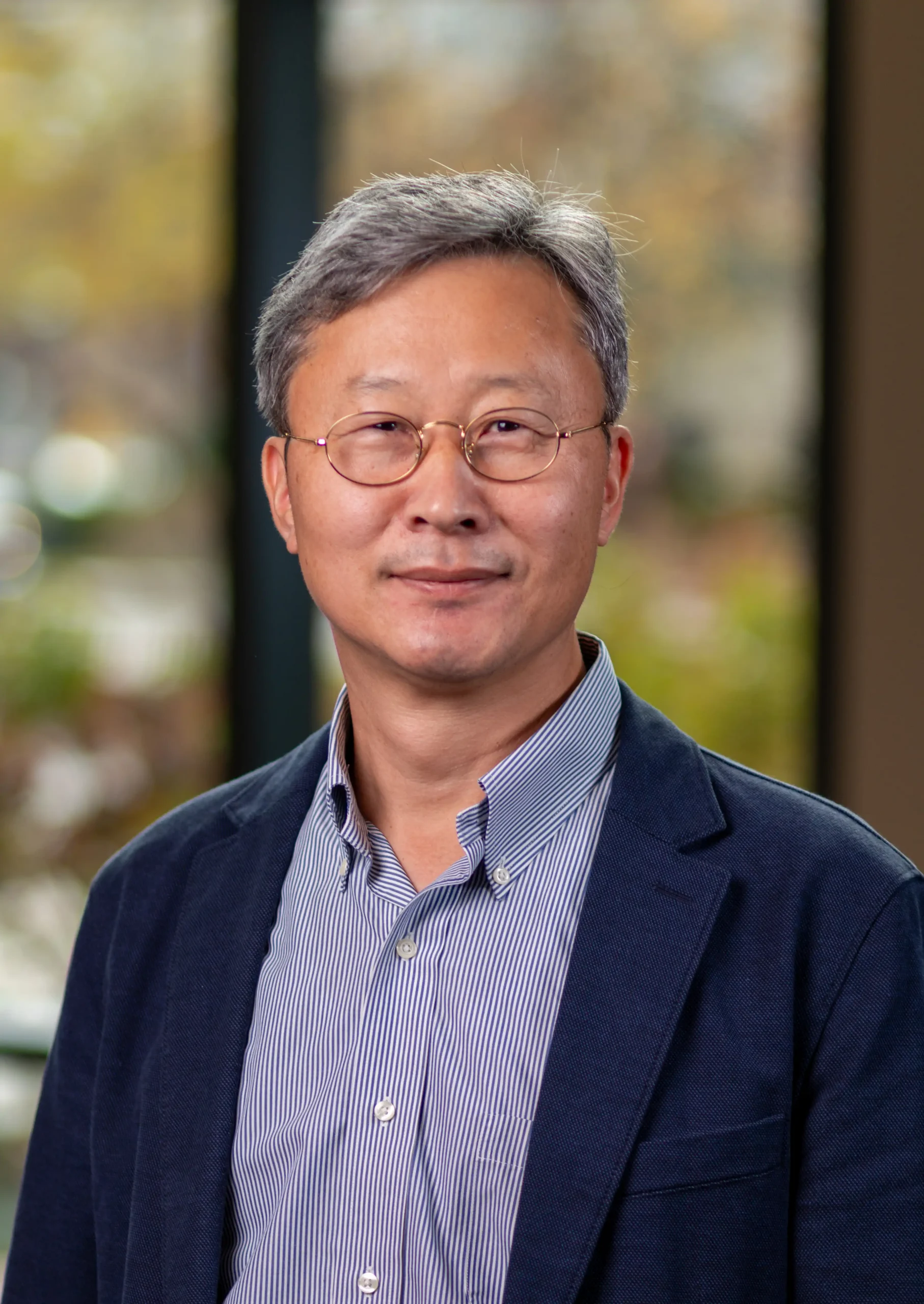
Dr. Hoontaek Seo serves as Associate Professor of Finance and Chair of the Department of Accounting, Economics, and Finance at Niagara University's Holzschuh College of Business Administration, where he has been faculty since fall 2010. His office is located in Bisgrove Hall Room 354F with office hours Tuesdays and Thursdays 10 a.m.-12 p.m. and Wednesdays 1:30-3:30 p.m. He holds a Ph.D. in Finance from Michigan State University (2009), forming the foundation of his academic expertise. Research focuses on empirical corporate finance mechanisms, particularly security offerings dynamics, corporate governance structures, control systems, and divestiture strategies. His work examines how these elements influence corporate financial decision-making and market valuation processes within empirical frameworks.
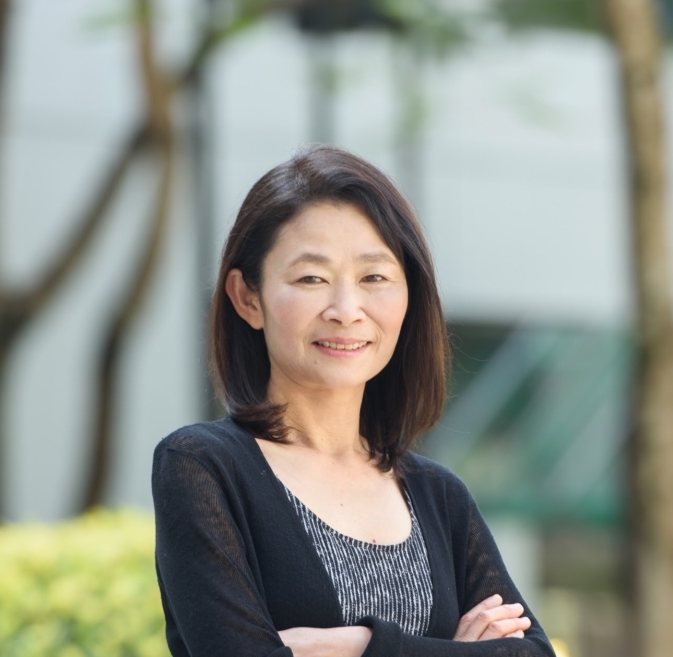
Ching Kwan Lee is a Professor of Sociology at the University of California, Los Angeles (UCLA). Her work focuses on global and comparative issues, including labor politics, political sociology, decolonization, and the dynamics of Chinese capitalism. She is renowned for her trilogy on Chinese labor and global expansion, including Gender and the South China Miracle , Against the Law , and The Specter of Global China . Lee has also authored groundbreaking studies on Hong Kong’s decolonization struggles and African-China relations. Education: PhD in Sociology from the University of California, Berkeley. Research Interests : Globalization and its social impacts Comparative labor movements and protest dynamics Decolonization and postcolonial state formations Sino-African economic and labor relations Hong Kong’s political trajectory and transnational activism Her recent work explores resistance to 'global China,' including mass mobilizations in Hong Kong documented in Forever Hong Kong: A Global City’s Decolonization Struggle (2025). She co-edits the Cambridge Elements in Global China and leads the Global Hong Kong Studies @UC initiative. Awards & Recognition : 2024 Distinguished Career in Political Sociology Award Multiple book prizes for The Specter of Global China Fellowships at Stanford’s Center for Advanced Study and Princeton’s Institute for Advanced Study Grants & Initiatives : Lead researcher on NSF grants studying platform capitalism and labor in China Initiated comparative projects on Brazil, India, China, and South Africa ( Southern Interregnum ) Co-editor of volumes on Hong Kong’s Umbrella Movement and global labor studies
Dawn Song is a Professor in the Department of Electrical Engineering and Computer Science at the University of California, Berkeley, affiliated with multiple research centers including the Berkeley Artificial Intelligence Research Lab (BAIR) and the Berkeley Center for Responsible, Decentralized Intelligence (RDI). She holds leadership roles in AI safety, cybersecurity, and blockchain research. Her work bridges machine learning, security, and distributed systems, with notable contributions to formal verification, privacy-preserving technologies, and AI governance. Education: Ph.D. (2002) and M.S. (1999) in Computer Science from UC Berkeley and Carnegie Mellon University, respectively. She previously served as an Assistant Professor at Carnegie Mellon University before joining UC Berkeley in 2007. Research Interests: Dawn's work focuses on AI safety, cybersecurity, and the ethical implications of frontier AI. She explores topics such as large language model vulnerabilities, zero-knowledge proofs, blockchain security, and policy frameworks for AI governance. Her research combines theoretical rigor with practical applications, addressing challenges in secure systems, adversarial machine learning, and privacy-preserving computation. Publications: Her recent work includes groundbreaking studies on LLM memorization, smart contract decompilation, and AI agent cybersecurity evaluation. She also leads initiatives like the Singapore Consensus and California Report on AI safety priorities, emphasizing global collaboration in risk mitigation. Notable Awards: MacArthur Fellowship (2010), ACM Fellow (2019), IEEE Fellow (2019) Advising & Grants: She advises projects on AI policy and cybersecurity, securing grants from NSF, DARPA, and industry collaborations. Her lab develops tools like CyberGym for evaluating AI agents and zkPyTorch for secure machine learning. Labs & Teams: Her research groups at UC Berkeley focus on cutting-edge projects in AI safety, blockchain, and cybersecurity, collaborating with industry leaders and policymakers to advance both technical and ethical standards.
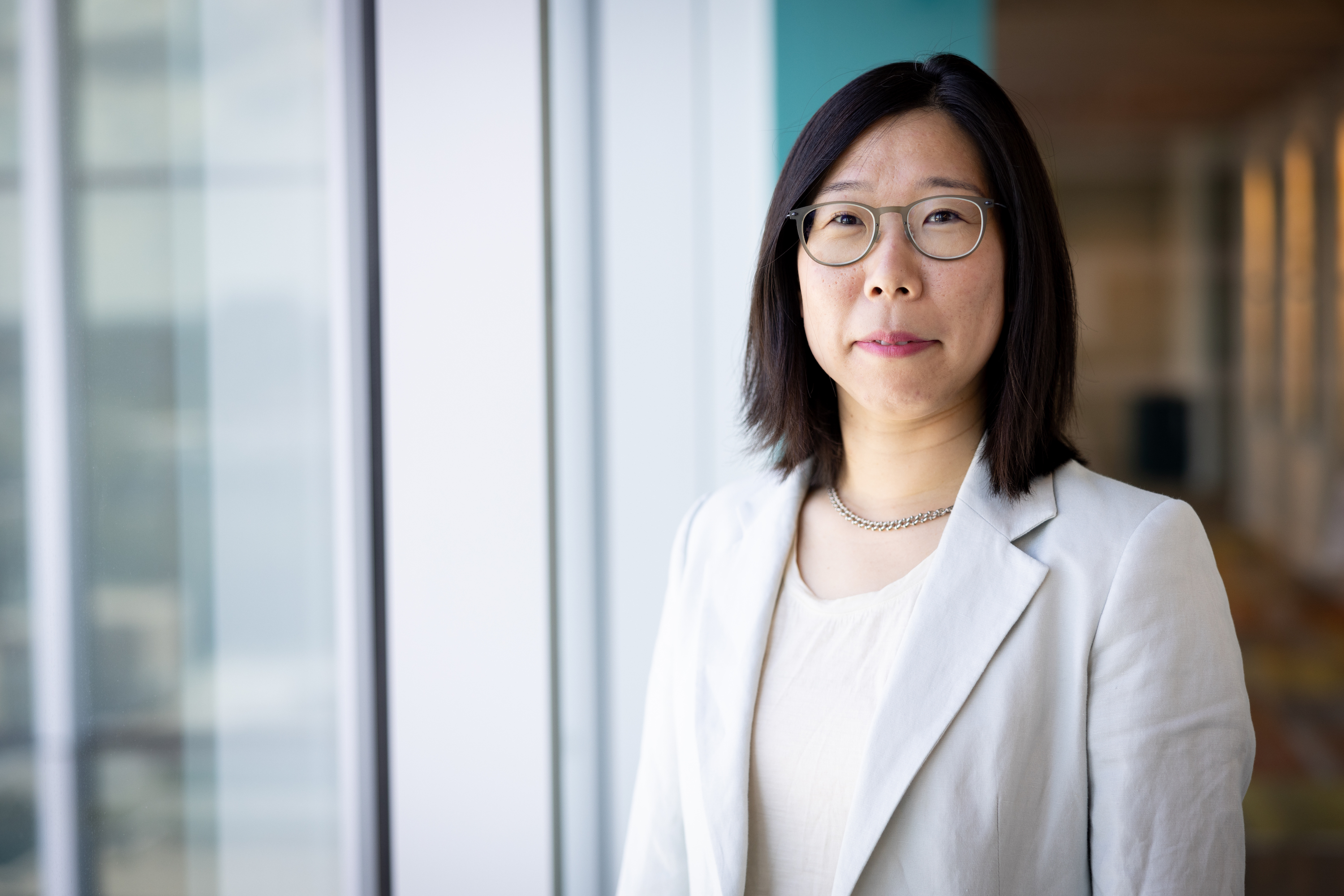
Wei Xu is an Associate Professor at Georgia Institute of Technology's College of Computing and School of Interactive Computing, with affiliations to the Machine Learning Center. Their research bridges machine learning, natural language processing, and social media with focus areas in large language models, cultural bias mitigation, multilingual capabilities, and human-AI collaboration in text evaluation. NSF CAREER and Google Academic Research Award recipient Director of NLP X Lab PhD from New York University, BSMS from Tsinghua University Research interests span: Multilingual Multicultural LLMs addressing representational gaps and cultural adaptation in language models (NAACL 2025, ACL 2024); Robustness and Reasoning through dynamic AGI evaluations (ACL 2024, EMNLP 2024); Interdisciplinary NLP applications in security, healthcare, and law (EMNLP 2024, ACL 2024). Recent publications focus on multilingual alignment (NAACL 2025), privacy risk estimation (arXiv 2025), cultural bias analysis (ACL 2024), and medical text simplification (EMNLP 2024). Key themes include bias mitigation, multimodal processing, and practical LLM evaluation. Scientific Awards : NSF CAREER, Google/Sony/Criteo research awards, ACL'24 Best Social Impact Award, COLING'18 Best Paper Advising 15 PhD/MS/BSMS students including Yao Dou (human-centered LLM evaluation), Tarek Naous (multilingual LLMs), and alumni like Chao Jiang (Apple AI/ML) and Yang Chen (NVIDIA research scientist). Teaches graduate courses on NLP and LLMs.
Jennifer Ross is a Professor of Physics and Associate Dean for Creativity, Scholarship, and Research at the College of Arts & Sciences of Syracuse University . As a biophysicist, she investigates how cells organize their interiors through self-assembly and active matter principles, focusing on the microtubule cytoskeleton and enzyme-driven systems using single-molecule imaging . Her research bridges fundamental physics with biological organization . Education: Ph.D. in Physics, University of California, Santa Barbara (2004) B.A. in Physics and Mathematics, Wellesley College (2000) Research Focus: Self-organization of cytoskeletal networks Active matter dynamics in biological systems Motor protein interactions and cargo transport Programming circadian materials via biomolecular systems Microtubule severing mechanisms Recent Article Trends: 2025 studies explore kinesin-driven cytoskeletal composites, urease-DNA origami engineering, and crosslinker-regulated network mechanics 2024-2023 work examines ionic strength effects on microtubules, programmable circadian materials, and motor-cargo dynamics Earlier studies analyze actin-microtubule composites, liquid crystal phase control, and severing enzyme mechanisms Scientific Awards: Fellow of the American Physical Society (APS) and American Association for the Advancement of Science (AAAS) Cottrell Scholar (2025) and STAR Award Margaret Oakley Dayhoff Award (Biophysical Society) Grants: Leads multiple NSF, Sloan Foundation, and Research Corporation grants for projects like "Energy and Entropy Sculpting" and "Explorations: SUPER-Tech SHIP" . Teaching: Offers courses in experimental physics, microscopy, and biophysics, including a globally adopted hands-on microscope-building curriculum. Lab: Heads the Bio-Active Matter Lab , studying how cells harness noisy systems for autonomous organization.
Tianqi Chen is an Assistant Professor at the Machine Learning Department and Computer Science Department of Carnegie Mellon University (CMU), with a courtesy appointment as a Professor in the Electrical and Computer Engineering Department within the College of Engineering. His research focuses on scalable machine learning systems, compiler optimization, and efficient deep learning frameworks. He holds a PhD from the Paul G. Allen School of Computer Science & Engineering at the University of Washington. Key contributions include the creation of XGBoost, Apache TVM, and MLC-LLM—widely adopted systems for machine learning and large language models. His work bridges algorithmic innovation with high-performance computing, emphasizing efficient deployment, quantization, and edge computing. Recent publications highlight advancements in LLM serving (e.g., WebLLM, Flashinfer), compiler-driven optimizations (e.g., TVM, Relax), and low-latency inference techniques (e.g., Magicdec, Tilus). These efforts address scalability, energy efficiency, and cross-platform compatibility in modern AI systems. Chen’s research has been applied to diverse domains, including music AI, browser-based inference, and microservice architectures for LLMs. His work underscores the importance of system-level thinking in advancing AI capabilities.
Mark Schmidt is a Professor in the Department of Computer Science at the University of British Columbia, Faculty of Science. He holds the Canada Research Chair in Large-Scale Machine Learning and is a Canada CIFAR AI Chair at the Alberta Machine Intelligence Institute. His research spans multiple centers including CAIDA (Centre for Artificial Intelligence Decision-making and Action), the Data Science Institute, and the Machine Intelligence Learning Discovery (MILD) group. Dr. Schmidt's educational background includes a Ph.D. from UBC (2005-2010), an M.Sc. from the University of Alberta (2003-2005), and a B.Sc. from the University of Alberta (2000-2003). His academic career progressed from Postdoc positions at Simon Fraser University, Ecole Normale Superieure, and UBC to Assistant Professor (2014-2019), Associate Professor (2019-2024), and current Professor (2024-present) at UBC. His research focuses on machine learning optimization, with particular emphasis on improving numerical algorithms for large-scale machine learning applications. His work bridges theoretical optimization and practical applications across computer vision, natural language processing, and reinforcement learning. He has developed numerous optimization techniques including variants of stochastic gradient methods, coordinate descent algorithms, and natural gradient approaches. Analysis of his recent publications reveals a strong focus on optimization for over-parameterized models, particularly transformers and large language models. His work addresses critical challenges in step-size selection, convergence guarantees, and efficient implementation of optimization algorithms. His research has significant implications for training deep neural networks more effectively and understanding why certain optimization methods outperform others in practice. Among his notable awards are the Dorothy Killam Fellowship (2025), Arthur B. McDonald Fellowship (2024), Sloan Research Fellowship (2017), and multiple UBC teaching awards. He has also received the Lagrange Prize in Continuous Optimization and Best Paper Award at AISTATS 2021. Dr. Schmidt actively supervises numerous graduate students, with over 40 PhD and Master's students listed as current or alumni members of his research group. His laboratory maintains strong connections with industry partners, with many alumni securing positions at leading AI companies including Google, Amazon, Meta, and Microsoft.
Prof. Ingmar Posner is a leading figure in applied artificial intelligence at the University of Oxford, where he serves as Principal Investigator for the Applied Artificial Intelligence Lab (A2I) and founding Director of the Oxford Robotics Institute. His work focuses on enabling robots to operate effectively in complex real-world environments through experience-driven learning. Key research areas: robot learning, scene interpretation, data-efficient learning, and transfer learning Applications in manipulation, autonomous driving, logistics, and space exploration His team has produced groundbreaking work in world models, sim-to-real transfer, and constraint-based manipulation systems (e.g., COMBO-Grasp). Notable contributions include the TWIST distillation framework and foundational research in tactile data generation (TactGen). He has received multiple best paper awards at top robotics venues. Publications reveal evolving research themes: 2025 work emphasizes language-conditioned learning (Lumos) and multi-agent decision-making, while 2024 focused on diffusion models for locomotion and differentiable simulators. Earlier work spans from urban scene analysis to physically plausible scene synthesis (RELATE).
Carl Vondrick is a Professor in the Department of Computer Science at Columbia University. His research focuses on creating robust and versatile perception systems that leverage video and interaction with the natural world, with applications in 3D reconstruction, visual question answering, and robot manipulation. Former research scientist at Google Visiting researcher at Cruise Education: PhD (2017) from MIT, advised by Antonio Torralba BS (2011) from UC Irvine, advised by Deva Ramanan His research explores multimodal approaches for cross-task and cross-modal transfer, scene dynamics, audiovisual perception, interpretable models, and spatial awareness systems. The lab emphasizes zero-shot generalization and neuro-symbolic methods while addressing safety and robustness in AI systems. Key publication trends include: 2025: Video generation for robotics 2024: Differentiable rendering and cross-modal reasoning 2023: Robust perception and 3D modeling Scientific Awards: 2024 PAMI Young Researcher Award 2021 NSF CAREER Award Teaching Roles: Teaching Computer Vision II (2021-2025), Computer Vision I (2018-2019), and Representation Learning (2020-2022). Advising: Advises 8 current PhD students and has mentored 5 graduated students now at institutions like MBZUAI and UMD. The lab recruits 1-2 PhD students annually through Columbia’s PhD program. Grants and Collaborations: Funded by NSF, DARPA, Toyota Research Institute, Amazon Research, and Google.
Musa Jouaneh is a Professor in the Mechanical, Industrial and Systems Engineering department at the University of Rhode Island 's College of Engineering . His research spans Robotics, Automation, Mechatronics , and Motion Control systems, with recent work focusing on robotic rehabilitation platforms, fastener extraction, and neural network applications in disassembly processes. Education: Ph.D., Mechanical Engineering, University of California at Berkeley (1989) M.Eng., Mechanical Engineering, University of California at Berkeley (1986) B.S., Mechanical Engineering, University of Louisiana, Lafayette (1984) Research Trends in Jouaneh's recent publications emphasize robotic rehabilitation using magnetic actuation, automated fastener detection via neural networks, and trajectory optimization for servo motor systems. His work bridges mechatronic design with industrial automation , particularly in disassembly and assembly applications. Grants include projects like "Cobots for Outfitting of Hangers" (ONR, 2023) and "Device for Proprioception Training" (RI Commerce, 2024). He leads the Mechatronics Lab and Intelligent Control and Robotics Laboratory , focusing on practical automation solutions.
Kevin Jamieson is an Associate Professor at the Paul G. Allen School of Computer Science & Engineering and an Adjunct Professor in the Department of Statistics at the University of Washington . His academic journey includes a B.S. (2009) , M.S. (2010) , and Ph.D. (2015) in electrical engineering from the University of Washington, Columbia University, and University of Wisconsin–Madison respectively. He completed a postdoc at UC Berkeley's AMP Lab before joining UW in 2017. Ph.D., Electrical Engineering, University of Wisconsin–Madison (2015) M.S., Electrical Engineering, Columbia University (2010) B.S., Electrical Engineering, University of Washington (2009) Jamieson's research lies at the intersection of interactive machine learning , active learning , and sequential decision making . His work focuses on: Adaptive sampling strategies in multi-armed bandits and reinforcement learning (RL) Developing instance-dependent optimal algorithms that adapt to problem difficulty Applications in robotics , human perception studies , and hyperparameter optimization Representation learning for large models and experimental design frameworks His 15 most recent publications (2025-2022) demonstrate expertise in bandit theory , contextual RL , and game-theoretic learning . Notable trends include sample-efficient optimization , adaptive A/B testing , and sim-to-real transfer in robotics. Jamieson has received: NSF CAREER award for foundational contributions Amazon Faculty Research award for innovation in learning systems He actively recruits graduate students and postdocs , emphasizing collaboration in areas like: Multi-agent RL and strategic actor learning Empirical process suprema and adaptive sampling theory Applications in robotics , large language model finetuning , and biomedical data analysis Jamieson leads the Washington AI Lab (WAIL) and develops open-source learning systems like the NEXT framework for real-world adaptive data collection. He serves as co-PI for the Institute for the Foundations of Data Science (IFDS) and co-organizes the Distinguished Seminar in Optimization & Data .
Andrea Voyer is a Professor of Sociology at Stockholm University , focusing on social norms, boundaries, and their role in shaping social inequality , particularly in the context of immigrant integration , class disparities, and ethnic inequality. She employs both qualitative and computational methods , including large-scale text analysis and cultural theory, to explore these themes. Her research has received funding from Riksbankens Jubileumsfond , the Swedish Research Council , the National Science Foundation (USA) , and the Russell Sage Foundation . Voyer serves as a program coordinator for master's programs in sociology and applied social research, and leads the department's research groups in qualitative methods , computational sociology , and cultural sociology . She is also an editorial board member for Sociological Theory and American Journal of Cultural Sociology , and contributes to public discourse on immigration, segregation, and social norms. Her recent publications highlight the use of computational techniques to analyze immigrant incorporation through shifts in mainstream discourse, the cultural processes of inequality during the COVID-19 pandemic , and the evolving role of class distinction-making in etiquette literature. These works bridge cultural theory with empirical analysis, offering actionable insights for addressing social inequality.
Robert West is an Associate Professor at EPFL (École polytechnique fédérale de Lausanne) in the School of Computer and Communication Sciences , leading the Data Science Lab (dlab) . His research focuses on Natural Language Processing , Machine Learning , and Computational Social Science , analyzing human-generated data from the web, social media, and online platforms. Education : PhD in Computer Science (2016) - Stanford University MSc in Computer Science (2010) - McGill University BSc in Computer Science (2007) - Technische Universität München Research Interests : West develops algorithms for analyzing large-scale web data, with emphasis on multilingual NLP , social network analysis , and AI ethics . His work bridges machine learning with social science to understand digital human behavior. Scientific Awards : ICWSM’22 Adamic–Glance Distinguished Young Researcher Award Google Faculty Research Award Facebook Research Award Multiple Outstanding Paper Awards at ICWSM and WWW Advising & Grants : He advises 12 PhD students and has secured funding from the Swiss National Science Foundation , Swiss Data Science Center , and industry partners. His lab maintains collaborations with Microsoft Research and CROSS . Labs & Collaborations : West leads the Data Science Lab at EPFL, which focuses on web-scale data analysis , privacy-preserving machine learning , and AI for social good . The lab develops tools like Wikispeedia and Quotebank for public data exploration.
Jan Østergaard is a Full Professor in Information Theory and Signal Processing at Aalborg University's Department of Electronic Systems. He leads the AI and Sound research section and directs the CASPR center. His expertise spans AI-driven acoustic signal processing, information theory, and EEG signal analysis. Østergaard holds a M.Sc. from Aalborg University and a PhD (cum laude) from Delft University of Technology. Major awards include the Danish Young Researcher’s Award and a EURASIP Best Thesis honor. His work focuses on speech enhancement, sound zone technologies, and neural tracking of auditory attention. Recent research emphasizes low-latency speech transmission, deep learning for sound field control, and robust voice activity detection. He serves on editorial boards and national committees, advancing Denmark’s sound technology initiatives. Education: M.Sc. (Aalborg, 1999), PhD (Delft, 2007) Research interests emphasize practical AI applications in sound systems, including hearing aid improvements, data-efficient acoustic modeling, and feedback control in networked systems. Over 210 publications and 17 active projects reflect his interdisciplinary impact across academia and industry.
Fanny Yang is an Assistant Professor in the Computer Science Department at ETH Zurich . She previously held postdoctoral positions at Stanford University and a Junior Fellowship at the Institute for Theoretical Studies at ETH Zurich, advised by Nicolai Meinshausen . Her PhD was completed at the EECS Department of UC Berkeley , supervised by Martin Wainwright . Research Interests : Theoretical foundations of machine learning and statistics , particularly focusing on overparameterized models and high-dimensional data . Developing trustworthy ML models with emphasis on distributional robustness , domain generalization , and interpretability . Applications in medical diagnostics and treatment effect analysis , aiming to address reliability issues in real-world domains. Recent Work Trends : 2025 Articles : Theoretical analysis of semi-supervised multi-objective learning , test-time scaling with verifiers, and foundation models for efficient randomized experiments . 2024 Articles : Studies on robust mixture learning , privacy-preserving data synthesis via optimal transport , confounding quantification in causal inference , and semi-private learning frameworks. 2023 Articles : Investigations into active vs. passive learning in high dimensions, inductive bias in noisy interpolation , and semi-supervised novelty detection using model ensembles .