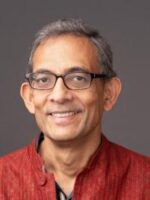
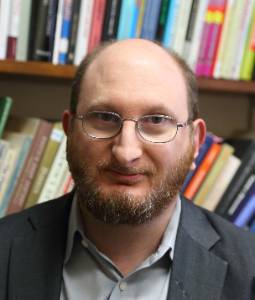
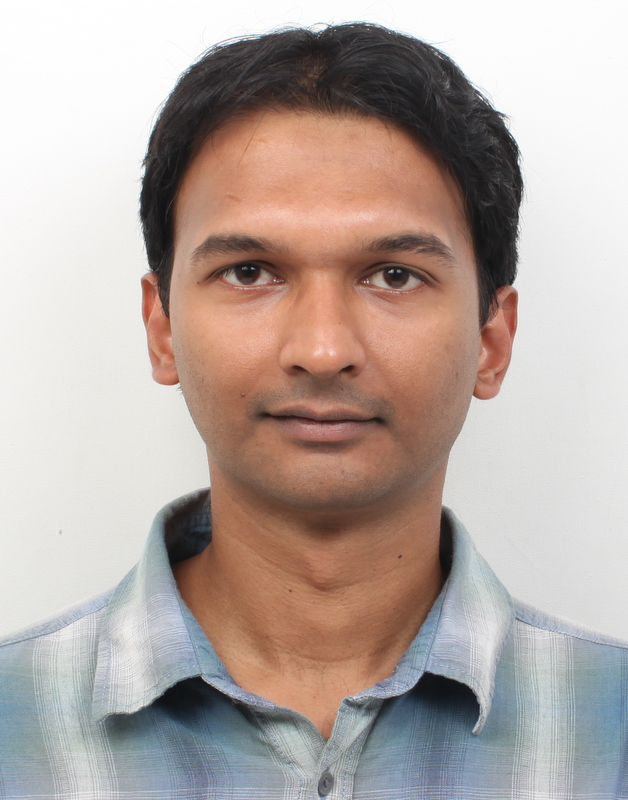
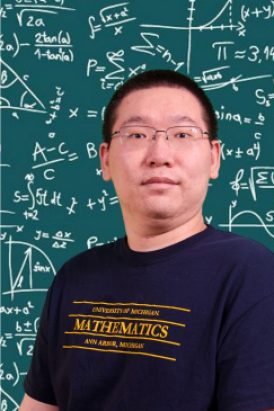
Sunita Sarawagi is a Professor at Computer Science and Engineering , IIT Bombay, and a member of AI Labs@CSE . She is also associated with the Center for Machine Intelligence and Data Science (CMInDS), which she founded in 2020. Education: PhD in Computer Science from UC Berkeley (Thesis: Query Processing in Tertiary Memory Databases), BTech in Computer Science from IIT Kharagpur Research Interests span machine learning , data analytics , graphical models , and structured learning , with applications in text segmentation, sequence modeling, domain adaptation, and human-in-the-loop systems. Her publications reveal a strong focus on integrating data mining with database systems , temporal data analysis , and information extraction using probabilistic methods. Professional Activities include serving on the IEEE John Von Neumann Medal committee (2017-), VLDB 2011 Research Track Co-chair , and multiple program committee roles at top conferences like ICML, KDD, and SIGMOD. Labs & Teams : Leads the SS Lab , a research group focused on probabilistic graphical models, sequence modeling, and data integration techniques.
Massachusetts Institute of TechnologyUnited States
Abhijit Banerjee is a Professor in the Department of Economics at the Massachusetts Institute of Technology (MIT). His research focuses on development economics, public health policy, and social protection programs, particularly addressing poverty and inequality in low- and middle-income countries. He has conducted large-scale experiments evaluating interventions such as conditional cash transfers, universal basic income, and healthcare policies. Key areas of interest include the design and implementation of anti-poverty programs, behavioral economics, and the long-term health impacts of infectious diseases like COVID-19. His work often integrates experimental methods to assess policy effectiveness, with contributions to global health studies and economic development strategies. Notably, his research on the RECOVERY trial evaluates treatments for hospitalized COVID-19 patients, while other studies explore financial spillover effects of electronic government transfers in Indonesia and savings behavior interventions in Chile. Banerjee has collaborated on projects analyzing post-COVID-19 health outcomes, labor market dynamics in India, and the role of trusted messengers in public health communication during crises. Despite the breadth of his contributions, specific details about his educational background, grants, or lab affiliations are not explicitly provided in the source text.
Joseph A. November is an Associate Professor in the Department of History at the University of South Carolina, affiliated with the McCausland College of Arts and Sciences. His research focuses on the history of biomedical computing, distributed computing, and the intersection of technology and medicine. He holds a Ph.D. from Princeton University (2006), an M.A. from the University of Chicago (2002), and a B.A. from Hamilton College (1997). His work includes the award-winning book Biomedical Computing: Digitizing Life in the United States (2012), which explores the co-development of biomedicine and computing technologies. Current projects include Revolutions@home , examining distributed computing in protein folding research, and a biography of computing pioneer Robert S. Ledley. He has received grants from the NSF, NIH, and the Charles Babbage Institute. Teaching interests span the history of science and technology, including courses on the history of medicine, digital humanities, and the role of games in historical education. He actively contributes to professional organizations like SHOT and the History of Science Society. Awards include the Computer History Museum Prize (2013) and the National Institutes of Health DeWitt Stetten Fellowship (2007-2008). His research bridges historical analysis with contemporary issues in technology and biomedical ethics.
Shivaram Kalyanakrishnan is an Associate Professor at the Department of Computer Science and Engineering , Indian Institute of Technology Bombay , specialising in Artificial Intelligence and Machine Learning . His research spans sequential decision making , multiagent learning , multi-armed bandits , and humanoid robotics , with applications in robot soccer , computer games , and online advertising . He teaches advanced courses like CS 747: Foundations of Intelligent and Learning Agents and CS 748: Advances in Intelligent and Learning Agents , focusing on end-to-end system design and theoretical analysis. His scientific awards include the Best Student Paper Award at RoboCup International Symposium 2006 and nomination for Best Student Paper Award at AAMAS 2007 . His work on reinforcement learning and policy iteration has been published in leading venues such as IJCAI , ICML , and COLT , with recent contributions to railway scheduling and bandit algorithms. While no explicit list of advisees is provided, his research projects and publications suggest mentorship of students in collaborative efforts. Contact : shivaram@cse.iitb.ac.in .
Boris Hanin is an Associate Professor at Princeton University's Department of Operations Research and Financial Engineering (ORFE) and Associated Faculty at the Program in Applied and Computational Mathematics (PACM). Prior to Princeton, he held academic positions at Texas A&M University (Assistant Professor of Mathematics), MIT (NSF Postdoctoral Fellow), and Northwestern University (PhD in Mathematics under Steve Zelditch). He works part-time at Foundry, an AI/computing startup, leading the Foundry Institute. PhD in Mathematics, Northwestern University NSF Postdoctoral Fellowship, MIT Mathematics Associate Professor, Princeton ORFE Part-Time Leader, Foundry Institute His research spans machine learning, probability theory, and mathematical physics, focusing on neural network theory (approximation power, optimization guarantees), random matrix theory, and spectral asymptotics. He has made foundational contributions to understanding gradient behavior, initialization, and infinite-width limits in deep learning. Boris has supervised numerous PhD students and postdocs, with former members securing prestigious positions at Harvard, MIT, and Huawei. He serves as Associate Editor for journals like Pure and Applied Analysis and Mathematics of Operations Research , and has taught short courses at Oxford, Luxembourg, and Tor Vergata on statistical physics of neural networks and deep learning theory. 2024 Sloan Fellowship in Mathematics NSF CAREER grant DMS-2143754 NSF grant DMS-2133806 His research group collaborates on topics including hyperparameter transfer, architecture-aware scaling, and spectral analysis of random waves and neural networks. He actively contributes to theoretical machine learning through foundational publications in venues like Probability Theory and Related Fields , Journal of Machine Learning Research , and Communications in Mathematical Physics .
Prof. Dr. Thomas Hofmann is a Full Professor and Head of the Department of Computer Science at ETH Zurich since 2014. He also leads the Institute for Machine Learning. His research focuses on machine learning, deep learning, natural language understanding, and text understanding. Hofmann holds a Ph.D. from the University of Bonn (1997) and has held academic positions at Brown University (1999–2004) and TU Darmstadt. He transitioned to industry as Director of Engineering at Google (2006–2014), leading the Zurich R&D center, before returning to academia. He co-founded Recommind (2000) and 1plusX (Swiss marketing tech company), currently serving as Chief Scientist and board member at 1plusX. Education: Ph.D. in Computer Science, University of Bonn (1997) Postdoctoral Work: MIT (CBCL/AI Lab), UC Berkeley (EECS/ICSI) His research explores advanced machine learning techniques, including diffusion models, generative adversarial networks, and optimization dynamics. Hofmann’s entrepreneurial ventures reflect his focus on applying AI to real-world challenges, such as e-discovery and marketing technology. His work spans theoretical contributions (e.g., neural network training dynamics, continual learning) and applied innovations (e.g., image editing, portrait generation). Hofmann actively bridges academia and industry, influencing both research and commercial AI applications.
Kevin Jamieson is an Associate Professor at the Paul G. Allen School of Computer Science & Engineering and an Adjunct Professor in the Department of Statistics at the University of Washington . His academic journey includes a B.S. (2009) , M.S. (2010) , and Ph.D. (2015) in electrical engineering from the University of Washington, Columbia University, and University of Wisconsin–Madison respectively. He completed a postdoc at UC Berkeley's AMP Lab before joining UW in 2017. Ph.D., Electrical Engineering, University of Wisconsin–Madison (2015) M.S., Electrical Engineering, Columbia University (2010) B.S., Electrical Engineering, University of Washington (2009) Jamieson's research lies at the intersection of interactive machine learning , active learning , and sequential decision making . His work focuses on: Adaptive sampling strategies in multi-armed bandits and reinforcement learning (RL) Developing instance-dependent optimal algorithms that adapt to problem difficulty Applications in robotics , human perception studies , and hyperparameter optimization Representation learning for large models and experimental design frameworks His 15 most recent publications (2025-2022) demonstrate expertise in bandit theory , contextual RL , and game-theoretic learning . Notable trends include sample-efficient optimization , adaptive A/B testing , and sim-to-real transfer in robotics. Jamieson has received: NSF CAREER award for foundational contributions Amazon Faculty Research award for innovation in learning systems He actively recruits graduate students and postdocs , emphasizing collaboration in areas like: Multi-agent RL and strategic actor learning Empirical process suprema and adaptive sampling theory Applications in robotics , large language model finetuning , and biomedical data analysis Jamieson leads the Washington AI Lab (WAIL) and develops open-source learning systems like the NEXT framework for real-world adaptive data collection. He serves as co-PI for the Institute for the Foundations of Data Science (IFDS) and co-organizes the Distinguished Seminar in Optimization & Data .
Shimon Whiteson is Professor of Computer Science at the University of Oxford, leading the Whiteson Research Lab focused on reinforcement learning, multi-agent systems, and deep learning. His research develops algorithms for efficient learning in complex environments. Current work explores meta-reinforcement learning frameworks that enable agents to rapidly adapt to new tasks, with applications in autonomous driving simulation and robotics. Recent innovations include novel methods for offline reinforcement learning, multi-agent coordination, and morphology-aware control. Publications demonstrate advances in: Meta-RL algorithm design for few-shot adaptation Multi-agent reinforcement learning environments and benchmarks Imitation learning in autonomous driving Bayesian methods for sample-efficient learning Research outputs include widely used benchmarks and tools including JaxMARL for accelerated multi-agent RL research. Current doctoral supervision focuses on temporal abstraction in RL, multi-agent coordination, and reinforcement learning theory.
Jason D. Lee is an associate professor of Electrical Engineering and Computer Sciences (EECS) and Statistics at the University of California, Berkeley. Previously, he held academic positions at Princeton University as an associate professor, and was a research scientist at Google DeepMind. He completed his Ph.D. in Computational and Mathematical Engineering at Stanford University under the advisement of Trevor Hastie and Jonathan Taylor. For students and collaborators, his primary contact email is jasonlee@princeton.edu, though prospective students and postdocs are asked to include "filter_student" in the subject line. Ph.D., Computational and Mathematical Engineering, Stanford University (2015) B.Sc., Mathematics, Duke University (2010) Lee's research lies at the intersection of machine learning, statistics, and optimization, focusing on the theoretical foundations of artificial intelligence. His work addresses fundamental questions in deep learning, including optimization landscapes, representation learning, and reinforcement learning theory. He has made significant contributions to understanding how gradient descent operates in neural network training and has developed provably efficient algorithms for various learning scenarios. His ten most recent publications represent a diverse yet coherent body of work across machine learning theory, focusing on topics such as Gaussian multi-index models, transformer learning capabilities, shallow neural networks, and optimization techniques. These publications appear in top venues including COLT, ICML, NeurIPS, and JMLR. Among his notable accolades are: Samsung AI Researcher of the Year Award (2023) NSF Career Award (2022) ONR Young Investigator Award (2021) Sloan Research Fellow in Computer Science (2019) NIPS Best Student Paper Award (2016) Princeton Commendation for Outstanding Teaching (ECE538B) Lee has advised numerous students including Alex Damian, Wenhao Zhan, Eshaan Nichani, Tianle Cai, Zixuan Wang, and Yunwei Ren. Former advisees have gone on to positions at institutions like NYU Courant, Facebook AI Research, UW, MIT, Duke, and Microsoft Research. His research group and collaborators span multiple institutions, working on theoretical and applied aspects of machine learning and artificial intelligence, with a particular focus on the optimization and learning dynamics of neural networks and transformer models.
Yee Whye Teh is a Professor at the Department of Statistics, University of Oxford, and a research scientist at DeepMind. His work focuses on statistical machine learning, including probabilistic learning, Bayesian nonparametrics, deep learning, and Monte Carlo methods. He co-directs the ELLIS programme on Robust Machine Learning and has held roles such as Programme Co-chair for ICML 2017. Teh has delivered keynotes at UAI 2019, an IMS Medallion Lecture at JSM 2019, and the Breiman Lecture in 2017. His research emphasizes scalable inference algorithms, hierarchical models, and applications in genetics and natural language processing. Teh's educational background includes a PhD from the University of Toronto (2003) and a Master's from the same institution (2000). He has contributed to widely used software tools like the Sequence Memoizer and has been recognized for his work through prestigious lectureships. Research interests span Bayesian nonparametric models, MCMC methods, and their applications in genetics and data compression. His lab collaborates on projects like fragmentation-coagulation processes for genetic variation modeling and Mondrian forests for online learning. Teh advises students through Oxford's graduate programs, though he notes high demand for mentorship. His work often bridges theory and practice, addressing challenges in big data learning and small data problems.
Prof. Dr. Sakibe Nalan BÜYÜKKANTARCIOĞLU is a Professor at Çankaya University, Faculty of Arts and Sciences, Department of Translation and Interpreting Studies (English). She previously served as Professor (2007–2019), Associate Professor (2000–2007), and Assistant Professor (1997–2000) at Hacettepe University, Department of English Linguistics. PhD in English Linguistics (Hacettepe University, 1991) MA in English Language Teaching (Middle East Technical University, 1985) BA in English Teaching (Istanbul University, 1978) Her research spans Linguistics, Cognitive Linguistics, Discourse Analysis, Psycholinguistics, Sociolinguistics, Translation Studies , with a focus on figurative language, interjections, political discourse, and endangered languages. She received the European Language Award (2011) and has supervised numerous PhD and MA theses, including work on Turkish idioms, gender representation, and language awareness. A prolific editor and conference participant, she has contributed to interdisciplinary projects and publications on Turkish sociolinguistics.
Abhishek Jain is an Associate Professor in the Department of Computer Science at Johns Hopkins University and a Senior Scientist at NTT Research. He is affiliated with the Data Science and AI Institute, the Information Security Institute, and the Algorithms and Complexity group. University: Johns Hopkins University Department: Computer Science Academic Rank: Associate Professor Institutional Roles: Co-director of the Advanced Research in Cryptography group, member of the Theory Group, and co-leader of the Cryptography Group Education: Ph.D. in Computer Science from the University of California Los Angeles (2012), advised by Amit Sahai and Rafail Ostrovsky. Recipient of the Symantec Outstanding Graduate Student Award during his Ph.D. Research Interests Cryptography Secure computation Proof systems Program obfuscation Privacy Blockchain Theoretical computer science Research Trends: His recent publications emphasize cryptographic protocols for homomorphic encryption, zero-knowledge proofs, and secure multi-party computation, alongside applications in blockchain and privacy-preserving systems. Key themes include scalability, verifiable evaluation, and adapting cryptographic techniques to dynamic and distributed environments. Scientific Awards 2020 NSF CAREER Award Best Paper Awards at Eurocrypt and the International Conference on the Theory and Applications of Cryptographic Techniques Advising & Grants: Mentors Ph.D. students and interns/postdocs at NTT Research. Research funded by NSF, DARPA, JP Morgan, Ethereum Foundation, Stellar, Cisco, Samsung, and JHU Catalyst awards. Labs & Teams: Co-leads the Cryptography Group at Johns Hopkins, participates in the DC Area Crypto Day, and organizes the weekly Theory Seminar. Collaborates with institutions including MIT CSAIL, BUSEC, and Microsoft Research New England.
Jan Østergaard is a Full Professor in Information Theory and Signal Processing at Aalborg University's Department of Electronic Systems. He leads the AI and Sound research section and directs the CASPR center. His expertise spans AI-driven acoustic signal processing, information theory, and EEG signal analysis. Østergaard holds a M.Sc. from Aalborg University and a PhD (cum laude) from Delft University of Technology. Major awards include the Danish Young Researcher’s Award and a EURASIP Best Thesis honor. His work focuses on speech enhancement, sound zone technologies, and neural tracking of auditory attention. Recent research emphasizes low-latency speech transmission, deep learning for sound field control, and robust voice activity detection. He serves on editorial boards and national committees, advancing Denmark’s sound technology initiatives. Education: M.Sc. (Aalborg, 1999), PhD (Delft, 2007) Research interests emphasize practical AI applications in sound systems, including hearing aid improvements, data-efficient acoustic modeling, and feedback control in networked systems. Over 210 publications and 17 active projects reflect his interdisciplinary impact across academia and industry.
Benjamin Van Roy is a Professor at Stanford University since 1998, affiliated with the Departments of Electrical Engineering and Management Science and Engineering, and the Institute for Computational and Mathematical Engineering. He leads the Efficient Agent Team at Google DeepMind and previously held leadership roles at Morgan Stanley, Unica, and Enuvis. He holds SB, SM, and PhD degrees in Computer Science and Electrical Engineering from MIT, advised by John Tsitsiklis. His research focuses on reinforcement learning, alignment, and information theory, with contributions to machine learning foundations, optimization, and finance. He has authored over 150 publications, including influential works on Thompson Sampling, approximate dynamic programming, and exploration strategies. His honors include INFORMS and IEEE Fellowships and the INFORMS Lanchester Prize. Van Roy advises doctoral students across academia and industry, with graduates at top institutions and companies like Meta, Tesla, and Citadel. He teaches courses on reinforcement learning, stochastic control, and optimization. His open-source projects include Epistemic Neural Networks and the Neural Testbed for evaluating machine learning models. Key contributions include foundational work in reinforcement learning theory, scalable methods for recommendation systems, and applications in finance and resource allocation. His research bridges theoretical insights with practical applications, emphasizing alignment and safety of AI systems.
Sara Ng is a Visiting Assistant Professor in the Department of Linguistics at Western Washington University. She holds a PhD in Linguistics from the University of Washington (2024) and an MS in Computational Linguistics (2023), alongside a B.A. in Linguistics and B.S. in Applied Mathematics from the University of Utah (2017). Her research focuses on computational models of prosody, speech perception, and their integration with speech technologies like automatic speech recognition (ASR). She investigates how prosody conveys pragmatic meaning, influences conversational dynamics, and impacts listeners with hearing impairments. Her work bridges computational methods and linguistic theory, addressing challenges in clinical and technological applications. Education PhD in Linguistics, University of Washington, 2024 MS in Computational Linguistics, University of Washington, 2023 B.A. in Linguistics (Honors), B.S. in Applied Mathematics, University of Utah, 2017 Research Interests Ng’s research explores computational linguistics, prosody modeling, speech technology, and hearing impairment studies. She develops methods to leverage prosodic cues for tasks like punctuation prediction and investigates the impact of hearing loss on speech perception. Grants & Awards 2024: Nominated for UW Excellence in Teaching Award 2023: Excellence in Linguistic Research Graduate Fellowship 2017: University of Utah Top Scholar Award Teaching Ng teaches courses in phonetics, computational linguistics, and linguistics for honors students. She emphasizes pedagogical innovation and inclusivity, with experience as an instructor of record and teaching assistant at both Western Washington University and the University of Washington. Labs & Collaborations She collaborates with the TIAL Lab (University of Washington), Phonetics Lab, Hearing Aid Laboratory (Northwestern University), and CLILLAC-ARP (Université Paris Cité). Her work intersects with clinical and engineering domains, addressing real-world applications of speech technology.