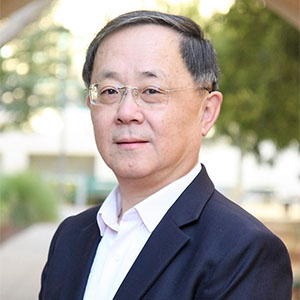
Professor Marios C. Angelides is a full-time faculty member at Brunel University London , serving as Professor of Computing and Divisional Lead within the College of Engineering, Design and Physical Sciences . He leads the Creative Computing Research Group under the Institute of Digital Futures and contributes to the Digital Media department at Brunel Design School. BSc (First Class Honours) and PhD in Computing from the London School of Economics (LSE) Chartered Engineer (CEng) and Chartered Fellow of the British Computer Society (FBCS CITP) His research focuses on Creative Computing , specifically applying Machine Learning , Serious Gaming , and Cognitive Modeling to develop Smart IoT Applications . His work spans autonomous drone fleets for environmental monitoring, cybersecurity middleware for Android systems, wearable technology for lifestyle recommendations, and historical analysis of Alan Turing’s legacy in modern AI. Recent publications highlight trends in deploying Machine Learning for: IoT systems optimization Autonomous aerial/underwater vehicle coordination Deepfake detection using Turing’s Imitation Game Energy allocation in CubeSats via gaming mechanics Scientific recognition includes being Deputy Editor of The Computer Journal and runner-up for the 2016 Oxford University Press Wilkes Award . He has supervised PhD students in topics like Smart Android Middleware for Cybersecurity and Wearable Recommendation Systems , with active involvement in editorial boards and international conferences.
Guibourg Delamotte is a tenured Full Professor of Political Science and head of the Japanese Studies Department at the French Institute of Oriental Studies (Inalco), where she has been affiliated since 2006. She also teaches at Sciences Po Paris and holds international research fellowships at the University of Tokyo’s Research Center for Advanced Science and Technology (RCAST), Temple University Japan, and the Japan Forum on International Relations (Tokyo). Her career spans Japanese defense policy, domestic politics, parliamentary institutions, and Indo-Pacific security dynamics. Education: Law, University of Paris Panthéon Assas Law, University of Oxford Japanese (BA, MA), Inalco Political Science, Sciences Po Paris PhD in Political Studies, EHESS (2007, Highest Honours, Shibusawa-Claudel Award) Habilitation à Diriger des Recherches, Sciences Po Paris (2022) Her research focuses on Japanese domestic and foreign policy, parliamentary governance, defense modernization, and Indo-Pacific security. She has authored/co-edited eight books, including Le Japon, un leader discret (Eyrolles, 2023) and La Démocratie au Japon, singulière et universelle (ENS Ed., 2022), and over 20 journal articles and book chapters. Recent publications emphasize Japan's strategic evolution in the Indo-Pacific, AUKUS implications, and democratic governance challenges. She examines security policy intersections with domestic politics, legal frameworks, and international alliances. Scientific Awards: Shibusawa-Claudel Award for PhD dissertation Highest Honours (PhD, EHESS) Delamotte leads the French Research Institute on East Asia (IFRAE)’s program on Contemporary East Asia's trajectory. She serves on the National Academic Council’s Political Science Section (CNU, Section 4) and contributes to policy debates through academic and governmental institutions.
Adam T. Smith is Distinguished Professor of Arts and Sciences in Anthropology at Cornell University, where he has been faculty since 2011. He is a leading scholar in Eurasian archaeology with a focus on the South Caucasus, particularly Armenia. Smith co-founded Project ArAGATS, a long-term archaeological program in Armenia, and co-directs the Aragats Foundation and Caucasus Heritage Watch, organizations dedicated to heritage preservation in the region. His educational background includes: Ph.D. (1996) in Anthropology from the University of Arizona M.A. (1993) in Anthropology from the University of Arizona M.Phil. (1991) in Social and Political Science from the University of Cambridge B.A. (1990) in Anthropology and Political Science from Brown University Smith's research centers on the role of material culture in political life, examining how objects, landscapes, and built environments shape political procedures and values. His work spans archaeological theory, political anthropology, and heritage studies, with a particular focus on the South Caucasus region. He investigates the long-term social and political dynamics from the Bronze Age to contemporary times, exploring themes of sovereignty, heritage preservation, and the political dimensions of material culture. His approach integrates theoretical frameworks with empirical fieldwork to understand political power through material evidence. His recent publications demonstrate a consistent focus on the archaeology of power and politics in Eurasia, with increasing attention to contemporary heritage issues. Smith's work bridges theoretical frameworks with empirical research, particularly through his long-term fieldwork in Armenia and the Caucasus region. His scholarship shows a progression from studies of ancient political systems to contemporary issues of cultural heritage and political violence, with a strong emphasis on ethical engagement with archaeological practice and heritage management. Smith has received numerous prestigious awards including: 2023-2025 Fellow, Milstein Program in Technology and Humanity, Cornell University 2023 Finalist, Falling Walls Science Breakthrough of the Year, Social Sciences and Humanities 2023 Certificate of Communal Partnership, St. James AME Zion Church, Ithaca NY 2010-2011 John Simon Guggenheim Memorial Foundation Fellow 2010-2011 Fellow, Cornell University Society for the Humanities 2006-2007 Fellow, Howard Foundation Smith has directed multiple field seasons and collaborative research projects in Armenia, involving both American and Armenian scholars. His work with Project ArAGATS has received continuous support over two decades, while Caucasus Heritage Watch represents a newer initiative addressing urgent heritage preservation needs through satellite monitoring. He has supervised numerous graduate students and secured significant research funding for his projects, demonstrating strong leadership in both academic and community-engaged research contexts. Smith leads several research initiatives including Project ArAGATS, the Aragats Foundation, and Caucasus Heritage Watch. His Landscapes and Objects Laboratory at Cornell serves as a hub for material culture studies, while his work with the St. James AME Zion Community Excavations demonstrates his commitment to community-engaged archaeology. These teams bring together interdisciplinary scholars to address complex questions about political power, material culture, and heritage preservation across time, with particular attention to how archaeological practice can engage with contemporary political issues and community needs.
Barbara Penner is Professor of Architectural Humanities at University College London's Bartlett School of Architecture, where she serves as Co-Director of the MA Architectural History program and supervises PhD students. Her academic appointments include Senior Lecturer positions at UCL since 2000 and previous roles at University of East London, Middlesex University, and Chelsea College of Art. Her educational background comprises a PhD from Birkbeck College (2003), MSc from University College London (1996), and BA from McGill University (1994). Penner's research focuses on the social and cultural dimensions of everyday spaces, examining how domestic environments, urban infrastructure, and commercial architecture shape social identities. Her interdisciplinary approach integrates architectural history with anthropology, literary theory, and cultural studies, particularly exploring gender dynamics in spaces like bathrooms, kitchens, hotels, and housing. Her publications reveal consistent engagement with themes of gender, domesticity, and infrastructure across historical periods. Key works include Bathroom (2013), Newlyweds on Tour (2009), and co-edited volumes on public toilets and gender. Recent scholarship examines social scientific research in home design, urine diversion systems, and historical housing models. RIBA President’s Award for Outstanding University-Located Research (2014) Leverhulme Major Fellowship (2021-2023) Provost Teaching Award, UCL (2013) Council of Editors of Learned Journals Best New Journal Award (2009) Penner actively supervises doctoral research on topics including Billy Butlin’s holiday camps and Gulf female shoppers' impact on London retail. She has completed twelve PhD supervisions and examined nearly thirty theses internationally. Her professional activities include serving on the Architectural Association Publications Committee, as North American Editor for Architectural History, and as External Examiner at University College Dublin. She participates in the 'Insurgent Domesticities' research group at Columbia University and contributes to Places Journal as a contributing editor.
Joy S. Kaufman is a Professor in the Department of Psychiatry at Yale School of Medicine. She serves as Deputy Chair for Career Development, Director of the Yale Consultation Center, and Director of YaleEVAL. Her work focuses on large-scale evaluations of health service delivery systems in under-resourced communities, emphasizing community-based participatory research and stakeholder training. Education: PhD in Clinical and Community Psychology, DePaul University (1994) Postdoctoral Fellow, Yale University (1993) MA in Psychology, DePaul University BA in Psychology, Assumption College Dr. Kaufman specializes in health equity , trauma exposure in children , and program evaluation . Her research bridges public health , social justice , and behavioral health policy through rigorous methodologies. Recent publications highlight her work on opioid use disorder in obstetric care , perinatal substance use reporting , and system-level mental health evaluations . She employs latent class analysis and CBPR frameworks to address disparities. Scientific Awards: Fellow, American Psychological Association Fellow, Society for Community Research and Action Gold Medal, Substance Abuse and Mental Health Services Administration Exemplary Evaluation, American Evaluation Association As principal investigator, she has secured funding from the National Institute of Justice , PCORI , and Connecticut state agencies . Her leadership extends to training community members in evaluation methods and developing trauma-informed healthcare systems .
Denise Esserman is a Professor of Biostatistics at the Yale School of Public Health, where she joined the faculty in 2014. She is a member of the Yale Center for Analytical Sciences and collaborates with multiple departments at the Yale School of Medicine, including the Clinical and Translational Science Award Program, Patient-Centered Outcomes Research Institute, and the Cancer Center. Her research focuses on methodological aspects of clustered randomized trials and sample size calculations. Education: PhD in Biostatistics from Columbia University (2006) MS in Statistics from University of Georgia (2001) Dr. Esserman's research interests span several critical areas in biostatistics and public health methodology. She specializes in clustered randomized trials, with particular expertise in understanding how intraclass correlation coefficients (ICC) and other factors impact sample size calculations. Her work extends to longitudinal studies methodology, randomized controlled trial design, and sampling techniques. She has contributed significantly to statistical methods for clinical trials, healthcare data analysis, and public health research. Her interdisciplinary approach bridges theoretical statistics with practical applications in healthcare settings. Analysis of Dr. Esserman's recent publications reveals a strong focus on methodological innovations in clinical trial design and analysis, particularly for cluster-randomized trials. Her work spans healthcare applications including fall injury prevention in elderly populations, opioid use disorder treatment in international settings, pain management for hemodialysis patients, and validation of medical coding algorithms. She frequently employs advanced statistical techniques including Bayesian methods, mediation analysis, and methods for handling clustered data. Her research demonstrates a consistent commitment to improving the rigor and applicability of statistical methods in public health and clinical research. Dr. Esserman serves as a reviewer for several prestigious journals including the American Journal of Epidemiology, Arteriosclerosis, Thrombosis and Vascular Biology; Statistics in Biopharmaceutical Research; Clinical Trials; and Obesity. As a member of the Yale Center for Analytical Sciences, Dr. Esserman collaborates with numerous researchers across Yale University. Her current projects include the EQuIP trial (HIC ID 2000033355), where she serves as Sub Investigator with primary completion date of 08/31/2027, focusing on mental health and behavioral research for sexual minority women.
Scott McCabe is a Professor of Marketing at Birmingham Business School, University of Birmingham. He earned his PhD from the University of Derby in 2001, focusing on visitor motivations in the Peak District National Park, and holds an MA in Leisure and Tourism Studies from the University of North London (1993) and an HND in Leisure Studies from the University of Salford (1991). Current co-editor in Chief of the Annals of Tourism Research Editorial board member of Tourism Management Elected fellow of the International Academy for the Study of Tourism (2019+) His research spans social tourism , responsible tourism , tourist emotions , and socio-linguistic methodology , with significant work on wellbeing outcomes from supported holidays for disadvantaged families. He has contributed to Annals of Tourism Research , Journal of Travel Research , and other top-tier journals. Recent publications address topics like qualitative research sampling , tourism theory , dark tourism motivations , and smart destination engagement . His work combines tourism policy critique , consumer behavior analysis , and methodological innovation . Scientific awards include fellowships and leadership roles in international tourism research committees. He has served as VP for the International Sociological Association's Tourism Research Committee and co-chairs the Academy of Marketing's Tourism Marketing SIG.
Ningyuan Cao is an Assistant Professor in the Department of Electrical Engineering at the University of Notre Dame, College of Engineering. He leads the Circuit and System Intelligence Research Lab , focusing on the intersection of advanced hardware design and real-time/low-power machine learning applications. Education : Ph.D., Electrical and Electronics Engineering, Georgia Institute of Technology (2020) M.S., Electrical Engineering, Columbia University (2015) B.S., Electrical and Electronics Engineering, Shanghai Jiao Tong University (2013) His research investigates custom analog/mixed-signal circuits , digital architecture , and micro-system design for machine learning acceleration, distributed intelligence, and data-driven IC design automation. Key application domains include Internet-of-Everything, tactile internet, and mixed reality systems. Recent publications highlight work on Bayesian neural networks , privacy-preserving bio-signal encoders , transformer-based surrogate models , and compute-in-memory architectures . Technical themes span neuromorphic computing, uncertainty quantification, and hardware security.
Anming Zhang serves as a Professor in the Operations and Logistics Division of UBC's Faculty of Commerce and Business Administration, holding the prestigious Vancouver International Airport Authority Professorship in Air Transportation. His academic foundation includes a B.Sc. from Shanghai Jiao-Tong University and M.Sc./Ph.D. degrees from the University of British Columbia. Education : B.Sc. (Shanghai Jiao-Tong University), M.Sc. & Ph.D. (University of British Columbia) His research focuses on Transport Economics and Policy , Air Cargo Logistics , and Industrial Organization , with particular expertise in air-rail competition dynamics, pandemic impacts on aviation, and infrastructure economics. Zhang employs advanced methodologies including spatial econometrics and complex network analysis to examine transportation systems. Analysis of his 2024-2025 publications reveals three dominant trends: (1) Resilience of global air networks against pandemics and geopolitical conflicts, (2) Economic implications of urban air mobility integration, and (3) Non-aeronautical revenue optimization in airport management. His work increasingly bridges transportation economics with environmental sustainability concerns. Zhang actively supervises graduate students in Transportation & Logistics MSc and PhD programs within Business Administration, teaching undergraduate courses including Logistics and Operations Management and Air Transportation. He maintains strong institutional ties through the Center for Transportation Studies and collaborates extensively with international researchers on aviation policy challenges.
Hua Cai is the Thomas and Jane Schmidt Rising Star Associate Professor at Purdue University's Edwardson School of Industrial Engineering with a joint appointment in Environmental & Ecological Engineering. She holds a PhD in Environmental Engineering & Natural Resources from the University of Michigan, an MS in Environmental Engineering from Penn State, and a BS from Tsinghua University. Her research integrates operations research and production systems to address sustainability challenges, with focus areas including: Environmental implications of emerging technologies Urban sustainability modeling and infrastructure resilience Industrial ecology and complex adaptive systems Sustainable transportation and mobility systems Recent publications demonstrate strong focus on sustainable transportation systems, with extensive analysis of shared mobility patterns (bike/e-scooter systems), autonomous vehicle impacts, and microgrid resilience. Her work consistently applies advanced computational methods including reinforcement learning, agent-based modeling, and spatiotemporal analysis to urban sustainability challenges. Dr. Cai has received recognition including the Thomas and Jane Schmidt Rising Star Professorship for her contributions to sustainable systems engineering. She leads research on renewable energy integration in transportation infrastructure and advises projects on climate-resilient urban systems.
Saugata Ghose is an Assistant Professor in the Siebel School of Computing and Data Science at the University of Illinois Urbana-Champaign (UIUC), with affiliate appointments in the Coordinated Science Laboratory and the Department of Electrical and Computer Engineering. His research focuses on data-centric computing, processing-in-memory architectures, memory systems, and hardware-software co-design. He holds a Ph.D. and M.S. in Computer Engineering from Cornell University and dual B.S. degrees in Computer Engineering and Computer Science from SUNY Binghamton. His academic positions include roles at Carnegie Mellon University (2016–2020) and postdoctoral research at CMU (2014–2016). Ghose has received notable awards such as the 2024 HPCA Hall of Fame, 2023 Intel Rising Star Faculty Award, and the 2019 CMU Wimmer Faculty Fellowship. His work has been supported by grants from NSF, Samsung, and Sandia National Laboratories. Research Interests: His group (ARCANA) explores data-centric architectures, processing-in-memory (PIM), and emerging memory technologies. Key areas include architectures for smart cities, autonomous systems, and genomics. He teaches courses on computer architecture and systems organization. Awards: HPCA Hall of Fame (2024) Intel Rising Star Faculty Award (2023) CMU Wimmer Faculty Fellow (2019) Cornell ECE Teaching Assistant Award (2013) Grants & Projects: NSF $2M for semiconductor advancements Samsung/Sandia grants for PIM programming models UIUC/ZJU DREMES collaboration on neuromorphic PIM Labs/Teams: Leads the ARCANA Research Group, focusing on reimagining computing around new applications. Collaborates with ASAP and HYBRID centers for co-design tools and neuromorphic architectures.
Dr. Rebecca Clark is an Associate Professor in the Department of Biosciences at Durham University. Her research focuses on understanding intestinal function in health and disease using the Drosophila model. She investigates how the intestinal epithelium balances barrier function, nutrient absorption, microbial symbiosis, and cell turnover, particularly during aging and disease states. Key research questions include mechanisms of intestinal barrier failure and the interplay between nutrition and intestinal homeostasis. Her work integrates genetic, microbiological, and physiological approaches to explore aging-related pathologies. Current projects aim to identify molecular pathways linking intestinal health to longevity. Supervised postgraduate students include Ale Acevedo Marcelin, Beñat Yanez, and Fanila Shahzad. Dr. Clark’s lab uses Drosophila as a model system due to its powerful genetic tools and evolutionary relevance. Research has implications for understanding human conditions such as inflammatory bowel disease and age-related metabolic disorders. Recent findings highlight microbiota-independent aging mechanisms and the role of tricellular junctions in stem cell regulation. No scientific awards are explicitly listed in the provided materials. Her research has been published in journals like Cell , Nature Cell Biology , and Proceedings of the National Academy of Sciences .
Prof. Ping Lu is the Albert W. Johnson Distinguished Professor and Department Chair in the Department of Aerospace Engineering at San Diego State University (SDSU), College of Engineering. He holds a PhD from the University of Michigan. His research focuses on advanced guidance systems, autonomous trajectory planning, flight control, and flight mechanics, with applications to space transportation systems like the X-33, Orion Crew Exploration Vehicle, and Mars missions. Prof. Lu has contributed to major programs such as the Evolvable Mars Campaign and has pioneered algorithms for propellant-optimal guidance and trajectory optimization. His awards include the NASA Director’s Innovation Group Achievement Award (2016) and AIAA Mechanics and Control of Flight Award (2008). Research highlights include model predictive guidance algorithms, six-degree-of-freedom rocket landing optimization, and fuel-optimal strategies for Mars and lunar missions. His work bridges theoretical control systems with practical aerospace applications, emphasizing real-world feasibility through convex optimization and numerical methods. Key contributions include over 150 peer-reviewed articles, with recent trends focusing on end-to-end trajectory optimization from entry to powered descent, asteroid landing trajectory design, and robust abort protocols. He leads SDSU’s aerospace systems research, collaborating on cutting-edge projects like the Pterodactyl entry vehicle and fractional-polynomial guidance frameworks.
Dr Crispin Branfoot is a Reader in the History of South Asian Art and Archaeology at SOAS University of London, affiliated with the School of Arts and the Department of History of Art and Archaeology. He holds a BA in Ancient History and Archaeology from Manchester University, and an MA and PhD in Art and Archaeology from SOAS. His research focuses on the arts of southern India from the 14th to 20th centuries, with emphasis on Hindu temple architecture, colonial-era renovations, and the intersection of photography, archaeology, and conservation. He has supervised four PhD students examining topics ranging from temple iconography to colonial paper-making practices. His work explores how sacred spaces like the Minakshi-Sundareshvara temple in Madurai were reconfigured through colonial and post-colonial interventions, while also analyzing pilgrimage routes, portraiture traditions, and the legacy of the Vijayanagara Empire. He has contributed to major publications such as India: A History in Objects (2022), and his research bridges material culture studies with postcolonial theory. He previously worked at De Montfort University and the British Museum, where he gained expertise in South Asian art curation and historical documentation.
Dr. Jean-Christophe Nave is an Associate Professor in the Department of Mathematics and Statistics at McGill University. He holds a PhD from the University of California, Santa Barbara (2004), under advisors Xu-Dong Liu and Sanjoy Banerjee. Prior to McGill, he served as a Lecturer and Instructor at MIT's Mathematics Department (2005-2010). His research focuses on numerical analysis, partial differential equations, fluid mechanics, and computational methods for interface problems. He has led research groups involving postdocs, PhD, and undergraduate students, collaborating on projects like the Correction Function Method for PDEs and the Characteristic Mapping Method for advection problems. Education: Ph.D. in Applied Mathematics from UCSB (2004). Affiliations include the Institut des Sciences Mathematiques Steering Committee, Centre de Recherches Mathematiques Applied Math Lab, and CNRS-UMI. Active in teaching courses like Numerical Analysis I/II and Non-Linear Dynamics at McGill, with sabbatical periods noted in recent years. Research interests span numerical methods for PDEs, fluid-structure interaction, and multi-phase flows. His work integrates computational geometry and invariant numerical techniques, addressing challenges in complex fluid dynamics and interface-driven phenomena. Over 40 peer-reviewed publications and continuous contributions to the field of computational applied mathematics. Scientific advising includes over 20 graduate and undergraduate students, with notable alumni now in academia and industry. Collaborations include projects on volcano dynamics, fiber drawing instabilities, and concentrated solar power systems. His methods have advanced numerical simulations for engineering and physical systems involving discontinuous coefficients and sharp interfaces.