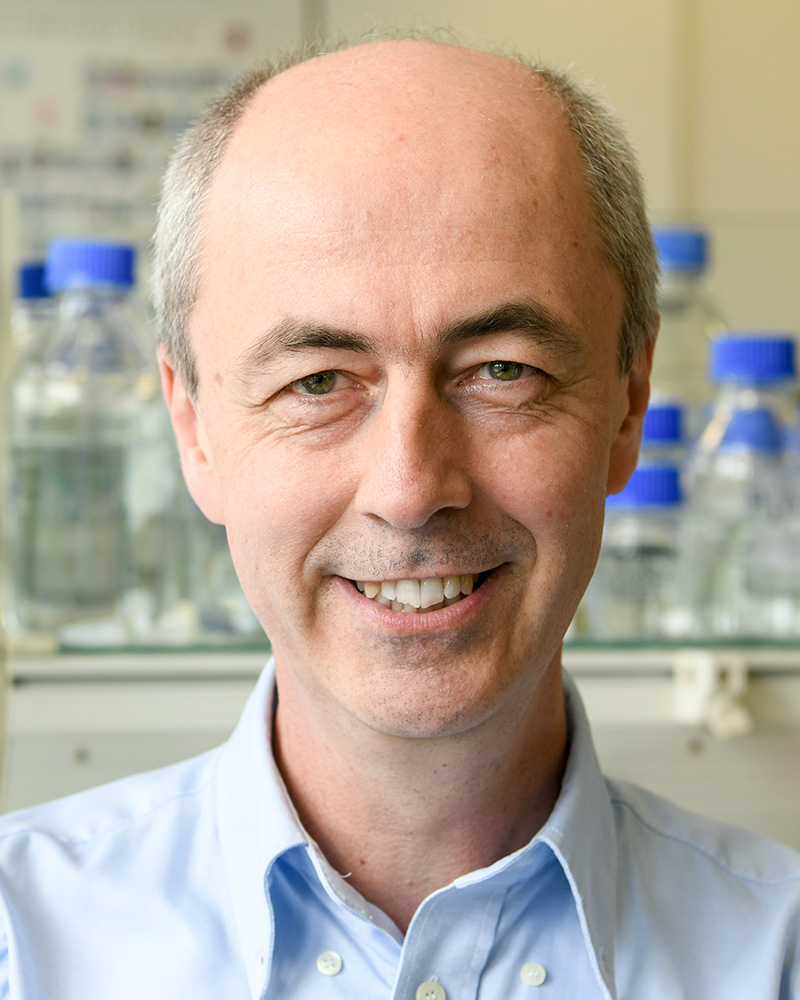
Matthias Weiss is a Professor of Experimental Physics at the University of Bayreuth since 2010. Previously, he held roles including BIOMS Junior Group Leader at the German Cancer Research Center (2004–2010) and postdoc positions at EMBL Heidelberg and the MEMPHYS-Center in Denmark. He studied physics at Frankfurt and Heidelberg, earning a Diploma (1997) and PhD in quantum chaos (2000). His research bridges physics and biology, focusing on dynamic self-organization in living systems. Key areas include transport processes, organelle formation, embryogenesis, and parasite-host interactions. Techniques include advanced light microscopy and computational modeling. His work spans projects like the physics of Giardia adhesion and Trypanosoma motility, funded under SPP 2332 PoP. Notable publications explore anomalous diffusion in nuclei, ER network dynamics, and microtubule roles in Trypanosoma. Collaborations involve institutions like DKFZ, EMBL, and the University of Würzburg. He leads the Experimental Physics I department at Bayreuth and advises on biophysical methodologies.
Dr. Dominic Winter is a Researcher at the Department of Biochemistry and Molecular Biology, University of Bonn. His research focuses on lysosome biology using mass spectrometry-based proteomics and biochemical approaches. He investigates lysosomal composition, signaling pathways, and their roles in health and disease. Research interests include lysosomal protein dynamics, disease mechanisms involving lysosomal dysfunction, and development of novel proteomics methods. His work addresses cell type-specific lysosomal variations, transcriptional regulation, and pathological effects on lysosomal signaling. Key techniques: relative/absolute protein quantification, protein-protein interaction analysis, and structural characterization of lysosomal proteins. The Winter Lab (winter-lab.org) applies these methods to understand lysosomal roles in cellular processes and disease pathogenesis.
Prof. Klaus Aktories is a Full Professor and Chair of Pharmacology and Toxicology at the University of Freiburg. He holds affiliations with the Institute of Experimental and Clinical Pharmacology and Toxicology and the BIOSS Centre for Biological Signalling Studies. Previously, he served as an Internal Senior Fellow (2015–2016) and held academic positions at the Universities of Frankfurt, Heidelberg, Gießen, Essen, and Saarland. His research focuses on the molecular mechanisms of bacterial protein toxins and their impact on eukaryotic cell signaling pathways, particularly GTP-binding proteins and cytoskeletal proteins like actin and microtubules. He is a prominent member of the German National Academy of Sciences – Leopoldina (2003), the American Academy of Microbiology (2008 Fellow), and EMBO (2008). Education: Pharmacy and Medicine studies at University of Frankfurt, Dr. med. (1977) Dr. rer. nat. (Ph.D.) in Pharmacology (1981), University of Heidelberg habilitation in Pharmacology and Toxicology (1983), University of Heidelberg Research Interests: The Aktories Lab investigates how bacterial toxins manipulate host cell signaling. Key areas include: Clostridium, Photorhabdus, Yersinia, and Legionella toxins Covalent modifications of Rho/Ras GTPases and actin via glucosylation, ADP-ribosylation, and deamidation Toxin-induced cytoskeletal disruption and its role in pathogenesis Development of anti-infection strategies and toxin-based pharmacological tools Current studies emphasize toxin-receptor interactions (e.g., LSR receptor for CDT) and toxin effects on processes like osteoblastogenesis and neuronal inflammation. Publications Trends: Recent articles highlight Clostridium difficile toxin mechanisms, Yersinia glycosylation effects, and novel therapeutic approaches using toxins. Key themes include toxin-induced signaling pathway disruptions, receptor identification, and defensin-based toxin neutralization. Awards: Member of the German National Academy of Sciences – Leopoldina (2003) Fellow of the American Academy of Microbiology (2008) Member of EMBO (2008) Research Funding & Labs: Laboratory at Institute of Experimental and Clinical Pharmacology and Toxicology Associated with BIOSS and CIBSS signaling research centers Research supported by grants focusing on toxin biology and anti-infection strategies His work bridges basic pharmacology with clinical applications, leveraging toxins as experimental tools for understanding cellular processes.
Prof. Dr. Valentin Stein leads research at the Institute of Physiology II, University of Bonn, focusing on synaptic mechanisms underlying brain function and neurodevelopmental disorders. His team investigates protein interactions at glutamatergic synapses, particularly AMPA receptor regulation through posttranslational modifications like neddylation. Key research areas include: 1) Molecular basis of synaptic plasticity and spine dynamics; 2) Neddylation's role in synaptic transmission/cognition; 3) Neurophysiological impacts of stress vulnerability; 4) Ion channel dysfunction in epilepsy. Experimental approaches combine electrophysiology, molecular biology, and in vivo two-photon microscopy. Publications demonstrate translational neuroscience linking fundamental synaptic processes to cognitive outcomes, with implications for epilepsy, neurodegenerative diseases, and neuropsychiatric conditions.
Macek is a Full Professor of Quantitative Proteomics and Director of the Proteome Center Tuebingen at the University of Tübingen, Germany. His research focuses on integrative proteomics, mitochondrial biology, bacterial physiology, and autophagy mechanisms. He holds a Doctorate in Biology from the University of Münster and a Diploma in Molecular Biology from the University of Zagreb. Key research interests include: Quantitative proteomics of cellular systems Mitochondrial dynamics and quality control Bacterial antibiotic production and resistance Host-pathogen interactions Cyanobacterial metabolism and circadian rhythms His work spans from fundamental biological processes to clinical applications such as precision medicine and cancer immunotherapy. Notable contributions include discoveries in Parkin-mediated mitophagy, antibiotic production regulation in Streptomyces, and AI-driven proteomic analysis. Macek has directed the Proteome Center Tuebingen since 2014, fostering collaborations across disciplines. His lab employs advanced proteomic techniques combined with computational biology to address complex biological questions.
Prof. Peter Bayer is a Professor at the University of Duisburg-Essen, leading the Structural and Medicinal Biochemistry department within the Faculty of Biology. His research focuses on elucidating protein-protein and protein-ligand interactions using biochemical, biophysical, and NMR spectroscopy techniques. Key areas include structural biology of enzymes, posttranslational modification processes, and the development of supramolecular ligands for biomedical applications. Research interests prominently feature protein structure determination, biophysical characterization of parvulins, and nanotechnology-based approaches for targeted drug delivery. Bayer’s work often integrates ultrasmall nanoparticles (e.g., gold, silver, platinum) with functionalized ligands to study protein interactions and antimicrobial activity. Publications span structural biology, nanomaterials, and enzymology, emphasizing molecular tweezers for enzyme inhibition and nanoparticle surface engineering. Collaborations with teams like those of Prof. Schrader and Dr. Beuck highlight interdisciplinary projects in drug design and biophysical chemistry.
Prof. Dr. Klaus Harter is a Professor at the University of Tübingen, affiliated with the Center for Molecular Biology of Plants (ZMBP) within the Faculty of Science. His research focuses on plant signal perception, integration, and transduction mechanisms, particularly plant two-component systems (TCS) and bZIP transcription factor regulation. He leads a research group investigating how plants adapt to environmental and developmental signals through molecular networks involving histidine kinases, response regulators, and transcription factors. His work combines cutting-edge methods like bimolecular fluorescence complementation (BiFC), proteomics, and bioinformatics to study processes such as calcium signaling, hormonal regulation, and gene expression networks. Education and affiliations include roles at the ZMBP Plant Physiology department. Key research areas include understanding TCS-mediated signal integration in plant growth and stress responses, post-translational regulation of transcription factors, and systems biology approaches to model gene regulatory networks. Collaborations with institutions like the University of Münster (Prof. Kudla) highlight expertise in signal transduction. Students advised include Amelie Spazierer (PhD candidate). Publications span over two decades, with recent works on AHK5 phosphorelay mechanisms, cytokinin-ethylene interactions, and brassinosteroid signaling. His lab develops novel imaging and molecular tools (e.g., BiFC, qDPI-ELISA) to study protein interactions and gene regulation. Research also addresses bioinformatic integration of genomic data to model plant response networks, emphasizing chromatin dynamics and epigenetic regulation.
Manuela Neumann is a Professor and Group Leader at the German Center for Neurodegenerative Diseases (DZNE) in Tübingen, Germany, researching molecular mechanisms of frontotemporal lobar degeneration (FTLD) and amyotrophic lateral sclerosis (ALS) with emphasis on TDP-43 and FUS protein aggregation. Her primary research spans neurodegenerative diseases, ALS, FTLD, molecular neuroscience, protein aggregation, and RNA metabolism. The Neumann group investigates physiological functions of TDP-43, FUS, and C9orf72 proteins in the central nervous system, mechanisms of neurodegeneration (loss of function vs. toxic gain of function), and molecular classification of disease subtypes to advance therapeutic development. No scientific awards were mentioned in the source text. No details regarding student supervision or research grants were provided in the source material. The laboratory employs advanced methodologies including histological/proteomic analysis, image processing, antibody generation, primary neuron cultures, organotypic slice cultures, and genetically modified mouse models (knock-out, knock-in, overexpression). Current projects focus on TDP-43/FUS posttranslational modifications, disease-model development, transcriptomic/epigenetic/proteomic changes, and C9orf72-TDP-43 interactions using human brain bank tissues.