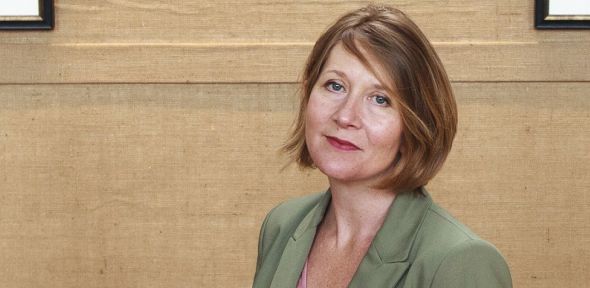
Professor Emma Widdis is a leading scholar at the Faculty of Modern and Medieval Languages and Linguistics at the University of Cambridge, specializing in the intersection of Soviet cinema, ideology, and cultural geography. Her work explores the reeducation of sensory perception through film, early Soviet urban spaces, and the construction of subjectivity via cinematic techniques. Teaches 20th-century Russian/Soviet literature, cinema, and film theory Focuses on sensory engagement, political avant-garde, and urban spatial representation Supervisor for MPhil and PhD students in Slavonic Studies Her recent book Socialist Senses (2017) examines how cinema shaped Soviet perceptions of reality. Her publications span topics like silence in sound film, set design materiality, and costume symbolism in early Soviet cinema. While no formal scientific awards are listed, her research has been supported through institutional grants and collaborations with centers like CRASSH and Cambridge Language Sciences.
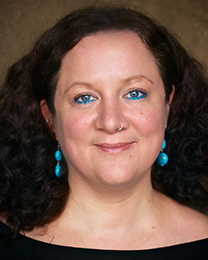
Dr. Frances Smith is an Associate Professor in Film Studies at the University of Sussex's School of Media, Arts and Humanities. She holds a PhD in Film and Television Studies from the University of Warwick (2013), an MA in Management from Durham University (2008), and a Master of Modern Languages in French/Italian from Manchester University (2007). Her research focuses on teen cinema, female authorship, Hollywood and European cinema, and gender studies, with current work on Céline Sciamma's Girlhood. She authored Rethinking the Hollywood Teen Movie (2017) and co-edited Refocus: The Films of John Hughes (2021). Teaching includes convening Analysing Film, American Teen Cinema, and Working with Film modules. She has taught Gender and Representation, British Cinema, and Study Skills. Her awards include Fellowship of the Higher Education Academy (2016). Active in PhD supervision focusing on teen cinema, female authorship, and gender in cinema. Publications span over 25 articles/chapters addressing topics like queer youth representation, transatlantic media comparisons, and directorial authorship in John Hughes and Amy Heckerling films. Research explores intersections of gender, space, and cultural identity in global popular cinema.
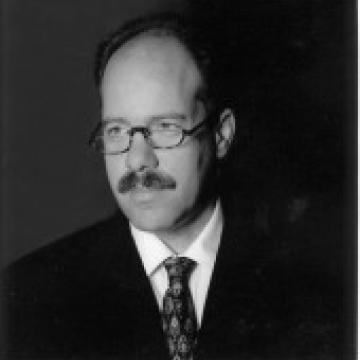
Dr. Ben Coulson is a Lecturer in International Relations at the University of Edinburgh's School of Social and Political Science. His research sits at the intersection of critical International Relations, history, and critical geopolitics, with a primary focus on the historical development of US-China relations from the mid-19th century to present. Education: PhD in International Relations, Newcastle University Research examines contemporary US foreign policy in East Asia, East Asian security dynamics, and the relationship between popular culture and politics. He teaches courses on Politics in a Changing World, Geopolitics, and Sport and Politics. Current work investigates how geopolitical discourses shape US-China relations across different historical periods, analyzing continuity and change in bilateral relations through critical theoretical frameworks.
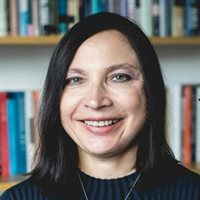
Professor Lizelle Bisschoff is a Professor of Film Studies at the University of Glasgow’s School of Culture & Creative Arts. She specializes in African cinema with particular focus on gender representation, digital technologies, and film festival curation. Her research bridges academic scholarship and practical initiatives, such as co-founding the Africa in Motion Film Festival (AiM). She holds a PhD from the University of Stirling and has held prestigious fellowships including the Leverhulme Trust (2010-2012) and Lord Kelvin Adam Smith (2012-2015). Education: PhD in African Cinema (University of Stirling, 2009) MSc in Cultural Studies (University of Edinburgh, 2005) Research Interests: Gender dynamics in African filmmaking Emerging digital film industries across sub-Saharan Africa Postcolonial cinema and modernist aesthetics Her work emphasizes decolonizing film studies through projects like AiM Festival and edited volumes such as Women in African Cinema . Recent research explores African science fiction and feminist archives. She has secured £115k in grants for film restoration and educational outreach programs. Awards: Leverhulme Trust Postdoctoral Fellowship AHRC Follow-on Funding for Impact (£90k) British Federation of Women Graduates Scholarship Teaching: Convenes MSc Film Curation program Teaches Introduction to African Cinemas and Race on Screen Key Projects: Lead curator for Africa’s Lost Classics restoration initiative Organized international symposia on African art and activism
Prof Chandrika Kaul is a Professor in the School of History at the University of St Andrews. Her research focuses on Modern British, Imperial, and Media History with specializations in 19th-20th century studies. She holds academic qualifications from the University of Oxford (MA, DPhil) and is a Fellow of the 21st Century Trust. Her work explores topics including British media-politics intersections, BBC-India relations during WWII, Indian colonial history, and Portuguese imperial media systems. Education: MA and DPhil from University of Oxford. Research interests include modern communications, British media history (including the BBC and popular press), British monarchy studies, South Asian history (especially modern India under British Raj), and decolonization processes. She has conducted extensive research on M.K. Gandhi’s relationship with media and Indian political movements. Recent projects include a Leverhulme Major Research Fellowship on BBC-India relations and studies on American popular culture’s portrayal of India (1900-1950). Her publications span monographs, edited volumes, and peer-reviewed articles in journals like Media History and Journal of Maltese History . Grants include funding from the Leverhulme Trust, Carnegie Trust, and British Academy for projects on imperial communication systems and Indian media history. She currently serves on editorial boards for Media History and Twentieth Century British History . Labs/Teams: Affiliated with the St Andrews Institute for Transnational & Spatial History. Supervises doctoral research in modern British politics, media history, and South Asian studies.
Dr. Mark B. Smith is an Associate Professor in Modern European History at the University of Cambridge’s Department of History. His research focuses on Soviet and European history, particularly the Soviet Union’s social structures, welfare policies, urban development, and cultural dynamics from Stalinism through late socialism. He teaches courses on welfare states, Soviet life, and 20th-century European violence. Key research areas include Soviet urban housing programs, welfare state evolution, and Cold War-era cultural exchanges. His publications analyze topics like Khrushchev’s housing reforms, post-Stalin urban welfare systems, and Soviet pension policies. Smith has co-edited special issues on European urban societies and authored books such as *The Russia Anxiety* (2019) and the forthcoming *Exit Stalin* (2026). He advises doctoral students on Soviet history, welfare states, and Cold War topics. His work bridges legal history, social policy analysis, and cultural studies, emphasizing how everyday life reflected broader ideological and structural changes in Soviet society.
Shannon Mathieu serves as a Teaching Fellow in International Security at the School of Politics and International Studies (PAIS), University of Warwick. Her administrative roles include: Deputy Director of Undergraduate Studies Joint Undergraduate Courses Director for Economics, Politics and International Studies (EPAIS), History and Politics, Philosophy and Politics, and Politics, International Studies and Global Sustainable Development PAIS Undergraduate Study Skills lead (Term 1) She teaches PO207: Politics of the USA, PO382: Vigilant State: Understanding Secret Intelligence, and PO3A7: Gender, Race and Militarism for the 2025-26 academic year. Her research critically examines international security through feminist IR theory, focusing on United Nations policy frameworks. Key interests include the Responsibility to Protect (R2P), gendered constructions of vulnerability, non-military masculinities in institutional culture, and discursive power dynamics in humanitarian interventions. Her work exposes how protection narratives reinforce patriarchal structures within global security governance. Recent publications analyze evolving gender-security intersections in UN interventions, revealing persistent masculine norms in R2P frameworks while exploring pedagogical innovations using cultural texts. Her scholarship demonstrates consistent thematic progression toward deconstructing gendered power hierarchies in international security institutions, with emerging work examining burden-sharing dynamics in protection mandates.
Professor Adam Yuet Chau is a Fellow and Director of Studies at St John's College and holds the Professor of the Anthropology of China position at the Faculty of Asian and Middle Eastern Studies, University of Cambridge . His academic journey includes training at Stanford University (PhD in Anthropology, 2001) and teaching roles at Oxford and SOAS before joining Cambridge in 2008. Focus on Chinese religions and their social dimensions Specializes in ritual theory and cultural transformations Develops comparative frameworks for understanding religious practices His research spans religion under socialism , hosting in political/religious contexts , and ritual polytropy . Recent projects include editing Chinese Religious Culture in 100 Objects and analyzing 'spheres' (界) in Chinese society . Publications like Miraculous Response (2006) and Religion in Contemporary China (2011) establish him as a key figure in religious anthropology. Current and past PhD/MPhil students explore topics from temple festivals in Taiwan to religious subjectification . He actively reviews for leading presses (Cambridge, Oxford, Harvard) and journals ( Ethnos , Modern China ), and participates in international academic workshops.
London School of Economics and Political Science (LSE)United Kingdom
Tomila Lankina is a Professor of Politics and International Relations at the London School of Economics (LSE), specializing in democratization, popular protest, and Russian and Eastern European politics. She holds a DPhil from the University of Oxford and has held research appointments at institutions such as Stanford University and Humboldt University in Berlin. Her work examines historical legacies of social structure and their implications for democracy, inequality, and political regimes. Her groundbreaking book The Estate Origins of Democracy in Russia (Cambridge University Press, 2022) explores how pre-communist social stratification in Russia shapes contemporary political outcomes. The book has received major accolades, including the 2023 J. David Greenstone Prize and Davis Center Book Prize. Lankina’s research also addresses modern issues like Russian media manipulation, post-communist social resilience, and the impact of historical institutions on modern governance. Active in supporting Ukrainian scholars during Russia’s invasion of Ukraine, Lankina co-founded an LSE Taskforce to assist displaced students and researchers. She has been recognized for her excellence in PhD supervision by LSE and has published widely in top journals like the American Political Science Review and World Politics . Her interdisciplinary approach combines historical analysis with contemporary political dynamics, emphasizing the persistence of social hierarchies and their role in shaping autocracy and democracy. Current projects include a book on Russian dissent history and comparative studies of post-colonial and post-communist societies.
Walter Armbrust is a Professor of Modern Middle Eastern Studies at the University of Oxford, affiliated with the Faculty of Asian and Middle Eastern Studies and St Antony's College. His research focuses on the intersection of mass media, popular culture, and political dynamics in the Middle East, with a particular emphasis on Egypt. Key research areas: Mass media, popular culture, revolutions, anthropology, neoliberalism Current projects: Cultural analysis of post-Mubarak Egypt and historical studies of new media in Egypt (1919-1975) Armbrust explores how media and cultural production reflect and shape political movements, including the January 25th Revolution. His work spans film, television, literature, and digital platforms, emphasizing the role of symbolic narratives in societal change. Recent publications analyze counter-revolutionary dynamics, neoliberalism, and Islamic cultural representation. He teaches undergraduate and graduate courses on topics including popular culture, social anthropology, and mass media in the Middle East. His academic contributions are linked to Oxford's Middle East Centre and interdisciplinary collaborations.
Dr. Simon A. Morrison is a Senior Lecturer in the Division of Communication, Screen & Performance within the Faculty of Arts, Humanities and Social Sciences at the University of Chester. He serves as Programme Leader for the Music Journalism degree, which he helped design, build and deliver from its first cohort in 2014. With 25 years of experience as a writer, broadcaster, and academic, Morrison brings extensive industry knowledge to his teaching and research, having worked as a music journalist reporting from locations worldwide including Beijing, Brazil, Moscow, and Marrakech. Dr. Morrison holds a PhD from the University of Leeds (completed 2018), an MA from the University of Manchester (1995-1997), and a BA Hons from the University of Manchester (1989-1992). Prior to his position at Chester, he worked as an Associate Lecturer at Manchester Metropolitan University (2012-2014) and as a Visiting Lecturer at Leeds University (2011-2013). His academic journey follows a substantial career in media where he presented TV for Rapture TV, hosted radio shows in Ibiza, produced and presented for Kiss Radio, and appeared on BBC Breakfast and BBC 5 Live. Dr. Morrison's research centers on the intersection of words and music , with particular focus on Popular Music , Musico-Literary Intermediality , and Electronic Dance Music Culture . His work explores how music subcultures, particularly rave and dance music scenes, are represented in literature and journalism. He examines the connections between different countercultural movements, notably drawing parallels between the Beat Generation writers and contemporary 'Chemical Generation' authors who write about club culture. His research also investigates the relationship between music journalism and subcultural movements across different historical periods. His recent publications reveal a clear trajectory connecting historical dance music developments across continents and eras. Morrison's work traces the evolution of electronic dance music from its American roots in Chicago and Detroit through its transatlantic journey to Europe and back again, examining how cultural exchange shaped musical innovation. His analyses of Pink Floyd demonstrate how rock bands interact with media landscapes, while his investigations of music journalism document the changing nature of music criticism in digital eras. The recurring theme across his scholarship is the examination of how subcultural experiences are translated into written form, whether through journalism, fiction, or academic analysis. Dr. Morrison actively supervises undergraduate dissertation projects and Negotiated Study production projects across all three years of undergraduate study. He has successfully supervised an MRes project to completion and examined PhDs (including one internal and two external, one being an Australian PhD by Artefact & Exegesis). He has served as an External Examiner for Music Journalism programs at Southampton Solent University (2016-2019) and BIMM London, Birmingham and Manchester (2016-2020). His teaching spans modules including Introduction to Journalism, Live Journalism, Dancing About Architecture: Popular Music Media, Histories and Technologies, The Cultural Politics of Music Journalism, The Politics of Social Media, Magazine Publishing and Music PR and Promotional Writing.
Alexandra Walsham is Professor of Modern History at the University of Cambridge and a Fellow of Emmanuel College. She previously held roles as Chair of the Faculty of History (2019-2022) and currently serves as President of the Historical Association. Her academic roots include a PhD from Trinity College, Cambridge, following studies at the University of Melbourne and Exeter University. Her research focuses on religious and cultural history of early modern Britain, particularly the Protestant and Catholic Reformations. Key themes include post-Reformation Catholicism, religious tolerance, providence, miracles, the history of the book, and the relationship between religion and landscape. Her work has been supported by grants from the British Academy, AHRC, and the Leverhulme Trust. Walsham has authored award-winning books like Providence in Early Modern England and The Reformation of the Landscape , and edited volumes on topics such as archives, memory, and confessional history. She has delivered prestigious lectures including the Ford Lectures at Oxford (2018) and the Wiles Lectures at Queen’s University Belfast (2024). Her professional service includes editorial roles for Past and Present and the Cambridge Studies in Early Modern British History series. She led the AHRC-funded 'Remembering the Reformation' project (2016-2019) and chairs the Early Modern Section of the British Academy. Awarded a CBE in 2017 and an honorary doctorate from Melbourne in 2023, Walsham’s work bridges academic rigor and public engagement, influencing both scholarly discourse and historical education.
Eric Smialek is a Senior Research Fellow at the University of Huddersfield, specializing in extreme metal vocals, popular music studies, and Taylor Swift analysis. He holds a Marie Skłodowska-Curie Actions Postdoctoral Fellowship and is affiliated with the Centre for Research in Music and its Technologies. His research explores vocal expression, cultural meaning in metal, and intersections of music with class, disability, and LGBTQ+ advocacy. Education: PhD in Genre and Expression in Extreme Metal Music (McGill University, 2016) Master's in Rethinking Metal Aesthetics (McGill University, 2009) Bachelor's from University of British Columbia (2006) Research Interests: Smialek’s work bridges music analysis and sociology, focusing on extreme metal’s vocal techniques, global social-class divides in metal scenes, and Taylor Swift’s cultural impact. He co-founded the European Taylor Swift Research Network and organized the 2024 Taylor Swift unconference in Amsterdam. Awards: Marie Skłodowska-Curie Actions Postdoctoral Fellowship Advising & Collaboration: Accepts PhD students and collaborates on projects like Extreme Metal Vocals: Musical Expression, Technique, and Cultural Meaning (2022–2025). His work has been cited in venues like Metal Music Studies and Contemporary Music Review . Labs/Teams: Member of the Centre for Research in Music and its Technologies, contributing to interdisciplinary studies in music acoustics and cultural analysis.
Dr. Galina Miazhevich is a Senior Lecturer at the School of Journalism, Media and Culture (JOMEC) at Cardiff University, UK. Previously, she served as a lecturer at the University of Leicester's School of Media, Communication and Sociology (2013-2017) and as the Gorbachev Media Research Fellow at the University of Oxford (2008-2012). Her academic career focuses on media representations in post-communist contexts, with particular expertise in Russian and Eastern European media landscapes. Dr. Miazhevich earned her PhD from the University of Manchester, where she subsequently worked for two years as a Research Associate on an AHRC-funded project examining representations of Islam as a security threat. Her educational background has informed her research trajectory, which bridges media studies, political communication, and cultural analysis of post-Soviet societies. Dr. Miazhevich's research spans several interconnected domains: media representations of Islam and multiculturalism in Europe; media and democracy in post-communist Europe; gender, media, and emergent forms of post-Soviet identity; feminism; Eurovision and popular culture; and diaspora, transnationalism, and media. Her work consistently examines how media shapes and is shaped by political transitions, identity formation, and social movements in post-Soviet contexts, with particular attention to marginalized voices and resistance practices. Analysis of Dr. Miazhevich's recent publications reveals a consistent focus on resistance, identity, and power dynamics in post-Soviet media environments. Her work increasingly examines gender and sexuality as political categories, particularly through the lens of feminist and LGBTQ+ resistance to authoritarian regimes. The Eurovision Song Contest serves as a recurring analytical framework for understanding cultural diplomacy and nation-branding strategies. More recently, her research has pivoted toward documenting anti-war resistance following Russia's invasion of Ukraine, examining how celebrities and media figures navigate political dissent under authoritarian conditions. Dr. Miazhevich has received several notable recognitions for her scholarly contributions: AHRC Leadership grant 'A Quiet Revolution: Discursive Representations of Non-heteronormative Sexuality in Russia' (2018-2020, £250,960) Visiting Fellowship at the Davis Centre for Russian and Eurasian Studies, Harvard University (Fall 2023) Fellow of the Higher Education Academy (FHEA) Associate Editor for the Oxford Encyclopedia of Race, Ethnicity, and Communication (2024) Dr. Miazhevich actively mentors the next generation of scholars, currently co-supervising PhD students Diyana Dobreva (with Professor Martin Innes) and John Tasker (with Professor Paul Bowman). She welcomes PhD proposals in areas including digital culture and resistance, media management and misinformation, media and democracy, representation of minority groups, post-communist identity politics, gender and feminism, Eurovision and popular culture, and geopolitics and nation-branding. Her grant portfolio demonstrates sustained success in securing competitive research funding, including leadership of an AHRC grant and participation in the Academy of Finland project FEMCORUS (2021-2025). Dr. Miazhevich is deeply engaged with academic communities, serving as co-convenor of the (Digital) Media and Culture group at the British Association for Slavic and East European Studies (BASEES) since 2016 and as a member of the Advisory Board of the European Communication Research and Education Association (ECREA) since 2021. Her work extends beyond academia through public engagement, including invited talks at prestigious institutions like Harvard University and participation in policy-relevant events at Chatham House addressing LGBTQ+ politics in Russia.
Peter Gries is a Professor of Chinese Politics and the Lee Kai Hung Chair at the University of Manchester, serving as the founding Director of the Manchester China Institute. He previously held roles at the University of Oklahoma and the University of Colorado, Boulder. Born in Singapore, he holds degrees from Middlebury, the University of Michigan, and a PhD from UC Berkeley. His research focuses on political psychology, particularly U.S.-China relations and Chinese nationalism, with notable works including China’s New Nationalism and The Politics of American Foreign Policy . He leads initiatives like the UK-China International Photography Award and the UK-China Diplomatic Dialogue. His grants include funding from the Ford Foundation and Smith Richardson Foundation for projects on security dialogues and course development. He sits on editorial boards of The China Quarterly , Political Psychology , and Nations & Nationalism . Recent work explores racial stereotypes, intersectionality, and threat perception in international relations. Education : Bachelor's and Master's in Asian Studies from Middlebury and the University of Michigan PhD in Politics from UC Berkeley Research Interests : Political psychology of international affairs U.S.-China relations Chinese nationalism and foreign policy Public opinion dynamics Grants : $60,000 from Smith Richardson Foundation (2005–2006) Multiple grants from Ford Foundation and Mershon Center for Sino-American Security Dialogues $4,000 from Freeman Foundation for Chinese Foreign Policy course development Media Contributions : Expert commentary on BBC World News, NYT, and CGTN Discussions on U.S.-China trade wars, China’s Japan policy, and global perceptions of China Labs/Institutes : Manchester China Institute Former director of the Institute for US-China Issues at University of Oklahoma