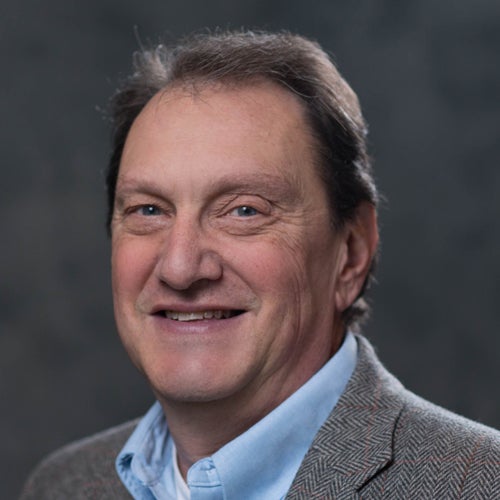
David IsaacsonView profile
Professor
David Isaacson holds the position of Professor in the Department of Mathematical Sciences at Rensselaer Polytechnic Institute (RPI), where he conducts cutting-edge research at the intersection of theoretical mathematics and clinical medicine. His primary institutional affiliation is with RPI, and he is also associated with the Center for Biotechnology and Interdisciplinary Studies, reflecting the multidisciplinary nature of his work. Professor Isaacson's long-term research goals center on improving diagnostic and therapeutic approaches for heart disease and cancer through innovative mathematical and engineering solutions. Professor Isaacson's research program is distinctly bifurcated into two major domains: mathematical physics and medical imaging. In mathematical physics, he develops advanced computational methods for approximating energy levels, particle masses, and critical exponents in quantum mechanics, quantum field theory, and statistical mechanics. His medical imaging research focuses on electrical impedance tomography (EIT), where he pioneers algorithms and hardware for non-invasively measuring and visualizing the electrical state of the body's interior from surface measurements. Specific applications include monitoring cardiac and pulmonary functions, diagnosing breast cancer through molecular impedance signatures, and optimizing chemotherapeutic interventions. His work in this area has significant clinical implications for conditions such as congenital heart defects, cystic fibrosis, and bronchopulmonary dysplasia. A review of Professor Isaacson's publication record from 2016 to 2025 demonstrates a sustained and evolving research trajectory in EIT technology. Early work concentrated on foundational reconstruction algorithms (e.g., D-bar and Calderón methods) and hardware development (ACT series systems), while recent publications emphasize clinical translation, particularly in pediatric cardiology and pulmonology. His team has produced innovative solutions for simultaneous EIT/ECG acquisition, 3D absolute imaging, and dynamic monitoring of ventilation-perfusion relationships. The consistent theme across these studies is the rigorous application of mathematical theory to solve practical biomedical imaging challenges, resulting in tools that are increasingly adopted in clinical settings for real-time physiological monitoring. No scientific awards or major honors were explicitly documented in the available sources. While detailed information about academic advisees, grant funding, or dedicated laboratory facilities was not provided in the current materials, Professor Isaacson's extensive collaborative network is evident from his numerous co-authored publications with clinicians and engineers. His work with the Center for Biotechnology and Interdisciplinary Studies suggests active participation in multidisciplinary research teams focused on translating engineering innovations into medical practice. Future research directions likely include further refinement of EIT for point-of-care diagnostics and expansion into new disease areas through continued cross-disciplinary partnerships.