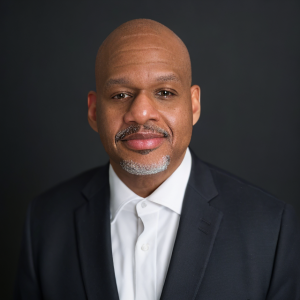
Damon L. Woodard is a Professor in the Department of Electrical and Computer Engineering at the University of Florida (UF) and serves as Director of the Florida Institute for National Security (FINS) and the Applied Artificial Intelligence (AAI) Group. His research focuses on applied artificial intelligence, hardware security, and biometrics, with particular emphasis on adversarial AI, AI-enabled hardware assurance, and explainable AI (XAI). He holds IEEE and ACM Senior Member status and is a Kavli Frontiers Fellow. Education: Ph.D. in Computer Science and Engineering, University of Notre Dame M.E. in Computer Science and Engineering, Penn State University B.S. in Computer Science and Computer Information Systems, Tulane University Research Interests: Dr. Woodard explores cutting-edge areas such as AI hardware acceleration, multi-modal AI systems, and counter-AI strategies. His work bridges cognitive science and technology through projects like text stylometry and psychological analysis frameworks. Key focus areas include semiconductor reverse engineering, hardware trojan detection via SEM imaging and machine learning, and secure IoT biometric systems. Highlighted Awards: National Academy of Science Kavli Frontiers Fellow IEEE Senior Member ACM Senior Member AAAI Membership Leadership & Contributions: As FINS Director, he oversees national security initiatives integrating AI and hardware assurance. His AAI Group develops resource-efficient AI solutions for constrained environments. Notable projects include the SECURE segmentation metric for IC reverse engineering and the MaGNIFIES GAN framework for electronic system inspection. Labs & Teams: Leads the Applied Artificial Intelligence Group and collaborates across disciplines through FINS, fostering innovation in AI-driven security and semiconductor integrity.
Dr Paul Jones is a Senior Lecturer in Sociology at the University of Liverpool, affiliated with the School of Law and Social Justice and the Faculty of Humanities and Social Sciences. His research focuses on architecture and capitalism, sociological theory, urban space, public sociology, and the climate emergency. He has received awards including the John Stewart Prize (2018) and the BSA-SAGE Award (2014). Dr Jones teaches modules on Sociological Theory, Urban Sociology, and Visual Sociology, coordinating courses such as 'Architecture and Power' and 'Thinking Sociologically'. His professional roles include serving as Sociology Pathway Leader for the ESRC, REF Impact Person, and Arts Officer in his department. He collaborates with institutions like the Port Sunlight Village Trust and Bluecoat, contributing to cultural and academic projects. His research explores intersections between architecture, political economy, and urban regeneration, with recent studies on medical architecture, local capitalisms, and the political economy of urban space. He actively supervises PhD students researching topics like urban sociology and socio-material dynamics.
Bridget Tombleson is a Senior Clinical/Professional Fellow at Curtin University, located in Perth, Western Australia. She holds positions within the School of Management and Marketing (Faculty of Business and Law) and contributes to the Office of the Provost. Her academic career spans over 20 years across government, corporate, and consultancy roles in public relations and communications. Bridget holds a Bachelor of Arts in English Literature and postgraduate degrees in Business and Public Relations. She is currently completing her PhD, further enriching her expertise in academic research and teaching. Her teaching focuses on transmedia and digital storytelling for brands, incorporating innovative platforms like Curtin.Edge and MOOCs. Her research interests emphasize the intersection of technology and education within public relations. Key areas include transmedia storytelling's impact on student engagement, participatory culture's influence on cross-cultural communication, flipped learning pedagogy, and sustainable tourism communication strategies. She also explores narrative evolution and semiotics in digital contexts, bridging theory with practical applications in brand management. Bridget has been recognized with numerous teaching awards, including the 2022 Curtin Excellence in Teaching Award, 2022 PRIA Education Awards (Gold), and 2018 EdX Prize Finalist status. Her work often involves collaboration, notably with Katharina Wolf on sustainable tourism and transmedia learning projects. Her advising and grants narrative highlights expertise in curriculum design and cross-cultural communication. She teaches across multiple disciplines at Curtin, including the Centre for Aboriginal Studies, Business and Law, Health Sciences, Humanities, and Science and Engineering, demonstrating a commitment to interdisciplinary education. Her research and teaching frequently address ethical storytelling, cultural sensitivity, and leveraging technology to enhance learning experiences. Bridget’s contributions extend beyond traditional classrooms through her creative works, such as designing EdX courses like *Curate Your Personal Brand*, and exploring MOOCs as transformative educational tools. She actively engages with global campuses and First Nations perspectives in her academic work, reflecting Curtin University’s institutional values.
Douglas R. Nickel is the Andrea V. Rosenthal Professor of History of Art and Architecture at Brown University, specializing in the history of photography and American art. His academic career includes roles as curator at the San Francisco Museum of Modern Art (1995-2005) and director of the Center for Creative Photography at the University of Arizona. He holds a PhD from Princeton University (1995), an MFA (1989), and a BA from Cornell University (1983). Research focuses on photographs' ontological status, viewer interpretation, and intersections between photography and scientific/metaphysical discourses. Notable publications include *Francis Frith in Egypt and Palestine* (2003), awarded by the Toronto Globe and Mail, and critical reviews such as analyses of Svetlana Alpers' *Walker Evans* (2021) and Nadya Bair's *The Decisive Network* (2022). Awards include the 2004 Historians of British Art Book Prize. Teaching spans courses like *Photography and Philosophy*, *The Museum and the Photograph*, and *Contemporary Photography*. His work bridges historical analysis with contemporary debates, emphasizing how photographic meaning is constructed through cultural, technological, and perceptual frameworks.
Dr. Abdul Rehman Ashraf is an Associate Professor of Marketing at the Goodman School of Business, Brock University , where he investigates the intersection of technology and consumer behavior. His research focuses on augmented reality (AR) , metaverse commerce , and ethical marketing practices . Academic Affiliation: Brock University (Goodman School of Business) Primary Research Areas: Digital Marketing, Augmented Reality, Consumer Behavior, Sustainability Marketing Contact: arehman@brocku.ca A leading scholar in technology-driven marketing, Dr. Ashraf explores how immersive environments (AR, metaverse) influence consumer decision-making, psychological ownership, and sustainable practices. His work bridges neuromarketing and digital commerce , emphasizing regulatory focus and stigma management in unconventional markets. Recent publications highlight trends in AR-enabled retail , AI-powered marketing , and ethical frameworks for digital commerce. These studies span topics from virtual tourism experiences to logo design psychology , reflecting his multidisciplinary approach. Dr. Ashraf teaches in the Marketing department, contributing to undergraduate and graduate programs in digital marketing and consumer behavior. While no formal advising roles or student names are listed in the scraped data, his research output suggests active mentorship in marketing innovation.
Dr. Lisa Lundgren is an Assistant Professor in the Department of Instructional Technology & Learning Sciences at Utah State University (USU), part of the Emma Eccles Jones College of Education and Human Services. She holds a PhD in Curriculum and Instruction (Science Education) from the University of Florida (2018), an MS in Science Education from Montana State University (2014), and a BA in History and English from Montana State University (2011). Her research focuses on design-based approaches to understanding how people learn science in diverse contexts, including social media, museums, and pop culture events like comic-cons. She specializes in mixed methods, particularly content analysis and social network analysis, to explore the integration of formal and informal education and public engagement in science. Dr. Lundgren leads the Cosplay for Science Initiative , which uses pop culture to make science accessible, funded by the Geological Society of America’s E-An Zen Fund. Her work emphasizes leveraging digital tools (e.g., Twitter, Instagram) to foster science communication and community participation. She teaches courses in information/media literacy and learning theory, both online and in-person. Her research interests include sociocultural frameworks, design-based research, and networked learning. Key areas of study involve social media’s role in science education, citizen science, and inclusive STEM practices. Dr. Lundgren has been recognized with the ITLS Teacher of the Year award (2022) and actively mentors students across PhD, Master’s, and undergraduate levels. Her grants include funding for projects like Girl Scouts Researching and Inventing Animal-Centered Technologies (GRIT) and infrastructure development for Next Generation Science Standards. Her publications span journals like Social Media + Society , Journal of Science Communication , and Research in Science Education , reflecting her interdisciplinary focus. She also contributes to professional development workshops, policy committees, and outreach initiatives, including roles with the National Association for Research in Science Teaching (NARST) and the Geological Society of America (GSA).
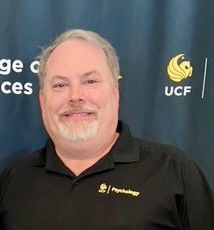
Jeffrey S. Bedwell is a Professor in the Department of Psychology at the University of Central Florida (UCF), serving as Program Director and Director of Clinical Training for the Clinical Psychology Ph.D. Program. He holds a secondary joint appointment as Professor of Medicine in the Department of Clinical Sciences at UCF's College of Medicine. Bedwell earned his B.S. in Psychology from James Madison University, followed by a Ph.D. in Clinical Psychology from the University of Georgia, with a predoctoral clinical internship at the Medical University of South Carolina/VA Consortium. His research, conducted through the MPACT Lab, employs a transdiagnostic NIMH Research Domain Criteria (RDoC) approach to study reduced motivation (avolition/apathy), pleasure (anhedonia), and emotional expression (constricted/blunted affect) across mood disorders like depression and bipolar disorder. His work also explores links between these symptoms and psychopathy, social anxiety, and suicidal behavior using cognitive neuroscience methods (e.g., event-related potentials, pupillometry). Bedwell's research aims to improve treatments targeting specific psychiatric symptoms. He has received recognition such as the 2024 Founders’ Day Awards from UCF. His academic memberships include the American Psychological Association and the Society for Research in Psychopathology. His teaching and clinical training leadership roles reflect his commitment to shaping future clinical psychologists. Education: B.S. in Psychology, James Madison University Ph.D. in Clinical Psychology, University of Georgia (2004) Predoc Internship: Medical University of South Carolina/VA Consortium Key Research Themes: Psychopathology of mood disorders Cognitive neuroscience of anhedonia/avolition Transdiagnostic symptom mechanisms Awards: 2024 UCF Founders’ Day Award for Academic Excellence Professional Roles: Director of Clinical Training (Ph.D. Program) Member, Council of University Directors of Clinical Training Bedwell’s lab employs advanced methodologies like EEG, neuroimaging, and behavioral assays to investigate how neurophysiological processes underpin psychiatric symptoms. His translational research bridges basic science and clinical applications, particularly in refining treatment strategies for complex symptom clusters.
Emmanuel Koku is an Associate Professor and Department Head of Sociology at Drexel University, with graduate faculty appointments in Communication, Culture & Media. His research focuses on social networks, sexual health behaviors, and knowledge dissemination. Education: PhD, Sociology, University of Toronto, 2005 His work examines socio-demographic determinants of HIV risk in Africa, lived experiences of persons with HIV, and professional networks of researchers and policymakers. He collaborates with the Office of Minority Health addressing health disparities in African immigrant communities. Recent research explores PrEP information diffusion among women who inject drugs, misinformation about HPV vaccines on social media, and social factors influencing HIV risk perceptions. His publications demonstrate consistent focus on network analysis methodologies applied to public health challenges.
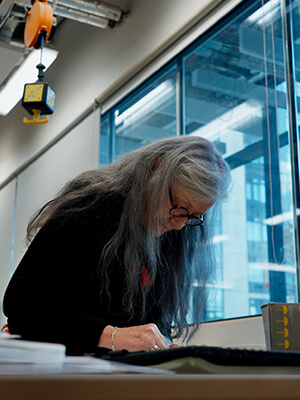
Dr. Mary O'Neill serves as Associate Head (Education) and Programme Leader for Fine Art at De Montfort University's School of Arts, Design and Architecture within the Faculty of Arts, Design and Humanities. Holding an AHRC-funded PhD in Ephemeral Art: Mourning and Loss from Loughborough University (2007), she is a Senior Fellow of the Higher Education Academy with extensive leadership in art education and research. Her academic journey includes significant professional development through prestigious awards including the AHRC Doctoral Award (2003) and Higher Education Academy Teaching Fellowship (2008). Her educational background culminated in a PhD focused on the intersection of ephemeral art and concepts of mortality, establishing the foundation for her ongoing research trajectory. Dr. O'Neill's research is fundamentally interdisciplinary, exploring how contemporary artworks engage with significant cultural issues. Initially focused on ephemeral art and concepts of mortality and immortality, her work has evolved to investigate intangible culture, particularly the lost skills embodied in museum objects. Her current project, 'Re-creative Practice: Learning from the Past,' examines how historical objects can inform contemporary artistic practice. She identifies key research areas including Ephemeral Practice, Collaborative Practice, Art and Society, Art Activism, Science Art, and Re-creative Practice. Her work bridges theoretical and practical approaches, connecting art practice with broader social, ethical, and cultural concerns through both academic texts and creative fiction. Analysis of her publication record reveals consistent engagement with themes of memory, loss, and artistic practice, with recent work showing increasing focus on art education methodologies, collaborative approaches, and the application of historical craft knowledge to contemporary practice. She has produced significant interdisciplinary work connecting art with healthcare, social policy, and cultural heritage, demonstrating the expanding scope of her research interests. Dr. O'Neill has received numerous awards and recognitions throughout her distinguished career: 2023 HEIF Award for the Artefacts Live project 2022 Academic Innovation Project Award 2015 Writer in Residence at Centre for Contemporary Art (CCA), Glasgow 2014 and 2012 Artist in Residence positions at Gray Zone and Grace Exhibition Center 2008 Higher Education Academy Teaching Fellowship 2003 AHRC Doctoral Award Her career has been marked by prestigious international residencies including at Banff Centre for Media and Visual Arts (1997), Frans Masereel Centrum, Belgium (1990), and House of Creativity, Chelyuskinskii, Moscow (1989). As an educator and mentor, Dr. O'Neill supervises PhD students including Rebecca Walker (researching 'Henry Moore: The Shape of Trauma') and Talvir Kaur. She has presented on collaborative teaching approaches internationally, notably 'A year of living dangerously: Collaborating with undergraduate students' at Temasek Polytechnic, Singapore (2010). Her leadership extends to directing the 'Artefacts Live' project (2022-2023), a HEIF-funded collaboration between DMU and The Museum of Leathercraft, Northampton, which resulted in the documentary 'The Museum of Leathercraft – Ordinary Objects: Extraordinary Stories' produced with filmmaker Nik Trzcinowicz. Dr. O'Neill leads the Practice Based Research group within the Institute of Art and Design. She actively contributes to academic discourse through international conference presentations, recently speaking at 'Psychogeography, How did we get here?' panel at Leicester Gallery (2024) and 'Flotsam, Jetsam, Lagan, Derelict. The Things We Have Lost' at the Narratives of Water conference in Torino (2024). Her teaching encompasses Fine Art Studio Practice, Critical Theory, Art History, and Professional Practice across multiple undergraduate and postgraduate courses.
Tara Whalen is an Adjunct Professor at the School of Computer Science, Carleton University. Her research focuses on cybersecurity, privacy engineering, usable security mechanisms, and information control systems. She has contributed to studies on password security, authentication alternatives to CAPTCHA, and mobile device privacy challenges. Her work bridges technical security practices with human factors, emphasizing how security systems interact with end-users. Notable projects include breach alerting services and empirical studies on browser security interfaces. She has published extensively since 2003, with recent work addressing modern challenges in password management and privacy-by-design frameworks. No academic awards or grants are listed, though her publications indicate active collaboration in computer security research. She maintains an affiliation with Carleton's Herzberg Laboratories and can be reached at tjwhalen@gmail.com.
Joey T. Cheng is an Associate Professor of Psychology at York University and holds the York Research Chair in Leadership, Collaboration, and Teams. Her work focuses on the psychological mechanisms underlying social hierarchy, overconfidence, and competitive behavior. She investigates how individuals attain influence in groups, communicate status through vocal signals, and navigate the social costs/benefits of competitiveness. Research Interests: Signaling of status and dominance in human interactions Interplay between prestige and dominance in social rank dynamics Impact of overconfidence on group dynamics and decision-making Recent publications emphasize leadership strategies in resolving intragroup conflict, cross-cultural analyses of optimism, and neurobiological underpinnings of competition. Media engagement includes a BBC Worklife feature on overconfidence's contagious nature. No formal student advisee list is provided, but her research lab engages in collaborative projects with international institutions. Current projects explore dominance mechanisms in organizational settings and cross-cultural variations in social hierarchy.
Dr. Christopher Collins is a Professor of Computer Science at Ontario Tech University, leading the Visualization for Information Analysis Lab (vialab). He holds a PhD from the University of Toronto (2010) and focuses on interdisciplinary research in information visualization, human-computer interaction, and natural language processing. His work addresses challenges in information overload, text analytics, and novel interfaces such as touch, pen, VR/AR. Collins' research has been featured in top-tier venues like ACM CHI and IEEE Transactions on Visualization and Computer Graphics, earning honorable mentions and over $3M in funding as sole PI. He serves on the IEEE VIS Executive Committee and Board of Governors at Ontario Tech University. Education: PhD in Computer Science, University of Toronto (2010) MSc in Computer Science, University of Toronto (2004) BSc (Hons) in Computer Science, Memorial University (2001) Research Interests: Collins' work spans information visualization , pen+touch interfaces , visual analytics , and text-driven systems . He explores how interactive technologies can democratize complex data analysis, particularly in education, healthcare, and creative domains. Recent projects include gaze-driven learning tools, context-aware camera interfaces, and bias-mitigating product review analysis. Awards: ACM CHI Honorable Mention Award IEEE VIS Honorable Mention Award Grants & Impact: Secured $3M+ in research funding. Media coverage includes New York Times and CBS Sunday Morning for innovations in visualization and text analytics. Teaches courses in human-computer interaction, computer graphics, and information visualization. Labs & Collaborations: vialab develops tools like Lexichrome , ConToVi , and NeuroSight . Active in IEEE Visualization and ACM Interactive Media communities. Collaborates with academia and industry globally.
Xiaoze Xie serves as the Paul L. & Phyllis Wattis Professor of Art at Stanford University within the Department of Art & Art History under the School of Humanities and Sciences. An internationally recognized artist, he maintains a studio practice deeply engaged with political and cultural memory. His academic journey includes a Master of Fine Arts from the Central Academy of Arts & Design in Beijing and the University of North Texas, complemented by a Bachelor of Engineering in Architecture from Tsinghua University. Research interests center on contemporary political art, particularly examining archival practices, library systems, and institutional memory through painting, drawing, and video installations. His notable series include Theater of Power analyzing political iconography, Library projects documenting knowledge institutions, and Tracing Banned Books in China confronting censorship. His work consistently explores the intersection of personal memory and collective history within Chinese cultural contexts. Critical reception highlights his contributions through reviews in The New York Times , Art in America , and ARTnews . His artistic output reveals persistent engagement with temporal fragmentation, archival materiality, and political documentation across media. Recent exhibitions at major biennales demonstrate evolving focus on urban transformation and post-pandemic cultural memory. Asia Game Changer West Award (2022) Academic Award in Painting, Nanjing International Art Festival (2016) Joan Mitchell Foundation Painters and Sculptors Grant (2013) Pollock-Krasner Foundation Grant (2003) Dallas Museum of Art Artist Award Phoenix Art Museum Artist Award Xie's artistic practice functions as scholarly research, generating significant discourse through permanent collections at major institutions including Baltimore Museum of Art, Denver Art Museum, and Museum of Fine Arts Houston. His GSA Art-in-Architecture Commission for the US Courthouse in Davenport, Iowa demonstrates public art engagement. Current projects continue his exploration of cultural memory through the Reinventing the Library Cave in Dunhuang initiative, connecting historical preservation with contemporary practice.
Scott A. Sandage is an Associate Professor of History at Carnegie Mellon University's Dietrich College of Humanities and Social Sciences, specializing in nineteenth-century American cultural history and the evolution of American identity. He joined the Department of History in 1995 and has established himself as a leading scholar on the cultural history of failure in America. Professor Sandage's research focuses on how Americans have understood success and failure throughout history, with particular attention to race, identity, and cultural narratives. His work examines the intersections of capitalism, individualism, and cultural memory in shaping American historical consciousness. He has made significant contributions to understanding how historical figures like Abraham Lincoln have been memorialized and mythologized in American culture. His publications reveal consistent engagement with themes of historical memory, cultural narratives of success and failure, and the politics of commemoration. Sandage's scholarly work spans academic journals, mainstream publications like The New York Times Book Review and Smithsonian Magazine, and public history projects that bring historical insights to broader audiences. Distinguished Lecturer by the Organization of American Historians Elliot Dunlap Smith Award for Distinguished Teaching (2006) NEH Senior Faculty Fellowship (2007-2008) Jameson Fellowship from Library of Congress (1998) Named one of America's 'Top Young Historians' by History News Network (2007) As an educator, Sandage teaches undergraduate and graduate courses including 'The Roots of Rock & Roll,' which explores the genre's development through collaborative innovation across racial lines. He has advised numerous doctoral students and contributed significantly to public history through consultations with the Smithsonian Institution, National Archives, and National Park Service. Sandage's current research focuses on racial identity formation through his forthcoming book 'Laughing Buffalo in Paris: A Tall Tale of Race from the Half-Breed Rez.'
Margaret Michelle Torres is an Assistant Professor in the Department of Political Science at the University of California, Los Angeles (UCLA). Her research focuses on political methodology, computer vision, causal inference, and survey methodology, with substantive interests in political media communication, participation, and attitude formation. She holds a Ph.D. in Political Science and an A.M. in Statistics from Washington University in St. Louis, alongside a B.A. in Political Science and International Relations from CIDE (Mexico City). Her work bridges computational methods and social science inquiry, emphasizing innovative tools for analyzing visual and textual data. Recent projects explore how ideology influences perceptions of political groups, the role of visual frames in protests, and methodological issues in causal inference. Torres has authored influential papers on topics ranging from election dynamics to the application of machine learning in political analysis. Notable contributions include frameworks for unsupervised visual analysis and critiques of posttreatment variable pitfalls in experiments. Her research frequently intersects with questions of media representation, public opinion, and institutional trust. Torres advises students in quantitative methods and political behavior, though specific advisee names are not listed here.