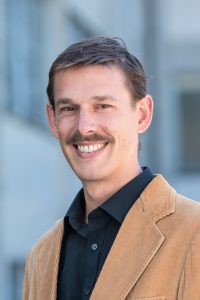
Dr. Alex Bigazzi is an Associate Professor and Associate Head (Undergraduate Program) in the Department of Civil Engineering at the University of British Columbia (UBC), with a joint appointment in the School of Community and Regional Planning. He leads the REACT Lab, focusing on active transportation, micromobility, and sustainable infrastructure design. His research emphasizes the intersection of physics, physiology, and behavior in active travel, particularly for pedestrians and cyclists, and addresses emissions reduction and equitable urban mobility. Bigazzi holds a B.M. in Jazz Saxophone from the University of Miami and a Ph.D. in Civil Engineering from Portland State University. His career includes academic and practical contributions, such as founding the REACT Lab and leading projects on e-bike incentives, air pollution exposure, and infrastructure design. His work has earned awards like the 2024 Wall Legacy Award for inclusive transport design and the 2023 Climate Action Award. He teaches courses on pedestrian/bicycle facility design and capstone projects, mentoring students through UBC’s Civil Engineering programs.
Brendan Russo serves as an Associate Professor in the Department of Civil Engineering, Construction Management, and Environmental Engineering at Northern Arizona University, where he conducts influential research in transportation safety and traffic engineering. His work focuses on improving safety outcomes for vulnerable road users through rigorous analysis of crash data, traffic operations, and emerging mobility technologies, with significant contributions to Arizona-specific transportation challenges and national safety practices. Russo's research program centers on bicycle and pedestrian safety, crash severity analysis, and the integration of autonomous systems into transportation networks. He employs advanced methodologies including spatial analysis, statistical modeling (e.g., random parameters bivariate probit models), and observational studies to investigate traffic stress levels, intersection safety, and the impacts of infrastructure treatments. His work consistently bridges theoretical transportation engineering with practical applications for safer community design. Analysis of Russo's recent publications reveals a strong emphasis on emerging transportation technologies and their safety implications, particularly regarding autonomous delivery robots and vehicle-pedestrian interactions, while maintaining core focus on traditional safety concerns like bicycle crash frequency and severity. His research demonstrates increasing integration of spatiotemporal analysis and scenario-based testing methodologies, with a clear geographic concentration on Arizona metropolitan regions that provides valuable localized insights applicable to broader transportation contexts. No scientific awards were mentioned in the provided text. No specific information about advising responsibilities or grant funding was provided in the text, though his extensive publication record and dataset contributions indicate active research leadership. Russo collaborates within a robust research network centered on transportation safety, frequently partnering with colleagues including Gehrke, Smaglik, and Holliday on projects involving field data collection, bicycle infrastructure evaluation, and safety performance metrics. His work leverages both observational studies and simulation approaches to develop data-driven guidance for transportation practitioners, with particular attention to Arizona's unique transportation environment and metropolitan planning challenges.
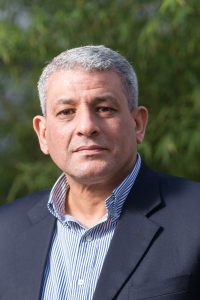
Dr. Tarek Sayed is a Professor at the University of British Columbia's Department of Civil Engineering within the Faculty of Applied Science. He specializes in Transportation Engineering, focusing on road safety analysis, traffic operations, and Intelligent Transportation Systems (ITS). He serves as the Director of the Bureau of Intelligent Transportation Systems and Freight Security (BITSAFS-Engineering) and Editor of the Canadian Journal of Civil Engineering . His research addresses three core areas: improving road safety evaluation techniques, enhancing safety through traffic operations and highway design analysis, and advancing ITS technologies. Notable contributions include frameworks for safety-audits of infrastructure projects like the Sea to Sky Highway and methodologies for evaluating transit signal priority systems in Vancouver. He has authored/co-authored over 250 publications and supervised 60 graduate students. Key Roles: Professor, BITSAFS Director, Journal Editor Awards: Tier 1 Canada Research Chair, Wilbur Smith Award, Sandford Fleming Award, Prince Michael International Road Safety Award Consulting: Global projects in traffic safety and ITS for agencies like ICBC, FHWA, and Ashghal His research integrates Bayesian statistical methods, extreme value theory, and machine learning to model traffic conflicts, pedestrian behavior, and safety interventions. Current projects include real-time safety optimization using autonomous vehicle data and analyzing shared space interactions between cyclists and pedestrians. Dr. Sayed chairs national/international committees, including the U.S. Transportation Research Board’s safety data committee. His work bridges academia and practice, influencing policy and infrastructure investment decisions worldwide.
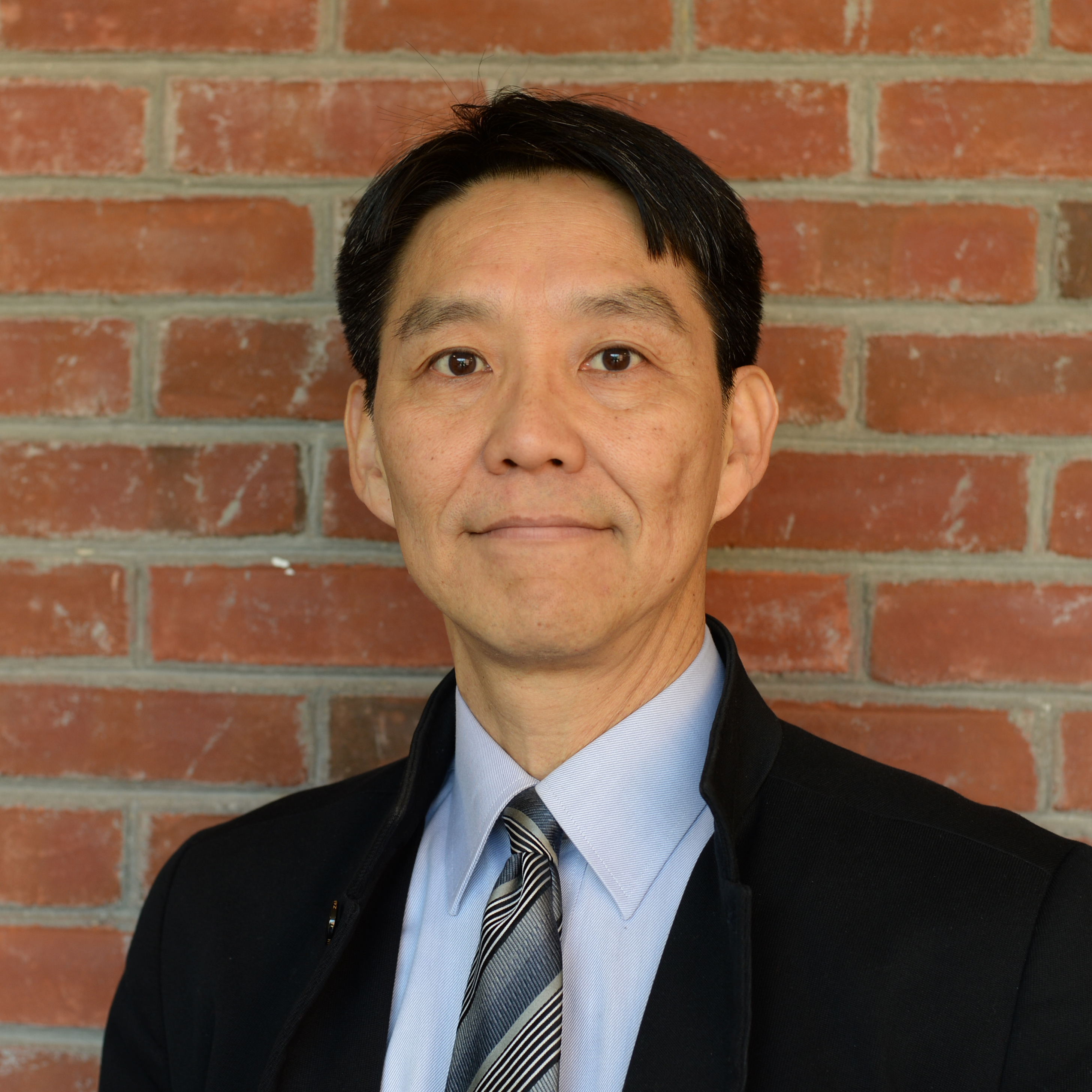
Hiroyuki Iseki is Associate Professor of Urban Studies and Planning at University of Maryland's School of Architecture, Planning and Preservation, and Research Affiliate with the National Center for Smart Growth. His work examines interactions between transportation, land use, equity, and environmental sustainability. Research focuses on: Transit-oriented development impacts on firm location Equity in public transit finance Climate policy implementation in urban planning Active transportation infrastructure analysis Recent publications analyze post-pandemic transit demand shifts, campus multimodal conflicts, and bicycle accessibility modeling. Methodological strengths include spatial econometrics, GIS analysis, and longitudinal data approaches. Work increasingly addresses climate adaptation in transportation planning and EV charging grid impacts. Research contributes to urban policy through WMATA collaborations and Japanese municipal climate planning studies. Current PhD program directorship advances urban planning analytics training.
Yu Xiao is an Associate Professor at the Department of Information and Communications Engineering, Aalto University, specializing in edge computing, extended reality (XR), wearable computing, and crowdsensing. Their research contributes to the UN Sustainable Development Goals, particularly in education and technology innovation. Active in mobile cloud computing and decentralized systems Principal Investigator in EU-funded projects (EMIL, TUTL) Expert in 5G networks, autonomous systems, and human activity recognition Yu Xiao's work spans interdisciplinary domains, including healthcare (cardiovascular resuscitation devices) and urban mobility (autonomous vehicle interactions). They have received multiple awards, including Best Paper Awards and Nokia Foundation Scholarships. Focus on low-latency communication and multiagent reinforcement learning Developed frameworks like FediLive for decentralized social networks Contributed to 128+ publications and software tools Recent collaborations include institutions like Pontificia Universidad Católica de Chile and participation in IEEE committees. Their research integrates blockchain for secure IoT communication and advanced AR applications.
Rutgers, The State University of New JerseyUnited States
Robert B. Noland is a Distinguished Professor and Associate Dean of Faculty at the Edward J. Bloustein School of Planning and Public Policy at Rutgers University. He also serves as Director of the Voorhees Transportation Center. He holds a B.A. from the University of California, and M.Sc. and Ph.D. from the University of Pennsylvania in Energy Management and Environmental Policy. His research focuses on transportation planning’s economic and environmental impacts, including traffic safety modeling, infrastructure planning, and climate change mitigation. He has held roles at Imperial College London, the US EPA, and the University of California, Irvine. Noland is co-Editor-in-Chief of Transportation Research Part D and former Chair of the Transportation Research Board’s Climate Change Task Force. His work emphasizes equitable transportation policies, safety metrics, and sustainable urban design. Education: B.A., University of California M.Sc., University of Pennsylvania Ph.D., University of Pennsylvania (Energy Management & Environmental Policy) Research Interests: Economic and environmental impacts of transportation policies Traffic safety data analysis and modeling Climate change adaptation in infrastructure planning Non-motorized transportation (bikeshare, pedestrian safety) Equity in mobility access and infrastructure Key Contributions: Pioneered studies on road diet conversions and their benefits Evaluated bikeshare systems globally, including NYC and Seoul Investigated disparities in ridehailing and EV charging access Advanced pedestrian safety metrics and crash data practices Advising & Grants: Directed major transportation projects (e.g., Newark Light Rail study) Recipient of grants for climate resilience and urban mobility research Labs/Teams: Leads the Voorhees Transportation Center, a hub for innovative transportation research and policy analysis.
Norwegian University of Science and TechnologyNorway
Eirin Olaussen Ryeng is a Professor at the Department of Civil and Environmental Engineering, Norwegian University of Science and Technology (NTNU). Her work focuses on transportation engineering, road safety, and human behavior in urban and rural mobility contexts. Key research themes: winter road conditions, autonomous vehicles, cyclist/pedestrian safety, route familiarity, and sustainable transport infrastructure Active in transnational studies and multidisciplinary collaborations Recent publications analyze pedestrian gait in winter, cargo bike efficiency, driver risk perception, and geometric road design impacts. She employs advanced methodologies like sensor technology, survey analysis, and crash-based modeling. Teaching includes courses on road engineering, traffic safety, and transport infrastructure. She has presented at major European Transport Conferences and Nordic Traffic Safety Academy seminars.
Dr. Ioannis Kaparias is an Associate Professor in Transport Engineering at the University of Southampton, affiliated with the Transportation Research Group (TRG). He holds a Master of Engineering from Imperial College London and a PhD from the same institution. His academic career includes roles at City, University of London, and postdoctoral research at Imperial College. He is a Fellow of Advance HE, a member of the Chartered Institute of Highways and Transportation (CIHT), and serves as Deputy Editor-in-Chief of the IET Intelligent Transport Systems journal. Education: MEng in Civil Engineering, Imperial College London (2004) PhD in Transport Engineering, Imperial College London (2008) Postdoctoral Researcher, Imperial College London (2008–2012) Research Interests: Efficient, safe, and sustainable land transport systems Highway and traffic management, including real-time routing and network reliability Active travel modes (cycling/pedestrian infrastructure) Public transport operations and optimization New transport technologies (CAVs, MaaS, EVs) Land use-transport interaction models Teaching: Highway & Traffic Engineering modules at Southampton Doctoral Programme Director (Training) in the School of Engineering Past roles include teaching at Imperial College London, City University London, and the University of East London External Roles: Member of US Transportation Research Board committees (Pedestrians/ACH10 and Human Factors/ACH40) Independent expert for the European Commission Speaker at international conferences (e.g., 'To share or not to share space? A very British tale', 2023)
Prof. Dr. Melanie Krüger is a faculty member at Leibniz University Hannover , where she serves as Head of the Research Unit Sports and Cognition within the Institute of Sports Science. Her academic career spans institutions including the Technical University of Munich, University of Tasmania, and Ludwig Maximilian University. She leads research initiatives in embodiment, cognitive aging, motor decision-making, and the impact of physical activity on neurocognitive and motor functioning. Current Position: Professor, Institute of Sports Science, Leibniz University Hannover Prior Appointments: Post-doctoral roles at Technical University of Munich, University of Tasmania, and Pennsylvania State University Education: PhD in Systemic Neurosciences, Ludwig Maximilian University; Diploma in Sports Science, University of Leipzig Krüger's research focuses on: Embodiment Research: Systemic interactions between cognitive and motor development Cognitive Aging: Age-related changes in motor decision-making and coordination Human Locomotion: Collision avoidance, mixed reality interactions, and real-world movement studies Open Science: Advocacy for research data management in sports science Her recent publications explore mixed reality applications ( 2024 ), stress effects on motor function ( 2023 ), and methodological innovations in locomotion studies ( 2021-2025 ). Current projects include Moving Forward (2021-2022) and two Innovation Plus initiatives (2022-2024) developing experimental frameworks for human movement analysis. Krüger actively participates in academic governance: Spokesperson, German Society of Sport Science's Ad Hoc Committee on Research Data Management (since 2022) Board member, DVS Section 'Sports Motor Skills' (since 2022) Doctoral Committee, Faculty of Humanities Examination Board, MSc Sustainable Health Promotion in Sports Science
Elias Willberg is a Postdoctoral Researcher at the Department of Geosciences and Geography, University of Helsinki. He is affiliated with the Helsinki Institute of Urban and Regional Studies (Urbaria), the Helsinki Institute of Sustainability Science (HELSUS), and the Digital Geography Lab. His work focuses on urban sustainability, transportation planning, and environmental exposure during active mobility.
Zhou Zhou is an Assistant Professor (tenure track) in Neuronic Engineering at KTH Royal Institute of Technology's Department of Biomedical Engineering and Health Systems. He is affiliated with the Digital Futures Faculty, a cross-disciplinary research center focusing on digital technologies for societal challenges. His research focuses on neurotrauma prevention, prediction, and protection through computational modeling, machine learning, and biomechanical validation. Dr. Zhou holds a PhD from KTH (2019) and completed postdoctoral training at Stanford University, specializing in sports safety and concussion prevention. His work is supported by VINNOVA, Swedish Research Council, and others. He received the 2025 Göran Gustafsson Prize for young researchers. Research interests include in silico modeling, fluid mechanics, and safety standardization for helmets. Zhou teaches courses such as Biomechanics and Neuronics (HL2035/CH213V) and leads labs in human and animal neurotrauma modeling. He seeks postdoctoral candidates for rat neurotrauma research. Education: PhD in Biomedical Engineering, KTH (2019); Postdoc at Stanford University (Sports Safety) Key Projects: InSilicoHealth ITN, helmet evaluation via virtual testing Labs/Teams: Neuronic Engineering Division, Digital Futures Collaboratory
Karim Ismail is a Professor at the Department of Civil and Environmental Engineering, Carleton University. His research focuses on sustainable transportation modeling, road safety analysis, intelligent transportation systems, and computer vision applications for traffic data collection. Specializes in non-motorized transportation , including pedestrian and cyclist behavior. Develops probabilistic highway design standards using reliability and risk analysis. Pioneers vision-based safety evaluation techniques and traffic conflict modeling. His recent publications explore automated analysis tools for roundabout traffic, deep learning applications for proximity detection, and wireless sensor frameworks for collision avoidance. Notable accolades include the Michel Van Aerde Award (2025) and multiple Transportation Research Board honors. Supervised graduate students: Al-Haideri, Rulla (Ph.D. 2025) Mohammadi, Shahriar (Ph.D. 2022) Kassim, Ali (Ph.D. 2014)
Christopher Cherry is a Professor and Associate Department Head of Undergraduate Studies in the Department of Civil and Environmental Engineering at the University of Tennessee, Knoxville. His research focuses on sustainable transportation, micromobility (e-bikes, e-scooters), pedestrian and bicycle safety, and the impacts of emerging technologies on urban mobility systems. PhD, Civil and Environmental Engineering–Transportation, University of California, Berkeley (2007) MS, Civil Engineering–Transportation, University of Arizona (2003) BS, Civil Engineering, University of Arizona (2000) Dr. Cherry’s research interests lie at the intersection of transportation engineering, behavioral science, and sustainability. He investigates travel behavior, transportation economics, and the safety implications of shared and electric micromobility systems. His work emphasizes non-motorized transportation and the integration of new technologies into urban planning. He leads the Light Electric Vehicle Education and Research (LEVER) Initiative and is an Associate Director of the Center for Pedestrian and Bicyclist Safety (CPBS), a multi-institutional UTC led by the University of New Mexico. His recent publications span topics such as e-bike adoption, micromobility safety, transit integration, and urban delivery systems. Collectively, these works reflect a strong emphasis on data-driven policy, behavioral modeling, and the environmental and public health impacts of transportation choices. NSF CAREER Award TCE Ferris Faculty Award (2015) TCE Professional Promise in Research Award (2014) CEE Research Recognition Award (2009, 2012) Member, Transportation Research Board Chair, SAE Micromobility Committee Dr. Cherry has supervised numerous PhD and MS students in transportation research and has led multiple federally and state-funded projects on micromobility, transit, and safety. He is actively involved in professional service and collaborates with institutions across the U.S. and internationally, including UC Berkeley, Tsinghua University, and the Asian Development Bank. His work bridges engineering, policy, and public health to advance sustainable and equitable urban mobility. He leads research initiatives on e-bike and e-scooter safety, urban logistics, and the integration of big data into transportation planning. His team utilizes smartphone-based data collection, video analysis, and simulation models to understand real-world behavior and improve system design.
Raktim Mitra is a Professor and Director of the School of Urban and Regional Planning at Toronto Metropolitan University, co-directing the TransForm Research Laboratory. His expertise spans the built environment, travel behavior, and health linkages, with a focus on active transportation, micromobility, and healthy communities. Mitra teaches courses in Transportation Planning, Healthy Communities, and Research Methods. His research explores how urban planning impacts physical activity and wellbeing, particularly for pedestrians, cyclists, and micromobility users. Current projects include pandemic-era travel behavior shifts, cycling infrastructure impacts, and children’s outdoor play. He has led studies on post-pandemic active transportation policies, equity in street reallocation, and mobility for students with disabilities. Key funded research areas include cycling facility efficacy, post-pandemic active transportation, student travel wellbeing, and e-scooter policy. Mitra’s work bridges academic inquiry with practical solutions, emphasizing equity and sustainability in urban environments. His laboratory focuses on interdisciplinary approaches to transportation-land use-health interactions. Publications highlight pandemic mobility shifts, gendered cycling behavior, and the role of neighborhood environments in child health. Mitra collaborates on community science initiatives like Canada’s Pedal Poll, analyzing cycling demographics and infrastructure use patterns.
Dr. Anuj Sharma is a Professor in the Department of Civil, Construction, and Environmental Engineering at Iowa State University, serving as Co-Director of the REACTOR Lab and Director of FAST-TrAC. He holds affiliations with InTrans, CTRE, and REACTOR, and is CEO of ETALYC Inc. His research focuses on big data analytics, traffic signal systems, and real-time transportation decision-making. Education: PhD in Civil Engineering, Purdue University, 2008 MS in Civil Engineering, Texas A&M University, 2004 BE in Civil Engineering, Regional Engineering College, Rourkela, India, 2001 Research Interests: Dr. Sharma’s work leverages big data to improve transportation systems, including real-time analytics, traffic signal optimization, and smart rural infrastructure. His lab, REACTOR, integrates multiple data streams for policy and operational decisions. Publications: His recent work spans driver behavior analysis, autonomous systems, and traffic safety, with a focus on data-driven solutions. Notable projects include congestion modeling and pandemic-era traffic adaptations. Awards: Social Analytics Strategic Network (SASNet) Fellow, 2016 Outstanding Reviewer (Journal of Transportation Engineering), 2014 Pikarsky Award for PhD Dissertation, 2008 Grants & Projects: Secured over $13M in funding for 32+ projects, including work on adaptive traffic control, AI-driven data analysis, and rural safety. Active roles in TRB committees and journal reviewing highlight his leadership in the field. Labs & Teams: Leadership at REACTOR Lab drives innovations in transportation data management and real-time systems, collaborating with agencies like Iowa DOT.