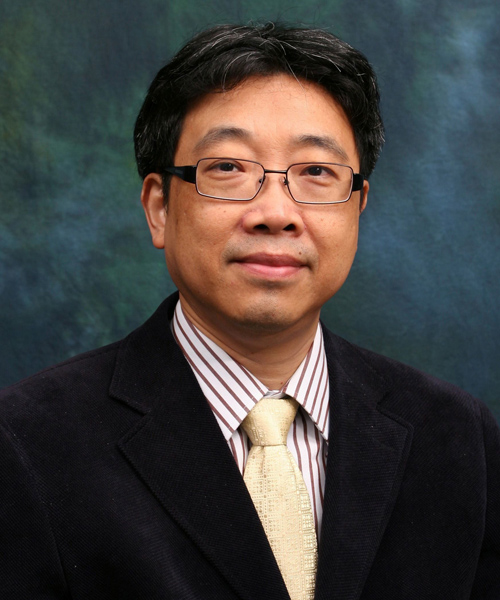
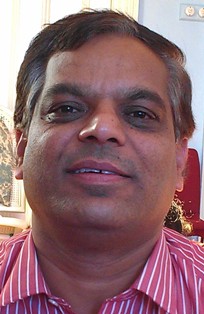
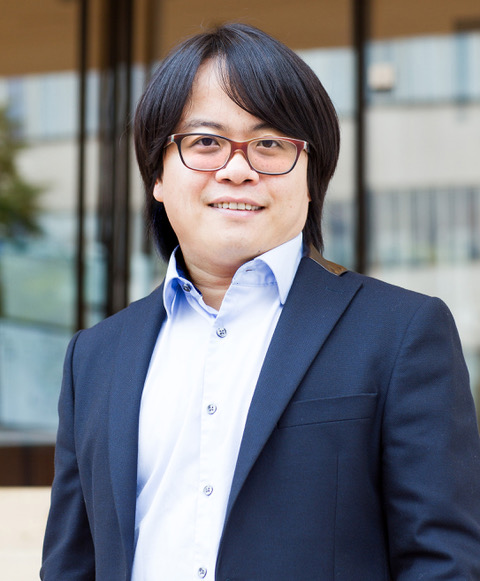
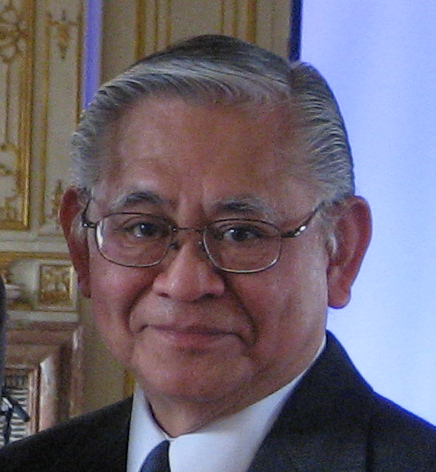
Beng Chin Ooi is a Lee Kong Chian Centennial Professor at the National University of Singapore (NUS), School of Computing (SoC). He holds a B.Sc. (1st Class Honors) and Ph.D. in Computer Science from Monash University. His research focuses on database systems, large-scale analytics, and distributed computing. He has held leadership roles including Dean of School of Computing (2007–2013) and Director of Smart Systems Institute (2011–2021). Key achievements include the Singapore President’s Science Award (2011), ACM Fellow (2011), IEEE Fellow (2009), and multiple best paper awards. His work emphasizes scalable data management, blockchain systems, and healthcare data analytics. Education: Monash University (B.Sc., Ph.D.) Leadership: Dean (SoC), Director (Smart Systems Institute) Awards: Over 15 major honors including ACM SIGMOD E.F. Codd Innovations Award (2020) His research spans distributed databases, big data systems, and innovative applications of blockchain technology. Recent work includes NASI (neural architecture search) and Rafiki (ML-as-a-service).
Cao Jiannong is currently a Chair Professor and Director of the University Research Facility in Big Data Analytics at Hong Kong Polytechnic University . He has held academic roles including Assistant Professor at City University of Hong Kong and University Lecturer at the University of Adelaide and James Cook University. His research spans Cloud and Edge Computing , Parallel and Distributed Systems , Big Data Analytics , and Wireless Sensing . Ph.D. in Computer Science, Washington State University (1990) MSc in Computer Science, Washington State University (1986) BSc in Computer Science, Nanjing University, China (1982) His work focuses on solving theoretical and practical challenges in distributed computing , mobile cloud systems , and wireless sensor networks . Recent projects include coupled network embedding models for heterogeneous networks and SDN architectures for vehicular communication. His research also pioneers WiFi-based non-invasive health monitoring and fault-tolerant sensor deployment for structural health applications. Dr. Cao's publications highlight advancements in network embedding , edge computing , and WSN optimization . Key papers address multi-user computation partitioning , energy-efficient SHM systems , and consensus protocols for mobile networks. These works have been cited over 15,000 times, with an h-index of 60. Ministry of Education (China) Natural Science Award (2018) Distinguished Member, ACM (2017) Fellow, IEEE (2014) Best Paper Awards at IEEE DSAA, SMARTCOMP, and WCNC Dr. Cao has advised multiple PhD students, including Linchuan Xu and Weigang Wu , whose research on WSN-based SHM and coupled network embedding has practical impact. His leadership includes directing Hong Kong Polytechnic University's Big Data Research Facility and serving on technical committees for IEEE INFOCOM and ACM/IEEE conferences.
Dr. Rajkumar Buyya is a Redmond Barry Distinguished Professor at the University of Melbourne and Founder & CEO of Manjrasoft , a spin-off commercializing cloud innovations. He has held visiting roles at Imperial College London , University of Birmingham , and Tsinghua University . Research Interests : His work spans Cloud Computing , Edge Computing , Grid Systems , and Energy-Efficient Computing , focusing on utility-driven resource allocation, simulation tools, and scalable IoT application frameworks. He pioneered the CloudSim toolkit and Aneka Cloud technologies. Scientific Awards : IEEE Fellow (2015), Web of Science Highly Cited Researcher (2016-2021) Khwarizmi International Award (2020), Scopus Researcher of the Year (2017) Frost & Sullivan New Product Innovation Award (2010), IEEE TCSC Medal (2009) Impact : Authored over 850 publications, including the widely adopted textbook Mastering Cloud Computing . Graduated 54 PhD students now in leadership roles at institutions like Newcastle University and companies such as IBM , Google , and Amazon . His research has driven global adoption of cloud/edge technologies in 50+ countries.
Jiannong Cao is a Chair Professor and Director of the University Research Facility in Big Data Analytics at the Department of Computing, Hong Kong Polytechnic University. He has held various academic roles since 1990, including Assistant Professor at City University of Hong Kong and Lecturer at Australian universities. PhD in Computer Science, Washington State University (1990) MSc in Computer Science, Washington State University (1986) BSc in Computer Science, Nanjing University (1982) His research focuses on cloud and edge computing , parallel and distributed computing , and mobile computing , with significant contributions to wireless sensor networks (WSN) for structural health monitoring (SHM) and software-defined networking (SDN) for vehicular communications. Recent work includes WiFi-based non-invasive health monitoring systems and multi-user computation partitioning in mobile cloud environments. Dr. Cao’s publications demonstrate trends in WSN optimization , SDN architectures , and cognitive modeling for network embedding , with applications in smart healthcare , transportation systems , and industrial IoT . Ministry of Education Natural Science Award (2018) ACM Distinguished Member (2017) IEEE Fellow (2014) Best Paper Awards at IEEE DSAA, SMARTCOMP, WCNC He has mentored numerous researchers, including Linchuan Xu , Xuefeng Liu , and Weigang Wu , who have authored key publications in top venues like ACM WSDM and IEEE INFOCOM . His professional roles include chairing IEEE committees and serving on grant panels for the Hong Kong Research Grant Council.
Hui Pan is a distinguished academic holding dual positions as Nokia Chair in Data Science and Professor of Computer Science at the University of Helsinki, and Chair Professor of Computational Media and Arts at the Hong Kong University of Science and Technology (HKUST). His research spans networking, mobile computing, augmented reality, and computational social science. He earned his Ph.D. in Computer Science from the University of Cambridge in 2007. His work bridges social networks with mobile systems, pioneering fields like mobile social networks and opportunistic forwarding algorithms. Research interests include data science, complex networks, and innovative applications of augmented reality. His recent publications focus on low-latency AR frameworks, blockchain for computation offloading, and mobile web visualization. He has received prestigious awards, including IEEE Fellow (2018), ACM Distinguished Scientist (2016), and the Nokia Chair Endowment (2017). He has supervised over 15 PhD and 12 MPhil graduates, with 13 current Ph.D. students and 2 MPhil students. His editorial roles include Associate Editorships at IEEE Transactions journals and guest editorships at top venues like IEEE JSAC and ACM Transactions. He has organized conferences such as WWW Track Chair and ExtremeCom General Chair.
Gheorghe Paun is a Senior Researcher at the Institute of Mathematics of the Romanian Academy (1994–present) and a Visiting Researcher at the University of Sevilla (2009–present). He earned his Ph.D. in Mathematics from the University of Bucharest (1977), supervised by Solomon Marcus. His research spans Automata and Language Theory (descriptional complexity, regulated rewriting), Natural Computing (DNA computing, membrane computing), and he is the initiator of membrane computing . Education : M.Sc. in Mathematics (1974), University of Bucharest (specialization: computer science) Ph.D. in Mathematics (1977), University of Bucharest His work includes foundational contributions to DNA computing (book DNA Computing. New Computing Paradigms , 1998) and membrane computing (book Membrane Computing. An Introduction , 2002). He has collaborated with over 100 researchers globally and advised multiple Ph.D. students, including Victor Mitrana and Gianina Georgescu. His scientific awards include the Gheorghe Lazar award (1981), Corresponding Member of the Romanian Academy (1997), Doctor Honoris Causa from Silesian University of Opava (2007), and recognition as an ISI Highly Cited Scientist (2007). He also holds honorary citizenships in Curtea de Arges (1998), Arges County (2007), and Cicanesti village (2009). Paun has served on editorial boards for journals like Theoretical Computer Science. Natural Computing Series and Natural Computing , and organized major workshops in membrane computing. His academic contributions include over 150 publications and editorial roles in 20+ journals.
Emanuel Sallinger is a Full Professor at TU Wien's Databases and Artificial Intelligence Group and Vice Dean of Academic Affairs for Business Informatics and Data Science. He leads the Knowledge Graph Lab, focusing on scalable knowledge-based systems, reasoning in knowledge graphs, and AI integration. His research spans computational logic, database theory, and blockchain applications. Education: PhD in Computer Science (awarded 'sub auspiciis praesidentis rei publicae'), Master's degrees in Computational Intelligence and Informatics Management, and a Bachelor's in Software and Information Engineering. Research Interests: Knowledge graphs (construction, reasoning, scalability), logic-based systems, AI/ML integration with databases, enterprise architecture modeling, and financial knowledge systems. His work emphasizes practical applications like enterprise modeling, sustainable waste management, and regulatory compliance. Grants & Projects: Lead Vienna Science and Technology Fund (WWTF)-funded Knowledge Graph Lab. Involved in projects like 'Knowledge Graph-driven Tour Management' (sustainability), 'SustainGraph' (waste processing), and 'Enterprise Architecture Knowledge Graphs'. Teaching: Offers courses on Knowledge Graphs, Generative AI, Database Systems, and research methodology. Supervises doctoral and master's students in AI, databases, and knowledge representation. Labs/Teams: Knowledge Graph Lab at TU Wien, collaborating with industry on blockchain-based systems, financial AI, and enterprise architecture frameworks.
Viktor Prasanna is the Charles Lee Powell Chair in Engineering and Professor of Electrical and Computer Engineering and Computer Science at the University of Southern California. He holds courtesy appointments in Computer Science and leads the Center for Energy Informatics, focusing on interdisciplinary research linking energy technologies, computer science, and engineering. Education: BE in Electronics (Bangalore University), ME (Indian Institute of Science), PhD in Computer Science (Pennsylvania State University) His research spans reconfigurable computing, FPGA accelerators, parallel and distributed systems, and big data applications. He has pioneered high-performance architectures and algorithms using FPGAs, impacting domains like networking, security, HPC, and machine learning. Prasanna has published over 600 papers, received 22 best paper awards, and secured >$50M in grants. His work emphasizes energy-efficient computing, with recent grants totaling $12.9M (2016–2021). His h-index is 73, with 23,454 total citations. Scientific Awards: IEEE Fellow, ACM Fellow, AAAS Fellow, W. Wallace McDowell Award, multiple Distinguished Alumnus Awards He has advised over 70 doctoral students and led major centers including CiSoft (Big Data in oilfield tech) and CAST. His editorial roles include Editor-in-Chief of IEEE Transactions on Computers and Journal of Parallel and Distributed Computing.
Oscar H. Ibarra is Professor of Computer Science at the University of California, Santa Barbara since 1989, where he served as Department Chair from 1997-1999. Previously, he held faculty positions at the University of Minnesota (1969-1989) and the University of the Philippines (1975-1976). He earned his Ph.D. in Electrical Engineering from the University of California, Berkeley in 1967. His research fundamentally advances theoretical computer science through work in algorithm design, computational complexity, and emerging paradigms like molecular and membrane computing. Key contributions span formal verification, parallel computing systems, and computational theory. Major recognitions include: Guggenheim Fellowship (1984-1985) Triple Fellowships: IEEE (1992), AAAS (1993), ACM (1995) IEEE Computer Society's Harry M. Goode Award (2001) Blaise Pascal Medal in Computer Science (2007) Academia Europaea Foreign Membership (2008) He serves as Editor-in-Chief of the International Journal of Foundations of Computer Science and edits Theoretical Computer Science and the Journal of Parallel and Distributed Computing.
Manolis G.H. Katevenis is a Professor at the Department of Computer Science, University of Crete, and Deputy Director and Head of the Computer Architecture and VLSI Systems (CARV) Laboratory at the Institute of Computer Science (ICS), Foundation for Research & Technology - Hellas (FORTH). He co-founded the European Research Center on Computer Architecture (EuReCCA) and is a founding partner of the European Network of Excellence on High-Performance and Embedded Architecture and Compilation (HiPEAC). PhD in Computer Science from University of California, Berkeley (1983) Co-founder of EuReCCA (2011) Contributed to RISC architecture (1980-1983), interconnection networks (1985-2011), and parallel computing (1993-2010) His research spans Scalable Multicore Systems , Interconnection Network Architecture , Packet Switch Design , Computer Architecture , and VLSI Systems . He has made foundational contributions to per-flow queueing, backpressure mechanisms, and wormhole IP over ATM, with applications in internet routers, data centers, and supercomputers. His publications focus on high-radix crossbar switches, flow control algorithms, and explicit interprocessor communication. Notable scientific awards include: ACM Doctoral Dissertation Award (1984) David J. Sakrison Memorial Prize (1983) IBM PhD Fellowship (1981-1983) Greek State Fellowship (1973-1978) He has supervised 40 graduate theses and participated in 22 R&D projects totaling €9M, including HiPEAC (coordinator of interconnection networks), SARC (FPGA prototype design), and ENCORE (cache-optimized remote DMA). His work has received over 2000 citations, with an h-index of 23.
Sylvain Lefebvre is a permanent researcher at INRIA (Institut National de Recherche en Informatique et en Automatique) in France, where he leads the MFX research team since 2018. Previously, he was part of the ALICE group at INRIA Nancy (2009-2018) and the REVES team in Sophia Antipolis (2006-2009). His career includes a postdoctoral position at Microsoft Research Seattle (2005) following his PhD at INRIA Rhones-Alpes under Fabrice Neyret. His educational background includes a PhD in Computer Graphics from Université Joseph Fourier (Grenoble) in 2005, preceded by a Master in Computer Graphics from INP Grenoble in 2001. His habilitation thesis focused on Runtime Texture Synthesis. Lefebvre's research centers on simplifying content creation for highly detailed patterns, structures, and shapes with applications spanning Computer Graphics to additive manufacturing. He develops fast, controllable by-example synthesis approaches that generate content while enforcing user-specified constraints. His work addresses computational challenges through novel data structures and algorithms optimized for GPUs and FPGAs, including his Silice programming language. The ERC-funded ShapeForge project (2012-2017) advanced shape generation for 3D printing, leading to the IceSL software for digital modeling and fabrication. Analysis of his 15 most recent publications reveals a strong focus on additive manufacturing optimization, with recurring themes in structural integrity, material efficiency, and geometric algorithms. His work bridges computer graphics theory with practical fabrication constraints, particularly in microstructure design, slicing techniques, and mechanical metamaterials. The interdisciplinary nature spans computer science, materials engineering, and robotics. EUROGRAPHICS Young Researcher Award (2010) ERC Starting Grant for ShapeForge project (2012) Lefebvre has advised over 25 PhD students and interns including Marco Freire, Thibault Tricard, and Jimmy Etienne. His ShapeForge project received significant ERC funding, supporting research in computational fabrication. He serves on numerous program committees including SIGGRAPH, Eurographics, and SIGGRAPH Asia, reflecting his leadership in the computer graphics community. As leader of the MFX team since 2018, Lefebvre directs research in computational fabrication, focusing on IceSL software development for 3D printing workflows. The team integrates computer graphics techniques with manufacturing constraints, developing tools that simplify complex object design and fabrication while addressing real-world challenges in material usage and structural integrity.
Xiaotie Deng is a distinguished academic and Chair Professor at Peking University (since 2018), with prior roles at Shanghai Jiao Tong University (2013–2017), the University of Liverpool (2010–2013), and City University of Hong Kong (1997–2013). His research focuses on algorithmic game theory, internet economics, and parallel computing. He holds prestigious fellowships including ACM Fellow (2008) and IEEE Fellow (2019). Deng has led significant grants, including a RMB 5M project on algorithmic game theory at Peking University (2018–2020) and NNSFC-funded research on market competitiveness and fairness (2018–2020). Education: PhD in Computer Science from Stanford University (1989), MSc from Chinese Academy of Sciences (1984), BSc from Tsinghua University (1982). Research interests span computational game theory, equilibrium analysis, and blockchain applications. Notable contributions include foundational work on Nash equilibrium complexity and mechanism design for resource allocation. He has advised numerous PhD students and serves on editorial boards of top journals like SIAM Journal on Computing and IEEE Transactions on Cloud Computing. Key awards: ACM and IEEE Fellowships, JSPS Invitation Fellowships (2005, 1996), and NSERC International Fellowship (1991). Active in conference organizing, including PC chairs for WINE 2020 and SAGT 2018. Consultancy includes work with Cryptape, Ant Financial, and Microsoft Research Asia, reflecting his industry engagement in algorithmic solutions and blockchain technologies.
Rafail Ostrovsky is a Professor of Computer Science and Mathematics at UCLA , affiliated with the Center for Information and Computation Security at the Henry Samueli School of Engineering and Applied Science. He earned his Ph.D. in Computer Science from MIT in 1992 under Silvio Micali. Research Focus: His work spans cryptography, algorithms, and theoretical computer science, emphasizing secure multi-party computation, zero-knowledge proofs, oblivious RAM, and high-dimensional data analysis. Applications include privacy-preserving data mining, systems security, and quantum cryptography. Article Trends: Recent publications address concurrent security protocols, robust secret sharing via expander graphs, and efficient multi-party computation. Topics intersect computational complexity, cryptographic reductions, and practical security implementations. Awards: Recipient of the 2018 RSA Conference Excellence in Mathematics Award , 2017 IEEE Fellow , and multiple IEEE/ACM honors. Holds 14 U.S. patents and over 290 refereed papers. Advising: Supervised 27 Ph.D. students, many now professors at top institutions. Served on 40+ program committees, including FOCS 2011 Chair. Labs: Leads the CICS research center, fostering interdisciplinary work in information security and cryptographic systems.
Radu-Aurel Prodan is a full Professor in the Department of Computer Science at the University of Innsbruck, Austria. He is actively involved in teaching and research, with office hours from Monday to Friday, 09:00–13:00. His work is centered within the academic and technical framework of one of Austria's leading computer science departments. His research interests span key areas in modern computing systems, including distributed computing, parallel computing, workflow scheduling, high-performance computing, cloud computing, and grid computing. These domains reflect his contributions to scalable and efficient computing infrastructures. The publications in his body of work demonstrate consistent engagement with challenges in system efficiency, resource management, and scientific workflows across distributed environments. Broad themes include optimization, performance modeling, and large-scale data processing in parallel systems. Scientific awards: No specific awards mentioned in the provided text. There is no available information on student advising, research grants, or leadership in specific labs or teams within the provided content. His professional activities appear to be anchored in the Department of Computer Science at the University of Innsbruck.
Wilfried Gansterer is a Professor at the Faculty of Computer Science, University of Vienna, leading the Theory and Applications of Algorithms research group. His work focuses on numerical algorithms, distributed computing, and machine learning, with notable contributions to graph neural networks and fault-tolerant systems. Active in projects such as Algorithmic Data Science for Computational Drug Discovery (2020–2028) and REPEAL (Resilience vs. Performance in Numerical Linear Algebra, 2016–2020). Research Interests: Dr. Gansterer’s expertise spans graph neural networks, matrix compression, adversarial defense mechanisms, and high-performance computing. His work addresses challenges in efficient computation, resilience against node failures, and optimizing distributed systems. Projects : Algorithmic Data Science for Computational Drug Discovery (2020–2028) REPEAL: Resilience vs. Performance in Numerical Linear Algebra (2016–2020) Verteiltes Rechnen (Distributed Computing, 2007–2014) Awards : 2023 Best Paper Award for work on Crossfire: An Elastic Defense Framework for Graph Neural Networks. Labs/Teams : Directs the Theory and Applications of Algorithms group, focusing on algorithmic innovation in distributed and high-performance computing environments.