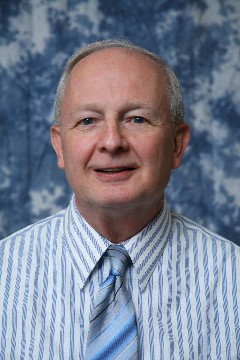
Richard BaileyView profile
Professor
Professor Richard Bailey is Professor of Environmental Systems at the University of Oxford's School of Geography and the Environment. He serves as a Tutorial Fellow and Dean of St Catherine's College, a Senior Research Fellow at the Institute for New Economic Thinking, and a member of the Oxford Biodiversity Institute. Bailey co-directs the Oxford Luminescence Dating Laboratory and leads the CoHESys-lab research group focused on complex human-environmental systems. Richard's research centers on the dynamics of natural environmental systems and coupled human-environment interactions across various timescales. His work employs mathematical modeling, numerical simulations, and empirical data analysis to understand complex systems, with a strong focus on sustainability applications, particularly in ocean systems. The CoHESys-lab develops models that integrate machine learning methods to explore implementable policies for environmental challenges. His recent publications demonstrate a strong trend toward interdisciplinary research combining environmental science, computational modeling, and sustainability. Bailey's work spans from theoretical explorations of complex systems to applied projects addressing pressing issues like plastic pollution, fisheries management, and climate change impacts on marine ecosystems. His research increasingly incorporates agent-based modeling and machine learning approaches to tackle coupled human-environment challenges. Co-Director of Oxford Martin School Programme on Sustainable Oceans Co-Director of Oxford Luminescence Dating Laboratory Leader of CoHESys-lab research group Professor Bailey currently supervises graduate students Maike Nowatzki (focusing on dunefield morphology using deep learning) and Thomas Youngman (working on macroeconomic modeling for UK climate transition). His recent advisees include Emily Neil (rewilding impacts at Knepp Estate) and Diana Bailey (LM OSL analysis techniques). His research is supported through collaborations with organizations including Ocean Conservancy, Stanford University, George Mason University, and the University of California at Santa Barbara, with computational support from Amazon Web Services. Bailey leads the CoHESys-lab (Complex Human Environmental Systems Simulation Laboratory), which develops sophisticated models for understanding coupled human-environment systems. His OSIRIS framework (Ocean Systems Interactions, Risks, Instabilities and Synergies) represents a significant contribution to analyzing multiple stressors on marine systems. The lab maintains strong collaborations with environmental organizations and academic institutions worldwide to address sustainability challenges through innovative computational approaches.