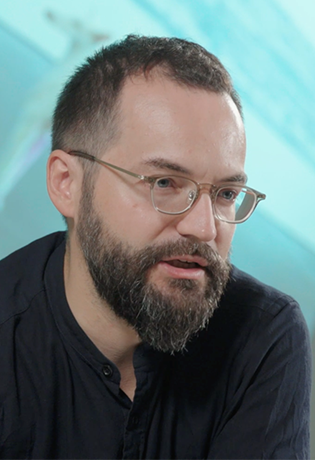
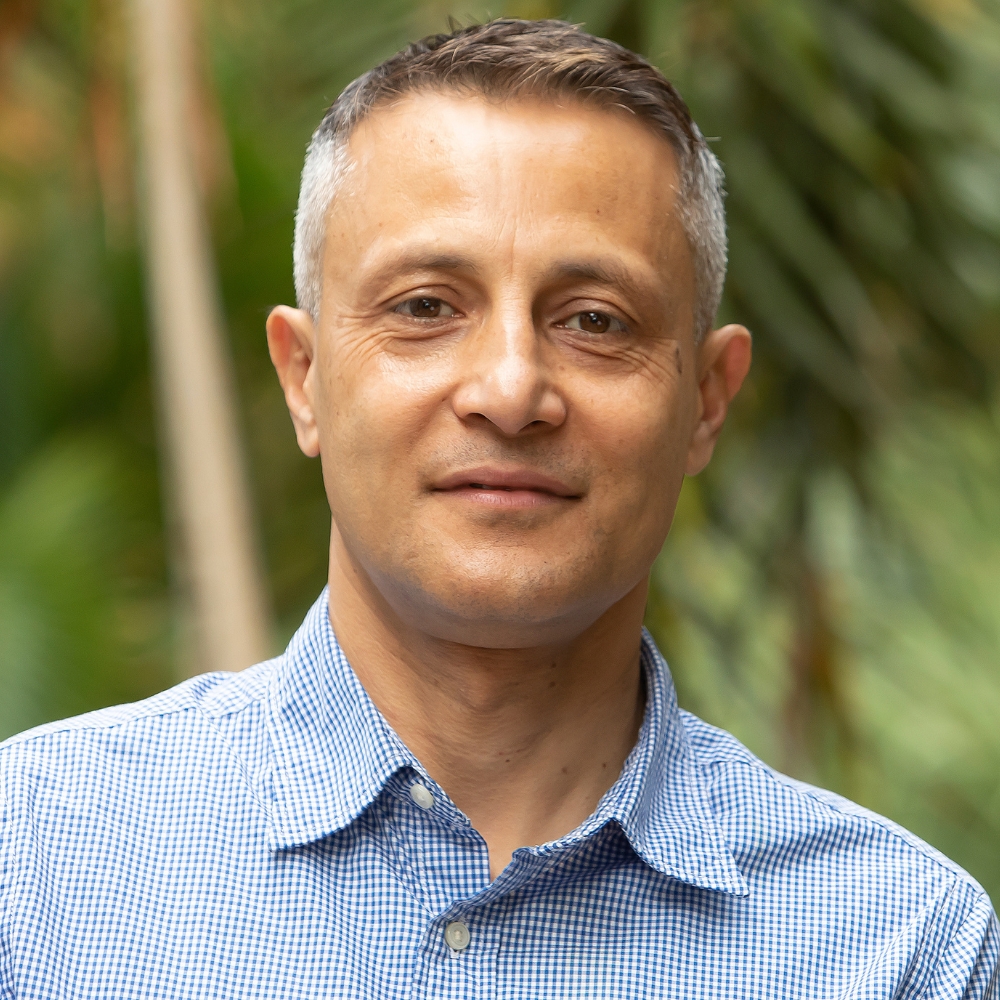
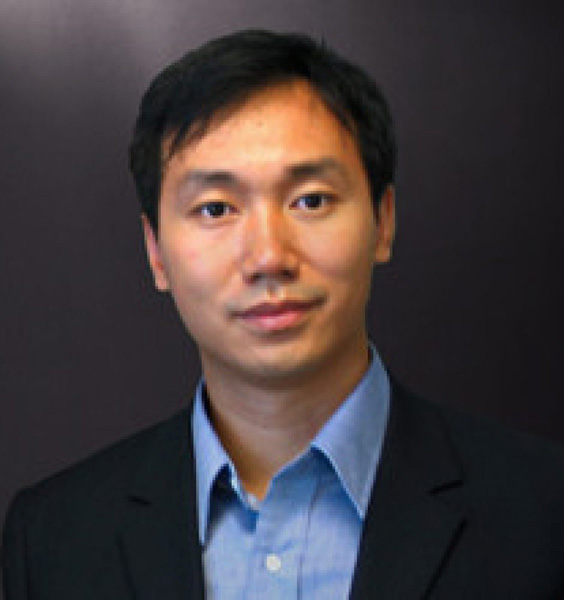
David Mazières is a Professor at Stanford University , affiliated with the School of Engineering and the Department of Computer Science . He serves as a software engineer at the Stellar Development Foundation . His work bridges academic research and industry applications in distributed systems and security. University: Stanford University Academic Rank: Professor Email: dm@scs.stanford.edu Research Interests: David Mazières' research focuses on distributed systems , cryptocurrencies , and computer security . Key areas include consensus protocols (e.g., Stellar ), low-latency scheduling ( Syrup , Shinjuku ), and cryptographic techniques for privacy and security ( SafetyPin , CCFI ). Key Achievements: His notable works include: TCP-ENO (RFC 8547) for secure transport protocols Stellar Consensus Protocol for decentralized finance SOSP 1999 Best Paper for 'Separating key management from file system security' Teaching Contributions: He has taught core and advanced courses at Stanford since 2005, including CS212 (Operating Systems) , CS240h (Functional Systems in Haskell) , and CS251 (Cryptocurrencies and Blockchain Technologies) . Previously taught courses at NYU (2001-2005).
Susan Fino is a Professor at the College of Liberal Arts and Sciences, Wayne State University. Her research focuses on public law, American constitutional law, administrative law, and the role of state supreme courts. She holds a B.A. from Johns Hopkins University, an M.A. and Ph.D. from Rutgers University. She has received the President's Award for Excellence in Teaching. Her courses include American Government (PS1010) and Constitutional Law (PS5110/PS5120), taught across multiple terms from 2023 to 2025. Dr. Fino's research explores judicial federalism, state constitutional frameworks, and legal interpretations of rights. Her work analyzes topics like church-state relations, taxation provisions in state constitutions, and assisted suicide debates. She has written extensively on state supreme court dynamics, including landmark cases and institutional performance metrics. Her scholarship bridges legal theory with practical governance challenges at both state and federal levels. Her publications span over three decades, addressing evolving legal landscapes such as the Rehnquist Court’s federalism approach and technological impacts on criminal sentencing. She consistently engages with issues at the intersection of law, politics, and societal values.
Dr. Damien Charrieras is an Associate Professor at the School of Creative Media , City University of Hong Kong, where he serves as Program Leader for the Master of Art in Creative Media and deputy program leader for the PhD in Creative Media. His work bridges cultural studies, new media theory, and the intersection of financial technologies with artistic practices through the ACIM Laboratory for Interventions in Speculative Finance . Doctoral research on digital artists' trajectories in Montreal FRQSC Postdoctoral Fellowship at McGill University Research spans game engine design , datafication of creativity , blockchain in art , and post-anthropocentric creative processes . With over HK$3.14M in grants as Principal Investigator, he explores situated digital creativity in urban contexts, critical worldbuilding pedagogy , and the mediation of technical systems in cultural production. His publications in Cities , Organized Sound , and Human Relations analyze the reconfiguration of artistic practices through software infrastructures and automation paradigms. Scientific awards include: FRQSC Postdoctoral Fellowship
Pawan Adhikari is a Professor of Accounting at Essex Business School, University of Essex , where he serves as Director of Impact and Enterprise and Director of Essex Accounting Centre . He is an Associate Editor of the Journal of Public Budgeting, Accounting and Financial Management and a Executive Board Member of the Comparative International Governmental Accounting Research Network (CIGAR) . Previously, he led accounting reforms at Nepal’s Accounting and Auditing Standards Board and lectured at Nord University, Norway. PhD, Nord University Business School Fellow of the Higher Education Academy His research focuses on public sector accounting in developing countries, particularly accounting reforms , public value creation , and climate accountability . He explores how accrual accounting and participatory budgeting can enhance transparency in South Asian and African contexts. His work has influenced policy-making in Nepal and is recognized with the 2023 Best International Research Impact award by the University of Essex. Recent publications analyze wellbeing economies (2025), NGO accountability in disasters (2024), and climate budgeting (2023). He collaborates with institutions like the World Bank , European Commission , and British Academy , focusing on projects related to financial resilience , circular economy , and health sector accountability . Supervising 8 current PhD students, his advisees have produced work on topics like accrual accounting in Bangladesh and NGO accountability in Palestine . World Bank/PEFA Research Award African Accounting and Financial Association (AAFA) Award ESRC IIA Impact Fund GCRF and SeNSS Grants 2019 Best Postgraduate Supervisor (Essex)
Sascha Struwe serves as a Postdoctoral Researcher at Aalborg University Business School within the Faculty of Social Sciences and Humanities, actively contributing to the International Business Research Group. Based at Fibigerstræde 11 in Aalborg Øst, Denmark, Struwe operates at the intersection of service innovation theory and business practice with international focus. Research expertise centers on service innovation , value co-creation , and digital servitization , particularly examining B2B contexts and open banking ecosystems. Work consistently explores institutional influences through German-Chinese case studies, addressing how cultural and regulatory frameworks shape service design. Recent trajectories reveal evolution from foundational service design challenges (2019-2021) toward digital transformation implications (2022-2023), with emphasis on value co-destruction mechanisms in financial ecosystems. Struwe led the PhD project Innovating the Invisible and Intangible: Value Creation in B2B service (2018-2021) investigating co-creation capabilities across industrial sectors. Academic engagement includes conference participation at EIBA and CICALICS events, plus a visiting researcher appointment at Fudan University's Nordic Centre (2019-2020). Current work continues through the International Business Research Group, focusing on digital literacies and service ecosystem resilience.
Nurul Alam is a Lecturer in Accounting at the University of Sydney Business School. His research focuses on machine learning applications in finance and accounting, corporate distress prediction, and financial reporting. He holds a PhD from the University of Sydney, where he investigated machine learning models for US corporate bankruptcies. His teaching excellence has earned over 15 awards, including multiple Dean’s Citations and nominations for the Wayne Lonergan Award for Teaching Excellence. Education Master of Commerce (Finance & Accounting), University of Sydney Bachelor of Business Administration (Finance & Banking), University of Rajshahi, Bangladesh Research Interests Machine Learning and Deep Learning in accounting and finance Big Data analytics for corporate financial decision-making Accounting fraud detection mechanisms Financial reporting standards and regulations Current Projects Corporate bankruptcy prediction using survival models and AI Deep Learning applications in panel data analysis for firm distress Machine learning variable selection in corporate finance Accounting fraud patterns among lower/mid-level employees Teaching Contributions Financial Accounting B (ACCT3011) Quantitative Methods for Accounting (QBUS5002) Quantitative Business Analysis (BUSS1020)
Dr. Kamran Sedig serves as a Professor in the Department of Computer Science and the Faculty of Information and Media Studies at Western University, where he directs the Insight Lab. His research focuses on designing interactive technologies to enhance human cognitive activities involving data and information, including decision making, problem solving, and learning across domains like healthcare, finance, and scientific discovery. His academic credentials include: Ph.D. in Computer Science (Human-Computer Interaction) from The University of British Columbia under Prof. Maria Klawe, with dissertation nominated for the Governor General’s Gold Medal M.Sc. in Computer Science (Artificial Intelligence) from McGill University under Prof. Renato De Mori B.Sc. in Computer Engineering and Science from Concordia University as Valedictorian with The Most Great Distinction Sedig’s research synthesizes computer science, information science, cognition theory, and game studies to develop frameworks for interactive visual tools (IVTs). He investigates human-data interaction, visual reasoning, and interactivity design to support complex cognitive tasks like medical diagnosis, financial analysis, and scientific exploration. His human-centered approach emphasizes how computational tools and humans form coordinated cognitive systems for optimal task execution. Analysis of his recent publications reveals dominant trends in health informatics applications (drug safety analytics, electronic health records) and foundational work on human-information interaction frameworks. His visual analytics systems consistently bridge theoretical models with practical tools for ontology exploration, document triage, and explainable AI, demonstrating strong interdisciplinary collaboration across medical and computational domains. Key recognitions include: Governor General’s Gold Medal nomination for doctoral research Valedictorian honors at Concordia University As Insight Lab director, Sedig mentors graduate students through courses like Human-Computer Interaction, Information Visualization, and Design of Digital Cognitive Games. His teaching philosophy emphasizes how cognitive technologies mediate human thinking processes in professional and private contexts. While specific grant details aren’t provided, his lab’s sustained output in health analytics and visual interfaces indicates robust research funding. The Insight Lab operates as a collaborative hub for developing and evaluating IVTs, with current projects including VICTORIOUS for document scoping reviews and VISEMURE for multimorbidity analysis. Sedig’s team prioritizes empirical validation of how interaction design affects cognitive load and task efficiency in real-world data-intensive environments.
Prof. Dr. Bernd Skiera holds the first chair for electronic commerce in Germany at Goethe University Frankfurt am Main since 1999. He serves on the board of efl - The Data Science Institute and the Schmalenbach Society, while representing Germany at the European Marketing Community (EMAC). Chair of Marketing, Goethe University Frankfurt am Main Board member, efl - The Data Science Institute National representative, European Marketing Community (EMAC) His research focuses on MarTech/SalesTech integration, customer value management, online advertising analytics, data-driven pricing models, and the economic implications of internet privacy regulations. He leads the ERC Advanced Grant project on cookie usage restrictions' economic consequences. Recent publications examine dynamic pricing in digital markets, competition visualization using big data, and AI applications in marketing analytics. The ERC Advanced Grant research has produced empirical analyses of GDPR impacts on advertising ecosystems. 2015 Journal of Marketing Best Paper Award 2013 International Journal of Research in Marketing Best Paper Award Multiple MSI/H. Paul Root Award recognitions He has mentored 17 doctoral students who became professors globally, including at London Business School and LMU Munich. His work bridges marketing analytics with financial valuation through customer equity modeling.
Associate Professor Sam Kirshner is a faculty member at the University of New South Wales within the School of Information Systems and Technology Management . His research focuses on behavioral decision making , algorithmic impact on operations , and artificial intelligence applications in business contexts. PhD in Management Science from Queen’s University, Canada Teaching expertise in data visualization, predictive analytics, and AI ethics Co-author of Business Analytics: A Management Approach Member of the Ethical AI Advisory His research explores how psychological distance and construal level theory influence decisions in supply chains, technology management, and consumer behavior. Recent work examines ChatGPT's decision biases , algorithm aversion , and sustainable operations under financial constraints. Key publication trends show focus areas: AI ethics and human-AI collaboration Behavioral supply chain analysis Temporal/spatial psychological distance effects CO2 forecasting with sparse data Consumer behavior in digital platforms Virtual reality and cognitive processing Supervision roles include mentoring 2 PhD students and 6 honors students, contributing to the next generation of scholars in business analytics and technology management.
Shrirang Mare is an Assistant Professor in the Computer Science Department at Western Washington University (WWU), focusing on computer security and privacy with emphasis on usable security solutions for diverse user groups including low-literate individuals, the elderly, and cross-cultural populations. His research bridges human-computer interaction and cyber-physical systems to create accessible security mechanisms for emerging technologies. His educational background includes a PhD in Computer Science from Dartmouth College (2016), where his dissertation on seamless authentication for ubiquitous devices established his research trajectory. Dr. Mare's research interests encompass security and privacy, human-computer interaction, and cyber-physical systems, with specialized focus on security for low-literate users and developing regions. His work consistently addresses real-world applicability through field studies in countries like India and Pakistan, examining mobile payment systems, SMS fraud, and smart home privacy challenges. Analysis of his 15 most recent publications (2018-2024) reveals a dominant trend in wearable-based authentication systems (wristbands for desktops/smartphones) and privacy solutions for consumer IoT, particularly smart homes. His research uniquely combines technical security mechanisms with deep user-centered design principles, often targeting underserved populations in developing regions. No scientific awards or fellowships were mentioned in the provided documentation. Teaching responsibilities include Privacy Enhancing Technologies, Object Oriented Design, and Data Structures at WWU, with prior guest lectures at UC Berkeley and the University of Washington; no current advisees or grant funding details were specified. Dr. Mare operates within the Computer Science Department at WWU but no dedicated research lab or team structure was referenced in the source materials.
Lin Chen is the Chair Professor of Finance and Stelux Endowed Professor in Finance at the University of Hong Kong (HKU), serving as Associate Dean (Research and Knowledge Exchange) in the Faculty of Business and Economics. He holds a PhD from the University of Florida and has held academic leadership roles at HKU and Chinese University of Hong Kong (CUHK). His research focuses on financial technology, banking systems, corporate finance, and economic development, with notable contributions to understanding financial resilience during crises and institutional reforms. Educations: PhD/MBA in Finance from University of Florida, B.E. in Engineering from South China University of Technology Leadership roles: Associate Dean (HKU), Board Member of HKU-Standard Chartered FinTech Academy, Currency Board Committee member Research interests span financial innovation , banking competition , corporate governance , and ESG integration . Key projects include RGC Theme-based grants on FinTech stability/inclusion and HK's financial center development. His work is published in top journals like Journal of Financial Economics and Review of Financial Studies . He has advised major institutions including Hong Kong Monetary Authority, World Bank, and China Construction Bank. Awards include the Jensen Prize (2011), Nobel nomination (2016), and honorary professorships from Edinburgh and Berkeley. Grants coordination includes HK$24.4 million FinTech project (2020-2025) and leadership roles in research centers like HKU’s Financial Innovation & Development Centre. Active in editorial roles for Management Science and policy advisory groups. Media engagements include BBC, Bloomberg, and Harvard Law School forums. Current initiatives focus on Web3.0 development in HK and financial inclusion strategies.
Prasenjit Mandal is an Associate Professor in the Department of Information Systems, Supply Chain Management, and Decision Support at NEOMA Business School (France). He holds a PhD in Decision Sciences and Information Systems from the Indian Institute of Management (IIM) Bangalore. Previously, he served as an Assistant Professor of Operations Management at IIM Calcutta and worked as an Oracle ERP consultant at Tata Consultancy Services. His research focuses on supply chain finance, revenue optimization, multi-channel retail strategies, and strategic decision-making in supply chains. He has published in top journals like European Journal of Operational Research and IEEE Transactions on Engineering Management. He currently serves as a reviewer for multiple academic journals. Education: PhD in Decision Science and Information Systems, IIM Bangalore, India Oracle ERP Techno-Functional Certification Research Interests: Revenue Management in Retail & E-commerce Supply Chain Finance & Platform Financing Multi-channel Distribution Strategies Empirical Modeling of Supply Chain Trade-offs Strategic Decision-Making under Competition Key Contributions: His recent work explores platform financing models, strategic supplier financing choices, and omnichannel retail challenges. His research integrates optimization models with real-world operational scenarios to address supply chain complexities. Professional Experience: Current: Associate Professor, NEOMA Business School 2016-2019: Assistant Professor, IIM Calcutta 2012-2015: Oracle ERP Consultant, Tata Consultancy Services
Banu Lokman is a Professor of Operational Research (OR) at the University of Portsmouth, serving as Associate Head (Research and Innovation) in the School of Organisations, Systems and People within the Faculty of Business & Law. She leads the Centre for Innovative and Sustainable Finance and contributes to the Centre for Operational Research & Logistics. Her expertise spans multi-criteria decision-making, optimization, and their applications in healthcare and sustainability. She holds editorial roles at OMEGA and the IMA Journal of Management Mathematics and organizes the NATCOR MCDM courses. Previously, she served as Deputy Director of CORL (2011–2024), Secretary of the International MCDM Society, and Board Member of INFORMS MCDM Section. She currently chairs the INFORMS MCDM Section as President-elect/Vice-President. Education: BSc, MSc, and PhD in Industrial Engineering from Middle East Technical University (METU, Turkey), followed by postdoctoral research at Aalto University (Finland). She taught at METU (2014–2019) and held visiting roles at Aalto University. Research Interests: Focuses on developing optimization methods for multi-criteria decision problems, particularly in healthcare (e.g., optimizing prostate biopsy decisions with Portsmouth NHS Trust) and sustainability. Her work emphasizes algorithms for nondominated set representation, robust efficiency analysis, and cluster ensemble methods. Key Awards: Bernard Roy Award (2022) for outstanding contributions to Multiple Criteria Decision Aiding, and Young Researcher Award (2015). Advising & Grants: Leads a healthcare-related PhD project and contributes to projects like the Social Investment Fund collaboration with Waltham Forest Council. She actively supervises students and participates in research initiatives on supply networks and data control systems. Labs & Teams: Engaged with interdisciplinary teams in operational research and logistics, particularly in applying OR to real-world challenges such as energy market optimization and MRO supply networks.
Thorsten Koch serves as Head of the Department of Applied Algorithmic Intelligence Methods within the Division of Mathematical Algorithmic Intelligence at Zuse Institute Berlin (ZIB). His research spans mathematical optimization, energy systems modeling, quantum computing applications, and scientometrics. Koch leads significant research projects including FAN (focusing on AI in scholarly communication), UNSEEN (energy scenarios), HPO-NAVI (research software visibility), and Multi-Energy Models for European Energy System Planning. Koch's research interests center on developing advanced optimization algorithms for complex systems, particularly in energy networks and scientific data analysis. His work bridges theoretical mathematics with practical applications in gas network optimization, wind farm design, portfolio management, and quantum computing. He has pioneered methods for large-scale mixed-integer programming, scenario generation, and the integration of machine learning with traditional optimization techniques. His recent publications demonstrate growing emphasis on quantum optimization, scientometrics, and the application of AI to scientific communication infrastructure. His publication trends reveal a strategic expansion from traditional mathematical optimization into quantum computing applications and scientific data infrastructure. Recent work shows increasing collaboration across disciplines - connecting energy systems analysis with financial modeling, integrating machine learning with optimization solvers, and applying computational methods to scientometrics. The 15 most recent articles highlight three major thrusts: quantum optimization (33%), energy systems modeling (27%), and scientific data infrastructure (40%), reflecting his leadership in both theoretical algorithm development and practical implementation for societal challenges. Koch actively contributes to research infrastructure through leadership roles in projects like KOBV (Berlin-Brandenburg Cooperative Library Network), HDC (Humanities Data Centre), and CIB (future library networks). His work on the DeepGreen initiative focuses on establishing legally secure workflows for implementing open-access components in scientific publication licensing agreements, demonstrating his commitment to open science principles and research data management.
Henrique O'Neill is an Associate Professor (with Habilitation) in the Department of Marketing, Operations and General Management at ISCTE - University Institute of Lisbon, Portugal. He is an Integrated Researcher at ISTAR-Iscte - Research Center in Information Sciences, Technologies and Architecture. His research focuses on information systems adoption, organizational strategy, and process optimization in healthcare, finance, and public administration. Education: PhD in Business Organization and Management - University of Cranfield (1995) Master's in Electrical and Computer Engineering - Higher Technical Institute (1987) Bachelor's in Electrical Engineering - Higher Technical Institute (1983) Research Interests: His work spans business/IT strategy, systems modeling, process analysis, and technology implementation. Key domains include healthcare informatics, banking systems, and Industry 4.0 applications. He emphasizes practical solutions for organizational performance through technology integration. Publication Trends: Recent articles explore intelligent business systems, telemedicine, design science methodologies, and supply chain innovation. His work consistently bridges theoretical frameworks with sector-specific applications in healthcare, education, and logistics. Professional Engagement: Member: Portuguese Telemedicine Association, Order of Engineers Commissioner: INEM (National Institute of Medical Emergency) reform study Director: Center for IT Development (2010-2014) Advising & Projects: Supervises 7 graduate students (1 PhD, 6 Master's). Leads EU-funded projects including: Atlantic Crossing (2024-2025): US-Portugal academic collaboration in AI/cybersecurity AAL4ALL (2011-2015): Ambient Assisted Living ecosystem UNITE (2000-2002): Ubiquitous teamwork platforms