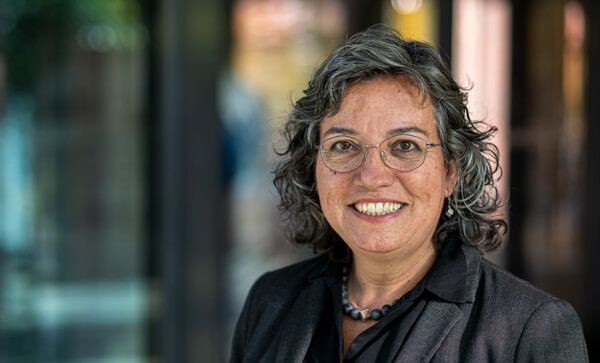
Aleksandra CavoskiView profile
Professor
Aleksandra Cavoski is a Professor of Law at the Birmingham Law School, University of Birmingham, and serves as Director of Global Engagement for the College of Arts and Law. She is also affiliated with the Birmingham Institute for Sustainability and Climate Action and the Centre for Environmental Research and Justice, reflecting her strong commitment to interdisciplinary and sustainability-focused legal scholarship. Her research lies at the intersection of environmental law, EU law, and public international law, with a particular focus on the connections between law and science, policy, and language. She explores how legal frameworks are shaped by social, political, and scientific contexts, especially in areas such as environmental governance, climate action, and regulatory innovation. Environmental Law EU Law Law and Science Legal Translation New Approach Methodologies (NAMs) Circular Economy and Plastics Regulation Energy Transition and Critical Minerals Her recent publications and research projects highlight a consistent focus on regulatory innovation and sustainability, particularly in the use of NAMs for chemical safety, the legal challenges of promoting recycled plastics, and the geopolitics of critical minerals for clean energy. These works reflect a multidisciplinary trend integrating law with environmental science, public health, and policy analysis. Her scientific recognition includes being appointed as a Visiting Lecturer at the University of Bayreuth in 2018. This honor reflects her international standing in legal academia. She actively supervises PhD students on topics such as renewable energy policy, hydraulic fracturing, and legal translation. Her research is supported by major grants from the European Commission and the UK’s Engineering and Physical Science Research Council (EPSRC), including projects like RECREATE and PrecisionTox, which aim to transform regulatory science and sustainability law. She leads and co-leads major interdisciplinary initiatives such as the Health-centred Systems Approach towards Net-Zero (Heal-NZ) and the development of a circular economy for medical plastics, demonstrating her role in bridging law with science and public health.