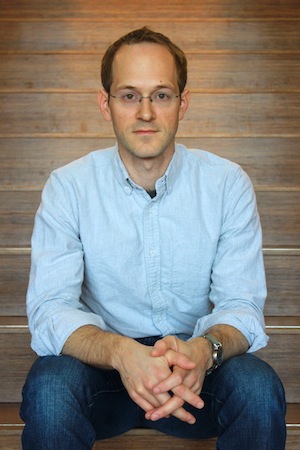
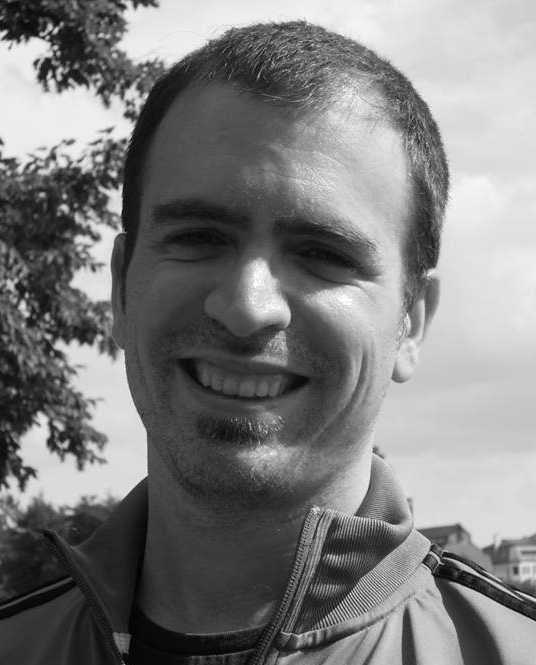
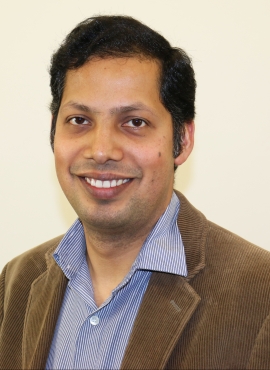
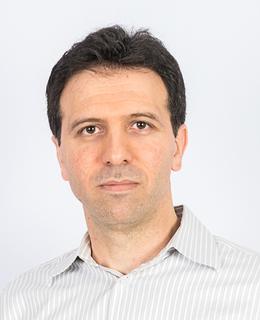
Dr. Khurram Aziz is a Senior Instructor in the Faculty of Computer Science at Dalhousie University , Halifax, Canada. He is actively engaged in teaching and research, with a focus on optical networks, data center interconnects, and network performance modeling. Education: PhD in Electrical Engineering, Vienna University of Technology, Austria (2008) MSc in Electrical Engineering, National University of Singapore (2003) BSc (Hons) in Electrical Engineering, University of Engineering and Technology, Lahore, Pakistan (1998) His research interests include optical packet and burst switched networks , optical interconnects for data centers , analytical modeling and simulation , and network routing and switching . He has contributed extensively to the design and performance evaluation of scalable optical switches and hybrid switching systems. The recent publications reflect a strong trend in data center optical networks , focusing on performance, blocking probability, signal degradation, and architectural classification. His work bridges theoretical modeling with practical simulation frameworks, such as CloudNetSim++ in OMNeT++, contributing to cloud and high-capacity network research. Dr. Aziz has no listed scientific awards in the provided text. He teaches several core computer science courses including CSCI 2141: Intro to Database Systems , CSCI 3171: Network Computing , CSCI 3132: Object Orientation and Generic Programming , and CSCI 3120: Operating Systems . There is no mention of graduate student supervision or external research grants. He has co-authored book chapters in major handbooks on data centers and switched systems. Dr. Aziz has not listed any formal lab or research team affiliations in the provided content.
Andrew Childs is a Professor at the University of Maryland, affiliated with the Department of Computer Science and the Institute for Advanced Computer Studies (UMIACS). He serves as Director of the NSF Quantum Leap Challenge Institute for Robust Quantum Simulation (RQS) and is a Fellow at the Joint Center for Quantum Information and Computer Science (QuICS). His research focuses on quantum algorithms for simulating physical systems, algebraic problems, and quantum walk protocols, with applications in quantum computing and computational complexity. University of Maryland Institute for Advanced Computer Studies (UMIACS) Joint Center for Quantum Information and Computer Science (QuICS) NSF Quantum Leap Challenge Institute for Robust Quantum Simulation Childs' research spans quantum simulation, quantum Fourier transform, phase estimation, and Hamiltonian dynamics. He has developed techniques to reduce quantum computational resources for simulating quantum systems and explored limitations of quantum computers through hidden subgroup problems and non-unitary dynamics. His publications cover diverse areas including quantum walk optimization, Hamiltonian simulation methods, and applications to cryptography and condensed matter physics. Recent works address spatial search algorithms, product formulas for commutators, and quantum routing protocols. As an educator, Childs has taught courses on quantum algorithms and information processing at both the University of Maryland and University of Waterloo, with lecture notes and materials spanning multiple years. Contact: amchilds@umd.edu | Office: ATL 3359 | Affiliated with University of Maryland's quantum research institutes.
Mariano Scazzariello is a Lecturer at KTH Royal Institute of Technology, Sweden, affiliated with the School of Electrical Engineering and Computer Science and the Department of Network and Systems Engineering. He teaches the course 'Network Systems with Edge or Cloud Datacenters (IK2227)'. His research focuses on advanced networking topics including machine learning in networks, high-speed packet processing, network emulation, and software-defined networking innovations. His work spans contributions to network emulation tools like Kathará and Megalos, stateful packet processing at terabit scales, and leveraging large language models (LLMs) for network configuration and vulnerability detection. Recent research emphasizes low-latency protocols (e.g., SRv6/DetNet integration) and GPU-centric networking on commodity hardware. Mariano’s publications (2020–2025) highlight expertise in network function virtualization, ASIC-based switching, and optimizing network configurations through AI-driven approaches. He has pioneered frameworks for evaluating routing protocols and virtualizing large network scenarios at scale.
Prof Christina Lim is a Professor at the Department of Electrical and Electronic Engineering, University of Melbourne, Australia. She serves as the Associate Dean of Research for the Faculty of Engineering and Information Technology (FEIT) and manages the Tucker Lab. Previously, she held roles as Research Group Leader of the Electronics and Photonics System group and Deputy Head of Department (Teaching and Operations) Education: PhD and Bachelors from University of Melbourne Research Interests: Radio-over-Fibre, Optical Wireless Communications, Microwave Photonics, Augmented Reality Displays, Reservoir Computing, Optical Crosshaul Networks Recent publications demonstrate expertise in optical waveguide design for AR, underwater optical wireless communications, photonic switching, and network optimization. Her projects focus on next-generation wireless infrastructure, including Photonics Computing Enabled Ultra-Broadband Wireless Communications (2024-2027, $598k ARC grant) and Additive Manufacturing of Optical Elements (2025). She has secured significant funding, including ARC Discovery Projects and Future Fellowships. Scientific Honors IEEE Fellow (2022) Optica Fellow (2018) ARC Future Fellow (2009-2013) ARC Australian Research Fellow (2004-2008) Professional Service Vice-President of Conferences, IEEE Photonics Society Deputy Editor, IEEE/Optica Journal of Lightwave Technology ARC College of Experts (2014-2016)
Maria Apostolaki is an Assistant Professor of Electrical and Computer Engineering at Princeton University. Her research focuses on designing secure, reliable, and high-performance networked systems, integrating expertise in networking, security, blockchain, and machine learning. She holds a Ph.D. from ETH Zurich (2021) and an M.Eng. from the National Technical University of Athens (2015). Education: Ph.D., ETH Zurich 2021 | M.Eng., NTUA 2015 Her work investigates challenges in network security, distributed systems, and adversarial resilience. Notable contributions include SABRE (protecting Bitcoin from routing attacks) and TANGO (collaborative route control). She has advised multiple graduate students in computer science and engineering. Key honors include the NSF CAREER Award and the IRTF/IETF Applied Networking Research Prize (2018). Her lab explores cutting-edge topics like contextual robustness in ML-driven network functions and formal methods for secure systems. Advising: 6 advisees in COS/ECE domains Grants: NSF CAREER Award, innovation grants for AI/robotics Her TANGO framework enables secure cross-domain routing, while recent work addresses vulnerabilities in Ethereum PoS and BGP routing protocols.
Paolo Ienne is a Professor at the Swiss Federal Institute of Technology in Lausanne (EPFL), where he leads the Processor Architecture Laboratory (LAP) within the School of Computer and Communication Sciences. His research focuses on advancing reconfigurable computing systems through innovative FPGA architectures and high-level synthesis methodologies. His primary research domains include reconfigurable computing, FPGA architecture design, dynamically scheduled dataflow circuits, and hardware acceleration techniques. Recent work emphasizes memory system optimization for FPGAs, formal verification of circuit transformations, and rapid C-to-hardware compilation flows. He has pioneered approaches for handling thousands of outstanding memory misses in FPGA accelerators and developed novel techniques for switch-block exploration without explicit pattern enumeration. Analysis of his 2023-2025 publications reveals a strong trend toward practical FPGA deployment challenges, with increasing focus on HBM integration, virtual memory systems for PCIe-attached devices, and formally verified circuit transformations. His work consistently targets real-world bottlenecks in high-level synthesis toolchains while maintaining theoretical rigor in dataflow architecture design. Professor Ienne's laboratory receives support from the Swiss National Science Foundation and industry partners including Huawei, enabling cutting-edge research in FPGA-based acceleration. His collaborative network spans major semiconductor companies and academic institutions worldwide, with frequent co-authorship on conference proceedings and journal publications in IEEE and ACM venues.
Halim Yanikomeroglu is a Full Professor and Chancellor's Professor at Carleton University's Department of Systems and Computer Engineering, part of the Faculty of Engineering and Design. His research focuses on wireless communications, including 5G/6G networks, non-terrestrial systems (HAPS/LEO satellites), MIMO, and cognitive radio. He has supervised numerous graduate students and holds IEEE Fellow status and the Harold Sobol Award. His work integrates machine learning, federated learning, and sustainability into next-generation networks. Affiliations: Carleton University, IEEE Education: Ph.D. (Toronto), M.A.Sc. (Toronto), B.Sc. (Middle East Technical University) Research interests span cellular networks, relay architectures, and energy-efficient systems. He pioneered cell-switching strategies for green networks and contributed to HAPS and UAV-based infrastructure. His recent work addresses NTN integration, AI-driven spectrum management, and 6G innovations. Awards include IEEE Fellow (2017) and multiple Research.com leadership accolades. His 150+ publications span journals like IEEE Transactions and conferences like ICC. Advising over 50 students, he emphasizes interdisciplinary solutions for future wireless challenges.
Shantanu Dutt is a full Professor in the Department of Electrical and Computer Engineering at the University of Illinois at Chicago , located in Chicago, IL. His office is in 930 SEO at 851 S. Morgan St, and he can be reached at dutt@uic.edu . Education Ph.D. in Computer Science and Engineering, University of Michigan, Ann Arbor (1990) M.Tech. in Computer Engineering, Indian Institute of Technology Kharagpur (1984) B.E. in Electronics and Communication Engineering, Maharaja Sayajirao University of Baroda (1983) Research Interests Professor Dutt’s research agenda centers on VLSI Computer-Aided Design (CAD) , with particular emphasis on physical design and incremental synthesis targeting both ASICs and FPGAs. He explores discrete optimization techniques to solve placement, routing, and partitioning problems. Another major thrust is FPGA built-in self-test (BIST) and trusted design , ensuring provable diagnosability and security against hardware Trojans. He also investigates fault-tolerant computing at both chip and system levels, and develops parallel and distributed computing algorithms for scalable performance. Scientific Awards 1996 Best Paper Award , ACM/IEEE Design Automation Conference, for “A probability-based approach to VLSI circuit partitioning” 1995 Most Influential Paper Award , Fault-Tolerant Computing Symposium, for “Design and reconfiguration strategies for near-optimal k-fault-tolerant tree architectures” Research Impact and Funding Professor Dutt has published extensively in top-tier journals (IEEE TVLSI, ACM TRETS, IEEE TCAD) and premier conferences (ICCAD, DAC, DATE, FTCS). His work has shaped incremental placement, timing-driven routing, FPGA security, and fault-tolerant multiprocessor architectures. While specific grant numbers are not listed, the breadth and longevity of his publication record indicate sustained funding from NSF, industry, and other agencies. Laboratory and Collaborations Although no formal laboratory name is provided, Professor Dutt’s research is conducted within the ECE department’s VLSI CAD and Fault-Tolerance groups, collaborating with graduate students and colleagues across the US and internationally.
Natalie Enright Jerger is a Professor in the Department of Electrical and Computer Engineering at the University of Toronto's Faculty of Applied Science and Engineering. She holds the Canada Research Chair in Computer Architecture and serves as Director of the Division of Engineering Science (2023-2028). Previously, she was the Percy Edward Hart Professor (2016-2019). She received her B.S. in Computer Engineering from Purdue University (2002), and M.S./Ph.D. in Electrical Engineering from University of Wisconsin-Madison (2004/2008). Her research focuses on: Multi/many-core architectures and on-chip networks Cache coherence protocols and memory hierarchy optimization Approximate computing and sustainable systems Intermittent computing for energy-harvesting devices Hardware acceleration for machine learning Her publications demonstrate strong emphasis on networks-on-chip (NoC) innovations, including routing algorithms, deadlock handling, power-efficient designs, and topology optimizations. Recent work expands into approximate computing, mobile architectures, and ML-driven hardware design. Major Awards: Fellow of Engineering Institute of Canada (2023) McLean Senior Fellow (2019) IEEE Micro Top Picks (2016) ACM/IEEE Microarchitecture Hall of Fame (2015) Sloan Research Fellowship (2015) Canada Research Chair (current) Distinguished Scientist, ACM Fellow, IEEE She leads the NEJ research group and collaborates with industry partners including Intel, AMD, Qualcomm, and IBM. Her work is funded by NSERC, CFI, and industrial grants. She co-chaired ASPLOS 2023 and HPCA 2014, and actively promotes diversity through WICARCH and ACM initiatives.
Jordi Perelló Muntan is an Associate Professor in the Department of Computer Architecture at the Universitat Politècnica de Catalunya (UPC), Barcelona, Spain, where he is also affiliated with the Escola Tècnica Superior d'Enginyeria de Telecomunicació de Barcelona (ETSETB). He is a member of the Broadband Communications Systems and Architectures (CBA) and IDEAI-UPC research groups, focusing on advanced optical and future internet networking technologies. Research Interests: His research spans telecommunications networks, optical fiber and optical networking, resource optimization, network architectures, and the Future Internet. He investigates performance optimization in 5G transport networks, Spatial Division Multiplexing (SDM), Recursive Inter-Network Architecture (RINA), elastic optical networks, and cognitive networking. His work integrates SDN, network virtualization, and green networking principles for scalable and efficient infrastructures. Publication Trends: His recent publications focus on probabilistic constellation shaping in multicore fiber networks, cognitive strategies for optical margin reduction, RINA-based QoS assurance, and migration planning toward spectrally-spatially flexible optical networks. These reflect a strong trend toward intelligent, adaptive, and energy-efficient network design for future communication systems. Scientific Awards: Co-recipient of the 2020 Fabio Neri Best Paper Award Runner-up (Elsevier Journal of Optical Switching and Networking) Co-recipient of the ONDM 2021 Best Paper Award Co-recipient of the 2019 IEEE Communications Society Charles Kao Award Co-recipient of the ONDM 2012 Best Student Paper Award Advising and Grants: He has advised multiple PhD students on topics including RINA, optical network planning, and virtual provisioning. He has led or participated in major European (H2020, FP7) and national (PID, TEC) research projects such as SLICENET, PRISTINE, TRAINER, and ALLIANCE, focusing on 5G, RINA, and sustainable network infrastructures. Labs and Teams: He is an active member of the CBA research group at UPC, contributing to experimental and theoretical advancements in optical and programmable networks. His team collaborates internationally on testbed development and standardization efforts in next-generation networking.
Vinod M. Vokkarane is a Professor in the Department of Electrical and Computer Engineering at the University of Massachusetts Lowell, where he serves as Director of the Center for Smart Cyber-Physical Systems (SCyPS) and Director of Advanced Computer Network Labs. Previously, he was an Associate Professor at University of Massachusetts Dartmouth from 2004 to 2013 and a Visiting Scientist at MIT's Research Laboratory of Electronics from 2011 to 2014. His extensive research portfolio spans multiple domains of advanced networking and cyber-physical systems. Dr. Vokkarane earned his educational foundation with a B.S. from University of Mysore, India (1999), followed by an M.S. (2001) and Ph.D. (2004) in Computer Science from the University of Texas at Dallas. His dissertation focused on optical burst-switched networks, establishing the foundation for his future research trajectory. His research interests center on Cyber-Physical Systems, Network Optimization, Reliability, Smart Grids, and Cyber-Security, with particular expertise in the design, analysis, and modeling of architectures, protocols, and algorithms for ultra-high speed networks including Optical networks, Grid/Cloud networks, and Big-data networks. His work bridges theoretical foundations with practical implementations, often addressing critical challenges in network reliability, security, and efficiency. His research has received significant recognition through numerous best paper awards and substantial external funding. Analysis of his recent publications reveals a clear evolution toward increasingly sophisticated integration of cyber-physical systems with power infrastructure, particularly in the areas of grid resilience and observability. His work has expanded from fundamental optical networking research to address critical infrastructure challenges, with a growing emphasis on machine learning applications for network optimization and power system monitoring. The recent focus on PMU networks, disaster resilience, and cyber restoration demonstrates his strategic pivot toward addressing national security and critical infrastructure protection challenges. UMass Dartmouth Scholar of the Year Award (2011) UMass Dartmouth Chancellor's Innovation in Teaching Award (2010-11) University of Texas at Dallas Computer Science Dissertation of the Year Award (2003-04) Multiple Best Paper Awards including IEEE GLOBECOM 2005, IEEE ANTS 2010, ONDM 2015, ONDM 2016, and IEEE ANTS 2016 Texas Telecommunications Engineering Consortium Fellowship (2002-03) Dr. Vokkarane has successfully mentored numerous graduate students who have contributed significantly to his research projects, with several going on to successful careers in academia and industry. His research has been consistently supported by major funding agencies including NSF, DOE, and USMC, with recent projects totaling over $5 million in funding. Current projects include Unified Post-Disaster Restoration Planning for Cyber-Physical Power Distribution Systems (ONR, $550K), CyberCARE: Northeast University Cybersecurity Center (DOE, $3.5M), and Flexible Spectrum Allocation in Next-Generation Optical Networks (NSF, $350K). He leads the Center for Smart Cyber-Physical Systems (SCyPS) and Advanced Computer Network Labs at UMass Lowell, where his research teams work on cutting-edge problems in network architecture, cyber-physical security, and infrastructure resilience. His labs collaborate extensively with national laboratories and industry partners to translate theoretical advances into practical solutions for real-world infrastructure challenges.
Mohit Singh is the Coca-Cola Foundation Professor at the H. Milton Stewart School of Industrial and Systems Engineering, Georgia Institute of Technology. He previously held positions at Microsoft Research (2011-2016) and as an Assistant Professor at McGill University (2010-2012). PhD in Algorithms, Combinatorics, and Optimization (ACO) at Carnegie Mellon University His research focuses on discrete optimization , approximation algorithms , and convex optimization , with applications to combinatorial optimization, submodular functions, and network design. He has contributed to topics like Sticky Brownian Rounding, integrality gaps, and online adaptive algorithms. His recent work includes theoretical advancements in matroid constraints, dimensionality reduction, and submodular maximization. He has published extensively in top conferences such as FOCS, SODA, ICML, and NeurIPS. He has been recognized with the Coca-Cola Foundation Professorship and served as Director of the Algorithms and Randomness Center at Georgia Tech (2019-2023). He has also held editorial roles and organized key academic workshops like the Bellairs Workshop on Approximation Algorithms (2011). His teaching includes advanced courses on approximation algorithms, combinatorial optimization, and linear inequalities. He has collaborated with institutions such as Microsoft Research and McGill University.
Majid Ghaderi is a Professor in the Department of Computer Science at the University of Calgary, Faculty of Science. His expertise spans network algorithms, secure communication, and machine learning applications in network control. He holds a Ph.D. in Computer Science from the University of Waterloo (2006), and M.Sc. and B.Sc. degrees in Software Engineering from Sharif University of Technology (2001 and 1999). Education: Ph.D. Computer Science, University of Waterloo, 2006 M.Sc. Software Engineering, Sharif University of Technology, 2001 B.Sc. Software Engineering, Sharif University of Technology, 1999 Research Interests: Dr. Ghaderi focuses on optimizing network algorithms, securing communication in distributed systems, and leveraging machine learning for network control. His work addresses challenges such as secure wireless protocols, SDN-based network management, and efficient resource allocation in data centers. He explores proactive traffic scheduling and anomaly detection in critical infrastructures like industrial control systems and vehicular networks. Publications Trends: His recent work emphasizes covert communication in heterogeneous networks, adaptive federated learning in edge environments, and low-overhead diagnostic systems for cloud networks. He also investigates cybersecurity defenses against hardware vulnerabilities and dynamic threat landscapes. Awards: Best in-session Presentation Award, IEEE INFOCOM 2018 Municipal Excellence Award, Government of Alberta 2018 Faculty of Science Excellence in Teaching Award 2012 Advising & Grants: While no specific advisees are listed, his research has been supported by grants focusing on network security, edge computing, and IoT applications. He teaches CPSC 441 (Computer Networks) and maintains an active lab focused on network systems and cybersecurity. Labs & Teams: His research group collaborates on projects involving software-defined networks, vehicular communication, and industrial IoT security. The team develops open-source tools for network monitoring and anomaly detection.
Dr.-Ing. Thomas Wild serves as an Academic Director at the Technical University of Munich (TUM), working within the TUM School of Computation, Information and Technology at the Chair of Integrated Systems. He maintains an active research and teaching role at the institution, with his office located in Building N1 (Theresienstr. 90), Room N2136 in Munich, Germany. Dr. Wild's research focuses on advanced computing architectures, with particular emphasis on manycore system on chip (SoC) architectures, network processor (NPU) architectures, on-chip communication architectures including networks on chip (NoC), and system level design methodologies. His work bridges theoretical research with practical implementation, often exploring design space exploration techniques to optimize system performance. The evolution of his research over two decades demonstrates a consistent focus on improving communication architectures and system-level design for embedded and high-performance computing platforms. His recent publications (2023-2025) reveal a growing integration of machine learning techniques with traditional hardware design, particularly in optimizing power-performance tradeoffs in embedded systems. There's a clear trend toward hardware-software co-design approaches, with significant work on SmartNICs, Linux system optimization, and network processing acceleration. His research shows strong interdisciplinary connections between computer architecture, networking, and machine learning. EUROPRACTICE representative for TUM city campus, facilitating access to commercial EDA tools for academic purposes Active collaborator with Professor Andreas Herkersdorf and other researchers at TUM Focus on practical implementations with FPGA-based prototyping and real system modifications Dr. Wild teaches several hardware design courses including VHDL Lab, SystemC Lab, and HW/SW Codesign, contributing to the education of next-generation computer engineers. His teaching directly complements his research in system design and hardware acceleration, providing students with hands-on experience in cutting-edge technologies.
Patrik Hilber is a Professor at KTH Royal Institute of Technology, working in the Division of Electromagnetic Engineering and Fusion Science within the School of Electrical Engineering and Computer Science (EECS). He serves as Deputy Director of First and Second Cycle Education at EECS and heads the QED AM research group. He is also a board member of YH-electrical engineering. Research Interests: His research focuses on reliability engineering, asset management, maintenance optimization, and smart grid technologies in electric power systems. Key areas include transmission and distribution systems, dynamic line and transformer rating, wind power integration, multiobjective optimization, condition monitoring, and data quality in power systems. He applies advanced modeling and data-driven approaches to improve power system planning, operation, and resilience. The recent trends in his publications (2020–2025) highlight a strong emphasis on dynamic rating technologies (DLR and DTR), data quality and machine learning applications in outage analysis, reliability-centered planning for wind farms and distribution systems, and the integration of renewable energy and electric vehicles. His work bridges theoretical modeling with practical utility applications. Teaching and Academic Leadership: He is examiner and course responsible for several degree projects in electrical engineering, power systems, and energy innovation. He also teaches courses on reliability evaluation, asset management, and innovation in electric power engineering. Publications and Books: He has authored a book titled Reliability Analysis and Asset Management Applied to Power Distribution (2014) and a book chapter on cable segment replacement optimization. His scholarly output includes numerous peer-reviewed articles in leading journals such as IEEE Transactions on Power Systems , Reliability Engineering & System Safety , and Applied Energy . Education: He holds a Ph.D. (2008), a Licentiate degree (2005), and an M.Sc. (2000), all from KTH. He became a Docent (Associate Professor) in 2014.