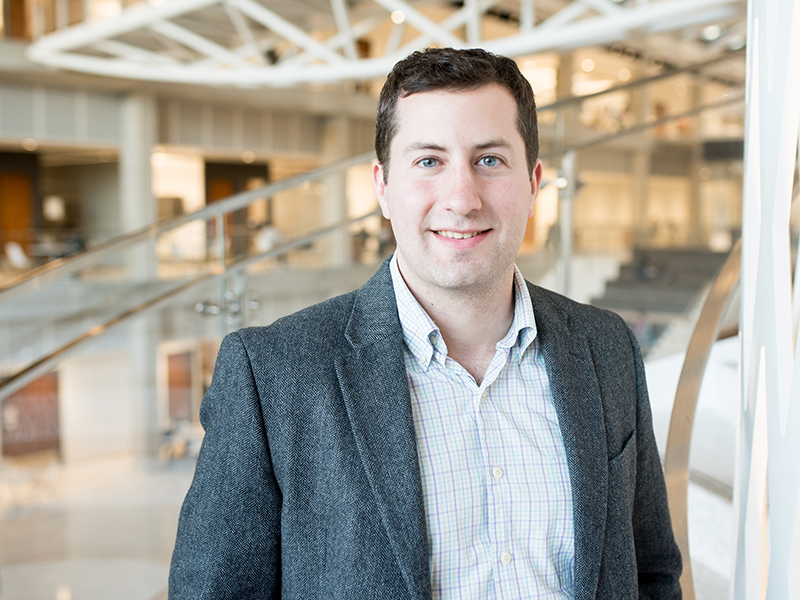
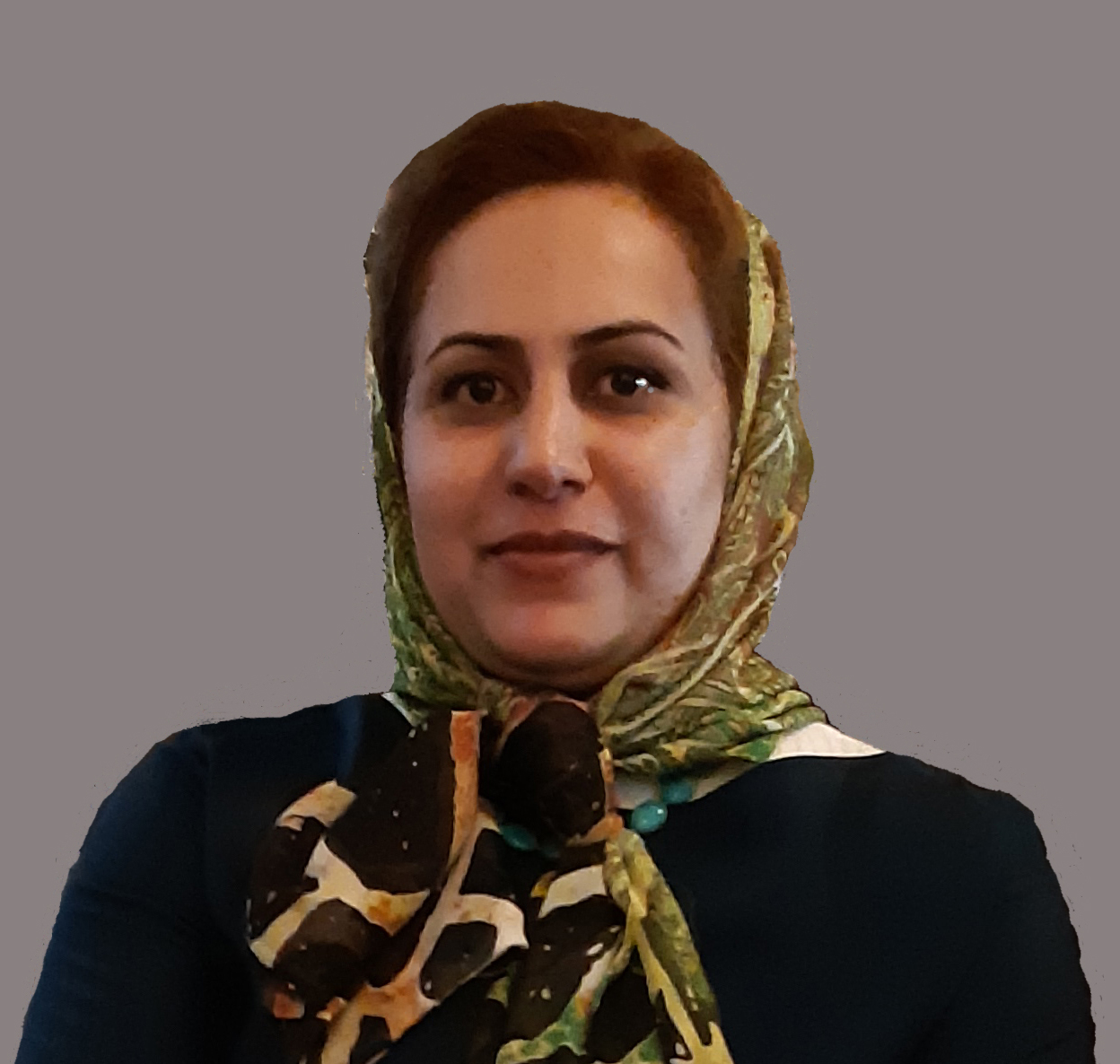
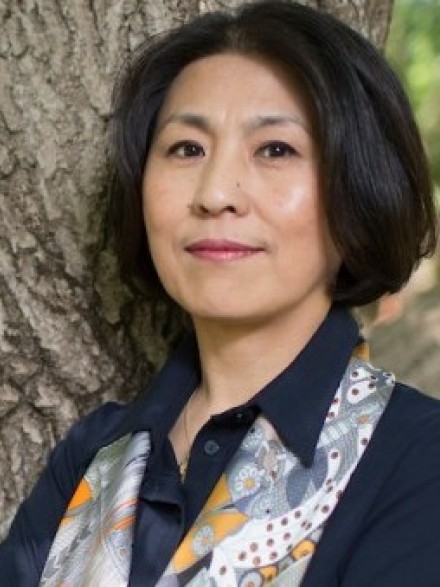
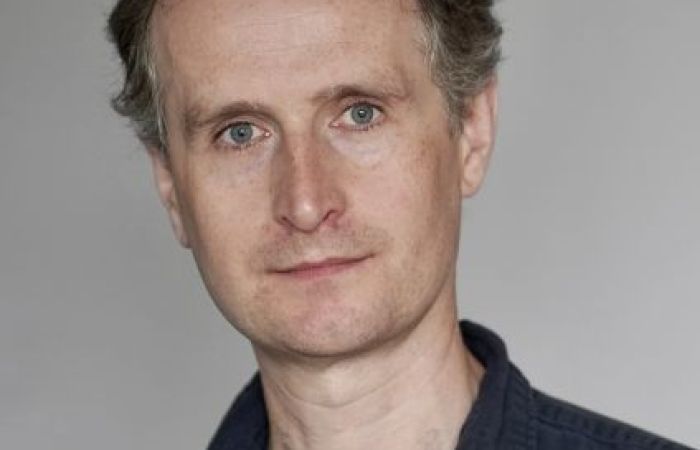
Simon de Rijke is a Lecturer and researcher at the Amsterdam University of Applied Sciences' Faculty of Technology (FT), specializing in City Net Zero City Logistics. His work focuses on sustainable waste management, urban logistics, and circular economy initiatives. Key research areas include waste collection optimization, cross-sectoral collaboration in logistics, and agent-based modeling for urban systems. He has actively contributed to projects like Re-Store, aiming to improve organic waste processing through innovative local supply chains. His research also evaluates pilots such as Amsterdam South East's circular logistics collaboration and control systems. De Rijke frequently collaborates with municipal departments and organizes workshops to validate models and engage stakeholders. Notable activities include supervising student theses in food, construction, and city logistics, and participating in educational programs like the Afstudeeratelier. His work has been highlighted in media coverage discussing sustainable waste initiatives and urban resource management.
Dr. Chrystalla Kapetaniou is a Lecturer (Assistant Professor) in Economics of Innovation and Public Policy at the Southampton Business School, University of Southampton. She previously served as a Principal Researcher at Nesta, leading projects like FutureFit and Digital Frontrunners, focusing on future of work and net-zero transitions. She holds a PhD in Management from the University of Kent and a Master’s in Operational Research from the London School of Economics. Her research interests include the future of work, digital transformation, green innovation, and automation. She employs mixed-method approaches to advise businesses, policymakers, and educators on transitioning to digital and net-zero economies. Key projects include preparing workforces for automation and decarbonization, supported by evidence used in the UK’s Green New Deal Reset inquiry. Teaching focuses on Innovation Management, Economics of Innovation, Entrepreneurship, and Global Challenges. She actively supervises PhD students and has published in journals like Small Business Economics and Technological Forecasting & Social Change , alongside influential policy reports on adult learning and green economy strategies. Her career includes academic roles at UK and Cypriot universities, management consulting, and leadership in national/international research projects. She advocates for equitable adult education systems and sustainable policy frameworks.
Dr Ed Atkins is a Senior Lecturer at the School of Geographical Sciences, University of Bristol. He holds a BAHons from the University of Kent, an MA from the University of Kent, an MRes from the University of Bristol, and a PhD. His research focuses on the political, social, and economic dimensions of climate and energy policy, particularly the interplay between decarbonisation, net-zero strategies, and labor markets. Key themes include green jobs, just transition frameworks, energy poverty, and the socio-spatial impacts of energy transitions. He also examines populism’s role in climate policy debates and the geographies of stranded communities in energy shifts. His work employs interdisciplinary approaches, blending policy analysis, political ecology, and socio-technical systems theory. Recent studies include a Bristol pilot on green job creation, participatory climate adaptation frameworks, and the socio-temporal dynamics of home energy transitions. Atkins emphasizes place-based solutions and equitable policy design, advocating for systemic approaches to climate governance. His research outputs highlight the need for inclusive decarbonisation strategies that address labor market transformations and regional inequalities. Dr Atkins collaborates with institutions like the Bristol Institute for Learning and Teaching and researchers such as Dr Aisling Tierney and Chris Preist. His contact details are available at ed.atkins@bristol.ac.uk. While no awards are explicitly listed, his prolific publication record reflects significant contributions to climate policy discourse.
Dr. Benjamin D. Leibowicz is an Associate Professor at The University of Texas at Austin, holding the Banks McLaurin Fellowship in Engineering. His primary appointment is in the Operations Research and Industrial Engineering program within the Walker Department of Mechanical Engineering. He also holds a courtesy appointment at the Lyndon B. Johnson School of Public Affairs and supervises research in the Energy and Earth Resources program. His research focuses on energy systems, climate policy, technological transitions, and infrastructure resilience, leveraging interdisciplinary methods like optimization, economic modeling, and stochastic control. Dr. Leibowicz earned a BA in Physics from Harvard University and MS/PhD in Management Science and Engineering from Stanford, with prior research at the International Institute for Applied Systems Analysis. His work has been featured in Energy Journal , Energy Economics , and prominent media outlets like Washington Post and Bloomberg . His research interests include energy policy analysis, sustainable cities, and the interplay between technology and policy. He serves as President of the INFORMS ENRE section, editorial roles in Energy Sources, Part B , and the Macro-Energy Systems steering committee. His grants come from NSF, DOE, and industry partnerships. Dr. Leibowicz advises students in energy policy and systems analysis, with publications addressing carbon capture, grid resilience, and urban sustainability. His current projects explore decarbonization pathways and policy frameworks for net-zero futures.
Florian Allroggen is the Executive Director of MIT's Laboratory for Aviation and the Environment (LAE) and Senior Strategic Advisor in the Department of Aeronautics and Astronautics. He holds the academic rank of Instructor and also serves as a Research Scientist. His roles include co-leading MIT's Transportation Decarbonization efforts in the Climate and Sustainability Consortium and directing the Zero Impact Aviation Alliance. Originally from Germany, he earned a B.S. and Doctorate in Transport Economics from Münster University. Prior to MIT, he worked as an LAE Postdoc and consultant at McKinsey & Company in Germany. Dr. Allroggen's research bridges Transport, Environmental, and Energy Economics, focusing on sustainable aviation solutions. He analyzes policy and market responses to new technologies, including hydrogen fuels, biofuels, and contrail mitigation strategies. His work emphasizes techno-economic assessments, lifecycle analysis, and climate system impacts. He is an expert on aviation decarbonization pathways and sits on the ICAO Committee on Aviation Environmental Protection's Fuels Task Group. His publications (e.g., 2023–2025) explore hydrogen aircraft design, contrail avoidance, and aviation's environmental trade-offs. His research also evaluates infrastructure requirements for low-carbon fuels and quantifies economic benefits of air connectivity. While no formal awards are cited, his leadership roles and expert appointments highlight recognition in his field. Dr. Allroggen heads major MIT initiatives like the Transportation Decarbonization program and collaborates with global stakeholders. His work integrates technical, economic, and policy dimensions to address aviation's sustainability challenges, emphasizing scalable solutions for climate-neutral flight.
Dr. Okechukwu Okorie is a Senior Lecturer in Mechanical and Aerospace Engineering at the University of Manchester and a Royal Academy of Engineering Research Fellow. He leads a £0.625 million fellowship focused on circular economy modelling for net-zero manufacturing and co-leads the £1.5M EPSRC-funded DECHI project. His research spans sustainable manufacturing, circular economy digitalization, lifecycle assessment, and carbon accounting. He has secured over £3.3M in funding since 2016 and collaborates with global firms like Airbus and Rolls Royce. Education: PhD in Sustainable Manufacturing Systems, Cranfield University (2020) Chartered Engineer (CEng), Institution of Mechanical Engineers (2020) Associate Fellow, Higher Education Academy (AFHEA, 2023) Research Interests: Circular Economy quantification and digitalization Smart remanufacturing and lifecycle assessment Sustainable manufacturing systems Circular business models and carbon accounting Awards: Royal Academy of Engineering Research Fellowship (2023) EPSRC Manufacturing Early Career Forum Member (2024) GW4 Crucible Participant (2021) Grants & Collaborations: Principal Investigator: Royal Academy Fellowship (2023–2028) Co-Investigator: DECHI Project (2025–2028) British Council-funded Saudi Circular Economy Study (2023–2024) Labs & Teams: Leads a multidisciplinary research group at the University of Manchester and collaborates with the Exeter Centre for Circular Economy. Involved in international initiatives like the NSF-funded VR(Ex)Change programme.
Jonathan Ritson is a Research Fellow in Geography, focusing on environmental science and peatland ecosystems. He is Co-Investigator on a UKRI-funded greenhouse gas removal project and has held roles at Green Alliance and Imperial College London. His research addresses climate change impacts on peatlands, carbon cycling, and sustainable development goals. Ritson holds a PhD in environmental engineering (Imperial College London), MSc in physical geography (King's College London), and BSc in Chemistry (University of York). Research Interests: His work centers on peatland ecology, climate change mitigation, and ecosystem services. Key topics include peat formation, Sphagnum moss resilience, microbial communities in carbon cycling, and policy frameworks for carbon offsetting. Ritson collaborates globally, contributing to UN SDGs related to climate action and sustainable ecosystems. Awards & Activities: Recipient of the Best Outstanding Contribution to Research Impact (2023) Best Speaker Award at the Rank Symposium (2024) Bezos Earth Fund ideation prize (2024) He delivers invited talks on carbon policy and hosts academic visitors. Ritson is a peer reviewer for the British Ecological Society and engages in public outreach via platforms like Pint of Science. Media Impact: His work has been featured in 19+ news outlets, including studies on UK peatland vulnerability and 'super moss' research funded by Amazon.
Sara Shirowzhan is a Senior Lecturer at the School of Built Environment, UNSW, serving as co-convener of the Smart Cities and Infrastructure Cluster and UNSW co-lead of the Work Integrated Learning Community of Practice. She specializes in advanced GIS, BIM, digital twins, and AI applications for sustainable urban development, disaster management, and smart infrastructure. Her research spans technologies like sensing, remote sensing, and machine learning to address SDG11 and urban resilience. She holds editorial roles at Nature Scientific Reports , Sustainability , and Buildings . Education: PhD in Geomatics Engineering from UNSW Faculty of Engineering. Awards include the 2023 Outstanding Paper Award from the International Society for Digital Earth. Grants include projects on BIM-GIS integration, disaster-responsive housing, and AI-driven WIL opportunities. Teaching focuses on Urban Informatics, GIS, BIM, and Geo-computation with R. Supervision covers AI in construction, net-zero carbon strategies, and digital twins. Engagements include Women in Construction Ambassador and CIOB Tomorrow’s Leaders Champion roles. Research interests emphasize data-driven decision-making for resilient cities, digital construction, and integrating AI with geospatial technologies. Active in policy and industry collaborations to advance smart urban solutions.
Lan Ding is an Associate Professor at the University of New South Wales (UNSW), Faculty of Built Environment. She holds roles including Convenor of the High Performance Architecture (HPA) Research Cluster and former UNSW Node Leader of the CRC for Low Carbon Living. Her expertise spans sustainable building design, urban heat mitigation, smart cities, and AI-driven decision-making frameworks. Education: PhD from the University of Sydney's Faculty of Architecture, Design and Planning; MArch and BArch degrees. Professional affiliations include STANDARDS Australia Committee (IT-268 Sustainable Cities) and Honorary Associate at the University of Sydney. Research focuses on energy efficiency, urban informatics, and climate adaptation. Notable projects include the National Heat Vulnerability Observatory, Cool Sydney 2050 strategy, and development of the UHI-DS decision-support tool. She has secured over $10M in grants, leading projects like Net-Zero Energy Buildings and Smart Community Pilots. Grants : Over 20 funded projects including government-industry collaborations on urban heat, building energy systems, and embodied carbon reduction. Awards : ADA Award (2024), Port Phillip Excellence (2022), and multiple CSIRO recognitions. Teaching : Courses in BIM, Computational Sustainability, and Urban Modelling. Lab Teams : Leads HPA Cluster and collaborates with industry partners like CSIRO, City of Sydney, and Swinburne University.
Dr. Xuemei Bai is a Distinguished Professor of Urban Environment & Human Ecology at the Fenner School of Environment & Society, Australian National University (ANU). She joined ANU in 2011, previously serving as a Senior Principal Research Scientist at CSIRO, a visiting professor at Yale University, and a senior researcher in Japan. She is also a Visiting Professor at the University of Tokyo. Her research focuses on urban sustainability science and policy, including urbanization drivers, socio-ecological systems, urban metabolism, climate change, and policy governance. She has authored/co-authored over 200 publications, including 20+ in Nature , Science , and Nature Research journals. She has held leadership roles in global initiatives like the IPCC, IPBES, and the Earth Commission, where she co-leads cross-scale translations of planetary targets. Education: B.Sc. (Peking University), M.Eng. and PhD (University of Tokyo), FASSA Fellow (2017). Awards: Volvo Environment Prize (2018), Global Economy Prize (2021), ARC Laureate Fellow (2023). Roles: Deputy Editor of Global Sustainability ; member of Earth Commission, Future Earth, and IPCC. Her advisory contributions span urban climate resilience, low-carbon transitions, and global environmental justice. She leads projects on science-policy interfaces and sustainability experiments in cities worldwide.
Anupam Nanda is a Professor of Urban Economics & Real Estate (Full Professor/Chair) at the University of Manchester, UK, and serves as Co-Deputy Director of the Manchester Urban Institute. He previously held roles at the Henley Business School, University of Reading, and worked in non-academic positions at Deloitte and the National Association of Home Builders (US). His research focuses on property markets, regional and urban studies, household sentiment, cross-border investment, ESG in urban markets, and infrastructure impacts. Education: PhD in Economics (University of Connecticut, 2006), MSc in Economics (University of Calcutta), BSc (Hons) in Economics (St. Xavier's College, Kolkata). Research interests include real estate firm operations, housing policies, cross-border investment, ESG integration, and climate adaptation. He chairs the European Real Estate Society’s refereed conference section and serves on editorial boards of journals like Journal of Real Estate Research . His work contributes to UN SDGs related to sustainable cities, climate action, and responsible consumption. Major projects include studies on housing inequality, foreign investor demand, and infrastructure impacts. Awards include the 2015 Nick Tyrrell Research Prize and 2020 Harold Samuel Prize. He advises on major government projects, such as the UK’s 1.5 million homes initiative. Current PhD supervision includes topics like ESG performance in real estate and infrastructure impacts. Completed PhDs span cross-border investment, migration, and housing dynamics.
Subashini Suresh is a Professor of Knowledge Management at the Faculty of Science and Engineering, University of Wolverhampton , where she also serves as Director for Postgraduate Research Programme (DPGRP). With over 20 years of experience in UK academia, she leads the Energy and Sustainability Research Group and co-founded the CIB Commission W102 on Information and Knowledge Management in Building. Key research areas: Knowledge Management, Sustainable Development, Smart Cities, Digital Transformation, and Climate Resilience International collaborations across 31 countries Over 300 publications, including articles on AI governance, flood mitigation, and railway cybersecurity Her work intersects with policy-making through roles as Athena SWAN Champion (2016-2019) and current member of the Athena SWAN University Self Assessment Team. She has supervised 29 PhD students and contributed to UK parliamentary evidence on environmental, digital, and infrastructure topics. Notable scientific contributions include: Advisory roles for UK Parliament (Environmental Audit Committee, Public Accounts Committee) Expert panel member for the European Commission REF coordinator for Unit of Assessment C13 (2014, 2021)
Dr. Margot Hurlbert is a Professor and Canada Research Chair in Climate Change, Energy and Sustainability Policy at the Johnson Shoyama Graduate School of Public Policy, University of Regina. She holds a PhD from the University of Amsterdam (2016), an LL.M. from Osgoode Hall Law School (2004), an LL.B. from Osgoode Hall Law School (1987), and a B.Admin. with Great Distinction from the University of Regina (1984). Dr. Hurlbert's research focuses on governance and climate change, energy and water systems, examining laws, policies and practices that address climate change adaptation and mitigation. She has led numerous research projects on energy governance, water management, agricultural livelihoods, drought, and flood. Her current research passion centers on participatory governance mechanisms to achieve Paris Agreement goals of net zero emissions by 2050, with geographical focus on western Canada and South America. Her scholarly publications demonstrate strong focus on climate adaptation, energy justice, water governance, and community-based approaches. These works span environmental science, law, policy studies, and social sciences, with particular attention to Indigenous perspectives and practical governance solutions for climate challenges. Her research increasingly integrates climate science with policy frameworks to develop actionable pathways toward sustainability. Dr. Hurlbert has received notable recognition including: Nomination for the 2017 High Plains Book Awards Nomination for the 2017 Alberta Book Publishing Award (Scholarly and Academic) The 2010 Emerald Literati Network Award for Excellence As an active researcher, Dr. Hurlbert has secured significant funding for projects including 'Deliberative Community Energy Futures' and 'Implementing Community Citizen Engaged Best Management Practices.' She serves as Coordinating Lead Author for the IPCC, Associate Editor for the International Journal of Climate Change Strategies and Management, and Fellow of the Earth Systems Governance Project. Her community engagement spans decades, including volunteer work with the YMCA since 1990 and leadership roles with the Canadian Bar Association.
Benjamin Sovacool is a Distinguished Professor at the Department of Business Development and Technology at Aarhus University in Denmark. His research addresses critical challenges at the intersection of energy systems, climate policy, and sustainable development. Based at the Herning campus (Birk Centerpark 15, 8001, 7400 Herning), he maintains an active research profile with over 671 publications to date. His research interests span energy policy, renewable energy systems, energy security, climate change mitigation, decarbonization pathways, environmental justice, and climate intervention technologies. Sovacool's work often examines the social, political, and ethical dimensions of energy transitions, with particular attention to public perceptions, governance challenges, and equity considerations in climate solutions. His research fingerprint reveals strong connections to climate change (79%), decarbonization (75%), electric vehicles (67%), justice (67%), UK studies (63%), specific industry applications (55%), and energy conservation (51%). Recent publications demonstrate a clear trend toward examining climate intervention technologies, public perceptions of geoengineering, carbon dioxide removal methods, and the socio-technical challenges of energy infrastructure projects. His 2025 work spans environmental policy journals, energy engineering publications, and social science outlets, reflecting his interdisciplinary approach that bridges technical and social dimensions of climate solutions. Sovacool's research increasingly focuses on practical implementation challenges of climate interventions and the governance frameworks needed to address them. Sovacool serves as Principal Investigator (PI) on multiple major research projects including UPTAKE (2023-2027), ELEVATE (2022-2026), and GENIE (2021-2027), all focused on climate action, carbon removal, and net-zero emissions pathways. These projects represent significant research funding that supports his team's work on geoengineering, negative emissions technologies, and climate policy frameworks. His academic activities include participation in workshops, seminars, and conferences worldwide, serving as an editor for research journals, delivering lectures on energy poverty and climate policy, and conducting peer reviews. Notable engagements include presentations at Yale University's Climate and Energy Institute and the International Energy Policy Conference at Cambridge University. Sovacool's research has received substantial media attention, including coverage by multiple news outlets, blog mentions, and social media discussion. His work on electric vehicle adoption was particularly notable, receiving coverage from 8 news outlets, mentions by 24 X users, and references by 58 Bluesky users, demonstrating the policy relevance and public impact of his research.
Ronan Bolton is Professor of Sustainable Energy at the University of Edinburgh's School of Social and Political Science. His research examines the interconnected policy, market and regulatory challenges of transforming carbon-based energy systems. He has held visiting positions at the University of Melbourne and Leibniz Institute for Regional Development and Structural Planning in Berlin. His academic credentials include: PhD in Energy Policy from the University of Leeds MSc (Distinction) in Environmental Sustainability from the University of Edinburgh BEng (First Class) in Mechanical Engineering from the University of Galway Bolton's primary research focuses on electricity market design and energy network regulation, with particular expertise in the history and development of energy liberalization processes. His influential book 'Making Energy Markets: The Origins of Electricity Liberalisation in Europe' established him as a leading scholar in energy policy history. Recent work examines seasonal thermal energy storage, electricity distribution networks, and regional energy planning strategies for net zero transitions. His publications reveal a consistent focus on bridging historical policy analysis with contemporary energy transition challenges, particularly examining how past liberalization reforms can inform current net zero policy development. Bolton's work frequently addresses governance frameworks for energy transitions across European contexts. He has led significant research projects including a UKRI-funded study on electricity distribution networks and transitions. His policy contributions extend to UK Energy Research Centre reports on energy storage pathways, local energy systems, and strategic planning for electricity networks. Bolton actively engages with regulatory bodies and policymakers through his research on Ofgem's consumer value proposition and distribution network price controls. Bolton supervises PhD students in Energy Policy, Electricity Market Design, Energy Regulation, Political Economy of Energy, and Sustainability Transitions within the Science, Technology and Innovation Studies program. His collaborative research spans multiple institutions including the University of Melbourne and European partners through EU Commission projects.