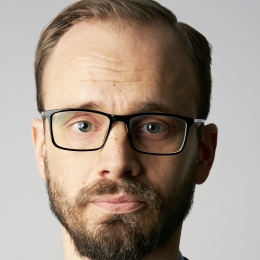
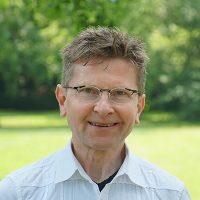
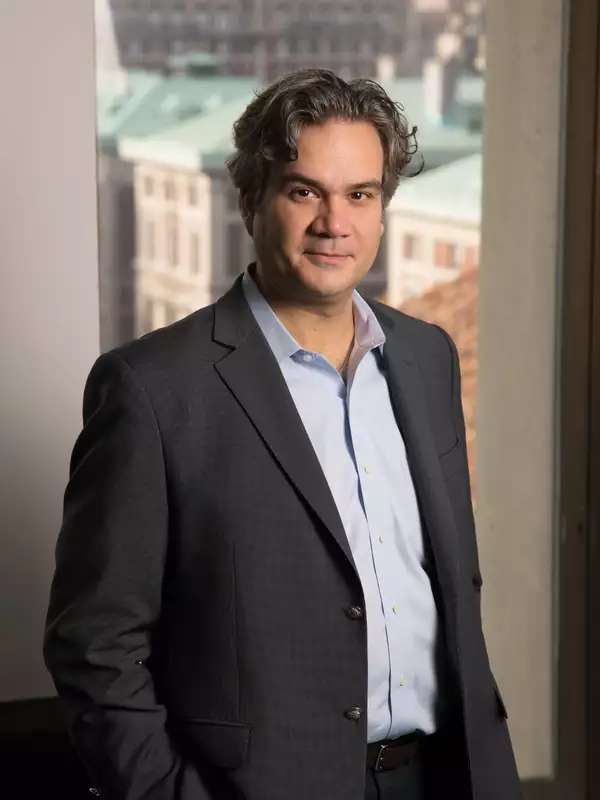
Karl Gustafsson is a Professor at Stockholm University within the Department of Economic History and International Relations. His work bridges security studies , collective memory , and digital research methods in international relations. Current Role: Professor of International Relations, Stockholm University Previous Positions: Post-Doc at Lund University, Researcher at Swedish Institute of International Affairs Visiting Appointments: University of Tokyo, Osaka University, Keio University, Academia Sinica, Nordic Institute of Asian Studies Research Focus: Karl specializes in memory politics , ontological security , and anxiety-driven international dynamics , particularly in Sino-Japanese relations and digital platforms . His studies explore how historical narratives and online memory construction influence state identity and policy. Awards & Grants: Recipient of the Wang Gungwu Prize (2014) and Stockholm University Association’s award (2011). Holds Swedish Research Council and Marianne & Marcus Wallenberg Foundation grants for projects on apologies in international politics and digital memory in East Asia . Publications: His work appears in journals such as International Studies Quarterly , European Journal of International Relations , and Memory Studies , addressing topics like narrative power in East Asia, anxiety’s role in policy change , and digital humanities applications in IR.
Amitav Acharya is UNESCO Chair in Transnational Challenges and Governance and Distinguished Professor at American University's School of International Service. He holds honorary positions at Rhodes University, University of Pretoria, and Nankai University, with previous appointments at Harvard, Oxford, and Tsinghua University. Research focuses on: Global international relations and world order transitions US-China relations and Asian regionalism Non-Western international relations theory United Nations and global governance Publications demonstrate extensive contributions to IR theory with works translated into multiple languages. Honors include: Three-time ISA Distinguished Scholar Award recipient American University Scholar-Teacher of the Year (2020) First non-Western President of International Studies Association (2014-2015)
Chantal Mouffe is Professor of Political Theory at University of Westminster, where she develops her influential theory of agonistic pluralism. Her research challenges deliberative democracy models and advocates for constructive political conflict within democratic frameworks. Core concepts: Agonistic pluralism as democratic alternative Critique of consensus-based politics Space as democratic battleground Post-structural political ontology Her recent work explores multipolar world orders and spatial dimensions of democratic practice. Mouffe has held research positions at Harvard, Cornell, and Collège International de Philosophie in Paris.
Professor Anoush Ehteshami holds the Nasser al-Mohammad al-Sabah Chair in International Relations at Durham University's School of Government and International Affairs. He directs the Institute for Middle Eastern & Islamic Studies (IMEIS), one of Europe's oldest centers of excellence in Middle Eastern studies, and leads the HH Sheikh Nasser al-Mohammad al-Sabah Programme in International Relations, Regional Politics and Security. Previously, he served as Durham's Dean of Internationalization (2009-2011), founding Head of the School of Government and International Affairs (2004-2009), and Joint Director of the £3.9 million AHRC-funded Open Worlds Initiative (2016-2021). His research centers on Middle Eastern international relations with emphases on Persian Gulf dynamics, regional security architectures, and China's geopolitical expansion through the Belt and Road Initiative. He examines evolving power structures including Iran-Saudi rivalries, Eurasian connectivity, and the impact of non-state actors on regional stability. His work bridges theoretical frameworks with policy-relevant analysis of energy politics, strategic alliances, and cultural diplomacy in contested spaces. Ehteshami's publication trajectory reveals intensifying focus on Asia-Middle East linkages, Iranian strategic behavior, and multipolar security frameworks. Recent works analyze China's economic statecraft, proxy warfare mechanisms, and the fragmentation of regional orders through lenses of geopolitical competition and institutional adaptation. Scientific Awards: Fellow of the World Economic Forum (2002) As a doctoral supervisor, Ehteshami mentors Abdullah Al-Khonaini, Fahad Al Fahad, and Mengqi Sun. His £3.9 million AHRC grant directed cross-linguistic community research, while his RCUK-funded Centre for Advanced Study of the Arab World (2006-2016) established national doctoral training networks. He edits two major book series and serves on seven international journal editorial boards, shaping scholarly discourse on Middle Eastern and Islamic studies. He leads IMEIS as a hub for interdisciplinary Middle Eastern scholarship and directs the HH Sheikh Nasser al-Mohammad al-Sabah Programme, which integrates security studies with political economy analyses through collaborative international research initiatives.
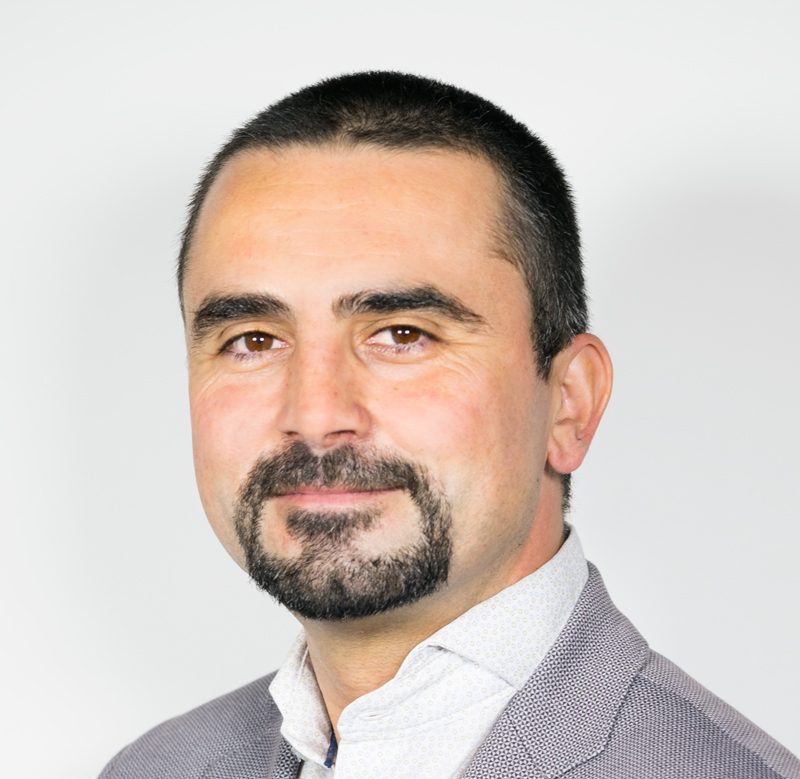
Paolo Sellari is an Associate Professor in the Department of Political Science at Sapienza University of Rome, where he contributes significantly to research and teaching in political and economic geography, geopolitics, and infrastructure security. He is affiliated with the research group Geopolitics of the Sea and plays a key role in the Master in Geopolitics and Global Security , contributing to curriculum development and academic supervision. Department: Department of Political Science University: Sapienza University of Rome Email: paolo.sellari@uniroma1.it His research interests span a broad yet interconnected spectrum, including maritime geopolitics, Mediterranean and Arctic strategic dynamics, Chinese foreign policy (especially the Belt and Road Initiative), infrastructure as instruments of power, and the geopolitics of climate change. He also explores unconventional intersections such as sports and geopolitics. His scholarly work emphasizes spatial dimensions of power, resilience, and connectivity in a rapidly transforming global order. The analysis of his recent publications (2023–2025) reveals a strong thematic consistency focused on maritime routes, infrastructure security, and the evolving geopolitical roles of the Mediterranean and Arctic regions. His work frequently addresses the interplay between physical geography and power projection, with a particular interest in how climate change, technological evolution, and strategic investments reshape global and regional orders. He contributes to both academic journals and reference works, including the Italian Encyclopedia. While specific scientific awards are not listed in the provided texts, his consistent publication record in reputable venues and leadership in advanced academic programs suggest recognition within the academic community. Sellari advises students through the Master in Geopolitics and Global Security and is involved in organizing seminars and educational content. Although no direct mention of grants is made, his editorial roles and institutional leadership imply active engagement in academic projects and collaborations. He supervises thesis work and contributes to academic discourse through prefaces, introductions, and editorial reviews. He is a core member of the Geopolitics of the Sea research group, which focuses on maritime spatial dynamics, naval security, and the geopolitical implications of oceanic infrastructure and climate change. This group serves as a hub for interdisciplinary research connecting geography, political science, and security studies.
Dr Yanan Song serves as Senior Lecturer (Associate Professor) in Global Politics at SOAS University of London, where she also holds the position of Co-Director of Distance Learning Programmes within the Department of Politics and International Studies. Prior to her current appointment, she was a Lecturer in International Relations at the University of Exeter. PhD in Politics, Durham University MSc in International Public Policy, University College London Dr Song's research centers on US foreign policy with particular emphasis on America's commitment to NATO in the post-Cold War era. Her work examines military operations in Kosovo, Afghanistan, Libya, and Ukraine through the lens of foreign policy analysis, with special attention to intra-administration bureaucratic politics. She is currently investigating US-China relations, focusing on how misperceptions and misinterpretations of each other's policies shape bilateral strategy, with specific interest in the reconfiguration of the relationship within the context of the One Belt One Road initiative. Analysis of Dr Song's publication record reveals a consistent scholarly trajectory examining US foreign policy commitments, NATO dynamics, and evolving US-China relations. Her recent work addresses contemporary challenges including the Ukraine crisis impact on transatlantic relations, trilateral dynamics in a multipolar world, and the reconfiguration of US-China relations in the post-pandemic era. Her scholarship consistently employs foreign policy analysis methodology to investigate how strategic misperceptions influence international relations and policy formulation. Dr Song actively supervises PhD students at SOAS and contributes to academic leadership through her role as Co-Director of Distance Learning Programmes. Her research appears to be supported by academic grants focused on international relations, US foreign policy, and China studies, though specific grant details are not publicly enumerated in her profile.
T.V. Paul is a Distinguished James McGill Professor of International Relations at McGill University's Department of Political Science, part of the Faculty of Arts. He has held leadership roles including President of the International Studies Association (ISA, 2016-2017) and founded the Global Research Network on Peaceful Change (GRENPEC). His research focuses on international security, rising powers (especially India and China), nuclear proliferation, and IR theory. Paul has been honored with prestigious awards such as the Royal Society of Canada Fellowship (2018) and the ISA-Canada Distinguished Scholar Award (2024). Education: PhD in Political Science from UCLA (1991), MA from UCLA (1988), MPhil from Jawaharlal Nehru University (1984), and BA from Kerala University (1977). Research interests span international security dynamics, globalization impacts on state behavior, regional security in Asia, and nuclear non-proliferation. His work emphasizes peaceful change mechanisms and soft balancing strategies in global politics. Recent articles analyze deglobalization trends, China-India rivalry, and institutional adaptations to power shifts. Grants include SSHRC funding for studies on peaceful grand strategies and FRQSC support for international security research. He has organized major conferences on topics like 'Globalization and National Security' and 'Accommodating Rising Powers'. His advisory roles include directing GRENPEC and serving on editorial boards for Georgetown University Press' South Asia series. Labs/Teams: Leads GRENPEC, a global network analyzing peaceful change in world politics, and previously directed McGill/Université de Montréal's Center for International Peace and Security Studies (CIPSS).
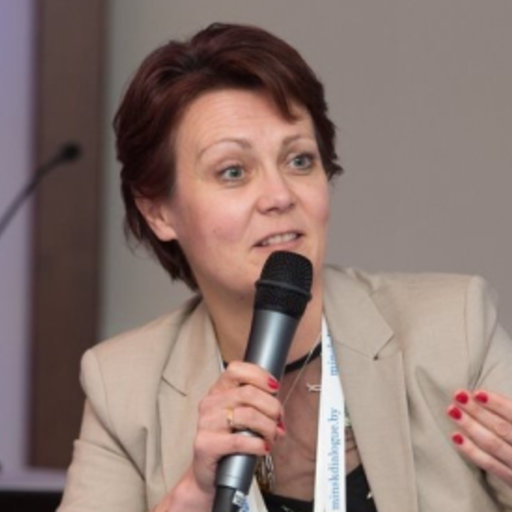
Elena Korosteleva is a Professor of Politics and Global Sustainable Development, and Director of the Institute for Global Sustainable Development (IGSD) at the University of Warwick. She holds dual doctoral degrees from the University of Bath (2001) and Belarusian State University (1997). Her academic roles include Jean Monnet Chair of European Politics (awarded twice by the European Commission), and Visiting Professorships at Oxford Belarus Observatory, LSE IDEAS, and the College of Europe. She previously held senior positions at the University of Kent (Founder of Global Europe Centre) and Aberystwyth University (Director of Centre for European Studies). Her research focuses on resilience, governance, and EU external policies in Central Eurasia. Key projects include Horizon Europe’s SHAPEDEM-EU (2022-25), GCRF COMPASS (2017-22, shortlisted for THE Best International Collaboration), and the Belarus Oxford Observatory (2021-23). Her work bridges complex systems theory with policy analysis, emphasizing local ownership and adaptive strategies. Elena has authored over a dozen books, including *Belarus in the 21st Century: Between Dictatorship and Democracy* (2023) and *Resilient Communities of Central Eurasia* (2023). Her peer-reviewed articles address EU-Russia relations, Eastern Partnership dynamics, and post-Soviet resilience. Awards include recognition for policy impact and academic excellence from the European Commission and Times Higher Education. Her advisory roles span UK and EU institutions, including the British Academy, FCDO, and European Parliament. She advises national governments in Eurasia and collaborates with NGOs like TEPSA and SIDA. A media commentator for BBC, France24, and Sky News, she bridges academic research with public discourse on geopolitical crises and democratic challenges.
Mario Esteban is a Senior Fellow at the Elcano Royal Institute and Full Professor at the Autonomous University of Madrid, where he directs the Centre for East Asian Studies. His academic work spans EU-East Asia relations, China's domestic and foreign policy, and global governance dynamics. Education: Ph.D. in Political Science, Autonomous University of Madrid MSc in Asian Politics, School of Oriental and African Studies (University of London) His research focuses on international norm diffusion in China's Belt and Road Initiative, EU-China strategic trust, and global governance reforms amid US-China competition. Recent projects include analyses of China-Western aid norm interactions and climate cooperation fragmentation. Selected publications (2018–2025) reveal a trajectory in international relations theory, China's regional engagement, and EU diplomatic challenges. Key themes include normative convergence/divergence, Mediterranean geopolitics, and multilateral sanctions frameworks.
Hans-Martin Jaeger is an Associate Professor and Chair in the Department of Political Science at Carleton University. He holds a Diploma in Public Administration from the University of Konstanz, an MA from Rutgers, and a PhD from Columbia. His research explores international political theory and sociology, global governance, international organizations, and postfoundational political thought. Jaeger is currently working on a book project examining concepts of world order (nomos, governmentality, pluriversality) as responses to global crises. His publications critically analyze topics such as post-neoliberal governmentality, political ontology, and the depoliticization of global governance. Jaeger has taught as a visiting professor at the University of Lucerne and previously at the University of Central Florida.
London School of Economics and Political Science (LSE)United Kingdom
Karen E. Smith is Professor of International Relations at the London School of Economics and Political Science (LSE), specializing in EU foreign policy, genocide prevention, and UN multilateralism. She currently leads the Women in Diplomacy project at LSE IDEAS and served as Head of the IR Department (2019-2022). Recent research examines feminist foreign policy analysis, emotional dimensions of EU decision-making, and group politics in UN diplomacy. Her award-winning book Group Politics in UN Multilateralism (2020) won the ACUNS best book prize. She has supervised 21 PhD students to completion, with alumni in academia, international organizations, and government. Current teaching includes the graduate course 'The EU in the World'. Education: PhD (LSE), MA (Johns Hopkins SAIS). Key Awards: ACUNS Book Award (2020), Anna Lindh Award (2007), Royal Society of Arts Fellowship (2016) Grants: EU-funded network on EU-UN relations (2016-2019)
Graham T. Allison, Jr. is the Douglas Dillon Professor of Government at Harvard Kennedy School, where he has taught for five decades. He previously served as the Founding Dean of Harvard's John F. Kennedy School of Government and as Director of the Belfer Center for Science and International Affairs until 2017. His career spans academia, government service, and international policy analysis, with significant contributions to national security studies and international relations. Dr. Allison's educational background includes: Davidson College Harvard College (B.A., magna cum laude, in History) Oxford University (B.A. and M.A., First Class Honors in Philosophy, Politics, and Economics) Harvard University (Ph.D. in Political Science) As a leading analyst of national security, Dr. Allison specializes in nuclear weapons policy, US-Russia relations, US-China relations, and decision-making processes in international crises. His research has profoundly influenced how scholars and policymakers understand great power competition and conflict prevention. He is particularly renowned for developing the concept of the "Thucydides Trap" to analyze the historical patterns when a rising power threatens to displace an established power. Dr. Allison's recent scholarly output demonstrates consistent focus on contemporary geopolitical challenges, particularly US-China strategic competition, nuclear weapons policy, and conflicts in the Middle East and Eastern Europe. His publications bridge academic rigor with policy relevance, often providing historical context to current crises while offering concrete recommendations for policymakers. The breadth of his work spans traditional academic journal articles, policy briefs, and commentary in major media outlets, demonstrating his commitment to engaging both scholarly and public audiences. Dr. Allison has received numerous prestigious awards for his contributions to national security: Defense Department's highest civilian award, the Defense Medal for Distinguished Public Service Distinguished Public Service Medal (awarded twice - first by Secretary Cap Weinberger and second by Secretary Bill Perry) Throughout his career, Dr. Allison has advised multiple presidential administrations, serving as Assistant Secretary of Defense in the Clinton Administration and Special Advisor to the Secretary of Defense under President Reagan. He has been a member of the Secretary of Defense's Advisory Board for every Secretary from Weinberger to Mattis. His work has been supported by significant sponsored projects including the "Russia Matters Web Portal" funded by the Carnegie Corporation of New York and programs to help students train for Russia-related jobs funded by the U.S. Russia Foundation. Dr. Allison has maintained strong connections with the Belfer Center for Science and International Affairs, which he directed until 2017 and which remains ranked as the "#1 University Affiliated Think Tank" in the world. Through the Belfer Center, he has fostered relationships with international security experts from around the world, particularly with Israeli security officials and analysts with whom he has collaborated extensively.
Alexander Cooley is the Claire Tow Professor of Political Science at Barnard College, Columbia University, and serves as Vice Provost for Research and Academic Centers. He previously directed Columbia’s Harriman Institute (2015–2021), a leading center for Russian, Eurasian, and Eastern European studies. His research focuses on external actors’ influence in post-Soviet states, kleptocracy, and the decline of American hegemony. Cooley has authored/co-authored eight books, including *Exit from Hegemony* (2020) and *Dictators Without Borders* (2017). He advises international bodies, testifies before Congress, and publishes in *Foreign Affairs*, *Foreign Policy*, and *New York Times*. Educated at Swarthmore College and Columbia University (MA, MPhil, PhD), his work spans global governance, international rankings, and authoritarian resilience. Grants from Open Society Foundations and Carnegie Corporation support his research. Education: BA (Swarthmore), MA/MPhil/PhD (Columbia) Leadership Roles: Harriman Institute Director, Barnard Vice Provost Research Themes: Eurasian geopolitics, authoritarianism, US-Russia military bases, global rankings His recent articles analyze Russia’s post-Soviet influence, America’s declining hegemony, and Central Asia’s adaptation to shifting global powers. Cooley’s work bridges academia and policy, addressing contemporary challenges like kleptocracy and multipolarity through rigorous scholarship and public engagement.
Pedro Schilling De Carvalho is a Lecturer in Law at University College London's Faculty of Laws, specializing in Financial and Environmental Law. He holds a PhD in Law and Finance from the University of Cambridge, where he received a Cambridge International Scholarship, as well as an LLM in Commercial Law from Cambridge (supported by a Chevening Scholarship) and a LLB from the University of São Paulo, Brazil. His academic journey includes positions at: University of Cambridge (Research Affiliate, Judge Business School and Lauterpacht Centre for International Law) London School of Economics (Guest Lecturer) University of Edinburgh (Early Career Fellow in Financial Law and Regulation) Max Planck Institute for Comparative and International Private Law (Visiting Fellow) Harvard Law School (Visiting Fellow) Pedro's research focuses on financial regulation, corporate finance, environmental law, international economic law, and sustainable finance. His work explores regulatory diffusion in sustainable finance, international financial governance in multipolar contexts, and the intersection of corporate governance with environmental and social concerns. He has published in peer-reviewed journals such as the Journal of Financial Regulation and has been cited by institutions including the International Monetary Fund. His recent publications demonstrate a strong focus on sustainable finance frameworks, regulatory coordination across jurisdictions, and the evolving landscape of financial technology regulation globally. His work spans theoretical analysis of corporate governance models alongside practical regulatory frameworks for emerging financial technologies and sustainable investment. Pedro has received several prestigious awards and recognitions: Cambridge International Scholarship Chevening Scholarship Max Planck Institute & Cambridge Scholarship Certified peer-reviewer by the Equitable Growth, Finance and Institutions Global Practice He has actively contributed to policy development through written evidence to the UK Parliament Committee on the Future Relationship with the European Union, consultancy work for the World Bank Group's Legal Vice Presidency, the Green Climate Fund, and the Bill & Melinda Gates Foundation. His professional activities include being Co-Director of the UCL Centre of Law and the Environment, academic member of the European Corporate Governance Network, and member of the Leadership of the Commission on Arbitration and ADR at the International Chamber of Commerce. Pedro has extensive experience as both a transactional and dispute resolution lawyer, having worked with prominent law firms and served as Chief of Staff at the Commercial Law Chamber of the São Paulo Supreme Court.
Rumi Aoyama is a Professor at Waseda University's Graduate School of Asia Pacific Studies, specializing in diplomatic history, international relations, and contemporary Chinese politics and foreign relations. With a PhD from Keio University, she has established herself as a leading scholar on China's foreign policy, East Asian regional dynamics, and China-Japan relations. Professional Memberships: Japan Association for Contemporary China Studies, Asian Politics and Economics Association, Japan Association of International Relations Research Focus: Diplomatic history, international relations, East Asia, modern Chinese politics and foreign relations Dr. Aoyama's research interests span diplomatic history, international relations, East Asia studies, Chinese politics, and Chinese foreign relations. Her work particularly focuses on China's diplomatic strategies, mediation diplomacy, and the evolving regional order in Asia. She has published extensively on topics ranging from China's "Belt and Road" initiative to its approach to the Global South and its relations with Japan. Her recent publications reveal a strong focus on contemporary challenges in international relations, particularly examining China's role in mediating global conflicts, its strategic positioning amid US-China confrontation, and its evolving approach to regional order in Eurasia. Her work demonstrates how China is developing a distinctive diplomatic approach that blends traditional non-interference principles with proactive engagement in global affairs. 24th Ohira Masayoshi Memorial Award (2008) Dr. Aoyama has been actively involved in international academic exchanges, including research stays at National University of Singapore (2022-2023), George Washington University (2016-2017), and Stanford University (2005-2006). She also serves as Director of the Waseda Institute of Contemporary Chinese Studies and is affiliated with the Faculty of Education and Integrated Arts and Sciences School of Education. Her editorial leadership includes serving as Co-editor of Cambridge Elements in Indo-Pacific Security and previously as Managing Editor-in-Chief of the Journal of Contemporary East Asia.