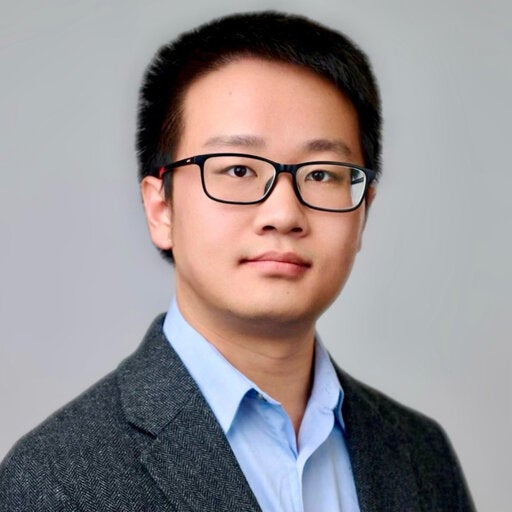
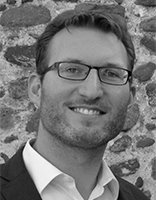
Dr. Peichen Zhong is an Assistant Professor in the Department of Materials Science and Engineering at the National University of Singapore (NUS). He leads the Applied Machine Learning and Materials Modeling (AM³) Group, focused on advancing computational methods for clean energy technologies. His research integrates machine learning with atomistic simulations to tackle challenges in battery materials, disordered materials, and sustainable energy systems. Education: B.S. in Physics from University of Science and Technology of China (2018); Ph.D. in Materials Science from UC Berkeley (2023, advised by Prof. Gerbrand Ceder); Postdoctoral training at Lawrence Berkeley National Lab and BIDMaP, co-advised by Persson, Cheng, and Krishnapriyan. Research Interests: Computational modeling of battery cathodes/electrolytes, AI-driven interatomic potentials, statistical mechanics in disordered materials, and generative models for scientific discovery. Key areas include Li/Na-ion batteries, solid-state reactions, and sustainable energy materials. Awards: BIDMaP Emerging Scholar Fellowship (UC Berkeley CDSS, 202?), 2023 Rising Stars in Materials Science (CMU/MIT/Stanford). Labs/Teams: The AM³ Group at NUS MSE focuses on interdisciplinary research combining theory, computation, and AI4Science. Current openings include PhD students and postdoctoral researchers.
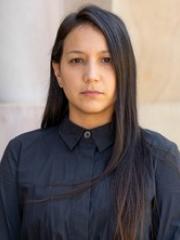
Dr. Gloria Milena Monsalve Bravo is an Advanced Queensland Industry Research Fellow and lecturer at The University of Queensland's School of Chemical Engineering, where she develops novel multiscale simulation techniques combining molecular simulations with macroscopic physics-based modeling to solve complex energy and environmental problems. Her interdisciplinary work bridges applied mathematics and engineering to improve understanding of phenomena in complex systems across chemical, biomedical, and ecological applications. Her research focuses on: Multiscale simulation techniques for complex systems Molecular simulations coupled with macroscopic modeling Gas permeation and separation in mixed-matrix membranes Uncertainty and sensitivity analysis in mathematical models Applied mathematics for engineering problems Dr. Monsalve Bravo's publication record demonstrates a strong trajectory in membrane technology and computational modeling. Her recent work has advanced understanding of gas transport in novel membrane materials, particularly mixed-matrix membranes, with applications in carbon capture and hydrogen storage. She has made significant contributions to theoretical frameworks for modeling permeation in finite-sized composite systems and developed Bayesian approaches for analyzing parameter uncertainty in sorption predictions. Her research bridges fundamental science with practical applications in energy and environmental engineering. Her scientific contributions have been recognized through research funding including: ARC Research Hub for Value-Added Processing of Underutilised Carbon Wastes (2024-2029) Tailor-made composite membranes for greenhouse gas capture (2023-2026) through Advance Queensland Industry Research Fellowships Dr. Monsalve Bravo actively mentors PhD students on cutting-edge projects related to membrane technology, catalyst development, and waste conversion. She collaborates extensively across disciplines, as evidenced by her diverse publication record spanning chemical engineering, materials science, and environmental applications.
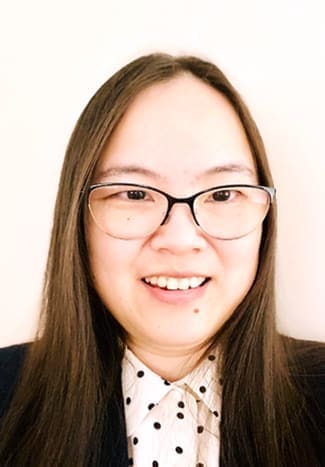
Yaojun Zhang is an Assistant Professor in the Department of Physics & Astronomy and the Department of Biophysics at Johns Hopkins University. She earned her PhD in Physics from the University of California, San Diego (2015), followed by postdoctoral fellowships at the Princeton Center for Theoretical Science (2015-2018) and the Princeton Center for the Physics of Biological Function (2018-2021). Her research focuses on biological physics, particularly the complex behaviors of biomolecules and their assemblies across scales—from single-molecule folding to intracellular transport and biomolecular phase separation. She employs theoretical, mathematical, and computational tools to bridge biological questions with physical principles. Education PhD in Physics, University of California, San Diego (2015) Postdoctoral Fellowships: Princeton University (2015-2021) Research Interests Her group studies biomolecular condensates and liquid-liquid phase separation, exploring how microscopic interactions determine macroscopic properties of cellular compartments. Key areas include: Biomolecular condensate formation and dynamics Phase separation in cellular environments Interactions between biomolecules and cellular components Biophysics of intracellular transport Collaborations & Tools Zhang collaborates with experimentalists to validate theoretical models and develops frameworks for understanding condensate functions, such as surface tension, stoichiometry, and phase diagrams. Her work addresses challenges like condensate stability, molecular exclusion, and biological function regulation. Labs & Resources She leads the Zhang Lab , which integrates experimental and computational approaches. Her team’s research is supported by resources at the Bloomberg Center for Physics and Astronomy.
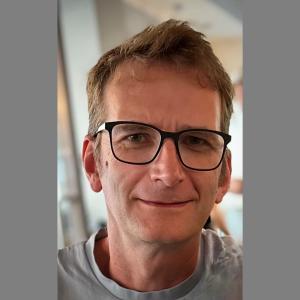
Professor Mikko Haataja is a distinguished faculty member in the Department of Mechanical and Aerospace Engineering at Princeton University's School of Engineering and Applied Science. Holding a Ph.D. from McGill University (2003), he leads the Haataja Research Group focused on theoretical and computational approaches to materials science and physical biology. His office is located in D404C Engineering Quadrangle, and he serves as an advisor to numerous graduate students working at the intersection of physics, materials science, and biology. Professor Haataja's research spans multiple domains including theoretical and computational materials science, physics of materials, and physical biology. His work examines microstructure formation during solid-solid phase transformations and solidification, growth of electrodeposited thin films and quantum heterostructures, dynamics of driven interfaces with mobile impurities, recrystallization kinetics, cell signaling mechanisms, and the regulation & self-organization of 'lipid rafts' in plasma membranes. His group has pioneered concepts in 'dynamically programmable electromechanical 2D materials' and investigates phase separation phenomena in biological systems. His publication record demonstrates significant contributions across several key areas: intracellular phase transitions and biomolecular condensates, 2D transition metal dichalcogenide materials, lipid bilayer membrane physics, solid oxide fuel cells and batteries, and organic semiconductor thin films. His most recent work focuses on amyloid-like fibril formation, liquid-liquid phase separation in biological contexts, and defect engineering in 2D materials, reflecting his interdisciplinary approach that bridges physics, materials science, and biology. Professor Haataja actively mentors graduate students and postdoctoral researchers, with numerous co-authored publications indicating strong advising relationships. His research program encompasses multiple funded projects investigating materials for energy conversion and storage, intracellular organization mechanisms, and novel 2D material systems. The Haataja Group maintains strong collaborations with other Princeton researchers and external institutions, particularly in the fields of biophysics and advanced materials. The Haataja Group operates as a dynamic research laboratory employing computational modeling and theoretical approaches to address fundamental questions in materials science and biophysics. Their work spans from atomic-scale simulations to continuum modeling, with particular emphasis on phase-field crystal models, membrane biophysics, and 2D material systems. The group maintains specialized computational infrastructure for multiscale modeling and collaborates extensively with experimental groups to validate theoretical predictions.
David John Procter is a Professor of Organic Chemistry and Head of the Department of Chemistry at the University of Manchester. His career includes academic roles at the University of Glasgow (Lecturer, Senior Lecturer) and a Readership at the University of Manchester, where he became a Professor in 2008. His research focuses on developing new synthetic methods, catalysis, and materials chemistry, with applications in drug discovery, biocatalysis, and organic electronics. Education: BSc Chemistry (University of Leeds, 1992), PhD (1995, supervised by Prof. Christopher Rayner). Postdoctoral work: Florida State University (Prof. Robert Holton, Taxol analog synthesis). Research interests include samarium diiodide-mediated reactions, metal-free coupling processes, and sustainable synthesis methods. He leads projects funded by EPSRC, Industry (30 grants), and international collaborations. Awards include the EPSRC Established Career Fellowship (2015–2020), Bader Prize (2014), and Young Heterocyclic Chemist Award (2015). Key contributions: Total synthesis of natural products (e.g., pleuromutilin), development of copper-catalyzed multicomponent couplings, and innovative methods for organic materials. His work aligns with UN Sustainable Development Goals related to affordable and clean energy and responsible consumption. Collaborations span academic and industrial partnerships in chemistry, physics, and biology. He supervises 60+ students and contributes to the Organic Materials Innovation Centre (OMIC). His group’s research is detailed at proctergroupresearch.com .
Matthew Gaunt is the 1702 Yusuf Hamied Professor of Chemistry at the University of Cambridge , specializing in C–H activation , visible-light photocatalysis , and bioconjugation . He leads a research group in Lab 177 , focusing on alkylamine synthesis and chemical biology applications. Gaunt's group has 23 members, including 14 PhD students and 6 postdocs. His research spans catalytic reactivity for organic synthesis, with a focus on metal-catalyzed C–H activation , photoredox strategies , and high-throughput experimentation for rapid reaction development. Key innovations include stereoselective methods for β-lactam synthesis and methionine-targeted protein modification . Scientific Awards & Fellowships: GlaxoWellcome Postdoctoral Fellowship Ramsay Memorial Fellow His group contributes to the SynTech Centre for Doctoral Training , integrating automation and data science into chemical synthesis education. Current students include Joseph Phelps, Marcus Grocott, James Robinson, and Tobias Kraus under his direct supervision.
Ram S. Mohan is the Wendell and Loretta Hess Endowed Professor of Chemistry and Chair of the Chemistry Department at Illinois Wesleyan University. He has established himself as a leading researcher in environmentally friendly organic synthesis, particularly through his innovative work with bismuth compounds as catalysts. Dr. Mohan earned his B.S. (Honors) in Chemistry from Hansraj College, Delhi, India (1985), followed by an M.S. in Organic Chemistry from the University of Delhi, India (1987), and completed his Ph.D. in Organic Chemistry at the University of Maryland, Baltimore (1992). His research program centers on three interconnected areas: (1) Environmentally-Friendly Organic Chemistry Using Bismuth Compounds, (2) Ionic Liquids as solvents for organic synthesis, and (3) Development of Discovery-Oriented Organic Chemistry Lab Experiments. His pioneering work demonstrates how bismuth compounds—remarkably non-toxic (often less toxic than NaCl), commercially available, and water-compatible—can replace hazardous reagents in organic synthesis while maintaining efficiency. His research shows that reaction pathways can fundamentally change when switching from traditional organic solvents to ionic liquids, rather than merely serving as direct replacements. Analysis of Dr. Mohan's recent publications reveals a consistent focus on sustainable methodologies in organic synthesis, with particular emphasis on bismuth catalysis and educational applications. His work bridges fundamental research with practical classroom implementation, as evidenced by his development of greener laboratory experiments for undergraduate chemistry curricula. Dr. Mohan's accomplishments have been recognized with numerous prestigious awards: Fulbright-Nehru Visiting Lecturer to India (2012-2013) Henry Dreyfus Teacher-Scholar Award (2001) IUPAC Young Observer Award Chemist of The Year by Illinois Heartland Section of The American Chemical Society (2011) Beling Professorship (2008) and Hess Professorship (2013) Co-author of one of Tetrahedron's 50 most-cited articles (2004-07) Dr. Mohan has mentored numerous undergraduate researchers who have gone on to successful careers in academia, medicine, and industry. His research group regularly publishes with undergraduate co-authors, demonstrating his commitment to involving students in meaningful research. He has secured multiple research grants from the National Science Foundation, the American Chemical Society, and Research Corporation to support his work. His international collaborations include conducting green chemistry workshops in India and China, reflecting his global impact in the field. Dr. Mohan's laboratory serves as a hub for undergraduate research in green chemistry, with ongoing projects focused on developing environmentally friendly synthetic methodologies and their educational applications. His research group maintains active collaborations with institutions worldwide, particularly in India where he has conducted numerous workshops and given invited lectures.
Thomas Boddaert is an Assistant Professor at the Institut de Chimie Moléculaire et des Matériaux d'Orsay (ICMMO), Université Paris-Saclay . His research focuses on organic photochemistry , synthesis of constrained β-amino acids , and conformational studies of peptide-based foldamers . He leads the photochemistry theme and instrumental platform in the CP3A Organic Synthesis group and manages collaborations with industry partners like Diverchim. PhD in Organocatalysis (Aix-Marseille University, 2009) Postdoctoral research: Manchester University (2010), Rouen University (2010-2012) HDR (2021) for PhD supervision qualification His research includes: Photochemical domino reactions for sulfur heterocycles Peptide foldamer design with cyclobutane motifs Asymmetric synthesis using N-heterocyclic carbenes (NHCs) Visible-light photocatalysis Recent publications demonstrate expertise in: Light-initiated cascade synthesis of alkylidenecyclobutanes (2024) Thia-Paternò-Büchi reaction applications (2024, 2022) Conformational analysis of oxetin oligomers (2018) Fluorinated β-peptide folding studies (2015) Awards: Thieme Chemistry Journals Award (2019) Emergence@international scholarship (INC/CNRS, 2020) Teaching and administrative roles: Co-responsible for L3 Organic Photochemistry Head of L2 Organic Chemistry courses Manager of the Villebon – Georges Charpak Institute chemistry program Member of Paris-Saclay University advisory commission (2021–) He supervises 6 Paris-Saclay PhD students , 2 foreign PhD students , and 2 postdoctoral researchers , with notable projects on: Photochemical post-functionalization of thietanes (2024–) Domino reactions for sulfur heterocycles (2023–) Light-controlled kinase inhibitors (2021)
Professor Rodrigo Freitas holds the TDK Professorship in Materials Science and Engineering at MIT. His research focuses on computational materials design, bridging atomistic simulations with mesoscale microstructural analysis. He leads the Freitas Research Group, specializing in machine learning-driven modeling of materials kinetics and solidification processes. Education: B.S. and M.S. in Physics, University of Campinas, Brazil M.S. and Ph.D. in Materials Science & Engineering, UC Berkeley Research Interests: Professor Freitas investigates microstructural evolution in metals and alloys using advanced computational methods. Key areas include solidification mechanisms, interstitial atom behavior in superalloys, and machine learning applications for materials discovery. His work emphasizes bridging atomistic and mesoscale phenomena to guide industrial applications like semiconductor manufacturing and battery design. Publications Trend: Recent work emphasizes machine learning potentials for alloy modeling, short-range order analysis in high-entropy alloys, and kinetic modeling of complex chemical systems. Themes include alloy phase stability, defect dynamics, and data-driven materials discovery. Labs/Teams: Leads the Freitas Research Group at MIT, which develops novel computational tools for materials engineering.
Gary Koenig is Associate Professor of Chemical Engineering at the University of Virginia. His research program focuses on advanced materials for energy storage systems, particularly lithium-ion batteries and flow batteries. He holds a PhD from University of Wisconsin-Madison and completed postdoctoral research at Argonne National Laboratory. His group develops novel electrode architectures, including thick sintered electrodes and all-active-material designs, to improve battery energy density and rate capability. Research spans materials synthesis, electrochemical characterization, and transport modeling to overcome limitations in current energy storage technologies. Honors include the NSF CAREER Award (2017) and Fulbright Research Fellowship (2020). Recent publications examine electrode processing techniques, lithium extraction methods, and transport phenomena in battery systems. His work demonstrates innovations in electrode design that enable higher energy densities while maintaining cycling stability. He has taught courses including Applied Statistics, Chemical Reaction Engineering, and Energy Technology Options.
Jonathan Ellman is the Eugene Higgins Professor of Chemistry and Professor of Pharmacology at Yale University, with joint appointments in the Department of Chemistry and the Department of Pharmacology at the Yale School of Medicine. He is also affiliated with the Yale Cancer Center and the Developmental Therapeutics program. Education: PhD, Chemistry, Harvard University (1989) BS, Chemistry, MIT (1984) NSF Postdoctoral Fellow, University of California at Berkeley (1992) Dr. Ellman's research lies at the intersection of synthetic organic chemistry and biomedical science, focusing on the development of novel synthetic methodologies and their application to drug discovery. His work emphasizes catalysis, particularly in C–H activation and enantioselective synthesis, with a strong interest in sulfur-containing compounds such as sulfoximines and sulfilimines as bioactive motifs. His lab has pioneered methods for constructing complex amine and amide architectures with quaternary centers, which are valuable in medicinal chemistry. A recent focus includes targeting opioid receptors for pain therapeutics with reduced side effects. His research has led to over 350 publications and significant contributions to chemical biology and pharmaceutical sciences. His recent publications reveal a consistent focus on catalytic methodologies, sulfur chemistry, and computational drug design, particularly in targeting opioid receptors. Themes include enantioselective synthesis, C–H functionalization, and the exploration of underutilized heteroatom-containing functional groups in drug discovery. Scientific Awards and Honors: Member, American Academy of Arts and Sciences (2016) Yale Dylan Hixon ’88 Prize for Teaching Excellence in the Natural Sciences (2016) Herbert C. Brown Award for Creative Research in Synthetic Methods (2012) GlaxoSmithKline Chemistry Scholar Award (2010) Pedler Award, Royal Society of Chemistry (2010) Dr. Ellman has trained numerous researchers and maintains a highly collaborative research program, evidenced by frequent co-authorship with colleagues across Yale. His lab, accessible via ellman.chem.yale.edu , is part of Yale’s broader research ecosystem in chemical biology and therapeutics. He has received continuous grant support, particularly in the areas of synthetic methods development and translational chemical biology, although specific grants are not detailed in the text.
Jennifer Golden is an Associate Professor in the Department of Pharmaceutical Sciences at the School of Pharmacy , University of Wisconsin-Madison . Her research focuses on synthetic medicinal chemistry to develop novel antiviral and anti-parasitic agents for diseases like alphavirus infections and kinetoplastid parasites. The Golden Lab emphasizes chemical methodology development and structure-activity relationship analysis through collaborations assessing compound efficacy in cell and animal models . Research Projects Quinazolinone Rearrangement: Developing synthetic transformations for amidine formation and ring-fused scaffolds. Anti-Alphaviral Agents: Creating FDA-approved therapeutic candidates for mosquito-borne RNA viruses. Broad-Spectrum Antiparasitics: Optimizing compounds for malaria, African sleeping sickness, and leishmaniasis. Publications highlight her work on ML336 (anti-VEEV), quinazolinone derivatives , and collaborations with experts in high-throughput screening and structural biology . Her lab trains students in hit-to-lead optimization , regioselective synthesis , and medicinal chemistry tactics . Education: B.S. (1996) – Eastern Illinois University Ph.D. (2002) – University of Kansas Postdoctoral Research (2004) – Stanford University
Dr. Ali Siamaki is a faculty member at Fayetteville State University in the Department of Chemistry, Physics & Materials Science. His research focuses on heterogeneous and homogeneous catalysis, metal nanoparticles synthesis, and their application in cross-coupling reactions under microwave and continuous flow conditions. M.S., University of Calgary, Canada Ph.D., McGill University, Canada His research group explores three core areas: preparation of solid-supported metal nanoparticles, their catalytic evaluation in C-C reactions (Suzuki, Heck, Sonogashira), and microwave/flow reaction applications. Students gain expertise in SEM, TEM, FT-IR, and XRD techniques. He teaches courses in organic chemistry, polymer science, and general chemistry. Recent work includes highly cited studies on graphene-supported Pd/Fe3O4 nanoparticles and nickel-palladium bimetallic catalysts for Sonogashira reactions. His team actively presents at conferences like ACS Meetings and Emerging Researcher National Conference in STEM. Scientific Awards Top Cited Article in 2011-2012 Certificate by the Journal of Catalysis Research Students Current: Katherine Coker, MaryKristy Eweama, Harlee Winkleman. Former: Lacey Picinich, Destiny Ivey, Sojeong Folsom, and others.
Dr. Sunil V. Pansare is a Professor in the Department of Chemistry at Memorial University, Canada. His research focuses on asymmetric organic synthesis using organocatalysis and metal-based catalysis, particularly for natural product synthesis and medicinal chemistry applications. Develops enantioselective synthetic routes for chiral biologically active molecules Specializes in organocatalytic conjugate addition, vinylogous aldol reactions, and C-H bond functionalization Applies methodologies to synthesize alkaloids, marine natural products, and functionalized heterocycles His group's recent work emphasizes organocatalyst design for carbon-carbon bond formation and multicomponent reactions for combinatorial chemistry. Key projects target asymmetric synthesis of pyrrolidines, quinolizidines, and hydroxy amino acid motifs. Scientific distinctions include: JACS Hot Paper (2007) for work on diamine catalysts Top 20 most cited minireview in Chemistry—A European Journal (2011) The Pansare Group has trained numerous researchers including Moorthy N.V.G., Rajender Dyapa, Rakesh Thorat, and Kaivalya Kulkarni. The group actively seeks new PhD candidates interested in organic synthesis and asymmetric catalysis.
Adrian Whitty is an Associate Professor in the Department of Biology at Boston University . His research focuses on protein-protein and protein-ligand recognition, particularly in developing mechanistic understandings of growth factor receptor activation and advancing drug discovery for protein-protein interaction inhibition. Education: B.Sc. (Honors) in Chemistry from King’s College, University of London (1985); Ph.D. in Organic Chemistry from the University of Illinois at Chicago (1991); Postdoctoral Research Fellow at Brandeis University's Biochemistry Department (1990-93). His work integrates biochemical and cell-based assays using advanced technologies like FRET, Time-Resolved Fluorescence, and Surface Plasmon Resonance (Biacore 3000). He collaborates with computational chemists, organic synthesis experts, X-ray crystallographers, and biologists to develop novel approaches for designing small molecule inhibitors of protein-protein interactions. Recent publications highlight trends in machine learning applications for molecular scientists, structural analysis of enzyme mechanisms, macrocycle-based drug design, and quantitative studies of protein interaction energetics. His lab emphasizes rigorous hypothesis-driven experimental design, preparing students for careers in academia or industry. Advisory and leadership roles include membership in The Protein Society (2008-present), the American Society of Biochemistry and Molecular Biology (ASBMB) Governing Council (2007-present), and founding roles in the Council for Systems Biology in Boston (CSB2) and the Institute for Chemical Biology and Drug Discovery at SUNY Stony Brook. His laboratory is equipped with state-of-the-art facilities for fluorescence, analytical ultracentrifugation (AUC), dynamic light scattering (DLS), isothermal titration calorimetry (ITC), and tissue culture, supporting diverse techniques including flow cytometry and reaction pathway modeling with Mathematica and MATLAB.