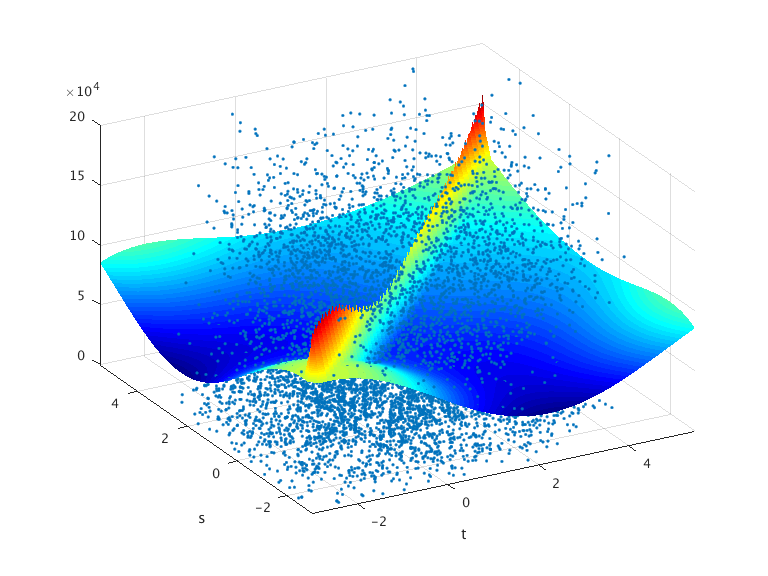
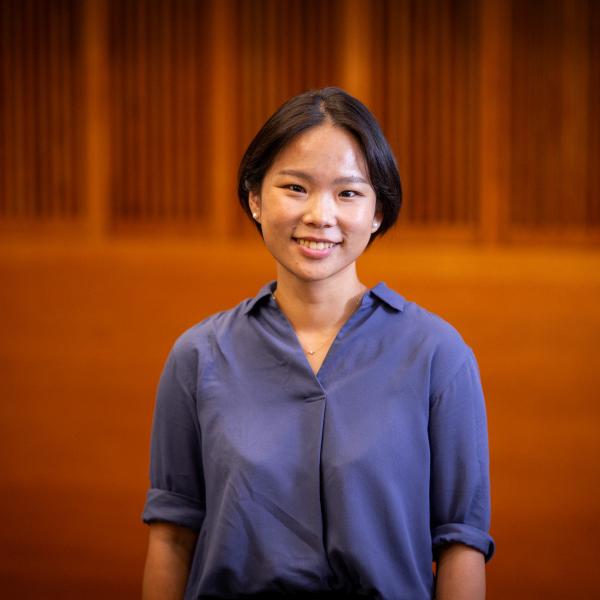
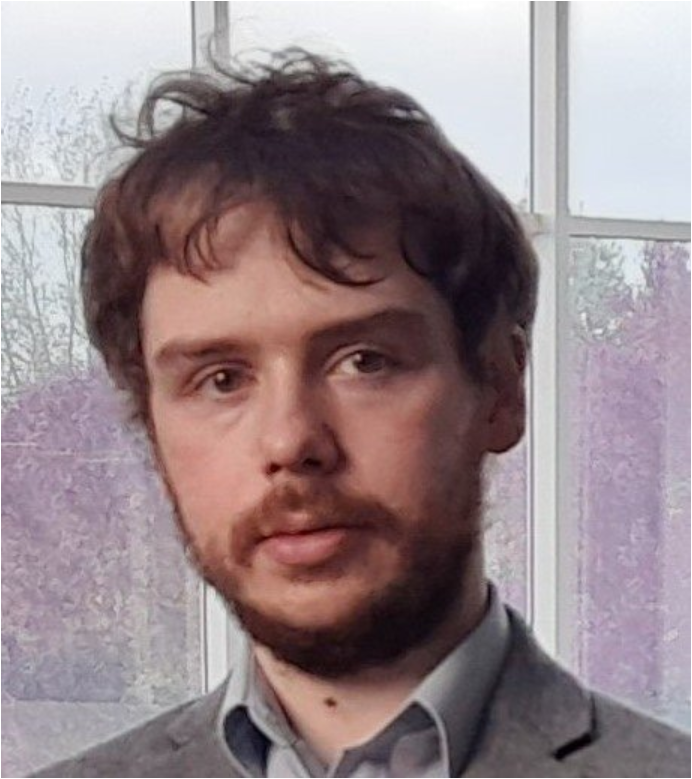
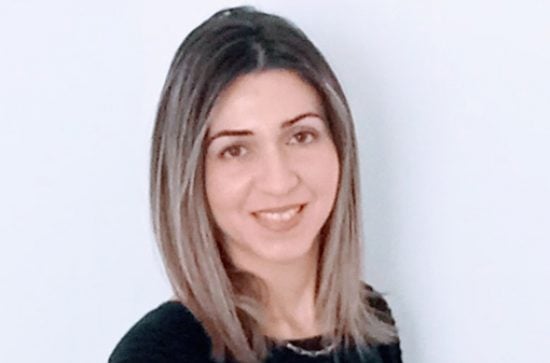
Hans-Georg Mueller is a Professor in the Department of Statistics at the University of California, Davis. His research spans multiple domains of modern statistical methodology, with groundbreaking contributions to functional data analysis, metric statistics, and nonparametric inference for random objects. Key research areas include Fréchet regression, distributional data analysis, network regression, and optimal transport Applications span longitudinal growth studies, brain development, aging and longevity, plant genomics Research Interests : He has pioneered methods for analyzing complex data structures such as functional data, manifold-valued data, and random objects. His work on the PACE approach for longitudinal data has become foundational in the field. Recent Publications demonstrate strong trends in Fréchet analysis, metric statistics, and distributional data modeling, with applications in both biomedical and environmental domains. Books and Edited Works : Author of the foundational monograph Nonparametric Regression Analysis for Longitudinal Data (1988), and co-editor of influential volumes including Change-point Problems (1994) and Mathematical Modeling in Experimental Nutrition (1998).
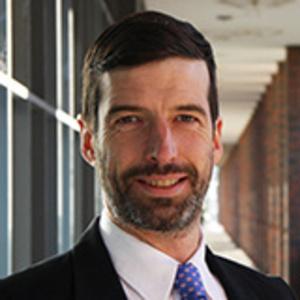
Dongsheng Yang is an Assistant Professor with the Electrical Energy Systems Group at the Department of Electrical Engineering of Eindhoven University of Technology (TU/e). He has been working at TU/e since 2019, focusing on power electronics and renewable energy integration, and previously served as Assistant Professor at Aalborg University's Department of Energy Technology (2018-2019). Dr. Yang received his B.S., M.S., and Ph.D. degrees in electrical engineering from Nanjing University of Aeronautics and Astronautics, Nanjing, China, in 2008, 2011, and 2016, respectively. His academic journey progressed from postdoctoral researcher at Aalborg University (2016) to faculty positions at both institutions. Dr. Yang's research focuses on the modeling, analysis, control, and design of power electronics dominated power systems , with the goal of safely accommodating high-penetrations of renewable energy sources and energy-efficient end-uses. His work spans several critical areas in modern power systems: Power electronics dominated grid stability and control Renewable energy integration and grid synchronization EV fast-charging infrastructure development Hydrogen production systems Medium-frequency transformer design and modeling AI applications in power electronics Analysis of Dr. Yang's recent publications reveals a strategic research trajectory toward developing advanced control strategies for power converters, improving modeling techniques through AI approaches, and addressing practical implementation challenges for renewable energy systems. His work spans both theoretical developments and practical applications, with increasing emphasis on neural network frameworks for magnetic modeling, safety boundaries for EV charging architectures, and enhanced fault ride-through capabilities for grid-connected systems. This progression demonstrates his commitment to solving real-world engineering challenges in the transition to renewable energy. Dr. Yang has received professional recognition including: Senior Member of IEEE Corresponding Member of CIGRE Working Group C4.56 Topic chair, technical committee member, and reviewer for top-level conferences and journals in power electronics Dr. Yang actively supervises doctoral candidates and postdoctoral researchers, including Xiao Yang (working on AI for power electronics), Saizhao Yang (postdoc), and L.A. Vlaar. He serves as project manager for multiple significant research initiatives totaling over €5 million in funding: REDCON (2023-2028) - Reconfigurable power electronics testbench Flexible Offshore Wind Hydrogen Power Plant Module (2022-2026) Sectorplan-DCES-Y.D.inv.: Reconfigurable power electronics testbench (2021-2029) E2GO-RDC Cost-reduction of EV fast-charging station (2021-2026) CW620863 System impact analysis for large scale renewable hydrogen production (2022-2023) Dr. Yang leads research within the Electrical Energy Systems group at TU/e's High Tech Systems Center, focusing on power conversion technologies. His work connects with multiple research teams across Europe through collaborative projects focused on renewable energy integration, EV infrastructure, and hydrogen production systems. He also teaches the course 'Dynamic control of power conversion in renewable energy systems' and contributes to the UN Sustainable Development Goals related to affordable and clean energy.
Adrian Priest is a Senior Lecturer in the School of Mathematics and Computer Science within the Faculty of Science and Engineering at the University of Wolverhampton. He plays key roles in academic quality assurance, apprenticeship development, and international education partnerships. His responsibilities include serving as a University Quality Panel Member, School Apprenticeships Champion, Link Tutor for Degree Apprenticeships, and Personal Tutor for Computing students. His educational background includes a degree in Business Information Systems from Staffordshire University and postgraduate qualifications from the University of Wolverhampton, such as a Postgraduate Certificate in Learning and Teaching in Higher Education, and studies in Business Information Technology and Strategic Information Technology Management. Adrian's research and teaching focus on critical areas in modern computing and management, particularly Cyber Security, Project Management, Change Management, Risk Management, and Degree Level Apprenticeships . His work bridges academic theory and industry practice, informed by prior professional experience as an IT Manager and IS Consultant in the financial sector. The available publication highlights his interest in the integration of change management within project management frameworks, reflecting a broader trend in organizational and technological adaptation. His work suggests a strong applied research orientation with relevance to both academic and industrial contexts. Chartered IT Professional, British Computer Society (Member) Fellow of the Higher Education Academy Member of the Institute of Leadership and Management Adrian has extensive experience in academic leadership and student supervision, having served as Module Leader for numerous undergraduate and postgraduate courses, supervised MSc and BSc projects, and led curriculum development initiatives. He has also contributed to institutional growth through roles in course validation, transnational education (Sri Lanka and Malaysia), Knowledge Transfer Partnerships, and vocational training facilitation (Prince2). While no specific grants are mentioned, his involvement in KTP and international programs indicates engagement with funded collaborative projects. He is actively involved in professional service, including health and safety representation, union activities, wellbeing advocacy, and fire safety. These roles reflect a strong commitment to the broader university community beyond teaching and research.
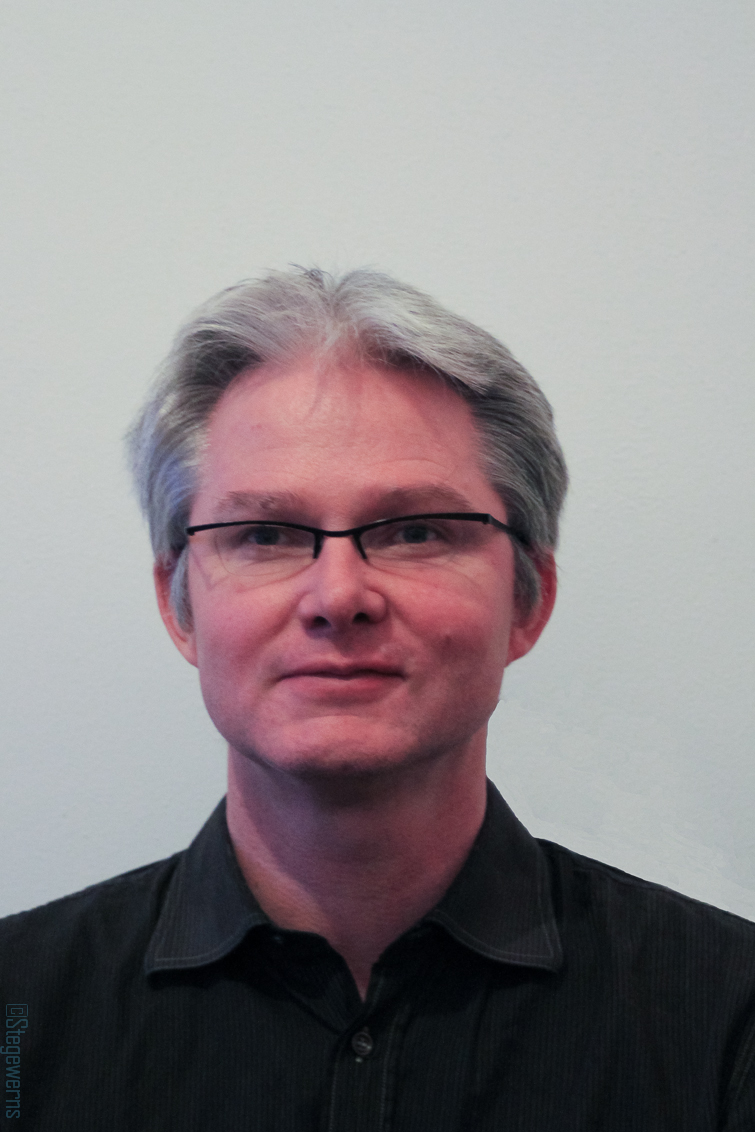
Dick Stegewerns is an Associate Professor in Japanese Studies at the University of Oslo. His research spans the political, intellectual, and diplomatic history of modern Japan, with a focus on East Asia's international relations, war memory, and cultural identity. He also explores Japanese cinema and popular culture, including sake's historical significance. Research Interests: Nationalism, regionalism, Japanese film studies, food studies, and transnational cultural perspectives. Current Projects: Monographs on Japanese self-perception, collaborative research on postwar Japanese cinema, sake globalization, and visualization of history in media. Publications cover topics like East-West civilization discourse, postwar war films, sake industry dynamics, and Hiroshima's transnational memory. His work integrates film studies, history, and cultural analysis.
Prof. Dr. Jan Eckel is a Professor of Modern and Contemporary History at the University of Freiburg . His academic career includes prior professorships at the University of Tübingen (2016-2021) and the University of Cologne (2015-2016). He researches human rights history , transnational politics , and globalization discourses since the late 19th century. Research Focus: Interactions between state/non-state actors, Cold War dynamics, decolonization, and ethical governance frameworks. Grant Involvement: DFG-funded projects, including SFB 923 sub-project on globalization narratives (1990s-2000s). His 15 most recent publications analyze globalization discourses, human rights evolution, and transnational conflict resolution, with keywords spanning 20th-Century History , Political Science , and Conflict Studies . Scientific Awards include the 2024 Opus Magnum Scholarship and multiple honors for historical analysis excellence. He advises seven doctoral students in contemporary history and globalization studies.
Professor Derrick Crook is a leading academic in medical microbiology at the Nuffield Department of Medicine , University of Oxford, while also serving as an Infectious Diseases Physician at Oxford University Hospitals NHS Trust. He combines clinical practice with cutting-edge research on pathogen genomics and antimicrobial resistance. Education : Medicine (University of Witwatersrand); Diploma of Tropical Medicine (London); Internal Medicine Specialization (University of Virginia); Infectious Diseases Fellowship (Tufts New England Medical Center) His research focuses on translating whole pathogen sequencing into clinical practice, studying Mycobacterium tuberculosis , Escherichia coli , and Clostridium difficile . Key projects include the CRyPTIC program (20-country tuberculosis resistance analysis) and development of AI-powered rapid diagnostics. Recent publications demonstrate his team's leadership in using genomic data to predict drug resistance and analyze disease trends through electronic health records . The research emphasizes practical applications for infection control and antibiotic stewardship. Scientific Contributions : NIHR Health Protection Research Unit Global Pathogen Analysis System (GPAS) Mykrobe Predictor software development As co-director of Oxford Biomedical Research Infection Theme, he leads a multidisciplinary team working to modernize infection diagnostics and treatment approaches.
Jiayi Chen is an Assistant Professor of East Asian Languages and Cultures at Washington University in St. Louis (on leave from Fall 2024 to Spring 2025). She holds a PhD in East Asian Languages and Civilizations from the University of Chicago (2023). Her research focuses on early modern Chinese literature, game studies, theater, and Sino-Japanese cultural exchange. She is currently developing her dissertation, Reading Games in Early Modern China , into a book exploring the role of games in shaping literary epistemology and reality navigation in pre-digital China. Her ongoing projects include studies on virtual reality concepts in early modern Chinese culture, the interplay between games and theater, and the history of miniature books. With a background in museum studies, she emphasizes integrating academic research into public exhibitions and events. Chen’s work has been supported by prestigious institutions including the Japan Foundation and the Andrew W. Mellon Foundation. Her academic awards include a junior fellowship at the Mellon Society of Fellows in Critical Bibliography. While no specific grants are listed, her research has received sustained institutional support. She is affiliated with the Rare Book School and collaborates with colleagues on interdisciplinary projects bridging academia and public engagement.
Thomas B. Gold is a Professor of Sociology at the University of California, Berkeley, and has held multiple leadership roles, including Executive Director of the Inter-University Program for Chinese Language Studies (IUP), a consortium managing advanced Chinese language programs at Tsinghua University. He has also served as Associate Dean of International and Area Studies, Founding Director of the Berkeley China Initiative, and Chair of the Center for Chinese Studies. Gold’s research examines the emergence of individual autonomy and civil society in East Asian contexts, particularly mainland China and Taiwan, focusing on topics like guanxi, entrepreneurship, popular culture, and non-governmental organizations. Gold earned his undergraduate degree in Sociology from Oberlin College, followed by a Master’s in Regional Studies-East Asia and a PhD in Sociology from Harvard University. His early academic work included being among the first American exchange students to study in China at Fudan University in Shanghai (1979-1980). He has taught courses on Development and Globalization, Contemporary Chinese Society, and special topics like North Korean Society and non-profits in education. His advocacy for public sociology led to roles on boards of organizations such as the National Committee on U.S.-China Relations and the East Bay College Fund, alongside editorial board positions in scholarly journals. Gold’s research trends emphasize civil society development, post-authoritarian societal change, and cross-strait dynamics between China and Taiwan. His work bridges traditional cultural frameworks with modern political and economic transformations, particularly in analyzing how individual agency evolves within authoritarian systems. Awards include the 2007 Distinguished Teaching Award and the 2010 Chancellor’s Award for Civic Engagement. As an advisor, he supports international student groups like Strait Talk and the East-West Coalition, and advises programs in Japan and Singapore. His civic engagement and academic leadership highlight a commitment to both scholarly rigor and practical societal impact. Labs/Teams: Gold is affiliated with the Institute of East Asian Studies (IUP program), the Center for Chinese Studies, and collaborates with academic consortia and civic organizations globally.
Ciarán Mac an Bhaird is an Associate Professor of Business and Management at Dublin City University (DCU), within the Fiontar & Scoil na Gaeilge department. He holds a PhD from Trinity College Dublin, a B.Comm and LL.B from NUI Galway, and an M.Sc. in Finance from DCU. His academic role includes teaching and supervising PhD students focusing on enterprise policy, high-growth firm financing, and entrepreneurship education. Research interests span resourcing small firms, capital structure, alternative finance, and public policy for SMEs. He authored Resourcing Small and Medium Sized Enterprises (Springer-Verlag, 2010), launched by the Irish Minister for Enterprise. His work has been published in journals like Small Business Economics and Venture Capital . He chairs the Entrepreneurial Finance track at the Institute of Small Business and Entrepreneurship Conference and serves as an associate editor for Research in International Business and Finance . Current PhD advisees include Simon Bridge, Nouf Alnasser, Batoul Batoulbanjar, and Sean O Reilly. Professional activities include contributions to policy reports for Enterprise Ireland and the Irish League of Credit Unions, and participation in the U.S. State Department’s International Visitor Leadership Programme.
Giles Foody is a Professor of Geographical Information Science at the School of Geography, University of Nottingham, and a member of the Rights Lab in the Faculty of Social Science. He is recognized as the UK’s most prolific and highly cited researcher in remote sensing, with a focus on interdisciplinary applications for real-world impact. Education: BSc (1st class honours) and PhD from the University of Sheffield. His research spans image classification for thematic mapping, particularly in land cover and human-induced changes. He pioneered soft image classifications, object-based methods, neural networks in remote sensing, and citizen sensors in mapping. Current projects include 'slavery from space' and Sargassum beaching analysis to meet UN SDGs. The trends in his publications highlight advancements in remote sensing, citizen science, and land cover mapping. His work integrates machine learning and geospatial analysis for social and environmental challenges. Scientific awards: IEEE Fellowship, David Landgrebe Award, Founder's Award (ISARA), multiple RSPSoc accolades, and SDG-related honors. Giles has supervised 51 research students and contributed to academic service via editorial roles, peer review leadership, and participation in national research assessment panels. His interdisciplinary work extends to European National Mapping Agencies and anti-slavery initiatives.
Priya Lal is an Associate Professor in the History Department at Boston College, based in Stokes Hall. She holds a B.A. from Columbia University and a Ph.D. from New York University. Her research focuses on modern African history, particularly East Africa, with an emphasis on decolonization, nationalism, development policies, African socialism, and gender dynamics. She currently leads a project on the transnational training and labor of educational/medical professionals in post-independence southeastern Africa, supported by major fellowships from the ACLS. Her first book, African Socialism in Postcolonial Tanzania , examines the ujamaa villagization initiative and won prestigious recognition. Her work bridges micro-historical analysis with global frameworks, exploring how Tanzanian socialist policies intersected with transnational movements. Research interests include Cold War-era ideological exchanges, the gendered dimensions of developmental labor, and the material connections between African and Asian revolutionary movements. She has published widely in top journals like Humanity and Africa: Journal of the International African Institute , with articles addressing topics such as Maoism in Tanzania and the New International Economic Order. Professor Lal’s awards reflect her scholarly impact, including the ACLS Burkhardt Fellowship and a book prize honorable mention. Her teaching spans African history and global modern history, with courses emphasizing comparative postcolonial experiences. Current research expands beyond Tanzania to consider broader themes of resource sovereignty and transnational professional networks in decolonizing contexts.
Florian Strunk is a Professor in the Department of Mathematics at the University of Regensburg, working within the Faculty of Mathematics. His office is located in room M219 (phone: +49 941 943 2768) and his contact email is florian.strunk@ur.de. Dr. Strunk's research spans several interconnected areas of modern mathematics, with primary focus on Algebraic Geometry, Arithmetic Geometry, and Homotopy Theory. He has developed specialized expertise in Algebraic K-Theory, Motivic Homotopy Theory, and Derived Algebraic Geometry. His scholarly work bridges classical algebraic geometry with contemporary homotopy-theoretic methodologies, advancing our understanding of structural properties of algebraic varieties and schemes. His publication record demonstrates consistent contributions to Algebraic K-Theory and motivic homotopy theory, with significant work on descent properties, connectivity in motivic contexts, and algebraic cycles. His collaborative research with prominent mathematicians like Moritz Kerz and Georg Tamme has appeared in top-tier journals including Inventiones Mathematicae and Compositio Mathematica. As an educator, Dr. Strunk teaches across the mathematics curriculum, from foundational undergraduate courses to advanced graduate seminars. His teaching portfolio includes Algebraic Geometry I and II, Mathematics of Machine Learning, Introduction to Quantum Computing Mathematics, and specialized seminars on Algebraic K-Theory. He has developed comprehensive lecture notes for several courses, reflecting his commitment to effective pedagogy.
Daniel Gettings is a Sessional Tutor in the Department of History at the University of Warwick, specializing in early modern English history with a focus on water culture and its social, religious, and environmental dimensions. His educational background includes: PhD in History from the University of Warwick (2025) MA in Early Modern History from the University of Warwick (2020) BA (Hons) in History from the University of Warwick (2016-2019) Gettings' research centers on the cultural understandings of water in early modern England (1550-1750), exploring how people related to water in their daily lives, religious practices, and community formations. His work bridges environmental history, religious studies, and social history, examining topics such as drinking water typologies, river pollution protests, and the relationship between water and spiritual concepts. His interdisciplinary approach connects historical water practices to contemporary environmental concerns, demonstrating the long-standing human preoccupation with water quality, access, and meaning. His published articles demonstrate a consistent focus on water history, particularly examining how early modern English people conceptualized and interacted with water. These works reveal patterns in how communities responded to water pollution, developed classifications of water quality, and integrated water into religious and social practices. Gettings' scholarship contributes to the growing field of environmental history by providing historical context for contemporary water issues, showing that concerns about water purity, pollution, and access have deep historical roots. Gettings has presented his research at numerous international conferences across Europe and North America, including events at the University of Warwick, Technische Universität Dresden, University of Bristol, IEHCA in Tours, France, University of Exeter, Medici Archive in Florence, Newberry Library in Chicago, VUB in Brussels, and Université de Lille. He has actively engaged with public audiences through platforms like The Conversation and Many-Headed Monster, and contributed to Coventry City of Culture events, demonstrating his commitment to making historical research accessible beyond academic circles.
Lucia Avallone is an Associate Professor at the University of Bergamo, teaching Arabic language and literature. She holds a PhD in 'Near Eastern and Maghreb Studies. Cultural Specificities and Intercultural Relations' from the University of Naples 'L'Orientale' (2011) and graduated from the University of Turin (1989). National Scientific Qualification for Full Professor in Cultures of the Ancient Near East, Middle East, and Africa (2024-2035) Member of AIMA (International Association for the Study of Middle and Mixed Arabic) Advisor for Master's Degree in Modern Languages for International Communication and Cooperation (LM-38) Member of PhD programs in Philological and Linguistic Studies (Bergamo) and Linguistic Sciences (Bergamo-Pavia) Her research focuses on modern and contemporary Arabic language and literature , especially linguistic variation , code switching between standard and vernacular Arabic , and Arabic-European language contact . She analyzes political discourse and develops methodologies for Arabic language teaching, with particular attention to dialect-standard dynamics in literary and pedagogical contexts. Recent publications examine: Linguistic creativity in contemporary Egyptian fiction Sociolinguistic aspects of modern Arabic narratives Translation challenges between Arabic dialects and Standard Arabic Historical connections between Arabic and Mediterranean cultures She supervises master's theses and participates in doctoral committees, emphasizing: Intercultural communication Postcolonial Arabic literature Language pedagogy innovations
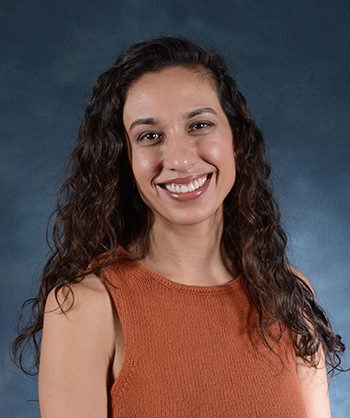
Dr. Galatia Cleanthous is a Lecturer in the Department of Mathematics and Statistics at Maynooth University, Ireland, affiliated with the Faculty of Science & Engineering and the Hamilton Institute. She joined Maynooth in 2020 after postdoctoral positions at Trinity College Dublin, Newcastle University, and University of Cyprus, and holds a PhD in Pure Mathematics from Aristotle University of Thessaloniki (2014). Education PhD in Mathematics, Aristotle University of Thessaloniki, Greece (2014) MSc in Mathematics, Aristotle University of Thessaloniki, Greece Diploma in Mathematics, Aristotle University of Thessaloniki, Greece Research Interests Her research bridges pure and applied mathematics, focusing on Mathematical Analysis , Probability , and Statistics . Specifically, she explores Geometric Analysis , Geometric Function Theory , and Harmonic Analysis on manifolds and metric spaces. In statistics, she works on Nonparametric , Spatial , and Environmental Statistics , developing adaptive estimation techniques and studying Gaussian random fields on spheres and other domains. Publication Trends From 2025 back to 2013, her work has consistently appeared in top journals such as Annals of Statistics , Bernoulli , Journal of Nonparametric Statistics , and Transactions of the American Mathematical Society . A clear trend emerges: early publications concentrate on pure analytic topics like Fourier multipliers and function spaces, while recent outputs integrate these theoretical tools into modern nonparametric statistics, density estimation on manifolds, and stochastic modeling of environmental and seismological data. Scientific Awards Master’s degree ranked first with grade 9.8/10, Aristotle University of Thessaloniki (2011) Diploma ranked first among ~200 students, grade 9.7/10, Aristotle University of Thessaloniki (2009) Undergraduate merit awards for three consecutive academic years (2005-2008), State Scholarship Foundation of Greece National first place in Cypriot high-school mathematics entrance exams (2005), Ministry of Education, Cyprus Advising & Outreach Dr. Cleanthous has supervised BSc and MSc students, including Ultán Doherty (BSc, 1st Class Honors, 2021) and Anush Harish (MSc, 2022). She serves as Chair of the Department PR Committee, Member of the University STEM Promotions Committee, and Member of the departmental Equality, Diversity & Inclusion committee. Beyond campus, she trains young mathematicians at the North Kildare Maths Problem Solving Club and organizes public engagement events for Science Week. Labs & Teams She is associated with the Hamilton Institute at Maynooth University, a multidisciplinary research institute fostering collaboration between mathematics, computer science, and engineering.