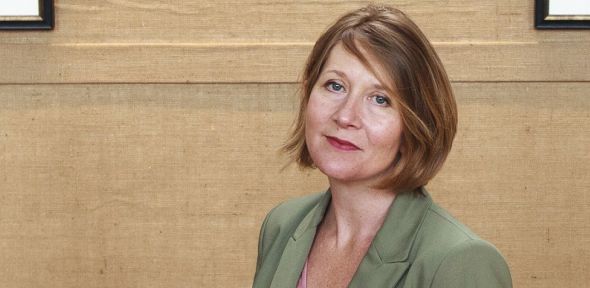
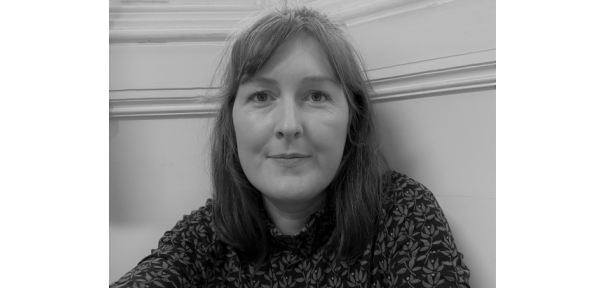
Professor Emma Widdis is a leading scholar at the Faculty of Modern and Medieval Languages and Linguistics at the University of Cambridge, specializing in the intersection of Soviet cinema, ideology, and cultural geography. Her work explores the reeducation of sensory perception through film, early Soviet urban spaces, and the construction of subjectivity via cinematic techniques. Teaches 20th-century Russian/Soviet literature, cinema, and film theory Focuses on sensory engagement, political avant-garde, and urban spatial representation Supervisor for MPhil and PhD students in Slavonic Studies Her recent book Socialist Senses (2017) examines how cinema shaped Soviet perceptions of reality. Her publications span topics like silence in sound film, set design materiality, and costume symbolism in early Soviet cinema. While no formal scientific awards are listed, her research has been supported through institutional grants and collaborations with centers like CRASSH and Cambridge Language Sciences.
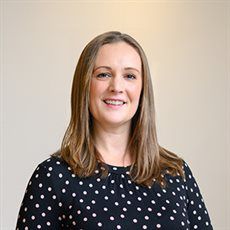
Dr. Frances Smith is an Associate Professor in Film Studies at the University of Sussex's School of Media, Arts and Humanities. She holds a PhD in Film and Television Studies from the University of Warwick (2013), an MA in Management from Durham University (2008), and a Master of Modern Languages in French/Italian from Manchester University (2007). Her research focuses on teen cinema, female authorship, Hollywood and European cinema, and gender studies, with current work on Céline Sciamma's Girlhood. She authored Rethinking the Hollywood Teen Movie (2017) and co-edited Refocus: The Films of John Hughes (2021). Teaching includes convening Analysing Film, American Teen Cinema, and Working with Film modules. She has taught Gender and Representation, British Cinema, and Study Skills. Her awards include Fellowship of the Higher Education Academy (2016). Active in PhD supervision focusing on teen cinema, female authorship, and gender in cinema. Publications span over 25 articles/chapters addressing topics like queer youth representation, transatlantic media comparisons, and directorial authorship in John Hughes and Amy Heckerling films. Research explores intersections of gender, space, and cultural identity in global popular cinema.
Mark Steedman is a Professor in the School of Informatics at the University of Edinburgh, where he conducts research in Artificial Intelligence, Computational Cognitive and Social Science, and Natural Language and Speech Processing. He is affiliated with the Institute for Language, Cognition and Computation (ILCC), the Centre for Speech Technology Research (CSTR), and the Human Communications Research Center (HCRC). He also holds an adjunct professorship in Computer and Information Science at the University of Pennsylvania. His research focuses on Combinatory Categorial Grammar (CCG) , computational linguistics , prosody and intonation , temporal semantics , gesture in communication , and computational music analysis . He has authored foundational books including Surface Structure and Interpretation , The Syntactic Process , and Taking Scope . The recent publications reflect a strong trend toward integrating formal grammatical frameworks like CCG with modern neural and distributional models, particularly in semantic parsing, entailment reasoning, and cognitive modeling. His work bridges symbolic and statistical approaches in NLP, often focusing on robust, wide-coverage parsing and semantic interpretation. Best Paper Award at AACL/IJCNLP 2023 for 'Smoothing Entailment Graphs with Language Models' Best Paper Award at ACL 2023 for 'Extrinsic Evaluation of Machine Translation Metrics' Influential Paper Award 2017 from IFAAMAS for 'Animated Conversation' Mark Steedman has supervised numerous PhD students and collaborated widely across institutions. He leads research in formal grammar applications to cognitive modeling, dialogue, and multimodal communication. His lab contributes to CCG software and semantic parsing tools, and he continues to be actively involved in advancing the integration of symbolic and neural AI.
Professor Anna Korhonen is a leading academic at the University of Cambridge, holding positions as Professor of Natural Language Processing, Co-Director of the Language Technology Laboratory (LTL), Director of the Centre for Human-Inspired Artificial Intelligence (CHIA), and Fellow of Churchill College. Her work bridges computational linguistics, artificial intelligence, and interdisciplinary applications. Her research focuses on human-centric NLP with core interests in multilingual/low-resource systems, conversational AI, and responsible technology development. She emphasizes applications for social and global good, including healthcare, climate science, and equitable language technologies. Her methodology integrates cognitive modeling with machine learning to create interpretable, fair NLP systems. Key projects include ERC-funded initiatives like MultiConvAI (multilingual conversational AI) and Towards Globally Equitable Language Technologies , alongside Innovate UK's ESG RoboFactory and EPSRC's Modeling Idiomaticity project. Her work spans biomedical text mining ( PheneBank , LION ), educational technology ( EF Education First Research Lab ), and cross-lingual transfer learning. Fellow of the Association for Computational Linguistics (ACL) Fellow of ELLIS (European Laboratory for Learning and Intelligent Systems) Royal Society University Research Fellow (2005-2014) Google Faculty Award recipient EACL Chair Elect Korhonen actively supervises PhD/MPhil students in Computation, Cognition and Language programs and leads interdisciplinary collaborations across computer science, linguistics, and domain sciences. Her lab (LTL) develops foundational NLP techniques while addressing real-world challenges through partnerships with healthcare, environmental science, and education sectors. Current strategic initiatives include the Institute for Technology and Humanity and CHIA's human-inspired AI framework.
John Holmes is Professor of Victorian Literature and Culture at the University of Birmingham, affiliated with the Birmingham Institute of Forest Research (BIFoR). His work bridges literary studies and scientific inquiry, focusing on interdisciplinary connections from 1800 to the present through extensive collaborations with institutions like the Royal Society and major natural history museums across Europe. His academic credentials include a D.Phil. in English Literature from Oxford (2001), an M.A. in Renaissance Studies from Queen Mary and Westfield College, London (1997), and a B.A. in English Language and Literature from Oxford (1994). D.Phil. English Literature, University of Oxford, 2001 M.A. Renaissance Studies, Queen Mary and Westfield College, University of London, 1997 B.A. English Language and Literature, University of Oxford, 1994 Professor Holmes specializes in literature-science intersections, particularly Victorian and modern poetry, Pre-Raphaelite studies, and natural history museums. His current research examines arts architecture within museum spaces and mythic literature's dialogue with evolutionary science. He has authored foundational works on Darwinism in poetry and Pre-Raphaelite scientific engagements while directing major collaborative projects with scientific institutions. Recent publications reveal consistent exploration of poetic form within scientific contexts, with growing emphasis on digital humanities applications and environmental education. His 2023-2024 outputs demonstrate expanded interdisciplinary scope, integrating virtual reality tools for forest education and deepening analysis of myth-science intersections in canonical poetic works. His distinguished honors include: AHRC Collaborative Doctoral Award (2011) British Society for Literature and Science Book Prize (2018) Chair of the British Society for Literature and Science (2012) Honorary Associate of Oxford University Museum of Natural History (2016) President of the Commission on Science and Literature (2023) Professor Holmes leads significant research initiatives including the AHRC-funded Interdisciplinary Forest Education project (2024) and the long-term 'Building the Book of Nature' study (2015-2023). As an active PhD supervisor, he mentors students in literature-science intersections while maintaining robust public engagement through museum collaborations, media appearances, and educational outreach programs that translate academic research for broader audiences. He directs BIFoR-affiliated initiatives connecting literary scholarship with forest research, partnering with natural history museums in Oxford, London, Berlin, and Vienna to develop interdisciplinary frameworks examining how literary traditions shape environmental understanding and scientific communication.
Professor Janet B. Pierrehumbert is a leading academic in computational linguistics and natural language processing, holding the position of Professor of Language Modelling at the Oxford e-Research Centre, University of Oxford. She is also a Senior Research Fellow at Trinity College and affiliated with the Faculty of Linguistics, Philology and Phonetics. Her work bridges interdisciplinary research in phonology, sociolinguistics, and computational models of language dynamics. Education: PhD in Linguistics from MIT (1980), A.B. in Linguistics from Harvard University (1975). Research Interests: Focuses on computational linguistics, dialect variation, language dynamics, and the societal impacts of NLP. Her group develops algorithms for analyzing social media discourse, forecasting trends, and modeling language evolution. Recent work includes studies on dialect fairness in LLMs and semantic shifts in political discourse. Key Projects: EPSRC-funded research on online forum dynamics, the Wordovators project on lexical innovation, and collaborations with institutions like the Oxford Man Institute. Her work emphasizes robust NLP systems and theoretical linguistics. Awards: ISCA Medal (2020), National Academy of Sciences membership (2019), Fellowships from the American Academy of Arts and Sciences and Cognitive Science Society. Grants & Advising: Over £6M in research funding, including EPSRC and Templeton grants. Supervised over 30 PhD students and postdocs, many now leading academics and industry researchers in NLP and linguistics. Labs/Teams: Leads the Pierrehumbert Language Modelling Group, collaborating with the Oxford e-Research Centre and international partners like Stanford and the University of Canterbury.
Professor Lizelle Bisschoff is a Professor of Film Studies at the University of Glasgow’s School of Culture & Creative Arts. She specializes in African cinema with particular focus on gender representation, digital technologies, and film festival curation. Her research bridges academic scholarship and practical initiatives, such as co-founding the Africa in Motion Film Festival (AiM). She holds a PhD from the University of Stirling and has held prestigious fellowships including the Leverhulme Trust (2010-2012) and Lord Kelvin Adam Smith (2012-2015). Education: PhD in African Cinema (University of Stirling, 2009) MSc in Cultural Studies (University of Edinburgh, 2005) Research Interests: Gender dynamics in African filmmaking Emerging digital film industries across sub-Saharan Africa Postcolonial cinema and modernist aesthetics Her work emphasizes decolonizing film studies through projects like AiM Festival and edited volumes such as Women in African Cinema . Recent research explores African science fiction and feminist archives. She has secured £115k in grants for film restoration and educational outreach programs. Awards: Leverhulme Trust Postdoctoral Fellowship AHRC Follow-on Funding for Impact (£90k) British Federation of Women Graduates Scholarship Teaching: Convenes MSc Film Curation program Teaches Introduction to African Cinemas and Race on Screen Key Projects: Lead curator for Africa’s Lost Classics restoration initiative Organized international symposia on African art and activism
Dr. Laura McMahon is an Associate Professor in Film and Screen Studies at the Faculty of Modern and Medieval Languages and Linguistics , University of Cambridge. She is currently on sabbatical leave and will return in Easter Term 2024. Her research explores intersections between film and philosophy , with a focus on French and Francophone cinema , decolonial approaches , feminist theory , and ecocritical perspectives . Dr. McMahon’s work examines how contemporary feminist filmmakers like Onyeka Igwe and Khady Sylla engage with archives to reframe history through speculative reimagining . She also investigates ecological themes in Claire Denis’s films and the ethics of animality in global art cinema. Her monograph Animal Worlds: Film, Philosophy and Time (2019) and edited collections like Animal Life and the Moving Image (2015) highlight her contributions to debates on nonhuman representation and deconstructive aesthetics . Her recent publications analyze documentary practices , postcolonial archives , and critical repurposing in moving image work. She welcomes inquiries from MPhil and PhD students working on related topics. Her teaching and research are affiliated with the Cambridge Film and Screen initiative and the Cambridge Italian Research Network (CIRN).
Jennifer Rushworth is an Associate Professor in French and Comparative Literature at University College London (SELCS). She holds a DPhil in Medieval and Modern Languages from the University of Oxford (2010–2013) and previously served as a Junior Research Fellow at St John's College, Oxford (2013–2017). Her research focuses on mourning, medievalism, music, and interdisciplinary studies spanning literary theory, cultural analysis, and philosophy. She has published extensively, including her monograph Proust’s Songbook (Penn Press, 2024). Her work aligns with Sustainable Development Goals 4 (Quality Education), 5 (Gender Equality), and 11 (Sustainable Cities and Communities). Education: DPhil in Medieval and Modern Languages, University of Oxford (2010–2013) Her research integrates musicological, philosophical, and critical-theoretical approaches to modern literature. Recent work explores intersections between memory, aesthetics, and cultural heritage. She teaches courses on comparative literature, medievalism, and French literature. Her academic contributions emphasize interdisciplinary dialogue, with a focus on how literary and musical forms articulate historical and philosophical themes.
Leigh Oakes is Professor of French and Linguistics in the Department of Modern Languages and Cultures within the School of Languages, Linguistics and Film at Queen Mary University of London. He has held progressive academic positions at the institution since 2000, advancing from Lecturer to his current professorship. His international academic background includes a PhD from the University of Melbourne and research at Stockholm University's Centre for Research on Bilingualism. His educational qualifications include a PhD (2001) and BA (Hons) (1996), both from the University of Melbourne. Oakes specializes in language policy and planning, with particular focus on language and national identity in France, Quebec, and Sweden. His research has expanded into linguistic justice debates in political theory, advocating for normative and interdisciplinary approaches to language policy. Oakes' publication trends reveal a consistent focus on ethical dimensions of language policy, with increasing emphasis on pluricentric justice and linguistic integration since 2016. His work bridges sociolinguistics and political philosophy, demonstrating strong interdisciplinary connections between language attitudes, national identity construction, and policy implementation across Francophone contexts. The 2018 co-authored monograph 'Normative Language Policy' represents a significant theoretical contribution to the field. 2008 Pierre Savard Prize for 'Language, Citizenship and Identity in Quebec' Leverhulme Trust Research Project Grant for 'The Ethics of Linguistic Integration' project Co-editor-in-chief of Sociolinguistica: European Journal of Sociolinguistics Co-editor of Multilingual Matters book series Member of editorial boards for Language Policy and Modern Languages Open Oakes actively supervises PhD candidates in sociolinguistic topics, with current research focusing on linguistic integration in Quebec and adaptation among mobile French speakers. His major Leverhulme-funded project 'The Ethics of Linguistic Integration' examines moral implications of language requirements for immigrants across England, Quebec, and Wales. He serves on several international academic committees including the Association internationale des études québécoises and the British Association of Canadian Studies. He leads the interdisciplinary 'Ethics of Linguistic Integration' research team, which combines expertise from applied linguistics, sociolinguistics, and political theory to investigate language integration policies. His work connects with broader university initiatives through Queen Mary's research highways in social justice and global challenges.
Michael O'Boyle is a Professor at the University of Edinburgh's School of Informatics, where he serves as Director of the ARM Research Centre of Excellence and the EPSRC Centre for Doctoral Training in Pervasive Parallelism. Holding an EPSRC Established Career Research Fellowship, he leads pioneering work in compiler technology for heterogeneous architectures, bridging theoretical advances with practical high-performance computing applications. Professor O'Boyle's research spans multiple cutting-edge areas including heterogeneous code discovery and optimization, neural machine translation for program synthesis, deep neural network system stack optimization, software-defined hardware, and compiler/architecture co-design. His approach integrates constraint analysis, program synthesis, and machine learning to address complex challenges in high-performance computing across diverse hardware platforms. His recent publications reveal a strong trend toward integrating machine learning with traditional compiler techniques, particularly in neural program synthesis, tensor optimization, and architecture-aware compilation. This work represents a paradigm shift in compiler design, moving from rule-based systems to learning-based approaches that can automatically adapt to diverse hardware targets. IEEE/ACM CGO 2025 Distinguished Paper Award for 'Tensorize: Fast Synthesis of Tensor Programs from Legacy Code' IEEE/ACM CGO 2024 Test of Time Award ACM GPCE 2023 Best Paper Award for 'C2TACO: Lifting Tensor Code to TACOM' ACM ASPLOS 2021 Distinguished Paper Award IEEE HPCA 2021 Best Paper Award for 'Prodigy: Improving the Memory Latency of Data-Indirect Irregular Workloads' Professor O'Boyle has successfully mentored numerous PhD students who have secured prominent positions in academia (including at Cambridge, Edinburgh, Leeds, and McGill) and industry (including Meta, NVIDIA, Qualcomm, Huawei, and Microsoft). His research is supported by significant funding from EPSRC, ARM, and European projects including Bonseyes and Transmuter, demonstrating strong international recognition and industry impact. He leads the influential Compiler and Architecture Design (CArD) Group at the University of Edinburgh and is a founder of the HiPEAC Network of Excellence, which has grown into a major European initiative connecting researchers and practitioners in high-performance and embedded computing.
Tom Rainforth is an Associate Professor of Statistical Machine Learning at the University of Oxford's Department of Statistics, leading the RainML Research Lab (rainml.uk). He holds a Tutorial Fellowship at Mansfield College and is Principal Investigator of the ERC Starting Grant 'Data-Driven Algorithms for Data Acquisition' (2024–2029). Previously, he held roles including a postdoc under Yee Whye Teh (2017–2019), Junior Research Fellow at Christ Church College (2019–2019), and Florence Nightingale Bicentennial Fellow (2020–2024). He earned his MEng in Mechanical Engineering from the University of Cambridge and his D.Phil from Oxford under Frank Wood and Michael Osborne, focusing on probabilistic programming and Monte Carlo methods. He briefly worked in Ferrari's Formula 1 team. Research Interests : Bayesian experimental design, probabilistic and data-efficient machine learning, active learning, deep learning (with a focus on probabilistic approaches), probabilistic programming, and Monte Carlo methods. His work emphasizes statistical efficiency and adaptive algorithms. Publications : Recent contributions span modern Bayesian experimental design, adaptive importance sampling (Daisee), and applications of probabilistic methods in LLMs and generative models. His research bridges theory and practice, addressing challenges in scalability and robustness. Awards : ERC Starting Grant (2024–2029), highlighting his leadership in foundational AI research. Advising & Grants : Supervises 15 graduate students, including work on Bayesian neural networks, generative flows, and experimental design. His ERC grant supports cutting-edge data-driven algorithm development. Labs & Teams : Directs the RainML Lab, which develops scalable Bayesian methods and probabilistic AI systems.
Professor Helen Abbott is a Professor of Modern Languages at the University of Birmingham, serving as Pro-Vice-Chancellor and Head of the College of Arts and Law. Her research focuses on the intersection of French poetry, music, and digital methods, particularly the work of Baudelaire. She has led major grants, including the AHRC-funded Baudelaire Song Project (2015-2019), exploring musical adaptations of Baudelaire's poetry. Abbott holds a BA from Cambridge, MA and PhD from King’s College London. She has supervised numerous PhD students and authored books such as Baudelaire in Song: 1880-1930 (2017). Awards include AHRC Standard Grant (£594,000) and an Early Career Fellowship. Her work bridges academia and practice, collaborating with musicians and digital researchers. She advises on doctoral programs and cultural initiatives, emphasizing interdisciplinary and public engagement.
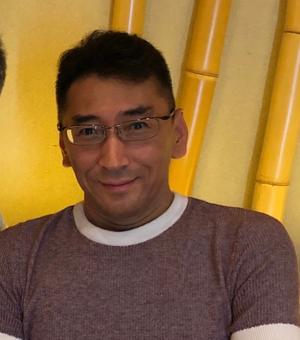
Sho Konishi serves as Director of the Nissan Institute of Japanese Studies and Associate Professor in Modern Japanese History at the University of Oxford, holding dual appointments in the Faculty of History and the Oxford School of Global and Area Studies. His interdisciplinary work bridges Japanese studies with transnational intellectual history, focusing on non-imperial connections between Japan, Russia, and global networks. Undergraduate studies completed as a U.S. military school cadet after extensive coursework in Russia Georgetown University: Philosophy and International Affairs University of Chicago: Ph.D. in History (Theology and History) Postdoctoral fellowship at Harvard University Konishi's research centers on intellectual and cultural history with emphases on transnational encounters, anarchist thought, and the history of science. He investigates non-imperial knowledge production across 19th-20th century Japan, Russia, and Eastern Europe, with particular focus on symbiosis theory, linguistic democracy, and the role of nonverbal communication in epistemology. His work challenges Western-centric modernity narratives through examinations of anarchist natural science and transnational emotional histories. His publications reveal consistent engagement with alternative epistemologies and cross-cultural exchanges, spanning transnational history, the history of science, and cultural studies. Key themes include Japan-Russia intellectual networks, anarchist cooperative movements, and non-imperial frameworks that reposition Japan within global knowledge systems rather than colonial paradigms. ICAS Book Prize 2023 – Humanities for Japan’s Russia: Challenging the East-West Paradigm Konishi contributes to international academic governance as Advisory Board Member for the Esperantic Studies Foundation, External Faculty at the University of Chicago Stevanovich Institute on the Formation of Knowledge, and International Advisory Board Member for Manchester University Press's Anarchist Studies Series. His cultural impact extends to architectural projects like the Venice Biennale's Philippine Pavilion through 'Symbiogenesis: The Art of Bayanihan Architecture'.
Dr. Heather Inwood serves as University Associate Professor in Modern Chinese Literature and Culture within the Faculty of Asian and Middle Eastern Studies at the University of Cambridge. She is also a Fellow and Director of Studies at Trinity Hall, maintaining dual institutional affiliations that support her teaching and research activities across undergraduate and postgraduate programs. Her educational background includes a BA in Chinese Studies from the University of Cambridge (Trinity Hall), followed by advanced studies at Tsinghua University and Peking University, culminating in a PhD in modern Chinese literature from SOAS, University of London in 2008. Prior academic appointments include Assistant Professor at The Ohio State University (2008-2013) and Lecturer in Chinese Cultural Studies at the University of Manchester before returning to Cambridge in 2016. Professor Inwood's research program investigates the dynamic interactions between digital media and literary production in contemporary China, with particular focus on poetry communities, genre fiction, and transmedia storytelling. Her work bridges traditional literary analysis with digital humanities approaches, examining how online platforms transform authorship, reception, and cultural value. She has pioneered scholarship on internet poetry scenes, demonstrating their vitality despite public perceptions of poetry's decline in modern China. Her publication trajectory reveals a clear evolution from early work on poetry communities ( Verse Going Viral: China's New Media Scenes , 2014) toward broader investigations of digital narrative forms, game studies, and Sinophone cyberspace. Recent publications increasingly engage with science fiction, transmedia storytelling, and the algorithmic structures shaping literary production, reflecting both the changing digital landscape and her expanding methodological toolkit. Professor Inwood actively supervises five PhD students working on diverse projects spanning Misty poetry, queer narratives, gender studies, and poetic animality, demonstrating her commitment to nurturing next-generation scholarship in Chinese literary studies. Her research has been supported by British Academy Small Grants and similar funding mechanisms that enable sustained fieldwork and publication. Her teaching responsibilities include undergraduate courses on East Asian media and popular culture, Modern Chinese texts, and Modern Chinese literature, connecting classroom instruction directly to her research expertise. She also maintains public engagement through Chinese-language columns for BBC China and other media outlets, bridging academic and public discourse on contemporary Chinese culture.