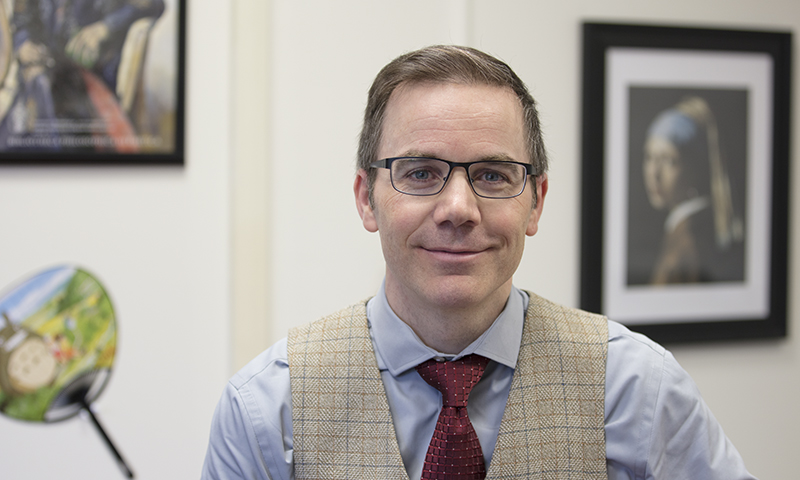
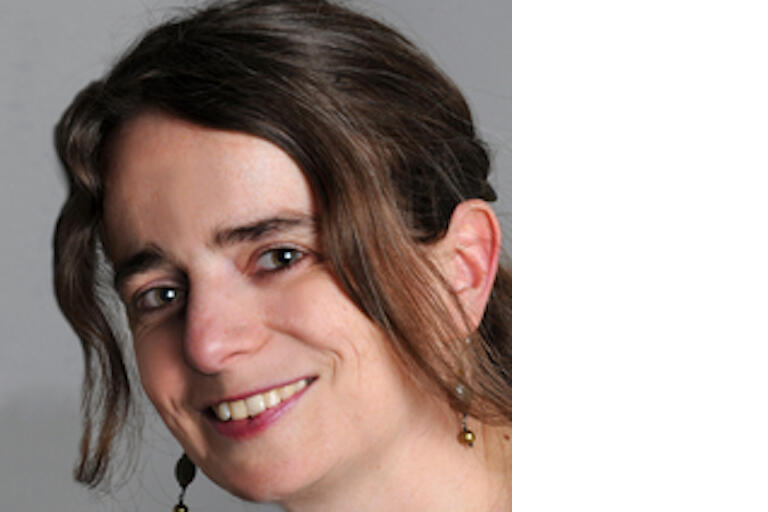
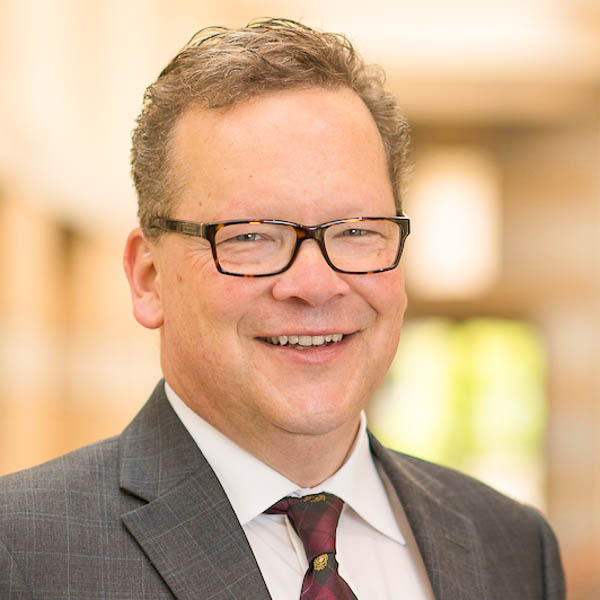
Robert Kaufman is a Professor of Comparative Literature at the University of California, Berkeley. He holds a B.A. (1979), J.D. (1982), and Ph.D. (1995) from UC Berkeley. Prior to academia, he practiced labor and employment law. His career includes positions at McGill University, Stanford University (where he was an Assistant Professor of English and affiliated with German Studies and Modern Thought & Literature), and visiting roles at the University of Chicago and UC Berkeley. He has held fellowships including Stanford Humanities Center, Hellman Family, and Institute of International Studies. He co-chairs Berkeley's Program in Critical Theory. His research focuses on 20th-21st century American poetry, Latin American poetry, Romantic-era poetics, Frankfurt School Critical Theory, and aesthetic philosophy. Key projects include Negative Romanticism: Adornian Aesthetics in Keats, Shelley, and Modern Poetry , and studies on César Vallejo, Paul Celan, and Robert Duncan. His work bridges Marxist theory, lyric form, and sociopolitical critique. Kaufman's essays analyze Adorno's influence on modern poetry, the ethics of lyric form, and intersections between poetry and democracy. His recent work engages postmodernism's aftermath and contemporary political crises. He frequently collaborates on translation projects and public humanities initiatives, including events on Paul Celan's centenary.
Carol Ann Allred is an Associate Professor (Lecturer) at the University of Utah's School of Music, specializing in Voice. She holds a DMA and MA from Eastman School of Music, and a BM in Vocal Pedagogy from Brigham Young University. Her career spans performance and education, with roles at SUNY Fredonia, Seton Hill College, and Hampden-Sydney Chamber Music Festival. Doctor of Musical Arts (DMA), Vocal Performance - Eastman School of Music (1989) Master of Music (MA), Vocal Performance - Eastman School of Music Bachelor of Music (BM), Vocal Pedagogy - Brigham Young University Allred's research and creative works focus on vocal performance across diverse genres, including choral masterpieces like Verdi Requiem and Brahms Requiem, contemporary works such as Golijov's La Pasion Según San Marcos, and historical repertoires from Mozart and Handel. Her recent projects include international tours and cultural outreach initiatives. Her scholarly performances highlight trends in sacred choral music, operatic excerpts, and community engagement through LDS church services and interfaith concerts. She has contributed to recordings including Christmas CDs and collaborations with Salt Lake Vocal Artists. Scientific Awards : Multiple first prizes in prestigious competitions and a Faculty Recognition Award nomination Teaching : Offers private voice lessons and masterclasses; advises the Michie Undergraduate Vocal Quartet Community Leadership : Conducts multi-congregational choirs and organizes veteran-focused concerts Allred's professional activities include collaborations with orchestras such as the Pittsburgh Symphony and Utah Symphony, with a strong emphasis on vocal pedagogy, interfaith musical outreach, and family ensemble performances. She maintains active roles in judging competitions and mentoring students at both University of Utah and UVU as a substitute instructor.
Charles Schulz is a Professor of Theology at the University of Chicago's College of Theology, Arts & Humanities, with prior tenure at Concordia University (2001–2024) and pastoral experience at St. Thomas Lutheran Church (2005–2014). His academic journey includes degrees from Concordia University, Concordia Seminary, Washington University, and the University of Virginia. His research focuses on Patristic Exegesis, Reformation Theology, and early Christian biblical interpretation. Key publications include his 2020 PhD dissertation on Patristic citations of Psalm 82:6 and translations of Martin Luther's sermons (2017–2018). His work bridges ancient and Reformation-era theological methods, emphasizing pastoral motives in exegesis. Recent presentations address topics like Patristic interpretations of Scripture and the impact of medical science on faith. He has received prestigious awards including the E. J. Otto Award (1998) and the University of Virginia Presidential Scholarship. His teaching excellence was recognized at Concordia University in 2022–2023. Schulz actively engages in theological commissions and academic symposia, contributing to both scholarly and pastoral discourse.
Jeffrey Rossman is an Associate Professor at the University of Virginia , affiliated with the Department of History and serving as Director of the Center for Russian, East European, and Eurasian Studies . His work bridges historical analysis with cultural and literary studies, focusing on Russia/USSR, Modern Europe, Communism, Genocide, Espionage, and Jewish Cultural Studies. Education: Ph.D., University of California, Berkeley, 1997 A.B., Harvard University, 1989 His research explores worker resistance under Stalin, the intersection of Jewish identity and German literature, and the role of translation in cultural exchange. He has authored key works on Soviet labor movements and Holocaust memory, blending historical narratives with literary theory. Jeffrey’s recent publications and Google Scholar contributions highlight trends in 20th-century European history , Yiddish-German literary dynamics , and translation as a tool for identity formation . His work spans comparative literature, cultural memory, and diaspora studies, emphasizing interdisciplinary approaches. Scientific Awards: ACLS Collaborative Research Fellowship (2013-15) Harry Frank Guggenheim Foundation Research Grant (2013-15) Multiple grants from the University of Virginia’s College of Arts & Sciences and Faculty Summer Research Grant program Fulbright-Hays and IREX fellowships for international research As an educator, Rossman has taught courses such as Genocide: A Global History and Stalinism , mentoring students in historical and literary analysis. His lab, the Center for Russian, East European, and Eurasian Studies, fosters research on Soviet history, Jewish cultural studies, and transnational literary exchange.
University of Illinois Urbana-ChampaignUnited States
Craig M. Koslofsky is a Professor of History at the University of Illinois at Urbana-Champaign, with additional affiliations in Germanic Languages and Literatures, the European Union Center, and the Program in Medieval Studies. His research focuses on early modern Europe, particularly the history of everyday life and human skin in the early modern era (1400–1800). He explores topics such as medical practices, slavery’s impact on indigenous populations, and supernatural beliefs in colonial contexts. His research interests span the Atlantic World, British Empire, and medieval Europe, reflecting interdisciplinary approaches to historical analysis. Recent publications address the intersection of skin studies and colonialism, the cultural history of ghosts in Enlightenment America, and the Reformation’s local manifestations. He has edited works on transatlantic slave trade surgeons and early modern religious debates. Koslofsky holds a Ph.D. and is based in Gregory Hall. His work bridges global and local histories, emphasizing the material and cultural dimensions of early modern life. He collaborates across disciplines, engaging with medical history, literary studies, and colonial studies.
Eric J Klaus is Professor of German Area Studies and Chair of the German Area Studies program at Hobart and William Smith Colleges (HWS), where he has been a faculty member since 2001. He holds a Ph.D. in German Studies from Brown University, an M.A. in Germanic Studies from the University of Maryland College Park, and a B.A. in German with a minor in History from Dickinson College. His academic home is within the Faculty of Humanities, focusing on German literature and intellectual history. Ph.D., German Studies, Brown University M.A., Germanic Studies, University of Maryland College Park B.A., German (minor in History), Dickinson College His research and teaching focus on modern German literature and intellectual history, with particular emphasis on modernism , the Bildungsroman , the uncanny , esotericism , and vanitas and dance of death motifs . He explores the evolution of selfhood, allegory, and humanism in literary texts, especially in Goethe and Gorky. His dissertation, Engineering Souls: Humanism, Allegory, and Specularity in Goethe's Wilhelm Meisters Lehrjahre and Gorky's Mother , reflects this deep engagement with identity and narrative form. The available publication information indicates ongoing scholarly work on Gustav Meyrink and forthcoming articles on the uncanny and the Bildungsroman, suggesting a continued contribution to the understanding of psychological and metaphysical dimensions in modern German literature. These works fall within broader disciplines of literature, philosophy, and cultural studies, with subfields including symbolic interpretation, narrative theory, and intellectual history. Professional Affiliations: Modern Language Association (MLA) American Association of Teachers of German (AATG) ACTFL MACLA Europäischer Totentanz-Vereinigung Klaus integrates his research into the classroom, teaching courses such as Beginning through Intermediate German , Madness and Mayhem in Modernity , and Haunting Memories – revealing the uncanny . He values the teacher-scholar model, emphasizing student engagement in exploring complex literary and philosophical themes. There is no indication of grant funding in the provided text, but his pedagogical philosophy highlights mentorship and collaborative inquiry. He has taught previously at Brown University, the University of Rhode Island, and the University of Maryland College Park. Klaus leads the German Area Studies program as its Chair, shaping curriculum and academic direction. While no formal lab or research team is mentioned, his leadership role and active scholarship suggest a guiding presence in the department’s intellectual life.
Devin Stauffer is a Professor and Associate Chair in the Department of Government at the University of Texas at Austin . Holding a Ph.D. from Boston College, he specializes in classical and early modern political philosophy, with a focus on Plato, Thomas Hobbes, and Leo Strauss. His career spans teaching roles at Kenyon College and St. John's College prior to joining UT Austin in 2004. Education: Ph.D., Boston College Professor Stauffer's research explores intersections of ancient and modern political thought, examining themes like justice, rhetoric, democracy, and the theological-political problem. His recent scholarly work continues to engage deeply with Strauss's interpretations of Hobbes, Locke, and classical texts. Key trends in his publications include: Interpretations of Strauss's correspondence and lectures Critical analyses of Hobbes's ethical and theological foundations Comparative studies of Socratic thinkers in classical texts Reconsideration of Locke's political conscience Debates on classical vs. modern approaches to natural right Scientific Awards : Two Teaching Excellence Awards at Kenyon College Three Teaching Awards at University of Texas Carl Friedrich von Siemens Foundation Fellowship (2013-14, Munich) He has taught courses including Machiavelli's Discourses , Socratic Political Philosophy , and Classical Quest for Justice . His visiting appointment at Harvard (2018) underscores his scholarly impact in political philosophy circles.
Anne-Lise François is an Associate Professor in the Departments of English and Comparative Literature at the University of California, Berkeley. She earned her PhD in Comparative Literature from Princeton University. Her work bridges 18th- and 19th-century British literature with contemporary environmental humanities, focusing on themes of ecological ethics, literary minimalism, and non-productive temporalities. Current research explores pastoral worldliness and commons-based economies in Romantic and modernist texts. Key scholarly contributions include her prize-winning book *Open Secrets: The Literature of Uncounted Experience* (2007), which examines 'affirmative reticence' in works by Jane Austen, Mme de Lafayette, and Emily Dickinson. Her recent projects address climate crisis narratives, food politics, and the intersection of aesthetic theory with ecological urgency. Teaching emphasizes transhistorical literary studies and environmental criticism Active in interdisciplinary collaborations across literature, philosophy, and environmental science Current book project: *Provident Improvisers: Parables of Subsistence from Wordsworth to Benjamin* Her writing synthesizes close textual analysis with broader socio-ecological frameworks, challenging Enlightenment models of productivity and advocating for 'recessive fulfillment' in both art and life.
Martin Hägglund is the Birgit Baldwin Professor of Comparative Literature and Humanities at Yale University, with a secondary appointment in the Department of Philosophy. He holds a Ph.D. in Comparative Literature from Cornell University (2011) and Philosophy from Leipzig University (expected 2026). His work bridges Post-Kantian philosophy, critical theory, and modernist literature, with notable books including This Life: Secular Faith and Spiritual Freedom (2019), which won the René Wellek Prize, and Dying for Time: Proust, Woolf, Nabokov (2012). Research focuses on temporality, mortality, and freedom, engaging thinkers like Heidegger, Marx, and Hegel. His writing explores secular ethics, political Marxism, and the interplay between philosophy and literature. Hägglund has held global appointments, including at Sorbonne University and invited professorships in Bonn and Cornell. Awards include the Guggenheim Fellowship (2018) and Myrdal Grand Prize (2024). Publications span over 60 articles and essays, addressing topics from Kierkegaard’s existentialism to Knausgaard’s secular confession. His current projects include The Mortality of the Soul and I Care, Therefore I Am . Teaching emphasizes Heideggerian thought, narrative temporality, and literary theory. Awards and fellowships include Harvard Society of Fellows membership (2009–2012), Berlin Prize (2024), and multiple honorary distinctions. His interdisciplinary approach unites philosophy, literature, and political theory, influencing debates on secularism, capitalism, and freedom’s material conditions.
Claudia Schwabe is a Professor in the Department of World Languages and Cultures at Utah State University, within the College of Humanities and Social Sciences. She holds a Ph.D. in German Studies from the University of Florida and has been teaching at USU since 2012. Her academic work bridges German language, literature, and cultural studies with a strong focus on fairy tales and folklore in both historical and contemporary contexts. Education: Ph.D., German Studies, University of Florida, 2012 M.A., Teaching Business Education, Georgia College & State University, 2005 B.A., International Business Administration, Northumbria University, UK, 2003 B.A., International Administrative Management, Accadis, Germany, 2003 Her research centers on 18th- and 19th-century Romantic literature, literary and folk fairy tales (Kunstmärchen), East German cinema, German Orientalism, and the adaptation of fairy tales in new media and popular culture. She explores how traditional narratives are transformed across media and cultures, especially in American television and film. Her teaching reflects this interdisciplinary approach, covering German language, literature, film, business German, and translation. Her recent scholarly publications reveal a strong trend in analyzing the cultural and political significance of fairy tales, particularly in DEFA films and modern adaptations like Grimm and Once Upon a Time . She has published monographs, edited volumes, and peer-reviewed articles with leading presses and journals in folklore and German studies, demonstrating sustained scholarly impact. Scientific Awards and Honors: Faculty Undergraduate Advisor of the Year Award, LPCS, USU (2015) Ed Glatfelter Service Award, LPCS, USU (2016-2017) Nominations for Dean’s Giraffe Award (2016, 2018) Nominations for Researcher of the Year (2016, 2017) Travel Awards from College of Humanities and Social Sciences and Center for Women and Gender Studies (2014) Graduate Student Teaching Award, University of Florida (2010) Grinter Fellowship, University of Florida (2008–2010) Claudia Schwabe has been actively involved in academic service, grant writing (participant in grant proposal seminar), and mentoring. She has served as a faculty advisor and contributed to curriculum development, particularly in interdisciplinary folklore and fairy-tale pedagogy. Her editorial work on volumes like New Approaches to Teaching Folk and Fairy Tales highlights her leadership in shaping scholarly discourse. She has also reviewed books for major journals, contributing to peer evaluation in her field. While no formal lab or research team is mentioned, her work is deeply collaborative, involving co-edited volumes, co-authored entries, and invitations to contribute to high-impact academic projects. Her ongoing research suggests continued exploration of fairy tales in global media, pedagogy, and cultural politics.
Sophie Salvo serves as an Assistant Professor in the Department of Germanic Studies at the University of Chicago, where she has taught since 2018. Holding a Ph.D. from Columbia University (2017), her scholarship bridges German literary studies, gender theory, and the history of linguistic thought, with primary focus on the nineteenth century and extending to contemporary political literature. Her acclaimed monograph Articulating Difference: Sex and Language in the German Nineteenth Century (University of Chicago Press, 2024) examines how gendered conceptions of language shaped intellectual discourse and literary production. Education Ph.D. in Germanic Studies, Columbia University, 2017 Salvo's research investigates the historical interplay between sex, gender, and language in German intellectual history, tracing how gendered tropes influenced linguistic analysis from Grimm's grammatical gender theories to modernist literary experiments. Her work reveals how patriarchal frameworks became embedded in linguistic science while highlighting women's contributions to language studies despite systemic exclusion. Current projects include an edited volume on the 'Reinvention of Patriarchy' around 1800 and a book analyzing twenty-first century political novels across the ideological spectrum. Her 2019-2024 publications demonstrate consistent interdisciplinary rigor, connecting historical linguistics with feminist theory and political analysis. Articles like 'Father is Always Uncertain' (2024) on Bachofen's patriarchal epistemology and 'The Sex of Language' (2021) on Jacob Grimm collectively chart how gendered assumptions permeated linguistic discourse, influencing both nineteenth-century scholarship and contemporary debates about inclusive language. Salvo actively mentors graduate research on topics including sexuality in Realism, women's writing, Holocaust representations in East German textbooks, and the rise of right-wing politics in post-reunification Germany. As co-organizer of the German Studies Scholarly Seminar at the Newberry Library, she facilitates interdisciplinary dialogue through regular events featuring scholars from institutions nationwide. Her teaching encompasses courses on Robert Musil, gender and sexuality studies, and contemporary political literature, reflecting her commitment to connecting historical analysis with urgent contemporary issues.
Ernest Julius Mitchell serves as Assistant Professor of English and Humanities at Yale University, where he contributes to the Department of English within the Faculty of Arts and Sciences. His interdisciplinary work bridges literature, philosophy, and religion with methodological grounding in Black studies. Education: Ph.D., Harvard University, 2019 M.T.S., Harvard Divinity School, 2009 A.B., Princeton University, 2006 Professor Mitchell's research centers on the intersections of literature, philosophy, and religion, with particular focus on the Harlem Renaissance viewed expansively as integral to transatlantic modernism. His work spans aesthetics and phenomenology in German thinkers from Kant to Benjamin, and religious traditions from the ancient Mediterranean to the contemporary Caribbean. He is currently completing three major book projects: a biography of Jamaican writer Claude McKay for Yale University Press, a new edition of Jean Toomer's Cane for the Norton Library, and a study of theological elements in Zora Neale Hurston's work, all reflecting his interest in questions of literary style—charm, revision, and grace. His scholarly publications demonstrate consistent engagement with African American literary traditions, particularly examining figures from the Harlem Renaissance era. Mitchell's work shows strong interdisciplinary connections between literary analysis, philosophical inquiry, and religious studies, with particular attention to how these fields shape modern consciousness and identity formation within Black literary production. Current Teaching: ENGL 351: Fictions of the Harlem Vogue (HUMS 370 / AFAM 354) ENGL 127: Readings in American Literature HUMS 223: Claude McKay: Interpretations (ENGL 242) DRST 002: Directed Studies: Literature
Hillary Herzog is an Associate Professor of German Studies at the University of Kentucky, affiliated with the Modern & Classical Languages Literatures & Cultures department. She holds a Ph.D. from the University of Chicago. Her research focuses on 20th-century German and Austrian literature, Jewish Studies, medicine and literature, and gender/sexuality studies. She co-edits The Journal of Austrian Studies and has authored Vienna is Different (2011) and co-edited Rebirth of a Culture (2008). Herzog teaches across levels, from language courses to graduate seminars, and emphasizes practical applications of German (e.g., German for Professions). Her scholarship bridges literary analysis with cultural history, particularly exploring intersections of medicine, Jewish identity, and gender. Recent work examines Arthur Schnitzler’s medical writings and Viennese Jewish cultural production across centuries. She actively contributes to interdisciplinary dialogues through publications and editorial work.
William Collins Donahue is the Rev. John J. Cavanaugh, C.S.C., Professor of the Humanities at the University of Notre Dame. He holds concurrent appointments in the Department of European Studies (Keough School of Global Affairs), Film, Television & Theater, and German. As Director of the Initiative for Global Europe, he leads interdisciplinary research on contemporary European challenges. His academic journey includes a Ph.D. from Harvard University, an M.T.S. from Harvard Divinity School, an M.A. from Middlebury College, and a B.S.F.S. from Georgetown University's Walsh School of Foreign Service. His research focuses on German literature and film, Holocaust Studies, and the socio-economic dynamics of literary production. He co-directs an annual seminar exploring the intersection of German literature with market forces and institutional contexts, resulting in publications like Die große Mischkalkulation . His work also examines how art responds to societal issues like migration and populism, blending philological rigor with historical and sociological perspectives. Donahue’s scholarship includes analyses of Elias Canetti’s modernist works and Bernhard Schlink’s Holocaust narratives. He co-founded the Nexus: Essays in German Jewish Studies series and the andererseits journal. His teaching emphasizes literature’s role in fostering resilience and sociability, using grueling narratives to explore human challenges. While no specific grants or advisees are listed, his editorial roles and collaborative projects reflect ongoing academic engagement. He directs the Initiative for Global Europe, fostering transatlantic dialogue on European integration, migration, and political trends. His work bridges artistic analysis with broader societal contexts, advocating for literature’s role in understanding complex historical and cultural dynamics.
William H. Nienhauser, Jr. is the Halls-Bascom Professor of Classical Chinese Literature in the Department of Asian Languages and Cultures at the University of Wisconsin–Madison, College of Letters and Science. He is a leading authority on early Chinese literature, historiography, and poetry, with a particular focus on Sima Qian’s Shiji and the poetry of Du Fu. He has held visiting and research positions in China, Japan, Germany, and Taiwan, and remains academically active, including a 2018 appointment as Visiting Professor at Nankai University. His research interests include early traditional Chinese fiction, historiography, chuanqi and zhiguai tales, and the application of modern Western critical theories to Chinese literary texts. He is deeply engaged in the translation and annotation of classical works, especially the Shiji , often in collaboration with graduate students. His scholarship bridges philology, literary theory, and historical contextualization, contributing significantly to the global understanding of pre-modern Chinese literature. Nienhauser’s publications reveal a sustained focus on textual analysis, narrative structure, and the interplay between history and literature. His work spans from early Shijing poetry to Tang dynasty fiction, with a strong emphasis on Sima Qian’s historiographical methods and legacy. He has also contributed foundational reference works and critical editions, shaping the field of Chinese literary studies. His scientific awards reflect the international recognition of his scholarship: Woodrow Wilson Fellowship ACLS Fellowship NEH Fellowship Fulbright-Hayes Fellowship Japan Foundation Fellowship German Research Foundation Fellowship Alexander von Humboldt Foundation Fellowship Humboldt Foundation Lifetime Achievement Award (2003) Nienhauser has advised numerous graduate students in collaborative research projects, particularly on the Shiji and Du Fu. He has secured major fellowships and grants from prestigious organizations including the NEH, ACLS, Fulbright-Hayes, and the Humboldt Foundation, enabling extended research and translation work. His editorial roles, especially as a founding editor of Chinese Literature: Essays, Articles, Reviews (CLEAR), have been instrumental in advancing the field. While no formal lab or research center is mentioned, Nienhauser leads a major international collaborative translation project on the Shiji , involving scholars and students across institutions. His seminars and graduate courses foster a close-knit research community focused on classical Chinese texts.