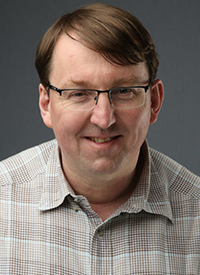
Dr. Venkattraman Ayyaswamy is an Associate Professor in the Mechanical Engineering Graduate Group at the University of California, Merced's School of Engineering. His research focuses on non-equilibrium fluid mechanics, plasma physics, and computational modeling of micro/nanostructured systems. Ph.D., Aeronautics & Astronautics, Purdue University (2012) M.S., Aeronautics & Astronautics, Purdue University (2009) B.S., Aerospace Engineering, IIT Madras (2007) Key research areas include stochastic methods for engineering applications, microfluidics, plasma modeling using OpenFOAM, and plasma-biomaterial interactions. His group employs computational/theoretical approaches while maintaining experimental capabilities. Recent publications analyze microwave microplasma behavior, ionization dynamics, and continuum breakdown criteria. The 15 most recent works span plasma characterization techniques, computational frameworks (plasmaFoam, SOMAFOAM), and applications in agriculture/environmental systems. Teaching includes courses in fluid mechanics, aerodynamics, and cold plasma theory. The lab actively recruits graduate students with programming skills in FORTRAN or C++.
Alessandro Gabrielli is a Full Professor at the Department of Physics and Astronomy "Augusto Righi" at the University of Bologna, where he also serves as Coordinator of the PhD Course in Physics. His primary scientific discipline is PHYS-01/A Experimental physics of fundamental interactions and applications. He is affiliated with both the National Institute for Nuclear Physics (INFN) and CERN in Geneva. His research focuses on experimental physics, particularly electronic technologies applied to particle accelerators. His current research activities center on the ATLAS experiments at CERN in Geneva and DUNE in the United States. More recently, he has expanded his research interests to include cybersecurity, artificial intelligence, and quantum computing, aligning with new international research initiatives in applied physics. Professor Gabrielli has been engaged in numerous national and international research projects, collaborating extensively with the National Institute for Nuclear Physics. He has coordinated multiple experimental research activities and authored over 1,000 publications in international peer-reviewed journals. His H-Index is 116 (SCOPUS, February 2025). His scientific recognition includes serving as Editor in Chief for MDPI Journals: Electronics since 2021, Guest Editor for special issues on Microelectronics in 2023, and Editor of Frontiers in Detector Science and Technology. He has also served as a reviewer for the Dutch Research Council (NWO) for a grant of €280,000. In terms of academic guidance, he has supervised 6 PhD theses in Physics, 1 PhD thesis in Data Science and Computation, and 14 Master's theses in Physics at the University of Bologna. His research has been supported by multiple grants, including a PRIN 2022 grant of 173k€ for "High performance microelectronics for low-noise cryogenic applications" and an AlmaIdea 2022 grant of 24,000€ for developing a Hardware Firewall. Professor Gabrielli is actively involved in international collaborations, having served as a "Visiting Scientist" at the Rutherford Appleton Laboratory in the UK (2009), "Visiting Professor" at the Center for Human Space Robotics at the Italian Institute of Technology (2012-2013), and "Project Associate" contractor at CERN (2008-2010). He currently coordinates the Bologna section of the INFN for the DUNE experiment and various ATLAS hardware activities.
Krzysztof Kasiński is a Professor at the Department of Metrology and Electronics, Faculty of Electrical Engineering, Automatics, Computer Science and Biomedical Engineering, AGH University of Science and Technology, Krakow, Poland. His work focuses on integrated circuit design for particle detectors and radiation imaging systems. School: Faculty of Electrical Engineering, Automatics, Computer Science and Biomedical Engineering Department: Metrology and Electronics Email: kasinski@agh.edu.pl Phone: +48 12 617 28 27 His research interests include: Integrated Circuit Design Sensor Systems Particle Physics Instrumentation Radiation Imaging The articles highlight his contributions to ASIC development for high-energy physics detectors, particularly for the CBM experiment at FAIR. Key areas include time-over-threshold readout, leakage current compensation, and 3D integration techniques. He is a member of the Quality of Education Council in the disciplines of automation, electronics, electrical engineering, space technologies, and biomedical engineering at AGH University.
Domenico Zito , PhD, Eng., is a Professor at the AGH University of Science and Technology in Kraków, Poland, affiliated with the Faculty of Electrical Engineering, Automatics, Computer Science and Biomedical Engineering under the Department of Metrology and Electronics . His research spans advanced semiconductor technologies, focusing on cryogenic circuits for quantum computing, millimeter-wave systems for 5G/6G communications, and biomedical sensing applications. University: AGH University of Science and Technology (Kraków, Poland) School: Faculty of Electrical Engineering, Automatics, Computer Science and Biomedical Engineering Department: Department of Metrology and Electronics Email: domenico.zito@agh.edu.pl Research Interests: His work emphasizes the intersection of electronics engineering with quantum computing and biomedical technologies. Key areas include: Development of cryogenic CMOS circuits for quantum processors Millimeter-wave circuit design for next-generation wireless systems High-frequency oscillators, amplifiers, and switches Integration of micro-devices in biomedical platforms Phase noise reduction in CMOS oscillator topologies Recent Article Trends: Recent publications highlight advancements in sub-mW mm-Wave LNAs, cryogenic amplifiers for spin qubit control, and 60–95 GHz CMOS/SiGe components. Collaborative efforts include biomedical applications like contactless respiratory monitoring via UWB radar and environmental sensing with Doppler radar systems. Contact: Located in Headquarters B-1, 2nd floor, room 213 at AGH University.
Manfred Dietrich is a Researcher at TU Dresden's Institute of Precision Engineering and Electronic Design, actively leading EU projects including HyPerStripes (2022-2025) and KI4BoardNet (2022-2025). His work focuses on design automation, IC design, and system design for advanced semiconductor integration. His educational background includes: 1970-1974: Dipl.-Ing in Information Technology, TU Dresden 1981: Promotion (PhD) on 'Fault localization in analog circuits' Dr. Dietrich's research centers on 3D/2.5D integration challenges, particularly interposer-based memory interfaces, thermal management of stacked systems, and Wide IO implementations. His methodologies address critical bottlenecks in signal integrity, power delivery, and design verification for next-generation semiconductor packaging. Publications from 2014-2016 demonstrate consistent focus on thermal optimization of 3D systems and XML-based design rule checking, establishing foundational work for current EU projects targeting high-performance computing architectures. Scientific awards: None documented. With extensive grant leadership including ECSEL's Microprince project (2017-2020) and current EU supervision roles, his portfolio reflects significant funding acquisition expertise. No student advisees are listed in available records. He actively contributes to industry standards through memberships in VDE's ITG/GMM groups, the GI/VDE 'Computer-aided circuit and system design' cooperation, and as an ECSEL Strategic Research Group expert.
Dr. Robert Fischbach is a researcher at the Institute of Micro and Electronic Systems (FET) at Dresden University of Technology. His work focuses on 3D integration, heterogeneous system design, layout verification, and thermal analysis of advanced electronic packaging solutions. Key research areas: 3D Integrated Circuits Thermal and Reliability Engineering Design Automation & Optimization Interposer-Based Systems He has contributed extensively to co-design methodologies, micro-transfer printing assembly, and XML/XSLT-based simulation frameworks. Collaborative work includes automotive mission profiles and standardized formats for electronics reliability. Notable publications span topics in layout verification, thermal modeling, and heterogeneous packaging. His collaborations include researchers like J. Lienig, A. Krinke, and T. Horst.
Tommaso Foscale is a Lecturer at the Department of Control and Computer Science (DAUIN), Politecnico di Torino. He is also a third-year PhD student in Computer and Control Engineering, affiliated with the Electronic CAD & Reliability group. PhD in Computer and Control Engineering (2022–2025) MSc in Computer Engineering, cum laude (2021) His research focuses on testing techniques for automotive systems on chip , with specific expertise in: Wafer-level and manufacturing testing FPGA-based test equipment design Single-event upset (SEU) injection Cost-effective characterization of SoCs Recent publications highlight trends in multi-site testing optimization and reliability engineering for automotive electronics. He has contributed to IEEE symposia on test strategies and functional safety. As a teaching assistant, he collaborates on Operating Systems courses for Computer Engineering and Computer Science Engineering programs (2023–2025). His research group actively explores fault tolerance and embedded systems testing.
Dr. Fengwei An is an Associate Professor at the Shenzhen-Hong Kong Institute of Microelectronics , Southern University of Science and Technology (SUSTech). He earned his Ph.D. in Engineering from Hiroshima University (2013) , following a Master's (2010) and Bachelor's (2006) from Qingdao University of Science and Technology. Current Role : 2025-Present - Associate Dean and Associate Professor, SUSTech Shenzhen-Hong Kong Institute of Microelectronics Prior Academic Roles : 2017-2018 - Associate Professor, Hiroshima University; 2013-2017 - Assistant Professor, Hiroshima University Industry Experience : 2018-2019 - Chief Engineer, Panasonic Semiconductor Co., Ltd., Japan Research Interests focus on low-power edge artificial intelligence chip design for computer vision, including: Ultra-large-scale digital integrated circuit design System-on-Chip (SoC) integration Image processing and recognition Machine learning hardware Autonomous driving applications High-speed motion tracking systems Publications include over 80 top-tier journal/conference papers (e.g., TCAS-I/II, ESSCIRC, APCCAS) on AI accelerators, stereo vision processors, and sensor interfaces, with 15 recent articles highlighting advancements in stereo matching, video denoising, and reconfigurable coprocessors. Scientific Awards : 2023 - SUSTech Outstanding Teaching Award 2022 - APCCAS Best Paper Nomination 2022 - PrimeAsia Bronze Leaf Award 2020 - Wu Wenjun Artificial Intelligence Science and Technology Award (Second Prize) Patents : 9 Chinese and 3 Japanese inventions in AI chip design, stereo matching systems, and sensor interfaces.
Dr. Xiaohu Fang is an Assistant Professor at the School of Microelectronics , Southern University of Science and Technology. His research focuses on microwave and millimeter-wave RF front-end circuits, high-efficiency transmitters, and power amplifier linearization techniques for 4G/5G systems. Education: PhD in Electrical Engineering (2015), Chinese University of Hong Kong; MPhil (2011) and BEng (2008) in Electronic Science and Technology, Huazhong University of Science and Technology. Dr. Fang's research addresses critical challenges in RF integrated circuits , including: Design of GaN-based monolithic microwave integrated circuits (MMICs) for 5G/6G communication systems Development of high-efficiency, wideband power amplifiers with advanced linearization techniques Exploration of beamforming architectures and harmonic-isolation resonators His recent publications (2023-2024) highlight trends in Doherty amplifiers , Class-F/G designs , and millimeter-wave front-end solutions using GaN and SOI-CMOS processes. He serves as an IEEE Senior Member and reviewer for top-tier journals like IEEE TMTT and TCAS . Dr. Fang's work also includes a 2025 teaching award, demonstrating his dual impact in research and education. Scientific Awards: Pengcheng Peacock Program Category C Talent Postgraduate Scholarship of Hong Kong (2011-2014) Second Prize in the 9th Youth Teacher Teaching Competition and Provincial Teaching Innovation Competition (2025)
Dr. Longyang Lin is an Assistant Professor at the School of Microelectronics, Southern University of Science and Technology (SUSTech) in Shenzhen, China. He received his Ph.D. from the National University of Singapore in 2018 and has been with SUSTech since May 2021. His research focuses on cutting-edge integrated circuit design with emphasis on ultra-low power systems, hardware security, and cryogenic circuits. Education: Ph.D., National University of Singapore, 2018 M.Sc., Lund University, 2011-2013 B.Sc., Umeå University & B.Eng., Shenzhen University, 2007-2011 Dr. Lin's research spans ultra-low power digital circuit design , energy-efficient AI processor design , compute-in-memory , on-chip sensor fusion , and cryogenic CMOS circuit design . His work addresses critical challenges in battery-less systems, hardware security, and energy-efficient computing. He has developed innovative solutions for self-powered sensor nodes, widely energy-scalable VLSI systems, and secure integrated circuits that operate across extreme temperature ranges. His recent publications demonstrate a strong focus on hardware security, ultra-low power design, and biomedical applications. The research shows a clear progression toward more integrated systems that combine sensing, processing, and communication in highly energy-constrained environments. Many papers address the challenge of maintaining performance while drastically reducing power consumption, with several targeting sub-nanowatt operation. Scientific Awards: Takuo Sugano Award for Outstanding Far-East Paper, ISSCC 2022 ISSCC Demonstration Session Certificate of Recognition, 2022 ISSCC Demonstration Session Certificate of Recognition, 2020 IEEE SSCS Singapore Chapter Award, 2017 & 2018 ISSCC Student Travel Grant Award, 2017 Dr. Lin actively mentors students and researchers, with openings for Research Assistant Professors, Postdoctoral Fellows, Research Assistants, and Graduate Students. His research group benefits from ample funding and regular tape-out opportunities (3-5 per year across different process nodes). He serves as Associate Editor for IEEE Transactions on VLSI Systems and has authored or co-authored over 40 publications, including 10 in IEEE JSSC, 5 in ISSCC, and 12 in VLSI Circuits conference. His laboratory focuses on integrated circuit design for ultra-low power applications, with specialized expertise in hardware security, energy harvesting systems, and cryogenic electronics. The research environment supports tape-outs in advanced CMOS processes, enabling practical validation of theoretical designs.
Anja Kohfeldt is an Associate Professor at the University of Oslo, affiliated with the Centre for Space Sensors and Systems (CENSSS). She has served as a Space Project Manager at IDEAS since 2018, focusing on satellite payload development, space electronics, and radiation measurement technologies. Her expertise spans environmental qualification, opto-electronics, and semiconductor laser modules for space applications. Education Her academic background includes a Master's in Physics (Microelectronics) from the University of Bergen (2010) and a Doctorate in Electronics/Opto-electronics from the Technical University of Berlin (2017). Her research interests emphasize sensor development, radiation detection, and instrumentation for space missions like ASIM and CENSSAT-1. The 2024 CENSSAT-1 mission concept and gamma-ray neutron detector publications highlight her leadership in designing compact, robust space instruments. Earlier works on CZT detectors and MXGS sensors (2012-2019) demonstrate sustained contributions to spaceborne radiation measurement systems. Kohfeldt collaborates extensively with international teams on projects like ASIM and participates in the Centre for Space Sensors and Systems (CENSSS). She teaches Sensor and Measurement Technology (FYS3231/FYS4231) at the University of Oslo.
Dirk Reiners is an Associate Professor at the College of Engineering and Computer Science (CECS) at the University of Central Florida (UCF) and serves as Chief Technology Officer (CTO) at CG Heroes LLC. His research focuses on immersive technologies, digital twins, and interactive visualization systems, with applications spanning defense, education, healthcare, microelectronics, and smart cities. Research Interests Applications of Virtual and Augmented Reality Digital Twins Immersive Display Systems Interactive Visualization of Large Data Rendering Systems for Virtual and Augmented Reality Scientific Awards Best Paper Award, IEEE Virtual Reality 2009 Best Paper Award, IITSEC 2005 Winner, Sikorsky Entrepreneurial Challenge 2014 Labs & Grants Dr. Reiners leads the VARLAB (Virtual and Augmented Reality Laboratory) and has secured grants such as the NSF MRI for Digital Twins for Drone Swarm Control and Integration, and industry collaborations including the Siemens Package Handling Facility Simulation.
Haridimos Vergos serves as a Professor in the Computer Engineering and Informatics Department (CEID) at the University of Patras, Greece. He has held faculty positions since 1998 and currently directs the Microelectronics Laboratory while teaching core undergraduate and graduate courses in computer systems and fault tolerance. His educational foundation includes a Computer Engineering Diploma (1991) and Ph.D. (1996) from CEID, University of Patras, where his doctoral research pioneered commercially adopted techniques for fault-tolerant cache memory architectures. This academic journey followed industry experience at Atmel Inc., where he co-developed the world's first IEEE 802.11-compliant medium access control processor. Professor Vergos's research spans arithmetic circuit architectures , VLSI design , fault tolerance mechanisms , and rapid prototyping using programmable logic . With over 100 publications and a worldwide patent for network processor design, his work bridges theoretical innovation and industrial application in digital systems. He maintains active roles as a Senior IEEE Member and reviewer for top-tier conferences and journals in his field. As an educator, he teaches Introduction to Computer Systems and E-CAD for Digital Hardware at the undergraduate level alongside the graduate course Fault Tolerant Computer Systems . His development of the AT91 ARM-based platform revolutionized laboratory instruction for assembly language and microcomputer courses across CEID. Administratively, he has served three terms as Head of the Hardware and Computer Architecture Division (2008-2009, 2014-2015, 2023-2024) and two terms as Director of the Computer Center (2011-2012, 2013-2014). His leadership extends to supervising laboratory development and maintaining regular office hours Monday-Thursday for student engagement.
Dr. Prateek Asthana is a Research Fellow at the Tyndall National Institute, specializing in micro-scale electronic circuits and systems . His work focuses on energy harvesting-based micro-power management solutions for IoT sensor systems in real-world applications. Research spans circuit level, architecture level, and system integration Developed MEMS-scale sensors and energy harvesters for health monitoring and asset tracking Expertise in digital logic design and transistor-level low-power design Contributed to international peer-reviewed journals, books, and conferences His research involves multi-physics simulation, mathematical analysis , and experimental verification of micro-power systems, with applications in health monitoring and equipment tracking.
George Souliotis is an Associate Professor at the Department of Electrical and Computer Engineering, University of Peloponnese, where he has been a faculty member since 2019. With over twenty years of professional and research experience in analog integrated circuit design, he has worked for multinational microelectronic companies and continues to serve as a consultant to companies in Greece and abroad. His expertise spans multiple domains of electronic circuit design including high-speed interfaces, RF circuits, and biomedical applications. Dr. Souliotis received his B.Sc. in Physics from the University of Ioannina in 1993, followed by M.Sc. and Ph.D. degrees in Electronics from the University of Patras in 1998 and 2003, respectively. Prior to his current position, he served as a Lecturer at the Department of Electrical Engineering, TEI of Western Greece (2015-2019), and as an Adjunct Lecturer there from 2002 to 2015. He was also a specialized technical and teaching laboratory staff member at the Department of Physics, University of Patras from 2005 to 2015. His research focuses on analog and mixed signal integrated circuit design , with particular expertise in high-speed serial interfaces (USB2, USB3, BLE, M-PHY), RF circuits operating up to 80 GHz, and low-power design. Dr. Souliotis has made significant contributions to circuits for communication protocols, precision analog design, and biomedical instrumentation. He has published over 60 papers in prestigious journals and conferences and holds two patents in the field, demonstrating consistent research productivity through 2024. Analysis of his recent publications reveals three dominant research streams: high-precision comparators and data converters, power-efficient DC-DC solutions, and biomedical interface circuits. His work consistently addresses challenges in speed, accuracy, and power consumption across diverse applications from consumer electronics to medical devices. The integration of traditional analog design with modern communication protocols represents a unifying theme across his research portfolio. Senior Member of IEEE Two patents in analog circuit design Dr. Souliotis serves as a reviewer for more than 10 international journals and conferences, contributing to scholarly discourse in his field. His industry consulting work demonstrates the practical applicability of his research, while his role in the ECSA Laboratory supports both undergraduate and graduate education in hardware design. His collaborations span academic and industrial partners in Greece and internationally. As a core member of the ECSA Laboratory (Electronics Circuits, Systems and Applications) at the University of Peloponnese, Dr. Souliotis contributes to research in FPGA and ASIC design, analog/mixed signal circuits, RF design, and digital systems for security applications. The laboratory provides essential infrastructure for advancing research in integrated circuit design while training students in state-of-the-art techniques across the analog-digital spectrum.




.jpg)