Alessandro Bausi is a Full Professor of Ethiopian Studies at Sapienza University of Rome since November 2023, where he focuses on Ethiopic language, literature, and manuscript cultures. Prior to this, he served as a Professor for Ethiopian Studies at the University of Hamburg (2009–2023) and held academic roles at the University of Naples 'L’Orientale' and Addis Ababa University. MA (1988, University of Florence) PhD (1992, Naples Oriental Institute) His research spans Ethiopian textual and manuscript cultures, Aksumite history, textual criticism, hagiography, and Semitic studies. He has led major projects like TraCES and Beta maṣāḥǝft , emphasizing linguistic evolution and manuscript digitization. He is a member of prestigious academies including the Accademia Nazionale dei Lincei (foreign member since 2023), Academia Europaea, and the Ethiopian Academy of Sciences. His editorial roles include editing Aethiopica and the Encyclopaedia Aethiopica .
Dr Teresa Barucci is a Fellow by Examination in Medieval History at Magdalen College, University of Oxford, a position she has held since January 2024. Her academic work is situated within the central History Department of the University of Oxford. Her educational background includes: PhD in History, University of Cambridge MSt, University of Oxford BA, Durham University Dr Barucci specializes in the social and political history of human mobility in late medieval Europe, employing comparative and trans-regional methodologies. Her research examines how academic mobility shaped collective identity formation at medieval universities, analyzes freedom of movement and regulatory mechanisms in fifteenth-century Italy, and explores connections between pre-modern historical phenomena and modern social sciences. She investigates diverse mobile populations including students, merchants, pilgrims, and vagrants across European and Mediterranean contexts. Her recent publications demonstrate a consistent focus on medieval social structures, identity politics, and cultural practices through interdisciplinary lenses. The 2024 heresy study in Bologna and 2023 manuscript analysis at Paris reveal her expertise in textual evidence and spatial mobility patterns within institutional settings. Her scientific recognition includes: Rome Fellowship at the British School at Rome No information is available regarding graduate student supervision or research grant funding. Dr Barucci's work operates within Oxford's History Department framework without mention of dedicated laboratories or research teams.
University of North Carolina at Chapel HillUnited States
Lucia Binotti is a Professor of Spanish and Digital Humanities at the University of North Carolina at Chapel Hill (UNC-CH), with dual affiliations in the Department of Romance Studies and interdisciplinary Digital Humanities initiatives. She serves as Graduate Advisor for Hispanic Linguistics and Director of the Honors Study Abroad Program in Rome. Her work bridges traditional philology with cutting-edge digital scholarship, emphasizing immersive learning experiences through virtual reality (VR) and augmented reality (AR) technologies. Binotti holds a Ph.D. from UC Santa Barbara (1990), an MA (1985), and a BA (1984) in Romance Philology from the Università degli Studi di Pisa. Her research focuses on linguistic identity, cultural heritage preservation, and innovative educational platforms like Amirabilia—the world’s first experiential learning platform. Notable projects include nXimena (healthcare training for Latinx abuse survivors) and Entiendelo (a linguistic/cultural navigation app for Latinx communities). Her scholarly interests span Early Modern Spanish literature, digital humanities applications, and the intersection of technology with social justice. She has directed grants totaling over $500K for projects involving AR/VR integration in education, including collaborations with the UNC Health Science Library and NCSU’s DELTA initiative. Recent awards include the John K. Walsh Award (2010) and Digital Innovation Fellow status (2014). Grants & Leadership: CFE-Lenovo Technology Grants (2018–2019) for AR/VR expansion iLRN 2020 International Co-Chair XR Faculty Learning Community Leader (UNC) Teaching: Courses span from introductory Hispanic literature to advanced topics like medieval intellectual history and digital humanities methodologies. Binotti’s work emphasizes ‘place, presence, and perspective’ in Cyber-Humanities education, particularly addressing marginalized communities through technology-driven solutions.
Caroline Goodson is a Professor of Early Medieval History at the University of Cambridge and a Fellow of King’s College. She holds a dual affiliation with the American Academy in Rome as the Andrew H. Mellon Humanities Professor (2024-2026). Her work bridges history, archaeology, and material culture studies, focusing on early medieval Mediterranean polities and urban dynamics. Education: BFA from Rhode Island School of Design (1997), PhD in Art History and Archaeology from Columbia University (2004). Prior to Cambridge, she taught at Birkbeck College, University of London (2005–2017). Research interests include urban archaeology, medieval power structures, and the interplay between material culture and political authority. She has led excavations at sites like Villa Magna in Italy and authored influential works on papal urbanism and medieval garden spaces. Recent publications include Cultivating the City in Early Medieval Italy (2021) and edited volumes such as Graphic Signs of Identity, Faith, and Power (2017). Her current work explores environmental impacts on medieval urban life. Awardee of the Rome Prize (2003) and a Fellow of the Royal Historical Society (2010), she serves on editorial boards for Speculum and Oxford Studies in Medieval European History .
Norman Doe is Professor of Law at Cardiff University's School of Law and Politics, where he serves as Director of the Centre for Law and Religion and course director of the LLM in Canon Law. He has held significant leadership roles including Director of Research at the Law School (2011-2014) and has been instrumental in establishing key academic programs such as the LLM in Canon Law (1991) and the LLB module Law and Religion (2002). His international academic presence includes being a visiting professor at the University of Paris since 1999, KU Leuven (2013-16), and Pontifical University of St Thomas in Rome (2009). Doe earned his law degree at University College Cardiff, completed his doctorate at Magdalene College, Cambridge, and studied theology at St Michael's Theological College, Llandaff and Mansfield College Oxford University. His academic credentials include LLD (Cambridge), LLM (Wales), MTh (Oxford), PhD (Cambridge), DCL (Lambeth), and he is a Barrister (Middle Temple). Professor Doe's research focuses on Anglican canon law, comparative church law, law and religion, and the history of ecclesiastical law. His scholarly work has established foundational frameworks for understanding Christian legal systems across denominations. His book Canon Law in the Anglican Communion (1998) formed the basis for The Principles of Canon Law Common to the Churches of the Anglican Communion (2008), while his Christian Law: Contemporary Principles (2013) contributed to the Statement of Principles of Christian Law (2016) that was launched at the World Council of Churches in 2022. His recent publications demonstrate a sustained focus on historical Anglican priest-jurists, ecclesiastical legal history, and the development of Christian legal principles across traditions. His scholarly impact is reflected in his election as a Fellow of the British Academy (2024), appointment as honorary King's Counsel (2024), and previous recognition as one of the 'top ten' law and religion scholars worldwide (2018). He has received numerous honors including election to the Council of the Selden Society (2023), becoming an Academic Bencher of the Inner Temple (2021), and being listed among the 50 most influential Anglicans in the world by The Telegraph (2008). Professor Doe serves as Chancellor of the Diocese of Bangor (since 2012), functioning as president of the Diocesan Consistory Court. He has been deeply involved in global Anglican structures, serving on the Lambeth Commission (2003-2004), contributing to the Windsor Report, and working with the Anglican Communion Network of Legal Advisers. He co-founded the Interfaith Legal Advisers Network (2007) and the Law and Religion Scholars Network (2008), demonstrating his commitment to practical applications of his scholarship. His current research focuses on the history of English ecclesiastical law since the Reformation and a series of articles on clergy jurists published in the Ecclesiastical Law Journal . He is also active in multiple networks of the Cardiff Centre for Law and Religion, including the Colloquium of Anglican and Roman Catholic Canon Lawyers and the Church Law History Network. His 2023 canon law play Thrice to Rome about Gerald of Wales has been performed at St Davids Cathedral and the Temple Church London, with upcoming performances planned for Canterbury and Rome.
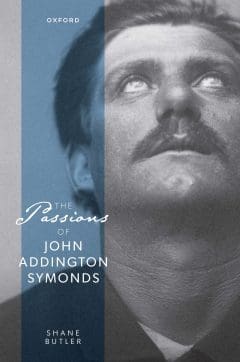
Shane Butler is the Nancy H. and Robert E. Hall Professor in the Humanities and Professor of Classics at Johns Hopkins University, where he also directs the Classics Research Lab and serves as Director of Graduate Studies. He holds a PhD from Columbia University (2000) and has taught at the University of Bristol, UCLA, and the University of Pennsylvania. His research spans Latin literature, classical reception, sensation studies, aesthetics, queer theory, and media history, focusing on the interplay between embodiment and art. Education: PhD in Classics from Columbia University (2000). Prior to Hopkins, he held faculty positions at the University of Bristol, UCLA, and UPenn. He has been a residential fellow at the American Academy in Rome, Villa I Tatti, the Getty Villa, and the MPIWG Berlin. Research focuses on Latin literature from antiquity to early modernity, classical reception theory, and the sensory dimensions of ancient aesthetics. Notable works include The Passions of John Addington Symonds (2022), The Ancient Phonograph (2015), and Sound and the Ancient Senses (2019). He co-edits the Classical Philology special issue on 'Philology Transfigured' and directs the John Addington Symonds Project. Awards include fellowships at leading institutions and editorial roles, including Associate Editor of the I Tatti Renaissance Library. His recent work explores queer philology and the intersection of sound studies with ancient literature.
Claire Pippa Saling Burridge is a Researcher in the Department of History at the University of Oslo, focusing on early medieval health and medicine. Her work integrates textual analysis, archaeology, and codicology to study medical knowledge transmission. She is affiliated with the MINiTEXTS project examining marginal medical texts in manuscripts. Previously, she held a Leverhulme Trust Fellowship at the University of Sheffield and postdoctoral roles at the British School at Rome. Her research explores Carolingian medical practices, interdisciplinary methods, and the interplay between medical theory and practice in pre-1000 Europe. Education B.A. (Honors) in History & Medieval Studies, University of North Carolina at Chapel Hill MPhil and PhD in History, University of Cambridge Research Focus Burridge investigates medical minitexts in manuscripts, osteological evidence for dietary practices, and challenges stereotypes about early medieval surgical practices. She examines how medical knowledge was recorded in marginal notes and how religious elements influenced healing practices. Her work bridges textual analysis with material culture studies. Grants & Projects Leverhulme Trust Early Career Fellowship: 'Crossroads: The Evolution of Early Medieval Medicine' MINiTEXTS project: 'Marginalized Voices in Early Medieval Latin Culture' Labs/Teams Active contributor to the International Summer School and the MINiTEXTS research group focusing on medieval manuscript culture.
Barbara Bombi is a Professor of Medieval History at the University of Kent's School of History. She holds a PhD from the Catholic University of Milan (2000) and has held research positions at the German Historical Institute in Rome, University of Padua, and Corpus Christi College, Oxford. Her research focuses on the High Middle Ages (1200-1450), specializing in the medieval papacy, canon law, crusades, and the Teutonic Order. She leads the Leverhulme/British Academy-funded 'Diplomacy and the Making of Europe' project. Elected Fellow of the British Academy (2022) and member of the Royal Historical Society Council (2019), she also serves as General Editor of the Canterbury and York Society and on the Internationale Historische Kommission. Teaching spans later medieval Europe, religious history, and canon law. Education: PhD in Medieval History, Catholic University of Milan (2000) Research Fellowships: German Historical Institute Rome (2001), University of Padua (2002–2004) Research Interests: Her work examines papal diplomacy, Anglo-papal relations (as seen in her 2019 OUP monograph), and the Teutonic Order's archival practices. She analyzes the Baltic Crusades' role in European identity formation and medieval diplomatic practices' impact on state-building. Current projects include compiling a catalog of manuscripts of the Liber Extra. Publications Trends: Her articles and books explore papal elections, curial administration, and military orders' archival strategies. Recent works emphasize diplomatic networks and their role in shaping late medieval Europe's political landscape. Awards/Grants: British Academy Fellowship (2022) Leverhulme/BA Small Grant (2018–present) Labs/Teams: Directs the 'Making of Europe' international research network through the Centre for Medieval and Early Modern Studies (MEMS).
Darian Marie Totten is an Assistant Professor & Director of Classical Studies at McGill University's Department of History and Classical Studies. Her research focuses on Roman archaeology, environmental history, and the intersection of ancient and modern placemaking. She holds a PhD from Stanford University and specializes in Mediterranean regions from 2000 BCE to 600 CE. Education: PhD in Classics/Archaeology from Stanford University (thesis not specified). Research interests include Roman infrastructure, comparative imperial systems (e.g., Han China), urban resilience strategies, and the material culture of labor and exchange. She directs fieldwork at Salapia-Salpi in Apulia, Italy, exploring late antique urbanism and environmental adaptation. Her scholarship bridges archaeological material analysis with historical interpretation, emphasizing interdisciplinary approaches to ancient economies, landscapes, and cultural transitions. Recent work highlights cross-cultural comparisons between Rome and Han China, as well as the long-term dynamics of Mediterranean coastal settlements. Her publications consistently engage with methodological innovation in field archaeology, particularly in paleoenvironmental reconstruction and ceramic sourcing. She also critiques modern uses of Roman heritage in national identity formation, reflecting a commitment to critical archaeology. Current projects include ongoing excavations at Salapia, analysis of Apulian salt production networks, and investigations into late antique glass trade routes. She teaches courses on classical archaeology (CLAS 240) and specialized topics (CLAS 349).
Gloria Samuela Pagani is an Associate Professor of Arabic Language and Literature at the University of Salento, Italy. She holds a PhD in Islamic Studies from the University of Naples 'L'Orientale' (2000) and has taught since 2005 at the Department of Humanities. Her expertise spans Arabic language pedagogy, classical and modern Arabic literature, and Middle Eastern cultural history. Education: Bachelor's in Islamic Studies (La Sapienza University, Rome, 1994) PhD in Islamic Studies (University of Naples 'L'Orientale', 2000) Research focuses on Islamic mysticism, Arabic literary traditions, and intercultural translation. She has conducted research in Damascus, Cairo, and Paris, and taught at universities including La Sapienza Rome and the Ecole des Hautes Études en Sciences Sociales (Paris). Teaching responsibilities include courses on Arabic literature, language instruction, and Middle Eastern cultural history. She co-organizes international conferences and collaborates with institutions like the Institut Français d'Archéologie Orientale and the University of Tübingen's Islamic Theology Center.
Lorenzo Geri is an Associate Professor in the Department of Modern Literature and Culture at Sapienza University of Rome's Faculty of Letters and Philosophy. His academic work focuses on Italian literature from the Middle Ages through the Renaissance, with particular expertise in Petrarchan studies, humanism, and Baroque literature. He teaches multiple courses including Italian Literature I, Texts and Questions of Italian Literature III, Italian Renaissance, and Italian Culture and Literature across various degree programs. Professor Geri's research spans eight major areas: meta-literary paths in Petrarch's work; Petrarch's relationship with religious culture; Petrarch's courtly connections; Italian lyric poetry from its origins to the 16th century; Baroque literary genres; Lucian's influence in the 15th century; connections between Italian and Northern European humanism; and Guicciardini's political experience. His work demonstrates deep engagement with textual analysis, historical context, and interdisciplinary approaches to literary studies. His recent publications show a strong focus on Petrarch's epistolary works, Erasmian studies, and Italian lyric poetry. The trend in his scholarship reveals increasing attention to the intersection of religious culture with literary production, particularly examining how theological concepts shape poetic expression across different historical periods. His editorial work on collections like 'Paths in Free Will' demonstrates his ability to synthesize complex interdisciplinary topics. Professor Geri has co-edited significant collections including 'Italian Lyric Poetry: A Fundamental Lexicon (13th-14th centuries)', 'Paths in Free Will: Theology, Philosophy and Literature from the Late Middle Ages to the Reformation', and 'Lirica e sacro tra Medioevo e Rinascimento'. His research has been supported by projects such as 'The political poetry in Curia from Avignon to Rome (1334-1513)' and studies on the manuscript circulation of Petrarch's anticurial texts. His office hours are held on Thursdays from 3-4pm, and he conducts exams in Room 1 of the Department of Modern Literature and Cultures on the fourth floor of the Faculty of Letters and Philosophy building.
Maria Fabricius Hansen is Professor of Art History at the Department of Arts and Cultural Studies, Faculty of Humanities, University of Copenhagen, where she has served since 2014 (promoted to Professor in 2022). Previously, she was Associate Professor at Aarhus University (2002-2014) following Assistant Professorship there (1998-2002), with earlier part-time appointment at the University of Copenhagen (1996-1997). Educational background: Born April 29, 1964 in Copenhagen, Denmark Mag.art. in Art History, University of Copenhagen (1992) Ph.D. in Art History, University of Copenhagen (1997) dr.phil. in Art History, Aarhus University (2005) Her research centers on art and architecture from late antiquity to c. 1600 with Italian and Danish focus, contemporary art, museology, and cultural heritage. Current projects examine art-nature-technology intersections through material culture studies, extending her expertise in spolia and architectural history. She teaches across these domains while supervising students at all academic levels. Recent publications reveal sustained engagement with Renaissance studies (particularly grotesque frescoes) and methodological innovation in cultural history. Her 2025 works demonstrate consistent focus on early modern court culture, architectural analysis, and contemporary collaborative practices, reflecting both historical depth and contemporary relevance. Scientific recognition includes: Rigmor and Carl Holst-Knudsen's Research Award (2006) HM Queen Margrethe II's Roman Award (2019) Ole Haslunds Kunstlegat (2019) She actively supervises PhD and master's students while maintaining extensive institutional service. Her 203 academic activities include editorial roles for Periskop journal and the Monsters and Marvels book series, plus consultancy for Børsen's reconstruction. Grant involvement spans the Novo Nordisk Foundation's art historical committee and multiple jury appointments. Professor Hansen's collaborative networks include the Danish Institute in Rome (2010-2018), New Carlsberg Foundation (2007-2014), and current board memberships at Lillian og Dan Finks fond (2025-2035) and Kunstforeningen Gl. Strand (2015-), demonstrating sustained leadership in Denmark's cultural infrastructure.
University of Versailles Saint-Quentin-en-YvelinesFrance
Vincent Puech is a Senior Lecturer in Ancient History at the University of Versailles Saint-Quentin-en-Yvelines (UVSQ), where he serves as Director of the Institute of Cultural and International Studies (IECI) within the Department of History. With a career spanning over two decades at UVSQ, he has held various leadership positions including Director of the History Department (2016-2018), Director of the Cultural and Social History track (2017-2020), and Director of the History Master's program at Paris-Saclay University (2018-2020). Dr. Puech's academic journey began with his 1994 achievement of 9th place in the History Agrégation. He earned his doctorate in 2000 with a thesis on 'Aristocracy and Power in Byzantium during the 13th Century (1204-1310)' under Georges Tate's supervision. In 2020, he completed his Habilitation to Direct Research with a work titled 'Court Elites of Constantinople (450-610): A Prosopographical Approach to Power Relations.' His research focuses on Byzantine history, particularly court elites, power relations, and imperial ceremonial in Late Antiquity. Dr. Puech has made significant contributions to understanding the political structures of Constantinople between the 5th and 15th centuries, with special attention to prosopographical methods. His work bridges Roman and Byzantine studies, examining continuity and transformation in imperial administration and aristocratic networks. Dr. Puech's scholarly output reveals a consistent focus on Byzantine political structures, with particular attention to court ceremonial, elite networks, and the transition from Roman to Byzantine governance. His publications demonstrate expertise in prosopography as a method for understanding power dynamics in Late Antiquity, with increasing attention to spatial dimensions of power in Constantinople. Concours général d'Histoire (3rd prize, 1987) Dr. Puech has supervised numerous academic projects and directed research at UVSQ. His leadership roles in academic administration, including directing the Institute of Cultural and International Studies, reflect his standing within the university community. He has also contributed to significant collaborative research projects, particularly those examining court rituals and ceremonies from the Roman Empire through the Baroque period. As Director of the Institute of Cultural and International Studies, Dr. Puech oversees research initiatives that bridge historical studies with contemporary cultural analysis. His institute serves as a hub for interdisciplinary work connecting ancient history with modern international relations perspectives.
Dina Danish (b. 1981, Paris) is an Egyptian-Danish artist and educator working at the intersection of language, historical reinterpretation, and conceptual practice. She holds a Lecturer position at the Fine Arts department of KABK in The Hague and serves as a teaching mentor at the Rietveld Academy, Amsterdam . Guest teaching roles include the Sandberg Institute and American University in Cairo . Education : BA from American University in Cairo; MFA from California College of the Arts (San Francisco) Residencies : Rijksakademie Amsterdam, Spinola Banna Italy, PiST/// Istanbul, A.i.R. Dubai, Affiliated Fellow at American Academy in Rome Her research explores humor, mistranslation, and overlooked historical moments , often through video art, performance, and text-based installations . Key themes include linguistic structures, cultural memory, and Dadaist methodologies . Recent projects examine ancient motifs in contemporary art (e.g., Jean-Baptiste Maitre) and political commentary through playful abstraction . Notable exhibitions at SFMOMA, Stedelijk Museum Schiedam, and Kunsthall Oslo highlight her focus on translation errors, sound poetry, and archival interventions . Volkskrant Award finalist Abraaj Art Prize nominee Illy Present Future Prize recipient Celeste Award nominee Barclay Simpson Award nominee Dina collaborates with institutions like Hotel Maria Kapel and De Nederlandsche Bank , and co-curated a Rijksakademie anniversary exhibition. Her work is represented by galleries in Amsterdam, Milan, and Zurich.
Professor Pamela Davidson is a distinguished scholar of Russian Literature at University College London's School of Slavonic and East European Studies (SSEES). With over four decades of academic experience, she has held various leadership positions including Head of the Russian Department (2003-2006), Head of Teaching and Graduate Tutor (2012-2014), and currently serves as Admissions Tutor for Languages & Cultures programmes. Her scholarly work has significantly shaped the field of Russian literary studies, particularly in areas of Russian Symbolism, literary prophecy, and the interaction between religion and culture. Doctor of Philosophy, University of Oxford, 1984 Undergraduate studies in Russian, French and Italian, Newnham College, Cambridge Professor Davidson's research spans several interconnected areas within Russian and comparative literature. Her work on the "construction and dynamics of literary tradition" examines how Russian writers positioned themselves within broader cultural and historical contexts. She has made significant contributions to understanding "the interaction of religion and culture," particularly through her edited volume "Russian Literature and Its Demons," which opened up new interdisciplinary research avenues. Her long-standing interest in "Silver Age poetry" has focused extensively on Viacheslav Ivanov, whose work she has studied through multiple lenses including his engagement with Dante and classical antiquity. Most notably, she has developed an extensive body of work on "the representation of the writer as prophet in Russia," tracing this tradition from its biblical and classical roots through to the Soviet period. Professor Davidson's recent publications reveal a consistent focus on the prophetic dimension of Russian literature, with particular attention to Viacheslav Ivanov and Fedor Glinka. Her scholarship demonstrates a sophisticated interweaving of literary analysis, religious studies, and cultural history. Over the past decade, her work has increasingly examined how Russian writers engaged with biblical and classical traditions, often reinterpreting them within specifically Russian contexts. The recurring themes across her publications include the tension between Athens and Jerusalem in Russian thought, the role of the writer as moral authority, and the complex relationship between religious tradition and literary innovation. Her comparative approach frequently bridges Russian literature with Western European intellectual traditions, revealing unexpected connections and influences. Travelling Junior Research Fellowship at Queen's College Leverhulme Research Fellowship (2019-2021) Director of the CEELBAS Centre for Doctoral Training (2020-2021) Member of the AHRC Peer Review College of Assessors (2003-2007) As an academic mentor, Professor Davidson has supervised numerous doctoral students in Russian literature and thought, with particular expertise in 19th and early 20th century literature, Silver Age poetry, and comparative literature. Her leadership roles have included serving as Graduate Tutor and Chair of BA and MA Examination Boards at SSEES. In terms of research funding, she has successfully secured competitive grants including the Leverhulme Research Fellowship that supported her recent work on literary prophecy. Her collaborative projects have often involved international partnerships, particularly with Russian academic institutions including the Institute of Russian Literature (IRLI) in St Petersburg. Professor Davidson has also contributed to major scholarly initiatives such as the 12-volume academic edition of Ivanov's collected works. While Professor Davidson's work is primarily in humanities rather than laboratory-based research, she has been instrumental in building academic networks and collaborative projects. She served as Director of the CEELBAS Centre for Doctoral Training, liaising with the Arts and Humanities Research Council (AHRC) and consortium members at Cambridge, Manchester and Oxford. Her long-standing collaboration with the St Petersburg Institute of Russian Literature has been particularly significant, resulting in the completion of the first comprehensive bibliography of Viacheslav Ivanov's works. Professor Davidson has also been active in the international scholarly community through her membership on the Board of Directors of the Foundation "Centro Studi e Ricerche Vjacheslav Ivanov" in Rome.