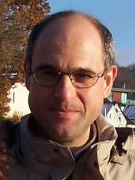
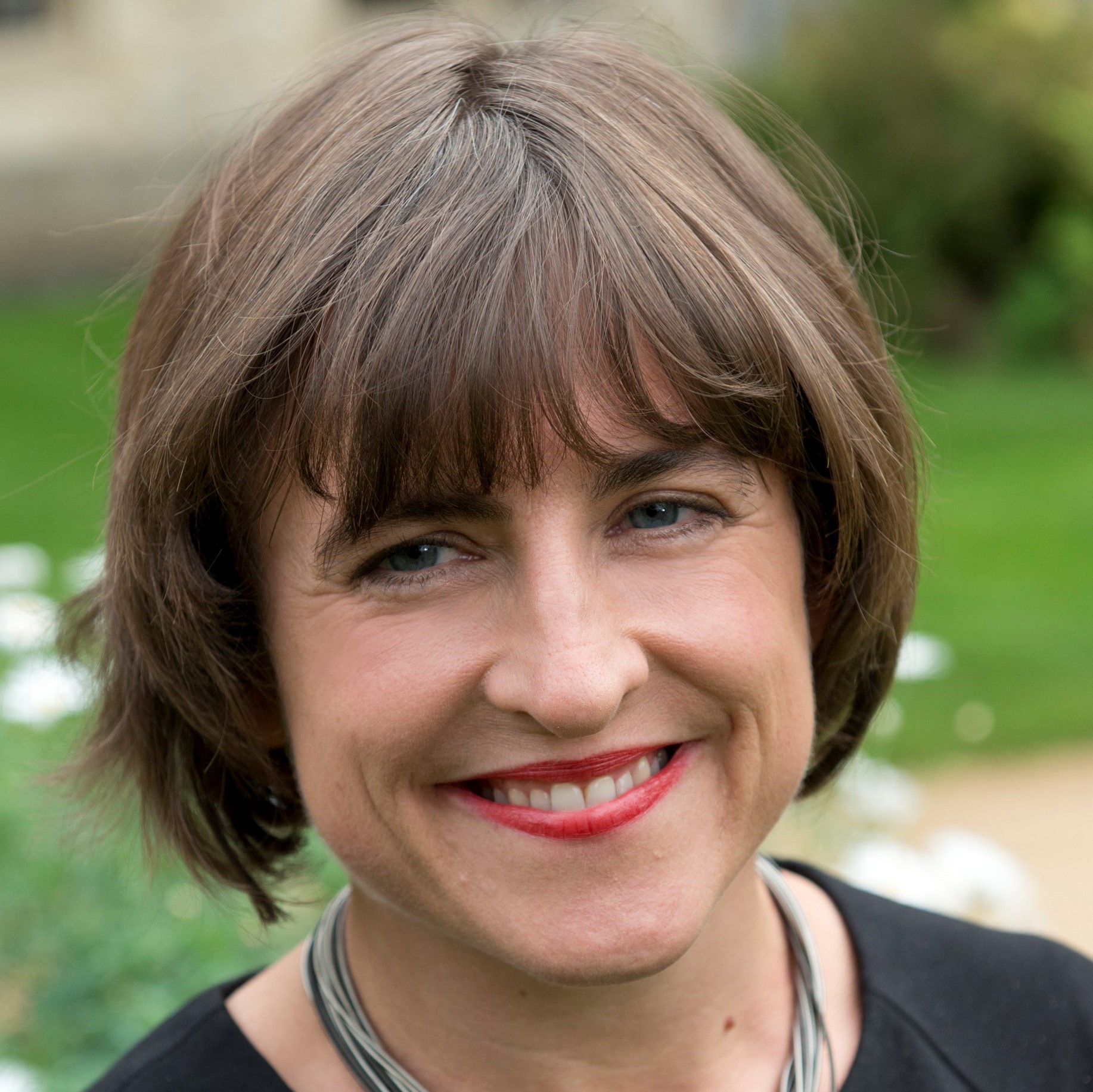
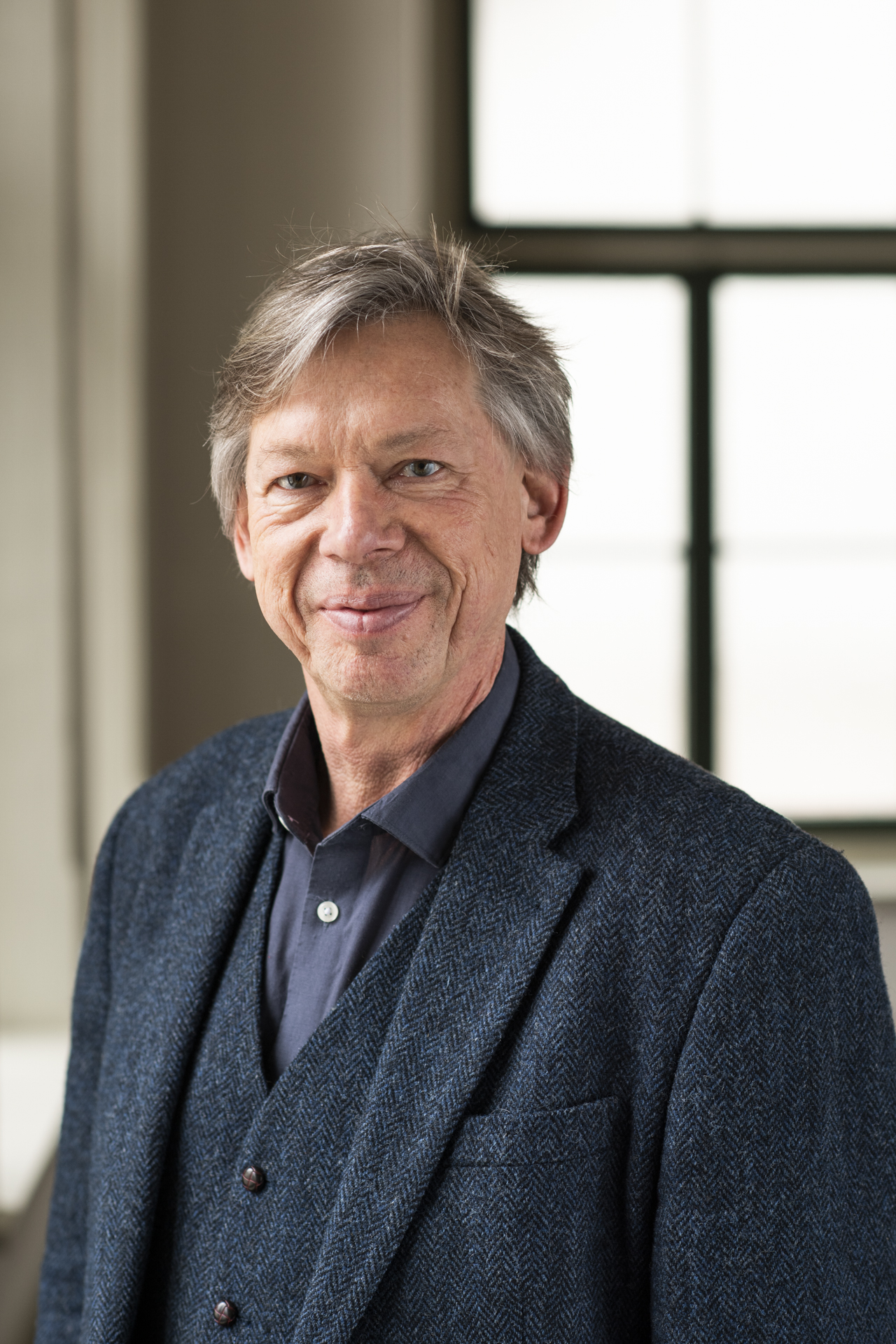
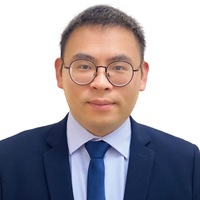
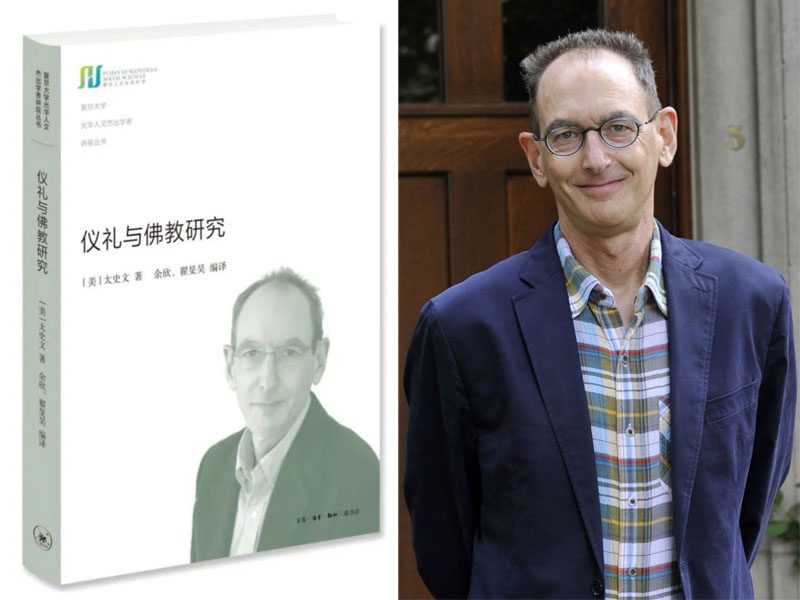
Alessandro Bausi is a Full Professor of Ethiopian Studies at Sapienza University of Rome since November 2023, where he focuses on Ethiopic language, literature, and manuscript cultures. Prior to this, he served as a Professor for Ethiopian Studies at the University of Hamburg (2009–2023) and held academic roles at the University of Naples 'L’Orientale' and Addis Ababa University. MA (1988, University of Florence) PhD (1992, Naples Oriental Institute) His research spans Ethiopian textual and manuscript cultures, Aksumite history, textual criticism, hagiography, and Semitic studies. He has led major projects like TraCES and Beta maṣāḥǝft , emphasizing linguistic evolution and manuscript digitization. He is a member of prestigious academies including the Accademia Nazionale dei Lincei (foreign member since 2023), Academia Europaea, and the Ethiopian Academy of Sciences. His editorial roles include editing Aethiopica and the Encyclopaedia Aethiopica .
Professor Agnieszka Zabłocka-Kos is a faculty member at the Institute of Art History, University of Wrocław, specializing in Central European architectural history and urbanism. Her work focuses on 19th-20th century architecture, with particular emphasis on Wrocław/Breslau, including post-war reconstruction, national identity construction, and sacred space design. Professor, University of Wrocław Specialist in 19th-20th century Central European architecture Director of postdoctoral internships (NCN FUGA III) Recipient of multiple Rector's awards for research and teaching Research Themes: Urban development in Central Europe, political architecture in Poland/Germany, sacred architecture of the 19th century, post-war modernism, industrial architecture revitalization. Her students have produced award-winning theses on topics like Wrocław urban blocks, Silesian architects, and post-industrial adaptations. Scientific Contributions: Notable works include the edited volume Architecture in the 'long' 19th century (2019), multiple articles on Breslau's architectural conflicts, and international projects on Central European sacred architecture. She has supervised 33 master's and 5 doctoral theses, with several student works published as books. Dettloff Prize for dissertation (1992) Rector's awards for research and didactic achievements International projects with universities in Berlin, Freiburg, and Leipzig Advisor for Wrocław's Monument Office and City Development Bureau Her teaching integrates interdisciplinary approaches, linking art history with political, economic, and social contexts. She promotes student research popularization through conferences, exhibitions, and publications.
Dr Helen Gittos is a Senior Lecturer and Fellow in Medieval History at Balliol College and Brasenose College, University of Oxford. She holds a PhD in early medieval history from Oxford, following an undergraduate degree in English Literature at Newcastle University. Her research focuses on medieval church history, liturgy, and the role of language in religious practices, with expertise in archaeological evidence and textual analysis. She teaches British and European medieval history at both undergraduate and graduate levels, including the MSt and MPhil programs in Medieval History. Her major publications include Liturgy, Architecture and Sacred Places in Anglo-Saxon England (2013) and co-edited volumes on medieval liturgy. Current projects explore the use of English in medieval liturgy and collaborative research on Cerne Abbas’s early medieval history with archaeologists. She leads the Oxford Centre for Early Medieval Britain and Ireland and participates in interdisciplinary initiatives like the Worked in Stone project. Dr Gittos actively supervises DPhil students in areas related to her research, with recent advisees focusing on topics like shrines, liturgical charms, and Anglo-Saxon burial practices. She is also a media commentator, appearing in BBC News and podcasts discussing Anglo-Saxon history and archaeological discoveries.
Professor Matthew Treherne is a leading scholar in Italian literature at the University of Leeds, where he holds the position of Professor of Italian Literature in the School of Languages, Cultures and Societies within the Faculty of Arts, Humanities and Cultures. He currently serves as Pro-Dean for Research and Innovation, and co-directs the Leeds Centre for Dante Studies. His research bridges medieval and Renaissance literature with contemporary issues such as finance, ecology, and technology. PhD in Italian Literature, University of Cambridge (2007) Diploma in Management Studies, Judge Business School, University of Cambridge (2000) M.Phil in European Literature (Distinction), University of Cambridge (1999) BA in Modern and Medieval Languages (First-class), University of Cambridge (1997) Matthew Treherne's research focuses on Dante and late-medieval religious culture, with a strong emphasis on the liturgical imagination and theological discourse in poetry. He explores how Dante’s work can inform modern debates on the ecological crisis, financialisation, and time. His interdisciplinary approach integrates theology, philosophy, and cultural studies. He leads the project The Cultural Life of Money and Finance , which investigates how the humanities can shape financial futures. His recent publications include Dante’s ‘Commedia’ and the Liturgical Imagination and co-edited volumes on Dante’s theology. His recent scholarly articles and chapters show a consistent engagement with Dante’s theological and poetic structures, Tasso’s religious poetry, and the role of art and liturgy in early modern culture. Themes such as sacramentality, time, vision, and interdisciplinarity recur across his work, reflecting a deep commitment to understanding literature as a living, ethically engaged practice. University Teaching Fellowship Developmental University Teaching Fellowship Faculty of Arts Development Teaching Prize Treherne has supervised numerous PhD students and fosters research-led teaching, notably through projects like Discover Dante and the Leeds Dante Podcast . He has led major research initiatives, including the AHRC-funded Dante and Late Medieval Florence , and collaborates widely across disciplines and institutions. He is also active in public engagement, contributing to BBC Radio 4’s In Our Time and curating podcast series such as Conversations on Dante and Arts and Humanities Futures . He co-leads the Cultural Life of Money and Finance project with Invisible Flock, blending humanities research with creative practice.
Dr David Grumett is a Senior Lecturer in Theology and Ethics at the University of Edinburgh's School of Divinity. He holds a BA(Hons), MPhil, and PhD, and is a Senior Fellow of the Higher Education Academy (SFHEA). His research focuses on theology, ethics, and philosophy, with particular attention to themes like sacramental theology, animal welfare, and historical theologians such as Henri de Lubac and Teilhard de Chardin. **Education**: BA(Hons) MPhil PhD SFHEA **Responsibilities**: Convener, Divinity Research Ethics Committee Academic cohort lead for Philosophy and Theology External roles include Assessor at the Office for Students and membership in the AHRC Peer Review College His work bridges theological theory with practical ethics, including animal ethics and liturgical studies. He has published extensively on sacramental theology, biblical interpretation, and contemporary ethical issues in Christianity.
Thomas Schlag is Professor of Practical Theology with a focus on Religious Education, Church Theory and Pastoral Theology at the Faculty of Theology, University of Zurich. Since January 1, 2021, he has served as Director of the University Research Priority Program 'Digital Religion(s): Communication, Interaction and Transformation in the Digital Society.' He is also Chairman of the Board of the Center for Church Development (ZKE), which he co-founded in June 2010. Previously, he served as Dean of the Faculty of Theology (2014-2016) and Vice Dean for Teaching (2012-2014). 1965: Born in Stuttgart 1980-1985: Attended Protestant seminaries Maulbronn and Blaubeuren 1986-1993: Studied Protestant Theology and Political Science in Tübingen and Munich 1993-1996: Doctorate at University of Munich 2004-2005: DFG research fellowship at University of Tübingen 2005: Appointed Assistant Professor at University of Zurich 2009: Habilitation at University of Tübingen 2011: Appointed Professor at University of Zurich Professor Schlag's work centers on the intersection of theology, education, and digital transformation. His research examines how religious practices adapt to digital environments, with particular focus on religious education in schools, confirmation work, and church youth programs. He explores theological-anthropological interpretations of digital transformation and investigates the relationship between church, state, and civil society through the lens of 'Public Theology.' His current projects analyze digital media practices in church educational offerings and investigate how churches negotiate digital worship services and sacraments. His recent publications reveal a strong emphasis on digital religion, with numerous articles examining digital media in confirmation work, religious leadership in digital contexts, and the challenges churches face in adapting to digital transformation. His work spans practical theology, religious education theory, and ecclesiology, with a particular focus on Swiss religious contexts while maintaining international comparative perspectives. The research demonstrates increasing interdisciplinary collaboration, particularly with scholars examining digital innovation in religious contexts. As Director of the University Research Priority Program 'Digital Religion(s),' Professor Schlag leads a significant interdisciplinary research initiative exploring how digital technologies transform religious communication, interaction, and practices. His work has practical implications for church development, religious education, and theological reflection in the digital age. He actively collaborates with international research networks including the European Network for Confirmation Work and the International Academy of Practical Theology.
Professor Adam Yuet Chau is a Fellow and Director of Studies at St John's College and holds the Professor of the Anthropology of China position at the Faculty of Asian and Middle Eastern Studies, University of Cambridge . His academic journey includes training at Stanford University (PhD in Anthropology, 2001) and teaching roles at Oxford and SOAS before joining Cambridge in 2008. Focus on Chinese religions and their social dimensions Specializes in ritual theory and cultural transformations Develops comparative frameworks for understanding religious practices His research spans religion under socialism , hosting in political/religious contexts , and ritual polytropy . Recent projects include editing Chinese Religious Culture in 100 Objects and analyzing 'spheres' (界) in Chinese society . Publications like Miraculous Response (2006) and Religion in Contemporary China (2011) establish him as a key figure in religious anthropology. Current and past PhD/MPhil students explore topics from temple festivals in Taiwan to religious subjectification . He actively reviews for leading presses (Cambridge, Oxford, Harvard) and journals ( Ethnos , Modern China ), and participates in international academic workshops.
Paul T Nimmo is Professor of Systematic Theology at the University of Aberdeen, holding the historic King's Chair (1620). He previously served as Meldrum Senior Lecturer in Reformed Theology at Edinburgh and a post-doctoral Research Assistant at Cambridge. Affiliated with the School of Divinity, History, Philosophy & Art History Founding Co-Director, Aberdeen Centre for Protestant Theology Senior Editor, International Journal of Systematic Theology English-Language Editor, Karl Barth Translation Seminar (Princeton Theological Seminary) His research spans systematic theology, Reformed tradition, and ecumenical dialogue. Key focuses include Karl Barth's sacramentology, Friedrich Schleiermacher's soteriology, and Scottish church history. His Templeton Award-winning work explores theological ethics and doctrinal coherence. He teaches undergraduate and postgraduate courses on Christian theology, sacramental theology, and Karl Barth. He is an ordained elder in the Church of Scotland and Vice-Convenor of its Theological Forum.
Ximian Xu (preferred name: Simeon) is a Senior Research Associate in the Faculty of Divinity at the University of Cambridge , with a PhD in Systematic Theology from the University of Edinburgh (2020). His research bridges theology with technology, focusing on artificial intelligence (AI) ethics, Dutch Neo-Calvinism, Karl Barth, and contextual theology in mainland China. Xu’s work explores the intersection of AI and Christian ethics, the role of Reformed theology in contemporary Chinese Christianity, and the ontological implications of technology on human sustainability. Research Interests Theology and Technology (AI, Surveillance) Dutch Neo-Calvinism (Herman Bavinck) Karl Barth Contextual Theology (Reformed in China) Grants and Organisational Roles He received the CAHSS KE Grant for the workshop "Artificial Intelligence and the Christian Churches" and the Alan Turing Institute Postdoctoral Enrichment Award for research on AI in pastoral care. Xu co-founded the Studies in Dutch Neo-Calvinism Series (Chinese) and is a co-editor for its publications. Publications and Awards His recent works include studies on AI’s moral agency, technomoral futures, and Reformed theological frameworks. Xu’s book The Digitalised Image of God: Artificial Intelligence, Liturgy, and Ethics (2024) addresses AI’s theological challenges. He has contributed to journals like Perspectives on Science and Christian Faith and Modern Theology .
Professor Rachel Muers is the Chair of Divinity at the University of Edinburgh’s School of Divinity, a historic position she became the first woman to hold. Her work bridges disciplinary, confessional, and institutional boundaries, focusing on 20th-century Christian theology and contemporary theological responses to urgent societal questions. She holds a PhD from the University of Cambridge (2002), where she also served as Margaret Smith Research Fellow. Previously, she held academic roles at the University of Exeter and the University of Leeds, achieving a personal chair in 2018. Her research explores intersections between theology, ethics, and social practice, with notable focus on Quaker theology, environmental stewardship, and ecumenical dialogue. She serves on the World Council of Churches Faith and Order Commission and is affiliated with organizations like the Society for the Study of Christian Ethics. Her teaching emphasizes practical theology and ethical discernment. Key themes in her scholarship include liturgical practices, pacifism, and the relevance of theology to modern challenges. She advocates for interdisciplinary approaches, integrating anthropology and the social sciences into theological inquiry. Her publications reflect a commitment to actionable theology, addressing issues from climate change to interfaith relations.
Daniel A. Smith, PhD, serves as Dean of Theology and Clark and Mary Wright Professor of New Testament Theology at Huron University College, where he has taught New Testament Language and Literature since 2004. An active member of the Society for New Testament Studies, Society of Biblical Literature, and Canadian Society for Biblical Studies, he frequently collaborates with KU Leuven's Leuven Centre for the Study of the Gospels. His research centers on contextual interpretation of New Testament texts, with specialized focus on Synoptic Gospels, Sayings Gospel Q, Passion/Resurrection Narratives, and Marcion's Gospel. He integrates historical-critical analysis with reception history, emphasizing how biblical interpretation impacts both faith communities and marginalized groups affected by scriptural misuse. Recent publications reveal sustained engagement with source criticism, particularly through 2020-2018 works on the Two-Document Hypothesis, Marcion's Gospel, and spatial analysis of Synoptic mission narratives. His scholarship consistently explores textual transmission, Q source traditions, and theological implications of early Christian writings while bridging academic rigor with ethical considerations in biblical hermeneutics.
Professor Bennett Zon is a faculty member at Durham University’s Department of Music , with affiliations to the Centre for Catholic Studies . He founded and directs the Centre for Nineteenth-Century Studies and the Centre for Nineteenth-Century Studies International . His editorial roles include Nineteenth-Century Music Review , Yale Journal of Music and Religion , and multiple book series. Research Focus : Music's intersections with religion and science in the long nineteenth century, including liturgical traditions, evolutionary discourse, and colonial representations of non-Western music. Key Publications : Four monographs on plainchant revival, musicology's metaphorical frameworks, non-Western music representation, and evolution's impact on Victorian musical culture (2000–2017). Academic Leadership : Co-founder of the International Network for Music Theology and International Nineteenth-Century Studies Association .
Annette Yoshiko Reed is the Krister Stendahl Professor of Divinity and Professor of New Testament and Early Christianity at Harvard Divinity School (HDS). She joined HDS in 2022 after roles at New York University, the University of Pennsylvania, and McMaster University. Her expertise spans Second Temple Judaism, early Christianity, and Jewish-Christian relations, with a focus on how ancient texts shape identity and difference. Key research areas include apocalypses, demonology, and the Old Testament Pseudepigrapha. She has authored or co-authored books such as Fallen Angels and the History of Judaism and Christianity and Demons, Angels, and Writing in Ancient Judaism . Education: BA from McGill University, MTS from Harvard Divinity School, and MA/PhD from Princeton University. Her work integrates Biblical Studies, Patristics, Jewish Studies, and Classics. She serves on the editorial boards of Texts and Studies in Ancient Judaism and Studia in Veteris Testamenti Pseudepigrapha , and chairs the Society of Biblical Literature’s “Jewish Christianity/Christian Judaism” section. A Fellow of the American Academy of Jewish Research, her current project explores the cultural power of forgetting in ancient Jewish history. Her research highlights marginalized writings like 1 Enoch and Pseudo-Clementine literature to bridge Jewish and Christian histories. Recent publications include studies on Enochic reception, rabbinic historiography, and demonology in ancient texts. She teaches at both HDS and Harvard’s Faculty of Arts and Sciences.
Stephen F. Teiser is the D.T. Suzuki Professor in Buddhist Studies and Professor of Religion at Princeton University. He holds the Old Dominion Research Professor title in the Humanities Council (2022-2023). His work focuses on Buddhist rituals, Chinese religious history, and the intersection of Indian and Chinese religious traditions. Teiser delivered lectures at Fudan University, shaping his research into broader scholarly discourse. His book Ritual and the Study of Buddhism (2022) explores Buddhist rituals in Chinese contexts, emphasizing cross-cultural and methodological insights. His research bridges medieval Chinese religious practices with modern academic frameworks, addressing topics like funerary rituals, lay communities, and textual interpretation. His academic contributions span Buddhist historiography, ritual studies, and East Asian religious history. Notable works include analyses of the Ghost Festival, Dunhuang liturgies, and comparative religious texts. Teiser’s interdisciplinary approach highlights the adaptation of Buddhism in Chinese culture and its global scholarly relevance. Awards: Old Dominion Research Professor (2022-2023) Teiser’s research also engages with collaborative international projects, such as co-editing volumes on divination and East Asian manuscripts. His work emphasizes the importance of language and cultural context in interpreting religious practices, making his scholarship foundational for understanding Buddhism’s evolution in China.
Dr. Siobhán Dowling is a Senior Lecturer in Education at the School of Education, University College Cork (UCC), with expertise in Religious Education, Music Education, and the intersection of The Arts in Education. She earned her PhD from the University of Wales, Trinity St David, Lampeter, UK, in 2011 and has served in both teaching and administrative roles at UCC since 1998, including Director of the Structured PhD in Education. Education: PhD (2011) in Biblical and Musical Reception History, University of Wales, Trinity St David. Current Roles: Senior Lecturer, Tutor, Placement Supervisor, Director of Structured PhD in Education. Her research focuses on the reception history of biblical narratives in music , particularly themes like the Sacrifice of Isaac, Eve, and the Book of Samuel. She explores collaborative learning in teacher education and integrates creative pedagogy in Religious Education. Her work spans interdisciplinary analysis of the Bible’s influence on music, art, and cultural identity. The 15 most recent publications highlight her pioneering work on biblical stories in musical compositions (2025), visual and musical reception of Dives (2024), and peer-reviewed studies on collaborative learning (2023). Her contributions to the Encyclopedia of the Bible and its Reception (2025–2016) cover topics like patriarchs, psalms, and gendered biblical figures. Scientific Awards: Recipient of two book awards in the USA for co-authored work 'The Bible in Music: A Dictionary of Songs, Works and More' (2015). Research Grants and Supervision: Awarded multiple Erasmus+ Staff Mobility Grants (2023, 2014) for international training and a Kurt Weill Foundation Travel Award (2014). Supervised PhD, MEd, and PME students while serving as Internal/External Examiner. Leadership: Coordinated UCC’s Cohort PhD in Education (2001–2014) and led the MAAP in Guidance and Counseling program. Delivered invited seminars at KU Leuven, University of Tuebingen, and Trinity College Dublin.