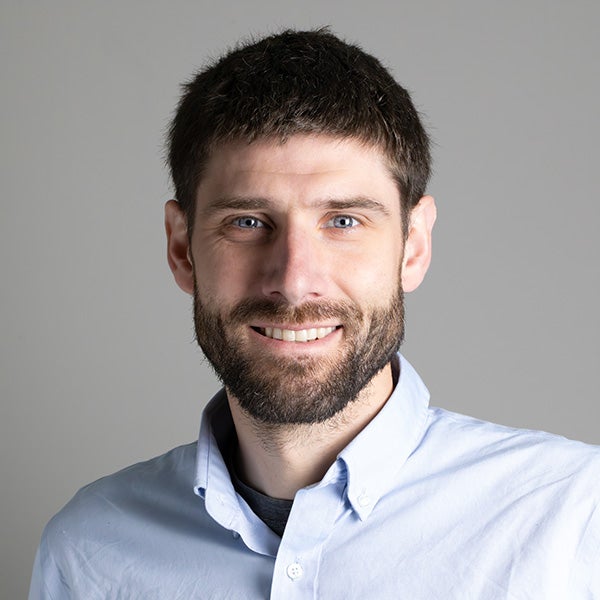
Brandon Schmandt is a Professor in the Department of Earth, Environmental and Planetary Sciences at Rice University, where he leads research using seismology to investigate Earth systems. His work integrates interdisciplinary approaches, data science, and numerical modeling to study tectonic processes, magmatic systems, and environmental interactions. His educational background includes a PhD in Geological Sciences from the University of Oregon (2011) and a BA in Environmental Studies from Warren Wilson College (2006). Dr. Schmandt's research focuses on seismology, tectonics, volcanology, and surface processes , with emphasis on seismic imaging of subsurface structures. His group employs innovative time-series analysis and field projects to resolve geologic history and contemporary Earth dynamics, particularly examining fault zones, magmatic reservoirs, and deep convective processes. Key methodologies include dense seismic arrays and machine learning applications. Analysis of his recent publications (2023-2025) reveals dominant trends in seismic event discrimination (earthquakes vs. explosions), magmatic system imaging (Yellowstone, Cascades), and global mantle structure studies. There is strong emphasis on induced seismicity, machine learning applications, and high-resolution imaging of Earth's discontinuities using dense arrays. His distinguished honors include: Aki Award of the AGU Seismology Section GSA Donath Medal AGU Macelwane Medal Body Dr. Schmandt directs an active research group conducting field projects across diverse settings including the Raton Basin, Yellowstone, Antarctica, and the Caribbean. While specific student advisees and grant details aren't provided in available materials, his group's work involves collaborative data collection, advanced computational modeling, and development of novel seismic analysis techniques applicable to both natural and anthropogenic seismic sources. The research program maintains focus on magmatic systems beneath volcanic regions, induced seismicity mechanisms, and global mantle structure using dense node arrays and interdisciplinary approaches to address fundamental questions in Earth dynamics.
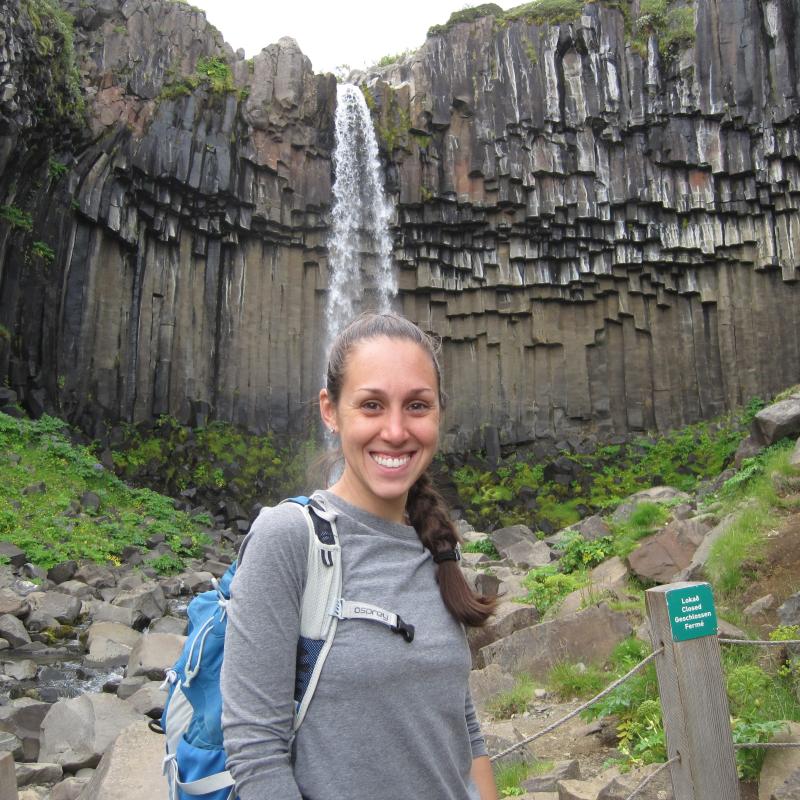
Marissa Mnich is an Assistant Professor at Sonoma State University, specializing in volcanology and igneous petrology. Her research focuses on basaltic systems, integrating field, geochemical, and mineral data to understand magma petrogenesis from mantle source to eruption. She earned her Ph.D., M.S., and B.S. in Geoscience from the University of Massachusetts Amherst and Cornell University. Education: Ph.D., Geoscience (University of Massachusetts Amherst, 2019) M.S., Geoscience (University of Massachusetts Amherst, 2013) B.S., Earth and Atmospheric Sciences (Cornell University, 2010) Her research spans volcanic fields in Arizona and Iceland, emphasizing magmatic mapping, volatile content in basalts, and volcanic hazard implications. Publications highlight methodologies for analyzing basaltic systems and their tectonic settings. Key trends in her publications include petrogenetic modeling of basaltic lavas, volcanic hazard assessment in monogenetic fields, and spatial-temporal volatile variations in Icelandic melt inclusions. Her work bridges field observations with geochemical analysis to explore mantle dynamics and eruption processes.
Professor M. Grae Worster is a renowned academic in fluid dynamics and geophysics, affiliated with the University of Cambridge's Department of Applied Mathematics and Theoretical Physics (DAMTP) within the Faculty of Mathematics. He holds the title of Professor and specializes in fluid mechanics, solidification processes, and geophysical flows. His research focuses on buoyancy-driven flows, magma dynamics, sea ice evolution, and phase-change phenomena in porous media. Worster earned his Ph.D. in 1983 from Cambridge University with a thesis on "Convective Flow Problems in Geological Fluid Mechanics." His work bridges theoretical and experimental approaches, addressing complex fluid dynamics in natural systems like magma chambers, lava lakes, and sea ice formation. Key areas of expertise include mushy-layer convection, premelting dynamics, and viscous gravity currents. His research interests span fluid mechanics, solidification physics, and environmental fluid dynamics, with a strong emphasis on geophysical applications. Recent studies explore hydrogel mechanics, grounding-line dynamics in ice sheets, and thermal regelation in colloidal systems. He has authored over 140 peer-reviewed articles and co-edited influential works like Perspectives in Fluid Dynamics and Understanding Fluid Flow . Worster's contributions to fluid dynamics include groundbreaking studies on sea ice dynamics, where he developed models for brine drainage and ice growth mechanisms. His work on solidification processes in alloys and colloidal suspensions has advanced materials science and geophysics. Collaborations with experimentalists ensure his theoretical models are grounded in empirical validation.
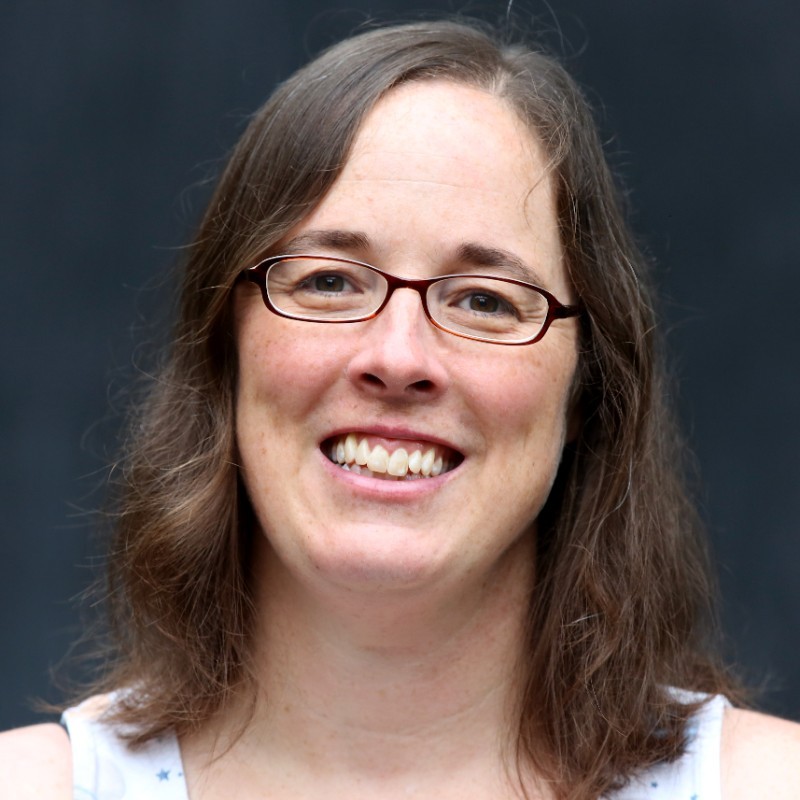
Catherine Neish is an Associate Professor in the Department of Earth Sciences at The University of Western Ontario. She serves as the Associate Director of Research for Western Space and is a Co-Investigator on NASA's Dragonfly mission to Titan. Her research focuses on planetary radar observations, impact cratering processes, and the geological evolution of planetary surfaces, particularly on the Moon, Titan, and other Solar System bodies. Ph.D. in Planetary Sciences, University of Arizona (2008) B.Sc. in Combined Honours Physics and Astronomy, University of British Columbia (2004) Her recent publications highlight studies on lunar impact crater thermophysics, Titan's impact melt dynamics, and radar-based analyses of planetary surfaces. She has contributed to missions including Lunar Reconnaissance Orbiter (Mini-RF), Cassini RADAR, and Dragonfly. Scientific Awards: College of New Scholars, Royal Society of Canada (2021) Early Researcher Award, Ontario (2017) Minor Planet 16972 Neish (2017) AGU Ron Greeley Award (2014) NASA Postdoctoral Fellowship (2012) NASA Group Achievement Award (2010) NSERC Postgraduate Scholarship (2005-2008) Julie Payette-NSERC Research Scholarship (2004-2005) Dr. Neish supervises a dynamic lab with current and former students investigating planetary geology, impact cratering, and remote sensing. Her work bridges field studies (e.g., Earth analogs), laboratory experiments, and spacecraft data analysis.
Frank Canters is a Professor of cartography, GIS, and remote sensing at the Department of Geography of Vrije Universiteit Brussel (VUB), leading the Cartography and GIS Research Group. His research focuses on urban remote sensing, spatial modeling of urban environments, and urban ecosystem services. He is renowned for pioneering the Canters projection, a minimum-error world map projection, and has contributed extensively to urban land-use mapping and decision-support systems for urban planning. His work spans over three decades, with 281+ publications and collaborations across multiple disciplines. Key areas include urban form dynamics, remote sensing applications for vegetation and land-use analysis, and spatial justice in green infrastructure distribution. He has supervised 83 students and developed tools like the Q-LavHA plugin for volcanic hazard modeling. Recent research highlights include integrating public perceptions into green space accessibility models, assessing allergenic potentials of urban greenery via LiDAR, and advancing machine learning approaches for urban vegetation mapping. His contributions bridge geospatial technologies with urban sustainability and policy.
Dr. Jae Sung Kim is an Assistant Professor in the Department of Civil, Environmental, and Geospatial Engineering at Michigan Technological University (MTU). He holds a PhD in Geomatics from Purdue University and teaches courses in photogrammetry, UAV mapping, and geospatial technology. His research focuses on geospatial technologies, including remote sensing, GIS, and their applications in agriculture, environmental science, and planetary studies. PhD: Geomatics, Purdue University MSCE: Civil Engineering, Purdue University ME: Civil Engineering, Korea University BE: Civil Engineering, Korea University Dr. Kim’s research interests span photogrammetry, remote sensing, geodesy, and geospatial cyberinfrastructure. He develops tools for agricultural water management (FARMs system) and landslide analysis. His work often utilizes open-source geospatial technologies and integrates historical aerial photography with modern GIS systems. His recent publications include studies on volcanic lava flow modeling (2025), winter vegetation detection via remote sensing (2024), and automated orthorectification of archival aerial photos (2022). These reflect his expertise in combining traditional geospatial methods with cutting-edge technologies. Dr. Kim serves as an Associate Editor for the Journal of Applied Remote Sensing and Assistant Director of the Photogrammetric Applications Division at ASPRS. He has also contributed to watershed delineation tools and web-based water monitoring systems using open-source frameworks.
Sara Barsotti is a researcher at the National Institute of Geophysics and Volcanology (INGV) specializing in volcanology and volcanic hazard assessment. Her key roles include: Associate Editor for Volcanology at Frontiers in Earth Science Review Editor for Geohazards and Georisks at Frontiers in Earth Science Contributor to the EU Center of Excellence for Exascale in Solid Earth (ChEESE) Member of the EUROVOLC citizen-science initiative Collaborator with European volcano observatories Her research focuses on computational geophysics, volcanic hazard modeling, and operational monitoring systems. She investigates tephra dispersion dynamics, lava flow behavior, and probabilistic hazard assessment using high-performance computing. Her work emphasizes European volcanic systems—particularly Icelandic eruptions—and integrates multidisciplinary approaches to improve crisis management protocols and public safety during volcanic events. Analysis of her recent publications reveals a strong trend toward operationalizing advanced computational methods for real-time hazard assessment. Key developments include exascale computing applications for solid earth simulations, refinement of the Aviation Colour Code system for aviation safety, and citizen-science data integration for eruption monitoring. These efforts consistently target practical risk mitigation strategies during active volcanic crises like the 2021 Fagradalsfjall eruption. Scientific awards: None mentioned in the provided text. While specific advised students or individual grants aren't documented, her leadership in major European projects (ChEESE, EUROVOLC) demonstrates substantial involvement in funded research initiatives. These projects coordinate transnational collaborations involving observatories, research centers, and emergency management agencies across Europe. Barsotti actively participates in integrated European volcano infrastructure teams, contributing to standardized monitoring protocols, hazard communication frameworks, and crisis response systems. Her work bridges institutional observatories (e.g., Icelandic Meteorological Office, INGV sections) with community-based monitoring tools, enhancing data collection and public engagement during volcanic unrest.
Steven Semken is a President's Professor of Geology and Education in the School of Earth and Space Exploration at Arizona State University. He holds additional affiliations as an Affiliated Faculty member with the Humanities for the Environment Global Network, the Global Drylands Center, the Osher Lifelong Learning Institute, the Global Futures Scientists and Scholars program, and the Division of Teacher Preparation at the Mary Lou Fulton College for Teaching and Learning Innovation. Dr. Semken earned his educational credentials from prestigious institutions: Certificate in Diné (Navajo) Educational Philosophy, Diné College, 1991 Ph.D., Materials Science (Ceramics), Massachusetts Institute of Technology, 1989 M.S., Geochemistry, University of California, Los Angeles, 1984 S.B., Earth and Planetary Science, Massachusetts Institute of Technology, 1980 As an ethnogeologist and geoscience-education researcher , Dr. Semken's work spans multiple interconnected domains that bridge scientific inquiry with cultural understanding. His primary research focuses on place-based and culturally responsive geoscience teaching methods, which he has developed through extensive fieldwork in geologically and culturally diverse regions of southwestern North America and Latin America. His research specifically investigates how sense of place influences geoscience learning, particularly among Indigenous and Latina/o communities, and how teaching approaches can be modified to honor cultural connections to land. This work extends to studying geological heritage and developing virtual field geology education experiences that maintain the pedagogical value of traditional fieldwork while increasing accessibility. His scholarship also encompasses the geological evolution of southwestern North America , which informs both his research and teaching practices. Analysis of Dr. Semken's recent publications reveals several key trends in his scholarly work. His research increasingly focuses on the integration of virtual and immersive technologies in geoscience education, particularly examining how virtual field experiences compare with traditional in-person fieldwork. There is also a strong emphasis on culturally responsive pedagogy , with numerous studies exploring how Indigenous knowledge systems can inform and enhance geoscience teaching. His work consistently bridges cognitive and affective domains of learning, recognizing that emotional connections to place are as important as intellectual understanding in geoscience education. Additionally, his scholarship demonstrates growing attention to issues of accessibility and inclusion in geoscience field education, developing methods to make geological field experiences available to students with diverse abilities. Dr. Semken's scientific achievements have been recognized with numerous prestigious awards: Fellow of the Geological Society of America Past-President and former Distinguished Speaker of the National Association of Geoscience Teachers ASU President's Professor (2025) 2014-2015 Zebulon Pearce Distinguished Teaching Award in Natural Sciences Highest awards for science teaching at Diné College in 1990, 1991, 1992, and 1995 Goodwin Medal (highest award for graduate teaching assistants at MIT) in 1985 Winner of the 2020 JGE Outstanding Paper Award from the National Association of Geoscience Teachers Winner of the 2015 Best Geologic Guidebook Award from the Geoscience Information Society Dr. Semken has been deeply involved in mentoring graduate students and early-career educators through numerous professional development workshops and research collaborations. He has co-organized and led over 20 educator professional-development workshops since 2009, focusing on place-based teaching, cultural context in geoscience education, and virtual field experiences. His grant-funded work includes collaborations with NASA, the American Geosciences Institute, and the EarthScope National Office, particularly supporting teacher leadership academies and workshops for Native American science educators. As a Principal Investigator and Co-PI on multiple NSF-funded projects, he has secured significant resources to advance research on the affective domain in geoscience education, place-based learning methodologies, and culturally responsive teaching approaches. Dr. Semken's research activities are supported by multiple collaborative teams and initiatives. He is associated with the Julie Ann Wrigley Global Futures Laboratory and is a Community Member of the Science Education Resource Center (SERC). His work on the "Trail of Time" at Grand Canyon National Park represents a significant public-facing educational initiative that combines geological time education with place-based interpretation. He has also developed the "Regional Geology of the Southwest" course as a living laboratory for place-based education research. His current research group includes graduate students working on projects related to virtual field experiences, ethnogeological knowledge systems, and cross-cultural science education. Through his leadership in the Earth Educators' Rendezvous and other professional networks, he has helped establish communities of practice focused on innovative geoscience teaching methods.
Thomas Giachetti is an Associate Professor in the Department of Earth Sciences at the University of Oregon, within the College of Arts and Sciences. His research focuses on volcanology and geochemical processes in volcanic systems, particularly investigating bubble nucleation, magma fragmentation, and eruption dynamics. He has conducted extensive studies on explosive rhyolite eruptions, volcanic ash behavior, and the implications of submarine eruptions for tsunamis and deep-sea ecosystems. Email: tgiachet@uoregon.edu Office: 224 Volcanology, University of Oregon Office Hours: Friday 2-3 pm Website: http://pages.uoregon.edu/tgiachet/ His recent publications (2020-2025) highlight his expertise in volcanic processes, including magnetic properties of pumice, hydration of pyroclasts, and the use of X-ray tomography in analyzing eruption deposits. While no formal awards or advisees are listed in the provided materials, his work on volcanic hazards and magma dynamics remains influential in the field.
Dr. David E. Lumley is the Cecil & Ida Green Endowed Chair in Geophysics and Professor of Earth Sciences & Physics at the University of Texas at Dallas (UTD), serving as Department Head since 2021. He holds a PhD from Stanford University (1995), MSc and BSc from the University of British Columbia (1989/1986). His research focuses on wavefield inversion methodologies for 4D time-lapse seismology, subsurface imaging, and applications to CO2 sequestration, induced seismicity, and planetary geodynamics. Lumley directs UTD's Seismic Imaging & Inversion Lab and previously led the Center for Energy Geoscience at University of Western Australia (2009-2017). Education: PhD in Geophysics, Stanford University (1995) MSc in Geophysics & Astronomy, UBC (1989) BSc (Hons) in Geophysics & Astronomy, UBC (1986) Research Interests: Pioneering 4D time-lapse seismology, seismic full-waveform inversion (FWI), ambient noise imaging, and applications to energy transition challenges. Current projects include monitoring Yellowstone's magmatic system, CO2 storage validation, and induced seismicity characterization. Combines HPC, AI, and geostatistical methods to solve inverse problems in exploration geophysics and environmental monitoring. Awards: SEG's J. Clarence Karcher Award (1996), 8 Best Paper Awards, Distinguished Lecturer for AAPG/SEG/SPE, and SEG Endowed Scholarships. Named SEG's first 'Pioneer of Geophysics' in 2005. Grants: Over $135M in competitive funding from NSF, DOE, DOD, and international agencies. Active in industry partnerships through ventures like 4th Wave Imaging (acquired by Fugro, 2007). Labs/Teams: Leads Seismic Imaging & Inversion Lab at UTD, collaborating with global networks in Australia, Europe, and industry consortia. Co-developer of seismic inversion software tools used in energy and environmental sectors.
Professor Malcolm Hole is a Personal Chair at the University of Aberdeen's School of Geosciences , where he serves as Head of the Geology & Geophysics Discipline and Undergraduate Programme Coordinator . With a career spanning multiple decades, he has specialized in volcanology, igneous petrology, and large igneous provinces (LIPs), particularly focusing on the geology of Scotland and its global implications. Education : BSc, MSc, PhD in geological sciences Research Themes : Mantle melting dynamics, phase equilibria in magmatic systems, fingerprinting volcanic sources, and the stratigraphic architecture of basaltic lava fields Teaching : Coordinates and teaches courses in Earth history, volcanology, planetary geology, and geological fieldwork His recent publications analyze volcanic stratigraphy in the North Atlantic Igneous Province, hyaloclastite delta deposits in Iceland, and mantle processes in slab window environments. These works integrate field photogrammetry, geochemical modeling, and seismic analysis to understand volcanic basin evolution. Scientific awards include his recognition as a Senior Fellow of the Higher Education Academy (SFHEA) . He actively participates in research groups like StratLIP and the Boltysh Meteorite Impact Crater Project, while supervising postgraduate students and contributing to curriculum development in geosciences.
Loÿc Vanderkluysen, PhD, is an Associate Professor in the Department of Biodiversity, Earth and Environmental Science at Drexel University. A volcanologist, he investigates how volcanic systems impact environments through multidisciplinary approaches spanning magma generation to eruption emplacement. Education: PhD, Geology and Geophysics, University of Hawaii, 2008 MSc, Earth Science, University of Lausanne (Switzerland), 2002 Diploma, Geology, University of Lausanne (Switzerland), 2001 Research Focus: His work examines volcanic eruption cyclicity, degassing processes, aerosols, and Large Igneous Provinces. Key methodologies include volcano monitoring, thermal remote sensing, high-temperature geochemistry, petrology, and experimental volcanology. Major projects include NSF-funded Deccan Traps research linking massive Cretaceous eruptions to environmental changes during dinosaur extinction. Publication Trends: Recent articles focus on volcanic morphodynamics (lava flows, domes, rift zones), integrating advanced techniques like photogrammetry, analog experiments, TanDEM-X satellite data, and machine learning. Geographic emphasis includes Indonesia, Equatorial Guinea, Yellowstone, and flood basalt provinces. Active Projects: Drone-based volcanic ash/aerosol characterization (PhD) Eruptive history/hazards of Bioko Island, Equatorial Guinea (PhD) Yellowstone volcanic gas monitoring (student projects) 3D architecture of Deccan Traps units (undergraduate) Machine learning for basalt classification Effusive-explosive transition mechanisms Lab & Advising: Directs research involving undergraduates (including STAR/co-op students) and PhD candidates in global field campaigns across active volcanic regions.
Jeffrey Ryan is a Professor in the School of Geosciences at the University of South Florida (USF), within the College of Arts and Sciences. He specializes in geochemical analysis of rocks to understand Earth's dynamic processes, particularly focusing on subduction zones and fluid-rock interactions. Ryan manages the USF Center for Geochemical Analysis and is a core user of the Florida Center for Analytical Electron Microscopy (FCAEM). His research involves studying metamorphic rocks and arc lavas in subduction settings, using isotopes like boron to trace fluid sources. He has led or co-PI'd multiple National Science Foundation (NSF) grants, including projects on remote microscopy education and the Noyce Scholarship Program. Ryan has been recognized with prestigious awards such as the Carnegie Foundation Professor of the Year (1999) and the USF Phi Kappa Phi Artist/Scholar Award (2000). Education: M.A., M.Phil., Ph.D. in Geochemistry, Columbia University (1983–1989) B.S. in Geology, Western Carolina University (1978–1983) Research Interests: Ryan’s work centers on tracing fluid-mobile elements (B, Cs, As) and isotopes in subduction zones to understand slab-derived water fluxes and their impact on magma generation. He investigates shallow forearc metamorphic rocks and arc lavas, with recent focus on the Mariana Trench and South China Sea via IODP Expeditions. His contributions include analyzing serpentinite mud volcanoes and seamounts to study fluid-rock exchange in subduction settings. Publications and Trends: Recent articles explore subduction dynamics, mantle wedge processes, and educational strategies. Key themes include tracking volatile cycling, slab dehydration, and the role of serpentinites in Earth’s deep carbon cycle. Ryan’s work bridges field, analytical, and educational research, emphasizing undergraduate involvement in IODP sample analysis. Awards and Recognition: USF Outstanding Undergraduate Teacher Award (1997) Carnegie Foundation/CASE Florida Professor of the Year (1999) USF Phi Kappa Phi Artist/Scholar Award (2000) USF President’s Award for Faculty Excellence (2003) Academic and Professional Achievement Award, Western Carolina University (2009) Advising and Grants: Ryan has advised students like Ray Johnston (Mariana forearc studies) and Antonio Luna (slow-spreading ocean crust comparisons). He secured NSF grants for educational innovation and geoscience workforce development, including projects on virtualizing undergraduate research and adapting geoscience curricula for diverse audiences. Labs and Collaborations: Ryan’s research leverages advanced facilities like the ICP-MS and SEM at FCAEM. He collaborates on international expeditions, such as IODP 366 (Mariana forearc) and 367-368 (South China Sea), to integrate fieldwork, lab analysis, and student mentorship.
Fabrice Neyret is a senior CNRS researcher in Computer Graphics and head of the MAVERICK team (formerly ARTIS- EVASION ) within the LJK laboratory at Université Grenoble Alpes and INRIA Rhône-Alpes, France. Education PhD in Computer Science, INRIA Rocquencourt, 1996 Diplôme d’Ingénieur, Télécom Paris (ENST), 1991 DESS Ingénierie Mathématique, 1989 Maîtrise d’Ingénierie Mathématique, 1988 Licence de Mathématiques, 1987 Research Interests Neyret’s work centers on Computer Graphics with a strong focus on procedural modeling , real-time rendering of natural phenomena , and GPU acceleration . He investigates volumetric textures, clouds, smoke, rivers, lava, and forests, aiming to bridge physics-based models with efficient, user-friendly methods for video production and interactive applications. Scientific Output & Trends His publications span over two decades and highlight a consistent emphasis on real-time realistic rendering of complex natural scenes. Key themes include volumetric rendering (GigaVoxels), procedural noise, GPU-friendly algorithms, and simulation of dynamic phenomena such as convective clouds, ocean waves, and lava flows. Awards & Recognition Multiple film-festival selections for scientific visualizations (e.g., Eurographics, Festival du Film Scientifique de Palaiseau, Festival international du film scientifique de Parmes) Invited seminars at MIT, University of Toronto, University of Montréal, and others Advising & Teaching Neyret has supervised more than 30 PhD and Master students since 1997, covering topics from fractal noise rendering to large-scale volumetric visualization. He teaches in the Master DEA IVR program and offers internships and postdoc positions regularly. Teams & Labs He leads the MAVERICK research team, hosted jointly by the LJK laboratory (Université Grenoble Alpes) and INRIA . The team’s infrastructure includes access to high-end GPU clusters and collaborative links with Weta Digital and other international partners.
Prof. Claudia Romano is a Full Professor at Università Roma TRE , with a career spanning over 25 years. She has held roles including Post-doctoral Fellow at Bayerisches Geoinstitut (Bayreuth), Researcher (1996-2014), Associate Professor (2014-2019), and Full Professor (2019-present) in the Department of Sciences. Her institutional responsibilities include coordinating geological degree programs, leading the Experimental Volcanology and Petrology Lab (EVPlab) , and serving in editorial roles for Chemical Geology and Minerals . PhD , Earth Science, University of Rome La Sapienza (1994) MSc , Earth Science, University of Rome La Sapienza (1990) Prof. Romano’s research focuses on volcanic processes, magma properties, and thermal maturity analysis. Her work encompasses electrical conductivity of minerals , experimental volcanology , volatile degassing mechanisms , and Raman spectroscopy applications . She has supervised 12 PhD students and teaches 150-200 hours annually across 50+ courses. Her publications (103 peer-reviewed) and editorial leadership highlight her expertise. Awards include the 1995 S.I.M.P. Best PhD Thesis . With 4049 Google Scholar citations (h-index 38), her work bridges volcanology, petrology, and geochemical analysis. Recent articles explore magma rheology, diamond formation depths, and volcanic glass analysis. Trends show emphasis on high-pressure experiments , eruptive dynamics , and advanced spectroscopic techniques . Best PhD Thesis in Earth Science - Societa italiana di Mineralogia e Petrologia (1995) As an educator, she has supervised 12 PhD students and taught over 50 courses. She leads EVPlab and has served editorial boards for Chemical Geology and Geochimica and Cosmochimica Acta . Her 200+ scientific meeting participations underscore her collaborative approach.