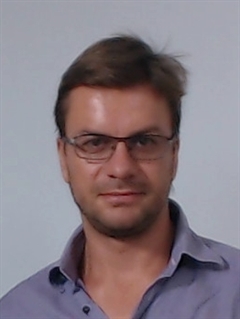
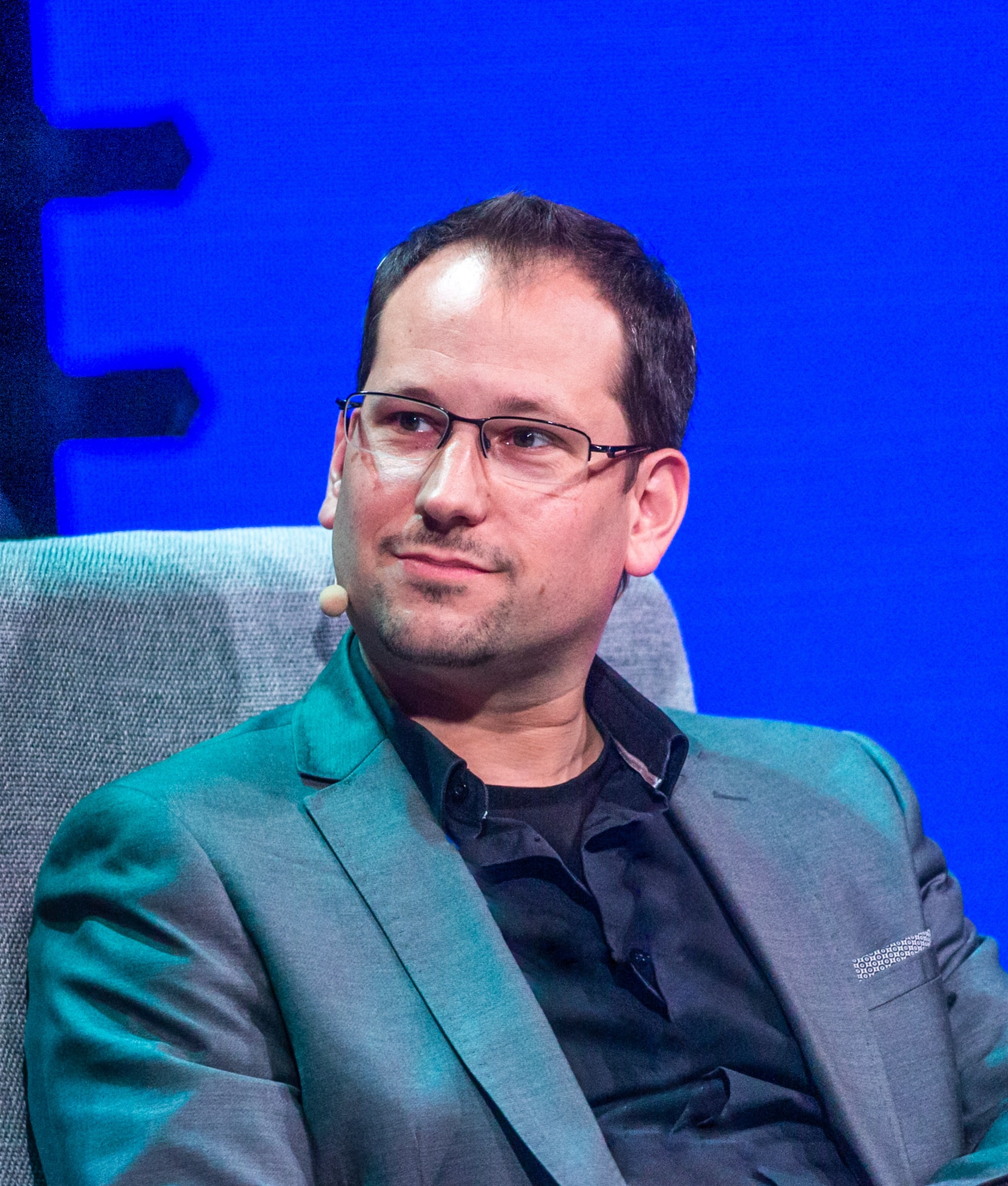
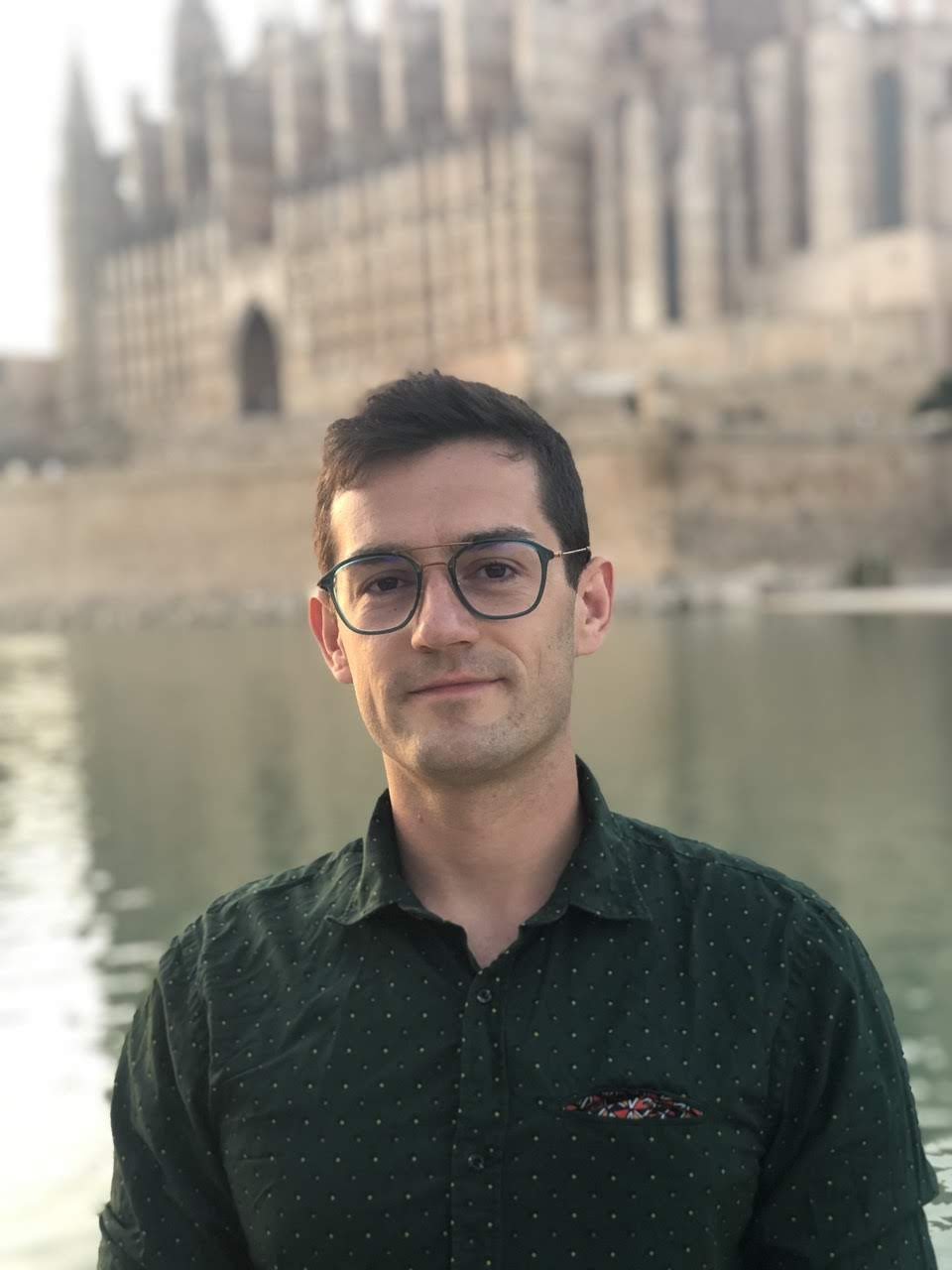
Prof. Dr. Damian Borth is a faculty member and Academic Director of the Doctoral Program for Computer Science at the University St.Gallen , affiliated with the School of Computer Science and the Institute of Computer Science (ICS-HSG) . His research spans Machine Learning , Remote Sensing , and Digitalization & Transformation , with a focus on diffusion models, vision transformers, and environmental data analysis. Recent publications highlight advancements in anomaly detection , cross-modal translation , and climate monitoring using AI. Key themes include weight space learning , federated learning , and data-efficient AI for Earth observation. His work bridges theoretical deep learning and practical applications in financial auditing, pollution estimation, and satellite imagery.
Dr. Marcus Zimmer serves as a Lecturer in Marketing at the Zurich University of Applied Sciences (ZHAW), specifically within the School of Management and Law at the Center of Customer Management in Winterthur, Switzerland. His academic position focuses on teaching Marketing at the BSc level, Integrated Customer Management, and Service Marketing & B2B Marketing. Zimmer's research interests span several critical areas in contemporary marketing: B2B & B2C Customer Relationships, Service Transformation & Servitization, and the "Dark Side" of Customer Management including Dark Patterns. He has established himself as a specialist in understanding how businesses can effectively manage customer relationships across different contexts and industries. His recent publications demonstrate a strong focus on digital content marketing along the B2B customer journey, business solutions as market signals, and the strategic value of solution business initiatives. Zimmer's work shows a consistent pattern of examining how companies can effectively position themselves in the marketplace through solution-based offerings and customer engagement strategies. Among his notable achievements is the Outstanding Article Award 2024 from Industrial Marketing Management, recognizing the quality and impact of his research. His scholarly contributions have appeared in prestigious journals including Industrial Marketing Management, International Journal of Operations & Production Management, and Marketing Review St. Gallen. Zimmer actively leads and participates in research projects including Consumer Perceptions of Dark Patterns (as project leader), SONEVA (as co-project leader), and Large Language Models as a Service in Marketing. These projects reflect his commitment to bridging academic research with practical business applications in customer management and marketing strategy.
Matthieu Wyart is a Full Professor of Theoretical Physics at École polytechnique fédérale de Lausanne (EPFL), holding a position in the School of Basic Sciences within the Institute of Physics. He leads research in the Physics of Complex Systems Laboratory (PCSL) at EPFL, where he investigates fundamental questions at the intersection of condensed matter theory, statistical mechanics, and emerging connections to machine learning. Wyart completed his education at prestigious French institutions, earning his physics degree with Honors from École Polytechnique in Paris in 2001, followed by a Diploma of Advanced Studies in Theoretical Physics with highest Honors from École Normale Supérieure, Paris in 2002. He obtained his doctoral degree in Theoretical Physics and Finance from SPEC, CEA Saclay, Paris in 2006 with a thesis on electronic markets. His academic journey included postdoctoral positions at Harvard University, Janelia Farm, and Princeton University before joining New York University as an Assistant Professor in 2010, where he was promoted to Associate Professor in 2014. He moved to EPFL in July 2015 as an Associate Professor of Theoretical Physics and was promoted to Full Professor in April 2024. His research spans multiple domains including condensed matter theory, statistical mechanics, quantum information, and biophysics, with particular focus on disordered systems, glass transitions, amorphous solids, and the emerging connections between physical systems and machine learning architectures. Wyart's work often reveals deep theoretical connections between seemingly disparate fields, such as demonstrating how principles governing amorphous materials relate to the behavior of neural networks. His recent publications explore hierarchical structures in data, diffusion models, learning curves for compositional data, and the physics of creep in disordered media. Through his laboratory (PCSL), Wyart fosters interdisciplinary research that bridges traditional physics with contemporary challenges in machine learning and complex systems. His work has established important theoretical frameworks for understanding the glass transition, jamming phenomena, and the geometric principles underlying both physical and artificial learning systems.
Julien Cornebise is an Honorary Associate Professor in the Department of Computer Science at University College London, with over 20 years of experience in Machine Learning and Artificial Intelligence. His career spans both academic and industry leadership roles, including co-founding startups and directing research at major AI organizations. His academic credentials include an MSc in Computer Engineering, an MSc in Mathematical Statistics, and a PhD in Mathematics specialized in Computational Statistics from University Paris VI Pierre and Marie Curie and Telecom ParisTech. He received the prestigious 2010 Savage Award from the International Society for Bayesian Analysis for his doctoral work. Dr. Cornebise's research interests span multiple AI domains with a strong focus on practical applications that create social impact. His work bridges theoretical foundations with real-world implementations across healthcare, human rights, environmental monitoring, and social good initiatives. He has made significant contributions to medical image analysis, satellite imagery processing, and ethical AI applications. His publication record demonstrates consistent productivity with research spanning from foundational statistical methods to applied AI across diverse domains. Recent work includes significant contributions to medical image analysis, satellite imagery processing, large language models for civic engagement, and ethical AI applications. 2021-2023: Co-founder and acting Chief Scientific Officer at ShiftLab Ltd (grew to 31 people) 2018-2019: Director of Research, Head of Element AI's London Office (AI for Good focus) 2012-2016: Early researcher at DeepMind Technologies Limited (acquired by Google) Postdoctoral positions at SAMSI/Duke University, UBC Vancouver, and University College London Dr. Cornebise has received the 2010 Savage Award from the International Society for Bayesian Analysis. His research has been applied in diverse contexts including healthcare applications with pharmaceutical companies and satellite imagery analysis for the European Space Agency. As an advisor, he works with several technology startups and nonprofits including Amnesty International. He also provides consulting services to various companies and assists venture funds with due diligence on machine learning technologies and strategic matters. His career demonstrates a consistent commitment to bridging cutting-edge AI research with practical applications that create meaningful impact.
Giovanni Iacca is an Associate Professor at the Department of Information Engineering and Computer Science (DISI) of the University of Trento, Italy, where he leads the Distributed Intelligence and Optimization Lab (DIOL). He serves as Coordinator of the Master's Degree in Computer Science and Deputy Director of the Information Engineering and Computer Science Doctoral School. Dr. Iacca has over 15 years of industrial experience in mechatronics and optimization applied to engineering, logistics, and scheduling. Dr. Iacca received his PhD in 2011 from the University of Jyväskylä, Finland, and his MSc in 2006 from the Technical University of Bari, Italy. His academic career includes: 2021-present: Associate Professor, University of Trento 2018-2021: Tenure-track Assistant Professor, University of Trento 2017-2018: Postdoc, RWTH Aachen University, Germany 2013-2016: Postdoc, EPFL and University of Lausanne, Switzerland 2012-2016: Postdoc, INCAS³, The Netherlands Dr. Iacca's research bridges fundamental and applied aspects of artificial intelligence with particular emphasis on evolutionary computation and explainable AI. His work spans machine learning, optimization techniques, distributed systems, and their practical implementations. Recent research directions include federated learning, interpretable reinforcement learning, neural architecture search, and optimization for resource-constrained environments. He teaches courses on Computer Architectures, Introduction to Machine Learning, Bio-Inspired Artificial Intelligence, Optimization Techniques, and AI in Medicine. His publication record demonstrates a strong trend toward developing transparent and efficient AI systems. Recent papers focus on making complex AI models more interpretable while maintaining performance across diverse domains from healthcare to supply chain management. His work on evolutionary approaches to explainable AI has gained significant recognition in the computational intelligence community. Scientific Awards and Editorial Roles EvoApplications Best Paper Award (2017) UKCI AWARENESS Best Paper Award (2012) IEEE CIS Outstanding Student-Paper Award (2011) IEEE Senior Member (2023) Associate Editor, Evolutionary Intelligence (2024) Editorial Board Member, Memetic Computing (2024) Associate Editor, IEEE Transactions on Evolutionary Computation (2023) Dr. Iacca has successfully supervised multiple PhD students including Andrea Ferigo, Hyunho Mo, and Leonardo Lucio Custode. His research is supported by various grants and collaborations with industry partners like MyAv. He serves as chair for PPSN 2026 and has organized workshops including the Workshop on Awareness and Consciousness in Artificial Intelligence (ACAI). As leader of the Distributed Intelligence and Optimization Lab (DIOL), Dr. Iacca oversees a research team working at the intersection of evolutionary computation, machine learning, and distributed systems. The lab focuses on developing novel algorithms that balance computational efficiency with interpretability, with applications spanning from embedded systems to large-scale distributed computing environments. Current projects include interpretable reinforcement learning, federated neuroevolution, and optimization for edge computing.
Dr. Don Tuggener is a Researcher at the ZHAW Zurich University of Applied Sciences' School of Engineering, affiliated with the Centre for Artificial Intelligence. His work focuses on Natural Language Processing (NLP), Computational Linguistics, and Machine Learning applications in professional training and AI evaluation. He leads or collaborates on projects such as Meaning@Work (stress management for healthcare professionals), Virtual Kids (child interrogation training), and Favi-Score (bias detection in AI evaluation). His research emphasizes dialogue systems, generative AI ethics, and legal text analysis. Key projects include developing frameworks for conversational AI evaluation (Spot The Bot), large-scale legal text classification (LEDGAR corpus), and innovative training tools using LLMs. He has contributed to over 30 peer-reviewed publications since 2011, spanning topics like compound splitting in German, coreference resolution, and generative AI applications in professional contexts. As an editor for SwissText conferences and reviewer for ACL/EMNLP, he actively participates in the NLP academic community. Project Leadership: Virtual Kids, Interscriber Deputy Leadership: AutoNews, PRISM, SCAI Core Research Themes: AI ethics, dialogue systems, legal NLP Recent work highlights AI's role in professional education (e.g., investigative interviews with children) and societal challenges (hate speech mitigation via social influencers).
Martin Gjoreski is an Ambizione Fellow funded by the Swiss National Science Foundation (SNSF) and holds the position of Researcher at the Faculty of Informatics, Università della Svizzera italiana (USI) in Switzerland. He also serves as a lecturer, teaching courses like Mobile and Wearable Computing during the 2024/25 academic year. His research focuses on Artificial Intelligence, particularly machine learning, federated learning, and explainable AI (XAI), applied to wearable computing, affective computing, and digital healthcare. Education: PhD in Computer Science (2016-20) from the Jožef Stefan International Postgraduate School, Slovenia. Thesis: 'A fusion of classical and deep machine learning for mobile health and behavior monitoring with wearable sensors.' Notable achievements include the 'Jožef Stefan golden emblem' for an outstanding PhD thesis and inclusion in the 'top 2% scientists in the world' (2021). Research Interests: AI-driven healthcare solutions Federated learning for privacy preservation Explainable AI in pervasive systems Wearable sensor data fusion Grants: Leading the 'XAI-PAC' project (SNSF, 2024-2028) and contributing to 'SmartCHANGE' (Horizon Europe, 2024-2028) and 'TRUST-ME' (SNSF, 2024-2027). These focus on AI-based health monitoring and privacy-aware solutions. Labs/Teams: Member of the People-Centered Computing Lab at USI, led by Professors Marc Langheinrich and Silvia Santini. Collaborates on projects involving smart glasses, affective computing datasets, and federated learning frameworks.
Tessa Consoli serves as a Research Fellow at the Institute of Educational Science, University of Zurich, within the Chair of General Didactics and Media Didactics. Her work focuses on the intersection of digital technologies and educational practices in upper secondary contexts. Her research program centers on: Digital transformation processes in Swiss upper secondary education Technology integration quality and its measurable impact on student outcomes Digital citizenship education frameworks Generative AI's role in learning environments Teacher profiles and professional development needs Recent publications reveal strong methodological diversity including large-scale comparative studies, qualitative case analyses, and policy evaluations. Her work consistently examines both technical implementation and human factors affecting educational technology adoption. Current projects investigate BYOD (Bring Your Own Device) implementations, media literacy instruction patterns, and transformational leadership approaches for technology integration. Professional trajectory shows progressive research engagement since 2020 through multiple funded projects including DigiTraSII and SCATT, complemented by practical teaching experience in Italian language education. Her scholarly contributions primarily appear in high-impact educational technology journals with significant Swiss policy relevance.
Michael Aerni is a doctoral researcher at the Secure and Private AI (SPY) Lab within ETH Zurich , focusing on privacy and security challenges in machine learning and AI systems. His work bridges theoretical insights with practical applications. Education: Doctoral student in Computer Science (ongoing), ETH Zurich MSc in Computer Science, 2022, ETH Zurich BSc in Computer Science, 2017, FHNW Windisch His research emphasizes understanding and mitigating unintended memorization in large language models and evaluating empirical privacy defenses. Key themes include: Privacy leakage quantification Membership inference attack analysis Inductive bias impact on interpolation Robust margin behavior in noiseless data Publications reveal trends in privacy-preserving machine learning, with a focus on exposing limitations of heuristic defenses and proposing rigorous evaluation protocols. Collaborations span institutions like ETH Zurich, with advisors like Florian Tramèr .
Dr. Guang Lu is a Lecturer at the Lucerne School of Business, affiliated with the Institute of Communication and Marketing (IKM) and its CC Communication & Marketing Technologies division. He holds a Ph.D. in Energy Science and Engineering from ETH Zurich (2016), an M.Sc. in Mechatronics from Southeast University (2010), and a B.Sc. in Mechanical Design from Southeast University (2007). His work bridges computational mechanics, marketing technologies, and AI-driven solutions for societal challenges. Dr. Lu’s research focuses on AI applications in elder care (e.g., emotion-aware chatbots), NLP for corporate culture analysis, and sustainability in e-commerce. He has pioneered studies on sharing economy dynamics, algorithmic nudging for eco-friendly consumer behavior, and greenwashing detection via ESG report analysis. His technical expertise spans computational fluid dynamics, granular mechanics (e.g., rockfall simulations), and multimodal emotion recognition systems. His career includes roles as a Computational Mechanics Engineer at WSL SLF (2017–2019), Researcher/Teaching Assistant at ETH Zurich (2010–2016), and Engineer at Southeast University’s Robotics Center (2007–2010). He has published over 39 peer-reviewed articles, with recent work emphasizing AI ethics in elder care technology and data-driven marketing strategies. Dr. Lu collaborates with industry partners like GPTW Switzerland AG and has conducted projects on corporate culture assessment, chatbot localization for German-speaking elderly populations, and algorithmic solutions for sustainable consumer choices. His research often integrates interdisciplinary methods, merging natural language processing with engineering systems to address modern business and societal challenges.
Alexandre Alahi is an Associate Professor at École Polytechnique Fédérale de Lausanne (EPFL), where he leads the Visual Intelligence for Transportation (VITA) laboratory. He is affiliated with the School of Architecture, Civil and Environmental Engineering (ENAC), the Institute of Infrastructure (IIC), and also contributes to diversity initiatives at ENAC. His research focuses on integrating computer vision, machine learning, and robotics to develop socially-aware AI for transportation and autonomous systems. University: École Polytechnique Fédérale de Lausanne (EPFL) School: School of Architecture, Civil and Environmental Engineering Department: Institute of Infrastructure, IIC Research Lab: Visual Intelligence for Transportation (VITA) Alexandre's research interests center on computer vision, machine learning, robotics, and AI safety, particularly in human trajectory prediction, depth estimation, and socially-aware autonomous navigation. He investigates how AI can understand and predict human behavior in complex environments to improve safety in mobility systems. His work bridges theoretical advances with real-world applications in autonomous driving, urban planning, and healthcare. His recent publications span a wide array of topics including omnidirectional stereo matching, trajectory forecasting, cross-view localization, AI security, and depth estimation. These works demonstrate a strong trend toward building generalizable, robust, and socially-compliant AI systems, with increasing focus on uncertainty quantification, safety certification, and real-world deployment. The integration of multimodal data and the development of foundation models are recurring themes. Alexandre has received numerous scientific accolades, including: Top 100 Most Influential Scholar in Computer Vision (2022–2023) Editor’s Choice Award, Image and Vision Computing (2021) Honorable Mention, ICCV Workshop (2019) CVPR Open Source Award (2012) ICDSC Challenge Prize (2009) Top 20 Swiss Venture Leaders (2010) He has advised numerous PhD students whose theses cover diverse topics such as human motion prediction, person re-identification, trajectory forecasting, and AI security. His lab has secured significant recognition and funding, enabling impactful research with real-world applications. Alexandre has also co-founded startups like Visiosafe, demonstrating strong industry engagement and technology transfer. The VITA lab fosters interdisciplinary collaboration, working across computer vision, robotics, transportation engineering, and human-centered AI. The team develops datasets, benchmarks, and open-source tools to advance the field and promote reproducibility.
Eric A. Posner is the Kirkland and Ellis Professor of Law at the University of Chicago Law School, where he has established himself as a leading scholar in multiple legal fields. His extensive academic career spans law and economics, international law, constitutional law, and antitrust policy, with significant contributions to understanding the intersection of economic theory and legal frameworks. Posner's research interests focus on law and economics, international law, constitutional law, and antitrust policy. His work consistently applies economic analysis to legal problems, examining how legal rules affect behavior and how they might be designed to maximize social welfare. He has made significant contributions to understanding international law as a system of incentives rather than pure obligation, and his recent work has increasingly focused on contemporary issues like labor market power, judicial behavior, and the application of artificial intelligence in legal contexts. His scholarship often challenges conventional wisdom, advocating for evidence-based approaches to legal policy. His extensive publication record shows evolving research interests from foundational work in international law and contract theory to contemporary concerns about antitrust enforcement, labor markets, and the impact of technology on legal systems. Recent publications demonstrate a strong focus on labor market monopsony, the role of institutional investors in reducing competition, and the application of economic analysis to constitutional and administrative law problems. His work increasingly addresses how traditional legal frameworks must adapt to modern economic realities and technological changes. Posner frequently collaborates with prominent scholars across disciplines, including E. Glen Weyl, Cass Sunstein, and various economists and legal scholars. His interdisciplinary approach has resulted in influential work that bridges law, economics, and political science. While specific grant information isn't detailed in the provided text, his extensive publication record suggests sustained research support throughout his career. His work has been widely cited and has influenced both academic discourse and policy discussions in multiple legal domains.
Clemens Stachl is an Associate Professor of Behavioral Science at the University of St. Gallen (HSG), affiliated with the Institute for Business Information Technology (IBT). His research focuses on leveraging digital trace data from smartphones and mobile devices to understand human behavior, personality, and well-being. He specializes in applying machine learning techniques to analyze behavioral patterns in naturalistic settings, with particular emphasis on predicting life outcomes, mental health dynamics, and cognitive abilities through digital footprints. Key research domains include smartphone-based ambulatory assessment, personality sensing, and computational methods for social and behavioral science. His work addresses ethical implications of AI in data-driven research and emphasizes methodological advancements in machine learning applications. He has contributed to frameworks for human-centered hypothesis generation, transformer-based text analysis tutorials, and best practices in supervised machine learning for psychologists. Stachl leads projects like the Smartphone Sensing Panel Study on Cognitive Abilities and collaborates with interdisciplinary teams to develop tools for e-mental health interventions. His research spans topics from authoritarianism prediction via behavioral data to analyzing well-being during crises like the Ukraine war. He actively publishes in high-impact journals and contributes to methodological debates on algorithmic ethics and generalizability in psychological research.
Francesco Audrino is a Professor of Statistics at the Department of Mathematics and Statistics, University of St. Gallen, affiliated with the School of Economics and Political Science (SEPS). He holds a Diploma in Mathematics from ETH Zurich (specializing in Financial and Insurance Mathematics) and a Ph.D. in Statistics/Finance from ETH Zurich, with a thesis on statistical methods for high-dimensional financial time series. Research Focus: Computational Statistics applied to Economics and Finance, Financial Econometrics, Sentiment Analysis, Volatility Estimation, and Regime-switching Models. His work emphasizes nonparametric methods (e.g., Functional Gradient Descent) and their applications in asset pricing, interest rate dynamics, and risk management. Recent projects include the SentiVol program for sentiment-driven volatility forecasting and causal machine learning analyses of post-earnings sentiment impacts. Selected Projects: Director of the SentiVol SNF Grant (2017–2020) on sentiment analysis for volatility prediction. Co-Director of the SNF Grant on Behavioral Asset Pricing (2010–2013). Leading research on cross-asset dependency structures and causal machine learning applications. Awards & Recognition: Swiss Society of Economics and Statistics Young Economist Award (2007). University of St. Gallen’s Best Researcher Award (2007). Teaching load reduction for outstanding publications (2009–2018). Teaching & Academic Service: Teaches Statistics, Financial Volatility, and Computational Statistics at bachelor’s, master’s, and Ph.D. levels. Served as Elected Member of the Board of Directors of the European Regional Section of the International Association for Statistical Computing (2016–2020). Active in academic networks like the Computational Financial Econometrics (CFE) Network. Labs & Resources: Developed the FGD Code package for nonparametric high-dimensional time series analysis, widely used in volatility and correlation modeling. Maintains real-time volatility forecasts for S&P 500 constituents via the SentiVol project.
Denis Gillet is a Senior Scientist at the École Polytechnique Fédérale de Lausanne (EPFL) , affiliated with the School of Engineering . He leads the REACT Interaction Systems Group , focusing on innovative information systems for interdisciplinary applications including cyber physical systems, digital education, and explainable AI. His roles span research, teaching, and PhD program committee membership. Education : Diploma in Electrical Engineering (1988), PhD in Information Systems (1995) from EPFL Research : Technology-Enhanced Learning, Human-Computer Interaction, Cyber Physical Systems, Explainable AI Grants : Swiss Digital Skills Academy (2021-2024), iHub4Schools (2021-2023), GraphNEx (2021-2023) Students : Supervised 17 PhD students including Abassi Nour Ghalia and La Scala-Jayet Jérémy Alain His recent publications examine AI in education, digital wellbeing, and collaborative learning technologies. He has contributed to over 30 funded projects since 2005, including EU Horizon initiatives and collaborations with MSF.