About
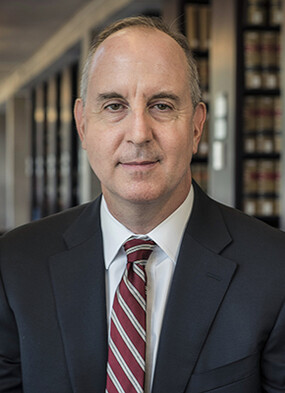
Eric A. Posner is the Kirkland and Ellis Professor of Law at the University of Chicago Law School, where he has established himself as a leading scholar in multiple legal fields. His extensive academic career spans law and economics, international law, constitutional law, and antitrust policy, with significant contributions to understanding the intersection of economic theory and legal frameworks.
Posner's research interests focus on law and economics, international law, constitutional law, and antitrust policy. His work consistently applies economic analysis to legal problems, examining how legal rules affect behavior and how they might be designed to maximize social welfare. He has made significant contributions to understanding international law as a system of incentives rather than pure obligation, and his recent work has increasingly focused on contemporary issues like labor market power, judicial behavior, and the application of artificial intelligence in legal contexts. His scholarship often challenges conventional wisdom, advocating for evidence-based approaches to legal policy.
His extensive publication record shows evolving research interests from foundational work in international law and contract theory to contemporary concerns about antitrust enforcement, labor markets, and the impact of technology on legal systems. Recent publications demonstrate a strong focus on labor market monopsony, the role of institutional investors in reducing competition, and the application of economic analysis to constitutional and administrative law problems. His work increasingly addresses how traditional legal frameworks must adapt to modern economic realities and technological changes.
Posner frequently collaborates with prominent scholars across disciplines, including E. Glen Weyl, Cass Sunstein, and various economists and legal scholars. His interdisciplinary approach has resulted in influential work that bridges law, economics, and political science. While specific grant information isn't detailed in the provided text, his extensive publication record suggests sustained research support throughout his career. His work has been widely cited and has influenced both academic discourse and policy discussions in multiple legal domains.