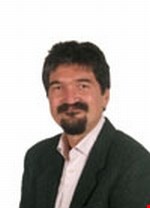
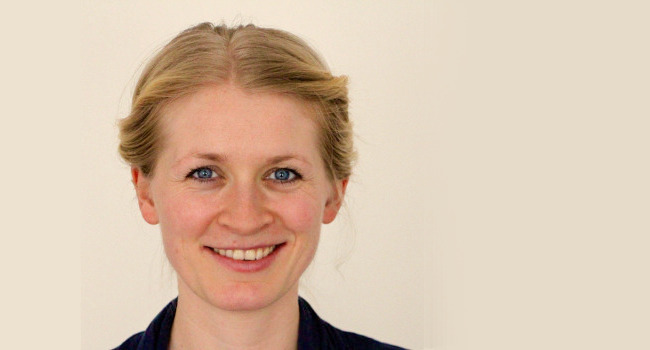
Péter Juhász is a Stipendiary Lecturer at Brasenose College and a Postdoctoral Research Associate in the Department of Physics at the University of Oxford. He holds an MA from the University of Cambridge and a DPhil from the University of Oxford. His research centers on quantum physics, specifically quantum computing and ultracold atomic systems. Juhász investigates Bose-Einstein condensates of dipolar gases, focusing on stability, loss mechanisms, and novel trapping geometries. He employs deep learning for atom cloud analysis and develops experimental protocols for large condensate production. His work combines theoretical modeling with advanced experimental techniques in ultracold physics. He previously served as Viscogliosi Fellow and Policy Adviser at the Permanent Observer Mission of the Holy See to the United Nations. He is President of the Cambridge–Oxford Alumni Club of Hungary and volunteers with the Order of Malta's soup kitchen initiatives.
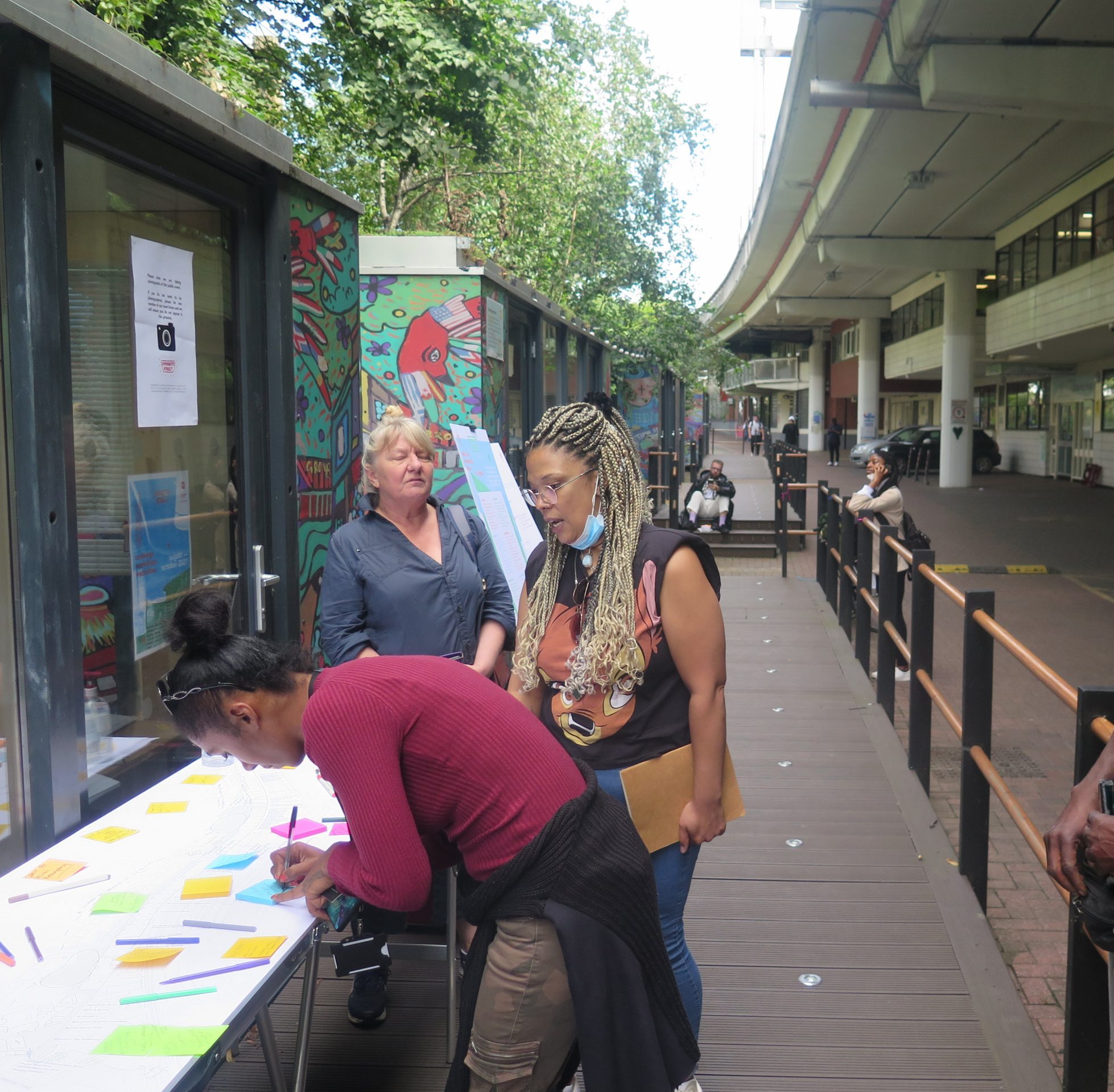
Pablo Sendra is an Associate Professor in Planning and Urban Design at The Bartlett School of Planning, University College London. He serves as Director of the MSc Urban Design and City Planning Programme and Coordinator of the Civic Design CPD and Cultural Infrastructure short course. Sendra combines his academic work with professional practice through his urban design firm LUGADERO LTD, which specializes in community co-design processes, and is co-founder of the CivicWise network. Architect Engineer, Universidad de Sevilla (2007) MArch Urban Design, University College London (2009) MSc in Sustainable City and Architecture, Universidad de Sevilla (2011) PhD in Architecture, Universidad de Sevilla (2014) Sendra's research focuses on social housing, community activism, co-design methodologies, social infrastructure, and public spaces, particularly examining how regeneration processes impact communities. His work emphasizes participatory action research conducted directly with communities, exploring how to design urban environments that encourage unplanned activities, social interaction, and collective governance. He advocates for disorder as a productive force in urban planning, challenging conventional top-down approaches to city design. His publications reveal a consistent focus on community-led alternatives to conventional urban regeneration, with particular attention to social housing estates. The research demonstrates a methodological commitment to co-production with communities, resulting in practical tools and frameworks that empower residents to develop their own regeneration proposals. His work bridges academic theory with practical application through community engagement. Fellow of the Higher Education Academy (2017) Designing Disorder included in The Observer's (The Guardian) Best Books of 2020 Sendra has secured significant research funding including a British Academy/Leverhulme Small Grant as Principal Investigator for the project 'Community-led social housing regeneration: between the formal and the informal,' and two Higher Education Innovation Fund grants for co-producing community-led proposals for social housing regeneration. His work with community groups such as Just Space and Granville Community Kitchen demonstrates a commitment to practical application of academic research. He has also served as a referee for numerous prestigious journals including International Journal of Urban and Regional Research, City, and Journal of Urban Design. Through LUGADERO LTD and the UCL Civic Exchange team, Sendra facilitates co-design processes for community street projects, public space transformations, and social infrastructure development. His work with the Westway Trust's Community Street project and Play Wimbledon demonstrates practical application of his research on collaborative urbanism. The CivicWise network serves as a platform for citizen-led initiatives in urban development.
Ivano Cardinale is a Professor and Head of the Institute of Management Studies at Goldsmiths, University of London. He previously held a Junior Research Fellowship at Emmanuel College, Cambridge, and has been a Visiting Fellow at Clare Hall, Cambridge. He founded and directs the Structural Economic Analysis Unit and serves as Editor-in-Chief of Structural Change and Economic Dynamics . PhD, University of Cambridge 2022 Feltrinelli Giovani Prize for Social Sciences (Italy's top award for researchers under 40) 2019 Guest Faculty, Learning Innovation Laboratory, Harvard University His research in Structural Political Economy examines how material, social, and cognitive structures shape economic conflicts and policy outcomes. Key areas include institutional theory, industrial dynamics, and energy transition frameworks. He analyzes systemic interests, sectoral conflicts, and structural conditions through theoretical and empirical studies. Recent publications explore gas market vulnerabilities in EU energy policy, Pasinetti's institutional theory, and networked economic structures. His work appears in Structural Change and Economic Dynamics , Energy Economics , and Cambridge Journal of Economics . Scientific awards include: 2022: Feltrinelli Giovani Prize (Social Sciences) 2019: Political Economy Research Fellowship (ISRF) 2016: Life Membership, Clare Hall, Cambridge He contributes to academic governance through editorial roles and co-edited major handbooks including The Palgrave Handbook of Political Economy (2018) and The Political Economy of the Eurozone (2017).
Barbara Penner is Professor of Architectural Humanities at University College London's Bartlett School of Architecture, where she serves as Co-Director of the MA Architectural History program and supervises PhD students. Her academic appointments include Senior Lecturer positions at UCL since 2000 and previous roles at University of East London, Middlesex University, and Chelsea College of Art. Her educational background comprises a PhD from Birkbeck College (2003), MSc from University College London (1996), and BA from McGill University (1994). Penner's research focuses on the social and cultural dimensions of everyday spaces, examining how domestic environments, urban infrastructure, and commercial architecture shape social identities. Her interdisciplinary approach integrates architectural history with anthropology, literary theory, and cultural studies, particularly exploring gender dynamics in spaces like bathrooms, kitchens, hotels, and housing. Her publications reveal consistent engagement with themes of gender, domesticity, and infrastructure across historical periods. Key works include Bathroom (2013), Newlyweds on Tour (2009), and co-edited volumes on public toilets and gender. Recent scholarship examines social scientific research in home design, urine diversion systems, and historical housing models. RIBA President’s Award for Outstanding University-Located Research (2014) Leverhulme Major Fellowship (2021-2023) Provost Teaching Award, UCL (2013) Council of Editors of Learned Journals Best New Journal Award (2009) Penner actively supervises doctoral research on topics including Billy Butlin’s holiday camps and Gulf female shoppers' impact on London retail. She has completed twelve PhD supervisions and examined nearly thirty theses internationally. Her professional activities include serving on the Architectural Association Publications Committee, as North American Editor for Architectural History, and as External Examiner at University College Dublin. She participates in the 'Insurgent Domesticities' research group at Columbia University and contributes to Places Journal as a contributing editor.
Shaji K Chacko, Ph.D., is an Instructor in the Department of Pediatrics – Nutrition at Baylor College of Medicine, where he leads an independent research laboratory at the USDA/ARS Children's Nutrition Research Center in Houston, Texas. His work focuses on metabolic regulation, particularly glucose production pathways in health and disease. BS, Nagpur University (1990) MS, Barkatullah University (1992) MS, University of Houston, Clear Lake (2000) PhD, University of Groningen (2011) Dr. Chacko's research centers on glucose metabolism , specifically gluconeogenesis and glycogenolysis , using stable isotope tracers and mass spectrometry. His lab investigates metabolic dysfunctions in conditions such as insulin resistance, type 2 diabetes, and post-surgical states, with a strong focus on pediatric and neonatal populations. He also studies total energy expenditure using the doubly labeled water method in free-living subjects. The 15 most recent publications reflect a consistent focus on metabolic regulation, particularly in insulin resistance , obesity , diabetes , and parenteral nutrition . Key themes include hormonal regulation (e.g., leptin), amino acid metabolism (glycine, BCAA), liver function, and therapeutic interventions like metformin and nutritional supplements. His work frequently involves translational models, including human clinical studies and genetically modified animal models. Dr. Chacko has not received any explicitly mentioned scientific awards in the provided texts. He mentors lab members such as Zhensheng Chen (Research Associate) and collaborates extensively with clinicians and scientists, including M.W. Haymond and F. Jahoor. While no specific grants are listed, his research likely involves externally funded projects given the scope and equipment required for stable isotope and mass spectrometry studies. His lab benefits from the state-of-the-art facilities at the Children's Nutrition Research Center, including a metabolic kitchen, greenhouse, and advanced instrumentation. The Shaji Chacko Lab is embedded within the USDA/ARS Children's Nutrition Research Center, a multidisciplinary hub housing elite scientists conducting cutting-edge research in pediatric nutrition and metabolism. The center provides extensive resources including specialized laboratories, research accommodations, and a collaborative scientific environment.
Andrew P. Dicks is a Teaching Professor in the Department of Chemistry at the University of Toronto, serving as Associate Chair for Undergraduate Studies. His work focuses on transforming chemistry education through green laboratory practices, sustainable curricula, and innovative pedagogical strategies. He has spearheaded the redesign of undergraduate organic chemistry labs to emphasize microscale experiments, green chemistry principles, and collaborative learning. His research explores methods to integrate the United Nations Sustainable Development Goals into education and has been recognized with the ACS-CEI Award for an undergraduate catalytic chemistry course. Dr. Dicks’ administrative contributions include mentoring faculty and developing programs like the Chemistry Teaching Fellowship. He advocates for teaching assistant training, writing instruction, and student learning communities. His lab initiatives emphasize real-world relevance, using waste materials (e.g., McDonald’s cooking oil) and natural media (citrus juice) to demonstrate chemical principles. Notable research themes include solvent-free reactions, energy-efficient microwave techniques, and metrics for evaluating reaction greenness. His articles highlight trends in green chemistry education, pandemic-driven pedagogical adaptations, and interdisciplinary approaches to materials science. Awards include the ACS-CEI Award, reflecting his impact on advancing sustainable chemistry education globally. Dr. Dicks also champions humor and puzzles in science communication to engage learners and foster a culture of curiosity.
Lanita Jacobs is a Professor at the University of Southern California , holding joint appointments in the Department of American Studies & Ethnicity and the Department of Anthropology . Her research focuses on language as a mediator of African American culture and identity , utilizing multi-sited ethnographies across hair care communities, hospitals, and standup comedy venues. She earned her Ph.D. in Linguistic Anthropology from the University of California, Los Angeles (1999) , preceded by an M.A. (1996) and B.A. (1993). Her scholarly work spans linguistic anthropology, discourse analysis, and cultural studies , examining topics such as race and humor , language and gender , anthropology of the body , and race, health, and disability . She has published extensively on these themes, including two monographs: From the Kitchen to the Parlor (2006) and Truth and Racial Authenticity in African American Standup Comedy (2022). Her research has been funded by prestigious grants such as the NIH R01 Continuation Grant and the Wenner-Gren Foundation Pre-Doctoral Grant . Jacobs has received numerous honors, including the Fight On Faculty Award (2010), USC Mellon Award for Excellence in Faculty Mentoring Undergraduates (2007-2008), and induction into the USC Chapter of Phi Kappa Phi (2018-2019). She mentors students across disciplines, including Mellon-Mays Scholars , McNair Scholars , and SOAR Scholars , emphasizing interdisciplinary research and cultural representation . Key research areas: Language and Identity in Diasporas , Race and Performance , Ethnographic Methodology Recent article trends: 2022 book on standup comedy, 2015-2006 work on disability narratives , cosmetology ethnography , and post-9/11 discourse
Shakti Bhagchandani is a UAE-born filmmaker and full-time Lecturer in Screenwriting at Yale University's Film and Media Studies Program. She holds an MFA in Screenwriting and Directing from Columbia University. Her work focuses on narrative short films exploring social, political, and cultural themes through cinematic storytelling. Education: MFA in Screenwriting & Directing, Columbia University Her research interests include cinematic representation of cultural identity, political satire, and the intersection of personal narrative with societal structures. Her films have been showcased globally at festivals like Sundance, Venice, and Locarno, with Lostfound marking her breakthrough as the first UAE filmmaker at Sundance. Recent projects include post-production work on Carousel (starring Olivia Washington) and development of the feature screenplay Without . She also serves as editor on the BBC/BFI-backed feature The Life and Times of Sir Douglas Weatherford . Awards: Hollywood Foreign Press Association Fellowship, Sundance Screenwriters Lab Alum, Stockholm Film Festival International Jury Award Her teaching emphasizes narrative construction and ethical storytelling. Current projects include a three-part short film series and collaborations with international film festivals.
Barış Çallı is a Professor at the Department of Environmental Technology, Faculty of Engineering, Marmara University (Turkey). He earned his Ph.D. in Environmental Technology from Boğaziçi University (2003) and received the Marie Curie Intra European Fellowship (2006) for his work on fermentative hydrogen production in Belgium. Since 2008, he has served as a full-time professor, leading 20 research projects focused on environmental bioprocesses, anaerobic digestion, biogas technology, resource recovery, and solid waste management. Ph.D. in Environmental Technology, Boğaziçi University (2003) Marie Curie Intra European Fellowship (2006) His research integrates bioprocess engineering with sustainable waste management, emphasizing biogas production, membrane technologies, and circular economy principles. Recent publications (2025-2021) address energy-neutral wastewater treatment, heavy metal recovery from sludge, and VFA-driven fermentation. Key subfields include anaerobic digestion , bioleaching , membrane reactor design , and agricultural waste valorization . Marie Curie Intra European Fellowship (2006) With 116 WoS publications and an H-index of 33 (Scholar), he has supervised 17 thesis advisories and contributed to 20 projects. His work aligns with UN Sustainable Development Goals (6, 7, 11, 12).
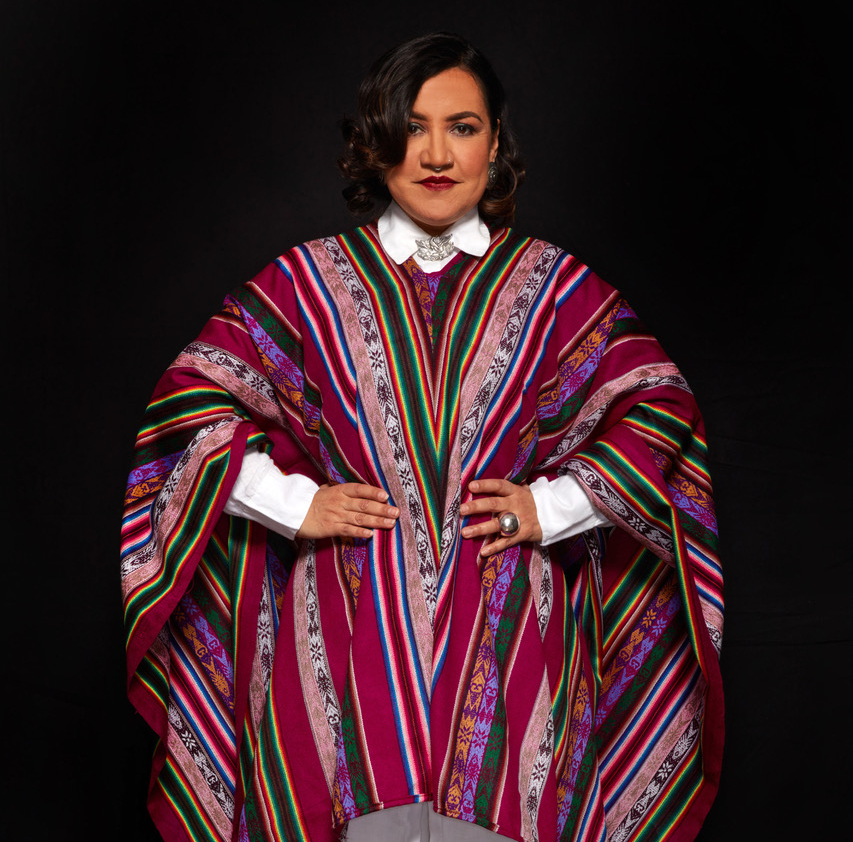
Martha Gonzalez is an Associate Professor in the Intercollegiate Department of Chicana/o-Latina/o Studies at Scripps College, Claremont, where she also serves as the Director of the Scripps Humanities Institute. A scholar, artist, and activist, she is deeply engaged in public scholarship through music, performance, and community organizing. Her work bridges academia and grassroots movements, particularly through her leadership in the Grammy Award-winning band Quetzal and her role in fostering transnational cultural dialogues. PhD in Feminist Studies (Chicana Studies Emphasis), University of Washington, 2013 BA in Ethnomusicology, University of California, Los Angeles, 1999 Transfer, Pasadena City College, 1990-1993 Her research centers on the intersection of Chicana feminist theory , Chican@ music , transnational musical dialogues , and performance studies . She emphasizes collective songwriting and participatory music as tools for social justice and decolonial praxis. Her scholarly work is deeply informed by her lived experience as a musician and community organizer in East Los Angeles and transnational networks with Jarocho communities in Veracruz, Mexico. The 15 most recent publications reflect a consistent engagement with themes of cultural resilience, feminist epistemology, and music as testimony. They span ethnographic analysis, critical reviews, and theoretical explorations, demonstrating her interdisciplinary approach across folklore, ethnomusicology, urban studies, and feminist theory. Her work frequently highlights marginalized voices and practices, from street vendors in Boyle Heights to incarcerated women. Her scientific honors include: MacArthur Fellowship (2022) United States Artist (USA) Fellowship (2021) Grammy Award (2013) Fulbright Garcia-Robles Fellowship (2007-2008) Woodrow Wilson Career Enhancement Fellowship Multiple Scripps College research and teaching awards Gonzalez has advised and co-founded several academic and artistic collectives, including Women Who Rock and The Seattle Fandango Project . She has secured research grants from the Mellon Foundation, California Arts Council, and the 5Cs Creativity and Innovation Initiative. Her leadership extends to board roles at Smithsonian Folkways Records and the American Folklife Center at the Library of Congress . Her personal musical artifacts are housed in the National Museum of American History , underscoring her cultural impact.
Professor George Ghinea is a distinguished academic in the Department of Computer Science at Brunel University London's College of Engineering, Design and Physical Sciences. With over 350 publications and 33 successfully supervised PhD students, he leads cutting-edge research at the intersection of computer science, media studies, and psychology. His educational background includes a PhD from the University of Reading (1999) where he pioneered the Quality of Perception (QoP) metric - a precursor to today's widely adopted Quality of Experience (QoE) concept. He holds multiple degrees with distinction from the University of the Witwatersrand in South Africa, including BSc, BSc (Hons), and MSc in Computer Science. Professor Ghinea's research focuses on perceptual multimedia quality and human-centered e-systems, with particular emphasis on mulsemedia (multiple sensorial media) - his own conceptual framework extending multimedia to engage non-traditional senses. His work spans eye-tracking applications, telemedicine, multi-modal interaction, and ubiquitous computing. Current research explores mulsemedia integration in autonomous vehicles, security-enhanced systems, and accessibility solutions. His publications reveal strong trends in multisensory computing (42% of recent works), telemedicine applications (28%), accessibility research (18%), and network optimization (12%). The work consistently bridges theoretical frameworks with practical implementations, often incorporating physiological data and user perception metrics. Distinguished Visiting Fellow of the Royal Academy of Engineering (2018) SPARC DUO-India 2020 Fellowship Programme recipient Principal Investigator for multiple EU Horizon 2020 projects Research featured in major media including BBC, Forbes, and Daily Telegraph Professor Ghinea has secured substantial research funding through projects like the EU H2020 NEWTON initiative, Royal Academy of Engineering partnerships, and multiple Newton Fund collaborations. His supervision portfolio includes 33 PhD completions with diverse research spanning security behavior in Ghana, physiological QoE in VR, smart city adoption in Oman, and sustainable digital transformation in Qatar. He leads the IMUSY research group focusing on mulsemedia systems and human perception. His laboratory work centers on the IMUSY research group where they develop mulsemedia applications integrating thermal, wind, and olfactory devices for enhanced user experiences. Current team projects include mulsemedia in autonomous vehicles (MulsEAV), physiological data for QoE assessment, and smart city adoption studies.
Dr. Daniel Cockayne is an Associate Professor in the Department of Geography at the University of Waterloo. His research bridges feminist economic geography, queer theory, and digital studies, focusing on workplace cultures within startup economies and the intersections of sexuality with neoliberal labor practices. Co-taught courses: GEOG100 - On Becoming a Geography GEOG302 - Geography of Work and Employment GEOG202 - Geography of the Global Economy GEOG411 - The Digital Economy Research Focus: Empirical: Startup culture, anti-work politics, and digital entrepreneurship in Waterloo-Kitchener and Silicon Valley. Theoretical: Integration of feminist theory, Deleuzian philosophy, queer theory, and affect studies to analyze labor, identity, and digital infrastructures. Current projects: Exploring the political economy of LGBTQ+ activism, diversity programs in tech, and queer temporalities in digital systems. Publication Themes: His work critically examines digital economies, affective labor, and queer geographies through empirical studies of tech startups and theoretical engagements with Deleuze and feminist epistemologies. Graduate Supervision: Dr. Cockayne welcomes MA and PhD students interested in cultural geography, queer theory, digital economies, and feminist critiques of knowledge production.
Dr. Katharina Graf is a Research Fellow at the Institute of Cultural Anthropology and European Ethnology, Faculty of Linguistics, Cultures and Arts, Goethe University Frankfurt. She leads the DFG-funded ethnographic research project Cyborg Cook – Domestic Cooking in the Digital Age , investigating how digital technologies transform domestic cooking practices, knowledge reproduction, and socio-political negotiations around gender, class, and race in German households. Previously, she was a Postdoctoral Research Fellow at the SOAS Food Studies Centre, University of London, where she conducted research on bread as a measure of urban stability in Morocco, funded by the AXA Research Fund. Her educational background includes a PhD in Social Anthropology from SOAS, University of London (2016), with fieldwork in Marrakech, and a Diplom in Geography from the universities of Tübingen, Bonn, and Cologne, focusing on water supply in rural Morocco. Katharina Graf’s research lies at the intersection of cultural anthropology, food studies, gender, urban life, and science and technology studies. She explores how everyday practices—especially cooking—reflect and shape broader social, political, and technological transformations. Her work emphasizes the entanglement of material culture, digitalization, and human agency, particularly in domestic spaces. She investigates how food serves as a lens for understanding political legitimacy, social change, and human-machine relations. Her recent publications and blog posts from the Cyborg Cook project reveal a strong trend toward understanding digital domesticity through ethnographic, sensory, and feminist lenses. Themes include the role of mothers as technological pioneers, the disruption of routines by smart devices, and the multisensory experience of digital cooking practices. Her earlier work on bread in Morocco highlights how food security and culinary practices are deeply tied to political stability and state-society relations. Postdoctoral Fellowship, AXA Research Fund Principal Investigator, DFG-funded 'Cyborg Cook' project Dr. Graf has supervised undergraduate and postgraduate students at SOAS and Goethe University. While no specific grants beyond DFG and AXA are named, her role as principal investigator indicates leadership in competitive research funding. She is actively involved in academic service, including as associate book reviews editor for the FoodAnthropology Blog (Society for the Anthropology of Food and Nutrition) and former co-convenor of the Anthropology of Food Network at EASA. She disseminates research through innovative public formats such as photo exhibitions, cookery classes, and comedy clubs, reflecting a commitment to engaged scholarship. She is affiliated with the Cyborg Cook research team at Goethe University, an interdisciplinary group using ethnographic methods to study digital kitchen technologies. The project emphasizes collaborative, sensory, and participatory research approaches, often involving co-creation with participants through shared meals and observational cooking sessions.
Casper Boks is Professor in Design for Sustainability at the Department of Design, NTNU Norwegian University of Science and Technology within the Faculty of Architecture and Design. He has held significant leadership roles including Vice Dean for Research and Innovation (2017-2021) and Head of Department (2013-2017). His research focuses on sustainable product and service design with specific expertise in design for sustainable behavior, circular economy implementation, societal sustainability narratives, and citizen engagement. With over 200 publications and an h-index of 42 on Google Scholar, his work bridges theoretical frameworks with practical industry applications to advance sustainability through design innovation. His recent publications demonstrate a strong focus on contemporary sustainability challenges, particularly lithium-ion battery repurposing, second-hand consumption barriers, plastic consumption patterns, and the emotional dimensions of sustainable behavior. His interdisciplinary approach connects design methodology with behavioral psychology, business model innovation, and systems thinking to address complex sustainability challenges. Professor Boks has supervised numerous PhD candidates as both main and co-supervisor, along with over 60 Master's theses at NTNU. His extensive project portfolio includes leadership in international initiatives such as NOTRAP (2025-2029), HolE-LiB (2022-2026), and TRANS-URBAN-EU-CHINA (2018-2021). He serves on numerous national and international committees including as Leader of the national committee for publication in Architecture, Design and Art (2024-present), and as a member of the Norwegian Academy of Technological Sciences. His international recognition extends to serving as an external assessor for academic positions worldwide and as a jury member for international design awards.
Raj Shekhar Bose is a postdoctoral researcher at the Leibniz Institute for Agricultural Engineering and Bioeconomy e.V. (ATB) in Potsdam, Germany, specializing in Mircobiome Biotechnology . With a Ph.D. in Environmental Biotechnology (IIT Kharagpur, 2023) M.Tech in Environmental Biotechnology (Jadavpur University, 2015) B.Tech in Biotechnology (West Bengal University of Technology, 2013) his research focuses on integrated waste valorization through anaerobic digestion and lactic acid fermentation . His work explores biorefinery processes for defatted rice bran , activated carbon applications in digestion systems, and biochar synthesis for wastewater treatment. Key projects include optimizing organic loading rates and mitigating ammonia inhibition in biogas production. Current efforts with BIOADVAN investigate advanced biomass treatment technologies. Publications demonstrate expertise in life cycle assessment , methane yield enhancement , and integrated process sustainability . Collaborations span institutions like Ionian University and Fraunhofer Institute, with emphasis on environmental impact reduction (67-71% improvement) and energy cost savings (80% reduction in biorefinery systems).