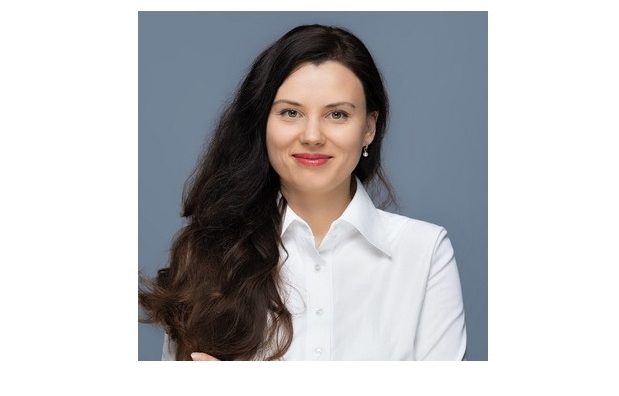
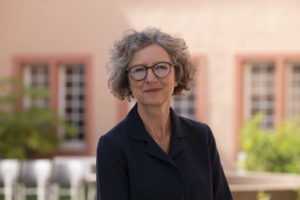
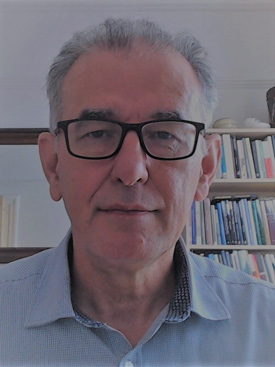
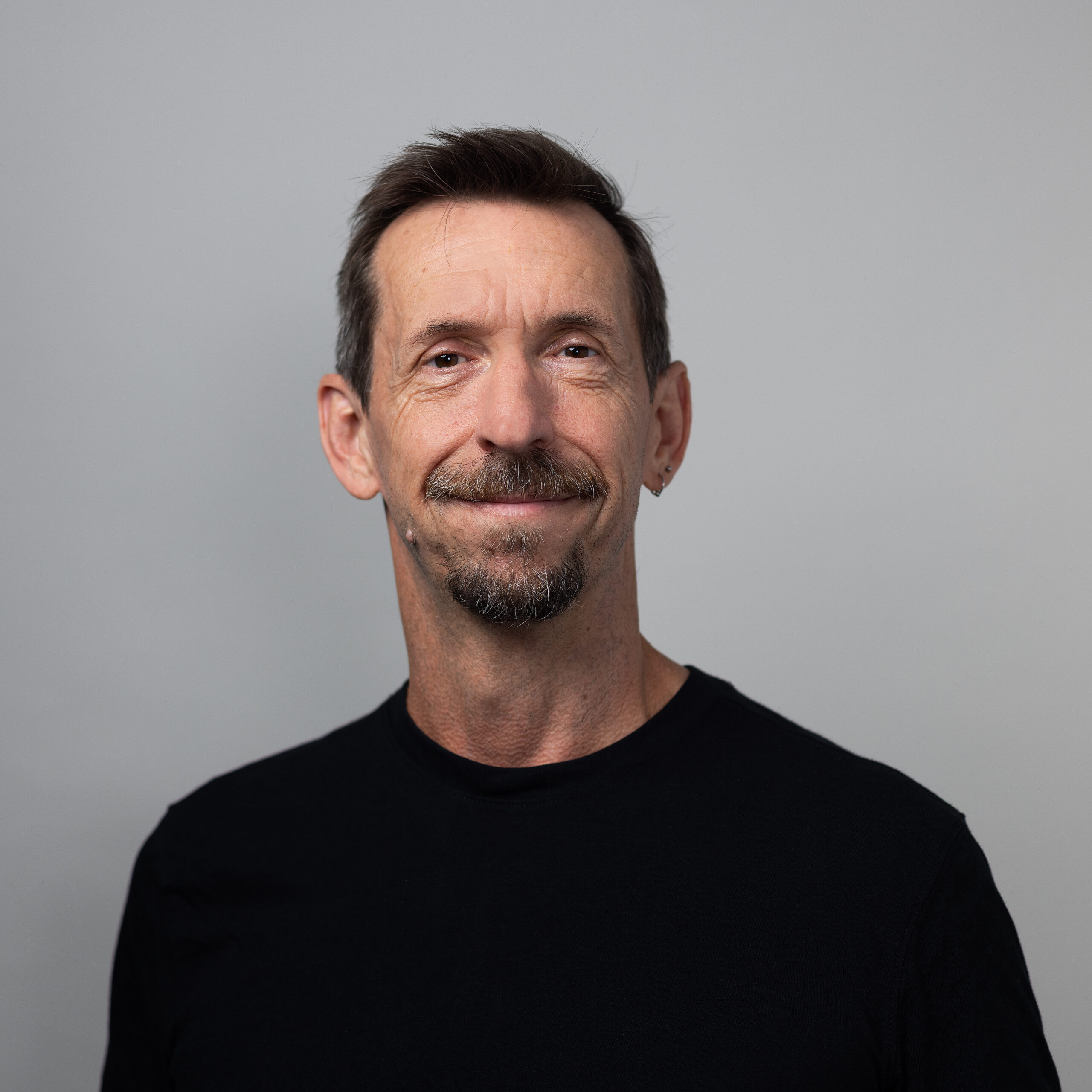
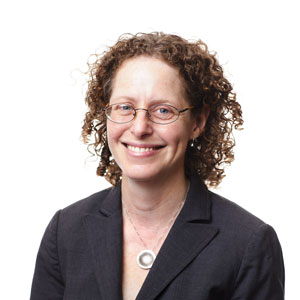
Sara Mackenzie is Department Head and Associate Professor of Linguistics at Memorial University's Faculty of Humanities and Social Sciences. Her research examines phonological representations, harmony systems, and interfaces between phonetics-phonology and morphology-phonology, with emphasis on contrastive feature theories and Stratal Optimality Theory. Recent publications analyze vowel harmony through feature-based frameworks and structure preservation in phonological theory. Experimental work includes acoustic/articulatory studies of /l/ allophony in Newfoundland English and moraic patterns in Japanese language games. Her research integrates theoretical modeling with empirical data from diverse languages including Nilotic languages and Nez Perce. She teaches undergraduate and graduate courses in phonetics, phonology, historical linguistics, and experimental methods.
Katažyna Bogdzevič is a Professor at Mykolas Romeris University (MRU) Law School, specializing in Private International Law , European Law , Human Rights , and Environmental Law . She leads the MRU Human Rights LAB and contributes to the Environmental Management Research LAB, focusing on legal frameworks for ecosystem services, climate change mitigation, and stakeholder engagement. Key Research Themes: Integration of Private International Law with Environmental Law , analysis of legal conflicts in nature-based solutions, and name rights under international human rights conventions. Policy Engagement: Serves as advisor to Lithuania's Minister of Justice Ewelina Dobrowolska , emphasizing knowledge transfer to legislative and judicial practices. Email: roffice@mruni.eu
Prof. Anja Müller-Wood holds a Professorship in English Literature at Johannes Gutenberg University Mainz since 2003. She earned her Ph.D. (1995) from Philipps-Universität Marburg and completed her Habilitation (2002) at the University of Trier. Her research focuses on early modern English literature (16th-17th centuries), 19th-20th century English literature, and interdisciplinary fields like narratology, stylistics, and literary linguistics. She teaches advanced BA/MA courses on these topics and co-leads core modules like 'Introduction to Literary Studies' and 'Colloquium' for literature and education students. Her work explores intersections between literature and cultural identity, particularly in post-Reformation religious dynamics and narrative form. She actively supervises theses aligned with her research areas. Her recent publications include analyses of Jacobean drama, cognitive approaches to narrative, and studies on Angela Carter and Ian McEwan. She serves on the editorial board of the International Journal of Literary Linguistics and maintains academic profiles on ResearchGate and academia.edu. Research emphasizes cognitive narratology, examining how literary forms interact with human cognitive processes. She also investigates transnational cultural exchanges in early modern and modern British literature, blending historical analysis with contemporary theoretical frameworks.
Mathieu Dormaels, Ph.D., is an Associate Professor at the University of Quebec in Montreal , specializing in Heritage Studies , Urban Planning , and Cultural Tourism . He actively participates in academic events focused on civic heritage engagement , landscape approaches , and community-based heritage . Current Role: Associate Professor at Université du Québec à Montréal Research Focus: Built heritage regulation, wind energy landscapes, participatory heritage management, and the interplay between universal/local heritage values. Event Moderation: He has moderated sessions on Engaged communities, civic heritage and participated in discussions about heritage and social change . Key Themes: Heritage policy, cultural landscapes, stakeholder dynamics, and sustainable development in urban and regional contexts. Academic Contributions: Dormaels has published extensively on topics including World Heritage site management in Peru, impacts of industrial heritage, and the role of museums in mediating cultural narratives. His work bridges theoretical frameworks with practical case studies in heritage conservation. Event Participation: Active in conferences addressing renaming/removal of heritage , industrial boom/bust , and cultural mediation , with a focus on balancing preservation, community needs, and economic development.
Lucas Introna is a Distinguished Professor of Organisation, Technology, and Ethics at Lancaster University's Management School. He holds a BCom, BA (Hons), MBA, and PhD. His research focuses on the ethical and social implications of technology, particularly information systems, informed by phenomenology and process philosophy. He has served as Associate Dean for Research (2010-2016) and Head of the Organisation, Work and Technology Department (2007-2010). **Research Interests:** Sociomateriality and performativity Ethical implications of IT (privacy, surveillance) Political studies of technology design Plagiarism and cultural values Virtuality and embodiment **Recent Work Trends:** His publications explore algorithmic governance, digital ethics, and the interplay between technology and social structures. Notable themes include blockchain trust dynamics, refugee precarity, and the ethical dimensions of facial recognition systems. **Awards:** IFIP Outstanding Service Award **Grants & Roles:** Co-founder of the Centre for the Study of Technology and Organisation Member of multiple ethics committees and editorial boards Visited professor at University of Amsterdam **Labs/Groups:** Affiliated with the Centre for Technological Futures and the Society Management and Society group.
John R. Decker is an Associate Professor at the School of Information at Pratt Institute. He serves as Reviews Editor for Renaissance Quarterly , the journal of record for specialists in Art, Literature, and History of the Renaissance. Education: PhD in History of Art and Architecture from University of California, Santa Barbara MA in History of Art and Architecture from University of California, Santa Barbara MS in Data Analytics & Visualization from Pratt Institute Advanced Certificate in Information Experience Design from Pratt Institute BA in Art, Concentration in Art History from California State University, Stanislaus Dr. Decker is a historian with expertise in cultural heritage and data analytics. His research examines how images and objects function as tools of self-fashioning and investigates the role of visual and material cultures—including social media and the Internet—in asserting, mediating, and sustaining claims about "truth" and "reality" across socio-political contexts. He specializes in making complex issues accessible through data analysis, visualization, and storytelling, with particular attention to how audiences interact with information. His Information Experience Design training informs his commitment to creating usable, digestible, and engaging content. Analysis of Dr. Decker's recent publications reveals consistent focus on Renaissance studies, particularly audience reception and devotional practices in early modern Europe. His work bridges historical scholarship with contemporary data visualization techniques, demonstrating expertise in visual culture, material religion, identity formation, and historical intersections of technology and spirituality. His publications show increasing integration of digital humanities methodologies with traditional art historical research. As Reviews Editor for Renaissance Quarterly , Dr. Decker significantly contributes to scholarly discourse in Renaissance studies. His technical proficiency spans Python, R, SQL, HTML, CSS, and JavaScript, positioning him at the intersection of digital humanities and cultural heritage. He maintains an active presence on Mastodon where he engages with academic technology communities.
Dr Mark J. Hill is a Lecturer in Cultural Computation at King's College London's Department of Digital Humanities within the Faculty of Arts & Humanities. He holds a DPhil from the University of Oxford, an M.Sc. in Political Theory from the London School of Economics, and a B.A. in Political Science from Concordia University. His interdisciplinary work bridges digital humanities, computational social science, and intellectual history. Research Focus: Social network analysis, public discourse analysis via large datasets, quantitative text analysis, and critical evaluation of digital methods. Current Projects: Investigating discourse patterns across historical and contemporary contexts, including Early Modern Nonconformist networks and digital discourse around football fandom. He collaborates with institutions like the University of Helsinki and engages with public sectors on digital research projects. Teaching includes digital research methods and critical thinking in the digital age. His affiliations include the Computational Humanities Research Group and the Centre for Digital Culture at King's College London.
Michael Quante is a Professor of Philosophy with a focus on Practical Philosophy at the University of Münster. His affiliations include leadership roles in the Cluster of Excellence 'Religion and Politics', the Graduate School, and the Center for Science Communication. He holds dual roles as Prorector for International Affairs and Sustainability at the University of Münster. His academic career includes habilitation (2001) and a PhD (1992) from the University of Münster, with earlier studies in Philosophy and German at the Universities of Münster and Berlin. Quante’s research focuses on Philosophy of German Idealism, especially Hegel and Marx, Philosophy of the Person, Action Theory, and Biomedical Ethics. Notable projects include leading the 'Religious-Philosophical Noncognitivism' project and co-editing the 'Hegel Studien' series. His work bridges philosophical theory with contemporary societal issues, such as ethics in science, inclusive education, and the critique of religion. His recent publications emphasize Marx’s philosophy, Hegelian recognition theory, and ethical aspects of biomedical technologies. He has received prestigious awards, including the German Prize for Philosophy and Sozialethik (2013) and honorary doctorates from institutions like the Ilia State University (2023). He actively contributes to academic governance, including roles in the Berlin-Brandenburg Academy of Sciences and the Academia Europaea. Quante’s advising and grants include leading interdisciplinary projects on individualization and evolutionary processes. His involvement in labs and teams includes the Center for Bioethics and the Graduate School 'Evolutionary Processes of Adaptation and Disease'.
Michael Doolan is a Senior Lecturer at Sydney College of the Arts, University of Sydney. He holds a PhD from Monash University (2013), a Master of Arts (2001), and a Bachelor of Arts (1981). His work explores the intersection of memory, narrative, and objects, using ceramics and mixed media to create sculptures that interrogate childhood narratives and their influence on adult identity. Doolan’s installations often feature disorienting optical effects and fairy tale motifs, reinterpreting classic stories through a contemporary lens. Education: PhD, Faculty of Art Design & Architecture, Monash University (2013) Master of Arts, Monash University (2001) Bachelor of Arts, Monash University (1981) Research Interests: Doolan’s practice focuses on the legacy of fairy tales and their unresolved narratives. By combining handcrafted techniques with digital fabrication, his sculptures critique cultural narratives and materiality. His work often features uncanny, monochromatic ceramic forms that evoke childhood memories while questioning adult perceptions of selfhood. Exhibitions & Awards: Recent highlights include the Deakin University Small Sculpture Award 2024 , participation in the Korean International Ceramics Biennale 2019 , and solo exhibitions such as Stories with Endings Changed (2018) and World without World (2017). His work is featured in major public and private collections internationally. Associations: Member, Australian Network for Art & Technology (ANAT) Member, International Society for the Arts, Sciences and Technology (Leonardo) Current Projects: Researching new sculptural works that blend handcrafting with digital fabrication to reflect contemporary entanglements between human and machine processes.
Dr. Guy Westwood is an Associate Professor in Greek Language and Literature at the University of Oxford, affiliated with Lady Margaret Hall as a Fellow and Tutor in Classics. He holds an MA, MSt, and DPhil from Oxford, with academic roles spanning Balliol, Merton, and Birmingham. His research focuses on classical Greek and Roman rhetorical prose, particularly Athenian democratic oratory, exploring how historical narratives shaped political persuasion. He has authored a monograph on Demosthenes and Aeschines and published widely on topics such as Athenian lawcourt rhetoric, intertextuality in poetry, and ancient historiography. Teaching encompasses Greek language, literature, and history at both undergraduate and graduate levels, with supervision in ancient rhetoric and related fields. He encourages graduate applications in Greek rhetoric and comedy. His work bridges rhetoric with drama and historiography, reflecting a broad engagement with fifth and fourth-century Greek studies. Publications highlight themes like legal oratory's performative aspects, intertextual poetic analysis, and the role of memory in persuasion. His career includes fellowships at Merton and teaching roles at Birmingham, showcasing a trajectory of academic leadership in classical studies.
Patrick Gaudreau is a Full Professor in the School of Psychology at the University of Ottawa, where he specializes in social and personality psychology. His research focuses on the determinants and consequences of achievement in educational, sport, and artistic domains, particularly through the lens of his Model of Excellencism and Perfectionism (MEP). The MEP distinguishes between healthy pursuit of excellence and harmful perfectionism, emphasizing how these motivations affect performance, psychological adjustment, and social behaviors. Gaudreau's work highlights the benefits of excellencism, such as reduced distress and ethical attitudes compared to perfectionism. He also investigates motivational dynamics, coping strategies, and the impact of digital devices on learning. Education: Ph.D. in Psychology, Université de Montréal (2004) M.Sc. in Psychology, Université de Montréal (2000) B.Sc. in Psychology, Université de Montréal (1999) Research Interests: Perfectionism vs. excellencism, achievement goals, self-determination theory, performance anxiety, sport psychology, health psychology, and quantitative methods. His laboratory, LAMRA (Laboratory for Research on Achievement, Motivation, and the Regulation of Action), explores interactionist perspectives on how social environments and individual traits shape achievement outcomes. Recent Articles: Recent work examines psychological needs in the context of excellencism, perfectionism's impact on social disconnection, and the motivational roles of fear of failure. His findings advocate for interventions to transform perfectionism into excellencism to enhance both performance and well-being. Awards: None explicitly listed, but recognized as editor of Anxiety, Stress, and Coping and for over 100 scientific publications. Active in applied settings, including coaching youth baseball and advising on athlete well-being. Advising & Grants: Supervises numerous graduate students and collaborates on grants focusing on perfectionism, excellencism, and motivational interventions. His research has been supported by studies on procrastination, academic transitions, and the psychological effects of sport participation. Labs/Teams: Leads the LAMRA, a multidisciplinary team investigating achievement-related processes. Engaged with the Student-athlete Well-being and Achievement Project (SWAP), examining sport and academic outcomes for student-athletes.
Dr. Alexander Engelmann is an Assistant Professor at the Institute for Strategy and Innovation Management (ISM) at WU Vienna University of Economics and Business. His research focuses on firm adaptation to environmental dynamics, particularly in mature industries transitioning to digital ecosystems. He examines strategy processes (dynamic capabilities, business model adaptation) and practices (framing, communication) to understand organizational resilience. Before academia, he worked in management consulting and as a certified Work & Organization psychologist. Education: PhD in Strategy and Innovation Management from WU Vienna University of Economics and Business Mag. rer. nat. (Master of Science equivalent) in Psychology from the University of Vienna Research Interests: Dynamic capabilities and SME innovation Ecosystem governance and platform strategies Sustainability-oriented business models Strategic framing in mature industries Recent work explores how automotive firms navigate platform-based transitions and how high-status OEMs maintain competitive edges. His 2025 Journal of Management Studies paper addresses innovation in politicized ecosystems, while 2024 Research Policy research introduced the 'slipstream strategy' concept. Team affiliations include collaboration with Prof. Werner H. Hoffmann, Dr. Georg Reischauer, and others in the ISM research group. Current projects focus on ecosystem resilience and stakeholder integration in sustainability innovation.
Megan J. Elias is an Associate Professor of the Practice and Director of the Food Studies Program at Boston University. She holds a PhD from the City University of New York (CUNY), an MA from San Francisco State University, and a BA from Cornell University. Her research explores the intersection of food, culture, and history, with a focus on food writing, markets, home economics, and gender. Dr. Elias is the author of seven books, including *Food on the Page: Cookbooks and American Culture* (2017) and *Food in the United States, 1890–1945* (2009), which received the American Library Association’s Outstanding Academic Text award. She serves as editor-in-chief of *Food, Culture & Society* and has been a co-recipient of multiple National Endowment for the Humanities grants. Elias teaches courses such as *History of Food*, *Introduction to Gastronomy*, and *Food and Gender*, emphasizing interdisciplinary approaches. Her work bridges historical analysis with public engagement, including contributions to Sundance Channel’s *Love/Lust* series and collaborations on museum podcasts like the *Making Objects Speech* project. Her research interests span business history, cultural history, food technology, and the scholarship of teaching and learning. In grants and fellowships, she secured $350,000 as Lead Faculty Mentor for the *Bridging Historias* program and a $74,937 NEH grant for the *Foodways and Humanities Project*. Her awards include the CUNY Chancellor’s Fellowship (2014) and the Culinary Historians of New York Amelia Scholars Grant (2007). She actively mentors faculty and curricular development, reflecting her commitment to academic innovation and educational equity.
prof. dr. Irene Stengs is an Endowed Professor at Vrije Universiteit Amsterdam's Faculty of Social Sciences, specializing in Social and Cultural Anthropology. She holds a joint appointment with the Mobilities, Beliefs and Belonging (MOBB) research unit and is a senior researcher at the Meertens Instituut (KNAW). Her work focuses on popular religiosity, heritage formation, Dutch cultural identity, and Thai society. Key research topics include the cultural politics of 'Dutchness,' the heritagization of religion (HERILIGION project), and high-density events' role in shaping national identity. She has contributed to projects like ‘The Dutch Passion for the Passion,’ examining the popularity of religious performances in the Netherlands. Education: PhD in Cultural Anthropology from Universiteit van Amsterdam (thesis on Thai monarchy veneration) Research Interests: Irene explores how cultural heritage is commodified and politicized, particularly in the Netherlands and Thailand. Her work analyzes the interplay between secularization, colonial history, and contemporary rituals. She investigates how events like passion performances or cultural festivals act as 'high-density events,' intensifying national identity discourses and heritage formation. Research Projects: HERILIGION (HERA-funded): Examines religion's transformation into heritage in Europe. ‘Dutchness’: Studies cultural heritage's resurgence in the Netherlands, including its colonial legacy. Labs/Teams: Collaborates with the Meertens Instituut's Ethnology Department and leads the MOBB research unit at VU.
Christian Gasser is a Lecturer in Film at the Lucerne School of Design, Film and Art (HSLU D&K). He holds a background in German and Romance Studies from universities in Bern and Paris. Beyond academia, he is a freelance writer, cultural journalist for publications like the NZZ and Swiss-German radio stations, and co-editor of the comic magazine STRAPAZIN. His professional roles include curator for events like the Graphic Novel Days in Hamburg and Avant Comics in Madrid, alongside jury memberships for international comic and animation festivals. Education: Germanistik und Romanistik (Bern/Paris) His research focuses on animation film aesthetics, history of moving images, illustration history, and mentorship in theory/practice. He has curated festivals and contributed to radio programs, earning awards such as the Zürcher Radiopreis (1994) and Prix Europa Berlin (1996). Recent publications include the novel Rakkaus! (2014) and Comic Deluxe (2012) . He has been affiliated with HSLU since 2004, teaching theory in Animation and Illustration programs since 2013. His articles explore diverse themes from Swiss animation history to avant-garde comics, reflecting his interdisciplinary approach. Engagements include moderating panels at international festivals and publishing in academic journals. He co-led the Video Essay research project on audiovisual education methodologies.