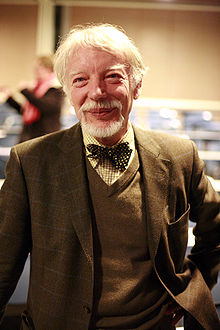
Alessandro Bausi is a Full Professor of Ethiopian Studies at Sapienza University of Rome since November 2023, where he focuses on Ethiopic language, literature, and manuscript cultures. Prior to this, he served as a Professor for Ethiopian Studies at the University of Hamburg (2009–2023) and held academic roles at the University of Naples 'L’Orientale' and Addis Ababa University. MA (1988, University of Florence) PhD (1992, Naples Oriental Institute) His research spans Ethiopian textual and manuscript cultures, Aksumite history, textual criticism, hagiography, and Semitic studies. He has led major projects like TraCES and Beta maṣāḥǝft , emphasizing linguistic evolution and manuscript digitization. He is a member of prestigious academies including the Accademia Nazionale dei Lincei (foreign member since 2023), Academia Europaea, and the Ethiopian Academy of Sciences. His editorial roles include editing Aethiopica and the Encyclopaedia Aethiopica .
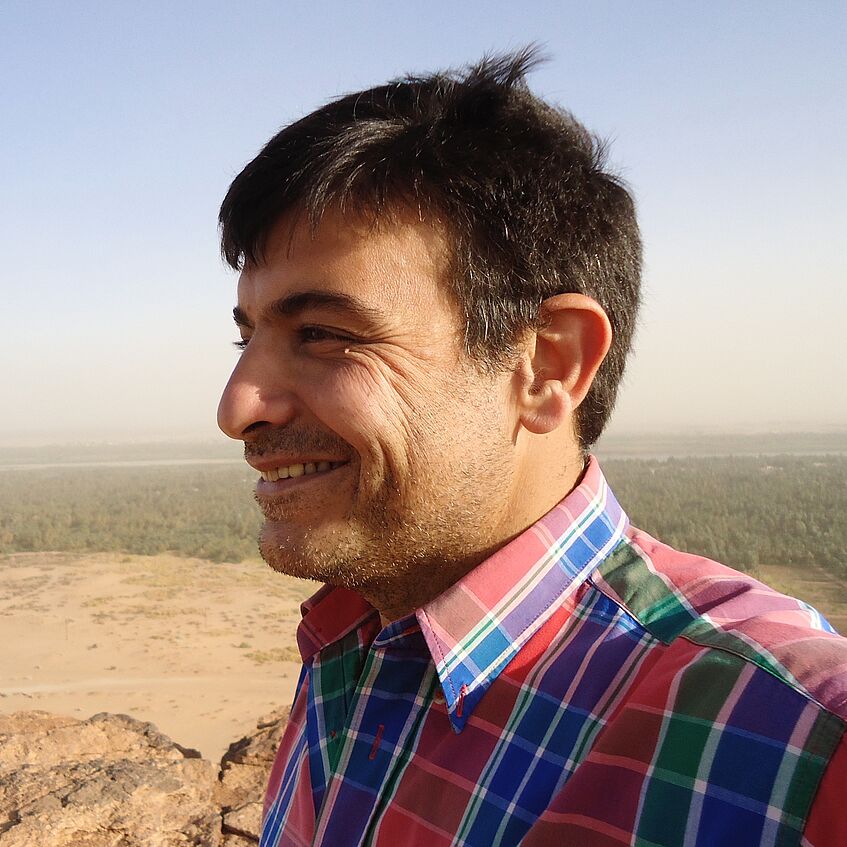
Ramón Soneira Martínez is a Postdoctoral Fellow at the Austrian Archaeological Institute's Department of Classical Studies. He holds a Degree in History from the Complutense University of Madrid (Spain) with a focus on Ancient History, a Master's degree in Religious Studies, and a PhD in Religious Studies from the Max-Weber-Kolleg of the University of Erfurt (Germany) and the University of Graz (Austria). His academic career centers on interdisciplinary approaches to ancient religious phenomena. Education : Bachelor's Degree in History (Ancient History focus), Complutense University of Madrid Master's Degree in Religious Studies Doctor of Philosophy (PhD) in Religious Studies, Max-Weber-Kolleg (University of Erfurt) and University of Graz Research Interests : Ramón specializes in Ancient History of Religion, Theory and Methodology of Religious Studies, Religious Deviance, and Atheism in the ancient Mediterranean. His work explores unbelief narratives, sacred spatial practices, and biopolitical dimensions of religious systems in Greco-Roman contexts. Publication Trends : His recent scholarship (2020–2025) examines atheistic positions in Classical Athens, interdisciplinary frameworks for analyzing ancient religion, biopolitical dimensions of marriage, and ecological interpretations of sacred landscapes. These works frequently engage with Platonic philosophy, pre-Socratic thought, and comparative methodologies across Mediterranean civilizations. Current Research Projects : Doubt and religion in the ancient Mediterranean: A comparative analysis of unbelief narratives Lodging/Living in a Sacred Context: Investigating spatial dynamics of religious environments
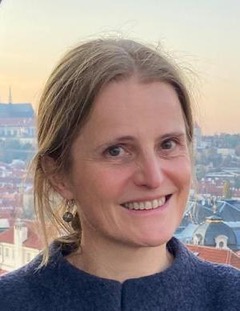
Rahim Shayegan is an Assistant Professor of Iranian at the University of California, Los Angeles (UCLA) Department of Near Eastern Languages and Cultures, and serves as Director of the Pourdavoud Center for the Study of the Iranian World and the Program of Iranian Studies. His research spans multiple historical periods and linguistic traditions of Iran. Education PhD in Iranian Philology & Ancient History, Harvard University MA in Old Iranian Philology & Ancient History, Sorbonne University BA in Philosophy, Comparative Philology, and History, University of Cologne His expertise includes Sasanian history, Iranian epigraphy, and comparative philology, with significant contributions to understanding ancient Iranian religions and historiography. He has received prestigious awards for his scholarship, including the Ehsan Yarshater Book Award and Guggenheim Fellowship. Academic Leadership Director, Pourdavoud Center (2017–present) Jahangir and Eleanor Amuzegar Chair (2013–present)
Dr. Gabrielle Kremer is a Senior Research Associate and Guest Researcher at the Austrian Academy of Sciences (OeAW), focusing on provincial Roman archaeology with emphasis on the Danube provinces and Gallia Belgica. She has taught at the University of Vienna since 2001 and coordinates interdisciplinary projects on Roman stone monuments, including the Corpus Signorum Imperii Romani Carnuntum series. Her work bridges epigraphy, sculpture analysis, and funerary architecture studies. Research focuses include: Religious practices in Roman provinces Stone monument provenance and reuse Cultural identity in Noricum and Pannonia Interdisciplinary analysis of Roman material culture Monumental grave architecture in the Treveri region Current projects involve the PolychroMon initiative (2023–2025) analyzing polychromy in Roman monuments and the Accommodation/Living in a Sacred Context study. She co-edited multiple international colloquium proceedings and led the "Religion and Society" working group (2017–2020) at OeAW's Institute for Cultural History of Antiquity.
Nils Arne Pedersen is an Associate Professor in Church History at Aarhus University's Faculty of Theology/Arts since 2004. His academic career includes roles as a Full-time scholar supported by the Carlsberg Foundation (1990–1995) and Danish Research Council grants. He specializes in Manichaeism, Patristics, and the historical reception of biblical texts. His research focuses on early Christian and Manichaean theological texts, especially Coptic and Syriac manuscripts. Research Interests : Pedersen’s work explores Manichaean literature, Patristic theology, and the interplay between biblical sources and early religious movements. He has edited critical editions of Manichaean texts and studies their transmission across languages like Syriac, Coptic, and Persian. Key Projects : Biblia Manichaica (Old and New Testament studies in Manichaean contexts), textual editions of Manichaean homilies, and analyses of anti-Manichaean polemics. Awards & Leadership : Honorary member of the International Association of Manichaean Studies (2022), former President (2017–2022). He has received significant grants, including €887k for the Biblia Manichaica project (2012–2015) and €233k from the Carlsberg Foundation (1990–1995). Grants & Funding : Danish Council for Independent Research, Danish Research Council for the Humanities, and Carlsberg Foundation grants have supported his work on Manichaean textual traditions and comparative religious studies.
Nikolaos Stampolidis is a distinguished Professor of Classical Archaeology at the University of Crete, where he has served since 1984, progressing from Lecturer to full Professor since 1994. He currently holds multiple prestigious positions including Director-General of the Acropolis Museum (since June 2021) and Director of the Museum of Cycladic Art (since 1996). Previously, he served as Dean of the Faculty of Letters and Arts at the University of Crete (1994-1997) and Head of the Department of History and Archaeology (1991-1993). Stampolidis earned his undergraduate degree from the Aristotelian University of Thessaloniki (1970-1974), followed by postgraduate studies in Bonn, Germany (1975-1977) with a DAAD scholarship. He completed his dissertation in Athens (1978-1979) with a Greek government scholarship, achieving Magna cum laude distinction. His research focuses on Mediterranean interconnections during the Early Iron Age, with special emphasis on Cretan archaeology, particularly the Eleutherna site he has excavated continuously since 1985. His work spans homeric archaeology, Greek sculpture across multiple periods, epigraphy, funerary practices, and the dialogue between antiquity and contemporary art. His excavations at Eleutherna have revealed significant insights into geometric-archaic period customs and cultural exchanges across the Mediterranean. Stampolidis' scholarly output demonstrates a consistent focus on Mediterranean cultural networks, particularly between Crete, the Cyclades, Cyprus, and the Near East during the Early Iron Age through Hellenistic periods. His research combines meticulous excavation work with innovative interpretations of cultural interactions, often bridging archaeological evidence with literary sources like Homer. The recurring themes in his work include the analysis of funerary practices, the study of Mediterranean trade networks, and the examination of how cultural influences traveled across the ancient world. His numerous honors reflect his significant contributions to archaeology and Greek culture, including being named Honorary Citizen of Eleutherna (1995), receiving the Tourism Award for his contribution to Crete's development (2015), and being awarded the Grand Commander of the Order of Phoenix by the President of the Hellenic Republic (2016). Throughout his career, Stampolidis has supervised numerous graduate students through the Post-graduation program in Classical Archaeology at the University of Crete, which he directed since 2005 (previously co-directing from 1991-2005). His research has been supported by multiple funding sources including UNESCO, the University of Crete, the Institute of Mediterranean Studies, the Mediterranean Archaeological Society, various Greek Ministries, the INSTAP, and European Community programs including INTERREG IIIA and the 3rd European Community Support Framework. Stampolidis directs the long-term excavation and research project at Eleutherna, Crete, which has evolved into a major archaeological site with its own museum. His work at Eleutherna represents one of the most significant ongoing archaeological projects in Greece, combining excavation, conservation, publication, and public presentation of findings through both the on-site museum and numerous international exhibitions he has curated.
Rahim Shayegan is an Assistant Professor of Iranian Studies at the University of California, Los Angeles (UCLA), affiliated with the Department of Near Eastern Languages and Cultures in the Division of Humanities. He currently holds the Pourdavoud Endowed Director's Chair (2018-present) and serves as Director of the Pourdavoud Center for the Study of the Iranian World. He also directs the Program of Iranian Studies at UCLA. PhD in Near Eastern Languages and Civilizations (Iranian Philology, Ancient History) from Harvard University MA in Old Iranian Philology and Ancient History from Université de la Sorbonne BA in Philosophy, Comparative Philology, and History from Albertus-Magnus-Universität zu Köln His research focuses on Iranian epigraphy, philology, and historiography across multiple eras, including Achaemenid, Arsacid, Seleucid, and Sasanian periods. He studies Persian epic traditions, ancient religions, and intersections between Greek and Islamic historiographical practices. Ehsan Yarshater Book Award for Arsacids and Sasanians (2011) Guggenheim Memorial Foundation Fellowship (2013-2014) UCLA Faculty Career Development Award (2008-2009)
Wolfram Drews is a Professor of Medieval History at the University of Münster (Westfälische Wilhelms-Universität), Germany, since 2011. He holds a Dr. phil. (summa cum laude) from Freie Universität Berlin and completed his Habilitation in Medieval History at the University of Cologne. His research focuses on comparative and transcultural approaches to medieval history, examining themes like monarchical strategies, religious violence, and cultural entanglements between Christianity, Judaism, and Islam. Education: 1986–1991: Humboldt-Universität, Berlin (Languages: English, Spanish, French) 1992–1998: Freie Universität Berlin (History, Jewish Studies, Theology) 2001: Ph.D., Freie Universität Berlin (supervisor: Kaspar Elm) 2008: Habilitation, University of Cologne (supervisor: Georg Jenal) His research interests include medieval kingship, transcultural history, and the interplay between religion and power. He has led major projects like the Special Research Field 'Cultures of Decision Making' and the Cluster of Excellence 'Religion and Politics' in Münster. His work often bridges European and Islamicate contexts, as seen in studies comparing Carolingian and Abbasid dynasties. Dr. Drews has held visiting professorships at Cologne University, Ruhr-Universität Bochum, and Humboldt-Universität Berlin. He is a Fellow of Dumbarton Oaks (Harvard) and has served as President of the Mediävistenverband (Interdisciplinary Association of Medievalists). His honors include the Friedrich-Meinecke-Preis (2001) and leadership roles in global historical networks. He has organized conferences across Europe and North America and contributed to interdisciplinary research on premodern decision-making cultures and religious-political dynamics. His edited volumes and articles address topics ranging from medieval Spanish imperialism to the cultural emergence of Abbasid Iraq.
Jan Assmann (1938–2024) was a renowned Egyptologist and cultural theorist, serving as Professor of Egyptology at the University of Heidelberg (1976–2003) and later as Honorary Professor at the University of Konstanz. He held visiting professorships worldwide, including at Yale, Collège de France, and the Hebrew University of Jerusalem. His research focused on Egyptian religion, cultural memory, and the origins of monotheism. He led the DFG-funded 'Ramesside Officials' Graves' project in Thebes, producing foundational work on Egyptian funerary practices and religious texts. He authored over 50 monographs and 600 essays, earning international acclaim and numerous awards, including the Balzan Prize (2017) and the Peace Prize of the German Book Trade (2018). His academic legacy includes shaping Heidelberg's Egyptology program and mentoring future leaders in the field. Education: Studied Egyptology, Classical Archaeology, and Greek Studies at Munich, Heidelberg, Paris, and Göttingen. Habilitated in 1971. Key Projects: Epigraphic fieldwork in Theban necropolis; cultural memory studies with wife Aleida Assmann. Research Interests: Egyptian theology, cosmography, Ma’at, funerary liturgies, and the reception of ancient Egypt in later cultures. His work bridged Egyptology with broader cultural theory, influencing disciplines beyond archaeology. Awards & Honors: Recipient of Germany's highest civilian honors, including the Grand Cross of the Federal Cross of Merit, and international accolades for interdisciplinary scholarship. Legacy: Focused on fostering interdisciplinary dialogue and practical fieldwork education. His teachings emphasized connecting textual analysis with archaeological context, inspiring generations of scholars. The Heidelberg Institute continues his tradition of integrating field archaeology with philological rigor.
Univ.-Prof. Robert Rollinger is a full professor at the University of Innsbruck’s Department of Ancient History and Oriental Studies. He holds academic degrees from the Leopold-Franzens-Universität Innsbruck, including a M.A. (1989), PhD (1993), and Habilitation (1999). His research focuses on the interconnections between the Aegean and Ancient Near East, Achaemenid history, and global historiography. Rollinger has held prestigious positions such as editor of journals like Nikephoros and Ancient History Bulletin , and is a member of institutions including the Academia Europaea and the Austrian Academy of Sciences. Research Interests Contacts between Aegean and Near Eastern worlds Ancient Near Eastern historiography Empire studies (especially Achaemenid Persia) Global and entangled history approaches Awards Dr. Seibert-Preis (1995) Preis des Fürstentums Liechtenstein (1998) Wissenschaftspreis des Österreichischen Olympischen Comités (1999) Ausonius-Preis (2023) He leads major projects like the NAWA Chair on Achaemenid-Roman empire comparisons and chairs the Austrian Academy’s “Transformation Processes and Empire” commission. His work emphasizes cross-cultural connections and imperial legacies in antiquity.
Dr. Evangelos Karagiannis is a Research Fellow in the Department of Social and Cultural Anthropology at the University of Vienna. He holds a PhD in Social Anthropology from the Free University Berlin and has held academic positions at institutions such as the University of Zurich (Assistant Professor), Max Planck Institute for Social Anthropology, and University of Osnabrück. His research focuses on political anthropology (nationalism, ethnicity, marginality), the anthropology of religion (particularly Pentecostalism in Greece), globalization, migration, and Balkan studies. Key fieldwork locations include Bulgaria’s Rhodope Mountains, Germany, and Greece. Education: PhD in Social Anthropology, Free University Berlin MA in Social Anthropology and Balkan Studies, Free University Berlin Research Projects: Europeanization & Collective Identities (Volkswagen Foundation) Pentecostalism in Greece (Swiss National Science Foundation) Migrant Incorporation (MacArthur Foundation) Awards: None explicitly listed. His publications analyze Pentecostalism’s role in Greece, migration policies, and cultural exclusion. He has edited journals like Vienna Working Papers in Ethnography and contributed to debates on transnational religious practices and modernity. Current research emphasizes Greece’s religious landscape and anti-Western sentiments within Orthodox Christianity.
Prof. Fabio Wolkenstein is an Associate Professor at the Department of Political Science, University of Vienna, and Head of Department. He holds a PhD in Political Theory from the London School of Economics (2016), an M.Sc. in Political Sociology (LSE, 2011), and a B.A. in Political Science from the University of Vienna (2009). Research Interests: Wolkenstein specializes in democratic theory, political parties, representation, and Christian/Social Democracy. His work explores democratic backsliding, institutional reforms, and transnational party dynamics. He has conducted research at Aarhus University (2017–2021), Goethe University Frankfurt, and the University of Amsterdam (2020–2021). Publications: His recent works include Political Representation as Communicative Practice (2025), Democratic Regressions: Subversions of Popular Rule (2023), and Die dunkle Seite der Christdemokratie (2019). He has authored over 80 peer-reviewed articles on democratic theory, party systems, and constitutionalism. Grants & Projects: Lead researcher on the 2024 project 'Social justice or cancel culture? Gender-just language and academic freedom in Germany' (funded by external grants). Previously held a VENI Grant from NWO (2020–2021) for research on party reforms. Labs/Teams: Engaged with transnational research networks on democratic theory and EU party systems. Collaborates with scholars at Goethe University, Freie Universität Berlin, and the London School of Economics.
George Karamanolis is a Professor at the Department of Philosophy , University of Vienna, and currently serves as Vice Dean of the Faculty of Philosophy and Education. His research focuses on Ancient Philosophy, particularly Platonism, Neoplatonism, and their intersections with early Christian thought. Email: george.karamanolis@univie.ac.at Office Hours: Tuesday 12:00-13:30 His recent publications analyze Neoplatonic metaphysics, Syriac philosophical traditions, and the reception of Aristotle in late antiquity. Teaching includes courses on Greek terminology, Aristotle's ethics, and the history of philosophy from antiquity to late antiquity.
PD Dr. Torsten Tobias Voß serves as an Associate Professor at the Institute of German Studies, University of Klagenfurt, Austria, specializing in German literary studies from the 18th century to contemporary periods with emphasis on cultural intersections and theoretical frameworks. His academic credentials include: Habilitation (Venia legendi) in Modern German Literature, University of Klagenfurt (2014), thesis: "Bodies, Uniforms, and Officers: Exemplary Stages of a Conditional Relationship from the Early Modern Period to the Modern Age" Doctorate in Literature, University of Bielefeld (2004, summa cum laude), thesis: "The Distance of Art and the Coldness of Forms" State Teaching Qualification in German Studies/History, University of Bielefeld (1994-2000) Voß's research spans children's and young adult literature, cultural-literary history, literature's relationship with popular media and religion (particularly Literary Catholicism), and modernist movements including Romanticism, Aestheticism, and Avant-garde. He further investigates poetry theory, masculinity studies, paratextuality, literary field dynamics, and authorship staging through contemporary theoretical lenses. No scientific awards were documented in the source material. Information regarding student supervision, research grants, and laboratory/team affiliations was not provided in the available text.
Anne Piéjus is a CNRS Researcher specializing in Early Modern Music, with a focus on interdisciplinary approaches integrating literature, theater, history, and digital humanities. She leads the Mercure galant program, producing enriched editions of music, text, and images while advancing digital methodologies in musicology. Her research includes studies on Italian Renaissance music, French Baroque theater, and music's role in education and devotion. Positions: 1st Class Research Director at CNRS-IReMus (2021–present) Formerly at the Paris Philharmony (2001–2002) and University of Fribourg (2001–2002) Fellowships: Villa Medici (Rome, 1998–2000), Thiers Foundation (1995–1998) Research Interests: Music in early modern press, theater, and education; sacred music in Renaissance Rome; digital humanities; music and politics; interdisciplinary performance studies. Awards: Thorlet Prize (2015), Alfred Verdaguer Prize (2015) Prime d'Encadrement de Recherche (2016, 2020) Prix des Muses (2001) Advising & Grants: Supervises graduate students in the Doctoral School “Concepts et langages”; led ANR-funded research on school spectacles under the Ancien Régime. Labs/Teams: Heads the Mercure galant program and co-founded the European seminar Building Relationships in a Changing World .