Xiuyuan Cheng is an Associate Professor of Mathematics at Duke University, affiliated with the Trinity College of Arts & Sciences. Her expertise lies in applied analysis, focusing on developing theoretical and computational techniques for high-dimensional data analysis, signal processing, and machine learning. She holds a Ph.D. from Princeton University (2013). Her research emphasizes graph-based methods, kernel techniques, and deep learning applications in manifold data analysis. Notable contributions include work on graph Laplacian convergence, optimal transport for single-cell data, and rotation-equivariant neural networks. She has received grants from the National Science Foundation, including a CAREER award (2023–2028) for learning graph diffusion from high-dimensional data. Recent publications explore topics such as bi-stochastic graph normalization, neural tangent kernels, and adversarial defense using basis transformations. Teaching includes advanced courses like Measure and Integration and High-Dimensional Data Analysis. She collaborates extensively in interdisciplinary projects, integrating mathematical theory with computational tools for real-world applications.
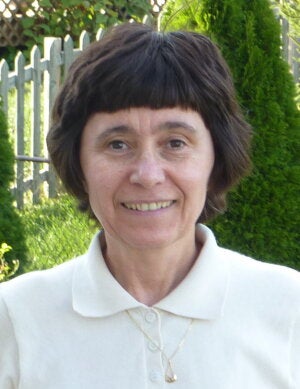
Solveig Bruvoll is an Associate Professor at the University of Oslo (15% position) and holds a 100% research position at the Norwegian Defence Research Establishment (FFI). She specializes in Autonomous Systems and Cybersecurity , focusing on security in military operations and software resilience. Her work bridges engineering, mathematics, and defense applications. Research interests include autonomous vehicle security, defense simulation, and mathematical modeling. She teaches the course TEK5510 and has published extensively in conferences like IEEE CNS and journals such as Journal of Defense Modeling and Simulation . Her FFI affiliation emphasizes practical military technology and operational analysis. Publications highlight contributions to path planning algorithms, command agent modeling, and cybersecurity frameworks for autonomous systems. She collaborates on NATO projects, as seen in her work on M&S support for operational tasks. No awards are explicitly listed, but her research impacts critical defense and civilian infrastructure security domains.
Prof Ian M. Wanless is a Professor in the School of Mathematics at Monash University, Melbourne, Australia. He has held academic positions at institutions including the Australian National University (ANU), University of Melbourne, Christ Church Oxford, and Charles Darwin University. His research primarily focuses on combinatorics, with specializations in Latin squares, matrix permanents, graph theory, and algebraic structures. He has made significant contributions to the enumeration and properties of Latin squares, including groundbreaking work on transversals, orthogonality, and symmetry. Wanless has also explored connections between Latin squares and algebraic structures like quasigroups and loops. His education includes a PhD from ANU (supervised by Brendan McKay) and postdoctoral fellowships at Oxford and ANU. He has been awarded an Australian Research Council Future Fellowship (2011) and has led major research initiatives, including organizing international conferences (e.g., 5ICC in 2017). His work spans theoretical results and computational methods, with over 100 publications in top journals like Journal of Combinatorial Theory and SIAM Journal on Discrete Mathematics . Wanless’s research interests extend to design theory, hypergraphs, and permutation polynomials. He co-edits the Electronic Journal of Combinatorics and has held leadership roles in professional societies, including president of the Combinatorial Mathematics Society of Australasia. His current projects include studies on perfect 1-factorizations, covering radii of permutation sets, and algebraic properties of Latin squares.
Boris Landa is an Assistant Professor in the Department of Electrical & Computer Engineering at Yale University. His research focuses on statistical signal processing and geometric data analysis, developing theoretical and computational tools for analyzing large, complex datasets. He holds a Ph.D. and M.S. from Tel Aviv University, Israel, and a B.S. from the Technion - Israel Institute of Technology. His work bridges computational methods with applications in molecular biology, cryo-electron microscopy, and high-dimensional data analysis. Notable contributions include robust inference of manifold geometry, doubly stochastic scaling techniques, and multi-reference factor analysis for alignment problems. Recent research explores optimal transport metrics for single-cell data and noise stabilization in signal recovery. Landa's publications span prestigious journals such as SIAM Journal on Mathematics of Data Science and Information and Inference. His methodologies address challenges in manifold learning, graph Laplacian normalization, and biological dataset integration. Active areas include developing adaptive algorithms for low-rank signal detection and robust statistical techniques for heterogeneous data. His educational background includes advanced studies in applied mathematics and engineering, with a strong emphasis on interdisciplinary applications. Ongoing projects involve geometric approaches to omics data analysis and scalable solutions for large scientific imaging datasets.
CHENG Shih-Fen is an Associate Professor of Computer Science at Singapore Management University (SMU) and a Principal Research Scientist at Amazon. He holds a PhD in Industrial and Operations Engineering from the University of Michigan and a BSE in Mechanical Engineering from National Taiwan University. His research focuses on modeling and optimization of complex systems in urban computing, decision-making, and transportation, with notable contributions to taxi fleet management, ride-hailing systems, and sustainable logistics. Research interests include Artificial Intelligence , Decision Optimization , Machine Learning , and Urban Sustainability . Notable achievements include prestigious awards from CIKM, AAMAS, and INFORMS. He has advised students such as Qian Shao and Pang Jin Tan, who received SMU Presidential Doctoral Fellowships. Key contributions include the Driver Guidance System (DGS) for taxis and patented taxi demand prediction models. Publications span top venues like IJCAI, AAAI, and Transportation Science. He is a Senior Editor of Electronic Commerce Research and Applications and actively contributes to professional communities like INFORMS and AAAI.
George Dasoulas is a Postdoctoral Researcher at Harvard University's Department of Biomedical Informatics, affiliated with the Zitnik Lab. He holds a PhD in Computer Science from École polytechnique in Paris, France, and previously worked at Huawei Technologies France. His research focuses on graph machine learning, particularly in biomedical applications and telecommunications, with contributions to graph neural networks (GNNs), attention mechanisms, and topological deep learning. Education: Ph.D., Computer Science (DaSciM group, LIX, École polytechnique); Diploma in Electrical & Computer Engineering (National Technical University of Athens). His work includes developing Lipschitz-normalized attention layers, parametrized graph shift operators, and modularity-aware graph autoencoders. He has been recognized with the 2022 Wojcicki and Troper Fellowship from Harvard's Data Science Initiative. Key Research Themes: Graph Representation Learning, Topological Neural Networks, Equivariant Learning, Multimodal Learning Applications: Biomedical Informatics, Telecommunications, Sustainable AI His articles emphasize scalable GNN architectures, graph-based unlearning strategies, and multimodal protein phenotyping. He has contributed to open-source projects like LipschitzNorm and PGSO, and actively publishes in top conferences (ICML, ICLR, NeurIPS).
Ayush Tewari is an Assistant Professor at the University of Cambridge. Previously, he was a postdoctoral researcher at MIT CSAIL under Bill Freeman, Josh Tenenbaum, and Vincent Sitzmann, and completed his Ph.D. at the Max Planck Institute for Informatics under Christian Theobalt. His research focuses on visual perception, developing methods to infer 3D structured representations from images and videos, aiming to bridge the gap between human perceptual capabilities and machine learning systems. Key research interests include neural rendering, inverse rendering, 3D reconstruction, and generative models. Notable contributions include advancements in Neural Radiance Fields (NeRF), diffusion models for inverse problems, and human-centric perception studies. His work has been published in top venues such as SIGGRAPH, CVPR, ICCV, and NeurIPS. Recent research trends emphasize ambiguity-aware inverse rendering, stochastic inverse problem solving using diffusion models, and integrating forward models for 3D scene inference. His work on Diffusion with Forward Models (NeurIPS 2023) proposes a novel framework for solving inverse problems without direct supervision. Awards: Best Paper Honorable Mention at BMVC 2022 (VoRF: Volumetric Relightable Faces). Labs/Projects: Core contributor to the DFM (Diffusion with Forward Models) project, advancing 3D scene understanding via probabilistic methods.
Bernd Sturmfels is a leading mathematician serving as Director of the Max Planck Institute for Mathematics in the Sciences in Leipzig since 2017. He is also Professor Emeritus of Mathematics, Statistics, and Computer Science at the University of California, Berkeley, and holds honorary professorships at the Technical University of Berlin and the University of Leipzig. His research bridges pure and applied mathematics, with foundational contributions to algebraic geometry, combinatorics, and computational biology. Education: Sturmfels earned dual Ph.D. degrees in 1987 from the University of Washington and Technische Universität Darmstadt, followed by an honorary doctorate from Goethe University Frankfurt in 2015 and additional honorary doctorates from the University of Bern (2023) and the University of Chicago (2024). Research Interests: His work spans algebraic geometry , combinatorics , commutative algebra , algebraic statistics , convex optimization , and computational biology . He explores deep connections between abstract algebraic structures and practical applications in statistics, optimization, and the life sciences. Publications and Trends: With over 300 research articles and 11 books, his recent work (2022–2025) focuses on advanced topics like Grassmannian geometry, tropical implicitization, quantum chemistry applications, and algebraic statistics. His research increasingly integrates computational methods with theoretical insights, addressing problems in machine learning, phylogenetics, and optimization. Awards and Honors: Sturmfels has received numerous prestigious awards, including: George David Birkhoff Prize in Applied Mathematics (2018) SIAM von Neumann Lecturership (2010) Humboldt Senior Research Prize (2007–2008) David and Lucile Packard Fellowship (1992–1997) Fellowships of the AMS and SIAM Membership in the Berlin-Brandenburg Academy of Sciences and Humanities Mentoring and Grants: He has supervised 60 doctoral students and numerous postdocs, with many securing positions at leading institutions. His mentoring philosophy emphasizes diversity and excellence, as highlighted in his Notices of the AMS article. Funding sources include the NSF, DARPA, and the German National Science Foundation (DFG). Labs and Teams: At the Max Planck Institute, he leads the Nonlinear Algebra group, fostering interdisciplinary collaboration between mathematics and the sciences. His team focuses on developing algebraic methods for data analysis, optimization, and theoretical physics.
Hanan Samet is a Distinguished University Professor in the Computer Science Department at the University of Maryland, College Park. He holds affiliations with the Center for Automation Research and the Institute for Advanced Computer Studies (UMIACS). His academic journey includes a PhD from Stanford University (1975) in Computer Science, following degrees in Engineering (UCLA) and Operations Research/Computer Science (Stanford). Affiliations: University of Maryland, College Park (since 1975) Roles: Professor, Founding Editor-in-Chief of ACM Transactions on Spatial Algorithms and Systems, Founder of ACM SIGSPATIAL Samet's research focuses on spatial data structures, spatial databases, GIS, computer vision, and information retrieval. His seminal work includes the Foundations of Multidimensional and Metric Data Structures , an award-winning book addressing spatial indexing and query optimization. He pioneered frameworks like NewsStand for map-based news exploration and Coronaviz for pandemic visualization. Key contributions span spatial synonyms for approximate search, SAND spatial browser for digital government, and trajectory analysis systems for aviation safety and urban mobility. His work bridges theory and practice, influencing databases, graphics, and geographic systems. Education: B.S. Engineering, UCLA M.S. Operations Research, Stanford M.S./Ph.D. Computer Science, Stanford Samet has advised numerous students and led NSF-funded projects on spatio-textual data, similarity search, and spreadsheet analysis. His honors include the ACM Paris Kanellakis Award (2011), IEEE Wallace McDowell Award (2014), and UCGIS Research Award (2009). His labs and teams focus on spatial algorithms, visualization, and GIS applications. Notable projects include VASCO (spatial index demo), MARCO (image databases), and CHOLERA (disease tracking).
Philip Dames is an Associate Professor in the Department of Mechanical Engineering at the College of Engineering, Temple University, where he leads the Temple Robotics and Artificial Intelligence Lab (TRAIL). His research focuses on enabling robots to operate effectively in complex, real-world environments to meet societal needs. Research Interests: His work spans robotics, probabilistic reasoning, multi-robot systems, active sensing, mapping, and target tracking. He develops algorithms for distributed coordination, uncertainty-aware navigation, and semantic perception, with applications in autonomous systems and human-robot interaction. Publication Trends: His recent publications (2020–2025) appear in top robotics journals like IEEE Transactions on Robotics and Autonomous Robots . The research emphasizes probabilistic methods, deep reinforcement learning, large language models for planning, and real-time navigation in dynamic and uncertain environments, reflecting a strong trend toward intelligent, adaptive robotic systems. Scientific Awards: NSF CAREER Award Advising and Grants: While specific advisees are not listed, he leads a research lab and has secured competitive funding such as the NSF CAREER award. He mentors students through research in robotics and advises on projects related to autonomous navigation and multi-robot systems. Labs and Teams: He directs the Temple Robotics and Artificial Intelligence Lab (TRAIL), which focuses on developing advanced robotic capabilities through collaborative, interdisciplinary research in perception, planning, and control.
Jacob Fish holds the Rosalind and John J. Redfern Jr. Chair in Engineering at Columbia University's Department of Civil Engineering and Engineering Mechanics within the Fu Foundation School of Engineering and Applied Science. His research program focuses on computational mechanics and multiscale modeling with applications across material science and structural engineering. His research interests center on developing advanced computational frameworks for multiscale analysis of heterogeneous materials. Key areas include computational continua, atomistic-to-continuum coupling, fracture mechanics of composites, and thermomechanical modeling of advanced materials. His work bridges theoretical developments with practical engineering applications through reduced-order modeling and data-physics integration. His recent publications demonstrate strong trends in multiscale computational engineering, particularly in homogenization techniques, phase-field fracture modeling, and data-driven approaches for material behavior prediction. The research spans from atomistic simulations to structural-scale analysis with emphasis on computational efficiency and physical fidelity. Fellow, U.S. Association for Computational Mechanics (USACM) Computational Structural Mechanics Award, 2005 Fellow, International Association for Computational Mechanics (IACM), 2002 National Science Foundation Presidential Young Investigator Award, 1992 Walter P. Murphy Fellowship, Northwestern University, 1986 Fish serves as Editor-in-Chief of the International Journal for Multiscale Computational Engineering and has secured numerous research grants focused on multiscale modeling of advanced materials. His collaborative network spans multiple institutions and disciplines, particularly in computational mechanics and material science. His laboratory develops computational frameworks for multiscale analysis with applications in structural engineering, material science, and biomechanics, focusing on efficient algorithms for complex material behavior prediction.
Ben Hodges is a Professor in the Civil, Architectural and Environmental Engineering (CAEE) Department at the University of Texas at Austin, holding the Marion E. Forsman Centennial Professorship in Engineering. He specializes in environmental and water resources engineering, with a focus on computational fluid dynamics (CFD), urban stormwater drainage modeling, and river dynamics. His research bridges hydraulics, geospatial analysis, and environmental fluid mechanics, addressing challenges like flood modeling, water distribution systems, and supersaturated dissolved gas management. Education: Ph.D., Civil Engineering, Stanford University (1997) M.S., Mechanical Engineering, George Washington University (1991) B.S., Marine Engineering/Nautical Science, U.S. Merchant Marine Academy (1984) Research Interests: Development of computational models (e.g., SPRNT, Frehd, SUNTANS) Oil spill transport modeling, saltwater intrusion, and continental river networks High-performance parallel algorithms and hydraulic simulation tools His work emphasizes practical applications, such as designing stormwater systems and predicting environmental impacts like oil spill trajectories. He collaborates on projects with organizations like IBM Research Austin and the U.S. EPA, contributing to tools like the SWMM5+ and PTSNet simulators. Hodges advises a dynamic graduate research group (JETlab) and maintains active involvement in academic conferences and international collaborations.
Daniel G. Aliaga is an Associate Professor in the Department of Computer Science at Purdue University, part of the College of Science. His research focuses on urban computing, combining computer graphics, computer vision, and AI to develop tools for urban modeling and simulation. He leads the Computer Graphics and Visualization Laboratory (CGVLAB), pioneering work in inverse procedural modeling and generative AI for urban environments. Aliaga has a PhD from the University of North Carolina at Chapel Hill and has held visiting professorships at ETH Zurich and KAUST. Education: BS (Brown University), MS & PhD (UNC Chapel Hill) Research Areas: Urban Computing, Computer Graphics, AI, Robotics Notable Projects: WUDAPT initiative, urban weather modeling, 3D reconstruction techniques His work spans interdisciplinary collaborations with urban planners, meteorologists, and engineers. Over 150 peer-reviewed publications and $42M in grants highlight his impact. Awards include the Fulbright Scholar Award and Discovery Park Fellowship. Aliaga advises numerous PhD and undergraduate researchers, contributing to startups and patents.
Hemanta K. Maji is an Associate Professor in the Department of Computer Science at Purdue University, affiliated with the College of Science. He joined Purdue in 2015 as an Assistant Professor and was promoted to Associate Professor in 2023. His research focuses on cryptography, information theory, secure computation, and quantum computing, with a particular emphasis on leakage-resilient secret sharing, secure multiparty computation, and cryptographic protocol design. Education: Ph.D. in Computer Science from the University of Illinois Urbana-Champaign (2011), B.Tech. from IIT Kanpur (2004). Postdoctoral research included positions at UCLA’s Center for Encrypted Functionalities (2013–2015) and as a Computing Innovation Fellow (2011–2013). Research interests span theoretical cryptography, including secure computation, information-theoretic cryptography, and algorithmic aspects of privacy-preserving techniques. He has received grants from NSF, IARPA, MITRE, and the Ross–Lynn Research Scholar Grant. His work has led to advancements in leakage-resilient schemes, non-malleable codes, and cryptographic complexity analysis. Key contributions include leakage-resilient Shamir’s secret sharing, secure non-interactive simulation, and geometric approaches to secure two-party computation. His articles address foundational questions in cryptographic protocol design, emphasizing practical applications such as low-latency MPC and collusion-resistant secret sharing. Awards include the 2019 Excellence in Research at Purdue Award and the 2004 Best B.Tech. Project Award from IIT Kanpur. He mentors Ph.D. and master’s students, including Mingyuan Wang, Hai H. Nguyen, and Hamidreza Amini Khorasgani. Teaching includes courses on cryptography, theoretical computer science, and mathematical toolkits for computer science. Labs/Teams: Leads research in secure computation and cryptography, collaborating with institutions like UCLA and MITRE. Active in organizing workshops and guest lectures on cryptographic complexity and information theory.
Denka Kutzarova is a Professor in the Department of Mathematics at the University of Illinois at Urbana-Champaign. She holds an office in Altgeld Hall and specializes in functional analysis, particularly focusing on the geometry of Banach spaces and approximation theory. Her work includes studies on subsymmetric sequences, norms in Banach spaces, and greedy algorithms. Education: 1983 Ph.D. in Mathematics, University of Sofia, Bulgaria Research Interests: Dr. Kutzarova’s research explores advanced topics in functional analysis, including the geometric properties of Banach spaces, renorming theory, and the structure of infinite-dimensional spaces. She investigates properties like uniform convexity, uniform smoothness, and the interplay between these properties and operator theory. Her work also delves into approximation theory, greedy algorithms, and the construction of explicit matrices with restricted isometry properties for compressed sensing applications. Publications Overview: Her recent work focuses on subsymmetric sequences, 2-rotund norms, and metric embeddings. Key themes include the structural analysis of Banach spaces, properties of sequence spaces, and applications to transportation cost spaces. Her research bridges theoretical functional analysis with practical applications in approximation and matrix theory. Additional Contributions: Beyond academic work, she authored a series of novels titled Journey of the Guinea Pig , exploring themes of academia and cultural identity. She also contributes poetry, including works published in both Bulgarian and Russian.


%20/solveio/solveig_bruvoll.jpg)