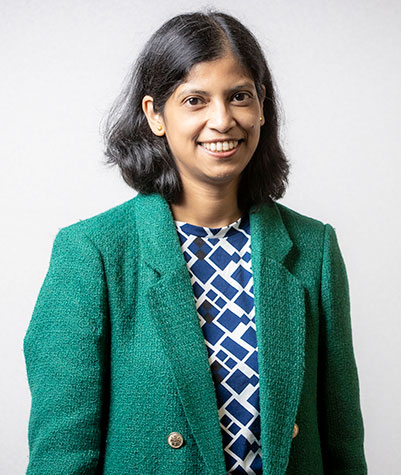
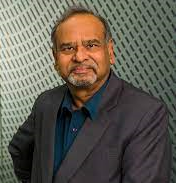
Mahdi Farnaghi is an Assistant Professor at the University of Twente , specializing in the Department of Geo-Information Processing . His research spans Artificial Intelligence , Machine Learning , and Geospatial Analysis , with applications in Environmental Monitoring , Public Health , and Urban Mobility . He leads the NWO-NGF IntelliGeo project (2024-2025), integrating Large Language Models into GIS workflows. Focus areas: Wastewater-based epidemiology , AI-powered environmental modeling , and spatiotemporal analysis Recent work: Machine learning frameworks for pollutant mapping , crop water needs , and infectious disease distribution The 2025 TU Delft Water for Impact Best Paper Award recipient for collaborative research on wastewater modeling. His projects include EO AFRICA R&D Innovation Lab and software tools for reproducible geospatial research .
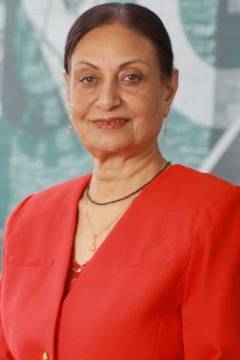
Anne Håkansson is a Professor at the Department of Informatics , UiT The Arctic University of Norway . Her research bridges Artificial Intelligence and Cyber-Physical Systems with applications in mHealth and Smart Energy Systems . Current research focuses on proactive health promotion via digital twins and wearables. Explores robust reasoning in autonomous systems and smart nudging for behavioral change. Recent work includes AI for battery digitalization and multi-agent collision avoidance in dynamic environments. She contributes to Springer and Procedia Computer Science publications, with emphasis on context-aware AI and sustainable technologies . Active in the Open Distributed Systems (ODS) and Computational Analytics and Intelligence (CAI) research groups, and involved in projects like Better Balance in Informatics (BBI) and the Nudge Project .
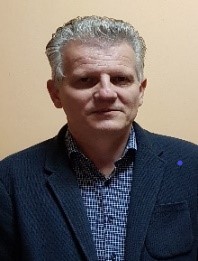
Carlos Jesús Fernández Basso is a Post-Doc Researcher at the Universidad de Granada in the Department of Computer Science. His work focuses on the intersection of Big Data, Data Mining, and Fuzzy Systems, with applications in energy efficiency, social network analysis, and medical diagnostics. His research interests include: Energy-efficient building management using IoT and Big Data Distributed frequent itemset mining and association rule discovery Fuzzy logic for data interpretability in complex systems Text mining and pattern detection in social media Recent publications highlight his contributions to Spark-based distributed algorithms, predictive control systems, and visualization of fuzzy association rules. He collaborates with researchers across disciplines, including applications in healthcare and cybersecurity.
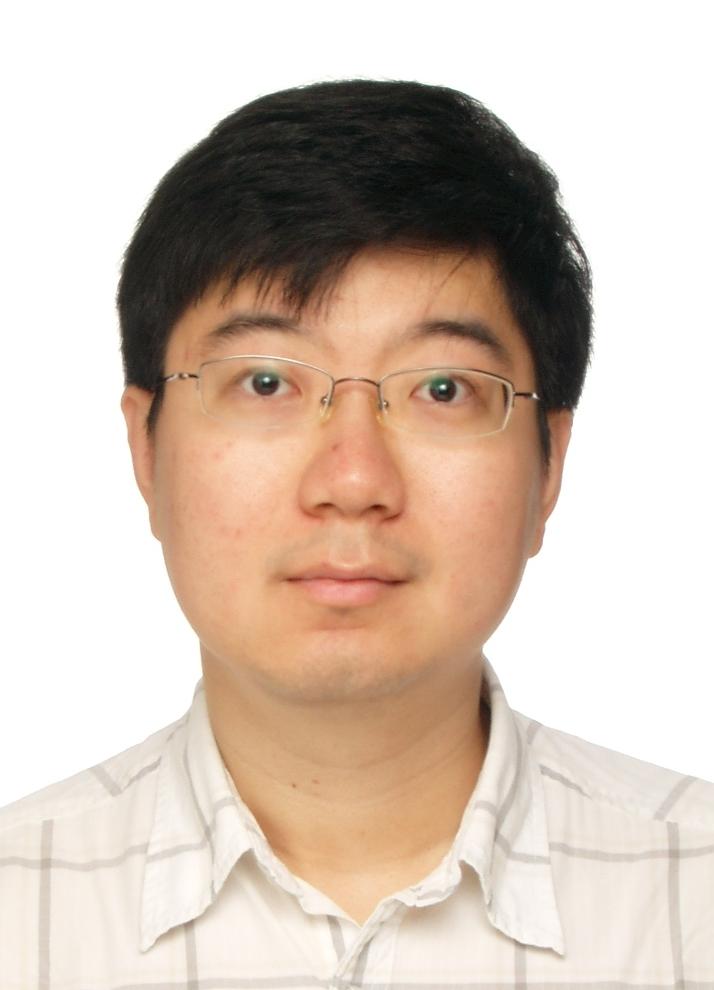
Núria Agell Jané is a Full Professor at the Department of Operations, Innovation and Data Sciences within Esade School of Business Administration and Management at Universitat Ramon Llull. She leads the Institute for Data-Driven Decisions (ESADE D3) and has maintained an active research agenda since 1984 with 178 scientific productions and 26 projects. Her Scopus profile shows an h-index of 20 and 98 citations in her 2023 publication on Production Planning and Control. Research Interests: Artificial Intelligence Fuzzy Linguistic Methodologies Decision-Making Systems Human-Computer Interaction Food Waste Reduction Industry 4.0 Technologies Scientific Awards: Scopus h-index of 20 98 citations in 2023 publication Recent Research Trends: Applying hesitant fuzzy linguistic term sets to conflict analysis (2025) Developing qualitative reasoning frameworks for environmental concerns (2025) Innovating in health sector malpractice detection using deep learning (2024) Advancing food waste reduction through data-driven models (2023) Integrating lean-agile manufacturing with Industry 4.0 (2023)
Dr. Lipika Deka is an Associate Professor and Faculty Head of Research Students at De Montfort University's School of Computer Science and Informatics. She is affiliated with multiple research groups including The Institute of Artificial Intelligence, The De Montfort University Interdisciplinary Group in Intelligent Transport Systems (DIGITS), and the Software Technology Research Laboratory. Dr. Deka holds a PhD in Computer Science and Engineering from Indian Institute of Technology (IIT) Guwahati, an MTech in Computer Science and Information Technology, and a BEng in Computer Science and Engineering. Her academic journey began with a passion for operating systems and network programming, which led to her PhD work on transactional file systems and online backup algorithms. Dr. Deka's research spans multiple interdisciplinary domains at the intersection of computer science and real-world applications. Her primary areas of expertise include: Concurrency control techniques for consistent, architecture-preserving online software updates in autonomous vehicles and IoT devices Machine learning applications for Intelligent Transportation Systems Downstream space applications including smart agriculture (particularly for climate change adaptation) and soil/water analysis AI techniques for reducing e-waste by facilitating longer lifespans of digital items Analysis of Dr. Deka's recent publications reveals a strong focus on applying artificial intelligence and machine learning to solve critical transportation, environmental, and healthcare challenges. Her work demonstrates a trend toward interdisciplinary research that bridges computer science with practical applications in autonomous vehicles, environmental monitoring, precision agriculture, and public health infrastructure. Notably, her research shows increasing integration of satellite data with ground-level applications, particularly in agriculture and environmental monitoring. Dr. Deka has received the Faculty Staff Leadership Award in 2019 for her contributions to academia. Her leadership extends to professional organizations as well, where she served as Vice-Chair of the Association of Computing Machinery - UK Women's Chapter (2017-2020) and Lead of the European Volunteers Network, ACM Women's Chapter (2020-2022). As an academic supervisor, Dr. Deka has successfully guided numerous PhD students to completion while currently advising six doctoral candidates. Her research portfolio includes significant projects such as: Co-I on STAGE I (2022-23): EIT Food Seedbed pre-incubation for OPTIcut Advisory board member for a THIS Institute fellowship (2022-2026) Participant in a Spanish Government-funded project on photovoltaic systems (2022-2026) Project Partner on an EPSRC Discipline Hopping Award for smart water treatment (2020-2024) Entrepreneurial Lead on INNOVATE UK's ICURe project for OPTIcut (2020) Academic Supervisor for a Knowledge Transfer Partnership with Geospatial Insight Ltd (2018-2020) De Montfort University PI for the Transport Catapult-sponsored IMPART project (2015-2018) Dr. Deka's research is conducted through multiple collaborative frameworks including The Institute of Artificial Intelligence, the De Montfort University Interdisciplinary Group in Intelligent Transport Systems (DIGITS), and the Software Technology Research Laboratory. These groups facilitate cross-disciplinary collaboration between computer scientists, transportation engineers, environmental scientists, and healthcare professionals to address complex societal challenges through technological innovation.
Professor Pedro Martín Vallejo Llamas serves in the Department of Computer Science and Automation at the University of Salamanca, specializing in process supervision and control systems with emphasis on industrial applications. His research profile centers on advanced control methodologies, particularly evidenced by his 2021 doctoral work supervised by Dr. Pastora Isabel Vega Cruz. Key focus areas include: Real-time process monitoring Model-based predictive control frameworks Fuzzy logic integration for complex system management Water treatment infrastructure optimization He actively contributes to the PROCESS SUPERVISION AND CONTROL research group, driving innovation in automation technologies for critical infrastructure systems.
Dr. Theodoros Theodoridis serves as Associate Professor (Reader) in Robotics and Intelligent Systems and Head of the Department of Aeronautical and Mechanical Engineering at the University of Salford's School of Science, Engineering & Environment. He leads the Intelligent Mobility research area at the North England Robotics Innovation Centre (NERIC) and is a key member of the Autonomous Systems and Advanced Robotics (ASAR) research group. His research has secured over £1.8 million in funding from EC FP5-7, EPSRC, MRC, Innovate UK, and the Regional Growth Fund. Dr. Theodoridis completed his academic training with the following qualifications: BEng in Automation Engineering from Technological Educational Institute of Piraeus, Greece MSc in Embedded Systems and Robotics from University of Essex, UK PhD in Intelligent Crime-Recognition Surveillance Robots from University of Essex, UK His research spans three primary domains with significant technical depth. In Service Robotics, he develops specialized robots including nurses, maids, guards, companions, and entertainers. His Artificial Intelligence work integrates classical AI, machine learning, deep learning, fuzzy logic, and probabilistic reasoning to create intelligent robotic systems. His Embedded Systems and Mechatronics expertise covers mechanical modeling, electronic/PCB design, and embedded programming, with applications across multiple disciplines. Recent publications (2023-2025) demonstrate a strategic shift toward practical applications in healthcare rehabilitation and industrial automation. His work on cable-driven exosuits and soft sensors for gesture recognition addresses critical challenges in upper limb rehabilitation. Earlier research (2018-2020) established foundational work in pneumatic actuators and continuum robotics that now informs his current applied research directions. His publications consistently bridge theoretical robotics with real-world implementation across medical, manufacturing, and construction sectors. Dr. Theodoridis maintains active industry collaborations that translate research into practical solutions. His grant portfolio demonstrates consistent success in securing competitive funding across multiple research councils and funding bodies. As an educator, he teaches Mechatronics, Advanced Embedded Systems, Mobile Robotics, and supervises final year projects and dissertations. His leadership extends to directing departmental operations while maintaining an active research program through the Centre for Future Engineering and NERIC.
Pedro Miguel Pinto Ramos is an Associate Professor in the Department of Electrical and Computer Engineering at the University of Lisbon (Técnico Lisboa), affiliated with the Higher Technical Institute. His research focuses on signal processing, instrumentation, power quality analysis, and non-destructive testing. He teaches courses such as 'Instrumentation and Measurements' and '2nd Cycle Integrative Project in Electronic Engineering.' His work spans embedded systems design, magnetic material characterization, and applications in particle accelerator magnets. Recent contributions include deep learning techniques for power quality monitoring, eddy current testing probes using magneto-resistive sensors, and impedance spectroscopy for sensor modeling. He collaborates on projects like smart composting monitoring and robotic tactile sensors. Ramos has published extensively on topics including harmonic estimation algorithms, genetic algorithms for circuit identification, and low-cost measurement systems. His technical contributions include DSP-based data acquisition systems and real-time processing for eddy currents testing. He also works on low-frequency impedance measurement techniques and uncertainty analysis in electrical measurements. His research lab focuses on advancing non-destructive testing (NDT) through eddy current methods, with applications in friction stir welding inspection and material characterization for high-field superconducting magnets. Collaborations include work with CERN on magnetic material properties for Large Hadron Collider (LHC) upgrades.
Dr. Omar Alani is a Senior Lecturer and Head of the Networking and Mathematics Group at the School of Science, Engineering & Environment, University of Salford, UK. He holds a PhD in Telecommunication Engineering from De Montfort University and has held academic and research roles at Swansea University, the University of Leeds, and De Montfort University. His expertise spans Mobile Communications, 5G/6G systems, IoT, and Green ICT. Education: PhD (Telecommunication Engineering, De Montfort University, 2005), MSc (Advanced Control Systems), BEng (Electrical Engineering) Affiliations: Informatics Research Centre, University of Salford Research Interests: Alani focuses on advancing communication systems through projects in next-generation networks, including 6G/5G innovations, cognitive radio, and energy-efficient telecommunication solutions. His work intersects with renewable energy monitoring via ICT and smart grid technologies. He has authored over 90 publications and supervised multiple theses in these areas. Teaching: He teaches courses on Mobile Communication Networks, IoT, and Control Systems Engineering, emphasizing practical applications in postgraduate project management. Labs/Teams: Leads the Networking and Mathematics Group, collaborating on projects related to routing protocols, antenna design, and network security.
Dr. Devinder Kaur is a Professor in the Department of Electrical Engineering and Computer Science at the University of Toledo's College of Engineering. She holds a PhD in Computer Engineering from Wayne State University (1989), alongside degrees from the University of Aberdeen and Panjab University. Her research focuses on bio-inspired computational algorithms for engineering applications, including fuzzy logic, neural networks, and swarm intelligence. She has published over 100 articles and secured grants from NSF, Daimler Chrysler, and others. Education: PhD and MS in Computer Engineering, Wayne State University (1989, 1985) M.Sc. in Medical Physics, University of Aberdeen (1976) M.Sc. (Hons.) in Physics (Electronics), Panjab University (1970) Research Interests: Integrating intelligence into engineering systems using bio-inspired methods, nature-inspired machine learning, and parallel computing architectures. Her work spans applications in energy systems, medical imaging, and autonomous systems. Key Achievements: Developed courses like 'Biologically Inspired Computing' and 'Fuzzy Systems and Applications.' Summer fellowships at NASA Glenn, AFRL Dayton, and Daimler Chrysler. Fulbright Senior Specialist Award (lectured at Nippon Institute of Technology and Tokyo Denki University). Recipient of Thomas Rumble Fellowship, Commonwealth Fellowship, and Panjab University Medal. Grants & Contributions: Over $2M in research grants, including NSF support and industry partnerships. Active in professional societies like IEEE, WSEAS, and INFORMS. Labs/Teams: Leads research in bio-inspired computing and smart energy systems. Collaborates on interdisciplinary projects involving AI, medical diagnostics, and autonomous UAV systems.
Andrei-Nicolae Alistar is an Assistant Professor at the Technical University of Iasi, focusing on power electronics and control systems. His research explores resonant converters, fuzzy logic control, and state-space averaging techniques. He has published works on numerical command structures for power converters and applications of fuzzy logic in resonant converter designs. His current research investigates the current state of resonant-circuit-based power converters. Education: PhD Topic: Contributions to the development of power converters with resonant circuits (Advisor: Prof. Dimitrie Alexa) Research Interests: Power electronics, resonant converter optimization, and advanced control methodologies for energy systems. His work bridges theoretical control frameworks with practical applications in high-efficiency power conversion. Awards: None explicitly mentioned. Advising & Grants: No formal advisees or grants listed. Collaborations include researchers like Constantin Posa and Cosmin Galea.
Professor Daniel Tudor Cotfas is affiliated with the Department of Electronic and Computers at the Faculty of Electrical Engineering and Computer Science, University of Technical Education Bucharest. His research focuses on renewable energy systems, particularly photovoltaic (PV) and hybrid energy solutions. He explores topics such as solar thermoelectric generators, low-power sensor networks, and cybersecurity in IoT-integrated energy systems. His work emphasizes improving energy efficiency through advanced materials, optimization algorithms, and policy frameworks. Key research areas include dust impact on PV panel performance, parameter extraction for solar cells using metaheuristic algorithms, and virtual instrumentation for educational and industrial applications. He has contributed to remote laboratory systems and smart energy monitoring technologies. His publications address challenges in concentrated solar power, hybrid PV-thermoelectric systems, and energy harvesting for wireless sensors. Notable collaborations involve experimental setups for studying thermoelectric materials under concentrated light and developing frameworks for secure IoT integration in renewable energy infrastructure. Cotfas is also engaged in educational initiatives, leveraging LabVIEW and FPGA-based tools for hands-on learning in renewable energy and control systems.
Doru TODINCA is an Associate Professor at the Polytechnic University of Timisoara , affiliated with the Faculty of Automatic Control and Computers and the Computer Science department. His research focuses on fuzzy logic systems , networks and communications , and mobile systems , with particular emphasis on applications in cellular networks and fuzzy automata. He earned his Dr. Eng. degree in 2005 with a thesis on resource allocation in GPRS/EGPRS networks , supervised by Dr. Eng. Ştefan HOLBAN. His work bridges theoretical fuzzy logic with practical network challenges, including resource optimization and service composition. Notable contributions include algorithms for network selection, fuzzy inference systems for diabetic management, and VHDL frameworks for automata modeling. His research has been published in venues such as OMNeT++ simulations and IEEE conferences. Education: PhD (2005), Polytechnic University of Timisoara Awards: Merit Award 2025 He organizes events like the Mobile Applications Student Contest (SCMUPT) and contributes to workshops on secure data transmission solutions. His lab focuses on embedded systems, fuzzy logic controllers, and wireless communication protocols.
Marcelo H. Ang Jr. is a Professor in the Department of Mechanical Engineering at the National University of Singapore (NUS), where he also serves as the Director of the Advanced Robotics Centre. With expertise spanning robotics, control systems, and intelligent automation, he has made significant contributions to mobile manipulation, compliant control, and multi-robot systems. His work bridges theoretical foundations with practical applications in manufacturing, surveillance, and human-robot interaction. Research Interests: Robust Mobile Manipulation in Unstructured Environments Distributed Mobile Robotic Systems Man-Machine User Interface Control of Dynamic Behavior of Robot Manipulators Passive Compliance and Flexible Robots Mobile Robotics Intelligent Control using Neural Networks and Fuzzy Reasoning His research spans fundamental robotics concepts like impedance control and compliant manipulation to cutting-edge applications in multi-robot systems, autonomous navigation, and soft robotics. Recent work focuses on mobility-enhanced sensor networks, deep learning for perception, and autonomous vehicles. Scientific Awards: Awards for Excellence 2000, for Most Outstanding Paper in 1999 Volume for "A Walk-Through Programmed Robot for Welding in Shipyards" Research Activities: Professor Ang has led multiple funded projects including "Integration of Solid Modeling Systems and Robot Controller Architectures" (1990-1995), "Management of Manufacturing Technologies" (1993-1995), and "Research and Development of a Ship-Welding Robot" (1994-1997). He has supervised numerous students, including Ph.D. candidate Zheng Liu who worked on multi-robot surveillance systems. His laboratory at NUS develops advanced robotic systems for applications ranging from ship welding to autonomous vehicles.
Professor Madhu Chetty is a distinguished academic in Information Technology at Federation University Australia's Institute of Innovation, Science and Sustainability (IISS). He also serves as the Director of AI and ML Stream within the Health Innovation and Transformation Centre (HITC). With over 35 years of tertiary teaching, research, and leadership experience in Australia and overseas, Professor Chetty has held academic positions at the University of Melbourne, Monash University, and the National Institute of Technology, India. His notable visiting appointments include Indian Institute of Technology Bombay, University of Warwick, Jawaharlal Nehru University, and Delft University of Technology. Amity University, India conferred on him a 'Citation and Lifetime Professorship'. Professor Chetty's research focuses on applying Artificial Intelligence (AI), Machine Learning (ML), Large Language Models, and Blockchain to problems in bioinformatics, health, and energy trading. His interdisciplinary work contributes to FedUni's strategic research centers in Health and IT. Key research areas include modeling genetic networks for cardiovascular and eye disease research, mental health applications using AI techniques for analyzing biopsychosocial data, drug repurposing with IBM collaboration, and blockchain algorithms for energy trading funded by the Qatar government. His publication record shows a consistent focus on computational approaches to biological problems, with recent work emphasizing genetic network modeling, mental health applications of AI, and blockchain technology. The research demonstrates a progression from foundational work in protein structure prediction to current applications of AI in healthcare and energy systems, with a strong emphasis on translating computational methods to real-world problems. 2021 Overall Award for Excellence in Graduate Research Supervision 2024 Dean's award for excellence in PhD thesis (awarded to one of his students) 2021 Vice Chancellor's Certificate of Commendation for Excellence in Community Engagement and Impact Professor Chetty has supervised over 22 PhD students to completion and currently supervises 5 PhD students across diverse topics including dementia prediction, drug repurposing, cancer classification, and mental health. His leadership extends to editorial roles for journals, conference organization, and development of publicly available software tools like GRAMP and GlobalMIT for genetic network analysis. He has secured substantial research funding totaling over $1.1 million as lead investigator, including projects funded by NHMRC, Qatar Research, Development and Innovation, and industry partners. As an academic leader, he has served as Deputy Head of School, member of the School Leadership Team, and HDR Coordinator. His professional service includes roles as General Chair of IEEE International Conference and Vice Chair of the IEEE Victorian/Tasmanian Section, demonstrating significant contribution to the broader academic community.