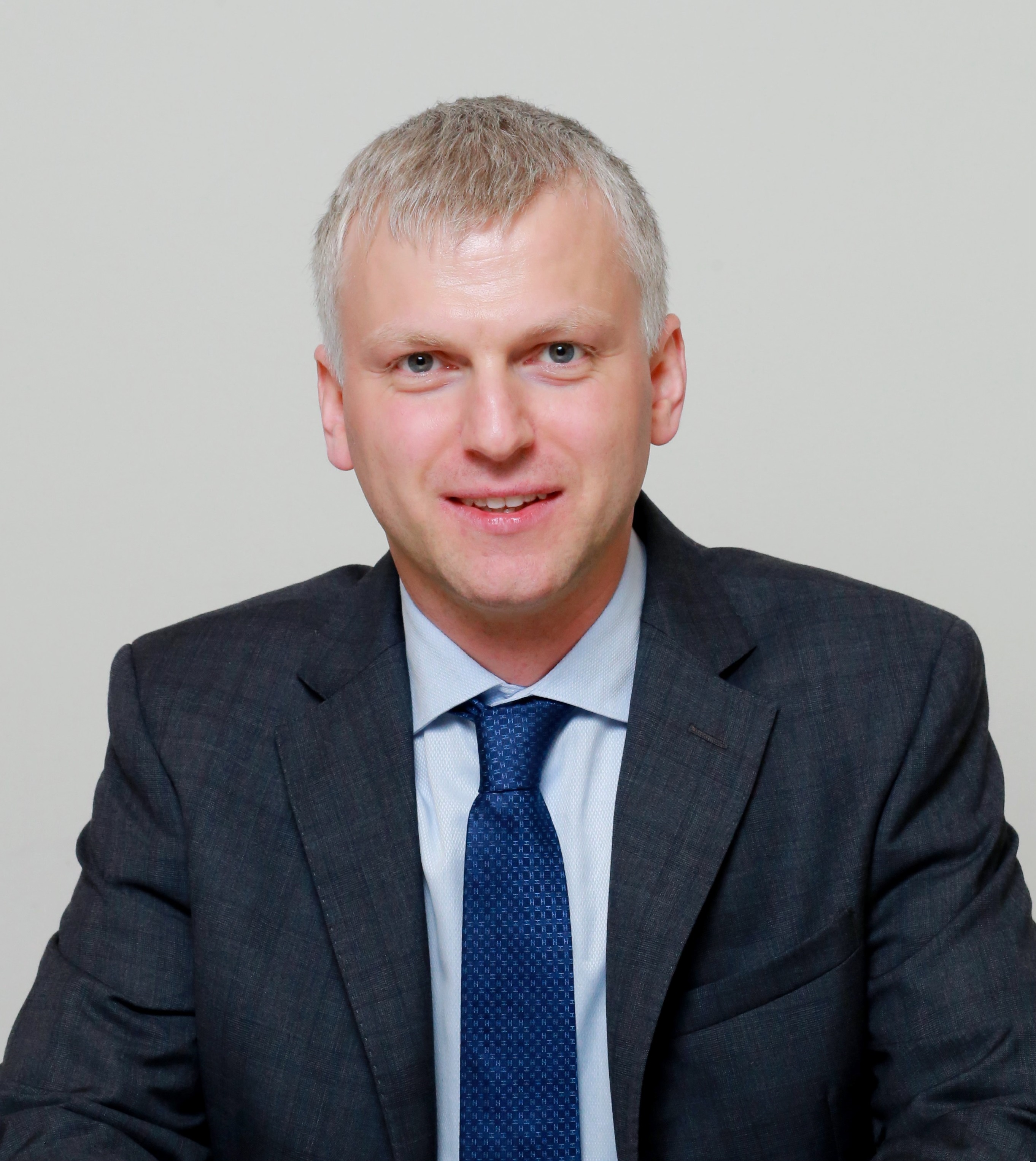
Dr. Evelina Akimova is an Assistant Professor of Sociology at Purdue University. Her research integrates social science genomics , chronotype analysis , and quantitative causal inference to explore health inequalities and career trajectories.
Martin Peitz is Professor of Microeconomics at the University of Mannheim and Director of the Mannheim Centre for Competition and Innovation (MaCCI) . His research focuses on industrial organization, competition policy, and digital platform regulation. He has served as head of the Department of Economics (2010–2013), a member of the European Commission's Economic Advisory Group on Competition Policy (2013–2016), and Academic Director at CERRE (2012–2016). Peitz earned his economics degree from the University of Bonn in 1992 and a PhD in economics from Bonn in 1995. His work bridges game theory, institutional frameworks, and empirical analysis of markets experiencing failure due to monopolistic behavior, externalities, or asymmetric information. His research highlights the evolution of competition policy in the digital age, analyzing tech giants like Google and Microsoft, and contributed to debates on zero-rating, net neutrality, and AI liability. He emphasizes ex ante regulatory interventions (e.g., sector inquiries) and ex post antitrust measures (e.g., merger control) to address market power. Scientific Awards : Heisenberg fellowship, Deutsche Forschungsgemeinschaft (2000) Peitz supervises bachelor’s and master’s theses in industrial organization and microeconomics, requiring electives in these areas. His lab, MaCCI , regularly hosts events like the Mannheim Competition Policy Forum (MCPF) , open to students and researchers.
Marco Leyton, PhD , is a Senior Scientist at the Research Institute of the McGill University Health Centre (RI-MUHC) and the Montreal Neurological Institute and Hospital. He serves as a Professor in the Department of Psychiatry within the Faculty of Medicine and Health Sciences at McGill University . His work focuses on understanding addictions and psychiatric disorders through biopsychosocial frameworks. Institution: RI-MUHC, Montreal Neurological Institute, McGill University Academic Rank: Professor Research Interests : Leyton investigates the neurobiological underpinnings of addiction, emphasizing dopamine and serotonin signaling, neuroimaging techniques (PET, MRI), and vulnerability traits in psychiatric disorders. His studies explore how temperament, adversity, and neurochemical pathways contribute to substance use disorders. Publication Trends : Recent work examines psychedelic drug mechanisms (psilocybin, lisuride), glutamate receptor dynamics, and policy approaches to the overdose crisis. He integrates multimodal imaging (fMRI, PET) to study cue reactivity, cognitive regulation, and developmental trajectories of mental health. Methodological Expertise : Leyton employs advanced neuroimaging, radiotracer development, and longitudinal cohort studies to map neural circuits involved in addiction vulnerability. His research bridges preclinical models with human clinical applications.
Prof. Dr. Birgit Becker is a Professor of Sociology with a focus on Empirical Educational Research at the Faculty of Social Sciences , Institute of Sociology , Goethe University Frankfurt. Her research examines how reconfigurations between socio-economic status and immigrant backgrounds affect identities, preferences, and behaviors that reproduce social inequalities, particularly in parenting norms (RISS Project No. 2) and academic efficacy beliefs (RISS Project No. 4). Education: Diploma in Social Sciences (University of Mannheim, 2003), PhD in Sociology (University of Mannheim, 2009) Career: Research Assistant at University of Mannheim; Junior Professor at Goethe University (2011-2014); Full Professor since 2014 Research Interests include educational inequality, migration and integration, gender norms, digital divides, and early childhood development. She investigates how social structures and institutional contexts shape educational trajectories and political participation, with a focus on marginalized groups. Her work spans topics like multilingualism in refugee education, efficacy beliefs in education, and gender ideologies in childcare. Key Publication Trends (2022-2025) reflect interdisciplinary analyses of educational disparities, migration-specific challenges, and political efficacy. Her recent articles explore digital inequalities in education, refugee student integration, and longitudinal studies of immigrant children's aspirations. Projects include DFG-funded studies on status aspirations, political efficacy, and gender norms; BMBF-funded SchuWaMi (school transitions for refugee students); and involvement in the Doing Transitions graduate college (DFG). Team: Collaborates with researchers like Taylan Acar, Max Jansen, and Thomas Zimmermann. Supervises external doctoral candidates and former assistants.
Mikhail Drugov is a Professor at the New Economic School (NES), holding the SAFMAR Foundation-supported position, and serves as Deputy Vice-Rector for Academic Affairs. He is also a Research Fellow at the Center for Economic Policy Research (CEPR). With a distinguished academic career spanning multiple international institutions, Drugov contributes significantly to economic theory and its practical applications. Educational Background: PhD in Economics, University of Toulouse (2006, with highest honors) Master's degree, New Economic School and Higher School of Economics (2001) Bachelor's degree in Economics, Higher School of Economics (1999) Professor Drugov's research focuses on the intersection of theoretical and applied economics, particularly examining how incentive structures shape human behavior in competitive environments. His work in contract theory explores the design of optimal agreements under information asymmetry, while his corruption studies analyze both theoretical frameworks and empirical evidence of corrupt practices. His competition theory research investigates how luck, noise, and prize structures influence effort in tournaments, with significant implications for understanding winner-take-all markets. Notably, his work demonstrates how heavy-tailed distributions of luck can paradoxically reduce competitive intensity when participant numbers increase. His publication portfolio reveals a consistent focus on tournament theory, corruption economics, and experimental approaches to understanding strategic behavior. Drugov's research often bridges theoretical models with real-world applications, particularly in understanding how institutions can be designed to minimize corruption and optimize competitive incentives. His work on corruption distinguishes between centralized and decentralized forms, explaining why some high-corruption countries still achieve economic growth. As an educator, Drugov teaches Industrial Organization Theory, Microeconomics 2, and Information Economy courses at NES. His academic leadership extends to his role as Deputy Vice-Rector for Academic Affairs, where he shapes educational policy and academic standards at the institution. His research has been published in top economics journals including Journal of Economic Theory , Theoretical Economics , and Games and Economic Behavior , demonstrating both theoretical rigor and practical relevance.
Jess Whitley is a Full Professor and Vice-Dean for Research and Professional Development at the University of Ottawa's Faculty of Education, where she holds a University Research Chair on Inclusion, Mental Health and School Attendance in partnership with Crossroads Children's Mental Health Centre. Her work focuses on improving educational experiences for students with special needs through research, teaching, and policy engagement. Dr. Whitley earned her educational qualifications from prestigious Canadian institutions: Ph.D. in Educational Psychology – Special Education, University of Alberta (2006) M.A. in Educational Psychology – Inclusive Education, McGill University (2003) B.A. in Education (Primary/Junior), University of Ottawa (2001) H.B.A. in Psychology, University of Ottawa (2000) Her research centers on school attendance and absenteeism, inclusive education policy, mental health literacy in schools, and teacher preparation for inclusive classrooms. She employs diverse methodologies including longitudinal surveys, focus groups, and community-based participatory research to examine psychosocial functioning and mental health of students with special needs. Her work has gained significant media attention through outlets like The Globe and Mail, CBC, and The Conversation. Analysis of her recent publications reveals a consistent focus on pandemic impacts on vulnerable students, school attendance challenges, and inclusive education policy implementation. Her research spans educational psychology, mental health promotion, and special education policy with particular emphasis on collaborative approaches between schools, families, and community organizations. Her notable recognitions include: Prix commémoratif Carol Crealock (2022) Prix du nouveau chercheur from the University of Ottawa (2011) Dr. Whitley actively supervises numerous graduate students and leads major research initiatives including the Canadian School Attendance Partnership, developmental evaluation of Nova Scotia's Inclusive Education Policy, and the Ontario School Inclusion Survey. She has secured significant funding from SSHRC and other agencies to support her collaborative research with community organizations and school boards across Canada. Her laboratory work centers on the Canadian School Attendance Partnership and the CCMHC-uOttawa Partnership, focusing on data-driven approaches to understanding school attendance problems and developing evidence-based interventions for students with mental health challenges and special educational needs.
Erica McGreevy serves as a Teaching Professor in the Department of Biological Sciences and Assistant Dean for Undergraduate Studies at the University of Pittsburgh's Dietrich School of Arts and Sciences, where she has held faculty positions since 2014 following completion of her doctoral studies at the same institution. Her dual administrative-academic role positions her at the intersection of educational leadership and pedagogical innovation within undergraduate STEM education. Her educational background includes: Ph.D. in Molecular, Cell, and Developmental Biology with Minor in Teaching, University of Pittsburgh Dr. McGreevy's research program investigates how classroom climate, community dynamics, and students' sense of belonging influence learning outcomes and persistence in large gateway STEM courses, with particular focus on structural and psychological barriers affecting women and underrepresented minority students. She develops ecological belonging interventions that reshape classroom norms and student perceptions of scientific identity, integrating evidence-based strategies to foster inclusive environments where all learners can thrive. Her work emphasizes practical implementation of interventions that address equity gaps while building students' critical thinking and scientific competencies. Analysis of her publication trajectory reveals consistent focus on scaling belonging interventions across engineering and occupational therapy education, examining virtual learning impacts, and measuring intervention fidelity in diverse institutional contexts. Recent work demonstrates increasing emphasis on cross-disciplinary adaptation of interventions and longitudinal assessment of their effects on student retention and identity formation in STEM fields. No scientific awards or honors were documented in the available information. While Dr. McGreevy's research involves collaborative program development and institutional partnerships, specific details regarding graduate student advising or external grant funding were not provided. Her administrative role as Assistant Dean suggests leadership in curriculum development and undergraduate policy, though operational details of research teams or laboratory facilities remain unspecified in the source materials.
Dr Eral Bele serves as Associate Professor (Teaching) in the Department of Mechanical Engineering at University College London, with adjunct appointments at Vellore Institute of Technology (India) and external examiner duties at Coventry University. His research and teaching focus on mechanics of lightweight materials—composites, natural fibers, and cellular structures—aiming to develop lighter, stronger, energy-efficient solutions through experimental mechanics and finite element analysis. His research spans four core projects: (1) manufacturing mechanics of natural fiber composites and technical foams; (2) fracture toughness of metamaterials; (3) additive manufacturing of hierarchical microlattices; and (4) fatigue mechanics in natural structural materials. This work leverages UCL's Materials, Structures and Manufacturing Research group facilities, including mechanical testing labs, full-field strain mapping, and additive manufacturing equipment for metallic and fiber-reinforced components. Recent publications (2022–2025) reveal concentrated expertise in additive manufacturing applications, fracture behavior of novel materials, and sustainable material development—particularly in nacre-like composites, lunar regolith processing, and natural fiber foams. His work bridges experimental validation with computational modeling to advance sustainable materials engineering. Dr Bele holds the following recognition: Senior Fellow Advance HE (York, United Kingdom) His educational leadership includes serving as UCL's Departmental Tutor and Head of Undergraduate Education, designing the MSc in Future Manufacturing and Nanoscale Engineering (2023), and supervising MEng Capstone Design Projects. Internationally, he co-leads PhD training at CICY (Yucatan) on micro-CT characterization of composites and established VIT's Sustainable Manufacturing undergraduate program. His research group operates within UCL's Materials, Structures and Manufacturing Research ecosystem and maintains active collaborations with University of Toronto, CICY, VIT, and EU industrial partners—focusing on natural fiber composites, metamaterials, and sustainable manufacturing processes.
Thomas Klefoth serves as Professor of Ecology and Nature Conservation and Fisheries Biologist at Bremen University of Applied Sciences, where he heads the ISTAB program (Institute for Sustainability and Environmental Management in Bremen). His expertise spans freshwater ecosystems, particularly gravel pit lakes, integrating fisheries science with biodiversity conservation and recreational angling management. His research focuses on ecological dynamics in small lake systems, examining angler behavior, habitat management, and species conservation. Key interests include ontogenetic niche shifts in fish, crayfish population viability, telemetry-based movement ecology, and socio-ecological aspects of environmental stewardship. His work consistently bridges empirical lake studies with stakeholder engagement to develop sustainable water management practices. Analysis of his recent publications reveals a strong interdisciplinary trend combining biotelemetry, experimental ecology, and social science methodologies. His research demonstrates how ecosystem-based approaches outperform single-species management, particularly in recreational fisheries contexts, while addressing contamination impacts and biodiversity-service trade-offs in human-dominated aquatic landscapes. Professor Klefoth leads multiple externally funded projects through 2028, including initiatives on sustainable water management by fishing clubs, campus greening, municipal biodiversity strategies, and organofluorochemical contamination. His advisory roles include service on the Lower Saxony Animal Welfare Advisory Board (2012-2020), Hameln Fishing Cooperative (as 2nd Deputy Chairman, 2015-2020), and Dümmer Advisory Board (2012-2015), demonstrating active integration of research with policy implementation.
Jason Chen is an Associate Professor in Tourism and Events Management at the University of Surrey, serving as Director of Postgraduate Research in the School of Hospitality and Tourism Management. He holds a PhD in Tourism Management from The Hong Kong Polytechnic University, alongside earlier degrees in Economics (BA, 2004) and Economics and Statistics (MSc, 2007). His research focuses on tourism economics, tourist behavior, demand forecasting, and quantitative methods. Notable projects include 'Understanding the Landscape of Inbound Tourism Measurement' and collaborations with organizations on tourism impact assessments. He has secured grants, including an ESRC grant for the School, and advises on postgraduate research programs. Teaching responsibilities include modules in International Tourism Management, Consumer Behavior, and Researcher Development. His recent publications emphasize spatiotemporal models, crisis management in tourism, and pro-environmental behavior interventions. He has contributed to policy-relevant studies on tourism's economic role and sustainability challenges. Key research themes include destination resilience, electric vehicle adoption, and behavioral nudging for sustainability. His work bridges academic theory with practical applications, supporting industry and policy stakeholders.
Rebecca Kimball is a Professor in the Department of Biology at the University of Florida , focusing on evolutionary biology through molecular techniques and field research. Her work spans three primary areas: phylogenetics for comparative studies, microevolutionary processes like mating systems and sexual selection, and linking genomic changes to organismal evolution. Education : Ph.D. (University of New Mexico, 1995) Research Themes : Phylogenetic reconstruction, genome-phenome mapping, sensory system evolution, and avian diversification. Her lab, the Braun-Kimball Lab , trains students in phylogenetics, computational biology, and population genetics. Current projects include galliform evolution, chemosensory systems in vultures, and hybridization studies in paradise flycatchers. She collaborates on NSF-funded phylogenomic initiatives and emphasizes rigorous lab practices, including long-term commitments for researchers and interdisciplinary training. Scientific Awards : No explicit awards listed, but her lab receives external grants (e.g., NSF, University Scholars Program). Advising & Grants : Mentors numerous graduate and undergraduate researchers. Lab members often co-author publications and pursue independent projects. Grants focus on phylogenomic tools and avian evolutionary questions. Labs & Teams : Leads the Braun-Kimball Lab, which engages in global collaborations (e.g., Field Museum, New York State Museum) and interdisciplinary work in genomics and ecology.
Dr. GOH Khim Yong is an Associate Professor and Head of the Department of Information Systems and Analytics at the National University of Singapore (NUS School of Computing). He holds a Ph.D. in Business Administration (University of Chicago), M.Sc. and B.Sc. in Computer & Information Sciences (NUS). His research focuses on digital media marketing, social/mobile platforms, AI pricing strategies, and econometric methods. He advises major firms like Alibaba, Lazada, and Johnson & Johnson across industries such as e-commerce, healthcare, and retailing. Educations: Ph.D., Business Administration, University of Chicago (2005) M.Sc., Computer & Information Sciences, NUS (1998) B.Sc., Computer & Information Sciences, NUS (1997, First-Class Honours) His research explores digital transformation, AI-driven pricing, live-streaming commerce, and consumer behavior in platform ecosystems. Notable projects include studying AI pricing agents' impact on e-commerce sales and analyzing live-streaming dynamics' socio-economic effects. He has published in top journals like Management Science and Information Systems Research , and his work frequently addresses practical industry challenges. Recipient of prestigious awards including the International Conference on Information Systems Best Paper Award (2022) and AIS Distinguished Member (2021). He teaches courses in econometrics and data analytics across NUS and the University of Chicago. His former Ph.D. students hold faculty positions at institutions like Tsinghua University and the Chinese University of Hong Kong (Shenzhen).
Sergio Cortes serves as Senior Lecturer II in the Department of Chemistry and Biochemistry at the School of Natural Sciences and Mathematics, University of Texas at Dallas, a position held continuously since 1995. His career includes significant research appointments at Purdue University, Iowa State University, and the University of Texas at Dallas, along with adjunct teaching roles at Brookhaven College and Collin County Community College. His educational foundation consists of: Ph.D. in Chemistry from the University of Houston (1983) B.S. in Chemistry from the University of Coahuila (1972) Dr. Cortes's research expertise centers on NMR spectroscopy applications across chemical disciplines, with particular emphasis on macrocyclic chemistry, metal-ligand interactions, and structural modifications of bioactive compounds. His work bridges inorganic systems (triaza macrocycles and metal complexes), organic reaction mechanisms (hydantoin reductions), and biochemical applications (carbohydrate NMR and anticonvulsant development). Analysis of his publication timeline (1983-1991) reveals an evolving research trajectory: early focus on organic synthesis and medicinal chemistry of heterocyclic compounds transitioned toward inorganic chemistry investigations of macrocyclic ligands, while consistently leveraging NMR spectroscopy as the primary analytical tool across all domains. Key thematic threads include protonation dynamics, metal coordination behavior, and isotopic effects in biologically relevant molecules. No scientific awards were documented in the provided materials. Current advising status indicates he is not accepting undergraduate students. No information regarding past mentees, research grants, or external funding sources was available in the source text.
Dimitrios Minos is a Lecturer (Assistant Professor) in Economics at King's Business School, King's College London. His research focuses on development economics, health economics, and political economy, with an emphasis on how culture and social behavior influence health, development, and political outcomes. He holds a PhD in Economics from Georg-August-University of Göttingen, Germany. Education: PhD in Economics, Georg-August-University of Göttingen, Germany Research interests include the intersection of culture, social interactions, and health outcomes, as well as obesity trends in developed and developing countries. He has published on topics such as the impact of community ties during economic crises, healthcare costs for chronic diseases, and the effects of parental substance misuse on children. His teaching emphasizes non-traditional assessment methods and innovative pedagogy. He has provided consulting services to organizations like the KfW, DFID, and the World Bank. Advising and Grants: Currently accepting new PhD students. Engaged in external committees related to living income benchmarks and poverty analysis. Labs/Teams: Member of the Quantitative Political Economy Research Group at King's Business School, bridging economics and political science through advanced quantitative methods.
Sean Daly is an Associate Professor of Management at the University of Oklahoma's Price College of Business. With over 20 years of experience in sport leadership, event operations, and athletic administration, his research focuses on workplace behavior in sport organizations and pedagogical practices in sport business education. He teaches courses in analytics, finance, and economics while managing program branding, external partnerships, adjunct faculty coordination, and student internships. His work bridges academic research with industry applications, emphasizing ethical practices and innovative strategies in sport management. Dr. Daly's research spans esports business models, stakeholder perspectives in sports, and athlete/coach education. His recent studies explore esports sponsorship strategies, safe sport policies, and typologies of esports players. He holds a Ph.D. in a relevant field and actively contributes to academic journals like the Journal of Electronic Gaming and Esports. His teaching philosophy integrates practical skills for future career opportunities, leveraging tools like DISC behavioral profiling to enhance student learning. Professional contributions include managing the Price College's sport business program, fostering industry connections, and advising on sport event operations. Notably, he has examined Olympic market dynamics, fan identity in sports, and the cultural impacts of fitness center memberships. His work highlights the intersection of sports economics, organizational behavior, and emerging technologies in esports.