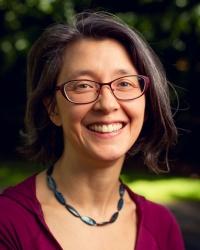
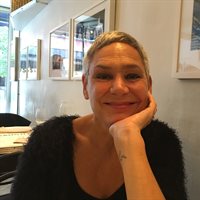
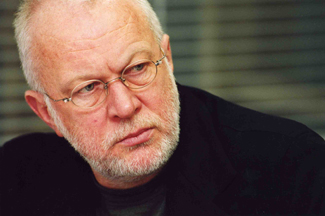
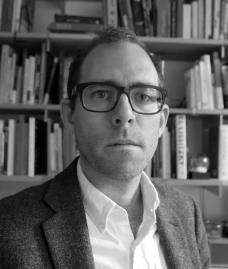
Sasha Welland is an Adjunct Associate Professor in the Department of Anthropology at the University of Washington, affiliated with Gender, Women & Sexuality Studies; China Studies; Comparative History of Ideas; and graduate certificate programs in Cinema & Media Studies and Public Scholarship. Her research focuses on Asian American studies, East Asian ethnography, feminism, visual culture, and sociocultural anthropology. Welland’s scholarship bridges historical and contemporary analyses. Her book Experimental Beijing (2018) explores Chinese contemporary art as a site of cultural negotiation around gender, globalization, and post-socialist transformations. Her earlier work A Thousand Miles of Dreams (2006) traces the transnational lives of two 20 th -century Chinese women activists. She contributes to Journal of Visual Culture and has published in Signs and Yishu . An engaged public scholar, Welland has curated feminist art exhibitions in Beijing, Shanghai, and Hong Kong, blending academic research with cultural practice. Her work interrogates intersections of gender, space, and global flows in East Asian contexts.
Clare Hemmings is a Professor of Feminist Theory at the Department of Gender Studies, London School of Economics and Political Science (LSE), where she has been since 1999. Her work bridges feminist theory, queer studies, and sexuality studies, with a focus on how these fields are institutionalized and narrated. She holds a PhD and has authored seminal works like Why Stories Matter (2011) and Considering Emma Goldman (2018), which explore feminist historiography and political ambivalence. Her research emphasizes interdisciplinary methods, including archival interventions and creative writing to challenge dominant narratives. Hemmings’ research interests include feminist epistemology, queer of color critique, and anarchist thought. She has been active in countering 'anti-gender' movements and is currently developing a project on 'Feminist Knowledge Struggles.' Her work is marked by attention to form, affect, and the intersection of nationalism, feminism, and sexuality. She supervises PhD students Senel Wanniarachchi and Rawda Elaskary and has received the FWSA Book Prize 2012 for Why Stories Matter . Hemmings’ articles span feminist theory, political mobilizations, and affect studies. Her recent work engages with family memory archives and decolonial methodologies. She is a prolific scholar, contributing to journals like Memory Studies , Feminist Studies , and Radical Philosophy . Her interdisciplinary approach integrates literary criticism, sociology, and activism, offering transformative frameworks for feminist praxis.
Steven Jackson is a Professor of Information Science and Science and Technology Studies at Cornell University's Bowers College of Computing and Information Science, with additional graduate field appointments in Communication and Public Affairs. Since July 2023, he has served as Vice-Provost for Academic Innovation at Cornell, and previously held leadership positions as Chair of Information Science and Dean of William Keeton House. His work bridges academic research with significant institutional leadership in higher education innovation. Dr. Jackson's research focuses on critical intersections of technology, society, and the environment, with three primary strands: technology ethics, law and policy; maintenance, repair and sustainability; and technology, inequality and global development. His work draws from American pragmatism, political economy, and science and technology studies, integrating methods from sociology, anthropology, philosophy, and media studies. He is particularly interested in how computing practices meet social and material worlds, with implications for infrastructure, collaboration, sustainability, and cultural practice. His recent publications reveal a strong emphasis on repair as both theoretical concept and practical methodology, exploring 'ordinary hope' as a framework for technological engagement and examining unmaking as a necessary counterpart to design. The research spans diverse geographical contexts from the global North to South, addressing caste dynamics in computing, digital authoritarianism, and infrastructure challenges in developing contexts. Dr. Jackson has received significant recognition including an NSF CAREER award and more than twenty paper awards at leading computing and information science venues. His research has been supported by major organizations including the U.S. National Science Foundation, Social Science Research Council, Ford Foundation, Sloan Foundation, World Bank, Intel Research, Atkinson Center for Sustainability, and the Canadian Social Science and Humanities Research Council. As an advisor, Dr. Jackson has mentored numerous graduate students who have gone on to prominent positions at institutions worldwide. He currently advises Jen Liu, Amy Cheatle, Daniel Mwesigwa, Johan Michalove, and Ritik Batra, while his former students include Palashi Vaghela (Assistant Professor at Simon Fraser University), Samir Passi (Responsible AI Researcher at Microsoft), Maggie Jack (Assistant Professor at NYU), and Ranjit Singh (Senior Researcher at Data and Society). Dr. Jackson convenes the Computing On Earth Lab, an experimental collaboration bringing together social scientists, humanists, artists, and engineers to rethink the material and planetary foundations of computing. The lab reflects his commitment to interdisciplinary approaches that address computing's environmental impacts and sustainability challenges.
K. Michael Hays is the Eliot Noyes Professor of Architectural Theory at Harvard University's Graduate School of Design (GSD) and Co-Director of the Master in Design Studies program. He has been a faculty member since 1988, specializing in architectural history and theory. His research focuses on European modernism, critical theory, and contemporary architectural practice, with notable contributions to the field through writings on figures like Mies van der Rohe and Peter Eisenman. Education: He holds a Bachelor of Architecture (1976) from Georgia Institute of Technology, a Master of Architecture in Advanced Studies (1979) from MIT, and a PhD in History, Theory, and Criticism of Architecture and Art (1990) from MIT. Research Interests: Hays is renowned for founding the journal Assemblage , a pivotal forum for architectural theory. His work bridges historical analysis and contemporary practice, emphasizing theoretical frameworks for understanding modernism and its evolution. He has curated exhibitions at institutions like the Whitney Museum of American Art (as its first Adjunct Curator from 2000–2009). Publications: His authored and edited works include Architecture's Desire , Inscriptions: Architecture Before Speech , and critical studies on architects such as Buckminster Fuller and Diller + Scofidio. These publications explore themes of representation, modernist aesthetics, and interdisciplinary design. Awards and Roles: While no specific awards are listed, his academic leadership roles include Chair of the GSD PhD Committee (1995–2005) and Director of Advanced Independent Study Programs. He has also served on editorial boards for journals like Assemblage and Thresholds . Labs and Collaborations: Hays collaborates with academic and institutional partners, notably through curatorial projects and his role in shaping the GSD's theoretical curriculum. His influence extends to both pedagogical innovation and scholarly discourse in architectural education.
Craig Buckley is an Associate Professor in the Department of the History of Art and affiliated with the Yale School of Architecture. His research bridges modern architecture with visual arts and media, focusing on techniques like montage, collage, and screen-based practices. Education: BA (Trent University), MA (University of Western Ontario), PhD (Princeton University) His work examines how media such as print, film, and digital screens shape architectural culture. Key themes include cinema architecture, media theory, and the intersection of design with socio-political movements like 1968 protests. His recent articles analyze topics such as colonial-era cinema architecture, media façades, and pneumatic structures. He teaches courses on architecture’s relationship with media and print culture, often utilizing Yale’s special collections.
Antonio Rangel is the Bing Professor of Neuroscience, Behavioral Biology, and Economics at the California Institute of Technology (Caltech), where he also serves as Head Faculty in Residence. He is a faculty member in the Division of Humanities and Social Sciences (HSS) with research focusing on the computational and neurobiological basis of value-based decision-making. Dr. Rangel received his educational training at prestigious institutions: B.Sc. from Caltech in 1993 M.S. from Harvard University in 1996 Ph.D. in 1998 Professor Rangel's research lies at the intersection of neuroscience, economics, and psychology, with a focus on understanding how the brain makes decisions. His work investigates the neural mechanisms underlying value computation, choice processes, self-control, and social decision-making. Using a multidisciplinary approach that combines functional magnetic resonance imaging (fMRI), eye-tracking, computational modeling, and behavioral experiments, his lab has made significant contributions to the field of neuroeconomics. His research has revealed how value signals are represented in the brain, how attention influences choice, and the neural basis of self-control failures. Professor Rangel has pioneered methods for studying decision processes with high temporal resolution using eye-tracking data, demonstrating how fixation patterns relate to value computations and choice outcomes. His work spans from theoretical frameworks of value-based decision-making to practical applications in behavioral public economics. Professor Rangel's work has been recognized with prestigious awards: 2019 NOMIS Distinguished Scientist Award 2018 Fellow of the Association for Psychological Science As an academic leader, Professor Rangel has mentored numerous students and researchers who have gone on to make their own contributions to neuroscience and economics. His lab, the Rangel Neuroeconomics Laboratory at Caltech, serves as a hub for interdisciplinary research, bringing together students and scholars from neuroscience, economics, psychology, and computer science. The lab has received significant funding to support its research on the neural basis of decision-making, including support from the NOMIS Foundation. The Rangel Neuroeconomics Laboratory is equipped with state-of-the-art facilities including fMRI analysis capabilities, eye-tracking systems, and computational resources for modeling decision processes. The lab fosters a collaborative environment where researchers apply methods from experimental economics and cognitive neuroscience to unravel the complexities of human decision-making.
Alice Reagan is Professor of Professional Practice and Director of Undergraduate Studies in the Department of Theatre at Barnard College, Columbia University. She teaches directing, performance, and seminars on Zora Neale Hurston, Black performance, and AIDS activism, while also directing professionally across the U.S. Education: B.A., Bates College M.A., Tisch School of the Arts, New York University M.F.A., Columbia University, School of the Arts Her research and artistic practice centers on theatre directing, adaptation, new play development, and ensemble-based work , with a strong commitment to feminist and socially engaged theatre. She founded New Plays at Barnard , commissioning works by women-identified playwrights. Her recent and upcoming productions include Evelyn Brown (A Diary) , Cherry Orchard , Measure for Measure , and The Thanksgiving Play . Her recent publications and public scholarship focus on the revival of María Irene Fornés' work and the ethics of white educators teaching Black diasporic material, especially her influential 2019 article Teaching While White . The articles reflect a consistent engagement with race, pedagogy, classical reinterpretation, and feminist performance . Selected Awards & Honors: Named to Kilroys List, 2023 Individual Artist Grant, NYSCA, 2023 Cherry Orchard Teaching Excellence Award, 2022 Princess Grace Award Drama League Directing Fellow Berkshire Theatre Award nominations (9) She advises student productions and leads the New Plays at Barnard program, shaping the next generation of theatre artists. She has received grants from the Shubert Foundation and NYSCA. Her professional affiliations include Stage Directors and Choreographers Society, New Georges, and Wingspace Design. She is deeply involved in lab programs such as the Lincoln Center Directors Lab and Mabou Mines/SUITE. She leads the New Plays at Barnard initiative and collaborates with professional ensembles like Portland Experimental Theatre Ensemble and Shakespeare & Company, bridging academic and professional theatre.
Un J. Kang, MD is the Founders Professor of Neurology at NYU Grossman School of Medicine and Professor in the Department of Neuroscience and Physiology. He serves as Director of Translational Research at the Marlene and Paolo Fresco Institute for Parkinson's and Movement Disorders and Co-Director of the Parekh Center for Interdisciplinary Neurology. His clinical practice focuses on Parkinson's disease and related movement disorders including tremor, dystonia, and Huntington's disease. Dr. Kang earned his MD from Johns Hopkins University in 1982, completed residency in Neurology at NY Presbyterian - Columbia University Medical Center in 1986, and specialized in Movement Disorders through fellowship training at the same institution in 1987. His research investigates the pathogenesis of Parkinson's disease and mechanisms of therapy, with particular focus on basal ganglia circuit plasticity, neural adaptation to dopamine loss, and development of biomarkers for neurodegenerative disorders. He pioneered experimental gene therapy approaches for Parkinson's disease and now directs the Kang Lab where his team studies how brain circuitry is perturbed by dopamine loss and pharmacological treatment in mouse models. Dr. Kang's research portfolio includes multiple NIH-funded projects examining striatal cholinergic interneuron dysfunction, freezing of gait mechanisms, and biomarker development for Parkinson's disease. His laboratory has published extensively on Parkinson's disease mechanisms with 178 publications to date, including significant recent work on alpha-synuclein detection methods and striatal pathway alterations in Parkinsonian motor deficits. Before joining NYU Langone in 2019, Dr. Kang created and led a multidisciplinary research team at the University of Chicago for two decades and previously served as chief of the movement disorders division at Columbia University. He leads the BioFIND consortium as principal investigator, banking biospecimens for Parkinson's disease biomarker discovery.
Professor Lizelle Bisschoff is a Professor of Film Studies at the University of Glasgow’s School of Culture & Creative Arts. She specializes in African cinema with particular focus on gender representation, digital technologies, and film festival curation. Her research bridges academic scholarship and practical initiatives, such as co-founding the Africa in Motion Film Festival (AiM). She holds a PhD from the University of Stirling and has held prestigious fellowships including the Leverhulme Trust (2010-2012) and Lord Kelvin Adam Smith (2012-2015). Education: PhD in African Cinema (University of Stirling, 2009) MSc in Cultural Studies (University of Edinburgh, 2005) Research Interests: Gender dynamics in African filmmaking Emerging digital film industries across sub-Saharan Africa Postcolonial cinema and modernist aesthetics Her work emphasizes decolonizing film studies through projects like AiM Festival and edited volumes such as Women in African Cinema . Recent research explores African science fiction and feminist archives. She has secured £115k in grants for film restoration and educational outreach programs. Awards: Leverhulme Trust Postdoctoral Fellowship AHRC Follow-on Funding for Impact (£90k) British Federation of Women Graduates Scholarship Teaching: Convenes MSc Film Curation program Teaches Introduction to African Cinemas and Race on Screen Key Projects: Lead curator for Africa’s Lost Classics restoration initiative Organized international symposia on African art and activism
Ceren Budak is an Associate Professor at the University of Michigan School of Information and holds a joint appointment as Associate Professor of Electrical Engineering and Computer Science in the College of Engineering. Her work bridges computer science, statistics, and social sciences through computational social science approaches. Her educational background includes a PhD in Computer Science from the University of California, Santa Barbara (2012) and a Bachelors degree in Computer Science from Bilkent University in Turkey (2007). Prior to joining the University of Michigan faculty, she was a Postdoctoral Researcher at Microsoft Research New York. Professor Budak's research centers on computational social science, with particular emphasis on analyzing large-scale datasets to address questions with social, political, and policy implications. Her work spans several interconnected domains: News Media Production & Consumption (examining bias in news outlets and reader preferences), Social Movements & Media (using social media data to study collective action), Social Networks (understanding information diffusion processes), and Measuring and Promoting the Quality of Online Discussions (developing tools to improve online conversations). She teaches SI 608 (Networks) and SI 618 (Data Manipulation and Analysis) at the School of Information. Her publication record demonstrates consistent contributions to understanding how online information ecosystems operate, with recent work focusing on AI-human collaboration, misinformation dynamics, social movement framing, and the application of computational methods to political communication. Her research shows a clear trajectory from foundational work on social network diffusion to increasingly sophisticated analyses of contemporary information challenges. Among her service activities, she has served as Registration chair for COSN (ACM Conference on Online Social Networks) 2015 and as Program Committee Member for numerous prestigious conferences including WWW, ICWSM, WebSci, AAAI, and others. She has also been involved in organizing the MSR NYC Data Science Seminar Series and instructing the Microsoft Research Data Science Summer School.
Professor Brian Dillon is the Professor of Creative Writing and Director of Creative Writing at Queen Mary University of London's School of English and Drama. Previously, he served as Head of the Writing Programme at the Royal College of Art. He holds a PhD from the University of Kent (1999) and has authored numerous books blending creative nonfiction, literary criticism, and art analysis. His research focuses on the essay form, autobiography, literature-visual arts intersections, and writing about illness. Key publications include *Suppose a Sentence* (2020), an experimental essay collection analyzing literary sentences, and *Affinities* (2023), exploring photographic imagery. Current projects include a study of Kate Bush's *Hounds of Love* and an essay on education. Dillon frequently contributes to *The Guardian*, *London Review of Books*, and *Artforum*, and has curated exhibitions for Tate and Hayward Galleries. His awards and fellowships are not explicitly listed here, but his work has been widely exhibited and published internationally. He supervises doctoral students in creative writing and related fields, emphasizing interdisciplinary approaches to literature and art. Public engagement includes talks at institutions like the British Museum and Pompidou Centre, and appearances on BBC Radio 3 and RTE Radio. His work bridges academic critique with accessible creative writing, making complex themes engaging for broader audiences.
Mark Angus is a Visiting Lecturer at the Estonian Academy of Arts, Faculty of Design, and has been a pivotal figure in stained glass art since the 1970s. His work spans architectural commissions for churches and public spaces in the UK, Germany, and Ireland, alongside autonomous art in painting, printmaking, and artist’s books. He operates studios in Frauenau (Germany) and Graz (Austria). Education : Bristol Polytechnic (Chartered Surveyor, 1970), Swansea School of Art (Architectural Stained Glass, 1978). Research Interests focus on: Stained Glass as a medium for spiritual and secular narratives. Vitreography (glass-based printmaking) and its interplay with light and subtlety. Artist’s Books integrating letterpress and visual storytelling. Human Figure Representation in glass and paper, emphasizing dialogue and existential themes. Recent Publications include his 2018 artist’s book 80 Capriccios and the Turbulences of the Self , drawing on Goya’s Los Caprichos to critique modernity, and 2025’s KUNST. Kunst im Landkreis Passau, Bd. 70 , documenting regional art practices. His RED (2014) and Juvenescence (2014) explore color symbolism and eternal youth through acrylics and illustrated novels. Scientific & Artistic Awards : 1990: South West Arts & Crafts Fellowship 1984: South West Arts Major Craft Award 1979: Crafts Council Setting-up Grant 1978: Worshipful Company of Glaziers Travelling Scholarship Teaching & Collaborations : He has taught at the Estonian Academy of Arts, Penland School of Crafts (USA), and Bild-Werk Frauenau (Germany), including 2025’s masterclass Risk & Resonance – The Stained Glass Experience . His exhibitions, such as 80 Capriccios (2024, Neuburg am Inn), reflect interdisciplinary dialogues between glass, poetry, and theological themes.
Dr. Ray Bobrownicki is a Lecturer in Sport Psychology and Co-Programme Director of the BSc (Hons) Applied Sport Science at the University of Edinburgh's Moray House School of Education and Sport. He holds affiliations with the Institute for Sport, Physical Education and Health Sciences (ISPEHS) and the Human Performance Science Research Group. As a chartered psychologist (BPS) and licensed athletics coach, his work bridges academic research and real-world sport practice. Educations: PhD (Sport Psychology and Coaching), University of Edinburgh MSc (Performance Psychology), University of Edinburgh AB (Psychology), Brown University PGCert (Academic Practice), University of the West of Scotland His research focuses on optimizing coaching instruction, motor learning, and performance under pressure. He explores how verbal instructions, analogies, and technology (e.g., VR) influence skill acquisition and athlete motivation. Secondary interests include the societal impacts of sporting policies on athlete welfare and identity. Recent work critiques traditional sport science methodologies and advocates for interdisciplinary, applied research. His publications span 2015–2025, emphasizing critical analysis of coaching practices, motor learning mechanisms, and systemic issues in sport. Key themes include instructional design, constraints-led approaches, and translational research validity. Awards: Fellow of the Higher Education Academy Chartered Psychologist (British Psychological Society) Associate Fellow (British Psychological Society) Teaching responsibilities include programme leadership for BSc Applied Sport Science and contributions to MSc Performance Psychology modules. He currently supervises PhD student Tongyu Liu on esports support taxonomies and welcomes inquiries on coaching instruction, performance psychology, and athlete policy impacts. Dr. Bobrownicki’s career integrates athletic experience (Commonwealth Games finalist, high jumper) with coaching expertise (e.g., mentoring record-breaking athletes) to inform evidence-based practice in sport science.
Ksana Blank is a Senior Lecturer at Princeton University’s Department of Slavic Languages and Literatures. She coordinates the Russian Language Program and directs the Princeton-in-Petersburg Program, fostering academic exchange and interdisciplinary research. With a PhD in Russian Literature (Columbia University, 1997) and a BA in French Philology (St. Petersburg State University, 1979), her academic career spans over two decades at Princeton, preceded by teaching roles at Hunter College and Middlebury College Russian Summer School. Education: PhD, Russian Literature, Columbia University (1997) BA, French Philology, St. Petersburg State University (1979) Her research centers on Russian literature, emphasizing stylistic analysis and interdisciplinary connections with music, visual arts, folklore, and religious philosophy. Notable works include studies on Dostoevsky’s dialectics, Gogol’s The Nose , and the interplay between Russian modernism and Western art movements. She has authored multiple books and articles, many translated into Russian, and has published in academic journals across Russia, Europe, and China. Recent publications explore Dostoevsky’s paradoxes, Gogol’s linguistic innovation, and the intersection of Russian literature with music (Shostakovich), art (Malevich), and philosophy. Her 2023 book Парадоксы классики expands traditional interpretations of classic works through interdisciplinary lenses, while her 2021 The Nose guide deciphers Gogol’s wordplay and its narrative function. Earlier works address Tolstoy’s spiritual crisis and Bakhtinian dialogism in Russian literary theory. While no scientific awards are listed, her contributions to pedagogy include advanced Russian language courses and graduate-level Tolstoy studies. She currently works on Leo Tolstoy’s The Prisoner of the Caucasus and teaches courses on Russian literature, spirituality, and translation.
William Brown is an Associate Professor of Film in the Department of Theatre & Film within the Faculty of Arts at the University of British Columbia. He earned his D.Phil. from the University of Oxford and joined UBC in January 2022 after teaching positions at the University of Roehampton, University of St Andrews, University of Oxford, and New York University Abu Dhabi. At UBC, he serves as Graduate Advisor for Cinema and Media Studies. His research spans multiple intersecting fields including film-philosophy, digital media, posthumanism, and critical race theory. Brown approaches cinema through both theoretical scholarship and practical filmmaking, creating works that blend fiction, documentary, and video essays. His academic contributions include numerous books that have shaped contemporary film theory, particularly exploring the relationship between cinema and philosophical concepts in the digital age. Brown's publications reveal a consistent trajectory toward understanding cinema's relationship with ecological thought, nonhuman perspectives, and decolonial approaches. His recent work focuses on navigating from the 'White Anthropocene' to the 'Black Chthulucene,' examining how cinema can represent and intervene in ecological crises while challenging dominant Western perspectives. Nominated for Best Monograph by British Association of Film and Television Studies Society (2018) Book Reviews Editor for Studies in European Cinema and Film-Philosophy Conference Report Editor for Cinema: Journal of Philosophy and the Moving Image Brown has supervised five PhD dissertations to completion, four of which successfully combined practice and theory. His teaching encompasses both film production and film history/theory. As an active filmmaker, he has created approximately 15 no-budget feature films that have received recognition from prestigious critics and festivals including Sight & Sound Films of the Year and American Online Film Awards. He is a frequent keynote speaker at international conferences and has presented at venues including the British Film Institute's Philosophical Screens series.