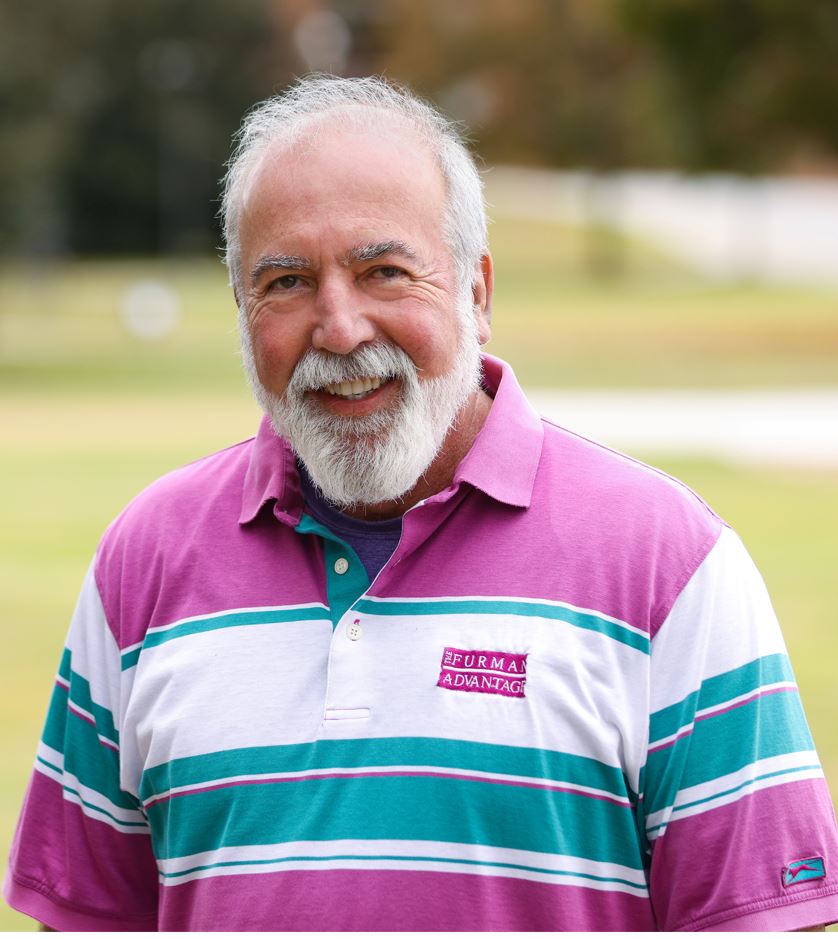
Anthony Caterisano is a Professor of Health Sciences at Furman University, with over 35 years of academic and athletic leadership. He holds a Ph.D., M.A., and B.S. from The University of Connecticut, SUNY, and UNC Chapel Hill. His research focuses on exercise physiology, resistance training, and sports medicine, with notable publications in journals like Medicine and Science in Sports and Exercise . Dr. Caterisano is a Fellow of the American College of Sports Medicine (FACSM) and has authored/co-authored books on football training and resistance techniques. He has served as wrestling coach at Furman, Spartanburg Methodist College, and currently coaches at Wade Hampton High School. As a competitive powerlifter, he has secured 16 South Carolina state titles, 10 national titles, and 10 world gold medals in masters-level competitions. His work bridges scientific research and practical application, with grants and presentations on topics like strength training methodologies and cardiovascular adaptations. Key contributions include studies on Tsunami Barbell training, metabolic responses to exercise, and core muscle engagement. His awards reflect both academic excellence and athletic achievement, while his grants and presentations underscore his commitment to advancing sports science.
Dr. Alex Bigazzi is an Associate Professor and Associate Head (Undergraduate Program) in the Department of Civil Engineering at the University of British Columbia (UBC), with a joint appointment in the School of Community and Regional Planning. He leads the REACT Lab, focusing on active transportation, micromobility, and sustainable infrastructure design. His research emphasizes the intersection of physics, physiology, and behavior in active travel, particularly for pedestrians and cyclists, and addresses emissions reduction and equitable urban mobility. Bigazzi holds a B.M. in Jazz Saxophone from the University of Miami and a Ph.D. in Civil Engineering from Portland State University. His career includes academic and practical contributions, such as founding the REACT Lab and leading projects on e-bike incentives, air pollution exposure, and infrastructure design. His work has earned awards like the 2024 Wall Legacy Award for inclusive transport design and the 2023 Climate Action Award. He teaches courses on pedestrian/bicycle facility design and capstone projects, mentoring students through UBC’s Civil Engineering programs.
Melissa Coyle is a Senior Lecturer at the School of Sport, Exercise and Rehabilitation, Marjon University. She specializes in sport and exercise psychology, focusing on applications in sport science, coaching, physical education, outdoor education, and health and well-being. Her qualifications include HCPC registration as a sport and exercise psychologist, BASES chartered scientist, and BASES-accredited sport scientist (Psychology), alongside a PGCert, MSc, and BSc. Her research explores psychological factors in high-stakes environments, including military training, cancer patient exercise programs, and aging populations. Notable studies include a qualitative evaluation of an 8-week exercise referral program for cancer patients and an investigation into psychological factors in Royal Artillery Army Commando training. She has also examined motivations and barriers to indoor bowls participation among over-65s and mental health transitions in university students. Dr. Coyle has been awarded grants for studies like 'Psychological factors in Army Commando training' and 'Exercise adherence for cancer recovery.' Her publications span journals like Psychology of Sport and Exercise and conferences such as the Association of Applied Sport Psychology. She actively contributes to professional bodies like HCPC and BASES. Her teaching emphasizes practical applications of psychology in sports and health, complemented by research-driven insights. Beyond academia, she is an avid golfer and hill walker.
Prof. Dr. Kenan Aycan is a Professor of Anatomy at Ahi Evran University's Faculty of Medicine, Department of Basic Medical Sciences, where he has served since 2019. He also holds the position of Department Head since 2020. Previously, he worked at Erciyes University as a School Director from 2011-2016. His academic career spans over four decades with significant contributions to anatomical sciences. Dr. Aycan earned his PhD in Basic Medical Sciences from Ege University's Faculty of Medicine (1983-1986) following his Bachelor's degree in Science from Ege University's Faculty of Science (1970-1975). He also holds a Certificate of Use of Experimental Animals from Erciyes University (2008). His research focuses on anatomical morphology, vascular structures, and developmental processes. Dr. Aycan has pioneered anatomical techniques including the 'Aycan's method' for corrosion preparations. His work spans comparative anatomy across various species, morphometric analyses of anatomical structures, and investigations into teratogenic effects and protective agents. He has extensively studied the foramen magnum using golden ratio principles, vascular anatomy of reproductive organs in ruminants, and auditory ossicles in sheep. Analysis of his recent publications (2021-2025) reveals consistent focus on anatomical methodology development, morphometric studies of key anatomical structures, vascular anatomy investigations, and research on developmental processes and teratology. His work often employs plastic injection and corrosion techniques, CT imaging, and comparative approaches across human and animal models. Dr. Aycan has mentored numerous graduate students, serving as primary advisor for over 20 Master's and PhD theses covering diverse anatomical topics from vascular variations to developmental studies. His collaborative network includes researchers like Tufan Ulcay, Burcu Kamaşak, and others across Turkish institutions.
Deborah Fox is Associate Professor in Midwifery at the University of Technology Sydney (UTS), Faculty of Health, and a core member of the Centre for Midwifery, Child and Family Health. She serves as Co-lead of the Maridulu Budyari Gumal SPHERE Maternal and Women's Clinical Theme and Chair of the National Publicly Funded Homebirth Consortium. In 2024, she received the Faculty of Health Dean's Academic Excellence Award for Research (Mid Career Researcher), following her 2021 award as Highest Performing Early Career Researcher from the School of Nursing and Midwifery. Her research focuses on optimizing physiological processes and positive experiences for women with complex pregnancies, with particular emphasis on the mediation of technology in midwifery practice. Current projects include evaluation of non-invasive fetal ECG beltless and wireless fetal monitoring in labor and birth, and examining the social, economic and environmental impacts of telemonitoring and telehealth in pregnancy and postpartum care. Dr. Fox's scholarly work demonstrates consistent focus on technology's role in maternity care, women's experiences of monitoring during labor, and innovative approaches to midwifery practice. Her recent publications show increasing emphasis on digital health solutions, AI applications in women's health, and pandemic impacts on maternal care systems globally. Faculty of Health Dean's Academic Excellence Award for Research (Mid Career Researcher) 2024 Highest Performing Early Career Researcher award from School of Nursing and Midwifery 2021 Editorial Board Member, Women and Birth journal Dr. Fox is actively involved in higher degree research supervision and has developed innovative teaching resources, including an Objective Structured Clinical Examination for perinatal mental healthcare. She is scheduled to spend three months as a Visiting Scholar at the University of Oxford in 2025.
Karin Allor Pfeiffer is a Professor in the Department of Kinesiology at Michigan State University (MSU) and Director of the Institute for the Study of Youth Sports. She holds additional membership in the Center for Physical Activity and Health. With a Ph.D. from MSU, her research focuses on physical activity measurement methodologies and population health interventions, particularly among children and adolescents. Her work addresses obesity prevention, environmental design impacts on activity levels, and sociocultural factors influencing youth sport participation. Education: Ph.D. in Kinesiology from Michigan State University Her research interests emphasize: - Quantitative methods for physical activity assessment - Schoolyard redesign strategies and their health impacts - Cardiometabolic risk factors in pediatric populations - Longitudinal tracking of physical fitness and health outcomes Recent work explores accelerometer fragmentation metrics, GPS-linked activity tracking, and disparities in sedentary behavior across demographic groups. She has pioneered interdisciplinary approaches integrating spatial analysis, wearable technology, and policy evaluation. Key contributions include developing the Observational System for Recording Physical Activity in Children and advancing consensus methods for accelerometer data interpretation. Her studies frequently highlight socioeconomic and environmental determinants of health behaviors. Dr. Pfeiffer collaborates with public health agencies and urban planners to translate research into actionable policies. Her lab focuses on scalable interventions for underserved communities, leveraging community-engaged methods to address greenspace accessibility and safety concerns.
Dr. Rene Ferdinands is a Lecturer at the University of Sydney's School of Health Sciences, specializing in sports biomechanics, particularly in cricket and golf. He leads research programs focused on optimizing techniques and minimizing injury risks, such as lumbar load analysis in fast bowlers and spin bowling biomechanics. His work includes developing 3D models for analyzing bowling actions and spin delivery mechanics. Education: MSc and PhD from the University of Waikato. Research Themes: Cricket biomechanics, golf swing dynamics, equine biomechanics, and injury prevention. Professional Roles: Editor of the Cricket Coaching Information service for the International Society of Biomechanics in Sports, Honours Committee Member. His research interests span biomechanical analyses of sports techniques, including the development of smart cricket balls for performance assessment and injury mitigation. Key contributions include refining bowling action legality criteria and advancing understanding of lumbar kinetics in elite athletes. He actively supervises Honours and PhD students in biomechanics research across cricket, golf, and other sports. Notable grants include studies on hydration status in cricket performance (2008), lumbar injury prevention (2013), and biomechanical modeling of fast bowling (2009). His work bridges applied research with practical applications in sports technology and athlete development. Dr. Ferdinands collaborates with the Biomechanics Research Team at the University of Sydney, focusing on innovative tools like smart balls and advanced motion analysis techniques to improve sports performance and safety.
Professor Paweł Chmura is a Full Professor at Wrocław University of Health and Sport Sciences, specializing in Sports Sciences with a focus on football performance analysis. He serves in the Department of Individual and Team Sports, where he conducts research on exercise physiology, training load monitoring, and physical activity analysis in soccer players. With over 130 publications, Professor Chmura is a recognized expert in sports science and also holds a UEFA A coaching license. Professor Chmura's research interests center on exercise physiology, particularly in the context of team sports. His work extensively examines repeated maximum effort capabilities, physical activity analysis in soccer players, and monitoring training loads. He has developed innovative concepts such as the Psychomotor Fatigue Threshold and investigates how environmental factors like temperature and air quality affect athletic performance. His research bridges the gap between theoretical sports science and practical coaching applications, making significant contributions to football performance optimization. Professor Chmura's extensive publication record demonstrates a consistent focus on soccer performance analysis, with recent work expanding into multidisciplinary approaches including physiological, psychological, and tactical aspects of the game. His research shows increasing sophistication in methodology, incorporating advanced monitoring technologies and comprehensive analysis frameworks that consider multiple performance indicators simultaneously. This evolution reflects broader trends in sports science toward integrated, holistic approaches to athlete performance. Professor Chmura actively supervises the Motosoccer Student Research Club and invites master's and doctoral students to collaborate on research projects related to football, exercise physiology, game analysis, and motor preparation. His mentorship extends beyond formal academic supervision to practical coaching guidance, leveraging his UEFA A coaching certification to provide students with both theoretical knowledge and practical field experience. As a UEFA A-licensed football coach and tennis instructor, Professor Chmura maintains strong connections between academic research and practical sports applications. He leads the Motosoccer Student Research Club, which provides hands-on research opportunities for students interested in sports science. His dual expertise in academic research and practical coaching creates a unique environment for applied sports science research that directly impacts coaching methodologies and athlete development.
Dr. Ariel Lang is a Professor In Residence in the Department of Psychiatry at the University of California San Diego (UCSD) and holds an Adjunct Professor position in the Department of Family Medicine and Public Health. She serves as Co-Director of the Experimental Psychopathology Track in the SDSU/UCSD Joint Doctoral Program in Clinical Psychology, and directs the VA San Diego Healthcare System (VASDHS) Center of Excellence for Stress and Mental Health (CESAMH). She co-leads the VASDHS Advanced Fellowship in Women's Health and specializes in evidence-based psychotherapeutic approaches for anxiety and trauma-related disorders in military populations. Education: Bachelor of Arts (BA), Psychology, Stanford University (1991) Master of Arts (MA), Clinical Psychology, UCLA (1994) Doctor of Philosophy (PhD), Clinical Psychology, UCLA (1998) Master of Public Health (MPH), Public Health (Biometry), SDSU (2007) Research Interests: Dr. Lang's work centers on assessing and treating PTSD, anxiety disorders, and trauma-related conditions with a focus on complementary and integrative approaches. Her studies frequently intersect with military/veteran populations, women's health, and public health issues such as systemic racism and environmental exposures. She has pioneered interventions like Compassion Meditation , Adaptive Disclosure , and Mantram Repetition Program , often using randomized controlled trials (RCTs) to evaluate efficacy. Her research also addresses co-occurring disorders (e.g., PTSD and substance use), pregnancy/postpartum mental health, and intergenerational trauma effects. Publications Trends: Her recent articles emphasize trauma-focused treatments, integrative health modalities, and veteran-specific healthcare challenges. Over 50% of her recent work involves clinical trial methodologies, particularly RCTs evaluating novel interventions. She consistently explores interdisciplinary topics like the intersection of mindfulness and clinical psychology, and the impact of systemic stressors on mental health outcomes. Awards: In 2022, she was honored as the UCSD Dept of Psychiatry Faculty Champion of Diversity . Grants/Advising: She is Principal Investigator on NIH grants exploring compassion meditation and yoga interventions for veterans, and has led projects funded by the VA and DoD. Her role in the 2023 VA/DoD PTSD Clinical Practice Guideline underscores her influence in shaping national healthcare policies. Labs/Teams: Her work is anchored in the VASDHS CESAMH, a multidisciplinary research center focused on stress-related mental health conditions. She collaborates extensively with researchers in public health, neurology, and military medicine, evidenced by frequent co-authorships in these domains.
Dr. Frances Chen is a Professor and Area Coordinator in the Department of Psychology at the University of British Columbia (UBC), located on the traditional, ancestral, and unceded territory of the Musqueam People. She holds a PhD from Stanford University (2009). Her research integrates health psychology, social psychology, and neuroendocrinology to explore how social experiences influence mental and physical health. Key areas include the physiological impacts of loneliness, social support, and hormonal changes during puberty on adolescent development. Education: PhD, Psychology, Stanford University, 2009 Research Focus: Dr. Chen investigates how social interactions 'get under the skin' through studies on loneliness, stress, conflict negotiation, and hormonal mechanisms. Her work emphasizes interventions to enhance social connection and reduce health disparities. Recent Article Trends: Recent publications highlight interdisciplinary approaches, including genetic influences on depression, effects of near-infrared lighting on cognition, and longitudinal studies on adolescent hormonal contraceptive use. Her work bridges basic science and applied health outcomes. Awards & Grants: Michael Smith Health Research BC C2 Award (2022) Killam Faculty Research Fellowship (2019) Teaching & Learning Enhancement Fund Grant (2025) SSHRC Prosociality Project Funding (2023) Lab & Mentorship: Director of the Social Health Lab, she mentors graduate and undergraduate students, prioritizing equity and inclusion. Recent lab achievements include studies on teen health development and interventions to improve student success in psychology programs. Lab Initiatives: UBC Teen Health and Development Study (longitudinal hormonal/mental health tracking) NIR lighting health impact research (collaborative interdisciplinary project) Prosociality 'in the Wild' SSHRC project
Ricardo Gutierrez-Osuna is a Professor in the Department of Computer Science and Engineering at Texas A&M University, part of the College of Engineering. He leads the PSI Lab and focuses on machine learning, speech processing, and digital health applications. His research spans topics like wearable sensors, foreign accent conversion, and physiological monitoring. Education: Ph.D. (Computer Engineering, NC State, 1998), M.S. (Computer Engineering, NC State, 1995), B.S. (Electrical Engineering, Universidad Politécnica de Madrid, 1992). Research interests include intelligent sensors, speech processing, machine learning, neuromorphic computation, and mobile robotics. His work bridges computer science and biomedical engineering, with applications in health monitoring and human-computer interaction. Awards: NSF CAREER Award (2002) Ramón y Cajal Award (2005-2010) Texas A&M Barbara and Ralph Cox Fellow (2009) Multiple teaching awards (2009-2010) His lab develops innovative technologies like stress-detecting wearables, biofeedback games, and systems for non-native speech improvement. He collaborates on projects involving voice conversion, glucose prediction algorithms, and multi-modal sensing devices.
Masaki Nishida is a Professor at the Faculty of Sport Sciences , Waseda University, and Vice President of the Health Support Center at the same institution. He also serves as Chief of the Sleep Research Institute . His research bridges Sleep Science , Sports Medicine , and Clinical Psychiatry , with a focus on the interplay between sleep, cognitive function, and athletic performance. Education: Tokyo Medical and Dental University, Faculty of Medicine (1996) His work has significantly advanced understanding of napping interventions for athletes, sleep quality in competitive divers, and neurophysiological mechanisms linking sleep spindles to memory consolidation. Current research projects include a 2024-2027 study on functional bedding effects funded by Japan Society for the Promotion of Science. Scientific awards include the 15th Japanese Society of Sleep Research Encouragement Award (2010) and the 88th Japanese Society for Occupational Health Award (2015). His publications span topics like REM sleep's role in emotional memory , sleep inertia , and motor adaptation , with recent emphasis on international sports psychiatry standards . He actively contributes to professional societies including the Japanese Association of Sports Psychiatry (Chairman) and Society for Neuroscience .
David J Mehlman, MD serves as an Associate Professor in the Department of Medicine (Cardiology) at Northwestern University's Feinberg School of Medicine, with clinical practice at Northwestern Memorial Hospital. His expertise spans echocardiography, general cardiology, and prosthetic heart valve disease management. His academic training includes: MD from Johns Hopkins University (1973) Internal Medicine Intern at Johns Hopkins Hospital (1974) Medicine Resident at Johns Hopkins Hospital (1976) Cardiology Fellowship at University of Chicago Hospitals (1978) Dr. Mehlman's research focuses on structural heart disease mechanisms and diagnostic applications, particularly in valve prostheses evaluation and exercise-induced cardiac adaptations. His work bridges clinical cardiology with cardiovascular imaging techniques to address complications in valvular interventions and transplant-related cardiomyopathies. His publication history reveals consistent contributions to cardiovascular pathology, with emphasis on aortic homograft performance, amyloidosis-related cardiac deterioration, and athlete physiology. Key methodologies involve advanced echocardiography and radiofrequency ultrasound for prosthetic valve assessment. He maintains prestigious recognition as a Castle Connolly Top Doctor across multiple years: Castle Connolly Top Doctor (2019) Castle Connolly Top Doctor (2018) Castle Connolly Top Doctor (2017) Castle Connolly Top Doctor (2016) Castle Connolly Medical Top Doctor (2006) Castle Connolly Medical Top Doctor (2005) Castle Connolly Medical Top Doctor (2005) Castle Connolly Medical Top Doctor (2004) Board certified in Internal Medicine and Cardiovascular Disease by the American Board of Internal Medicine, Dr. Mehlman integrates clinical practice with ongoing research in structural heart disease while adhering to Northwestern's professional disclosure standards.
John A. Rogers is the Louis Simpson and Kimberly Querrey Professor at Northwestern University, holding joint appointments in Materials Science and Engineering, Biomedical Engineering, Mechanical Engineering, Chemistry, and Neurological Surgery. He directs the Querrey-Simpson Institute for Bioelectronics. His work bridges soft materials science, bio-integrated electronics, and nanotechnology, with a focus on wearable medical devices, bioresorbable systems, and neural interfaces. Educations: B.A. & B.S. from University of Texas Austin (1989), S.M. from MIT (1992), Ph.D. in Physical Chemistry from MIT (1995). Prior roles include Director of Bell Labs' Condensed Matter Physics Department and faculty positions at University of Illinois at Urbana-Champaign. Research emphasizes soft materials for bio-inspired electronics, including flexible sensors, microfluidic platforms, and bioresorbable implants. His lab has pioneered epidermal electronics, injectable optoelectronics, and neural interfacing systems. Over 1000 peer-reviewed publications and 100+ patents highlight his contributions to nanotechnology and biomedical engineering. Awards include the Benjamin Franklin Medal (2019), MRS Medal (2018), and MacArthur Fellowship (2009). He is a member of the National Academies of Sciences, Engineering, and Medicine. Current projects span bioelectronic medicines, wearable health monitors, and advanced medical imaging tools.
Professor Guy Williams is a leading academic at the University of Cambridge with a focus on imaging science and clinical neurosciences, affiliated with Downing College and the Wolfson Brain Imaging Centre . Holding a PhD in Physics from his initial Natural Sciences degree, he specializes in nuclear magnetic resonance (NMR) and MRI techniques for brain imaging. Education: BA, PhD in Physics His research centers on non-invasive imaging of brain structure and function, particularly in traumatic brain injury (TBI) and dementia. His work involves developing novel MRI pulse sequences and advanced data analysis algorithms, including AI-based diagnostic tools. He leads studies on white matter integrity post-trauma, longitudinal dementia assessment, and applications of MRI in disorders of consciousness and addiction. Recent publications highlight collaborations in traumatic brain injury outcomes, AI-guided dementia prediction, and neuroimaging of post-COVID cognitive deficits. His team's work on ultra-high field laminar fMRI and distortion correction methods has advanced clinical neuroscience applications. Key techniques include diffusion tensor imaging (DTI), 7 Tesla MRI, and positron emission tomography (PET/MR). His research spans from basic NMR physics to clinical translation, with a strong emphasis on multi-site studies and real-world diagnostic implementation.