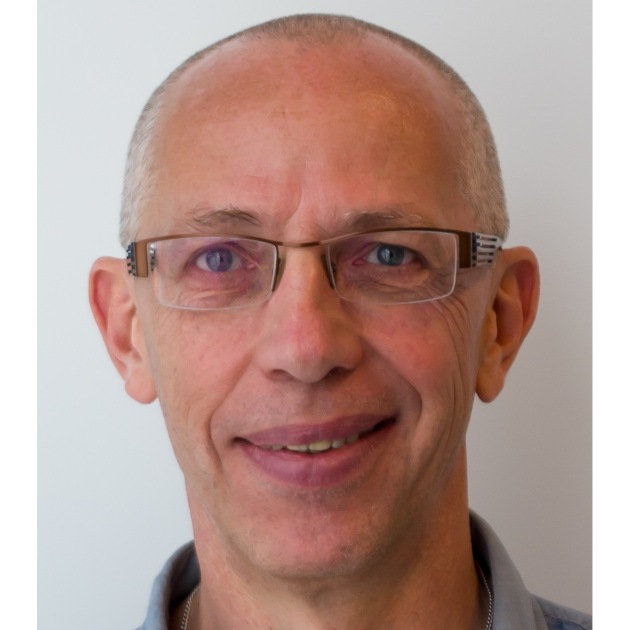
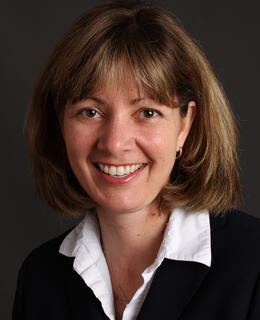
Ryan K. Williams is an Assistant Professor in the Bradley Department of Electrical and Computer Engineering at Virginia Tech. His research focuses on real-time systems optimization, multi-agent robotics, and computational frameworks for autonomous systems. He holds an NSF Career Award (2021) and has contributed to advancing algorithms for resilient and efficient multi-robot coordination. His work addresses challenges in distributed systems, including scheduling, fault tolerance, and resource allocation. Key areas include probabilistic security in multi-robot teams, topology control for stable coordination, and anticipatory planning for search and rescue operations. He also explores intersections with education, such as analyzing teacher professional learning impacts on student outcomes in STEM. Awards: NSF Career Award 2021 Grants: AF: Small grants (2024, 2021), CPS: Medium grant (2019) Labs/Teams: Collaborates on multi-robot systems and computational autonomy projects
Twan Basten is a Full Professor in the Electronic Systems group at Eindhoven University of Technology (TU/e). He leads research on embedded and cyber-physical systems, focusing on model-driven design, computational models, and system dependability. He holds an MSc (1993) and PhD (1998) in Computing Science from TU/e, advancing from Assistant to Full Professor by 2009, and became the Electronic Systems group chair in 2013. His research spans international projects (FP5-7, H2020, ECSEL) and Dutch initiatives (STW, NWO, RVO), with over 200 publications and seven best paper awards. He has co-supervised 21 PhD students and actively participates in program committees and conferences. His work contributes to UN Sustainable Development Goals through innovations in smart systems. Education: MSc in Computing Science, TU/e (1993) PhD in Computing Science, TU/e (1998) Research Interests: Explores design methodologies for embedded systems, including scenario-based design, real-time scheduling, and performance analysis. Specializes in model-driven engineering and computational models to ensure system dependability. Active in projects like TRANSACT (real-time systems) and SAM-FMS (flexible manufacturing). Key Contributions: Co-author of 1 book and over 200 scientific publications Recipient of seven best paper awards Co-supervised 21 PhD degrees Senior member of IEEE and lifetime member of ACM Labs & Teams: Leads the Model-Based Design Lab and contributes to EAISI High Tech Systems initiatives. Collaborates on tools like TRACE4CPS for execution trace analysis and CReTS for vehicle platooning simulation.
Hande Benson is a Professor in the Department of Decision Sciences and MIS at LeBow College of Business, Drexel University. She serves as the academic director of the Business and Engineering program and teaches in undergraduate and graduate programs in Business Analytics and Operations and Supply Chain Management. Research Interests: Dr. Benson specializes in optimization, particularly addressing modeling and computational challenges in large-scale nonlinear and mixed-integer optimization. Her work includes interior-point methods, regularization techniques, and the development of optimization software such as LOQO and MILANO. Recent Research Trends: Her recent publications span decision aggregation, multi-vehicle motion planning under communication constraints, and advanced interior-point algorithms. These works reflect a strong focus on algorithmic innovation, real-world applications in robotics and supply chains, and theoretical advancements in nonconvex optimization. Scientific Awards: Outstanding STAR Mentor, Drexel University (2017-2018) Distinguished Fellow, Center for Research Excellence, LeBow College of Business (2009-2012) Excellence in Research Award, LeBow College of Business (2005) Advising and Grants: While direct student advising is not explicitly listed, Dr. Benson has led significant research projects, including Multivehicle Path Coordination under Communication Constraints (Drexel Interdisciplinary Research Grant, $15,000) and Efficient Interior-Point Methods for Mixed-Integer Nonlinear and Conic Programming (NSF, $59,960). She has also contributed to executive education and consulting in financial, industrial, and governmental sectors. Editorial and Professional Service: Dr. Benson is actively involved in the academic community as Associate Editor for several leading journals, including Computational Optimization and Applications , Journal of Optimization Theory and Applications , Mathematical Programming Computation , and Optimization and Engineering .
Julie Bugg is a Professor of Psychological & Brain Sciences at Washington University in St. Louis, where she also serves as the Director of Graduate Studies. She is the principal investigator of the Cognitive Control & Aging Lab, which conducts research on cognitive control, aging, and memory. Her work is supported by funding from the National Institute on Aging (NIA). Education: PhD, Colorado State University MS, Colorado State University BA, Bloomsburg University of Pennsylvania Her research focuses on cognitive control mechanisms across the lifespan, particularly how aging affects attention, memory, and executive function. She investigates interference resolution in tasks like the Stroop and Eriksen flanker, distinguishing between list-level, contextual, and item-specific control. A major focus is how normal aging and early Alzheimer's disease differentially impact these processes. She also studies prospective memory —remembering future intentions—and the risks of commission errors, especially in older adults. Another active line explores cognitive training and physical exercise as interventions to preserve cognitive function in aging, including impacts on eHealth literacy. The published articles reveal a strong focus on cognitive control dynamics , with recurring themes in top-down regulation , conflict adaptation , and aging-related cognitive decline . Her work integrates behavioral paradigms with real-world applications, especially in improving health decision-making among older adults. Several studies use pupillometry to assess cognitive effort and awareness. Scientific Contributions: Developed methods to isolate levels of cognitive control Investigated mechanisms underlying commission errors in prospective memory Explored exercise as a neuroprotective factor in aging Examined eHealth literacy outcomes in cognitive training programs Julie Bugg actively mentors students, including undergraduates involved in her research. She has led NIA-funded projects on cognitive training and aging. Her lab investigates translational strategies to support cognitive health in older adults, with implications for public health and clinical intervention. Laboratory and Research Team: She leads the Cognitive Control & Aging Lab at Washington University, which conducts multi-faceted research on cognitive aging, memory, and executive function. The lab uses behavioral experiments, neuropsychological assessments, and physiological measures like pupillometry to explore cognitive mechanisms.
Dr. Christopher DeLuca is an Associate Dean in the School of Graduate Studies and an Associate Professor of Educational Assessment at Queen’s University’s Faculty of Education. He leads the Classroom Assessment Research Team (CART) and directs the Queen’s Assessment and Evaluation Group. Previously, he served as an Assistant Professor at the University of South Florida and conducted policy research in London, England. His research focuses on the intersection of curriculum, pedagogy, and assessment within school accountability frameworks, emphasizing teacher support to enhance student learning. He holds advanced degrees from Queen’s University (BSc, B.Ed., MEd, PhD). His work has been funded by the Social Sciences and Humanities Research Council of Canada and recognized with awards such as the Queen’s Research Excellence Award and the AERA Outstanding Paper Award. Dr. DeLuca has supervised numerous graduate students, taught courses ranging from undergraduate to doctoral levels, and contributed to professional journals as an editor. His research explores teacher assessment literacy, validity theory, and global educational trends. He currently serves as Executive Editor of Assessment in Education and advocates for inclusive assessment practices.
Prof. Dr. Mario Trapp is a Full Professor and Chairholder of Engineering Resilient Cognitive Systems at the Technical University of Munich (TUM), within the TUM School of Computation, Information and Technology. He is also the Executive Director of the Fraunhofer Institute for Cognitive Systems IKS in Munich, leading a major research institute focused on the safe integration of artificial intelligence into critical systems. Education: PhD in Computer Science, TU Kaiserslautern, 2005 (with distinction) Habilitation in Computer Science, TU Kaiserslautern, 2016 Studied Technoinformatics / Computer Science, TU Kaiserslautern His research centers on resilient cognitive systems , where he combines expertise in model-based safety engineering with self-adaptive software systems. He advocates for safe intelligence , emphasizing that AI must be engineered to be both intelligent and safe, particularly in domains like autonomous driving and medical technology. His work addresses the challenge of ensuring dependability in open, adaptive systems where traditional safety methods fall short. The available publications reflect a consistent focus on dynamic safety assurance, adaptive certification, and runtime risk management for complex, open systems. His research trajectory shows a deep commitment to foundational methods that enable systems to maintain safety despite uncertainty and change. Scientific Affiliations and Recognition: Member, Bavarian State Government’s Council on AI (Bayerischer KI-Rat) Member, Bavarian State Ministry’s AI – Data Science Expert Panel Former Adjunct Professor, Department of Computer Science, TU Kaiserslautern Prof. Trapp is actively involved in technology transfer, advising numerous industrial partners on safety-critical software and AI assurance. He is a frequent speaker and author on the topics of AI safety, software engineering, and resilience. He leads a research team at Fraunhofer IKS focused on developing architectures and methods for dependable cognitive systems.
Lisa Rosenblum is a Lecturer at the School of Information, San José State University, where she teaches courses in information professions and library science. She brings extensive leadership experience from major public library systems across the United States, including as former Executive Director of the King County Library System and Chief Librarian at Brooklyn Public Library. Executive Director, King County Library System (2018–2023) Chief Librarian, Brooklyn Public Library (2015–2017) Director of Library and Community Services, Sunnyvale, CA (2009–2015) Lecturer, SJSU School of Information (2008–2014, and currently affiliated) Adjunct Faculty, Pratt Institute (2016–2017) Her research and teaching interests focus on public libraries, library administration and management, facilities planning, and literacy promotion. She emphasizes strategic leadership and innovative service delivery in public information institutions. The recent publications in her portfolio reflect a strong trend in practical library management, strategic planning, and organizational development. Her work often addresses real-world challenges such as budget constraints, service efficiency, leadership transitions, and the integration of library services within broader community frameworks. Topics include performance metrics, reference service models, and the philosophical underpinnings of merged library collections. Distinguished Alumni, College of Arts and Sciences, San José State University (2009) Mover and Shaker, Library Journal (2009) Fellow, Urban Libraries Council Executive Leadership Institute Participant, Stanford Institute on 21st Century Librarianship Lisa Rosenblum has advised and mentored numerous library professionals through her teaching and leadership roles. She has served on advisory boards for the University of Washington Information School, Metropolitan New York Library Council, and Pratt Institute School of Information. While specific grant details are not listed, her leadership roles involved overseeing large-scale public library budgets and initiatives. Her professional service demonstrates a deep commitment to advancing the field through education, policy, and organizational innovation. She has contributed significantly to the development of future library leaders through her teaching in MLIS programs at SJSU, Pratt, and the University of Washington. Her courses, such as INFO 204 – Information Professions Education, are designed to prepare students for leadership and administrative roles in information institutions.
Karl Palmskog is a Lecturer at KTH Royal Institute of Technology in the Division of Theoretical Computer Science and the STEP research group. His work focuses on program verification and proof engineering, with particular emphasis on developing techniques and tools based on proof assistants for constructing functionally correct and secure software systems. Palmskog received his Ph.D. in Computer Science in 2014 from KTH, advised by Mads Dam, and his M.Sc. in Computer Science and Engineering from KTH in 2007. Prior to his current position, he was a postdoc at The University of Texas at Austin and University of Illinois at Urbana-Champaign. His research interests span programming languages, software engineering, and formal verification, with a particular focus on developing techniques and tools based on proof assistants. He is an avid user of the Coq proof assistant for both proving and programming, often complemented by OCaml, and also utilizes HOL4 and other ML family dialects. His work bridges theoretical foundations with practical applications, particularly in the domains of blockchain systems, distributed systems, and automotive software verification. Analysis of his recent publications reveals a strong focus on Coq-based verification, with significant contributions to proof engineering tools and methodologies. His work includes developing tools for regression proving, change impact analysis, mutation testing for Coq projects, and lemma name suggestion using deep learning. There's also a growing trend toward applying formal methods to real-world systems like blockchain protocols and automotive software. Palmskog has been involved in several research projects, including Coq-community Proof Engineering and Distributed Components. His past projects include Trustfull (SSF), Model-based Event Driven Scalable Programming for the Mobile Cloud (NSF), Highly Adaptable and Trustworthy Software (EU FP7), and 4WARD Future Internet (EU FP7). As an educator, Palmskog has served as examiner, course responsible, teacher, and assistant for various courses including Algorithms, Data Structures and Complexity; Degree Projects; Game Theory; Parallel and Distributed Computing; and Programming Paradigms. His work on Chip, a Coq formalization of change impact analysis, demonstrates his commitment to creating practical, certified tools that bridge formal methods with software engineering practice.
Robin Carpentier is a Research Fellow at the School of Computing, Macquarie University . His work focuses on Data Privacy , Information Management , and Hardware Security , particularly in developing secure personal data management systems using Trusted Execution Environments (TEE) and SGX technology. Research Interests : Secure data processing with third-party code Privacy-preserving computation frameworks Hardware-based security for databases Dimensionality challenges in text privacy Resource-constrained privacy-preserving methods Recent Publications Trends : Robin's research over the past decade has explored data leakage mitigation, TEE-optimized database operations, and privacy-preserving mechanisms for large-scale data applications. His 2024 work extends these principles to secure AI/LLM interactions and advanced text privacy techniques.
Renaud Pacalet is a Researcher at Institut Mines-Télécom – Télécom Paris , affiliated with the Communications and Electronics (Comelec) Department and the System on Chip (LabSoc) research team under the Information Processing and Communication Laboratory (LTCI). His work spans hardware security, embedded systems, and software-defined radio (SDR) architectures. Current Research: Hardware security, side-channel attacks (power, timing, fault injection), RISC-V security analysis using gem5, FPGA scheduling for cloud data centers, and model-driven design methodologies. Past Research: Hardware acceleration for ray tracing, SDR front-end processing, SoC security, and memory bus protection (SecBus project). Teaching: Courses on Digital Systems, Computer Architecture, and Hardware Security at EURECOM, including lab sessions on side-channel attacks and fault analysis. Email: renaud.pacalet@telecom-paris.fr Contact: Télécom ParisTech, Campus SophiaTech, 450 route des Chappes 06410 Biot, France
Dr. Beth Archer-Kuhn is an Associate Professor at the University of Calgary's Faculty of Social Work, currently on leave until January 2026. With 25+ years of practice experience in child welfare and mental health, she specializes in clinical social work, custody evaluations, and executive leadership. Her academic credentials include a BSW (1986) and MSW (1991) from the University of Windsor, culminating in a PhD in Social Work (2016). Her research examines: The intersection of child custody decisions and domestic violence Inquiry-Based Learning (IBL) in social work education Critical reflexivity in clinical practice Community responses to family violence Recent publications focus on pedagogical innovation during COVID-19, transformative learning frameworks, and women's experiences in shared parenting arrangements under domestic violence. Analysis reveals strong emphases on social justice education, trauma-informed practice, and technology adaptation in higher education. Awards & Honors: Faculty Publication Award (2019) Teaching Scholars Award (2019) VPR Travel Award (2019) She leads major grants including a SSHRC Insight Development Grant studying shared parenting impacts on domestic violence survivors, an Alberta Community Justice Grant for public awareness, and international IBL pedagogy research. Current projects explore AI ethics in education and national recruitment networks for vulnerable populations.
Dr. Robyn J Stiger is a Lecturer at Oxford Brookes University , specializing in Clinical Skills, Simulation & Immersive Technology . She leads a multidisciplinary team in simulation-based education, with affiliations to the Centre for Movement, Occupational and Rehabilitation Sciences (MOReS) and Oxford University Hospitals NHS Foundation Trust . PGcert in Education MSc in Physiotherapy BSc in Health Sciences Research Interests include: Prehabilitation for Upper Gastrointestinal Cancer and Critical Care outcomes Pedagogical applications of Simulation-Based Education to improve Patient Safety and Interprofessional Learning Physiotherapy interventions for Spinal Cord Injuries and Delirium in ICU Publications focus on: Systematic reviews and scoping studies on prehabilitation and critical care Simulation pedagogy in Postgraduate Healthcare Education Virtual reality applications for Muscular Activity Analysis Scientific Awards : Fellow of the Higher Education Academy (FHEA) Professional Roles : External Examiner at Birmingham University (2023–present) Executive Committee Member, Association of Simulated Practice in Healthcare (ASPiH) (2023–present) Honorary Research Physiotherapist at Oxford University NHS Foundation Trust (2019–present) External Examiner at Keele University (2020–2025)
Sietske Waslander is a Full Professor of Educational Sociology at TIAS School for Business and Society, Tilburg University, where she has been affiliated since 2007. Her expertise spans multiple domains including Context (Sociology), Health & Education (Education Management, Innovation, Strategy), Management & Organisation (Leadership, Public Policy, Research and Development), Quantitative Methods (Business Research Methods, Economics, Statistics), and Strategy & Innovation (Strategy and Leadership). Professor Waslander completed her cum laude dissertation on market mechanisms in education. Prior to her position at Tilburg University, she worked at Victoria University of Wellington, the OECD in Paris, a major national consultancy firm, and the University of Groningen. Her research focuses on steering processes in education at system, organizational, and regional levels. She has extensively studied the evaluation of the "Passend Onderwijs" (Appropriate Education) policy, analyzed debates about appropriate education in media and politics, and researched education policy, equal education opportunities, and the public nature of education. Her work demonstrates consistent attention to how governance, leadership, and policy interact within educational systems, particularly examining tensions between market mechanisms and public values. Her publication record reveals a research trajectory evolving from examining market mechanisms in education to more nuanced analyses of policy implementation, meta-governance, and regional steering networks. A consistent theme is how theoretical policy intentions translate (or fail to translate) into educational practice within complex, multi-level governance environments. Member of the Social and Economic Council of North Netherlands Serves on program and assessment committees of the Netherlands Organisation for Scientific Research Participates in various advisory committees and sounding boards Regularly contributes columns and weblogs to professional publications Professor Waslander teaches on leadership, governance, policy, strategy, and innovation in the public domain, delivering courses for executives and supervisors in public management and education programs, as well as in TIAS in-company programs.
Dominik Huber is a Ph.D. candidate and researcher at the Technical University of Munich , affiliated with the Chair of Computer Architecture & Parallel Systems . His work focuses on Dynamic Resource Management in High-Performance Computing (HPC) , with expertise in Parallel & Distributed Programming Models and Hardware-aware programming . He has actively contributed to teaching courses like Parallel Programming Systems and Advanced Computer Architecture . His research emphasizes adaptive resource allocation in hybrid HPC clusters, leveraging technologies such as MPI Sessions , PMIx , and frameworks like LAIK and XBraid . Recent projects include the DynRes software suite for dynamic resource management and collaborations on quantum-HPC integration. Huber has advised students on topics ranging from Dynamic Resource Management in Charm++ to CI Systems for HPC Software , and his publications address challenges in malleability, scheduling, and power-constrained environments. Current affiliations include participation in the SEANERGYS (EuroHPC) and PlasmaPEPS projects.
Alec H. Follmer is an Assistant Professor at the University of California, Davis, appointed in 2024. His research focuses on metalloenzymology, combining structural biology, spectroscopy, biophysics, and chemical biology to study non-equilibrium dynamics in metal-containing enzymes. He leads the Follmer Lab, which develops innovative approaches for high-resolution characterization of catalytic intermediates to pioneer selective catalysis and structure-based drug discovery. His educational background includes: Ph.D. from the University of California Irvine (2014-2019) B.Sc. from the University of the Pacific (2011-2014) Dr. Follmer's research spans bioinorganic chemistry and enzyme catalysis, investigating how protein motions couple with metallocofactor electronic structures to drive enzymatic mechanisms. His lab employs XFEL crystallography, advanced spectroscopies, and biophysical methods to capture transient catalytic states, with implications for sustainable chemistry and pharmacological applications. His recent publications (2018-2024) reveal consistent focus on cytochrome P450 systems, metallocofactor dynamics, and catalytic mechanisms. Key trends include substrate binding effects, redox partner interactions, and conformational changes during catalysis, utilizing X-ray scattering, crystallography, and electron spin resonance to probe enzyme dynamics at atomic resolution. His scientific honors include: Visiting Physicist at Stanford / SLAC National Accelerator Laboratory (2025) Appointed to LCLS User Executive Committee, SLAC (2024) National Science Foundation 2026 Idea Machine Finalist – Top 33 (2020) DOE Basic Energy Sciences Early Career Network Representative (2020–2021) No information on students or research grants is provided in the source text. The Follmer Lab operates at the Chemistry building (3110 Chemistry) at UC Davis, working at the interface of bioinorganic chemistry, (bio)photocatalysis, and pharmacology to develop strategies for medical and sustainable chemistry advancements.