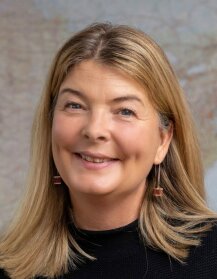
Prof. Dr. Caroline Rosenthal is a leading scholar in American Studies at the University of Jena, specializing in North American literature and culture. She has held the Chair of American Studies since 2009 and is a member of several academic boards including the Journal of English and American Studies editorial board (since 2023). Research Leadership : Coordinates the graduate school "Model Romanticism" (since 2015) Public Engagement : Regularly contributes to media discussions on cultural topics Teaching Innovation : Developed interdisciplinary courses on ePortfolios and experiential learning International Collaboration : Works with Canadian institutions and European research networks Research Specializations : Mobility and spatial studies in North American contexts Ecopoetics and Anthropocene literature Comparative North American studies Material culture analysis Hydroregionalism and water studies Indigenous knowledge systems Recent Publication Trends (2025-2019): Environmental humanities focus with 8 articles Canadian studies contributions (5 articles) Thoreau/Transcendentalism research (3 articles) Urban-nature intersections (4 articles) Material culture analysis (4 articles) Academic Service : Ombudsperson for scientific ethics (since 2022) Chair of Canadian Studies Foundation (since 2019) Former President of Society for Canadian Studies (2015-2017) Teaching Innovation includes: Experiential learning projects (e.g., Calgary Stampede excursions) ePortfolio assessment methods Interdisciplinary team-teaching approaches Focus on material culture pedagogy
Dr. Linda Boersma is an Assistant Professor in Art History at the Utrecht University , researching and teaching modern and contemporary art with a focus on Russian avant-garde , De Stijl , and art theory . She previously worked as an assistant curator at the Stedelijk Museum Amsterdam and Witte de With Rotterdam. Research Interests : Russian avant-garde, Suprematism, De Stijl, Modern/Contemporary Art, Art Theory Teaching : Courses like Masterpieces: A Concept in Modern Art , Excursion Abroad (Modern) , and supervision of master's theses Her recent publications analyze intersections between Russian avant-garde and Dutch modernism, contemporary art's role in cultural identity, and institutional critiques of canon formation. She actively contributes to Museumtijdschrift and Metropolis M , and since 2019, she serves as an advisor for NWO Museum Grants . Boersma is a member of the International Association of Art Critics (AICA) . Scientific Awards & Roles: Advisor for NWO Museum Grants (2019–present) Member of AICA
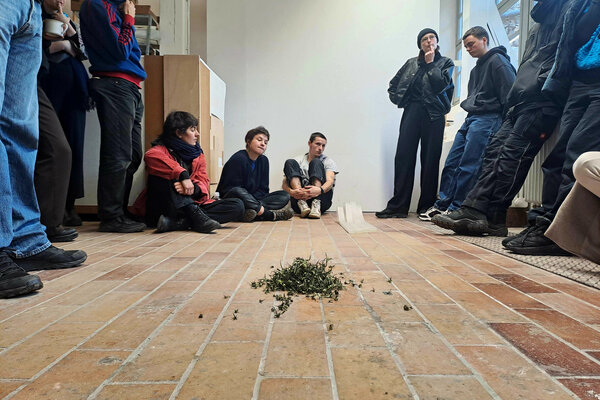
Karsten Födinger is Professor for Sculpture/Materiality and Space at Burg Giebichenstein Art Academy Halle, having taken over the professorship in the summer semester of 2023. Previously, he served as a visiting professor at the same institution since winter semester 2022/2023, and taught at the Faculty of Architecture at EPFL in Lausanne from 2018 to 2023. His educational background includes studies at the State Academy of Fine Arts in Karlsruhe under Professors Günter Umberg and Meuser, completing his studies as Meuser's master student in 2009. State Academy of Fine Arts in Karlsruhe (completed 2009) Födinger's sculptural work confronts elemental forces and structures at the interface between sculpture and architecture. His practice investigates the relationships between substance and form, with processual work with materials being fundamental elements of his work, alongside the places and contexts in which these processes occur. His teaching emphasizes interdisciplinary approaches, as seen in his collaboration with Professor Marita Tatari on the seminar 'Imagination of matter,' which explores the transformation of subject-object categories in the Anthropocene and includes a joint excursion to an active lignite open-pit mine. Professor Födinger has received numerous prestigious awards and scholarships throughout his career: Baloise Art Prize, Art 43 Basel Statements (2012) Graduate scholarship from Baden-Württemberg Art Foundation (2009) Scholarships from Baden-Württemberg Art Foundation (2012) Scholarships from Bonn Art Fund (2012, 2021, 2022) Cité Internationale des Arts in Paris residency (2012) Fogo Island Arts Residency scholarship in Newfoundland (2013) As an educator, Födinger oversees various teaching formats including individual meetings, basic and final colloquia, team projects, and excursions. His students participate in specialized teams focusing on exhibition curation, public engagement, and interdisciplinary exploration of art and cooking. He emphasizes portfolio professionalization and application preparation for grants and residencies, reflecting his commitment to supporting emerging artists' professional development. Födinger co-founded the Mark Pezinger publishing house for artists' books in 2009, developing over 60 publications with international artists by 2014. His monograph 'Toward a Radical Sculpture,' co-authored with Anna Rosellini and Roberto Gargiani, was published by DCV Verlag in 2021. His works have been exhibited internationally at venues including Palais de Tokyo in Paris, Hamburger Kunsthalle, and Kunsthalle Sankt Gallen.
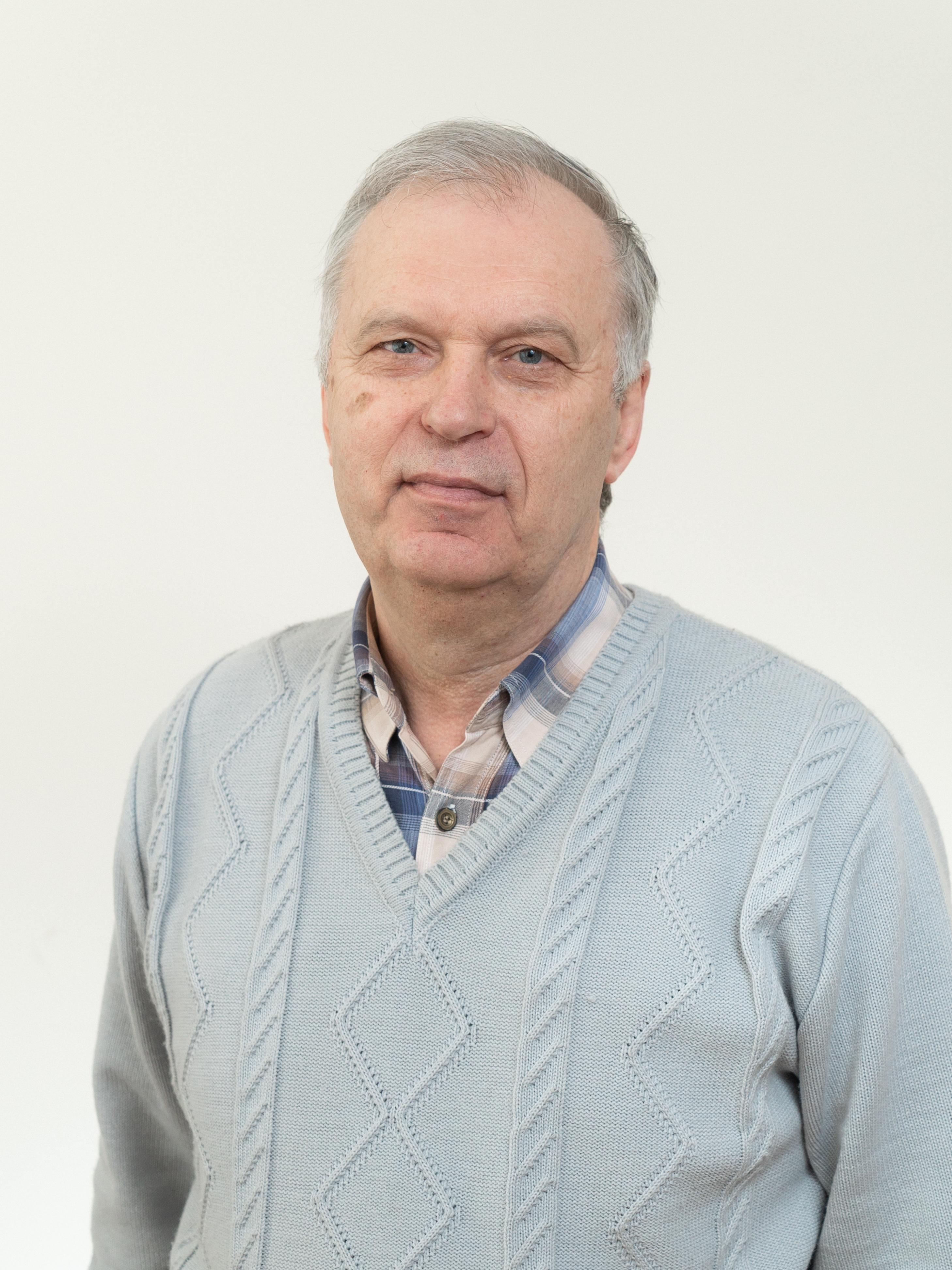
Rimantas Rudzkis is an Affiliated Professor at Vilnius University's Institute of Mathematics and Informatics, specifically within the Interdisciplinary Statistical Research Group. He serves as the Head of the Applied Statistics Department and has been working at the Institute since 1978. His academic credentials include a Doctor of Mathematics from Vilnius University (1978), a Habilitation Doctor from the Institute of Mathematics and Informatics (1993), and Professor title from Vytautas Magnus University (1996). Dr. Rudzkis has extensive educational background, having graduated from Kaunas Polytechnic Institute in 1973 with a specialization in computing technology and engineering mathematics. His professional journey began as an assistant at KPI (1973-1974), followed by postgraduate studies at the Institute of Mathematics and Informatics (1974-1977). His research primarily focuses on probability theory , mathematical statistics , and econometric modeling . He has developed methods for data clustering, nonparametric density estimation, and created mathematical models of Lithuanian macroeconomic indicators using VAR methodology. His work spans theoretical developments in statistical decision algorithms and practical applications in economic forecasting. Analysis of his recent publications reveals a consistent focus on statistical methodology development, particularly in goodness-of-fit testing, multivariate analysis, and applications to economic and financial data. His research shows a clear progression from theoretical probability work toward increasingly applied econometric modeling, with significant emphasis on Baltic region economic analysis in recent years. Dr. Rudzkis maintains significant professional engagement through multiple editorial roles, including membership on the editorial boards of 'Lithuanian Mathematical Collection' (since 1999), 'Lithuanian Statistical Works' (since 2000), and 'Money Studies' (since 2000). He has also served as Editor for proceedings of the '8th International Conference on Probability Theory and Mathematical Statistics'. His academic service includes leadership as Head of the Applied Statistics Department Seminar, membership on the program committee for international conferences, and serving as an Expert member of the Lithuanian Academy of Sciences since 1994. He has also been actively involved with professional societies, serving on the boards of both the Lithuanian Mathematical Society and Lithuanian Statistical Union since 1998. Dr. Rudzkis teaches probability theory, mathematical statistics, and specialized courses including multivariate statistics, time series analysis, correlation-regression analysis, and econometrics at multiple universities including VDU, KTU, and VGTU.
Johann Georg Lughofer serves as Associate Professor at the Department of German Studies with Dutch and Scandinavian Studies, Faculty of Arts, University of Ljubljana since 2009. His academic appointments include Visiting Assistant Professor at Stellenbosch University (2012) and regular lecturing at the University of Maribor alongside visiting professorships at institutions in Vienna, Klagenfurt, and Innsbruck through 2020. His educational background spans German studies, history, politics, and philosophy across universities in Vienna, Granada, Nice, and Exeter (1992-2004). This interdisciplinary foundation informs his scholarly approach. Lughofer's research centers on intercultural literature and exile narratives within German-speaking contexts, with specialized focus on Austrian literary traditions from the 19th to 21st centuries. He examines literature's role in German as a foreign language pedagogy, developing didactic frameworks for multicultural classrooms. His work bridges historical analysis with contemporary applications, particularly in Central European cultural transmission. His publication trajectory reveals consistent engagement with Austrian literary figures through critical editions and interdisciplinary studies. Recent works demonstrate expanding scope from author-specific analyses (Franzobel, Mayröcker) to broader themes like World War I representations and pacifist literature, increasingly incorporating political and cultural history perspectives. Professional recognition includes service as expert for Zagreber Germanistische Beiträge and jury membership for the 2015 Pergamena Literaturpreis. He maintains active roles in major German studies associations across Europe. Professor Lughofer directs departmental initiatives including the "Lyric Days" literary series since 2010 and Poetry Slam duels since 2007. He organizes cultural excursions to Vienna, Linz, and Graz while co-curating film series exploring German-language cinema. These projects create platforms for emerging Austrian authors and foster cross-border literary exchange.
Prof. Dr. Alexander Drewitz is a Professor in the Department of Mathematics and Computer Science at the University of Cologne, specifically within the Division of Mathematics. His research focuses on probability theory, with primary interests in percolation theory, random geometric structures, transport processes in random media, and applications of high-dimensional probability to data science. He has held prior positions as an ETH Fellow at ETH Zurich and as a J.F. Ritt Assistant Professor at Columbia University. His work bridges theoretical advancements with practical applications, particularly in understanding critical phenomena and stochastic processes in complex systems. Education: Doctorate in Mathematics (details not explicitly provided in text). Research Interests: Prof. Drewitz explores percolation models, Gaussian free fields, random interlacements, and concentration of measure phenomena. His studies often address geometric and dynamic properties of random structures, with implications for data science and statistical physics. Recent work includes investigations into cluster volumes, arm exponents, and universality classes in percolation models. Publications Trends: His 15 most recent articles (2008–2025) reflect a focus on Gaussian free fields, random interlacements, branching processes, and long-range correlations. Key themes include percolation thresholds, invariance principles, and high-dimensional asymptotics. Grants & Activities: Organized conferences like 'Long-range phenomena in percolation' (2024) and 'Geometric and Topological Properties of Random Algebraic Varieties' (2023). Co-founded the Scientific Network on Stochastic Processes on Evolving Networks. Labs/Teams: Active in the Center for Data and Simulation Science at Cologne, contributing to interdisciplinary research on random geometry and data-driven methods. Leads the stochastics seminar and Bonn Cologne Mathematics-Physics seminar.
Daniel Rothman is a Professor of Geophysics at the Massachusetts Institute of Technology (MIT), where he has been a faculty member since 1986. He serves as Co-Director of the MIT Lorenz Center, a privately funded interdisciplinary research center devoted to learning how climate works, which he co-founded with Kerry Emanuel in 2011. His work spans multiple departments and disciplines at MIT, including the Department of Earth, Atmospheric, and Planetary Sciences (EAPS), where he contributes to research in geophysics, atmospheres, oceans, climate, and geology. Rothman received his AB in applied mathematics from Brown University and his PhD in geophysics from Stanford University. His academic journey began with a focus on seismology, but he has since expanded his research interests to encompass: Earth system dynamics Carbon cycle and climate interactions Biogeochemistry and geobiology Statistical and nonlinear physics Mathematical geoscience As a theoretical scientist, Rothman's research focuses on understanding how the organization of the natural world emerges from the interactions of life and the physical environment. He employs mathematics, statistical physics, and nonlinear dynamics to construct simple mathematical models that predict or explain observational data. His current work centers on the carbon cycle and its coupling to climate, exploring fundamental questions about how global biogeochemical cycles arise and evolve, their stability, and how they impact climate stability. This research has important implications for understanding current climate change and potential tipping points in the Earth system. Rothman's publication record reveals a consistent focus on using mathematical approaches to understand Earth's systems. His work shows progression from fluid dynamics and pattern formation to carbon cycle modeling and mass extinction analysis. A recurring theme is identifying characteristic patterns and thresholds in Earth's systems, particularly how carbon cycle disruptions correlate with mass extinction events. His recent work has focused on identifying critical thresholds in the carbon cycle that, when breached, could lead to catastrophic climate change. Daniel Rothman has received numerous prestigious awards for his contributions to science: Fellow, American Association for the Advancement of Science (2023) Levi L. Conant Prize, American Mathematical Society (2016) Fellow, American Geophysical Union (2014) Fellow, American Physical Society (2012) Fellow, Radcliffe Institute for Advanced Study (2007-2008) Rothman has mentored numerous students throughout his career, supervising PhD students across multiple disciplines including Earth, Atmospheric and Planetary Sciences, Physics, Mechanical Engineering, and Mathematics. His research group has received significant funding for projects investigating Earth system dynamics and carbon cycle modeling. He has taught courses such as "Modeling Environmental Complexity" and "Nonlinear Dynamics: Chaos," training students in mathematical approaches to environmental problems. The Rothman research group operates within the Department of Earth, Atmospheric, and Planetary Sciences at MIT and is closely affiliated with the MIT Lorenz Center. His team combines theoretical approaches with data analysis to investigate complex Earth systems, frequently collaborating with researchers from physics, mathematics, biology, and oceanography. The group's work bridges disciplinary boundaries, applying concepts from statistical physics to understand biogeochemical cycles and Earth history.
Dr. Sanja Panovska is a leading scientist in geomagnetism and paleomagnetism at the GFZ Helmholtz Centre for Geosciences, specializing in the Earth's magnetic field dynamics, geomagnetic excursions, and reversals. She has been a postdoctoral scientist at GFZ since 2016, became a Principal Investigator in 2023, and leads projects like the ERC-funded 'EXCURSION' initiative. Her work focuses on reconstructing the geomagnetic field over millennia, linking it to core dynamics and space climate impacts. Education: Ph.D. in Geophysics from ETH Zurich (2012), M.Eng. and Diploma from the University of Ss. Cyril and Methodius, Skopje. Prior experience includes postdocs at Scripps Institution of Oceanography and GFZ. Research Interests: Geomagnetic secular variation, excursions, global field modeling, cosmogenic isotopes, and their environmental implications. Awards include the 2024 ERC Consolidator Grant and the 2019 GFZ Discovery Fund Fellowship. Key Projects: EXCURSION (ERC Grant) explores geomagnetic excursions over 780,000 years using data assimilation and machine learning. Collaborations involve DFG-funded 'DeepDyn' studies on deep Earth dynamics. Publications span over 50 peer-reviewed articles on geomagnetic field reconstructions and space weather. Scientific Contributions: Pioneered global models of geomagnetic reversals (e.g., Matuyama-Brunhes), quantified Laschamp excursion impacts on radiation shielding, and integrated cosmogenic isotopes with paleomagnetic data for multi-proxy reconstructions.
Barrie Llewelyn is a Senior Lecturer in English at the University of South Wales, affiliated with the Faculty of Business and Creative Industries and the Humanities Research and Innovation Group. Their work focuses on creative writing for wellbeing and language acquisition among forced migrants. Notable projects include the Speak to Me initiative, which uses creative workshops to aid refugee integration, and Cafe Chit Chat, an online forum connecting displaced women with native English speakers. Llewelyn holds a BA (1st Class), PGCE, MPhil in Writing, and is a Fellow of the Higher Education Academy (HEA) with Level 7 ILM Coaching and Mentoring qualifications. Research interests include the intersection of creative writing and education, particularly for marginalized groups. Projects like Walk and Talk combine physical activity with language learning through outdoor excursions. Llewelyn’s academic contributions span chapters on asylum seeker education, storytelling for wellbeing, and exhibitions blending art and refugee narratives. Awards include HEA Fellowship and ILM certification in mentoring. Teaching expertise covers journalism, media writing, and narrative theory, emphasizing the blurred lines between fiction and non-fiction. Supervised work includes seven student theses, though specific student names are not listed. Ongoing activities include organizing events like the Speak to Me Exhibition and collaborating on initiatives promoting sanctuary approaches to education.
Dmitry Belyaev is a Professor of Mathematics at the University of Oxford and a Tutorial Fellow at St. Anne's College. His research focuses on the intersection of analysis and probability, particularly Gaussian fields, critical phenomena, and Schramm-Loewner Evolution (SLE). He has made significant contributions to understanding the geometry of random functions, including work on zeros of random plane waves and Diffusion-Limited Aggregation models. His teaching includes advanced courses such as Metric Spaces, Complex Analysis, and Continuous Martingales. Research Interests: Geometry of Gaussian fields and critical points Stochastic processes in complex systems SLE and conformal maps Random fractals and percolation theory Harmonic measure and multifractal analysis Publications highlight studies on nodal domains, excursion sets, and critical point correlations in Gaussian fields. His work often bridges probability theory with geometric analysis, addressing questions about universality, continuity, and phase transitions. Supervised students include notable researchers in stochastic processes and mathematical physics.
Catherine Constable is a Professor in the Department of Geophysics at Scripps Institution of Oceanography, University of California San Diego. She is also affiliated with the Institute of Geophysics and Planetary Physics (IGPP). Her research focuses on Earth’s magnetic field dynamics, combining paleomagnetism, geomagnetism, and advanced numerical modeling techniques. She actively develops open-source tools and databases to standardize geophysical data sharing. Education: B.S., University of Western Australia; M.S., Australian National University; Ph.D., Scripps Institution of Oceanography, UCSD. Research Interests: Catherine’s work explores secular variation, geomagnetic reversals and excursions, core dynamics, and mantle conductivity influences on the geodynamo. She emphasizes statistical methods and inverse problem solutions in geophysical analysis. Key projects include the Magnetic Information Consortium (MagIC) database and FIESTA platform integration. Grants & Collaboration: She leads NSF- and NERC-funded initiatives such as the CSEDI project (2023) and collaborates on frameworks like FIESTA to enhance data interoperability. No formal advisees are listed, but her programs like Scripps-GEO Scholars support student development. Labs & Resources: Hosts a research lab at IGPP with dedicated websites (igppweb.ucsd.edu/~cathy and igpp.ucsd.edu) for data visualization tools, animations of geomagnetic components, and PmagPy software development efforts.
Avelio Sepúlveda is an Assistant Professor in the Department of Mathematics at Universidad de Chile, where he has been affiliated since 2021. He previously held a Chair CMM–CNRS fellowship (2020–2021) and completed postdoctoral work at Université Lyon 1 (2017–2020). His education includes a PhD from ETH Zürich (supervised by Wendelin Werner), a Master's from Université d'Orsay, and an Engineering degree from Universidad de Chile. His research centers on probability theory and statistical physics , with emphases on Gaussian free fields, random planar maps, percolation theory, and topological phase transitions. Key investigations include the structure of 2D Gaussian free fields, scaling limits of decorated planar maps, and dynamic conditioning of Markov processes ( myopic conditioning ). His publications (2020–2025) predominantly explore probabilistic geometry, phase transitions, and field theory, with recurring themes in conformal invariance, scaling limits, and lattice models. Notable methodological contributions include novel algorithms for myopic processes and combinatorial characterizations of Markov properties in planar maps. Awards & Service: Chair CMM–CNRS of Excellence for Young Researchers (2020–2021) Associate Editor: Electronic Journal of Probability and Electronic Communications in Probability Advising & Collaborations: He mentors six PhD/Master's students (Pablo Araya, Paul Cahen, Damian Cid, Felipe Espinosa, Pablo Zúñiga, Tomás Laengle) and collaborates extensively with researchers globally, including Christophe Garban (ERC Vortex). He co-organizes the Seminario de Probabilidades de Chile and workshops (e.g., 2025 Topological Phase Transition workshop).
Dr Jiawei Lim is a Lecturer in Financial Mathematics at the Department of Mathematics, College of Engineering, Design and Physical Sciences, Brunel University. His research focuses on financial mathematics, applied probability, and operations research, with specific interests in Parisian option pricing, excursion theory, and simulation of Levy processes. Research Trends His publications (2013–2020) emphasize stochastic modeling, martingale theory, and algorithmic solutions for financial derivatives. Key areas include Levy processes, Parisian options, and Brownian motion simulations. Education PhD in Statistics from the London School of Economics
Trygve Megaard serves as a University lecturer at the Department of Teacher Education within the Faculty of Social and Educational Sciences at the Norwegian University of Science and Technology (NTNU). His work bridges educational theory and environmental science, with physical location at Lysholmbygget, Kalvskinnet, and contact via trygve.megaard@ntnu.no. Megaard's research concentrates on Teacher Education methodologies including motor skills development, dance pedagogy, and outdoor schooling practices, alongside Environmental Botany focusing on infrastructure impacts. His environmental work examines wind farm and power line effects on vegetation, while educational research investigates practice teaching efficacy and interdisciplinary climate change curriculum design. Key interests include biodiversity conservation in cultural landscapes and mentorship dynamics in teacher training programs. Publication analysis reveals a dual-career trajectory: educational research emphasizes practice teaching outcomes and professional development (2018), while environmental studies document ecological consequences of renewable energy projects since 2002. Recent work shows increasing integration of climate change themes into teacher education, reflecting contemporary educational priorities. His 13 documented publications demonstrate consistent field-based methodology across both disciplines.
Bert Zwart is a Full Professor at Eindhoven University of Technology (TU/e), leading the CWI Stochastics Group in Amsterdam. He holds a Master's in Econometrics from Vrije Universiteit Amsterdam (1997) and a PhD in Mathematics from TU/e (2001). His research focuses on applied probability, stochastic networks, and rare event analysis, with applications in communication networks and energy systems. He has held roles at VU University and Georgia Tech, and currently directs the Dutch mathematics cluster STAR. Research interests include stochastic operations research, scaling limits, scheduling under uncertainty, and energy networks. Notable projects include the AISO: AI-driven applications to smarten Power System Operation (2022–2028). Recent work addresses traffic jam dynamics and probabilistic modeling in networks. Awards include the NWO Vici Grant (2014) and the Marcel Neuts Best Student Paper Award (2014). He contributes to the UN Sustainable Development Goals through energy research. Affiliated with TU/e’s Center for Computational Energy Research and Data Science Institute, he collaborates with industry partners like ASML and Shell. Leadership roles include editorial positions for Operations Research and organizing conferences on stochastic networks. Supervised 23 students, with active grants and industry partnerships driving his interdisciplinary work.