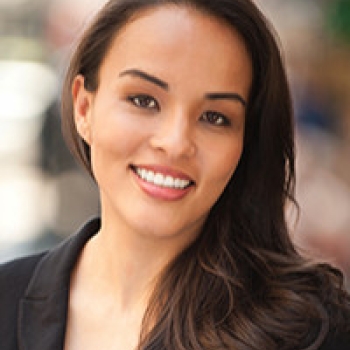
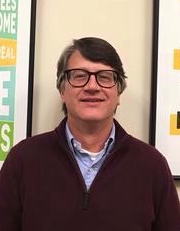
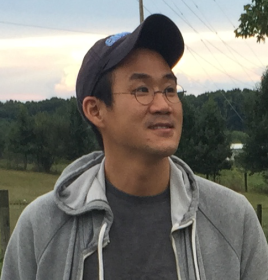
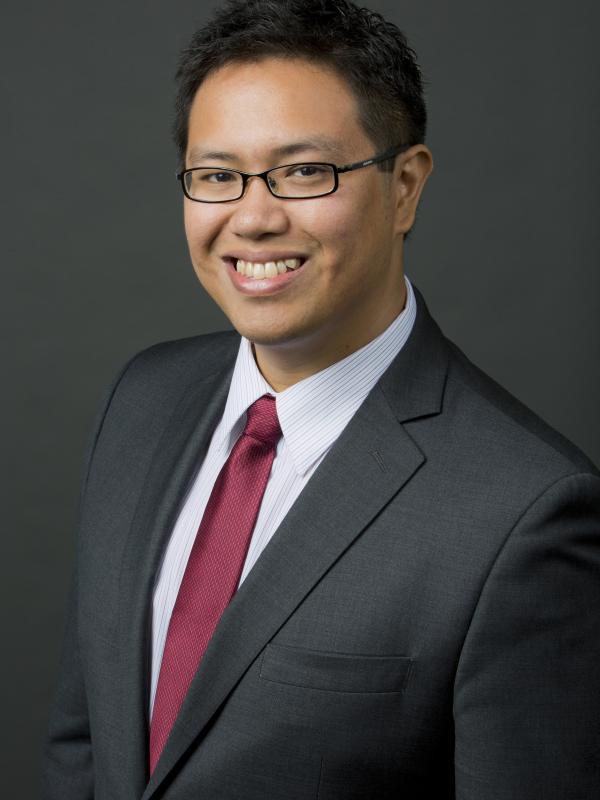
Eduardo Araral is an Associate Professor at the Lee Kuan Yew School of Public Policy, National University of Singapore. With over 30 years of experience in academia and government, he holds a PhD in Public Policy from Indiana University-Bloomington under Nobel Laureate Elinor Ostrom. His research focuses on collective action, institutions, and water governance, with publications in Nature Human Behaviour , Public Administration Review , and World Development . He has held fellowships at Stanford University and centers associated with Coase, Ostrom, and Stigler. Research Interests : Collective action, institutional analysis, water governance, digital technologies in public policy, political economy, and socio-ecological systems. Scientific Awards : Ostrom Prize for the Governance of the Commons, Fulbright PhD Scholarship, and Presidential Award for Outstanding Overseas Filipinos. Leadership Roles : Vice Dean for Research, Assistant Dean for Academic Affairs, and Co-Director of the Institute of Water Policy (2016-2022) at LKYSPP. Global Engagement : Advised 20+ international organizations including ADB, World Bank, UNDP, and Fortune 500 companies, while lecturing to 7,000+ government officials across 50+ countries.
Lucie DE CARVALHO is a Lecturer in British Civilization at the University of Lille, Faculty of Languages, Culture and Societies, Department of English Studies. She is affiliated with ULR 4074 - Center for Studies in Civilizations, Languages and Foreign Literature. Graduated from ENS Cachan Specializes in British Civilization Based at University of Lille (BO.529) Dr. DE CARVALHO's research focuses on contemporary British politics, political discourse studies, British energy policies (particularly nuclear and renewable energy), neoliberalism, historiography of science, and climate governance. Her work demonstrates a consistent engagement with the intersection of political power, energy policy, and media representation in the British context. She has developed a particular expertise in analyzing how the UK state manages controversial technologies like nuclear power within neoliberal frameworks. Her publication record shows a consistent output spanning from 2014 to 2024, with recent work examining twenty-first century UK broadcasting ecology, teaching British history to French students, and contemporary nuclear power policies. The analysis of her articles reveals a strong thematic continuity centered on British governance, energy policy, and the complexities of neoliberal state intervention. Her research employs interdisciplinary approaches drawing from political science, media studies, and science and technology studies. Member of the SAES (Society of Anglicists in Higher Education) Member of CRECIB (Centre for Research on British Civilization) Associate member of the Research Center in British Civilization (CREC) Institute of the Anglophone World, Sorbonne Nouvelle University – Paris 3 Member of the UK Political Studies Association Member of the European Association for the Study of Science and Technology (EASST) Member of UACES Dr. DE CARVALHO has demonstrated sustained research activity across multiple domains related to British studies, with particular emphasis on energy policy and political discourse. Her work bridges academic research with pedagogical practice, as evidenced by publications on teaching British history to French undergraduate students and language learning through television series.
Natalie H. Brito is an Associate Professor of Applied Psychology at New York University (NYU), affiliated with the Steinhardt School of Culture, Education, and Human Development. Her research focuses on how early social and cultural contexts shape neurocognitive development in infants and toddlers, particularly in areas of attention, memory, and socio-emotional skills. Prior to NYU, she completed a postdoctoral fellowship at Columbia University Medical Center and was a Robert Wood Johnson Health and Society Scholar. Dr. Brito’s work bridges developmental psychology, neuroscience, and public policy, emphasizing the need for equitable environments that support healthy child development. She has received prestigious awards such as the APS Rising Star Award and NIH grants, reflecting her impactful contributions to understanding developmental trajectories. Her research also extends to policy implications, such as the effects of paid maternal leave on infant brain function and the role of structural inequities in maternal mental health. Key themes include early life stress, gut microbiome influences, and the neurobiological underpinnings of cognitive development. Dr. Brito has published extensively in journals like Child Development , Developmental Cognitive Neuroscience , and JAMA Psychiatry , with a focus on innovative methodologies (e.g., the OWLET gaze-tracking tool). She teaches courses on developmental psychology and the principles of applied psychology, fostering interdisciplinary approaches to human development. Her scientific accolades include recognition from the International Society of Developmental Psychobiology and the American Psychological Association, underscoring her leadership in advancing developmental science and equity-focused research.
David Stradling is the Zane L. Miller Professor of Urban History and Interim Director of the School of Environment and Sustainability at the University of Cincinnati. He has held academic positions since 1999, progressing from Assistant Professor to his current full professorship. His research focuses on urban and environmental history, with notable works including Where the River Burned and The Nature of New York . Stradling earned his PhD from the University of Wisconsin-Madison (1996) following degrees from Colgate University. His research interests span urban development, environmental policy, and Cincinnati's historical narrative. He co-authored a global history of dredging and has explored topics like climate justice, sustainability frameworks, and the interplay between cities and natural systems. Stradling actively participates in interdisciplinary projects, including a 2024 NSF-funded conference connecting Earth and health scientists. His scholarship emphasizes historical analysis of environmental challenges, from air quality regulation to modern sustainability strategies. Recent work addresses urban resilience, equitable development, and the moral dimensions of environmental decision-making. Stradling’s academic leadership includes roles in faculty governance and institutional reform initiatives.
Janna Parker is a professor in the Department of Marketing at James Madison University, specializing in digital marketing, retailing, and nonprofit marketing. With a career transition from political campaigns, she focuses on social media's role in personal and professional branding. Her research examines work-personal social media boundaries, employer governance policies, and volunteerism in nonprofit contexts. Education: Bachelor's in History (California State University Sacramento), Master's (Cameron University), Doctorate (Louisiana Tech) Teaching Interests: Digital marketing education, social media strategy, nonprofit marketing Her scholarly work spans social media governance, volunteer engagement, and retail dynamics, with recent emphasis on digital marketing pedagogy and cancel culture implications. Parker has contributed to academic journals through empirical studies and conceptual commentaries. Key article trends include: Digital marketing education evolution (2024) Social media governance in corporate and nonprofit contexts (2024) Online teaching satisfaction in higher education (2022) Volunteer brand community dynamics (2020) Consumer behavior frameworks (2019) Her media appearances include expert commentary on holiday retail strategies and social media research, reflecting practical applications of her academic work.
Dr Alison Powell is an Associate Professor in the Department of Media and Communications at the London School of Economics and Political Science (LSE), serving as Programme Director for the MSc Media and Communications (Data and Society). Her research focuses on technology design, public sector technology, and digital futures. She is known for her book Undoing Optimization: Civic Action in Smart Cities (2021) and her participatory research method, data walking. From 2019–2023, she directed the JUST AI network, supported by the Ada Lovelace Institute and UKRI, advancing AI ethics research. Her work integrates critical theory, participatory methods, and interdisciplinary collaboration. Education: PhD in Communication from Concordia University (Canada), MA in Media Studies from Toronto Metropolitan University, and postdoctoral research at the Oxford Internet Institute. Prior to academia, she worked in the film and TV industry. Research interests include civic engagement in data-driven governance, ethical AI, and participatory urbanism. She has advised projects like Africa Just AI and Operationalising Ethics for AI, funded by Horizon Europe, AHRC, and the Open Society Foundations. Her articles address topics such as AI governance, urban light ecology, feminist research praxis, and the ethical implications of technology for marginalized communities. She contributes to blogs like Media@LSE and leads initiatives at Polis and the LSE’s Digital Futures for Children project. Grants and collaborations include work with Projects by IF, Open Rights Group, and the Human Data Interactions Network (EPSRC). She explores intersections of technology, justice, and sustainability, emphasizing equitable and inclusive innovation.
Daniel E. Ho holds multiple prestigious positions at Stanford University: William Benjamin Scott and Luna M. Scott Professor of Law Professor of Political Science Professor of Computer Science (by courtesy) Senior Fellow, Stanford Institute for Economic Policy Research Senior Fellow, Stanford Institute for Human-Centered Artificial Intelligence Faculty Fellow, Center for Advanced Study in the Behavioral Sciences He serves on the National Artificial Intelligence Advisory Commission (NAIAC), as Senior Advisor on Responsible AI at the U.S. Department of Labor, and as a Public Member of the Administrative Conference of the United States (ACUS). Ho earned his J.D. from Yale Law School and Ph.D. from Harvard University, completing a clerkship with Judge Stephen F. Williams on the U.S. Court of Appeals for the District of Columbia Circuit. His research bridges artificial intelligence, law, and public policy with emphasis on: Regulatory governance frameworks for AI systems Fairness and bias mitigation in algorithmic decision-making Environmental enforcement using satellite imagery and computer vision Methods for estimating racial disparities without direct demographic data Legal AI reliability and statutory research systems Analysis of his 2025 publications reveals a consistent focus on practical AI governance tools addressing real-world regulatory challenges. Key themes include developing benchmarks for legal applications, mitigating hallucination in legal AI tools, and creating systems for statutory research. His work demonstrates strong integration of technical AI methods with policy implementation, particularly in environmental enforcement and fairness assessment. As Director of the Regulation, Evaluation, and Governance Lab (RegLab), Ho leads interdisciplinary research partnerships with government agencies. While specific grant details aren't provided, RegLab's operational model indicates substantial research funding for policy-relevant AI projects. No student advisees are mentioned in available materials. Ho's leadership extends to national advisory roles where he shapes federal AI policy through evidence-based recommendations, particularly regarding environmental protection and civil rights enforcement mechanisms.
Ruth Mostern is Associate Professor of History at the University of Pittsburgh and Director of the Institute for Spatial History Innovation (ISHI). She is Vice-President and President-Elect (2025-2026) of the World History Association and leads the award-winning World Historical Gazetteer project. Education Ph.D. in History, University of California, Berkeley, 2003 Research Interests Mostern is an interdisciplinary historian specializing in world, Chinese, environmental, and spatial history. She investigates long-term human–environment interactions at continental and millennial scales, focusing on how societies organize space, resources, and risk. Her work integrates GIS, digital gazetteers, and environmental science to reconstruct historical geographies of empire, water management, and ecological change. Current projects include: Place: A Global History – a study of itineraries, gazetteers, and databases as technologies of spatial knowledge. The Medieval Climate Anomaly and the Global Medieval Era – cultural adaptations to climate change c. 950-1250 CE. Research Trends Her recent publications span digital environmental humanities, historical GIS, Song-dynasty political economy, and pre-industrial Asian political ecology. A dominant theme is the coupling of state power with environmental transformation, exemplified by her 2021 book The Yellow River: A Natural and Unnatural History (Yale), winner of the 2023 Joseph Levenson Prize. Awards & Honors Joseph Levenson Prize, Association for Asian Studies, 2023 NEH Digital Humanities Advancement Grant, 2023-2025 Digital Humanities Awards 2021 – Best DH Tool (World Historical Gazetteer) Fudan University Fellowship for Studies of Chinese Civilization, 2019 NEH Humanities Connections Implementation Grant, 2018-2020 Chiang Ching-kuo Foundation Summer Institute Grant, 2015-2016 NSF Collaborative Research Grant, 2013-2015 ACLS Digital Innovation Fellowship, 2011-2012 Advising & Grants Mostern welcomes graduate students interested in environmental, global, Asian, or digital history. She has directed multiple externally funded projects, including the NSF-funded Center for Historical Information and Analysis and NEH-supported initiatives on water in Central Asia and global historical gazetteers. Labs & Teams She directs the Institute for Spatial History Innovation (ISHI) at the University of Pittsburgh, a hub for interdisciplinary research integrating spatial technologies with historical inquiry. ISHI hosts the World Historical Gazetteer , providing open tools and datasets that link knowledge about historical places across world regions.
Tae-Ho Lee is an Associate Professor in the Department of Psychology at Virginia Tech, with affiliated appointments in the School of Neuroscience and Translational Biology, Medicine, and Health. His research focuses on affective and cognitive neural development across the lifespan, neurodegeneration, and family-based neural dynamics. PhD in Brain and Cognitive Science, University of Southern California M.A. in Clinical Psychology, Korea University B.A. in Psychology, Korea University Dr. Lee’s work explores brain connectome dynamics, dyadic neural concordance in families, and age-related attentional control. He employs neuroimaging techniques to study how familial and environmental factors shape emotional and cognitive outcomes in adolescents and older adults. Recent publications highlight trends in longitudinal studies , parent-child neural similarity , and functional connectivity in emotion regulation . Key areas include autism spectrum disorder, substance misuse risk, and the role of socioeconomic factors in brain development. Rising Star , Association for Psychological Science (2020) Dr. Lee is not currently accepting students and leads the Affective Neurodynamics and Development (AND) Lab at Virginia Tech.
Jose Miguel Abito ("Mike") is an Associate Professor in the Department of Economics at The Ohio State University (OSU), serving as Director of Undergraduate Studies. He holds a PhD from Northwestern University, with prior roles including Assistant Professor at the Wharton School, University of Pennsylvania, where he won a teaching award. His research focuses on applied microeconomics, particularly industrial organization, regulation, and environmental economics. He examines topics such as regulatory incentives, consumer misinformation effects, and antitrust methodologies in sectors like electricity, extended warranties, and infant formula. Education: PhD in Economics from Northwestern University (Evanston, IL), graduate studies in Econometrics and Mathematical Economics at Toulouse, France, and undergraduate studies in Singapore. Research Interests: Mike explores how regulatory frameworks impact market efficiency, consumer welfare, and firm behavior. Recent work analyzes renewable energy market design, electricity procurement dynamics, and demand spillovers in welfare programs like WIC. His methodologies bridge theoretical models and empirical analysis to address complex policy questions. Professional Activities: Currently serves as a University Senator (2023-2026), member of the Salmon P. Chase Center Academic Advisory Committee, and faculty advisor for the Quantitative Finance Club at OSU. Previously involved in inclusive teaching initiatives at Wharton. Awards: Recognized with a teaching award during his tenure at Wharton School. Grants & Advising: Advises on projects related to infant formula markets, wage dynamics, and environmental policy. Engaged in collaborative research on green jobs, regulatory auditing frameworks, and productivity analysis.
Magda Posani is an Assistant Professor in the Department of Civil Engineering at Aalto University, focusing on building physics, hygrothermal behavior of materials, and environmental sustainability. Her research explores the use of bio-based insulation, thermally massive stone and earth walls, and additive manufacturing techniques to enhance indoor comfort and address climate change challenges in Nordic regions. Integrated Master's Degree in 'Building Engineering and Architecture' from the University of Bologna (Italy) Ph.D. in Civil Engineering from the National Laboratory for Civil Engineering (LNEC) and the University of Porto (FEUP, Portugal) Postdoctoral Research at ETH Zürich (Switzerland) Her research integrates vernacular solutions with modern technology, such as combining additive manufacturing with super-hygroscopic materials to develop components for passive humidity regulation. She addresses critical issues like occupant comfort, health risks from improper humidity, and climate change impacts on traditional constructions. The articles highlight her work on low-carbon materials, 3D-printed building components, and strategies for enhancing hygrothermal performance in both modern and historic structures. Key themes include moisture buffering, thermal insulation compatibility, and climate-resilient renovation.
Ian Frigaard is a Professor in the Department of Mechanical Engineering at the University of British Columbia (UBC), affiliated with the Faculty of Applied Science. He also holds an appointment in the Department of Mathematics. His research group operates in UBC's Complex Fluids Lab, focusing on interdisciplinary studies combining mathematical, experimental, and computational approaches. Education: B.Sc. (University of Wales) M.Sc. (University of Oxford) D.Phil. (University of Oxford) C.Math. (Certificate in Mathematics) Research Interests: Professor Frigaard specializes in non-Newtonian fluid mechanics, particularly the mechanics of visco-plastic (yield stress) fluids. His work addresses industrial challenges in petroleum engineering, including well cementing, leakage prevention, and abandonment techniques related to GHG emission control and environmental protection. Research methodologies span theoretical modeling, experimental validation, and computational simulations. Publication Trends: Recent work (2021–2023) emphasizes bubble dynamics in complex fluids, displacement flows in annular geometries, wellbore integrity modeling, and stochastic risk assessment for oil/gas operations. Publications frequently appear in top-tier journals like the Journal of Fluid Mechanics and Journal of Non-Newtonian Fluid Mechanics . Awards & Honors: CSME Fluid Mechanics Medal (2024) Stanley G. Mason Award, Canadian Society of Rheology (2022) Killam Research Prize, UBC (2019) Academic Leadership: Leads a research group of 10+ graduate students and postdocs. Provides summer internships and collaborates extensively with the petroleum industry. Research is supported by industrial partnerships and institutional grants. Facilities: Conducts experiments in UBC's Complex Fluids Lab, equipped for advanced rheological measurements and flow visualization.
Richard Jochelson serves as Dean of Law at the Faculty of Law, University of Manitoba (Robson Hall), a position he has held since July 1, 2016. Previously, he taught criminal law for 10 years at the University of Winnipeg. Dr. Jochelson holds a Ph.D. in Law from Osgoode Hall Law School at York University, an LLM from the University of Toronto Faculty of Law, an LL.B. with Gold Medal from the University of Calgary Faculty of Law, and a B.Sc. in Zoology with Distinction from the same institution. He completed his legal training as a clerk at the Alberta Court of Appeal and Court of Queen's Bench before working at a major Canadian law firm. Dr. Jochelson's research program centers on critical issues in criminal justice and constitutional law, with primary interests in police powers jurisprudence, sexual regulation (particularly obscenity and indecency law), jury systems and representativeness, and legal pedagogy. His interdisciplinary approach bridges law with sociology and psychology, bringing empirical and theoretical rigor to legal scholarship. His work consistently addresses social justice concerns, examining how vulnerable populations interact with the justice system and how concepts like risk, precaution, and visibility shape legal decision-making. He has developed a distinctive methodology combining doctrinal analysis with empirical research on judicial behavior and jury decision-making. His recent publications reveal evolving scholarly priorities that respond to contemporary legal challenges. The 2025 article "Morbid Matters" addresses medical assistance in dying within federal corrections, while his 2024 works on youth terrorism cases and agnotology demonstrate expansion into new interdisciplinary territories. His longstanding commitment to police powers scholarship continues with "Ancillary Police Powers in Canada" (2024). The pandemic period saw significant contributions to understanding digital justice, mental health in legal education, and remote court proceedings. His criminal law scholarship maintains focus on jury representativeness, particularly regarding Indigenous inclusion following Bill C-75's elimination of peremptory challenges. Students' Teacher Recognition Award (CATL) - 2018 Dr. Jochelson has secured multiple SSHRC Insight Grants as both Principal and Co-investigator, demonstrating his ability to lead interdisciplinary research teams. His mentorship extends to junior academics and students, with several publications co-authored with emerging scholars. He has built significant research infrastructure, notably assembling nearly 40 interdisciplinary scholars across Canada for Robsoncrim.com, which has elevated the Criminal Law Edition of the Manitoba Law Journal to prominence as one of Canada's preeminent criminal law publications. As Dean of Law, Dr. Jochelson provides leadership in academic governance and legal education innovation. His service includes extensive committee work on academic affairs, workload policy, and hiring/tenure committees. His commitment to universal design principles informs both his teaching approach and administrative leadership, emphasizing accessibility and student-centered pedagogy that allows flexible evaluation methods tailored to individual learning preferences.
M. Granger Morgan is the Hamerschlag University Professor of Engineering at Carnegie Mellon University , with appointments in the Department of Engineering and Public Policy , Department of Electrical and Computer Engineering , and H. John Heinz III College . He co-directs the NSF Center for Climate and Energy Decision Making and the Electricity Industry Center at CMU. Education: Ph.D., Applied Physics and Information Science, University of California, San Diego (1969) M.S., Astronomy and Space Science, Cornell University (1965) B.A., Physics, Harvard College (1963) His research spans science, technology, and public policy with focus areas in energy systems , climate change mitigation , electric grid resilience , and uncertainty characterization in policy analysis . Recent publications analyze hydrogen market barriers , carbon sequestration timelines , and interdependent energy infrastructure risks . Scientific leadership includes: Member, National Academy of Sciences Member, American Academy of Arts and Sciences Co-chair, NAS Report Review Committee Board member, International Risk Governance Council Foundation Advisory Board, E.ON Energy Research Center, RWTH Aachen DOE Electricity Advisory Committee member Former EPA Science Advisory Board Chair Fellow of AAAS, IEEE, and Society for Risk Analysis Contact: Office 5220 Wean Hall, Phone 412-268-2672, Email granger.morgan@andrew.cmu.edu
Sheila Jasanoff is the Pforzheimer Professor of Science and Technology Studies at the Harvard Kennedy School of Government, where she founded and directs the STS Program. Previously, she was the founding chair of the STS Department at Cornell University. She holds AB, JD, and PhD degrees from Harvard University, along with honorary doctorates from the Universities of Twente and Liège. Current Position: Pforzheimer Professor of Science and Technology Studies (2002-present) Previous Position: Professor of Science Policy and Law at Cornell University (1991-1998) Education: AB (Mathematics) from Radcliffe College, PhD (Linguistics) and JD from Harvard University Professor Jasanoff's research explores the role of science and technology in the law, politics, and policy of modern democracies, with particular attention to environmental and biotechnology regulation in Europe and the U.S. She is a pioneer in the field of Science and Technology Studies (STS), having authored over 130 articles and chapters and written or edited more than 15 books, including The Fifth Branch , Science at the Bar , Designs on Nature , The Ethics of Invention , and Can Science Make Sense of Life? Her recent scholarly work focuses on climate communication, genome editing ethics, and the integration of STS perspectives into engineering and public policy. Jasanoff's publications demonstrate a consistent engagement with how different societies conceptualize scientific knowledge and incorporate it into governance structures, with particular attention to sociotechnical imaginaries and civic epistemologies. Holberg Prize (2022), often dubbed the 'Nobel Prize for social science and humanities' SSRC's Hirschman Prize Humboldt Foundation's Reimar-Lüst Award Guggenheim Fellowship Ehrenkreuz from the Government of Austria Foreign memberships in the British Academy and the Royal Danish Academy Jasanoff has served on the AAAS Board of Directors and as President of the Society for Social Studies of Science. She is a member of the Council on Foreign Relations. Her sponsored projects include the Global Observatory on Genome Editing funded by the John Templeton Foundation and Belmont Forum Collaborative Research on Governance of Sociotechnical Transformations funded by the National Science Foundation. She has held distinguished visiting appointments at leading universities worldwide and serves on numerous scientific advisory boards including at the Holberg Foundation, National Academy of Sciences, and University of Cambridge.