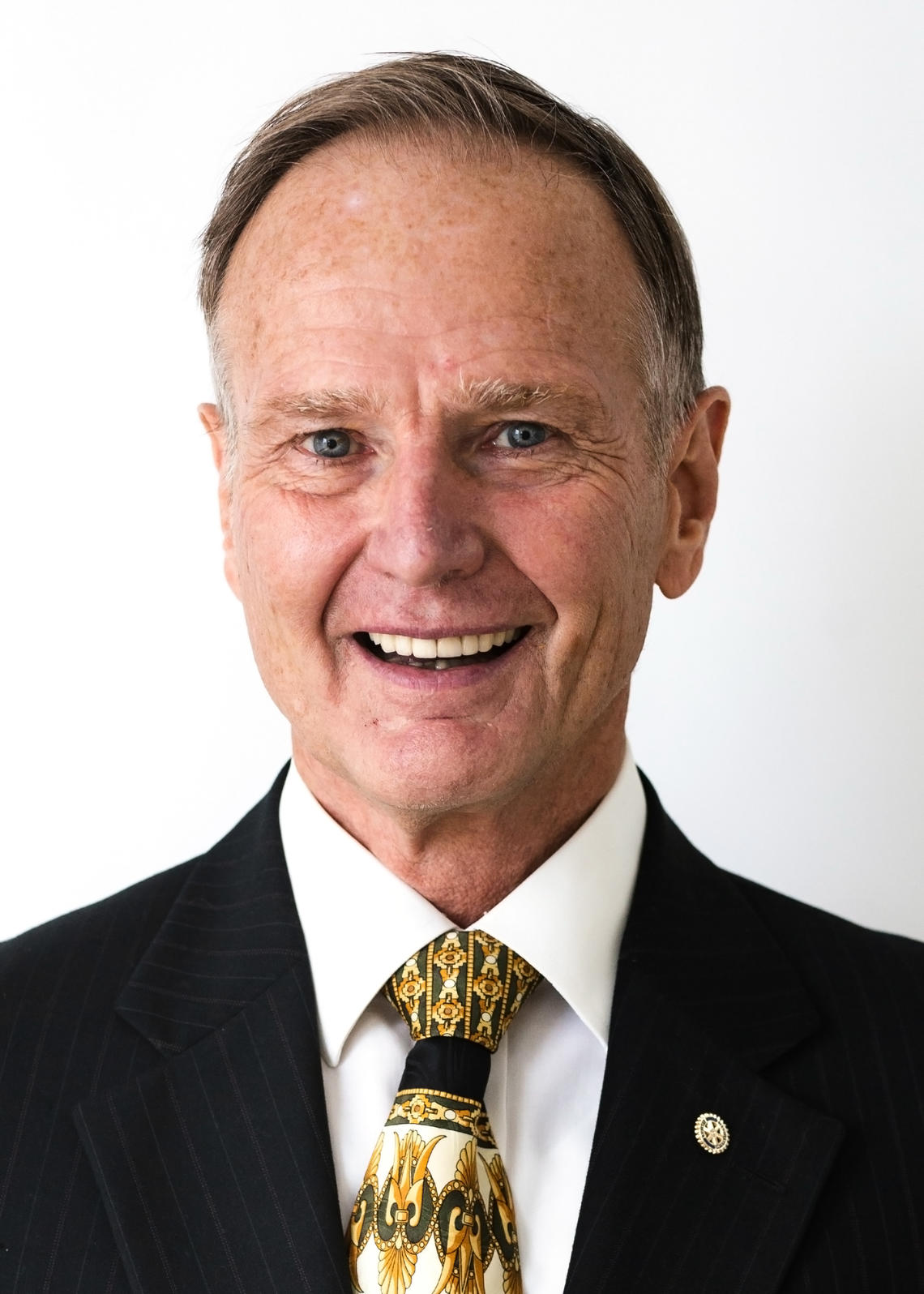
Dr. John Robert Bautista is Assistant Professor at University of Missouri's School of Nursing, employing socio-technical approaches to examine technology impacts on health professionals and consumers. Research spans blockchain applications, AI ethics, and health misinformation. Education includes: PhD in Health Informatics and Health Communication, Nanyang Technological University Postdoctoral Fellowship, UT Austin iSchool MPH, University of the Philippines - Manila BSN, Trinity University of Asia Current research develops ethical AI frameworks for clinical decision support and blockchain-based identity management systems. Publications appear in Computers in Human Behavior, International Journal of Medical Informatics, and JMIR journals. Projects examine clinical adoption of emerging technologies, focusing on implementation challenges and ethical considerations for AI systems in healthcare settings.
Pankaj Jaiswal is a Professor in the Department of Botany and Plant Pathology at Oregon State University. He leads the Jaiswal Lab, which focuses on plant genomics, bioinformatics, and systems biology. His research integrates computational and experimental approaches to study flowering time, seed development, and plant responses to abiotic stresses. Dr. Jaiswal is affiliated with the Center for Quantitative Life Sciences and collaborates with projects like the Gramene Database and Plant Ontology. Education: Ph.D. (1998), M.Sc. (1992), B.Sc. (1990) from Lucknow University, India. Professional awards include the Emerging Scholar Faculty Award (2013) and recognition from the Rice Genetics Cooperative (2009). Research interests span comparative plant genomics, functional genomics, bioinformatics tools, and database development. His lab has contributed to projects such as the Gramene Database, Plant Reactome, and Planteome, supporting interdisciplinary training in plant biology and computational methods. Key achievements include the chia genome assembly, space biology studies on plant transcriptomes, and collaborations on pathway databases for rice, maize, and other species. His work emphasizes leveraging genomic resources to address agricultural challenges like crop improvement and climate adaptation.
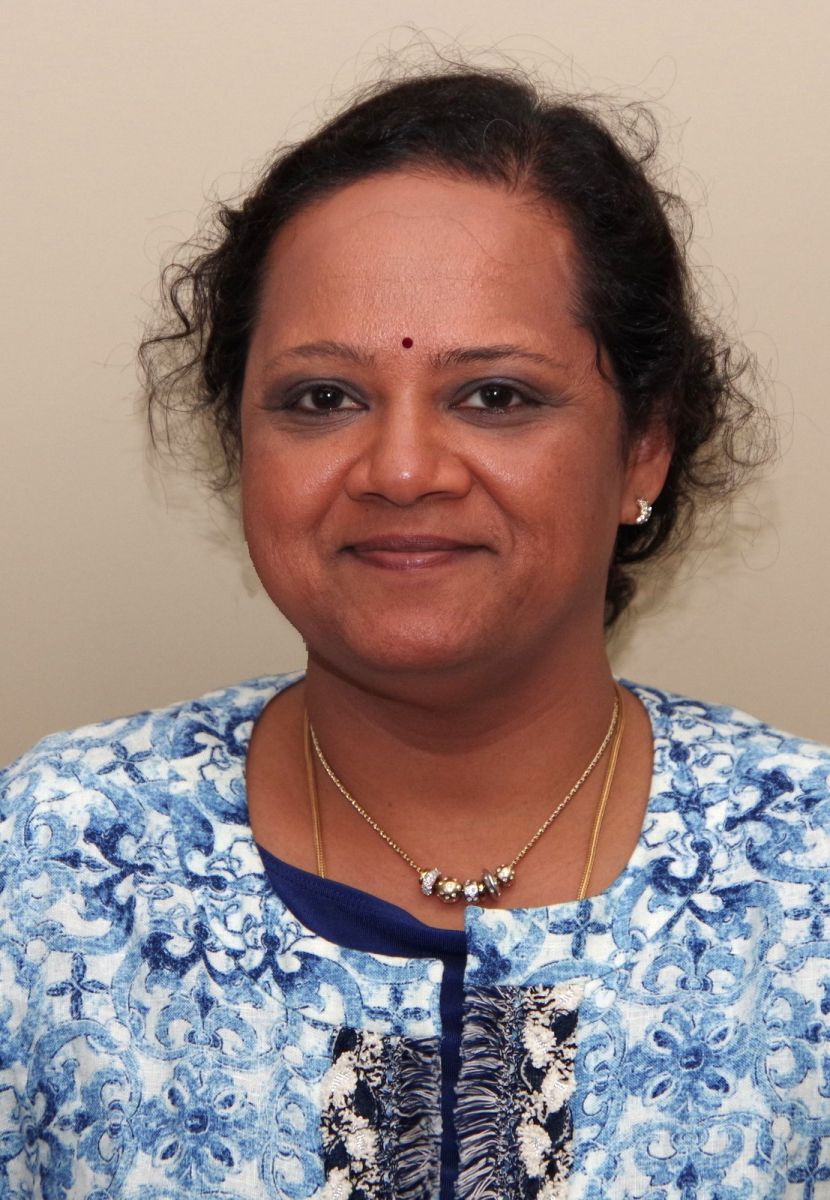
Dr. Chitra Rangan is a Professor in the Department of Physics at the University of Windsor and serves as the Associate Dean of the Faculty of Graduate Studies. She holds cross-appointments in Chemistry and Biochemistry (2008–2011) and has been a Visiting Associate Professor at the University of Michigan (2006–present). Her research focuses on quantum control, nanoplasmonics, and light-matter interactions, with applications in clinical diagnostics and quantum computing. She leads the BiopSys NSERC Strategic Network and contributes to Mathematics of Information Technology and Complex Systems (MITACS) . Education: Ph.D. in Physics, Louisiana State University (2000) M.Sc., Indian Institute of Technology, Madras (1993) B.Sc., University of Madras (1991) Affiliations: Ontario Physics Education Network (PI) NSERC Evaluation Committee (2018) International Day of Light Steering Committee (2018) Her research interests span quantum control theory, nanoplasmonic biosensors, and optimization in medical physics. She has advised over 40 students, many of whom pursue advanced degrees or careers in academia and industry. Notable grants include NSERC, CFI, and Mitacs funding. Publications highlight advancements in quantum state initialization, nanoplasmonic sensor design, and trapped-ion qubit control. Awards include the CAP Medal for Teaching and UWindsor Research Excellence (Emerging Scholars). Dr. Rangan actively promotes science outreach, organizing events like Science Rendezvous Windsor and delivering public lectures on quantum mechanics and medical physics. She has mentored dozens of students through co-op programs and summer projects, emphasizing hands-on learning and interdisciplinary collaboration.
Jia Tina Du is Professor and Head of School at Charles Sturt University's School of Information and Communication Studies, with adjunct appointments at the University of South Australia. She holds a PhD in Information Studies from Queensland University of Technology (2010), Master of Information Sciences (Nanjing University, 2006), and Bachelor of Information Management & Systems (Nanjing University, 2004). Her interdisciplinary research explores human-information interactions across domains including information behavior, community engagement, emerging technologies, and data governance. Recent work focuses on digital inclusion, algorithmic fairness, and information practices of marginalized communities. Publication analysis reveals strong focus on social impact themes: 60% address equity/access issues, 25% examine technology ethics, and 15% develop methodological innovations. Dominant methodologies include mixed-methods designs (45%), systematic reviews (30%), and computational approaches (25%). Australian Research Council DECRA Fellowship ASIS&T Distinguished Member (2023) National Field Leader in Library & Information Science (2020) 6 Best Paper Awards Winnovation Award Leads the Information and Innovation Lab supervising 22 PhD completions and 8 current candidates. Research has attracted AUD$1.9M+ in competitive funding. Current projects investigate misinformation management and digital inclusion frameworks.
Suryadipta Majumdar is an Associate Professor at the Concordia Institute for Information Systems Engineering (CIISE), part of Concordia University. His primary research interests focus on Cloud Computing Security and Privacy, Internet of Things (IoT) Security and Privacy, and Software-Defined Network (SDN) Security. He has contributed extensively to proactive security measures in containerized systems and Kubernetes environments, alongside developing tools like ACE-WARP and PerfSPEC to address real-time threats. In terms of education, he holds a PhD in a relevant field, though specific details about his academic background (e.g., institutions, thesis topics) are not explicitly mentioned in the provided text. His work bridges theoretical cybersecurity frameworks with practical implementations, emphasizing automated translation, differential privacy, and compliance auditing across cloud and IoT ecosystems. Majumdar’s research trends highlight a focus on layered security analysis, anomaly detection in IoT networks, and mitigating vulnerabilities in network functions virtualization (NFV). He has explored topics such as resilient in-band OpenFlow networks, runtime security policy enforcement in OpenStack, and privacy-preserving network data anonymization via tools like SegGuard. His recent publications reflect collaboration with international conferences and workshops, including contributions to Digital Forensics and Applied Cryptography. No scientific awards are explicitly mentioned in the text. His advising activities and grant history remain unlisted, though he has developed notable security frameworks and tools. He is affiliated with CIISE and likely contributes to its research initiatives in emerging technologies like 5G and edge-core environments.
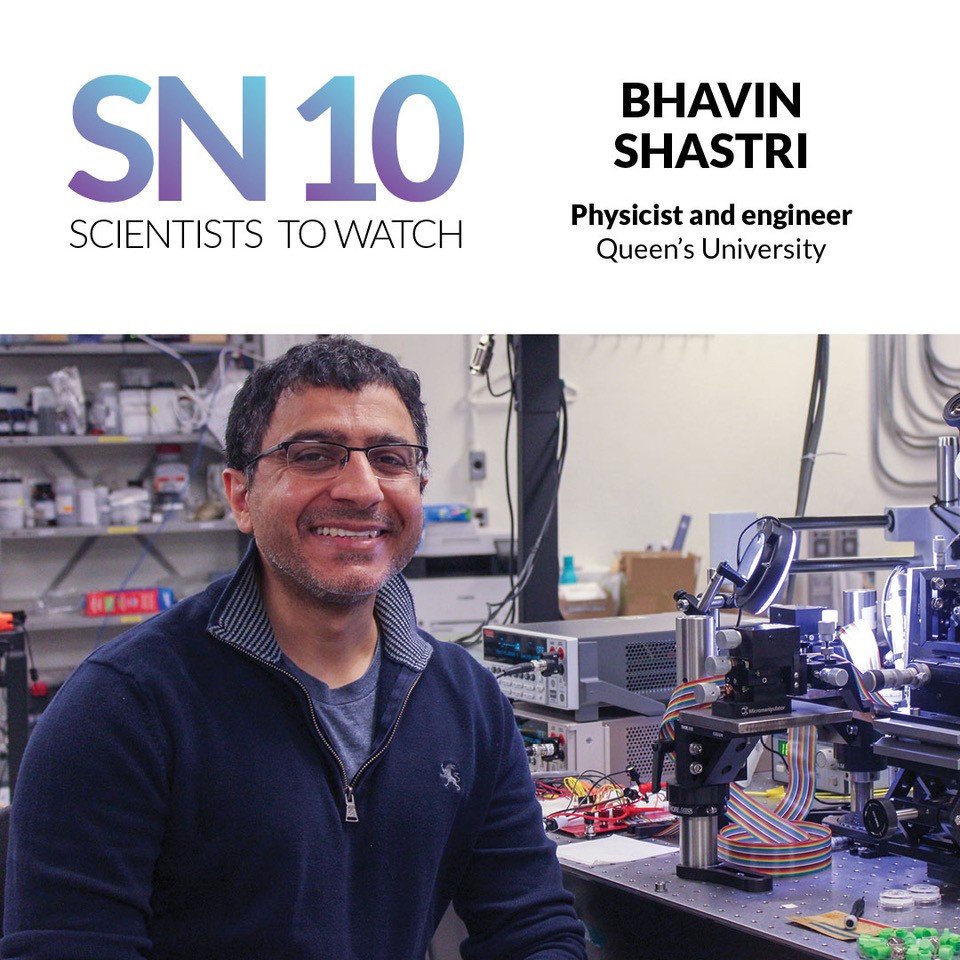
Bhavin Shastri is Canada Research Chair in Neuromorphic Photonic Computing and Assistant Professor of Engineering Physics at Queen's University. He directs research developing light-based computing systems that mimic neural processing for AI applications. His lab designs photonic integrated circuits that implement neural network architectures on chip-scale platforms. Research focuses on overcoming limitations of conventional computing through nanophotonic physics and novel materials. Publications demonstrate advances in photonic tensor cores, quantum photonic neural networks, and microwave photonic processors. Recent work achieves orders-of-magnitude improvements in processing speed and energy efficiency over electronic systems. Awards include: Alfred P. Sloan Research Fellowship (2025) Royal Society of Canada College Member (2024) Science News SN10 Scientist to Watch (2024) SPIE Early Career Award (2022) As Scientific Co-Director of NSERC's NUCLEUS program, he leads national efforts in photonic computing. Guides 12+ graduate students researching silicon photonics, neuromorphic architectures, and quantum photonics.
Akshay Narayan is a Senior Lecturer (Educator Track) at the School of Computing, National University of Singapore (NUS), where he teaches senior undergraduate and graduate-level courses in AI Planning and Decision Making, as well as introductory and intermediate-level Software Engineering courses. Education: Ph.D. in Computer Science from National University of Singapore (completed in 2020) M.Tech. in Information Technology from International Institute of Information Technology Bangalore, India B.E. in Computer Science & Engineering from Visveswaraya Technological University, India Research Interests: Dr. Narayan's research spans multiple domains within computer science with a primary focus on artificial intelligence and its applications. His current research centers on transfer learning in reinforcement learning, multi-agent decision making, and AI planning. He has also made significant contributions to cloud computing research, particularly in areas such as smart metering, chargeback systems, power-aware cloud metering, and workload analysis for virtual machine sizing. His work bridges theoretical foundations with practical applications, addressing real-world challenges in computing systems. He has recently expanded his research to include technology in education, exploring how AI can be integrated into teaching and learning processes. Publication Trends: Dr. Narayan's publication record demonstrates a clear evolution from foundational work in cloud computing to more recent explorations in reinforcement learning and AI education. His early work focused on practical applications in cloud systems, including smart metering and QoS monitoring. More recently, his research has shifted toward AI planning, decision making, and the educational applications of AI. This progression shows his ability to adapt to emerging fields while maintaining a strong foundation in systems research. Awards and Recognition: Teaching and Mentoring: Dr. Narayan teaches a variety of courses at NUS including CS2113 Software Engineering & Object-Oriented Programming, CS3219 Software Engineering Principles and Patterns, CS3268 Responsible AI: From Algorithms to Impact, and IT5100F Industry Readiness: Data Analytics and AI in Practice. He has also taught CS4246/CS5446 AI Planning and Decision Making. His teaching approach integrates his research expertise with practical applications, providing students with both theoretical foundations and hands-on experience. He has taught these courses across multiple academic years from AY-2013/14 through AY-2020/21. Research Groups and Collaborations: Dr. Narayan has collaborated with researchers across multiple institutions, including work with Prof. Tze Yun Leong at NUS (his PhD advisor), Shrisha Rao, Zhuoru Li, and others. His research has often involved interdisciplinary collaborations that bridge theoretical computer science with practical system implementations.
Jingxian Wang is an NUS Presidential Young Professor and Assistant Professor in the Department of Computer Science at the National University of Singapore's Faculty of Computing. His research builds next-generation wireless systems and satellite networks, with primary focus on integrating AI with wirelessly networked devices from WiFi to satellites. He earned his PhD from Carnegie Mellon University and previously served as a research scientist at Microsoft Research in Redmond, where he led the Smart Surface for 6G and Space initiative. His educational journey includes: PhD, Carnegie Mellon University Wang's research spans Wireless Systems , Satellite Networks , Artificial Intelligence , and Internet of Things , emphasizing AI-augmented wireless systems. His interdisciplinary work bridges robotics , materials science , and AI to develop sustainable sensing methods, robust communication networks, and multimodal AI techniques. Key projects include Multimodal AI for IoT (funded by Microsoft's Accelerate Foundation Models Program) and Satellite IoT Networks. His publication trends reveal accelerating integration of AI into wireless systems, with recent focus on satellite networking, soft robotics actuation, and generative models for IoT. The research consistently targets real-world deployment challenges in battery-free systems and space networks. His scientific contributions have earned prestigious recognition: ACM SIGMOBILE Doctoral Dissertation Award 2023 Communications of the ACM Research Highlights (2021, 2022) ACM SIGMOBILE Research Highlights 2021 Best Paper Awards at IPSN 2021 and UbiComp 2020 Microsoft Research Fellowship 2020 Emerging Rockstar in IEEE Pervasive Computing 2024 Wang actively mentors doctoral students and postdoctoral researchers through his AIoT Group. His grant portfolio includes Microsoft's Accelerate Foundation Models Research Program funding for multimodal AI projects, with ongoing work targeting satellite IoT infrastructure and wireless-powered soft robotics. Future directions emphasize foundation models for space networks and battery-free IoT systems. He leads the AIoT Group, fostering cross-disciplinary collaboration between computer scientists, roboticists, and materials engineers to pioneer wireless sensing and actuation technologies.
Lynn Carol Miller is a Professor of Communication at the University of Southern California’s Annenberg School for Communication and Journalism. Her research focuses on leveraging virtual environments, AI agents, and computational models to address health-related social behaviors, particularly in HIV/AIDS prevention and mental health. Funded by NIH, CDC, and DARPA (over $20M), her work integrates neuroscience, behavioral science, and technology. She pioneered interventions like SOLVE (Socially Optimized Learning in Virtual Environments) and Systematic Representative Design. Education: PhD in Personality Psychology from University of Texas at Austin. Key areas include health communication, gaming for behavior change, and computational modeling of social processes. She has supervised 17 doctoral students and collaborators across universities globally. Research emphasizes scalable interventions using fMRI-compatible tools and virtual reality. Notable contributions include reducing shame in HIV prevention games and analyzing neural correlates of risk-taking behaviors. Awards include the Early Career Award (2003) and ICA’s Outstanding Contribution to Communication Science (2020). Labs/Teams: Active in multidisciplinary teams at USC and collaborating institutions, focusing on virtual environment design, AI-driven interventions, and neurobehavioral studies. Current projects explore AI for public health and inclusive avatar representations in social VR.
Sarah Masud Preum is an Assistant Professor of Computer Science at Dartmouth College, with adjunct roles in the Department of Biomedical Data Science at Geisel School of Medicine and as Faculty Affiliate at the Center for Technology and Behavioral Health (CTBH). She also serves as Technical Associate Director of the Dartmouth Center for Precision Health and Artificial Intelligence. Her work focuses on machine learning for computational health, including natural language processing, temporal modeling, and human-AI interaction to develop personalized decision support systems in healthcare. Education includes a B.Sc. from Bangladesh University of Engineering and Technology, followed by M.Sc. and Ph.D. degrees from the University of Virginia. Previously, she was a postdoctoral research scholar at Carnegie Mellon University's School of Computer Science, recognized as a Rising Stars in EECS (2020) for her academic excellence and contributions to equity in STEM. Her research interests span Human-AI Interaction, Natural Language Processing, Mobile Health, and Cyber-Physical Systems. Over 2020–2023, her publications emphasize AI-driven solutions for healthcare challenges like conflict detection in health information and cognitive assistants for emergency response. Earlier work includes behavioral prediction models (MAPer) and spatial database optimizations (Maximum Visibility Queries). Awards: Rising Stars in EECS (2020) In teaching, she offers courses like Transforming Healthcare through Machine Learning and Machine Learning and Statistical Data Analysis. Her affiliations with multidisciplinary centers reflect her commitment to bridging technology and healthcare.
Professor Gina Neff is a Professor of Responsible AI at the Digital Environment Research Institute (DERI), Queen Mary University of London. She specializes in the ethical and societal implications of emerging technologies, particularly AI's impact on democracy, digital rights, and creative industries. Her work bridges academic research, policy-making, and industry collaboration. She holds dual roles as Deputy CEO of Responsible AI UK (a £33M initiative) and Executive Director of the Minderoo Centre for Technology & Democracy at the University of Cambridge. These roles emphasize her commitment to shaping AI governance frameworks and fostering democratic accountability in technological innovation. Her research focuses on AI ethics, digital policy, and sociotechnical systems. Key themes include mitigating harmful algorithmic practices, protecting creative sector rights in the AI era, and ensuring equitable technological development. Neff has advised governments and organizations on AI regulation, misinformation mitigation, and data governance. Recent initiatives include leading the ESRC’s Digital Good Network and contributing to UK policy consultations on copyright and AI. She frequently engages with media and policymakers, advocating for transparent, human-centered approaches to technology.
Christian Jacob is a Professor in the Department of Computer Science within the Faculty of Science at the University of Calgary . He holds a B.S. in Computer Science and a Doctor of Engineering Science from Erlangen University . His research focuses on nature-inspired algorithms, biocomputing, and agent-based simulations applied to biological systems and education. Key initiatives include the LINDSAY Virtual Human Project , which uses immersive virtual reality to explore human anatomy and physiology. He contributes to the university's strategic priorities in Digital Worlds and Health and Life initiatives. His work integrates evolutionary algorithms, cellular automata, and swarm intelligence into creative and medical applications. Notable achievements include the ASTech Award (2015) from Alberta Science and Technology. His projects emphasize interactive education through tools like LeukemiaSIM , Eukaryo , and the Giant Walkthrough Gut . Jacob also explores visualization techniques, such as evoVision3D and LifeBrush , to enhance scientific understanding. His research bridges computational methods with real-world applications in healthcare, architecture, and game design. Collaborative efforts include developing agent-based models for immune systems, nervous responses, and crowd behavior. Jacob's work spans interdisciplinary fields, blending computer science with biology, engineering, and the arts.
Dr. Shoufeng Lan is an Assistant Professor in the Department of Mechanical Engineering at Texas A&M University's College of Engineering, with affiliated appointments in Electrical & Computer Engineering and Materials Science & Engineering. His research focuses on advanced nanophotonics, exploring light-matter interactions across disciplines including quantum photonics, metamaterials, and 2D materials. Educational background includes a Ph.D. in Electrical and Computer Engineering with a Physics minor from Georgia Institute of Technology (2017), M.S. in ECE/Physics from University of New Mexico (2012), and dual B.S./B.E. degrees from Nankai University/Tianjin University (2007). Research interests span: Light-assisted control, sensing and manufacturing mechanics Plasmonic/metamaterial development Nonlinear/quantum/topological photonics Photon-induced chemical and biomedical synthesis His publications demonstrate consistent innovation in nanophotonics with recent focus on optical metamaterials, exciton control, and machine learning applications in photonics. Award highlights include the 2022 IAC Undergraduate Teaching Award and 2018 Sigma Xi Best Thesis Award. Current doctoral students include Yixin Chen and Sam Lin. Funded research includes NSF-supported work on Optical Hybrid Materials and DARPA-supported semiconductor manufacturing initiatives. Leads the Lán Laboratory (Lab for Advanced Nanophotonics) focusing on photon-matter interactions for energy and information technology applications.
Konstadinos (Kostas) Goulias is a Professor of Transportation in the Department of Geography at the University of California, Santa Barbara (UCSB), where he has served since 2004. Previously, he held academic positions at Penn State University from 1991 to 2004, including roles as Associate and Full Professor of Transportation Engineering. His research focuses on transportation systems planning, travel behavior dynamics, activity-based modeling, GIScience, and spatial analysis of transportation data. **Education**: Ph.D. in Civil Engineering (Transportation), University of California, Davis, 1991 M.S. in Civil Engineering, University of Michigan, Ann Arbor, 1987 Laurea Magistrale in Engineering, University of Calabria, Italy, 1986 **Research Interests**: Transportation demand modeling and microsimulation Activity-travel behavior analysis Spatiotemporal analysis of mobility using big data GIScience applications in transportation Policy implications of emerging technologies (e.g., autonomous vehicles) **Key Contributions**: Co-founder and Editor-in-Chief of Transportation Letters Principal Investigator of $6.5M in research projects Authored/edited three books and over 350 peer-reviewed publications Led the development of the SimAGENT microsimulation framework Directed the GeoTrans Laboratory at UCSB since 2007 **Awards**: Pyke Johnson Award (2021, 2016) Best Paper Award (2021) Chair of TRB committees on traveler behavior and activity-based approaches **Grants/Students**: Supervised multiple graduate students in transportation and geography Managed projects with sponsors including USDOT, state agencies, and international organizations **Labs/Teams**: GeoTrans Laboratory: Focused on smart city planning and transportation innovation Collaborations with institutions globally, including Australia, Europe, and Qatar
Dr. Thomas Patrick Keenan is a Professor at the School of Architecture Planning and Landscape (SAPL) at the University of Calgary. A polymath with expertise in technology, cybersecurity, and education, he pioneered Canada’s first Computer Security course in 1974 and contributed to early computer crime legislation. His research focuses on balancing technological advancements with privacy concerns, addressing topics like cybersecurity, technocreepiness, and AI ethics. He previously served as Dean of another faculty and joined SAPL to engage with its interdisciplinary approach. Keenan is committed to education, mentoring students in programs like Shad Valley and supporting PhD research on smart cities and accessibility for neurodiverse individuals. Education: Holds degrees including BA, MSc (Eng), MA, EdD, MLE, and certifications like FCIPS, ISP, and ITCP. Research Interests: Explores the societal impacts of technology, including hacking, privacy erosion, AI ethics, and the ethical failures in tech professions. He emphasizes proactive measures to mitigate risks posed by emerging technologies. Key Themes in Articles/Publications: Focus on cybersecurity challenges (e.g., blockchain, data persistence), misinformation dynamics, and ethical dilemmas in tech adoption. His work highlights the need for regulatory frameworks and public awareness in navigating digital futures. Advising & Mentoring: Played a pivotal role in establishing Shad Valley, nurturing gifted students in STEM fields. Supports PhD research spanning smart cities and accessibility innovations. No formal grants are detailed in the text.