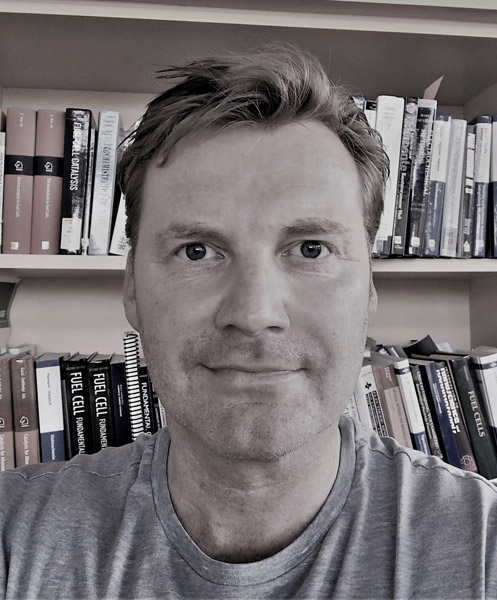
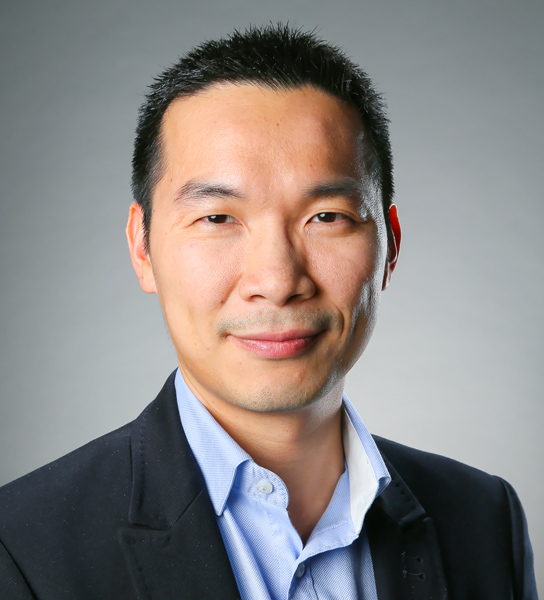
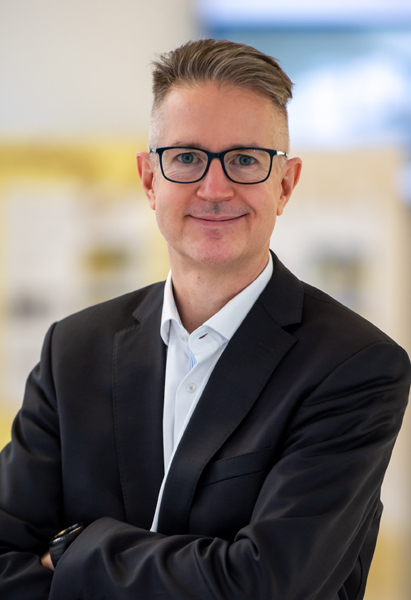
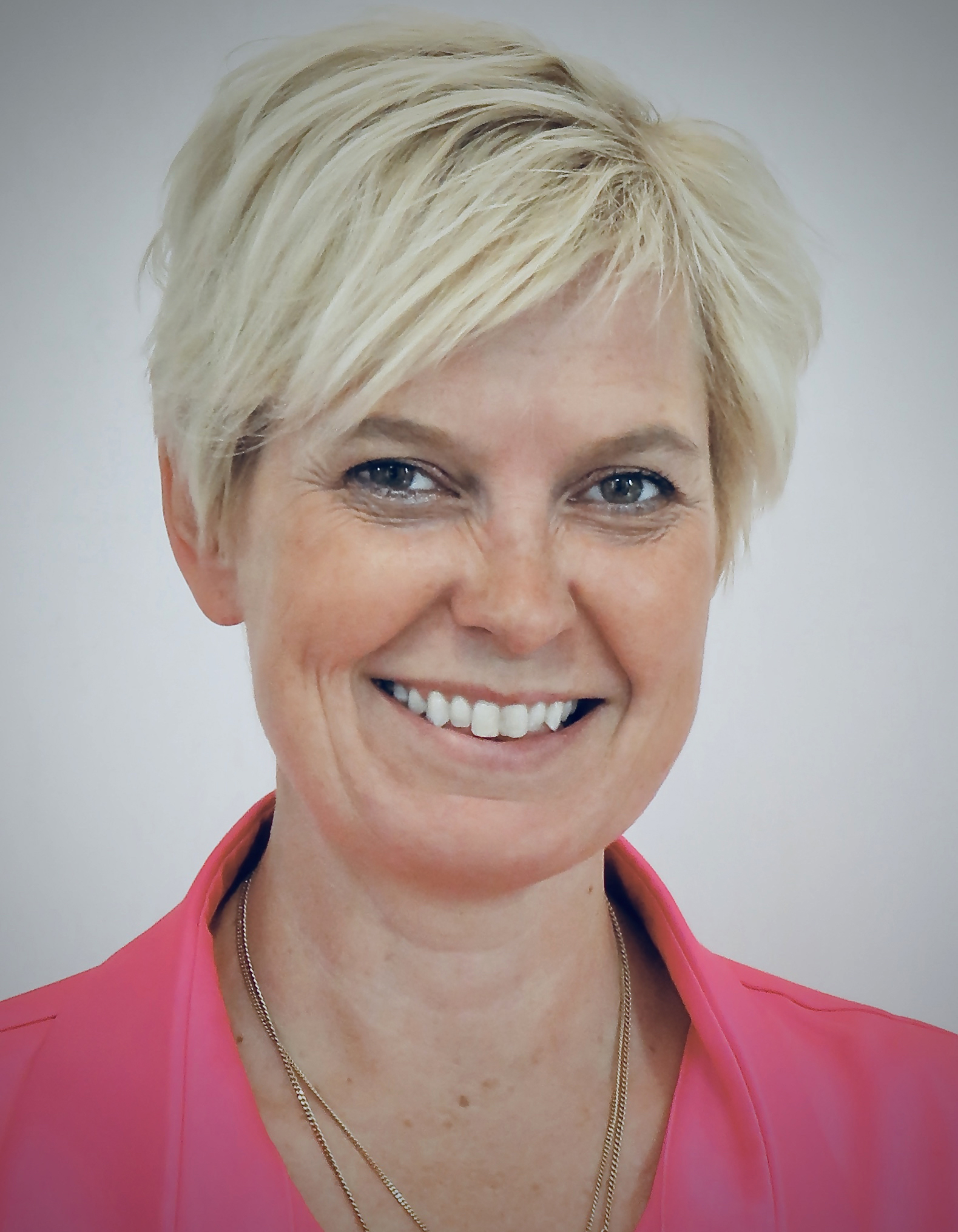
Peter Strasser is a Full Professor of Chemistry and Chemical Engineering at the Technical University Berlin, Germany. He holds a Diplom (MSc) in Physical Chemistry from Tübingen University (1995) and a PhD from the Fritz-Haber-Institute of the Max-Planck-Society (1999), supervised by Prof. Gerhard Ertl. His research focuses on electrocatalysis, CO₂ electroreduction, and materials science for energy storage/conversion. He has held roles at the University of Houston (2004–2007) and Symyx Technologies (2000–2004). Education : Tübingen University (1988–1995), Stanford University (1991), Università di Pisa (1992) Affiliations : German Chemical Society (GDCH) leadership roles, Electrochemical Society (ECS) committee memberships Research interests include structure-function relations in electrocatalysts, electrochemical oxygen evolution/reduction reactions, and in-situ spectroscopic techniques. He has organized major conferences such as the “Electrochemistry 2022” meeting and co-chairs symposia on fuel cells and electrolyzers. His entrepreneurial activities include mentoring startups like DexLeChem GmbH and LiquidLoop GmbH. Awards : Carl Wagner Memorial Award (2023), Faraday Medal (2021), Otto-Hahn Medal (2000) Grants/Advising : Extensive funding and mentorship in energy materials research He leads the Technische Chemie division at TU Berlin and collaborates internationally, including guest professorships in China. His work bridges fundamental electrochemistry with industrial applications in renewable energy systems.
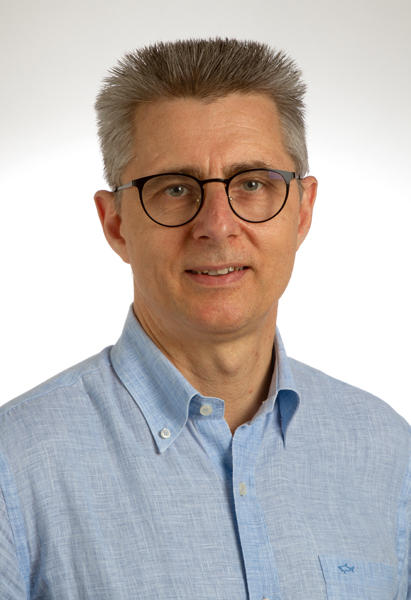
Professor Paolo Fornasiero is a Full Professor of Inorganic Chemistry at the University of Trieste, Department of Chemical and Pharmaceutical Sciences, where he has worked since 1998. He serves as Deputy Director of the department since 2021 and Scientific Responsible of the CNR Research Unit associated with the Institute of Chemistry of OrganoMetallic Compounds (ICCOM) since 2008. His career spans EU projects, bilateral collaborations with China, India, and Argentina, and leadership roles in journals like ACS Catalysis (Executive Editor since 2021). Full Professor (2016–present) Associate Professor (2006–2016) Assistant Professor (1998–2006) Post-Doc, University of Reading (1996–1997) His research focuses on multi-functional metal-oxide nanosystems for energy and environmental catalysis, including green hydrogen production , CO2 valorization , and methane emission control . He pioneered core-shell catalysts and single-atom systems for stability and selectivity. His work extends to solid oxide fuel cells and photocatalytic water depollution . Recent publications highlight trends in photothermal catalysis , single-atom catalysts , and CO2 electroreduction . His 280+ papers (3 in Science , 2 in Nature Communications ) reflect expertise across Environmental Catalysis , Nanomaterials , and Green Energy . 2022 Malatesta Medal 2021 European Academy of Sciences member 2017 Edoardo Kramer Award 2016 Heinz Heinemann Award 2013 Chiusoli Gold Medal He oversees PhD/postdoc advising and participates in global capacity-building via UNIDO and World Academy of Sciences . His lab collaborates with institutions like KAUST , Czech Academy of Sciences , and Dalian Institute of Chemical Physics .
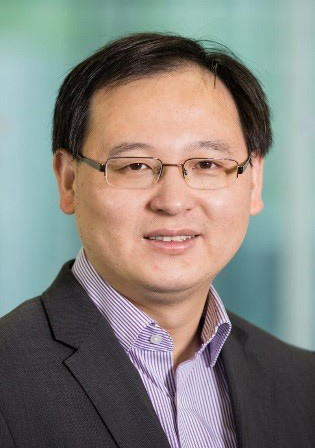
Jia Min Chin is an Associate Professor at the Faculty of Chemistry , affiliated with the Institute of Functional Materials and Catalysis . Her research focuses on advanced materials, particularly Metal-Organic Frameworks (MOFs), Gold nanoparticles, and N-Heterocyclic Carbene (NHC) chemistry, with applications in catalysis, environmental remediation, and sustainable technology. Her scientific work contributes to United Nations Sustainable Development Goals (SDGs) through innovations in functional materials and catalytic systems. Key projects include Breaking the ice – novel energy efficient hybrid de-icing systems and DYNAMOF: Electric Field Assisted Dynamic MOF Alignment , funded by major research grants. She received the prestigious ERC Grant in 2020 for her contributions to materials science. Chin's research spans MOF-based nanocomposites, photonic assemblies, and biomedical applications. Her publications highlight trends in Stimuli-responsive materials (electric/magnetic fields) Green catalytic systems Anti-icing and humidity-sensing coatings Cancer therapy platforms Scientific Awards ERC Grant (2020) She collaborates globally on cutting-edge topics like MOF alignment, nerve agent decomposition, and CO2 reduction, with recent activities including lectures at international conferences and workshops on material structuring.
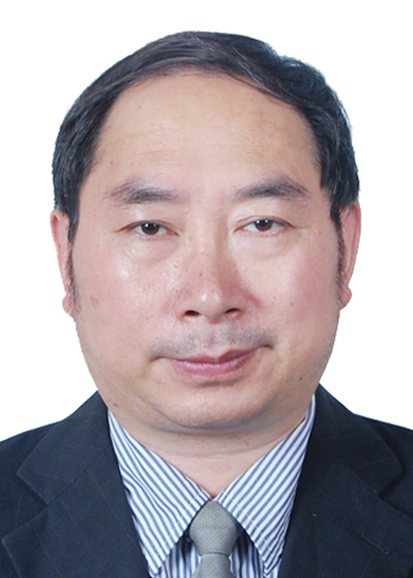
Xinliang Feng is a W3 Chair Professor at Dresden University of Technology, where he heads the Chair of Molecular Functional Materials. He also holds an Adjunct Chair Professorship at Shanghai Jiao Tong University, China. Previously, he served as a Distinguished Group Leader at the Max Planck Institute for Polymer Research in Mainz, Germany (2012-2014), and as a Group Leader at the same institute (2007-2012). His educational background includes a Bachelor's degree in Analytic Chemistry (2001), a Master's degree in Organic Chemistry (2004), and a PhD from the Max Planck Institute for Polymer Research (2008). Feng's research focuses on the frontier areas of nanomaterials science, particularly on 2D nanomaterials and low-dimensional nanostructures for energy applications. His work spans from fundamental organic synthesis to applied energy technologies. Key research areas include: Bottom-up synthesis of carbon nanostructures and graphene nanoribbons 2D polymers and supramolecular polymers with tailored properties Mesoporous covalent-bonding organic frameworks for energy storage Organic synthetic methodology in aromatic coupling reactions 2D carbon-rich conjugated polymers for electronic and optoelectronic applications His extensive publication record includes over 436 journal papers with significant impact, featuring publications in top-tier journals including Nature (3 papers), Science (1 paper), Nature Materials (2 papers), and numerous papers in Advanced Materials, Angewandte Chemie, and Journal of the American Chemical Society. His work has garnered over 34,797 citations in Web of Science (H-index ≥88) and over 44,959 citations in Google Scholar (H-index ≥101). Feng has received numerous prestigious awards recognizing his contributions to materials science and chemistry: Member of the German National Academy of Sciences (Leopoldina, 2024) Member of the Academia Europaea (2019) Fellow of the European Academy of Sciences (2019) EU-40 Materials Prize (2018) ERC Consolidator Grant Award (2018) Multiple years as a Highly Cited Researcher (2014-2018) ERC Starting Grant Award (2012) IUPAC Prize for Young Chemists (2009) He serves on the international/editorial advisory boards of 12 international journals and has organized or co-organized 30 symposia, workshops, and conferences. As the Head of the ESF Young Research Group "Graphene Center Dresden" and Working Package Leader for the EU GRAPHENE FLAGSHIP project, he plays a significant role in European materials research initiatives.
Prof. Julio Lloret-Fillol is a Group Leader at the Institute of Chemical Research of Catalonia (ICIQ) and an ICREA Research Professor since 2015. His work bridges homogeneous catalysis , material science , and automation to develop sustainable chemical processes and solar fuels. He earned his PhD in 2006 from Universidad de Valencia under Prof. Lahuerta and J. Pérez-Prieto, followed by postdoctoral research at University of Heidelberg (MEyC and Marie Curie Fellowships). Awards: 2024 RSEQ-GEQO Award on Excellence 2023 Fellow of the Royal Society of Chemistry 2022 Ramón Areces Grant 2019 Thieme Chemistry Journals Award 2017 Young Academy of Europe 2015 Young Researcher RSEQ Award Research Interests: Water oxidation catalysis CO₂ reduction to value-added chemicals Artificial photosynthesis Electrocatalytic hydrogen generation Spin-off technologies for green hydrogen and photoreactors Notable Publications: 2024: Angew. Chem. Int. Ed. (electrocatalytic ketones from CO₂) 2024: ACS Catal. (Fe-doped NiO for OER) 2023: ACS Catal. (COF-based cobalt catalysts) 2022: JACS (OER mechanism with cobalt complexes) 2022: Angew. Chem. Int. Ed. (chloroalkane activation) Spin-offs: Treellum Technologies (photoreactors) JOLT Solutions (electrodes for hydrogen production)
Jani Kotakoski is a Full Professor at the University of Vienna's Faculty of Physics, leading the Physics of Nanostructured Materials research group. He additionally holds an adjunct professorship at the University of Helsinki since May 2011. Education: Ph.D. in Physics, University of Helsinki (2007). Dissertation: Irradiation-mediated tailoring of carbon nanotubes Research Focus: Kotakoski pioneers atomic-scale manipulation of 2D materials using electron and ion beams. His work centers on defect engineering in graphene, carbon nanotubes, and transition metal dichalcogenides to control electronic, mechanical, and catalytic properties. Key methodologies include scanning transmission electron microscopy (STEM), slow highly charged ion irradiation, and in situ characterization within integrated vacuum systems. His fingerprint reveals dominant expertise in graphene (100%), two-dimensional materials (27%), carbon nanotubes (26%), and scanning transmission electron microscopy (20%). Publication Trends: Recent works (2024-2025) demonstrate a strategic shift toward functional applications: pore-engineered MoS 2 for hydrogen evolution catalysis, corrugation-controlled mechanical properties in graphene, and metal atom chains at graphene edges. His group increasingly combines defect creation with advanced imaging techniques like ptychography to resolve atomic structures of dopants and vacancies. Research Leadership: MECS (2023-2028): Materials for Energy Conversion and Storage Quantum Centers in Diamond (2021-2025): Creating quantum emitters DCAFM (2020-2025): Doctoral College for Advanced Functional Materials training Laboratory Infrastructure: His group operates an integrated vacuum system coupling graphene growth, manipulation, and atomic-resolution STEM imaging, enabling real-time observation of beam-induced dynamics from pristine to amorphous structures.
Professor Yi Lyu is a faculty member at the Department of Hepatobiliary Surgery, College of Medicine, Xi’an Jiaotong University, with extensive leadership roles including Vice President of the university and Director of the First Affiliated Hospital. His research bridges hepatobiliary surgery, magnetic surgery, and biomedical engineering, focusing on innovative surgical devices and transplantation immunity. Bachelor's, Master’s, and Doctorate in Clinical Medicine and General Surgery from Xi’an Medical College Postdoctoral training in Surgery at Nippon Medical School Hospital, Tokyo His research interests span hepatobiliary surgery, magnetic surgery applications, cancer therapy, transplantation immunity, and biomedical engineering. Recent work emphasizes magnetic devices for vascular reconstruction during liver transplantation and immunomodulation via nanotherapeutics. Article trends reflect a strong focus on magnetic surgical technologies (6/15), cancer-related applications (4/15), and immune/gut microbiome interactions (3/15). High-impact publications (IF >15) include work on nanotherapeutics for muscle regeneration and catalytic systems in alkaline seawater. 2023 : Editor-in-Chief of Magnetic Medicine , National Key R&D Program grant (¥12M) 2022 : National Teaching Achievement Award, Annals of Surgery publications 2018 : Chinese Medical and Technology Award, NSFC Project grant 2015 : Ministry of Education Technology Invention Award
James Durrant serves as Professor of Photochemistry at Imperial College London since 2005 and holds a part-time Sêr Cymru Solar Professorship at Swansea University since 2013. His research focuses on photochemical processes in solar energy conversion devices, utilizing transient spectroscopy to analyze electron transfer dynamics in next-generation photovoltaic and photocatalytic systems. His academic foundation includes a B.A. in Natural Sciences (Physics) from the University of Cambridge (1984-1987) and a PhD in Biochemistry from Imperial College London (1987-1991) under Lord Porter and James Barber. Prior appointments include BBSRC Advanced Research Fellow (1994-1999) and progressive academic roles in Imperial's Chemistry Department (1999-2005). Durrant's research centers on solar energy conversion mechanisms, with current emphasis on polymer/fullerene and perovskite solar cells alongside water-splitting photocatalysts. His experimental approach combines transient laser spectroscopies with device engineering to establish design principles for efficient solar materials. Key focus areas include charge carrier dynamics, interface engineering, and stability optimization for practical solar technologies. Recent publications reveal consistent advancement in understanding charge transfer processes across diverse materials systems, with growing emphasis on stability challenges and interfacial phenomena in both photovoltaic and solar fuel generation applications. The work bridges fundamental photochemistry with device-level performance optimization. His distinguished recognition includes: Meldola Medal of the RSC (1995) Imperial College Research Excellence Award (2006) Environment Prize of the RSC (2009) ERC Advanced Grant (2012-2017) Tilden Prize of the RSC (2012) Elected Fellow of the Royal Society (2017) Hughes Medal of the Royal Society (2018) Durrant directs a substantial research enterprise comprising 6 postdoctoral researchers, 8 PhD students, and 2 technicians at Imperial College, supported by EPSRC, ERC, CEC, and Solvay SA grants. He concurrently leads the Centre for Plastic Electronics (since 2015) and the Welsh government-funded Sêr Solar programme at Swansea's SPECIFIC IKC, accelerating printed photovoltaic technology demonstration through industry-academic collaboration.
Klaus Richter is an Associate Professor at the Faculty of Chemistry, University of Vienna, affiliated with the Department of Functional Materials and Catalysis. His research spans materials science, catalysis, and thermodynamics. Academic Rank: Associate Professor (ao. Univ.-Prof.) Research Focus: Phase diagrams, intermetallic compounds, vapour-solid synthesis, and catalytic applications for hydrogen production Projects: Notable work on Al-Cu-X (X=Si, Zn) phase diagrams and intermetallic nanoparticle synthesis Richter’s publications emphasize sustainable energy solutions through intermetallic catalysts, with recent studies on Ni-Te and Pt-Zn nanoparticles for green hydrogen production. His work integrates computational modeling (CALPHAD) with experimental phase analysis. Key scientific awards include the APDIC Best Paper Award (2014) and JPED Editors Choice Award (2018). He actively contributes to conferences and collaborative research in intermetallic systems.
Jiaguo Yu is a Professor at China University of Geosciences, Wuhan, and Distinguished Adjunct Professor at King Abdulaziz University, Saudi Arabia. He held previous roles including Chair Professor at Wuhan University of Technology (WUT) from 2011–2021 and Professor at WUT since 2000. His research focuses on semiconductor photocatalysis, solar fuels, and energy materials. He has over 570 publications and 2 books, and is a Clarivate Analytics Highly Cited Researcher in multiple years. Awards include the Royal Society of Chemistry Fellowship and China’s Second-Class State Natural Science Award. Education: PhD in Materials Science, Wuhan University of Technology (2000) MSc in Inorganic Chemistry, Xi’an Jiaotong University (1988) BSc in Chemistry, Central China Normal University (1985) Research Interests: Semiconductor photocatalysis for CO 2 reduction and H 2 production Perovskite and dye-sensitized solar cells Supercapacitors and electrocatalysis Adsorption materials and formaldehyde oxidation Awards: 2021–2017: Highly Cited Researcher in Chemistry/Materials Science 2015: Royal Society of Chemistry Fellow 2014: Second-Class State Natural Science Award (China) Labs & Affiliations: Previously affiliated with the State Key Laboratory of Advanced Technology for Materials Synthesis and Processing at WUT.
Xile Hu is a Full Professor of Chemistry at École Polytechnique Fédérale de Lausanne (EPFL), Switzerland. He has held academic positions there since 2007, advancing from Assistant to Full Professor. His research focuses on organometallic chemistry, inorganic materials, bioinorganic chemistry, electrocatalysis, and homogeneous catalysis. Education: B.S. in Chemistry (Peking University, 2000), Ph.D. in Chemistry (University of California, San Diego, 2004), Postdoc at California Institute of Technology (2005–2007). Research interests include catalytic mechanisms, sustainable chemistry, and energy storage materials. His work bridges fundamental chemistry and applied catalysis, with contributions to bioinorganic systems and electrochemical processes. Awards: 2020 International Catalysis Award ERC Consolidator Grant (2015), ERC Starting Grant (2010) Multiple Highly Cited Researcher recognitions (2017–2019) Teaching & Leadership: Director, Laboratory of Inorganic Synthesis and Catalysis (LSCI) Teaching courses in bioinorganic chemistry, catalysis, and advanced synthesis Member of EPFL’s Tenure Committee, Institute Award Nomination Committee, and other academic governance bodies Grants & Fellowships: ERC Starting and Consolidator Grants Bau Family Award in Inorganic Chemistry (2016) Invited Professorships at University of Paris Diderot (2016) and Indian Institute of Technology Kanpur (2016)
Jörg Libuda is a Full Professor and Chair of Interface Research and Catalysis (W3) at Friedrich-Alexander-University Erlangen-Nürnberg (FAU), Germany, where he also heads the Erlangen Center for Interface Research and Catalysis (ECRC). He holds a Diploma in Chemistry (1993) and a Dr. rer. nat. (1996) from Ruhr-Universität Bochum, both with highest distinction, and a habilitation from Humboldt-Universität zu Berlin (2003). His research focuses on the chemistry and physics of interfaces, catalysis, electrochemistry, and nanomaterials, with emphasis on energy storage/conversion, photochemistry, and in-situ spectroscopic techniques. He has led major research programs, including roles in Collaborative Research Centers and international initiatives. Education : Diploma in Chemistry, Ruhr-Universität Bochum (1993) PhD in Chemistry, Ruhr-Universität Bochum (1996) habilitation, Humboldt-Universität zu Berlin (2003) Research Contributions : Over 280 peer-reviewed publications (WOS: >10,000 citations, h-index 57), including work in top-tier journals. Specializes in linking fundamental research to applied technologies in catalysis, energy systems, and electronic devices. Awards : Studienstiftung des Deutschen Volkes (1993) Otto-Hahn Medal (1996) Fellow of EURASC (2022) Advising & Leadership : Supervised ~40 PhD students and >60 Master/Bachelor students. Organized international conferences and served on evaluation committees for research initiatives. Active in mentoring early-career researchers through interdisciplinary centers at FAU. Labs/Teams : Leads the ECRC at FAU, focusing on interface research and catalysis in energy and materials science.
Jana Dzíbelová is a Postdoctoral Researcher in the Physics of Nanostructured Materials group at the University of Vienna's Faculty of Physics. Her research focuses on advanced materials characterization and development of novel nanomaterials. Her expertise spans atomic-resolution investigation of 2D materials like hematene, and development of electrocatalytic materials for energy applications. She specializes in nanomaterials synthesis, structural analysis, and functional characterization. Recent conference presentations include studies on: Atomic-resolution investigation of 2D hematene (2024) Highly dispersed transition metal sulfides for electrocatalytic ORR (2024)
Sara Bals is a Full Professor in the Department of Physics at the Faculty of Science, University of Antwerp, Belgium. She has held this position since 2018, following her progression from Assistant Professor (2007-2012), Associate Professor (2012-2014), to Professor (2014-2018). She serves as the head of EMAT (Electron Microscopy for Materials Science), which comprises 7 principal investigators, about 25 postdoctoral researchers, and more than 30 PhD students. Additionally, she coordinates the "Nanolab" Centre of Excellence, composed of 6 research groups. Dr. Bals earned her Bachelor's degree in Physics from the University of Antwerp (1995-1997) with Great Distinction, followed by a Master's degree (1997-1999) with Greatest Distinction. She completed her PhD in Physics at the same institution (1999-2003) with Greatest Distinction and special honors, focusing on superconducting thin films and tapes under Professor Gustaaf Van Tendeloo. From 2003-2004, she conducted postdoctoral research at the National Center for Electron Microscopy in Berkeley, USA, working with Professor Christian Kisielowski on electron tomography for materials science. Sara Bals is an internationally recognized expert in electron tomography and advanced electron microscopy techniques for nanomaterials characterization. Her research focuses on developing and applying electron tomography to study functional nanomaterials at the atomic scale. By combining state-of-the-art electron microscopy with advanced 3D reconstruction algorithms, her group measures the positions and chemical nature of individual atoms in nanomaterials. A significant advancement in her work involves performing these measurements under realistic conditions, including heating, liquid, or gas flow experiments to investigate nanomaterials under working conditions. Her research spans multiple areas including chiral nanomaterials, in situ 3D characterization of nano materials, atomic resolution electron tomography, quantitative electron tomography, and the study of nanoparticles and ultra-small clusters using aberration-corrected (S)TEM. Her publication record demonstrates a strong focus on advancing electron microscopy techniques and applying them to cutting-edge nanomaterials research. The most recent publications show increasing emphasis on chiral nanostructures, perovskite materials, in-situ characterization techniques, and advanced computational methods for image reconstruction. Her work bridges fundamental materials science with practical applications in energy conversion, catalysis, and optoelectronics. Dr. Bals has received numerous prestigious awards and honors for her contributions to science: 2021: ACS Nano Lectureship Award 2020: Elected member of the Royal Flemish Academy of Belgium for Science and the Arts (Natural Sciences) 2020: European Microscopy Society Award 2018-2024: ERC Consolidator Grant (PE5 - Synthetic Chemistry and Materials) 2017-2020: Francqui Research Professor 2016: Laureate of the Academy for Natural Sciences awarded by the Royal Flemish Academy 2015: Finalist of the Science Talent of 2015 competition 2013-2018: ERC Starting Grant (PE4 - Physical and Analytical Chemical Sciences) As principal investigator, Dr. Bals has secured significant research funding, including two European Research Council grants (Starting and Consolidator). She serves as promotor for numerous European and national projects. Her mentorship has guided the research of many PhD students and postdoctoral researchers within EMAT. Her group's expertise in nanoscale characterization is essential for investigating beam-sensitive materials like perovskites under working conditions. Dr. Bals leads the EMAT research group, a world-renowned center for electron microscopy of materials. The group specializes in advanced electron microscopy techniques, particularly electron tomography for 3D characterization of nanomaterials. As coordinator of the "Nanolab" Centre of Excellence, she oversees a collaborative effort involving 6 research groups focused on nanoscience and nanotechnology research.
Xinliang Feng holds the W3 Chair Professor position at Technische Universität Dresden, Germany, leading the Chair of Molecular Functional Materials. He previously served as a Distinguished Group Leader at the Max Planck Institute for Polymer Research and held adjunct professorships at Shanghai Jiao Tong University. His research focuses on 2D nanomaterials, energy storage systems, and organic synthesis methodologies. Education: B.Sc. in Analytic Chemistry (2001), M.Sc. in Organic Chemistry (2004), Ph.D. from Max Planck Institute for Polymer Research (2008). He has authored over 436 journal papers, including in Nature , Science , and Advanced Materials , with >34,797 citations (Web of Science). ERC Consolidator Grant (2018) EU-40 Materials Prize (2018) Member, German National Academy of Sciences (2024) Advisory roles include leading the EU GRAPHENE FLAGSHIP's Functional Foams & Coatings Working Package and the ESF Graphene Center Dresden. He serves on 12 editorial boards and has delivered 170 invited conference talks.