About
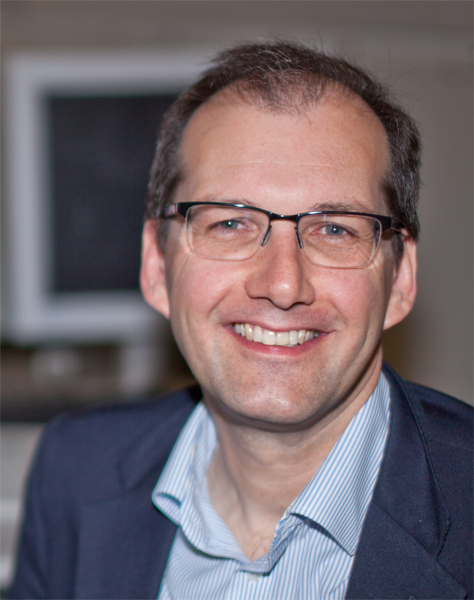
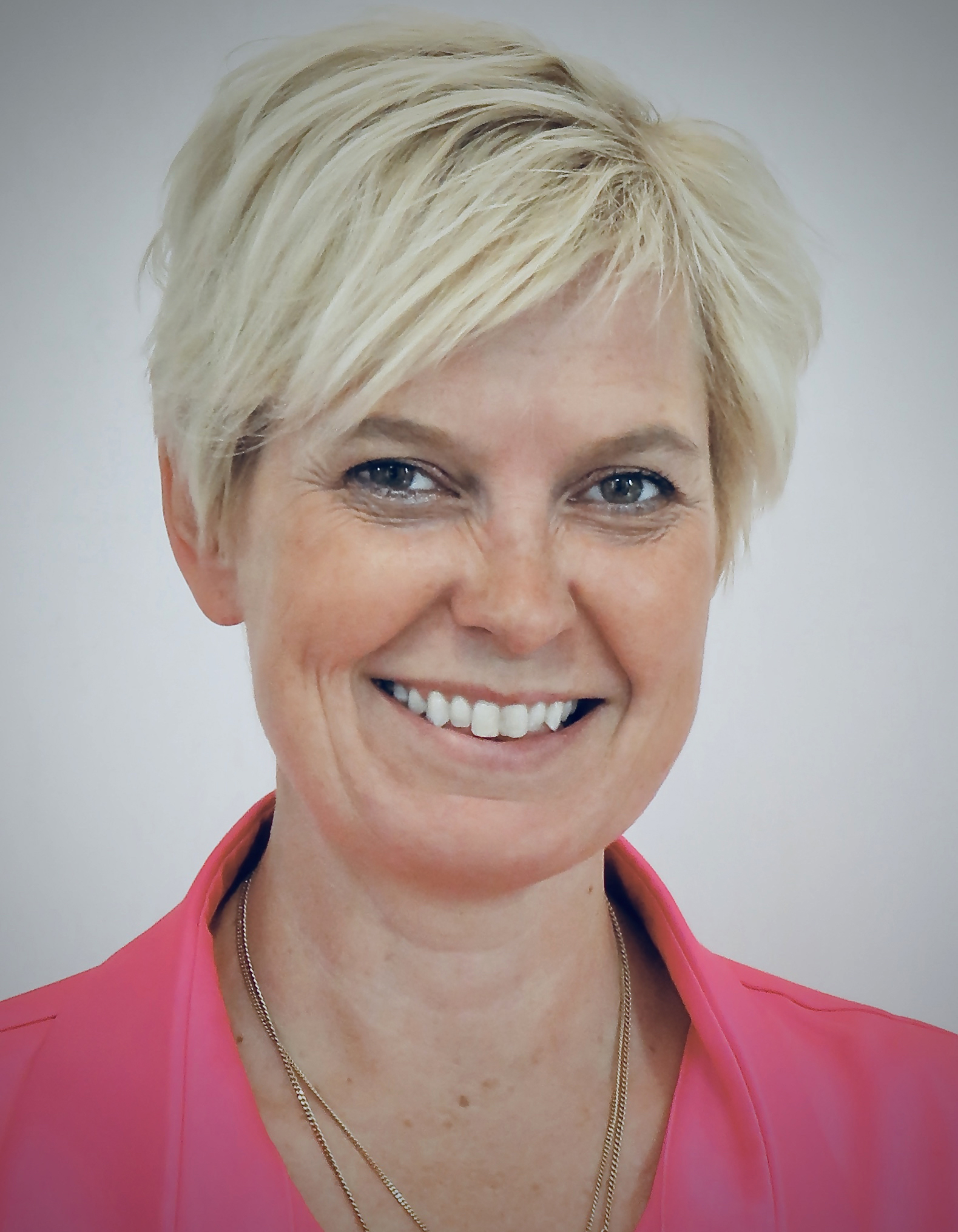
Sara Bals is a Full Professor in the Department of Physics at the Faculty of Science, University of Antwerp, Belgium. She has held this position since 2018, following her progression from Assistant Professor (2007-2012), Associate Professor (2012-2014), to Professor (2014-2018). She serves as the head of EMAT (Electron Microscopy for Materials Science), which comprises 7 principal investigators, about 25 postdoctoral researchers, and more than 30 PhD students. Additionally, she coordinates the "Nanolab" Centre of Excellence, composed of 6 research groups.
Dr. Bals earned her Bachelor's degree in Physics from the University of Antwerp (1995-1997) with Great Distinction, followed by a Master's degree (1997-1999) with Greatest Distinction. She completed her PhD in Physics at the same institution (1999-2003) with Greatest Distinction and special honors, focusing on superconducting thin films and tapes under Professor Gustaaf Van Tendeloo. From 2003-2004, she conducted postdoctoral research at the National Center for Electron Microscopy in Berkeley, USA, working with Professor Christian Kisielowski on electron tomography for materials science.
Sara Bals is an internationally recognized expert in electron tomography and advanced electron microscopy techniques for nanomaterials characterization. Her research focuses on developing and applying electron tomography to study functional nanomaterials at the atomic scale. By combining state-of-the-art electron microscopy with advanced 3D reconstruction algorithms, her group measures the positions and chemical nature of individual atoms in nanomaterials. A significant advancement in her work involves performing these measurements under realistic conditions, including heating, liquid, or gas flow experiments to investigate nanomaterials under working conditions. Her research spans multiple areas including chiral nanomaterials, in situ 3D characterization of nano materials, atomic resolution electron tomography, quantitative electron tomography, and the study of nanoparticles and ultra-small clusters using aberration-corrected (S)TEM.
Her publication record demonstrates a strong focus on advancing electron microscopy techniques and applying them to cutting-edge nanomaterials research. The most recent publications show increasing emphasis on chiral nanostructures, perovskite materials, in-situ characterization techniques, and advanced computational methods for image reconstruction. Her work bridges fundamental materials science with practical applications in energy conversion, catalysis, and optoelectronics.
Dr. Bals has received numerous prestigious awards and honors for her contributions to science:
- 2021: ACS Nano Lectureship Award
- 2020: Elected member of the Royal Flemish Academy of Belgium for Science and the Arts (Natural Sciences)
- 2020: European Microscopy Society Award
- 2018-2024: ERC Consolidator Grant (PE5 - Synthetic Chemistry and Materials)
- 2017-2020: Francqui Research Professor
- 2016: Laureate of the Academy for Natural Sciences awarded by the Royal Flemish Academy
- 2015: Finalist of the Science Talent of 2015 competition
- 2013-2018: ERC Starting Grant (PE4 - Physical and Analytical Chemical Sciences)
As principal investigator, Dr. Bals has secured significant research funding, including two European Research Council grants (Starting and Consolidator). She serves as promotor for numerous European and national projects. Her mentorship has guided the research of many PhD students and postdoctoral researchers within EMAT. Her group's expertise in nanoscale characterization is essential for investigating beam-sensitive materials like perovskites under working conditions.
Dr. Bals leads the EMAT research group, a world-renowned center for electron microscopy of materials. The group specializes in advanced electron microscopy techniques, particularly electron tomography for 3D characterization of nanomaterials. As coordinator of the "Nanolab" Centre of Excellence, she oversees a collaborative effort involving 6 research groups focused on nanoscience and nanotechnology research.
Research fields